
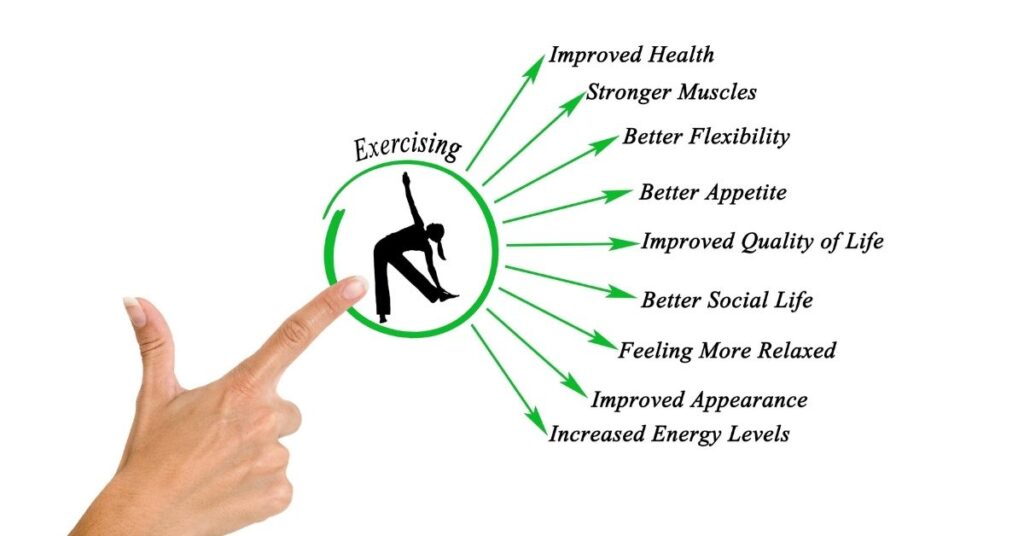
Exercise improves heart health, mood, sleep, strength, and blood sugar control while lowering long‑term disease risk.
Risk
Weekly Dose
Benefits
Starter Plan
- 3×10‑min walks
- 2× short strength days
- Daily mobility 5–8 min
Begin here
Time‑Smart Plan
- 3×20‑min intervals
- 2×30‑min circuits
- Steps goal 7–9k
Busy weeks
Performance Plan
- 2× interval sessions
- 2–3× heavy lifts
- 1 long easy cardio
More load
Why Exercise Pays Off Quickly
Many gains show up in days, not months. A brisk session can steady your mood, clear brain fog, and dial down stress. Within a few weeks, you may notice deeper sleep, easier climbs on the stairs, and better blood pressure readings. Over time, the same habit trims disease risk across the board.
Exercise is a broad word. It includes steady cardio like brisk walking or cycling, strength work with weights or bands, mobility drills that keep joints moving, and short bursts that raise your heart rate fast. Each lane feeds a different win, and the mix gives the best payback.
Exercise Types And Core Gains
| Type | Primary Gains | Starter Targets |
|---|---|---|
| Aerobic (walking, cycling) | Heart fitness, stamina, calorie burn | 20–30 min, 3–5 days per week |
| Strength (weights, bands) | Muscle, bone density, posture | 2 days per week, 8–10 moves, 1–3 sets |
| Mobility (yoga, stretching) | Range of motion, less stiffness | 5–10 min most days |
| Balance (single‑leg work, tai chi) | Stability, fall prevention | 2–3 sessions each week |
| Intervals (fast bursts) | Cardio capacity, time savings | 10–20 min, 1–3 days per week |
| Active living (steps, chores) | Daily burn, light movement | 7,000–10,000 steps on many days |
Benefits Of Exercise For Everyday Life
Movement makes day‑to‑day tasks easier. You feel steadier when you carry groceries, climb stairs without stopping, and sit with better posture during long meetings. The same routine also shapes sharper focus during work hours and a calmer end to the day.
Below are the major wins you can expect, plus simple ways to bank them. You don’t need a gym to start. Shoes, a bit of floor space, and a plan are plenty.
How Much Exercise Do You Need Each Week?
Aim for 150–300 minutes of moderate work each week or 75–150 minutes of vigorous work. Add two days of muscle‑strengthening that hit all major areas. Short sessions count. Stack them across the week.
Use The Talk Test For Intensity
During moderate work, you can speak in short sentences. During vigorous work, you can say a few words before pausing for breath. If you track heart rate, moderate sits near 50–70% of your max, while vigorous sits near 70–85%.
What Counts As Moderate?
- Brisk walking on flat ground
- Easy cycling outside or on a stationary bike
- Water aerobics or steady laps
- Mowing the lawn with a push mower
- Doubles tennis or casual pick‑up games
What Counts As Vigorous?
- Running or fast uphill walking
- Stair climbing or hill sprints
- Hard cycling with intervals
- Jump‑rope or quick body‑weight circuits
- Singles tennis or fast team sports
You’ll see these minute ranges echoed by major health groups. See the federal activity guidelines and the AHA recommendations for the full breakdown and examples.
Heart And Vascular Health
Cardio work trains the pump and the pipes. Steady sessions lower resting heart rate over time. Arteries get more elastic, and blood moves with less strain. That shift shows up on your next walk when hills feel easier and breath settles quicker after a push. Keep breathing smooth between hard efforts.
Mix low and mid effort most days. Add one faster day where you shift between easy and hard. People with a heart history should check with a clinician before hard intervals. Good shoes and a flat route help you start with confidence.
Simple Cardio Progression
- Week 1–2: Walk 20 minutes on 4 days. Keep a pace that warms you up without gasping.
- Week 3–4: Walk 30 minutes on 4 days. Add 4 x 30‑second brisk bursts with 90‑second easy strolls.
- Week 5–6: Add a fifth day or extend one walk to 45 minutes.
Metabolic Health And Weight Balance
Regular movement improves insulin action, which helps keep blood sugar steady. Strength work holds on to lean tissue while you trim fat. That shifts body shape and helps long‑term weight control. Cardio adds extra burn, while steps keep your daily total steady.
Think in layers. First, build a floor of daily movement. Next, add two strength days that hit legs, hips, back, chest, shoulders, and arms. Then, weave in one or two faster cardio blocks where breath runs high for short spells. The combo moves the scale and also keeps energy stable across the day.
Smart Strength Basics
- Pick 6–8 moves: squat, hinge, push, pull, lunge, carry, plank.
- Do 1–3 sets of 6–12 reps with solid form.
- Rest 60–90 seconds between sets. Breathe through each rep.
- When all reps feel steady, raise weight a notch or add a set.
Brain, Mood, And Stress Relief
Even a single brisk walk can ease anxious feelings for a few hours. Regular sessions tie to better attention and learning across the lifespan. Many people feel a lift right after a workout thanks to changes in brain chemicals tied to calm and focus.
Pick modes you enjoy. Music and sunlight help. Outdoor walks, group classes, or a quick skip rope block can turn a tense day around.
Muscle, Bones, And Joints
Strength training protects bone density and tendons. Strong legs and hips make ladders, yard work, and long errands easier. Good range of motion keeps aches away. Balance practice adds a safety net against slips.
Match load to your current level. Start with body‑weight moves. Add bands or light dumbbells once your form feels smooth. Use slow, controlled reps on the way down to challenge bone and tendon safely.
Weekly Strength Template
- Day 1: Lower body focus — squats or hinges, lunges, calf raises.
- Day 2: Upper body focus — rows, presses, carries, planks.
- Optional: Third short full‑body circuit with lighter weights.
Sleep And Steady Energy
People who move sleep deeper and wake up with more pep. Morning light walks can help set your body clock. Late‑day hard efforts can push bedtime later for some, so test timing. Keep caffeine earlier in the day and you’ll get an extra nudge toward better rest.
A small stretch block before bed can ease tight spots. Keep it gentle. Focus on slow breaths, long exhales, and muscles that worked earlier in the day.
Build A Week That Fits You
Here are sample mixes that meet the minute ranges while leaving room for real life. Rotate days as needed. The goal is repeatable patterns you can keep for months.
General Health Mix
- Mon: 30‑min brisk walk
- Tue: Strength A (30–40 min)
- Wed: 20‑min intervals on bike
- Thu: 30‑min walk plus 5‑min stretch
- Fri: Strength B (30–40 min)
- Sat or Sun: 45–60‑min easy hike, swim, or ride
Fat Loss Mix
- Mon: 30‑min walk before breakfast
- Tue: Full‑body strength (35 min) + 10‑min easy spin
- Wed: 25‑min intervals (work:rest = 1:2)
- Thu: 40‑min walk with hills
- Fri: Full‑body strength (35 min)
- Sat: Long easy cardio 60 min
Strength And Posture Mix
- Mon: Strength A (40 min)
- Tue: 25‑min brisk walk + mobility
- Wed: Strength B (40 min)
- Thu: 30‑min intervals or sled pushes
- Sat: Strength C (40 min)
Keep rest days flexible. If life gets busy, take a short walk and call it a win. Return to your plan the next morning.
Goals To Weekly Mix: Quick Reference
| Goal | Weekly Mix | Why It Works |
|---|---|---|
| Better heart health | 3×30‑min moderate cardio + 1 interval day | Steady base with one push expands capacity |
| Blood sugar control | 2 strength days + 3×20–30‑min brisk walks | Muscle soaks up glucose; walks curb spikes |
| Fat loss | 2–3 strength days + 2 cardio days + daily steps | Holds lean mass while raising daily burn |
| Stronger bones | 2 strength days with loaded carries and jumps | Load on bone sends a growth signal |
| Less joint stiffness | Daily mobility 8–10 min + easy cardio | Synovial fluid moves and tissues relax |
| Better sleep | Morning light walk + 3–4 cardio days | Daylight plus movement steadies body clock |
Time‑Savers That Still Deliver
Short hits count. Three 10‑minute walks across a day can beat one missed 30‑minute block. Try stair bursts at work, a jump‑rope micro‑session before lunch, or a fast spin on a bike between meetings. Many people keep a kettlebell in the living room for swings during TV breaks.
Commuter tricks help too. Park a few blocks away, get off transit one stop early, or take the long route to the coffee shop. Add a light walk after dinner to smooth blood sugar and aid sleep.
Five‑Move Ten‑Minute Circuit
- Body‑weight squats — 45 seconds, 15 seconds rest
- Push‑ups (incline if needed) — 45/15
- Hip hinge or kettlebell swings — 45/15
- Rows with a band — 45/15
- Plank — 45/15
Run the circuit once for a fast tune‑up. Run it twice on days with more time.
Safety, Soreness, And Progress
Good soreness fades in 24–48 hours and feels like dull stiffness. Sharp pain, joint clicks, or swelling call for a pause. If you live with a heart, lung, or metabolic condition, get personalized advice before hard intervals or heavy lifts. Start with easy pacing and add load in small steps.
Warm up with five minutes of light cardio and a few rehearsal reps. Cool down with slow breaths and a short stretch for the areas you trained. Drink water. Eat a meal with protein and carbs within a few hours.
Track three basics: minutes moved, strength sessions done, and daily steps. When two of the three feel steady for a month, nudge one dial: a bit faster, a bit farther, or a touch heavier. Small steps keep the trend rising without stalls.
What Counts Beyond The Gym
Plenty of movement happens outside a workout. Yard work, house cleaning, dog walks, and weekend games all add to your total. If you stack these on top of a simple plan, you’ll land near the weekly ranges without stressing your calendar.
On long desk days, stand up every hour. Stretch your hips, open your chest, and stroll to refill water. Those small breaks keep stiffness low and save your longer session for real work, not just warm‑up.
Evidence And Guidance You Can Trust
Large reviews from global and U.S. agencies line up on the same message: move often, add two days of strength, and sit less. You can read plain‑English summaries from public health authorities and dig into formal guidelines if you want the fine print and minute ranges by age.
New research keeps adding signals that even light daily activity helps long‑term health. Steps, short tasks, and brief bursts all play a role. The main story stays the same: the routine you enjoy most is the one that keeps paying you back.
Ready To Move Today
Pick one small action and start before the day gets crowded. Lace up and walk ten minutes. Do the five‑move circuit once. Or book two strength days on your calendar and protect them like meetings. The habit starts now, not later.
As weeks stack up, your body adapts. Errands feel easier. Sleep lands sooner. Mood steadies. Keep the streak going, adjust the mix when life changes, and let the gains compound.
Exercise Across Ages And Needs
Kids do best when they move often through the day with games and play. Tweens and teens thrive on a mix of sports, running, and basic strength skills. Adults benefit from the minute ranges listed above plus two strength days. People over 65 gain a lot from balance drills and lower‑body strength that makes stairs and curbs easy again. The big idea stays the same at every age: move often, add some work for muscles, and keep balance in the mix.
Pregnancy brings its own plan. Many people can keep moving with walks, swimming, and light strength on most days when cleared by their clinician. After birth, begin with easy walks and breathing drills, then rebuild strength in steps. If you live with pain, arthritis, or a long‑term condition, choose low‑impact modes like cycling, water exercise, or rowing and watch how your body responds. Tweak pace and duration based on how you feel later that day and the next morning.
Form, Footwear, And Setup
Good form keeps joints happy. Keep your ribs stacked over your pelvis on squats and presses. Hinge at the hips on deadlifts and swings. Pull your shoulder blades down and back on rows. Use smooth control on the lowering phase and avoid any sharp snap at the end of a rep.
Paved trails and rubber floors beat angled or cracked surfaces. Shoes matter too. For walking and running, choose a pair with a cushioned midsole and a snug heel. For lifting, flatter soles add stability. Keep a small towel, a water bottle, and a mat in a tote so a living room session takes less than a minute to set up.
Fuel, Hydration, And Recovery
Most short sessions need only water. Longer or hotter days call for steady sips. A meal with protein and carbs in the 2–3 hours before training works well for many people. If you lift early, a banana or yogurt can bridge the gap. Afterward, aim for protein to help repair muscle and carbs to refill energy. Sleep is your best recovery tool, so keep bedtime steady and set your phone aside near lights out.
Simple add‑ons help. Gentle foam rolling can ease stiffness. A warm shower or light stretch gives your nervous system a downshift cue. If soreness lingers past three days or pain spikes, back off load and pace the next week. Progress comes from a long line of sessions, not one epic day.
Simple Home Gear That Expands Options
You can go far with zero gear. Body‑weight moves build a strong base. If you want a small kit, one medium kettlebell, mini‑bands, and an adjustable dumbbell pair cover a lot. Add a jump rope for quick bursts and a mat for floor work. Store the set in a basket near your space so sessions start fast and stay tidy.
Use a simple timer for intervals and a notes app for weights, reps, and how the session felt. Looking back after a month shows steady progress and keeps motivation high.