
Our readers keep the lights on and the coffee maker working hard! As an Amazon Associate, I earn from qualifying purchases.
Specs are compiled from manufacturer listings and verified buyer reviews and can change over time — please confirm the key details on the product page before buying.
Your cutting board is a sponge. Every wash strips moisture, and a dry board drinks up juices, stains, and smells. A food-safe oil seals the wood’s pores, blocking moisture loss and preventing cracks. This guide compares eight proven options, from pure mineral oil to all-natural wax blends, so you can pick the one that matches how you actually cook.
I’m Mohammad — the founder and writer behind Calories Fit. This guide is built by comparing the manufacturers’ published specifications and the patterns across verified customer reviews, so you get each pick’s real strengths and trade-offs instead of marketing spin.
Choosing the right wood cutting board oil keeps your board sealed, clean, and ready for the next meal.
Our Picks at a Glance


How To Choose The Best Wood Cutting Board Oil
Without regular oiling, your cutting board dries out, cracks, and absorbs stains and odors. Pick a food-grade product first, then choose between pure oil, a wax, or a blend—each changes how often you reapply and how glossy the finish looks.
Mineral oil vs. wax vs. coconut oil
Pure mineral oil is the cheapest and easiest to apply. It soaks in fast but evaporates, so you reapply it every few weeks. Waxes like beeswax sit on top of the wood to seal it, which means you oil first, then wax for a tougher barrier. Coconut oil is a natural alternative that stays liquid at room temperature but costs more per bottle.
Food grade is non-negotiable
Any product touching food-prep surfaces must be labeled food safe. On a butcher block, an oil that is not food grade can leach chemicals into your dinner. Every pick on this list meets that standard, but check the label of anything you buy elsewhere.
Bottle size and application style
Do you have one board or a whole kitchen of wooden tools? A 12-ounce bottle handles a single board for years. A full gallon makes sense if you treat countertops, spoons, and bowls regularly. Some bottles have push applicator caps; others need a cloth or paper towel to spread.
Quick Comparison
| Model | Best For | Size | Base Ingredient | Format | Amazon |
|---|---|---|---|---|---|
| Thirteen Chefs Mineral Oil★ Best Overall | Best Overall | 12 oz | Mineral Oil | Liquid | Amazon |
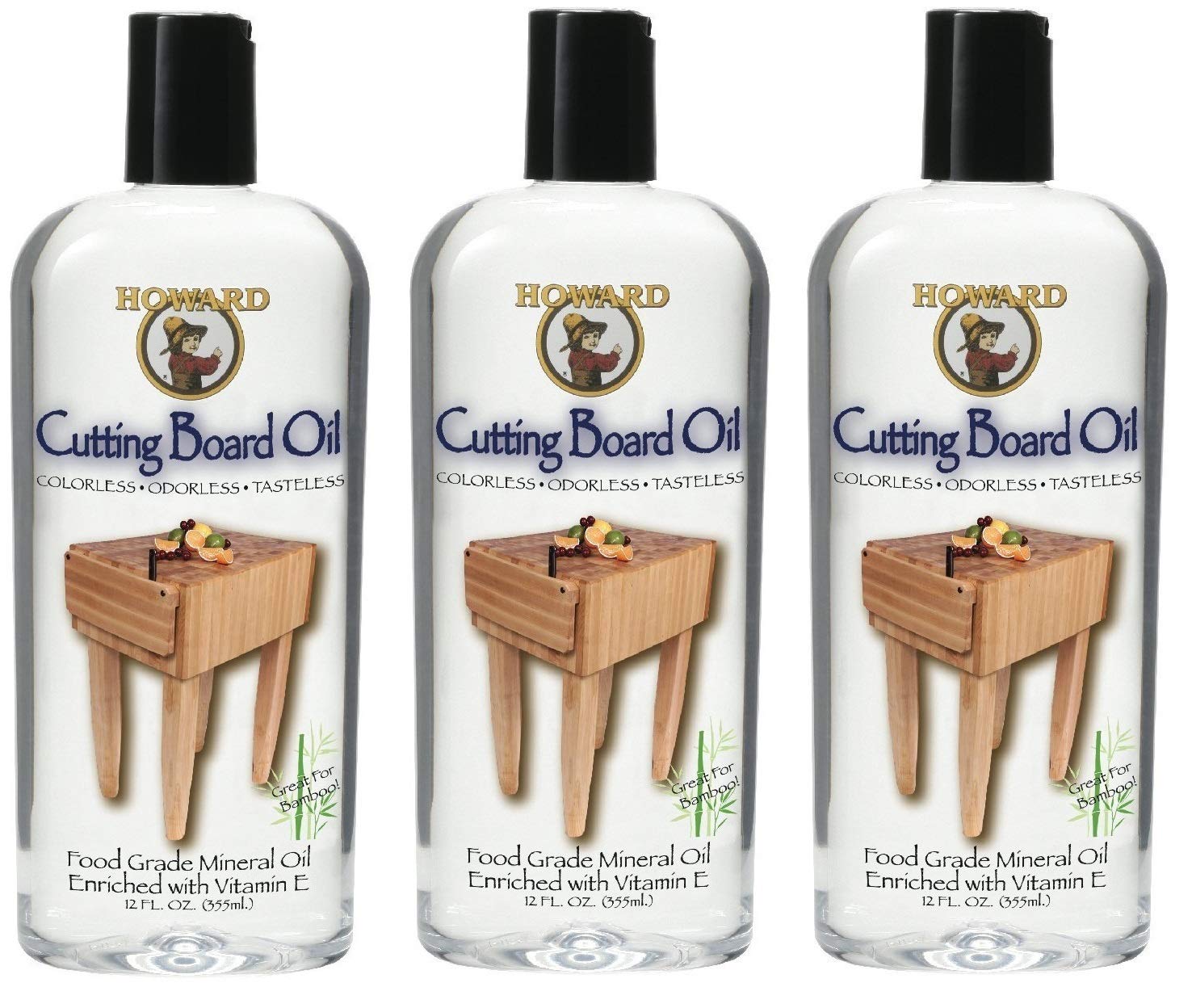
| Howard Butcher Block Oil3-Bottle Value | 3-Pack Value | 12 oz (3-Pack) | Mineral Oil | Liquid | Amazon |
| Caron & Doucet WaxPlant-Based Seal | Plant-Based Seal | 100 g | Coconut Oil & Wax | Wax | Amazon |
| USA Wood Oil | Simple Mineral Oil | 8 oz | Mineral Oil | Liquid | Amazon |
| Cutting Board Gel | Oil Plus Wax Blend | 8 fl oz | Mineral Oil & Beeswax | Gel | Amazon |
| Non-Toxic Wood Wax | Mineral Oil Free | 7 oz | Beeswax, Flaxseed & Lemon | Paste Wax | Amazon |
| Virginia Boys Coconut Oil | Coconut Alternative | 8 fl oz | Fractionated Coconut Oil | Liquid | Amazon |
| SMPLY. Mineral Oil | Gallon Size | 1 Gallon | Mineral Oil | Liquid | Amazon |
In‑Depth Reviews
1. Thirteen Chefs Mineral Oil
Our pick — over 4.5★ from 44,500+ verified ratings; the strongest balance of quality and price.
The crowd favorite that keeps counters hydrated with a nearly invisible, no-smell finish.
This is the bottle that wins people over on consistency. It is NSF certified, which means it meets strict food-safety standards, and it is colorless, odorless, tasteless, and gluten-free. A single 1-ounce treatment every 3 months is all you need for cutting boards up to 18 inches, so a 12-ounce bottle stretches for years of professional-grade care.
The sign of a good oil is how it behaves on the board. Buyers report it “goes on thick but dries quickly,” with very little odor — exactly what you want when you are prepping food an hour later. It is also a multi-purpose workhorse, conditioning butcher blocks, wooden spoons, bowls, countertops, and even knife handles and leather.
At 11 ounces by weight, it is the heavier handheld bottle here, and that weight translates into more oil per pour. The squeeze bottle with a push applicator cap makes the whole job a two-minute routine.
Why It Wins
- NSF certified food grade, lab-tested for safety
- Odorless and tasteless, so it never transfers to food
- One 1-oz treatment every 3 months lasts for years
- Works on boards, butcher blocks, tools, and even leather
The Trade-Off
- Pure mineral oil soaks in and needs regular reapplication
- No beeswax, so it offers less of a surface seal than wax blends
Reach for it if: you want a no-fuss, food-safe mineral oil that handles every wooden surface in your kitchen for years.
Look elsewhere if: you want a tougher moisture barrier — a wax blend will outperform it on heavy-use boards.
2. Howard Butcher Block and Cutting Board Oil
Three bottles of proven mineral oil enriched with Vitamin E for long-term board health.
This is a brand that owners stick with — people reorder it three times over two years. The 12-ounce bottle is colorless, odorless, and tasteless, and it is enriched with Vitamin E, a small addition that helps condition the wood fibers. Because it is mineral oil, it will not go rancid like cooking oils.
Where this one shines is the 3-pack format. You get three 12-ounce bottles, which is ideal if you have a butcher block island plus several cutting boards. Buyers use it weekly on daily-use boards, and it keeps the wood free of dryness, warping, and odors while preserving the grain. It soaks in without leaving an oily residue, a detail people notice immediately.
One note: as a pure mineral oil, it does not create the same surface barrier as a wax. On a heavily used butcher block, you will be reapplying more often than you would with a wax finish.
Standout spec: three 12-ounce bottles mean you will not run out mid-project, and the Vitamin E enriched formula protects without any smell.
Who it suits: households with multiple boards or a full butcher block countertop that needs weekly conditioning.
3. Caron & Doucet Wood Conditioning Wax
A plant-based wax that seals out water while skipping mineral oil entirely.
If you want to avoid petroleum-based mineral oil, this is your answer. It is 100% plant-based and vegan, made with a solvent-less refined coconut oil base and fortified with rice bran wax. That combination creates a waterproof barrier that stops liquids from soaking in and staining the wood — the same job oil does, but with a stronger surface seal.
The formula also contains pure essential oils that eliminate odors without transferring to food, and it makes cleaning easier by stopping food from drying and sticking to the board. Owners mention one jar lasts years — literally from 2020 to 2025 — which makes the small 100-gram tin a long-term investment. It does darken wood and bring out the grain, a look many owners love.
The catch is application. It is a paste wax in a tin, so you will need a plastic putty knife or paper towel to spread it, and the tin packaging is not as convenient as a squeeze bottle. Apply it after a mineral oil treatment for the best seal.
Best for: cooks who want a natural, mineral-oil-free seal that keeps boards water-resistant and odor-free for years.
Keep in mind: the tin format asks for a little more effort, and your first coat should follow a base oil treatment.
4. USA Wood Oil by Snow River

A stripped-back mineral oil that soaks in smoothly and never leaves a sticky residue.
Snow River keeps things simple: an 8-ounce bottle of food-safe mineral oil that is odorless and tasteless. The formula is a pure mineral oil that penetrates evenly, which owners say smooths over water splotches and keeps teak bath stools and oak doors looking conditioned.
It is noticeably lighter than the Thirteen Chefs bottle — 8 ounces versus 11 ounces by weight — so it is the more portable option. Buyers have used it for years, and the consensus is that there is no sticky residue and the oil absorbs smoothly into the grain. It works for any wood, from cutting boards to furniture.
The honest downside: it is priced higher than comparable mineral oils, and several owners note you cannot find it in local stores, so you are tied to buying it online.
Who it fits: anyone who wants a straightforward, no-frills mineral oil with a proven track record across wood types.
Consider this: the premium price does not buy more oil — it buys the brand’s simple, effective formula.
5. Rowdy Rooster Cutting Board Gel
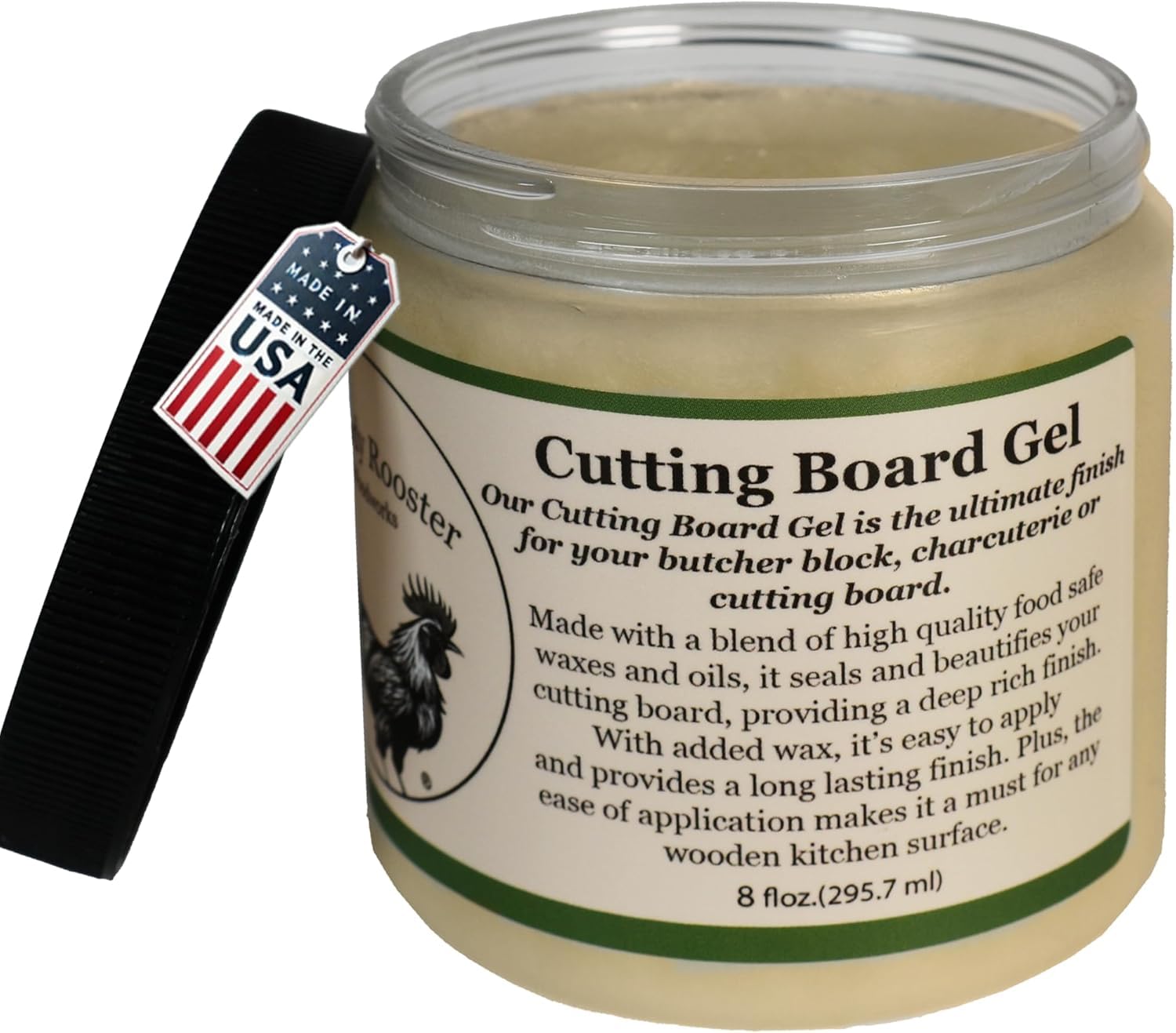
A clever gel that combines mineral oil and beeswax into one easy-spread conditioning step.
Most wood care routines ask for two steps: oil to nourish, then wax to seal. This gel collapses that into one. It blends food grade mineral oil and food grade beeswax into a gel texture that spreads evenly and soaks right in, leaving a glass-like finish that owners say makes boards look “nourished” for far longer than plain oil.
The citrus scent is a pleasant bonus — it lingers on your hands after application, which many buyers genuinely enjoy. It works across teak, bamboo, and engraved boards, bringing out the best grain patterns. The 8-fluid-ounce jar is slightly larger than the Caron & Doucet tin at 100 grams, giving you more product per container.
The one honest note: a single application may not be enough for larger boards, so be generous with the gel on a big butcher block. A few owners also found the gel less convenient than a squeeze bottle for quick touch-ups.
The highlight: a true 2-in-1 oil and wax in one jar that saves time and gives boards a long-lasting, water-resistant finish.
Watch for: bigger boards may need a second coat — budget a little extra gel for large surfaces.
6. Ziruma Non-Toxic Wood Wax

A beeswax paste that sidesteps mineral oil and fills small cracks with a light lemon scent.
This is the greenest option on the list. It is made from beeswax, flaxseed oil, and lemon oil — no petroleum-based mineral oil, no solvents, and nothing synthetic. The formula is biodegradable and creates a food-safe barrier once applied and cured. Owners love that it is safe enough for cutting boards, countertops, furniture, floors, and even wooden tools.
The paste wax works differently from oil. It sits in the wood and fills small cracks and scratches, restoring the natural luster of worn-out boards. Customers note that after two applications, dull cutting boards look brand new, and the light lemon smell is a favorite — “smells awesome,” as one owner put it. It applies easily with a microfiber cloth and, unlike oil, leaves a streak-free, non-sticky finish.
The 7-ounce tin is a bit smaller than the gel options, and because it is a paste, it takes slightly more elbow grease to buff in. But for anyone avoiding petroleum products entirely, this is the cleanest pick.
Why choose it: a chemical-free beeswax and flaxseed formula that restores worn wood and protects against moisture and stains.
The trade-off: paste wax needs a little more buffing effort than a liquid pour, and the tin is smaller than the gel jars.
7. Virginia Boys Kitchens Coconut Cutting Board Oil

A food-grade coconut oil that stays liquid in the bottle and hydrates wood fibers deeply.
Most wood oils start with mineral oil. This one starts in your pantry instead. It is made from pure food grade fractionated coconut oil, which stays liquid at all room temperatures so it pours easily. The formula is just coconut oil, orange essential oil, and rosemary extract — nothing else, no mystery ingredients.
Owners say it moisturizes deep into the wood fibers and brings out a darker, richer natural color. On a walnut board, it darkens the wood beautifully and leaves a glowing sheen. Two coats transform a new board, and the light fresh scent does not overwhelm. It is a top-tier conditioner for countertops and butcher blocks.
The cost is the sticking point. At 8 fluid ounces, it is the smaller bottle among the oils here, and some owners find it pricey. The bottle design also drew complaints — it needs a squeeze cap or smaller opening to avoid spills.
Standout quality: a pure, kitchen-ingredient coconut oil that conditions wood deeply and leaves a beautiful patina.
Think about: the 8-ounce bottle runs out faster than the larger mineral oil jugs, and the price per ounce is higher.
8. SMPLY. Food-Grade Mineral Oil

A full gallon of American-made mineral oil for serious woodworkers and big kitchens.
If you oil more than one board a month, this gallon jug saves you money and trips to the store. It is a food-grade mineral oil made in the USA by a small business, and the 128-fluid-ounce volume dwarfs every other bottle here—the Thirteen Chefs bottle holds 12 fluid ounces, so you get over ten times the oil in one container.
The formula is clean and odorless. Once it soaks in and dries, you can prepare and serve food right off the wood surface with no funny tastes or smells. It works on bamboo, teak, oak, and walnut, bringing out the best color without adding any tint. Buyers use it on butcher blocks, cutting boards, and even dry old wooden benches, and it revitalizes them all.
The trade-off is handling. A gallon is heavy and awkward for quick touch-ups, so most owners pour it into a smaller squeeze bottle first. Also, over-applying causes the oil to weep on the surface — apply at room temperature and wipe off the excess.
Best for: heavy users and woodworking hobbyists who want a year’s worth of oil in one affordable purchase.
Keep in mind: you will want a smaller dispensing bottle, and the initial application needs a 24-hour dry time before use.
Understanding the Specs
Food Grade vs. Food Safe
Food grade means the product is tested and certified for contact with food. Food safe means it is generally safe for that use but may not carry the same lab certification. For a cutting board, look for the explicit “food grade” label — it is the strongest assurance that nothing leaches into your food.
Mineral Oil and Shelf Life
Pure mineral oil will not go rancid, which is why it is the classic choice — it stays stable on your shelf for years. Natural oils like coconut oil and flaxseed oil can turn rancid over time, but fractionated coconut oil (used by Virginia Boys) has the long-chain fatty acids removed, so it stays stable and liquid at room temperature.
FAQ
How often should I oil my cutting board?
Can I use olive oil or vegetable oil on my cutting board?
What is the difference between oil and wax for cutting boards?
Is mineral oil safe to use on a butcher block countertop?
Will wood oil change the color of my cutting board?
How do I apply cutting board oil correctly?
Does beeswax work better than mineral oil?
How long does a bottle of cutting board oil last?
Final Thoughts: The Verdict
For most people, the wood cutting board oil winner is the Thirteen Chefs Mineral Oil because it pairs NSF certified food safety with a 12-ounce bottle that lasts for years and an easy squeeze applicator. If you want a natural, mineral-oil-free seal, grab the Caron & Doucet Wax. And for a family with several boards plus a butcher block, the Howard 3-Pack is the one to reach for.
How We Picked
We do not accept paid placement. Every pick is matched to a real buyer and a real use-case; we do not hands-on test units.
Sources & Methodology
Specifications: manufacturer listings and product documentation. Review insights: verified customer reviews, as of August 2026. Pricing: not shown on this page (it changes often); check the current price via the retailer link.
As an Amazon Associate, Calories Fit earns from qualifying purchases. This does not affect which products we feature.