9 Best Winter Jogging Jacket | Windproof Picks for Sub-Zero Miles

Our readers keep the lights on and the coffee maker working hard! As an Amazon Associate, I earn from qualifying purchases.

Specs are compiled from manufacturer listings and verified buyer reviews and can change over time — please confirm the key details on the product page before buying.

When the temperature drops and the wind picks up, the difference between a good run and a miserable one often depends on that first layer — the jacket you pull over your base layer. The right winter jogging jacket blocks icy gusts, vents sweat, and keeps your phone and gloves within reach. The wrong one leaves you shivering at mile one or soaked by mile three.

I’m Mohammad — the founder and writer behind Calories Fit. This guide is built by comparing the manufacturers’ published specifications and the patterns across verified customer reviews, so you get each pick’s real strengths and trade-offs instead of marketing spin.

Here is the crowd favorite — 4.6 stars across 900+ owners — and eight other serious contenders for the cold. Find your best winter jogging jacket by matching windproofing, warmth, and pocket layout to your local forecast.

Our Picks at a Glance
baleaf Men's Cycling Winter Jacket
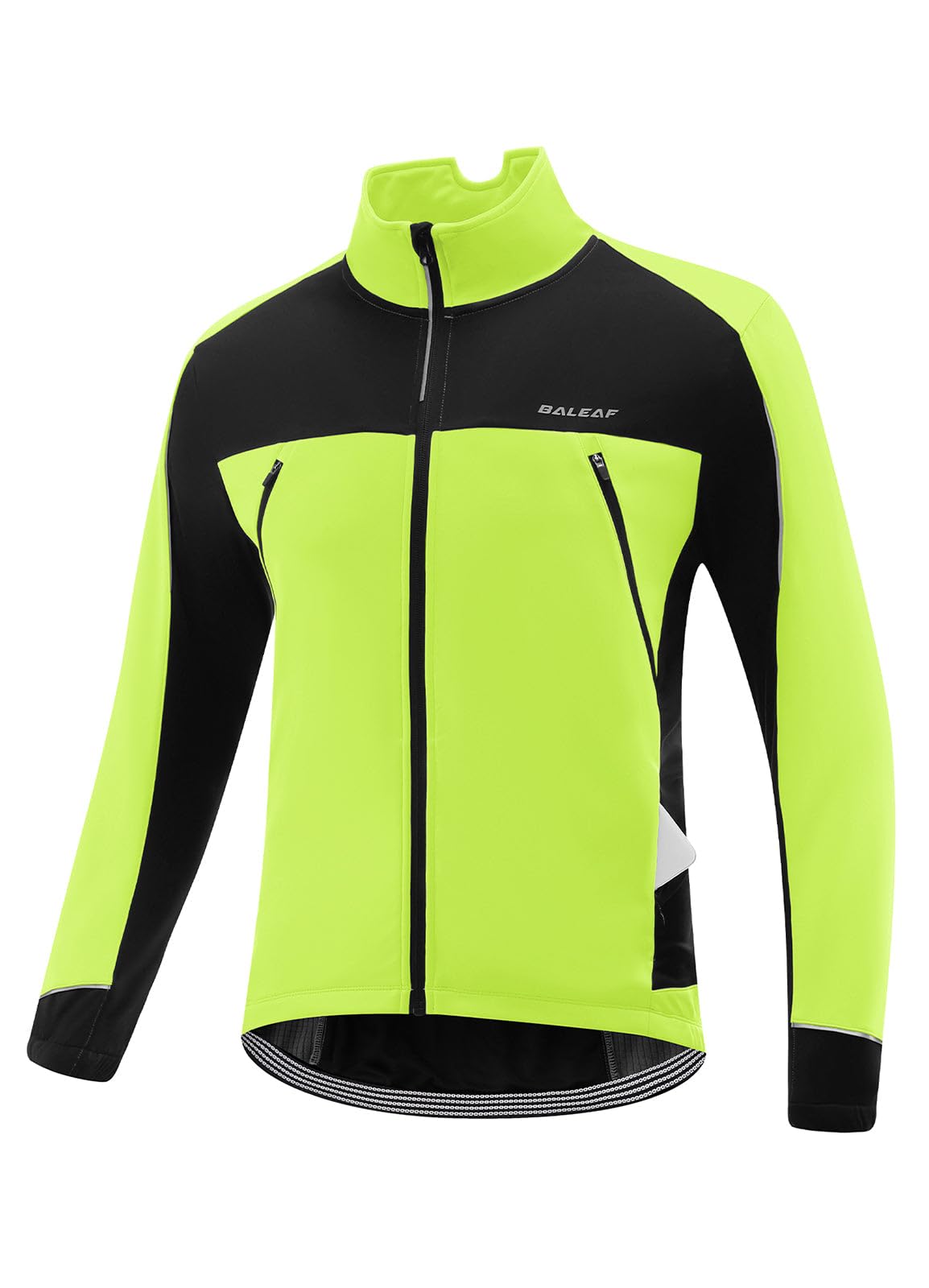
Best Overallbaleaf Men’s Cycling Winter Jacket4.6★946 ratingsThe cold-weather commuter’s workhorse that holds the line at 20°F without making you sweat. This jacket earns the top spot because it handles the two things winter runners hate most: biting wind and sudden overheating.Check Price on Amazon
Pioneer Camp Men's Lightweight Packable Puffer Jacket
Packable TravelPioneer Camp Men’s Lightweight Packable Puffer Jacket4.6★680 ratingsA puffer that shrinks to fist size in its pouch but still delivers in freezing wind. This jacket wins on the one metric travelers obsess over: how small it gets.Check Price on Amazon
baleaf Women's Running Jacket Puffer Coat
Chilly-Morning Pickbaleaf Women’s Running Jacket Puffer Coat4.6★577 ratingsPuffer warmth up front, stretchy breathability in the back — a flattering hybrid for cool runs.Check Price on Amazon

How To Choose The Best Winter Jogging Jacket

Buying a winter running jacket means balancing warmth against breathability. A jacket that seals out every breeze will also trap your body heat and sweat, leaving you clammy and cold the moment you stop. The best approach is to look for a shell that blocks wind on the front-facing surfaces while letting moisture escape where you generate the most heat.

Check the recommended temperature range

Many of these jackets list a temperature window, like 20-50°F. That range tells you what the jacket is designed for, but it assumes you are wearing a base layer underneath. A jacket rated for 20°F will feel too warm on a 45°F day, so think about your local winter and how much you tend to overheat once you get moving.

Look for windproofing, not just thickness

Running into a cold headwind is where most heat escapes. A softshell with a windproof membrane on the front does more for comfort than a fluffy jacket with no wind protection. Some designs use a hybrid approach — windproof panels on the chest and stretchy, breathable fabric on the sleeves and back — which keeps you warm where it matters without cooking your core.

Count the pockets and check their placement

Winter runs demand more gear: gloves, a phone, maybe a neck gaiter or a small water bottle. Rear pockets are standard on cycling-inspired jackets and keep your hands free, while zippered chest or side pockets protect valuables from rain and snow. Decide what you carry daily, then match the pocket layout to it.

Don’t ignore reflectivity

Winter’s short daylight means many runs happen in the dark. Reflective elements on the front, back, and sleeves make you visible to drivers when you’re running along roads. Some jackets place reflectors strategically on the arms and rear pockets to give 360-degree visibility in low light.

Quick Comparison

Model Best For Temp Range Wind Protection Pockets Amazon
baleaf Men’s Cycling Winter Jacket★ Best Overall Cold-weather commuters & runners 20-50°F Front-focused windproof 2+2 zipper Amazon
Pioneer Camp Men’s Puffer JacketPackable Travel Travel & packability Cold weather Water repellent 2 side + 2 inner Amazon
baleaf Women’s Running PufferChilly-Morning Pick Chilly morning runs Cool days Water-resistant Zip pockets Amazon
MoFiz Women’s Hybrid Puffer Mild winter & fall 45-55°F Windproof, light rain 2 zipper + 2 inner Amazon
Bikewa Men’s Winter Cycling Jacket Long-distance winter rides Cold weather 3-layer windproof 8 total Amazon
Pioneer Camp Men’s Hybrid Puffer Versatile mid-layer Cold weather Water-repellent Zippered + inner Amazon

In-Depth Reviews

★ Best Overall

1. baleaf Men’s Cycling Winter Jacket

Our pick — over 4.5★ from 900+ verified ratings; the strongest balance of quality and price.

Windproof Softshell20-50°F Range

The cold-weather commuter’s workhorse that holds the line at 20°F without making you sweat.

This jacket earns the top spot because it handles the two things winter runners hate most: biting wind and sudden overheating. It’s rated for 20-50°F, and the wind-resistant material is concentrated on the front-facing surfaces, which keeps the chest warm while the back stays breathable enough to shed heat on the climb. That design choice is exactly what you want when you’re moving into a headwind for thirty minutes.

Warmth is the thing owners praise most — 115 of them single it out — and the quality follows close behind with 100 mentions. Buyers report using it for biking to work for six months straight and taking it down to 16°F with a base layer underneath. The high collar seals around a balaclava, and the zipper vents let you dump heat before you overheat. The 2+2 zipper pockets are sized for winter gloves and a neck gaiter, so your hands stay free and your essentials stay put.

The trade-off is that this is a true cold-weather piece, not a year-round shell. Above freezing it runs warm on its own, so you’ll want to wear just a thin layer underneath. Some owners note the material feels a little stiff at first, and there are no sleeve closures beyond loose elastic — a minor gripe for deep winter. But the visibility reflectors are well placed for road runs, and the machine-wash reliability makes it a set-and-forget layer for the season.

Why it wins

  • Front-focused windproofing keeps you warm without trapping sweat
  • Zipper vents prevent overheating on harder efforts
  • High collar and sealed cuffs lock out cold with a balaclava

Before you buy

  • Runs warm above freezing — layer light
  • Material feels stiff when new
  • No sleeve closures, just loose elastic

Grab it if: you run or ride in genuinely cold, windy conditions and want one jacket that reliably handles 20-50°F.

Think twice if: your winters hover near freezing and you overheat easily — this one runs warm on its own.
Fitted Performance

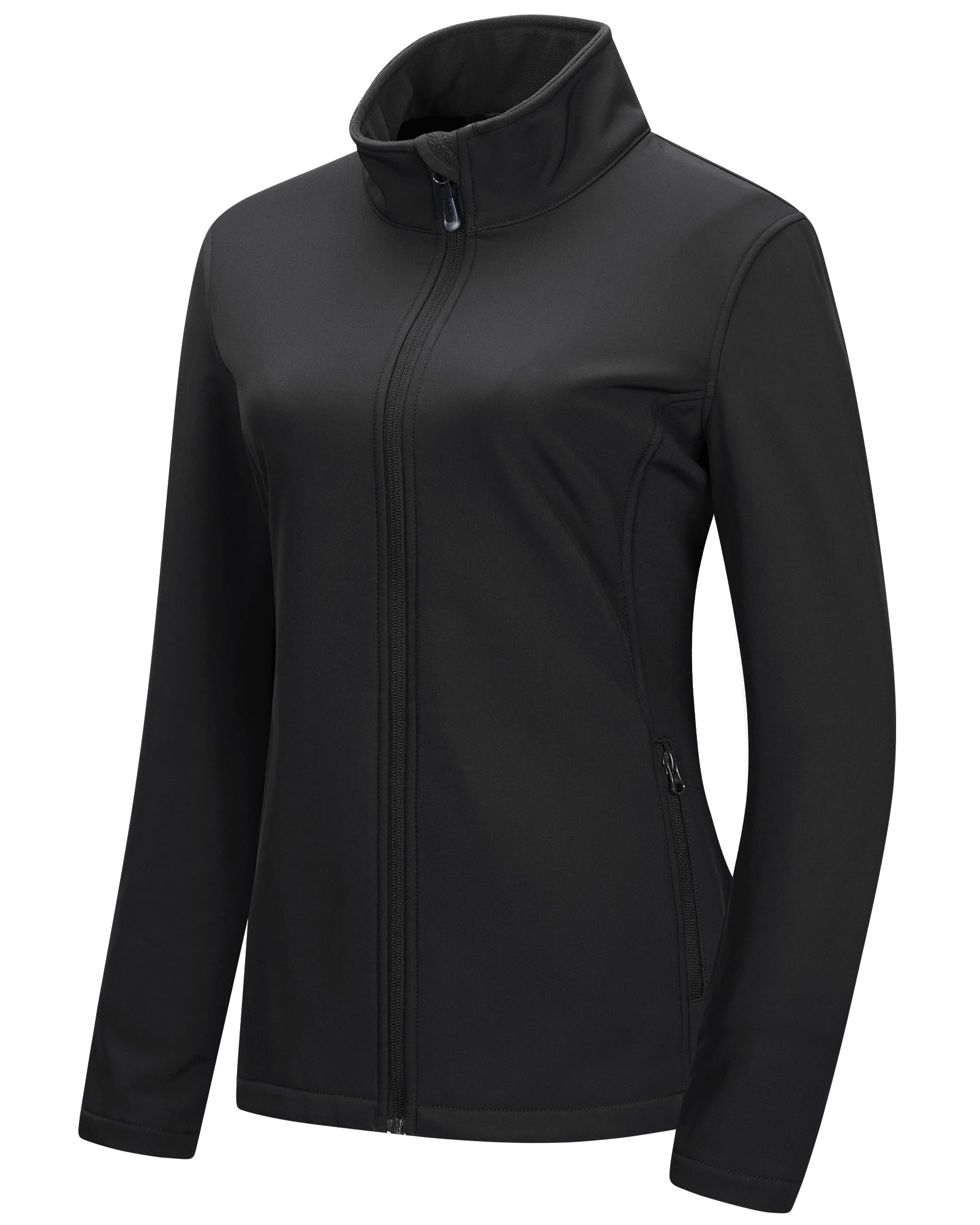
2. baleaf Women’s Fleece Running Jacket

Fleece-Lined4 Pockets

A stretchy, water-shedding shell that’s built for golf swings and drizzly runs alike.

This one earns its keep as a three-season softshell that handles light rain and wind without feeling like a raincoat. The outer shell is waterproof and breathable, with a 4-way stretch that owners say allows a full golf swing without pulling at the shoulders. The fleece lining is thin but genuinely warm, which makes it a comfortable pick for fall days and brisk nights rather than deep winter.

Owners specifically praise the quality of the materials — the polyester fabric feels soft and well-constructed, with smooth SBS zippers and a stand collar that blocks drafts. Storage comes from 4 functional pockets, including 2 outer zippered ones and 2 inner, plus an adjustable drawcord hem so you can cinch out the cold. One buyer at 5’5″ and 145 lbs found the medium a nice, well-made fit, while another noted the fit is not oversized and true to a normal track-jacket silhouette.

Shoppers say the jacket works well down to about 40°F with a layer, and one called it perfect for rain days. The recurring caveat is the sleeves — a few owners found them tight, especially in smaller sizes, and one at 5’3″ and 97 lbs couldn’t layer underneath an XS. There’s no hood or thumb holes, so if you run in pouring rain or need head coverage, you’ll want to pair it with a cap. It’s a “late fall to winter” piece, not a bitter-cold hard-shell.

Reach for it: when your run involves drizzle, wind, and temps from the 40s to 60s — it shrugs off moisture while staying breathable.

Watch: sleeve fit runs snug in smaller sizes, and there’s no hood for heavy rain.

Packable Travel

3. Pioneer Camp Men’s Lightweight Packable Puffer Jacket

Packs into PouchWater Repellent

A puffer that shrinks to fist size in its pouch but still delivers in freezing wind.

This jacket wins on the one metric travelers obsess over: how small it gets. It packs into its own side-pocket pouch in about a minute, and owners say it takes up virtually no room in a suitcase or carry-on. One buyer called it the perfect travel jacket for a trip through France — incredibly light, yet warm enough to handle cold airports and city days. For a runner, the packability means you can toss it in a backpack and pull it out for the cool-down without carrying bulk.

Warmth is the most-praised feature at 59 mentions, with lightweight right behind at 49. The puffer held up in harsh Iceland weather and performed in windy, rainy, snowy conditions down to 10-18°F when worn over a hoodie. The 2024 upgraded design uses water-repellent fabric, a windproof hood, elastic cuffs, and an elastic hem that keeps the fit snug. Two zippered side pockets plus one large and one small inner pocket per side give you plenty of stash spots.

The downside to this one is the hood — it’s not removable, which bothered some owners. Sizing also runs generous; a buyer with big shoulders and a long torso found the large fits perfectly, but others note it runs large, so you may want to size down. And it’s labeled a puffer, so it’s better for cold-weather travel and casual wear than for high-output interval training where you need maximum breathability.

What stands out

  • Compresses into a tiny pouch for travel or backpack storage
  • Water-repellent shell shrugs off light rain and snow
  • Windproof hood and elastic cuffs seal in warmth

Keep in mind

  • Hood is permanently attached
  • Runs large — consider sizing down
  • Not built for high-sweat interval sessions

Choose this if: you want one ultra-compact warm layer for travel, golf-bag storage, or post-run cool-downs.

Look elsewhere if: you need a breathable shell for intense tempo runs — this is warmth-first, not ventilation-first.

Chilly-Morning Pick

4. baleaf Women’s Running Jacket Puffer Coat

Stretchy PanelsWater-Resistant

Puffer warmth up front, stretchy breathability in the back — a flattering hybrid for cool runs.

This is a hybrid done right: insulated SORONA thermal fabric at the front keeps your core warm, while stretchy elastic material on the sleeves, back, and sides gives you full freedom of movement. Owners say the fleece-lined warmth looks sleek, not bulky, and the flattering fit works with joggers, yoga pants, or even jeans. One buyer loved it so much she bought it in two colors.

The design tackles the classic running-jacket problem: staying warm without overheating. The front blocks cold when fully zipped, and elastic cuffs prevent wind from sneaking up your sleeves. The slightly longer back prevents ride-up when you’re moving, which owners note makes it great for riding, cycling, and hiking. It’s water-resistant across the entire garment, so light rain and snow won’t soak through on a 45-minute run.

The caveat is temperature range — this is a cool-weather piece, not a deep-winter one. Owners describe it as not for super cold weather but perfect for cool days and nights, with one noting a thermal shirt underneath was all she needed. A few mention the zippered pockets are large but the material feels a bit flimsy, and one owner had a zipper that stuck. For brisk fall mornings and mild winter runs, it’s a comfortable, stylish choice.

Perfect for: cool-weather runners who want insulation up front without sacrificing arm mobility or a flattering silhouette.

Know this: it’s built for 40°F-and-up running, not single-digit temps — treat zippered pockets gently.

Mild-Winter Value

5. MoFiz Women’s Fleece-Lined Hybrid Puffer Jacket

Adjustable Hood2 Inner Pockets

A featherlight hybrid that keeps a Texan warm in northern falls without the puff.

This jacket understands that not everyone faces a brutal winter. It’s designed for autumn and mild winter sports, and owners confirm it shines in the 45-55°F range. The lightweight shell blocks light rain and wind, and the soft fleece lining keeps you cozy without any of the bulk of a traditional puffer. One buyer called it great for a Texan in the North — comfortable in the 50s without overheating.

Fit and warmth are the two most-praised aspects, both at 42 mentions. The jacket is true to size but fitted, with sleeves that run especially long, which owners with longer arms appreciate. The adjustable hood and hem let you cinch out cold air, and it packs small for easy stashing. The fabric quality feels premium, and the style is flattering enough that buyers report it looks even better in person than in photos.

The honest limit is wind. Below 55°F, or on breezy days, the wind cuts through this shell — it’s a wind-resistant, not windproof, garment. Owners agree it’s a spring or fall piece, not for super cold weather, and that you’ll want to layer for anything colder. One buyer had an issue with the logo leaving a black stain, and sizing feedback is mixed between true-to-size and runs small, so check the measurements before ordering.

Best suited to: mild winters and fall days in the 45-55°F range where you want light, packable warmth.

Keep in mind: wind cuts through below 55°F — layer up for truly cold or breezy runs.

Long-Ride Specialist

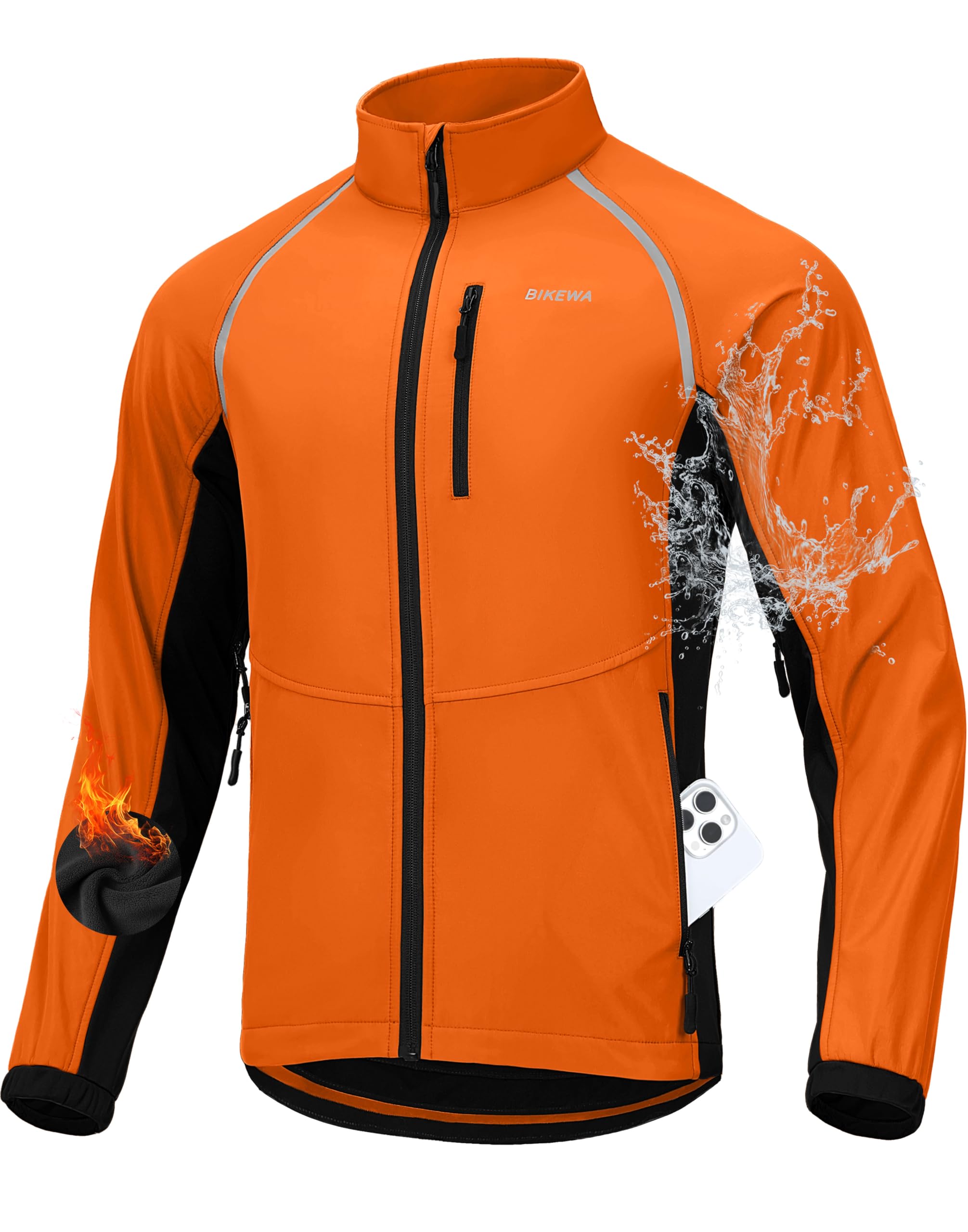
6. Bikewa Men’s Winter Cycling Jacket

8 Utility PocketsUnderarm Vents

Eight pockets and zippered underarm vents make this the go-to for long, cold, gear-heavy rides.

This jacket is engineered for cyclists who carry everything. Utility is the story here: 8 total pockets, including 2 side zippered, 1 chest zippered, 2 inner, and 3 large rear pockets big enough for winter gloves or a water bottle. Owners specifically note the chest pocket fits a phone perfectly — one confirmed his S22 Ultra slips right in — and the rear trio handles flasks and a phone for long-distance runs without needing a pack.

The warmth comes from a considered 3-layer build: a windproof outer surface, a breathable membrane film in the middle, and a soft warm fleece inside. That stack keeps you warm without overheating on a hard effort, and the underarm zipper vents let you dump heat on climbs. Owners mention staying warm on runs in the 20s-30s°F and layering it to handle 17°F. The high collar blocks wind, and the long bottom silicone waist grips form a barrier against icy gusts.

At 4.6 stars with 416 ratings, this is a solid performer, but there are trade-offs. The fabric has no stretch, so sizing matters — a buyer with a 37-inch chest fits a small, and getting a size up helps if you want to layer a bulky fleece. Some owners note the stitching isn’t top-notch, though they agree the price is worth it. It also runs a bit stiff and water-resistant rather than fully waterproof, so heavy downpours are its limit.

The payoff

  • 3-layer fabric balances windproofing with breathability
  • Rear pockets swallow gloves, bottles, and phones
  • Underarm zipper vents stop the dreaded mid-ride sweat

The trade-offs

  • No stretch in the shell — size up for bulky layers
  • Some stitching is less refined than premium brands
  • Water-resistant, not waterproof

Pick this up: for long-distance winter rides or runs where carrying gear without a backpack matters more than anything.

skip it if: you run in heavy rain or need a stretchy, form-fitting shell for high-intensity intervals.

Versatile Mid-Layer

7. Pioneer Camp Men’s Hybrid Puffer Running Jacket

Adjustable HoodGreat Mid-Layer

A lightweight insulated layer that works as a standalone runner or a mid-layer under a shell.

This jacket is all about versatility. It’s ultra-warm and water-repellent, but it’s also designed to work as a great mid-layer — you can wear it on its own for a winter run or slip it under a hard shell for extreme cold. Owners describe it as one of the warmest lightweight active-wear jackets they’ve worn, and note it’s perfect for winter running. The quality gets the most praise at 29 mentions, with fit close behind.

Key features include an adjustable hood, full zip closure, elastic cuffs, and a waist drawstring that lets you lock in warmth. The interior fabrics are designed to trap heat, and the front zippered pocket plus a large, spacious inner pocket give you room for essentials. One owner has bought it twice — the first lasted two years until a work-related tear, and he repurchased without hesitation, calling it warm, lightweight, and reliable.

The catch depends on fit. Sleeve length is a genuine issue for taller buyers — a 6’5″ owner found the XL sleeves too short to be a true XL. Sizing feedback is mixed overall, with some finding it great and others saying it runs too big in the body. If you’re tall, check the sleeve measurements carefully. And like most puffers, it favors warmth over breathability, so it’s better for steady-effort runs than high-intensity intervals.

Why it works

  • Functions as a standalone warm layer or a mid-layer under a shell
  • Water-repellent finish handles light precipitation
  • Adjustable hood and drawstring hem seal in warmth

Watch for

  • Sleeves run short for taller builds
  • Sizing is inconsistent — consult the size chart
  • Not built for high-sweat interval training

Reach for this: if you want one lightweight insulated jacket that pulls double duty as a standalone piece and a mid-layer for bitter cold.

Look elsewhere if: you’re tall and need long sleeves — verify the sleeve length before you order.

Understanding the Specs

Temperature Range

The recommended temperature range, like 20-50°F, tells you the jacket’s intended comfort zone. It assumes you’re wearing a base layer underneath, and it’s a guide — not a guarantee. A jacket rated down to 20°F will feel too warm on a 40°F day once your body heat builds up, so match the range to your local climate and your tendency to overheat.

Windproof vs. Wind-Resistant

Windproof means the fabric has a membrane or tight weave that blocks air entirely, while wind-resistant means it slows air movement but doesn’t stop it. For running, you often want windproofing on the front-facing chest panels and breathable fabric on the back, so you block the headwind without trapping your body heat and sweat.

Breathability & Ventilation

Breathability is how well the jacket lets moisture and heat escape. Look for mesh panels, zippered underarm vents, or stretchy back panels that shed heat. A jacket that can’t breathe will leave you soaked in sweat, which turns dangerous when you stop moving in cold weather.

Water-Resistant vs. Waterproof

Water-resistant fabric repels light rain and snow for a limited time, while waterproof fabric keeps you dry in a downpour. For running in winter, water-resistance is usually enough — you generate so much heat that a fully waterproof jacket often traps sweat and makes you feel clammy.

FAQ

What temperature range should a winter jogging jacket handle?
Look for a jacket with a stated range, like 20-50°F, and check your local winter lows. The range assumes a base layer underneath, so if you run warm, aim for the upper end of your typical temperatures rather than the lower end.
Is windproofing more important than insulation for running?
For running, windproofing often matters more than sheer insulation. Your body generates heat when you move, so a windproof shell that blocks the chill while letting sweat escape keeps you comfortable. A puffy jacket with no wind protection can leave you cold from the breeze even if it’s thick.
Should I size up or down for a winter running jacket?
It depends on the brand and your layering plan. Some jackets, like the baleaf men’s running jacket, run large and the maker recommends sizing down. Others, like the baleaf women’s jersey, run snug and owners advise sizing up for layers. Always check the brand’s specific sizing note before ordering.
How many pockets do I actually need for a winter run?
It depends on what you carry. A phone, gloves, and maybe a neck gaiter fit in 2-4 zippered pockets. For longer runs with a water bottle or flasks, look for 3 rear pockets in a cycling-style jacket or an 8-pocket design like the Bikewa that can swallow everything.
Can I wear a winter jogging jacket in the rain?
Only if it’s waterproof or at least water-resistant. Most running jackets are water-resistant, which handles light rain and snow but not a downpour. For heavy rain, you’d want a fully waterproof shell — but be aware these often trap sweat and are less breathable for running.
Why does my running jacket make me sweat so much?
That’s a breathability problem. A jacket that blocks all wind will also trap your body heat and moisture. Look for mesh underarm panels, zippered vents, or stretchy back fabric that lets heat escape. The best winter running jackets balance windproofing up front with breathability where you sweat most.
Are reflective elements really necessary on a winter jacket?
Yes, because winter means short daylight and many runs happen in the dark. Reflective strips on the front, back, and sleeves make you visible to drivers. Some jackets place reflectors on the arms and rear pockets for 360-degree visibility in low light, which is ideal for road running.
What’s the difference between a softshell and a puffer for running?
A softshell is a stretchy, wind-resistant outer layer that works for aerobic activity — it blocks the breeze but lets you move freely. A puffer uses insulation to trap heat, making it warmer but less breathable. For running, softshells or hybrid puffers (insulation up front, stretch in back) usually work better than a full puffer.

Final Thoughts: The Verdict

For most runners, the winter jogging jacket winner is the baleaf Men’s Cycling Winter Jacket because it balances windproof warmth with breathable vents across the recommended 20-50°F range. If you want a fitted, fleece-lined option with serious pocket space, grab the baleaf Women’s Fleece Jersey. And for high-visibility early-morning runs, the baleaf Men’s Running Jacket with its bright chartreuse shell and mesh panels is the one to reach for.

How We Picked

We do not accept paid placement. Every pick is matched to a real buyer and a real use-case; we do not hands-on test units.

Sources & Methodology

Specifications: manufacturer listings and product documentation. Review insights: verified customer reviews, as of August 2026. Pricing: not shown on this page (it changes often); check the current price via the retailer link.

As an Amazon Associate, Calories Fit earns from qualifying purchases. This does not affect which products we feature.

Related Guides

Please use a real email you check. If it's fake or mistyped, your message won't reach us and we can't reply — wrong addresses are rejected automatically.