
Our readers keep the lights on and the coffee maker working hard! As an Amazon Associate, I earn from qualifying purchases.
Specs are compiled from manufacturer listings and verified buyer reviews and can change over time — please confirm the key details on the product page before buying.
Finding a running shoe that actually holds your foot when it rolls inward is the whole game with overpronation. The right pick adds firm arch support to guide every stride; the wrong one leaves you sore from hip to heel. This guide breaks down the stability and motion-control models that genuinely help, so you can stop guessing and run comfortably.
I’m Mohammad — the founder and writer behind Calories Fit. This guide is built by comparing the manufacturers’ published specifications and the patterns across verified customer reviews, so you get each pick’s real strengths and trade-offs instead of marketing spin.
If your arches collapse and knees ache after a run, you need a shoe that controls overpronation (excessive inward foot roll). This review covers top-rated support shoes that owners say calm knees and arches, giving you an honest verdict before you spend.
Our Picks at a Glance
How To Choose The Best Women’s Running Shoes for Pronation
Overpronation means your foot rolls too far inward when it lands, which throws your whole leg out of alignment. A good stability shoe uses firmer foam or a guide rail on the inner side to slow that roll and keep your stride neutral. Think of it as a gentle hand steering your foot straight instead of letting it collapse.
Match the Support Level to Your Stride
Mild overpronation responds well to everyday stability shoes with a medial post. Severe overpronation and flat feet usually need motion-control models with a denser, more substantial support frame. If you are not sure which camp you fall into, ask a running store to watch your gait on a treadmill before you commit.
Width and Fit Matter as Much as Support
A supportive shoe that is too narrow will pinch your toes and cause new problems. Many stability models come in wide and extra-wide options, and several buyers report sizing up half a size to get enough room. Check the width options before you order, and measure your feet later in the day when they are slightly swollen.
Quick Comparison
| Model | Best For | Support Type | Midsole Drop | Weight | Amazon |
|---|---|---|---|---|---|
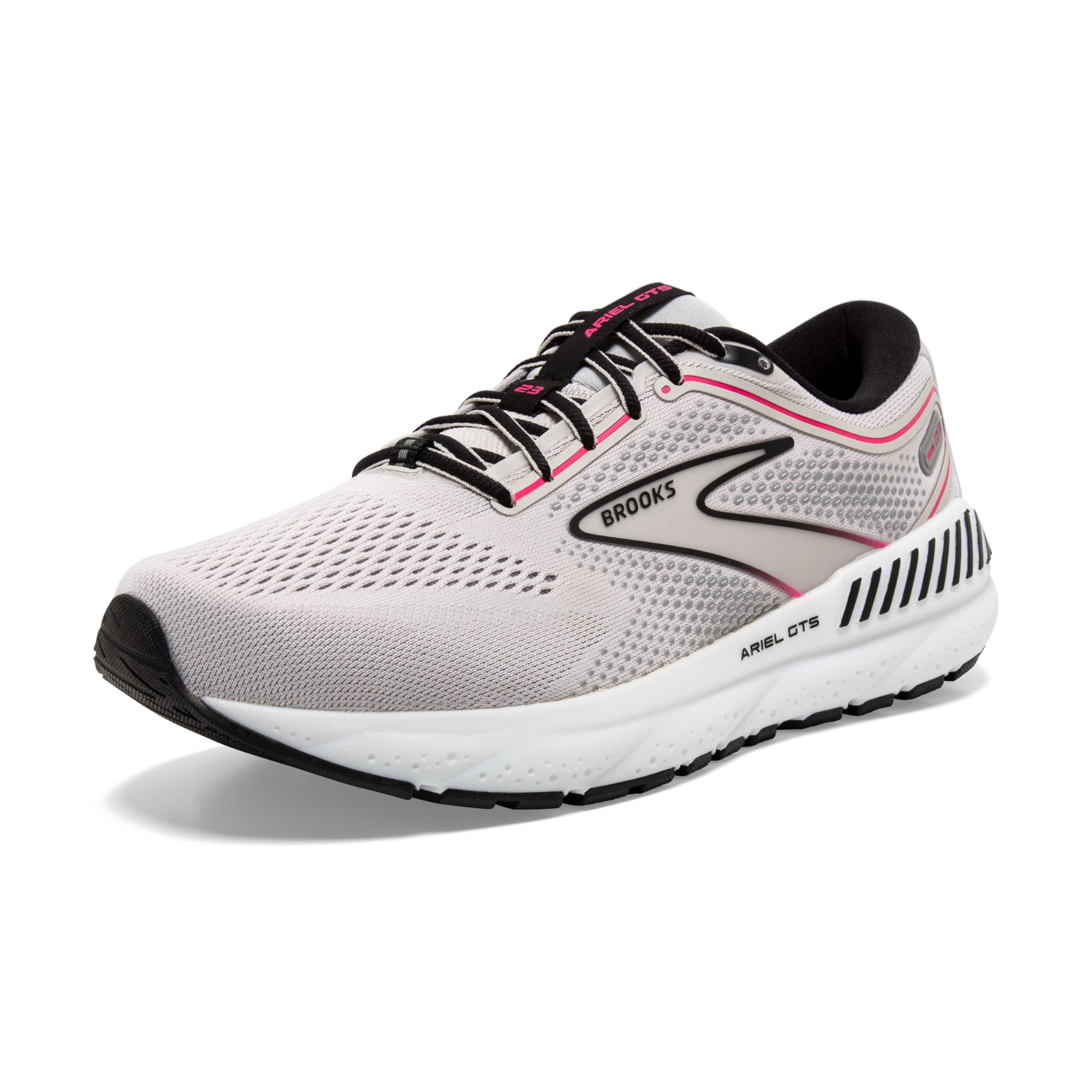
| Brooks Ariel GTS 23★ Best Overall | Maximum support and wide fit | Stability | 12mm | 10.7oz / 303.3g | Amazon |
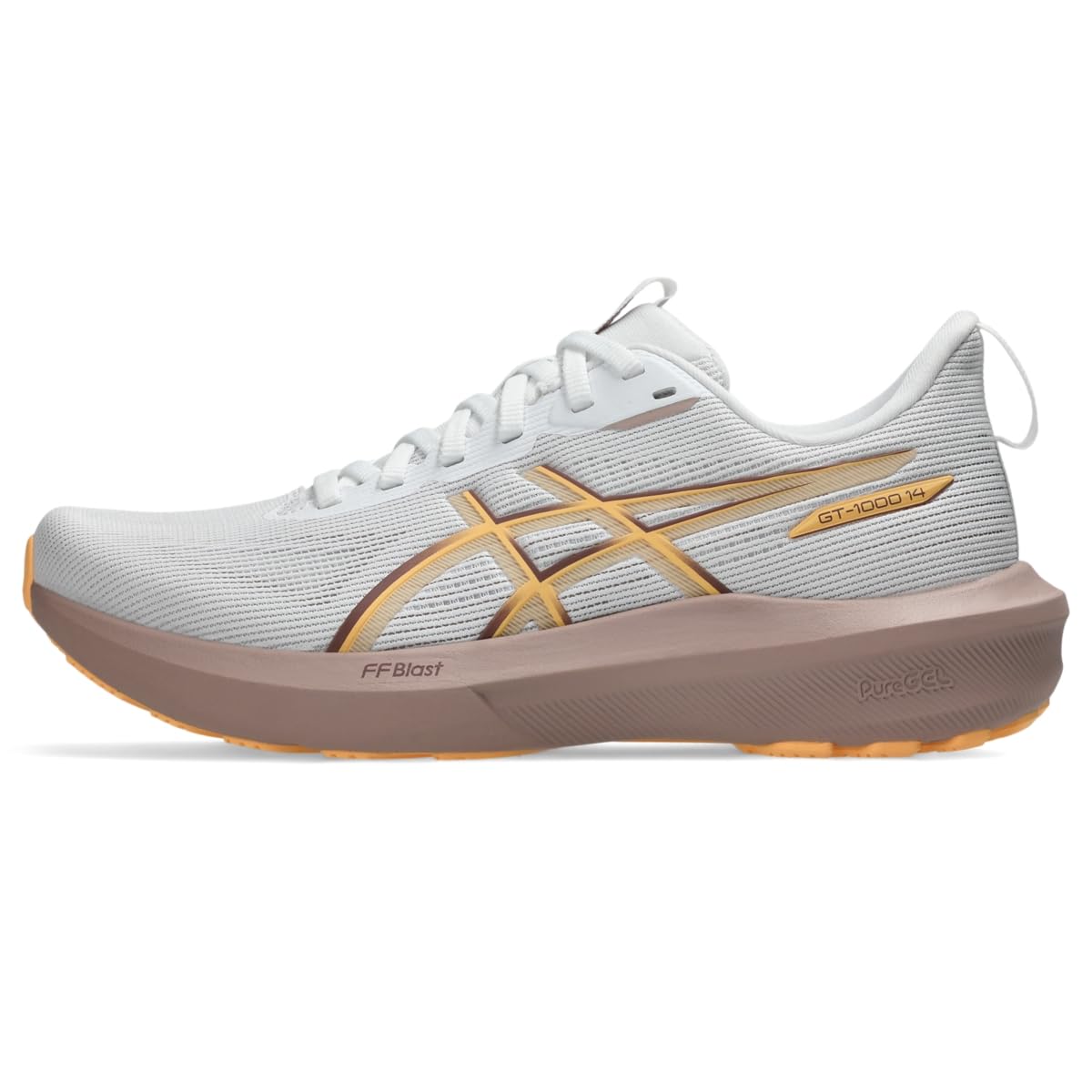
| ASICS GT-1000 14Best Value | Cloud-like cushion for narrow feet | Stability | — | 1.44 pounds | Amazon |
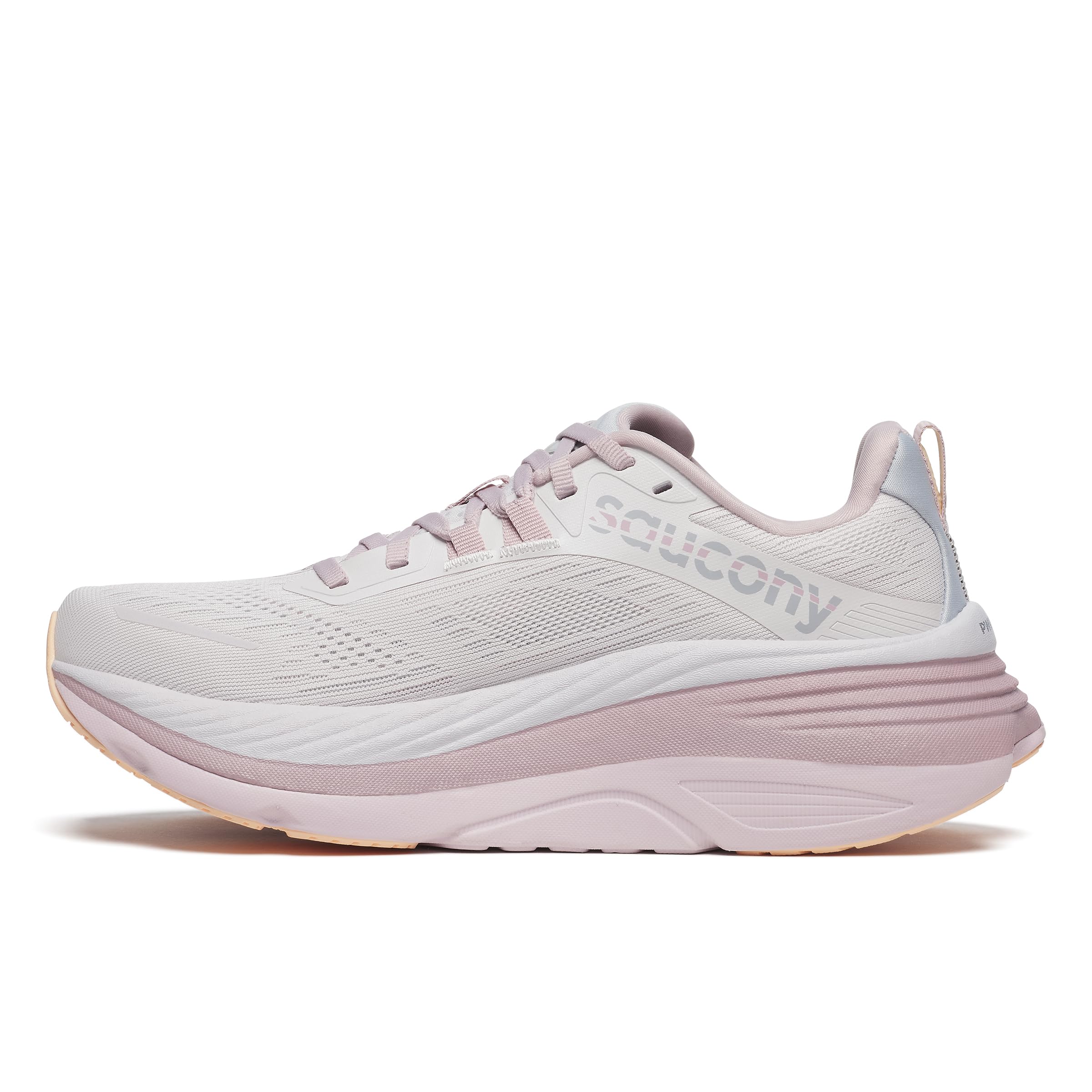
| Saucony Hurricane 24Premium Pick | Maximum cushioning for long miles | Stability | — | — | Amazon |
| Saucony Omni 21 | Dual-density comfort on a budget | Stability | — | 2.43 pounds | Amazon |
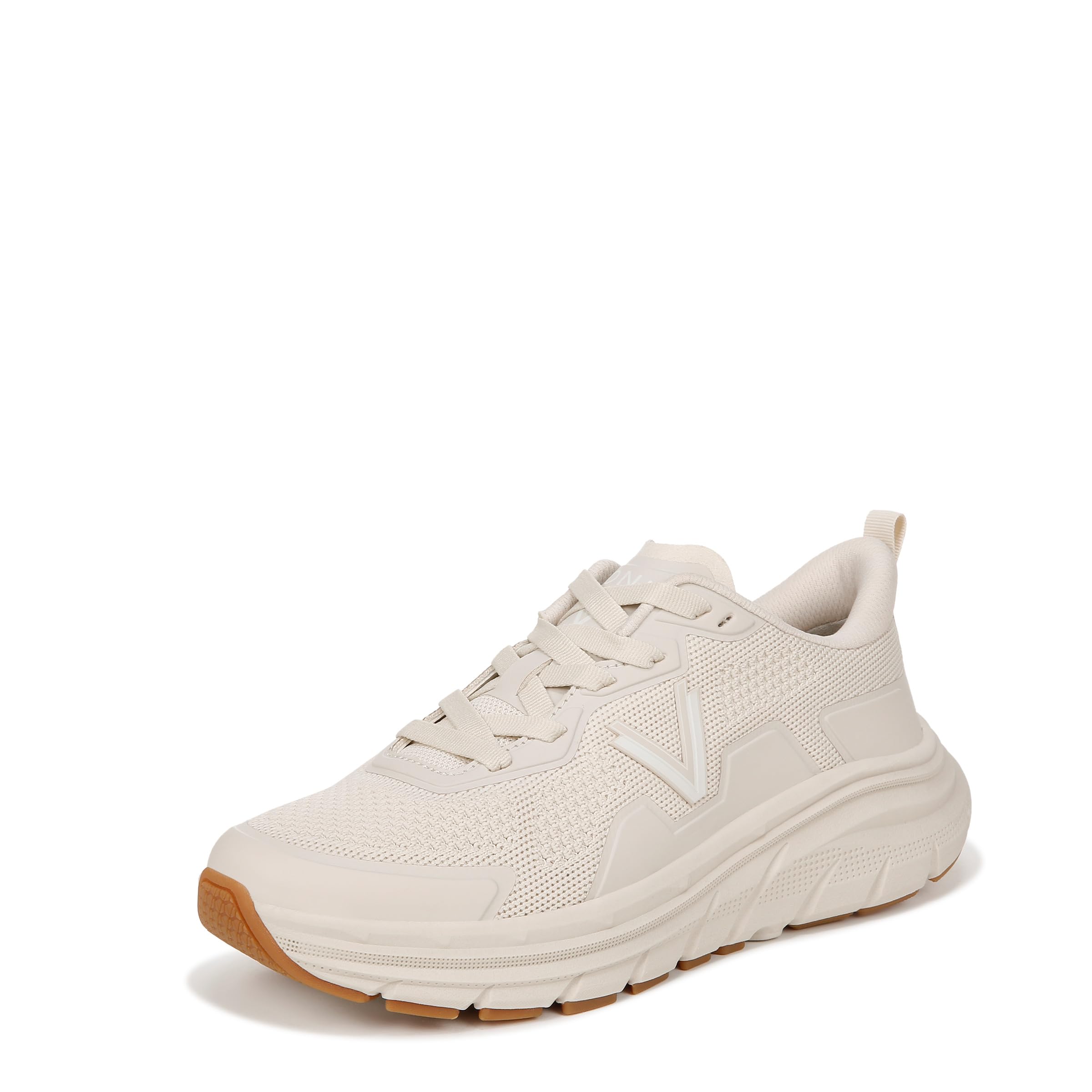
| Vionic Walk Max | All-day walking with orthotic arch support | Alignment | — | — | Amazon |
| Brooks Addiction Walker V-Strap 2 | Easy Velcro closure and leather upper | Motion Control | — | 1.8 pounds | Amazon |
| New Balance 928 V3 Hook and Loop | Stability for balance and arthritis | Motion Control | — | — | Amazon |
| Brooks Adrenaline GTS 22 | Everyday running with proven support | Stability | 12mm | 9.1oz / 258.0g | Amazon |
| Hoka Arahi 7 | Lightweight stability with plush feel | Stability | — | — | Amazon |
In‑Depth Reviews
1. Brooks Women’s Ariel GTS 23
Our pick — over 4.5★ from 800+ verified ratings; the strongest balance of quality and price.
The maximum-support workhorse that owners say ends hip, foot, and knee pain.
You get serious support with the Ariel GTS 23, which stands between your knees and the ache after a mile. Over 120 owners single out its comfort, thanks to a 12mm heel-to-toe drop (the height difference between heel and forefoot) and a stable, cushioned ride built for walking and road running.
What wins people over is the fit. It runs roomy through the toe and comes in double-wide sizes, which is rare among stability shoes. Owners mention it is “the only shoe fitting [a] wide mid-foot,” and one loyal owner notes it comfortably held up for 1.5 years of daily wear. It also accommodates orthopedic inserts without squeezing, making it a strong pick if you need extra room for custom footbeds.
The catch is that this is a heavier, stiffer shoe than the ASICS GT-1000 14, which weighs just 1.44 pounds against the Ariel’s 10.7 ounces per shoe — a real difference you feel on quick days. A few owners mention the stiffer feel takes getting used to, but for long walks and daily miles the trade-off is worth it. It holds a 4.6-star average across 800+ owners and is the model doctors and podiatrists most often recommend.
Why It Wins
- Ends hip, foot, and knee pain for most owners
- Spacious toe box with double-wide sizing options
- APMA-accepted for supportive design
The Trade-Off
- Heavier than lighter stability trainers
- Stiffer feel from the start
Grab it if: you need maximum support for overpronation and want a wide, roomy fit that lasts.
Think twice if: you want a featherlight trainer for speed work — look at the ASICS below instead.
2. ASICS Women’s GT-1000 14
The cloud-like stability shoe that disappears on your foot at a price that respects you.
Owners describe the ride as “cloud-like” — and that comes from the FF BLAST midsole (a responsive foam that returns energy with each step) plus a 3D GUIDANCE SYSTEM that adds stability without a bulky frame. It weighs just 1.44 pounds, making it noticeably lighter than the Saucony Omni 21’s 2.43 pounds, so your legs feel fresher on longer runs.
The comfort feedback is the strongest here, with over 70 owners calling it out, and the fit runs true to size for narrow feet. One buyer notes the medial buildup (a firmer section along the inner arch) “corrects overpronation” and reduces knee stress, while another highlights that the soles have good traction. It is a versatile shoe, too — owners use it for Zumba, walking, and everyday miles, not just running.
The honest downside is that ASICS fits narrow, so if you have wide feet, you will want the wide option or a different pick. Durability gets mixed reviews, though several customers note their pairs lasting at least two years. For the price, this is the best balance of support, weight, and cushioning in the lineup.
Why it shines: featherlight stability with true arch support that owners say reduces knee stress.
Who it leaves out: wide-footed runners who need more room through the midfoot.
3. Saucony Women’s Hurricane 24
Saucony’s most premium, maximum-cushion stability shoe for marathon-level comfort.
This is the shoe owners reach for when they need to log long miles without their arches or tendons screaming. The comfort is the headline — nearly 90 owners mention it — and the arch support prevents the foot and leg fatigue that usually ends a run early. One runner with plantar fasciitis and overpronation calls it “perfect for long runs,” praising the responsive cushioning that reduces fatigue.
Unlike neutral trainers, the Ariel GTS 23’s supportive platform gives excellent ankle support—one owner recovering from a sprain found the ankle collar reassuring. It runs true to size for most; one buyer notes a 9.5 fits perfectly for a typical size 9. The sage and yellow colorway earns compliments, so you do not sacrifice style for support.
The trade-off is weight — at 9.8 ounces per shoe, it is heavy enough that some owners find it tiring for speed work. The fabric quality also draws mixed notes, with one buyer reporting the reflective strip peeling. If you want a daily trainer for distance over a racer for speed, this is a standout.
Best for: runners who want maximum cushioning with genuine stability for long, slow miles.
Not for: tempo days where every ounce counts — this one is built for comfort, not speed.
4. Brooks Women’s Adrenaline GTS 22

The everyday running icon that protects your foot better than any shoe in four years.
The Adrenaline is Brooks’ most famous stability shoe, and the GTS 22 proves why. It uses GuideRails (firm foam along the sides that keeps excess motion in check) to support your knees and arches without feeling like a brick. One owner recovering from a foot injury says it “protects my foot better than any shoe in 4 years,” and the 12mm drop (the heel-to-toe height difference) keeps your stride feeling natural.
Comfort is the most-discussed strength, with over 70 owners praising it for both walking and running. It runs true to size for most, with a roomy toe box that gives your toes space to spread. The color options are a highlight too — the beige and neon leopard camo design turns heads, and the lighter pale pink is popular. It is lighter than the Ariel at 9.1 ounces, making it a better everyday trainer.
The recurring gripe is durability, with some owners reporting the shoe breaking down within a month of heavy use — though others say theirs last. Fit is also divisive: some find it true to size, others very narrow. If you get the right fit, this is a superb daily runner; if not, you will feel it on the first mile.
Reach for it if: you want a proven stability runner with style for your daily miles.
Look elsewhere if: you have wide feet — the narrow fit is the most common complaint.
5. Vionic Women’s Walk Max Sneaker
The orthotic-grade walking sneaker with a built-in arch that corrects your alignment.
Vionic is famous for podiatrist-designed footbeds, and the Walk Max delivers that in a sneaker. It uses a nitrogen-infused midsole (a lightweight foam that gives a springy rebound) plus the built-in VIO MOTION Technology footbed, which features contoured arch support and forefoot flexibility. Owners say it helps correct pronation and promotes full-body alignment — and they mention they can wear them all day without pain.
The arch support is the standout, with the footbed providing firm, cushioned comfort right from the start. The water-repellent coating (a treatment that makes water bead off on contact) means light rain is not a problem, and the breathable mesh upper keeps your feet cool. One owner with wide feet and bunions found them very comfortable, though they noted they run larger than the usual Vionic size.
The catch is fit — several owners say to size down half a size, and a couple report the tongue slides down and cuts the ankle. The traction and support are praised, but the tongue design is the recurring complaint. This is a walking shoe, not a runner, so save it for everyday wear and long walks.
What Stands Out
- Built-in contoured arch support for alignment
- Water-repellent coating for wet mornings
- Lightweight nitrogen-infused midsole with a bouncy step
What to Watch
- Runs large — size down half a size
- Tongue can slide and irritate the ankle
6. Brooks Addiction Walker V-Strap 2

The leather walking shoe with Velcro straps that gets you out the door in seconds.
If laces are a struggle, the V-Strap 2 solves that with adjustable Velcro closures that are easy to fasten and adjust. The full-grain leather upper and MoGo cushioned midsole (a foam that returns energy with each step) make this a sturdy walking shoe built for daily use. Owners say it keeps pronation under control and provides sturdy support for low arches.
Comfort is the top praise, with nearly 90 owners highlighting it for extended periods. The roomy toe box fits orthotics well, and the wide base gives great stability — one owner says 8-hour shifts on cement left no knee or foot pain. The shoes are durable, with one pair still wearable after 8 years, and the Velcro is ideal for anyone recovering from shoulder surgery.
The main caveat is fit, with owners noting the shoe runs large — most size up half a size — and the fit took multiple tries for some. A few find them difficult to walk in, and one owner reports a squeak with each step. The leather does not breathe like mesh, so they run warm. This is a walking shoe, not for running.
Best if: you need easy on-and-off access and durable leather support for everyday walking.
skip it if: you want a breathable trainer for actual running — this is a walker.
7. New Balance 928 V3 Hook and Loop
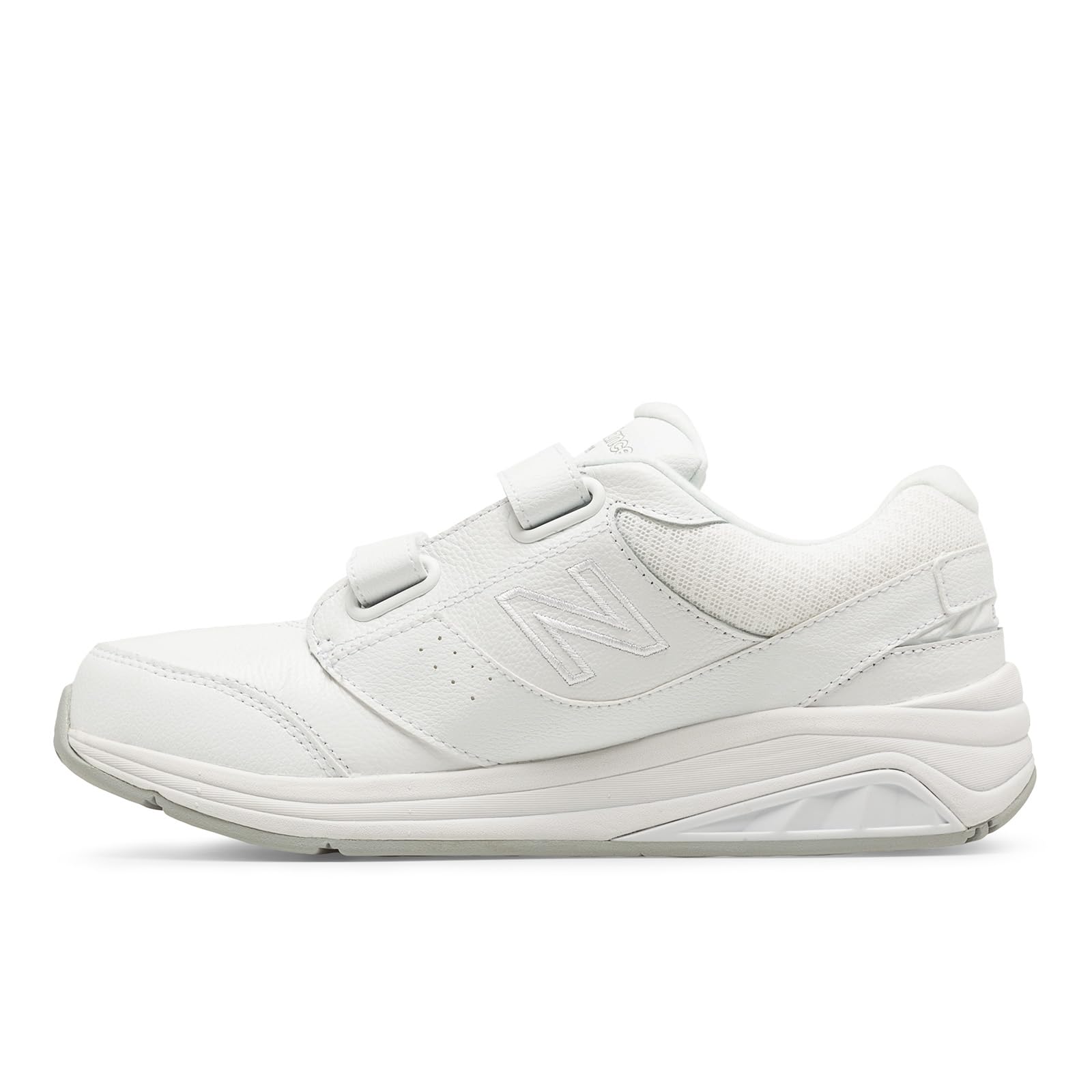
The stability walker that owners with balance issues and arthritis swear by.
The 928 V3 is a motion-control walking shoe, which means it offers the firmest level of support for severe overpronation and flat feet. The Velcro hook-and-loop closure is a blessing for anyone with arthritis in their fingers — one owner with balance trouble says the shoes give them stability and are easy to fasten. It comes in X-XXX wide widths, accommodating feet of all shapes.
Reviewers point out the arch support provides stability to their gait, and the shoes work well with custom orthotics. It is a relief for serious foot issues — one buyer with bunions, flat feet, and arthritis found them pain-free. The shoes are lightweight with soft leather, and the rollbar support (a firm piece along the midsole) keeps the foot from rolling inward.
The honest downside is that heels can slip off during exercises like planks, and the soles harden after about a year of heavy use. The fit runs wide, which is great for wide feet but may be too roomy for narrow ones. As a walking shoe, it is not built for running, and the brand’s sizing consistency has drawn a few negative notes.
Who it serves: walkers with severe overpronation, balance issues, or arthritis who need a firm, easy-to-fasten shoe.
Who it misses: runners and narrow-footed buyers looking for a snug athletic fit.
8. Saucony Women’s Omni 21
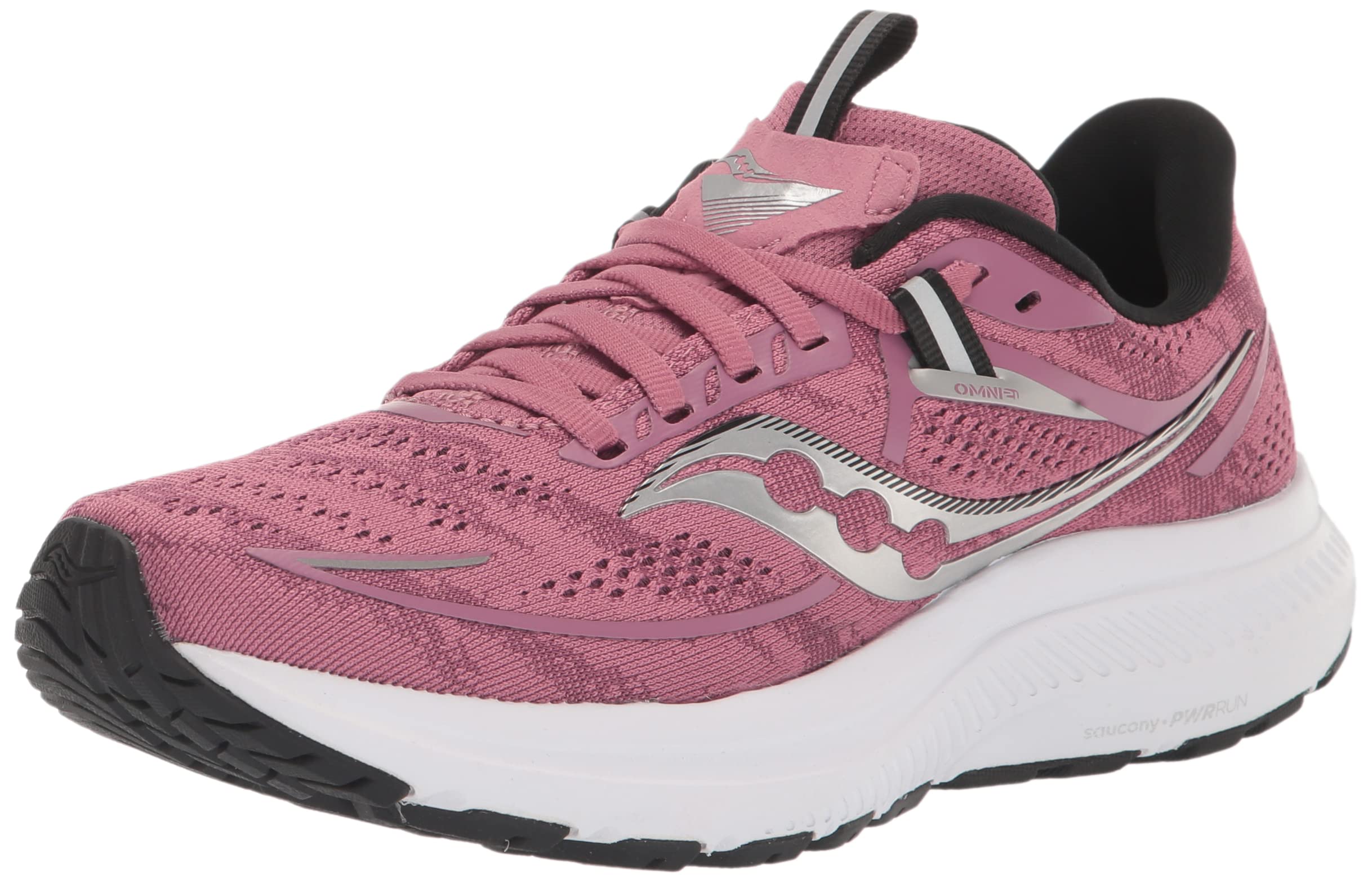
The dual-density support shoe that delivers solid value without the premium price tag.
The Omni 21 is Saucony’s workhorse stability trainer, using dual-density PWRRUN cushioning (two foam densities — one softer for comfort, one firmer for support) to guide your foot. Owners call it comfortable with good cushioning, and one buyer notes they were pleased to get it at nearly half price. It runs true to size and offers good arch support.
The comfort is the most-praised feature, with over 65 owners highlighting it. The shoe feels stable during daily walks and long runs, and the wide toe box is forgiving — one owner with a bunion found the soft mesh comfortable. The grey color hides dirt well, making it a practical everyday choice. One buyer with plantar fasciitis reports the support works well, and orthotics fit fine with a half size up.
The catch is durability, with some owners reporting the shoes coming apart within 10 weeks. The fit is also inconsistent — this model runs narrower than previous Omni versions, which disappointed loyal buyers. It is heavier than the ASICS GT-1000 14 at 2.43 pounds compared to 1.44 pounds, so it is not the lightest option. For the price, it is a solid value if you get a good pair.
The Strong Points
- Comfortable dual-density cushioning for support
- Good arch support that works with orthotics
- Value pricing for a stability shoe
The Weak Points
- Durability concerns — some fail within 10 weeks
- Runs narrow compared to older Omni models
9. Hoka ONE ONE Womens Arahi 7
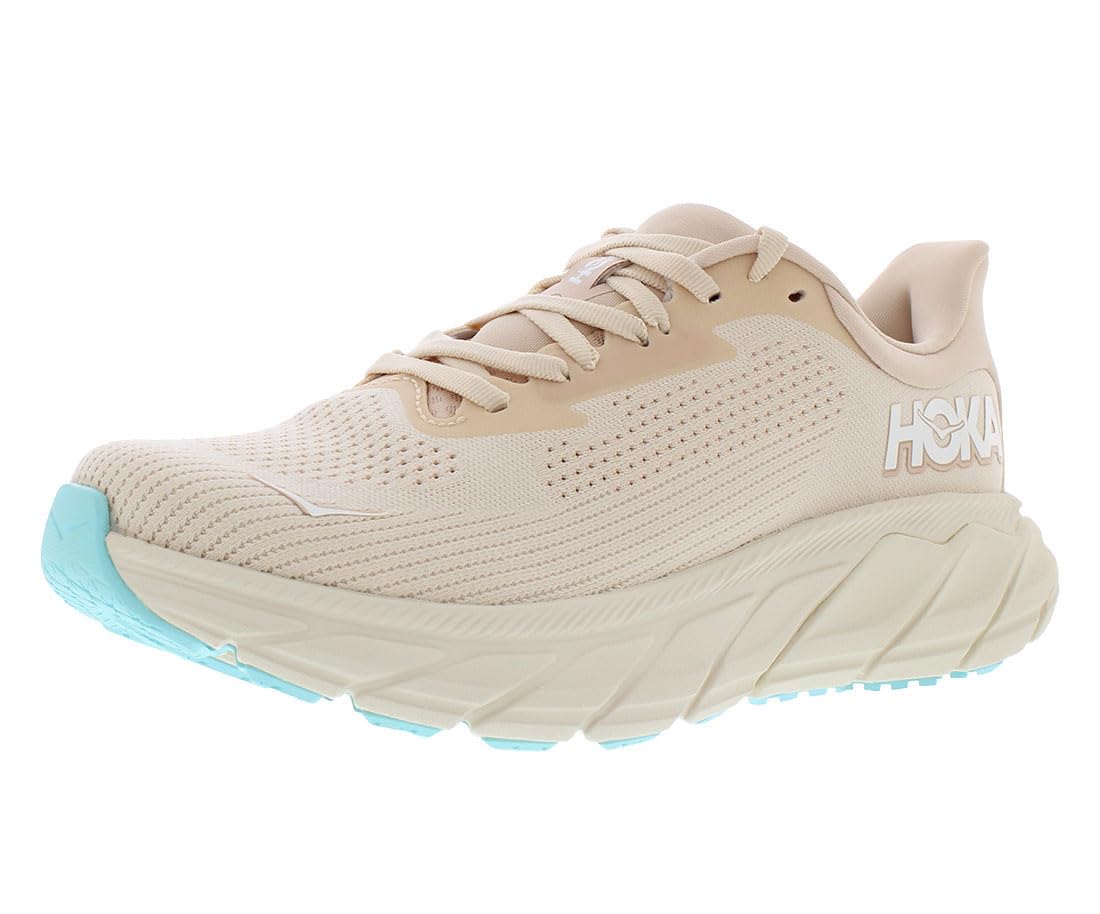
The lightweight stability shoe that feels plush but holds your foot firmly in line.
The Arahi 7 uses Hoka’s patented Frame technology — a firmer foam cradle that wraps the foot and slows overpronation without the heavy, stiff feel of traditional stability shoes. It is the lightest-feeling stability shoe here, and owners praise the comfort, with over 120 highlighting it. One runner with a posterior tibial tendon injury says it “significantly reduced” their pain and fully supports the foot.
The fit is fine-tuned with a flat knit upper (a one-piece mesh that stretches to your foot shape) and a plusher tongue with a dual gusset to stop it slipping. Owners say the arch support is great and the firm footbed keeps them stable. It is a favorite for teachers who are on their feet all day, and the color options earn compliments. One buyer notes they can wear them through the day despite having “bad feet.”
The honest trade-off is the fit, which some find too narrow, and the price, which several owners feel is steep — though most agree it is “worth the money” for the comfort. A few report the inner heel fabric rubbing off after about six months. The cushioning is firmer than Hoka’s neutral shoes, which suits stability but may feel stiff to some.
Go with it if: you want modern, lightweight stability with a plush feel for road running.
Pass on it if: you have wide feet — the narrow fit is the top complaint.
Understanding the Specs
Heel-to-Toe Drop
This is the height difference in millimeters between the heel and the forefoot of the shoe. A 12mm drop means your heel sits 12mm higher than your toes, which encourages a heel-first stride and takes strain off your calf. Lower-drop shoes around 6-8mm promote a midfoot strike but require more calf strength. For overpronators, the 12mm drop in the Brooks Ariel and Adrenaline helps keep your stride controlled and your Achilles comfortable.
Support Systems
Stability shoes use different tech to control inward rolling. A medial post is a firmer wedge of foam along the inner arch. GuideRails (Brooks) are firm rails along both sides that keep excess motion in check. Hoka’s Frame technology wraps the foot in a firmer cradle. All three do the same job — gently steering your foot straight — but they feel different, so it is worth trying both a posted shoe and a rail shoe to see which you prefer.
FAQ
How do I know if I overpronate?
What is the difference between stability and motion control shoes?
Should I size up in stability running shoes?
Can I use custom orthotics with these shoes?
How long do stability running shoes last?
Are these shoes good for walking as well as running?
What does a 12mm drop feel like versus a lower drop?
Why are stability shoes heavier than neutral shoes?
Can I run marathons in these shoes?
What if I have plantar fasciitis and overpronate?
Final Thoughts: The Verdict
For most runners, the women’s running shoes for pronation winner is the Brooks Ariel GTS 23 because it delivers maximum support with a roomy, wide-friendly fit that owners say genuinely ends hip, foot, and knee pain. If you want a lighter, cloud-like feel with true arch support at a friendlier price, grab the ASICS GT-1000 14. And for maximum cushioning on long-distance miles where comfort trumps weight, the Saucony Hurricane 24 is the one to reach for — the stability you need and the plush ride you want, all in one.
How We Picked
We do not accept paid placement. Every pick is matched to a real buyer and a real use-case; we do not hands-on test units.
Sources & Methodology
Specifications: manufacturer listings and product documentation. Review insights: verified customer reviews, as of August 2026. Pricing: not shown on this page (it changes often); check the current price via the retailer link.
As an Amazon Associate, Calories Fit earns from qualifying purchases. This does not affect which products we feature.