
Our readers keep the lights on and the coffee maker working hard! As an Amazon Associate, I earn from qualifying purchases.
Specs are compiled from manufacturer listings and verified buyer reviews and can change over time — please confirm the key details on the product page before buying.
For women backpacking, a sleeping bag’s temperature rating, weight, and pack size are the holy trinity. But the fit—whether it’s actually cut for a woman’s shoulders and hips and not just a men’s bag in a different color—makes the difference between shivering all night or sleeping like a log. This guide cuts through the marketing to find bags that genuinely deliver thermal efficiency, low weight, and a women-specific shape, so you can carry less and sleep warmer.
I’m Mohammad — the founder and writer behind Calories Fit. This guide is built by comparing the manufacturers’ published specifications and the patterns across verified customer reviews, so you get each pick’s real strengths and trade-offs instead of marketing spin.
You’re here to find the right women’s backpacking sleeping bag that balances warmth, weight, and a true women’s fit for your adventures.
Our Picks at a Glance

How To Choose The Best Women’s Backpacking Sleeping Bag
Choosing a sleeping bag for the trail means prioritizing a few key specs that determine how well you sleep and how much you carry. The right bag balances warmth and weight so you can carry it comfortably on the trail.
Temperature Rating Matters More Than You Think
The temperature rating (e.g., 20°F) is a survival limit, not a comfort rating. Women typically sleep colder than men, so look for a bag rated 10-15 degrees lower than the coldest night you expect. This ensures you sleep comfortably, not just survive the night.
Down vs. Synthetic Fill: The Core Trade-off
Down fill (measured in fill power, like 550 or 600) is lighter and compresses smaller. Synthetic fill is cheaper and keeps insulating even when wet. For most backpackers, the weight savings of down outweigh the wet-weather advantage of synthetic.
Quick Comparison
| Model | Best For | Temperature Rating | Fill Material | Weight | Amazon |
|---|---|---|---|---|---|
| Kelty Cosmic 20★ Best Overall | All-around backpacking | 20°F | 550 Fill Down | 3 pounds | Amazon |
| Marmot Trestles 15 | Car & camp comfort | 15°F | Insulated (Synthetic) | 4.37 pounds | Amazon |
| Sierra Designs Cloud 20 | Ultralight minimalists | 20°F | DriDown | 1.9 pounds (0.86 kg) | Amazon |
| deuter Exosphere -10° SL | Extreme cold comfort | -10°C / 14°F | Polyester (Synthetic) | 4.1 pounds | Amazon |
In‑Depth Reviews
1. Kelty Cosmic 20 Down Mummy Sleeping Bag
Our pick — over 4.5★ from 100+ verified ratings; the strongest balance of quality and price.
The best-selling down bag that delivers reliable warmth at a budget-friendly price.
The Kelty Cosmic 20 is the bag owners rave about for its warmth—the thing everyone praises most is how toasty it stays. The 550 fill DriDown insulation is light and compressible, so it packs down small enough to not dominate your pack. At 3 pounds, it’s a solid middle-ground choice for hikers who want down’s warmth-to-weight ratio without paying premium prices.
Trapezoidal baffle construction (the internal channels that hold the down in place) improves heat retention, and the women’s fit keeps extra insulation where your body needs it most. Buyers report one daughter took it on an April trip to Virginia and “it kept her warm in 16° weather”—real-world proof it handles freezing temps. The dual zippers let you unzip from the bottom to stick a foot out for temperature control, and the internal stash pocket is perfect for a phone or headlamp.
The main trade-off is weight versus portability—some owners mention it’s heavier than expected at 3.5 lbs. Compared to the Sierra Designs Cloud 20 below, the Kelty is a different beast entirely: it’s the do-it-all veteran, not an ultralight specialist.
What Wins People Over
- Warmth is the #1 praise—great for freezing nights
- Soft, quality zippers that don’t snag
- Women’s cut adds warmth and comfort
Fair Warning
- A few find it heavier than expected at 3.5 lbs
- Unsure in extreme cold below 30°F
Perfect Match: First-time backpackers and seasoned campers who want a reliable, warm down bag for three-season use.
Consider Skipping: Ultralight hikers counting every ounce—the Sierra Designs is more than a pound lighter.
2. Marmot Women’s Trestles 15° Sleeping Bag

Cold-natured women who want a warm, roomy bag for camp-outs.
The Marmot Trestles 15 makes no apologies for its bulk—it’s built for pure warmth and comfort. Weighing in at 4.37 pounds, it’s the heaviest of the four, but that weight buys serious insulation that buyers confirm keeps them warm. Even a woman who said she gets “REALLY cold” admitted she’d be comfortable with just “sweats and a sweater” instead of layers.
Its water-resistant synthetic insulation is a blessing for damp climates where down would fail. The women’s-specific left-zip design and spacious cut give you room to move without feeling cramped. Owners praise the quality and the color, though one noted the bright top fabric reflects moonlight and sunrise, acting like a muted nightlight inside the tent.
The honest trade-off is pack size—buyers describe it as “bastante grande y voluminoso” (quite large and bulky) even in its compression sack. This is a car-camp or base-camp champion rather than a long-haul backpacking hero.
Real-World Warmth: Buyers consistently confirm it keeps you warm to freezing temps, even for the coldest sleepers.
Heads-Up: The 4.37-lb weight and large packed size make it better for shorter carries than epic trail miles.
Ideal For: Campers and car-campers who prioritize roomy comfort and warmth over minimal weight.
Not For: Ultralight hikers—the 4.37-lb weight versus the Kelty’s 3 pounds.
3. Sierra Designs Cloud 20 DriDown Sleeping Bag

The ultralight zipperless quilt designed for side sleepers who want freedom of movement.
The Sierra Designs Cloud 20 is the ultralight dream for those who count every ounce. Weighing just 1.9 pounds (0.86 kg), it’s significantly lighter than the Kelty’s 3 pounds and the Marmot’s 4.37 pounds. It’s the most packable of the group, compressing small enough to disappear into your backpack.
Its genius is the zipperless design—a hybrid quilt that tucks in around you instead of zipping. The foot vent pouch is a standout feature, letting you poke your feet out to dump heat during temperature swings. The DriDown insulation (down treated to resist moisture) handles frost well, and the pad sleeve keeps the bag from twisting around you while you sleep.
What wins people over is the comfort and lightweight feel. Customers note staying “warm to 23°F with silk liner + hot water bottle.” The trade-off? It fits a 5’8″ frame well, and the minimalist foot area may feel tight for those who move around a lot at night. The maximum height recommendation is 68 inches, so taller hikers should look elsewhere.
Why It’s a Favorite
- Ultra-light at just 1.9 pounds (0.86 kg)
- Zipperless design means no snagging, ever
- Foot vent pouch is genius for temperature swings
Consider This
- Foot area is minimalist—may feel claustrophobic
- Cold shock when exiting the bag
Grab It If: You’re a side-sleeping ultralight hiker who wants maximum warmth per ounce and hates fighting zippers.
Think Twice If: You’re over 5’8″ or need a roomy foot box for active sleepers.
4. deuter Exosphere -10° SL Sleeping Bag
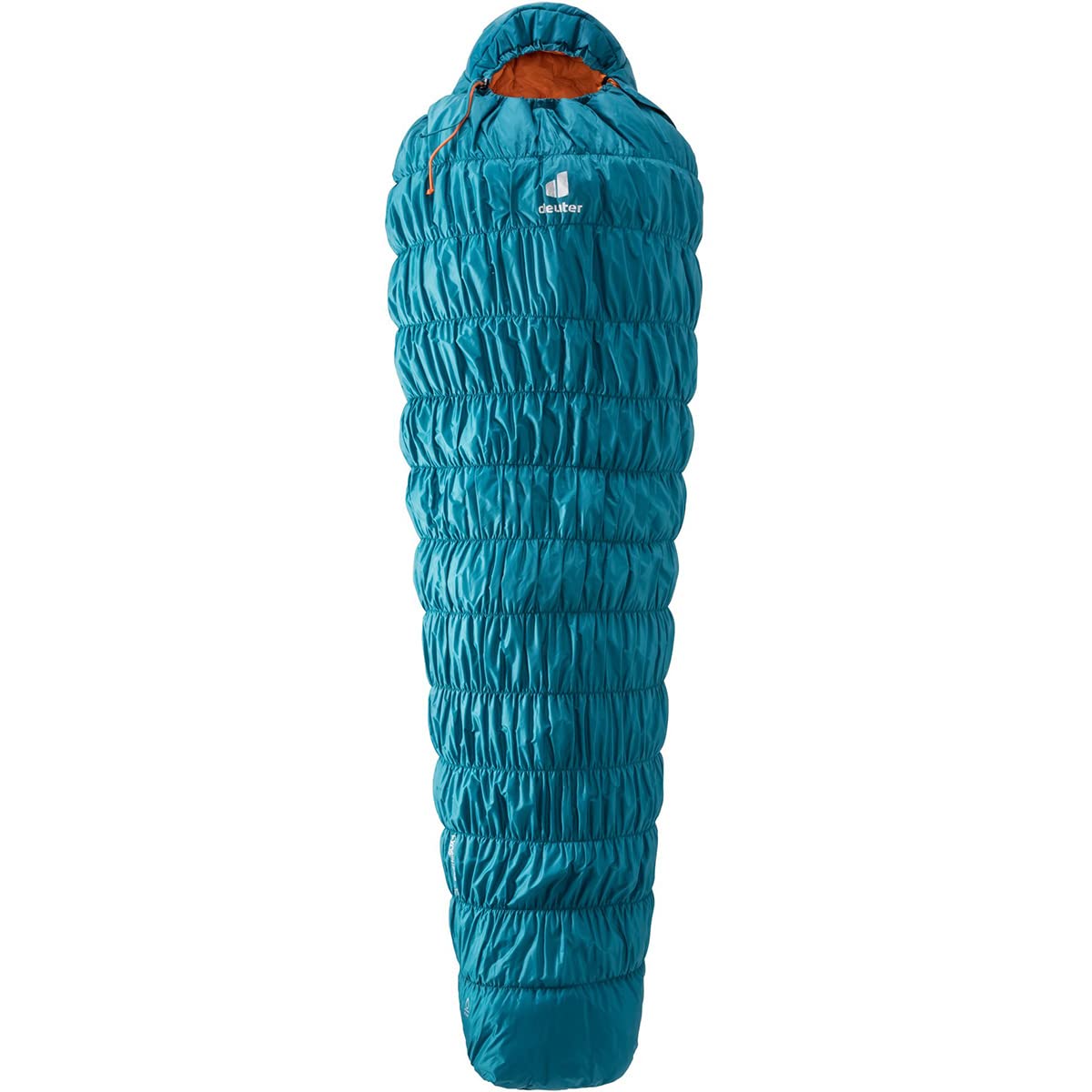
The warmest synthetic bag here, built for sub-zero expeditions.
The deuter Exosphere -10° SL is the brute-force solution for sub-zero camping. Rated to -10°C (14°F), it’s the coldest-rated bag here, and buyers confirm its power—one owner slept in 0°C weather with only a thin legging and blouse and felt no cold at all. The “SL” designation means it’s designed specifically for women, with fleece inserts in cold-sensitive areas like the back and feet.
Its sophisticated “shingle-like” construction with a 1.3 layer overlap traps heat efficiently, while the Thermo Stretch Comfort fabric hugs your body and stretches to move with you. The ergonomic hood with multiple drawstrings seals in warmth around your head and shoulders.
The honest downside is weight and dimensions—the women’s fit is rated for a maximum height of 67 inches, so taller women will find it too small. And at roughly 4.1 pounds with an item dimension of 21.65″L, it’s bulkier and heavier than the down options. One buyer wished for a taller version, noting it wasn’t the lightest but was manageable with a compression sack.
Arctic-Ready Warmth: Owners consistently confirm it keeps you warm at 0°C with minimal layers—that’s the headline feature.
Fit Check: Designed for women up to 67 inches (175 cm); taller campers should steer clear.
Pick This For: Winter bivouacs, mountain missions, and very cold sleepers who need maximum synthetic warmth and stretchy comfort.
Pass If: You’re over 5’7″ or prioritize minimal pack weight—this is the heavyweight champion.
Understanding the Specs
Temperature Rating
The temperature rating tells you the lowest temp you can survive, not the temp you’ll sleep comfortably. For women, aim for a bag rated 10-15°F lower than your coldest planned night. A 20°F bag is a good three-season choice; a 15°F or lower rating is better for shoulder-season or winter camping.
Fill Power & Material
Down fill (measured in fill power like 550 or 600) is lighter and more compressible but loses insulation when wet. DriDown is treated to resist moisture. Synthetic fill is heavier but keeps you warm even when damp. For backpacking, down offers the best warmth-to-weight; for wet climates, synthetic wins.
FAQ
How is a women’s sleeping bag different from a unisex one?
What temperature rating do I need for summer backpacking?
Is down or synthetic fill better for backpacking?
How should I store my sleeping bag?
Can I wash my sleeping bag in a washing machine?
What’s a mummy bag shape?
How do I know if a sleeping bag fits my height?
Is a zipperless sleeping bag a good idea?
Final Thoughts: The Verdict
For most people, the women’s backpacking sleeping bag winner is the Kelty Cosmic 20 because it blends down warmth, a true women’s cut, and a backpack-friendly 3-pound weight at a price that doesn’t scare off beginners. If you want the ultralight featherweight, grab the Sierra Designs Cloud 20. And for for extreme-cold missions, the deuter Exosphere -10° SL is the one to reach for.
How We Picked
We do not accept paid placement. Every pick is matched to a real buyer and a real use-case; we do not hands-on test units.
Sources & Methodology
Specifications: manufacturer listings and product documentation. Review insights: verified customer reviews, as of August 2026. Pricing: not shown on this page (it changes often); check the current price via the retailer link.
As an Amazon Associate, Calories Fit earns from qualifying purchases. This does not affect which products we feature.