
Our readers keep the lights on and the coffee maker working hard! As an Amazon Associate, I earn from qualifying purchases.
Specs are compiled from manufacturer listings and verified buyer reviews and can change over time — please confirm the key details on the product page before buying.
If your feet roll inward when you run, you need a shoe that actively guides your stride, not just a cushioned sole. The best women’s running shoes for overpronation use a firmer midsole and support posts to keep your foot aligned, which eases strain on your knees, hips, and lower back. This guide breaks down the top stability and motion-control shoes, matching each one to a specific foot shape, arch type, and running routine so you can buy with confidence.
I’m Mohammad — the founder and writer behind Calories Fit. This guide is built by comparing the manufacturers’ published specifications and the patterns across verified customer reviews, so you get each pick’s real strengths and trade-offs instead of marketing spin.
You need a shoe that stops your foot from rolling inward too much (that’s overpronation), and the right pick depends on how much support your arch needs and how the shoe fits your foot. This guide matches each model to your foot shape and running routine, so you find the one that keeps you comfortable mile after mile.
Our Picks at a Glance
How To Choose The Best Women’s Running Shoes for Overpronation
Overpronation means your ankle rolls inward too much with each step, which can make your knees and hips work harder than they should. A stability shoe uses a firmer section of foam on the inside of the sole to slow that roll and keep your foot aligned.
Stability vs. Motion Control
Stability shoes are the middle ground — good for mild to moderate overpronation, with a supportive post and moderate cushioning. Motion control shoes go further, with a firmer, denser sole and a wider base for severe overpronation or flat arches. If you need maximum guidance, look for the motion control label rather than a standard stability shoe.
Arch Height and Fit
Your arch shape decides how much support you need. Flat feet typically need more structure, while high arches often prefer a softer ride with a pronounced arch bed. Fit matters just as much: several of these models run narrow or small, so check the width options and consider sizing up half a size if you plan to run long distances.
Quick Comparison
| Model | Best For | Support Level | Heel Drop | Weight | Amazon |
|---|---|---|---|---|---|
| Brooks Ariel GTS 23★ Best Overall | Severe overpronation & wide feet | Motion Control | 12mm | 10.7 oz / 303.3g | Amazon |
| ASICS GT-1000 14Best Value | Budget stability & narrow feet | Stability | — | 1.44 lbs | Amazon |
| ASICS Gel Kayano Lite 2Eco Pick | Eco-friendly daily training | Stability | — | 3 lbs | Amazon |
| Saucony Guide 17 | Roomy toe box & long runs | Stability | — | 1.5 lbs | Amazon |
| Mizuno Wave Inspire 21 | High arches & plantar fasciitis | Stability | — | — | Amazon |
| New Balance 860 V13 | All-day comfort & walking | Stability | — | 3 lbs | Amazon |
| New Balance 860v15 | Healthcare workers on their feet | Stability | — | 2.1 lbs | Amazon |
| Hoka Arahi 7 | Plush support & recovery | Stability | — | 3 lbs | Amazon |
In‑Depth Reviews
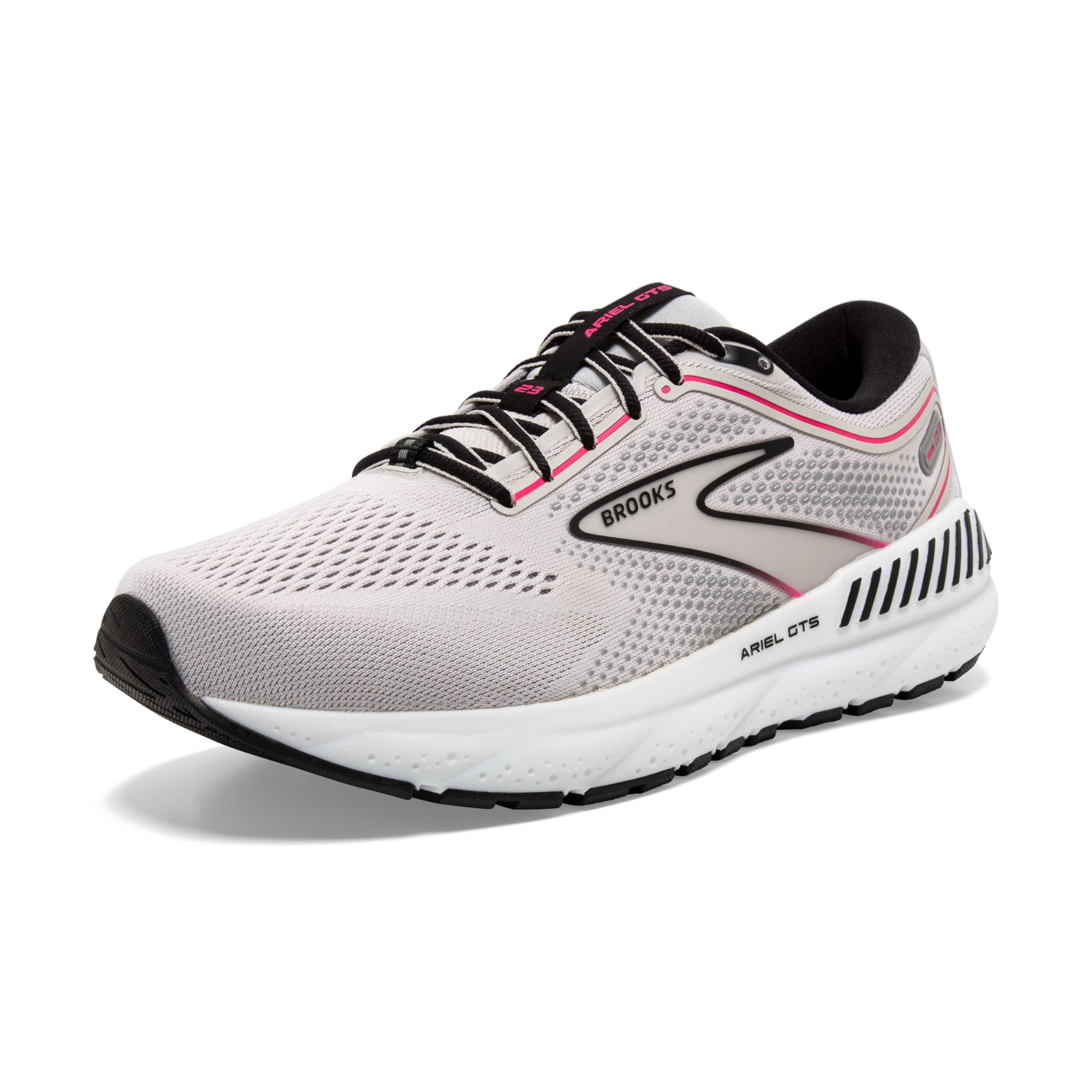
1. Brooks Women’s Ariel GTS 23 Supportive Running Shoe
Our pick — over 4.5★ from 800+ verified ratings; the strongest balance of quality and price.
The motion-control heavyweight that carries you through 12-hour workdays without a foot ache.
The Ariel GTS 23 is the pick when your overpronation is severe and you need maximum structure. It holds the APMA seal and PDAC A5500 Diabetic Shoe classification, signaling medical-grade support. At 10.7 oz / 303.3g it is not the lightest shoe here, but that weight translates into a dense, grounded feel that owners say wipes out hip, foot, and knee pain.
Comfort is the thing everyone raves about — the most echoed point in the review pool by a wide margin. The toe area is genuinely spacious, and it comes in double-wide sizes, which is rare for a stability shoe. Buyers report wearing it daily for 1.5 years in active jobs with no foot ache afterward. The 12mm midsole drop (the height difference between heel and toe) makes it a natural fit for walking and road running, where that slight heel elevation encourages a smooth roll-through.
The honest trade-off: it is firmer and stiffer than other Brooks models, so if you want a softer, more flexible ride, the Ariel will feel like a tank at first. That stiffness is exactly what motion control requires, though. The durability scores read as mixed in the reviews, so treat the outsole kindly, but the consensus is clear — for wide feet and serious pronation, this is the benchmark.
Why it wins
- APMA-accepted and rated as a PDAC A5500 diabetic shoe
- Available in double-wide widths for roomy fit
- 12mm drop suits walking and road running
Know before you buy
- Stiffer than other Brooks models
- Lighter than the GT-1000 14 at 10.7 oz vs 1.44 lbs
Reach for this if: you have severe overpronation or wide feet and spend hours on your feet each day.
Look elsewhere if: you want a flexible, featherlight trainer — the Saucony Guide 17 below is a better match.
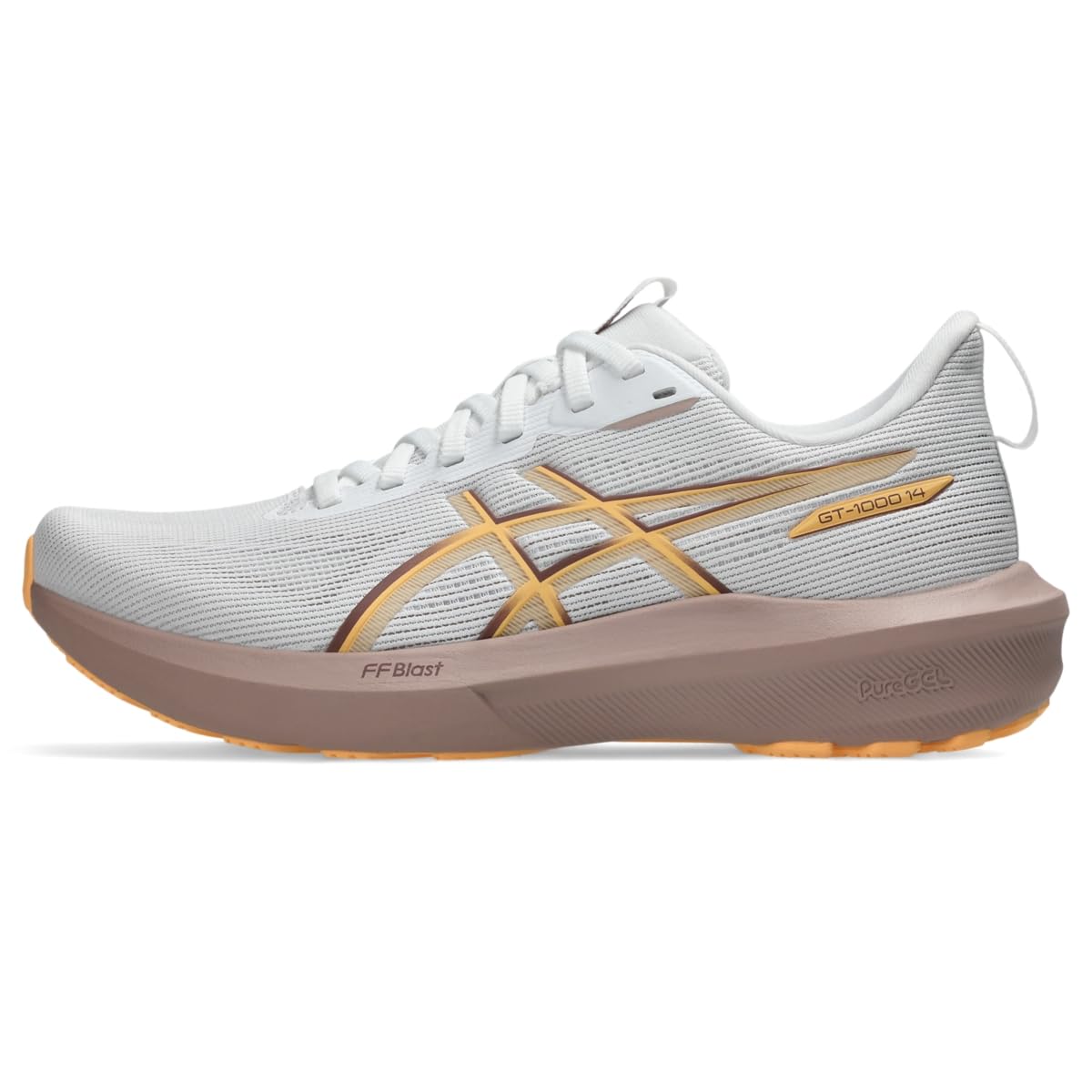
2. ASICS Women’s GT-1000 14 Running Shoes
A budget stability shoe that feels like it cost twice as much, and vanishes on your foot.
The GT-1000 14 is the entry point into ASICS’ stability line without sacrificing the tech that matters. The FF BLAST midsole delivers a cloud-like feel and an energized bounce, while the 3D GUIDANCE SYSTEM boosts stability for a smooth, confident ride. At 1.44 pounds it is dramatically lighter than the Gel Kayano Lite 2
Fit is the second-most praised trait here, and it leans narrow — which is great news if your feet are on the slimmer side. Owners mention no foot fatigue and superb arch support, with one likening the cushion to walking on a cloud. Durability is a recurring theme: customers note ASICS pairs lasting at least 2 years, which makes this an exceptional value for the price bracket.
The catch: the sole extends width-wise around the heel more than some prefer, and one buyer found the accent color reads as sherbet orange rather than gold. Neither affects performance, but check the colorway photos if that matters to you. The upper is breathable, the traction is solid, and for the money, this is the smartest stability buy in the lineup.
Best for: runners who want genuine stability tech at a budget-friendly price, especially those with narrow to medium feet.
Trade-off: the heel sole flares a bit wide, and lighter colors show wear faster than black.
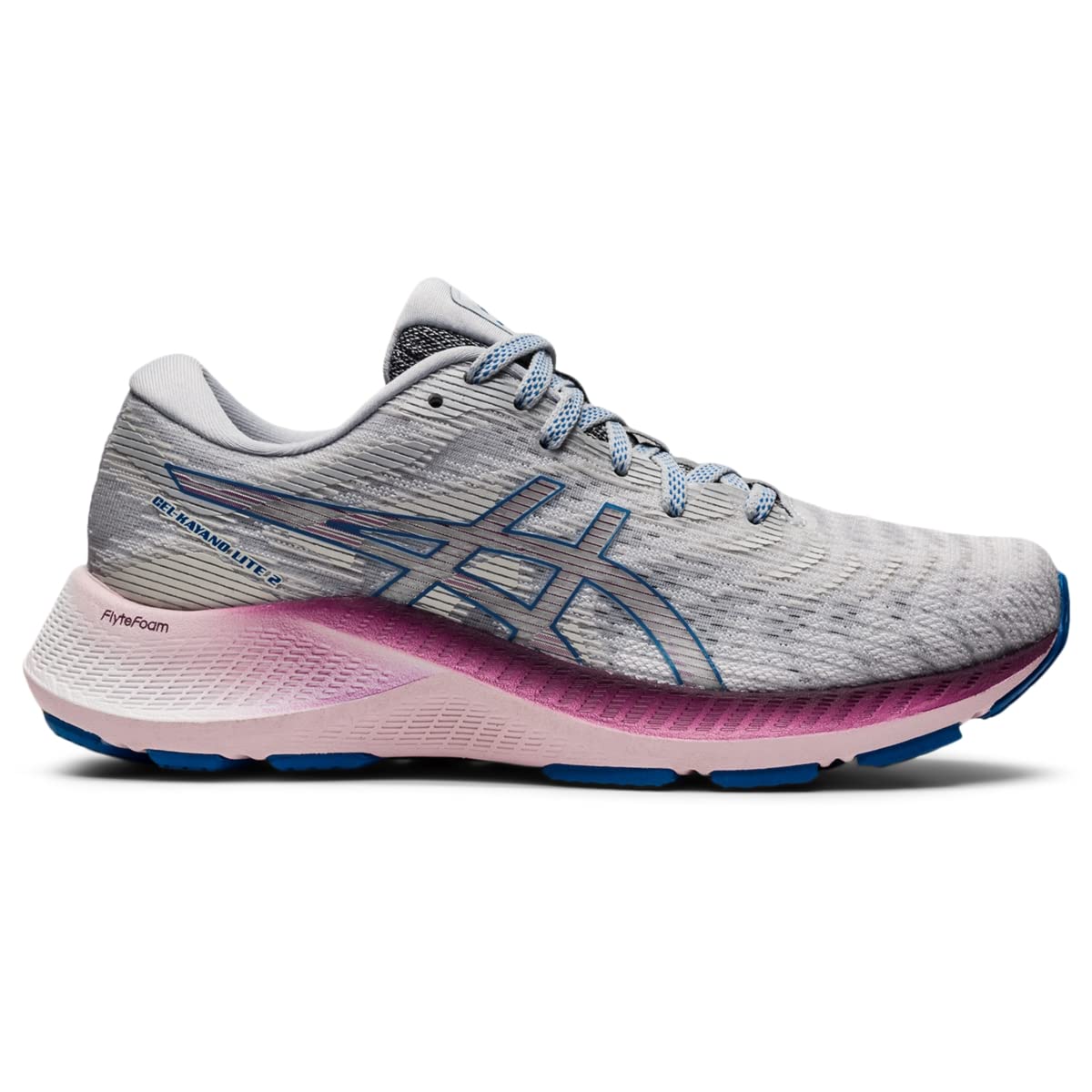
3. ASICS Women’s Gel Kayano Lite 2 Shoes
A greener take on the legendary Kayano, built to reduce overpronation without the heavy feel.
The Gel Kayano Lite 2 carries the Kayano name but strips out the bulk. Its engineered mesh upper uses a higher percentage of recycled materials than the previous version, and the FLYTEFOAM cushioning is made from organically derived materials. That foam improves shock absorption on landing, while the 3D SPACE CONSTRUCTION feature is specifically designed to reduce overpronation by addressing the gait differences between male and female runners.
Runners with plantar fasciitis or Achilles tendinitis report no foot pain during and after runs, with one finishing a 10-mile race comfortably. The arch support cradles the heel with stability, and many mention it fits like a glove. It’s a shoe you can wear all day without your feet hurting, which is the highest compliment a stability shoe gets.
There are two honest caveats. Durability is the recurring gripe — one owner reported tearing at the top where it creases after 1.5 months of 8+ hrs/day wear, so daily grinders should watch that flex point. And fit is mixed: some find it true to size with plenty of toe room, others find it too small, so ordering with a flexible return policy is smart.
Who it fits: eco-conscious runners with plantar fasciitis who want a lighter Kayano experience.
The warning: if you’re on your feet 8+ hours daily, the crease area may wear sooner than you’d like.
4. Saucony Women’s Guide 17 Running Sneakers

Comfort-first stability with a roomy toe box that post-surgery feet and wide-foot runners swear by.
The Guide 17 is Saucony’s “new era stability, built with comfort-first protection.” That priority shows in the fit, which is the most-praised aspect of this shoe by a substantial margin, followed closely by comfort. The wide heel platform and generous toe box make it a favorite among buyers with bunion surgery history or wider feet — they report long pain-free walks without rubbing, which is rare in the stability category.
The cushioning earns its own praise, with one owner noting the extra foam feels great on pavement runs. It’s also genuinely light, which surprises people given the thick sole. The shoe works straight from the start — no break-in needed, and it’s ready for long runs immediately. Runners with metatarsal discomfort and high arches find it accommodates inserts well, and the stability helps those with an unsteady gait.
The trade-offs are real but not dealbreakers. The sole is bulky-looking, which some find less sleek than competitors. And while most love the cushioning, a few report the sole lacks support for their specific foot mechanics, leaving the bottom of their feet aching on long walks. Durability is mixed — most hold up well, but some soles have been reported breaking apart.
Ideal for: wide feet, post-surgery recovery, and runners who prioritize a roomy toe box above all.
The trade-off: a bulky-looking sole and mixed long-term durability reports mean it’s not for everyone.
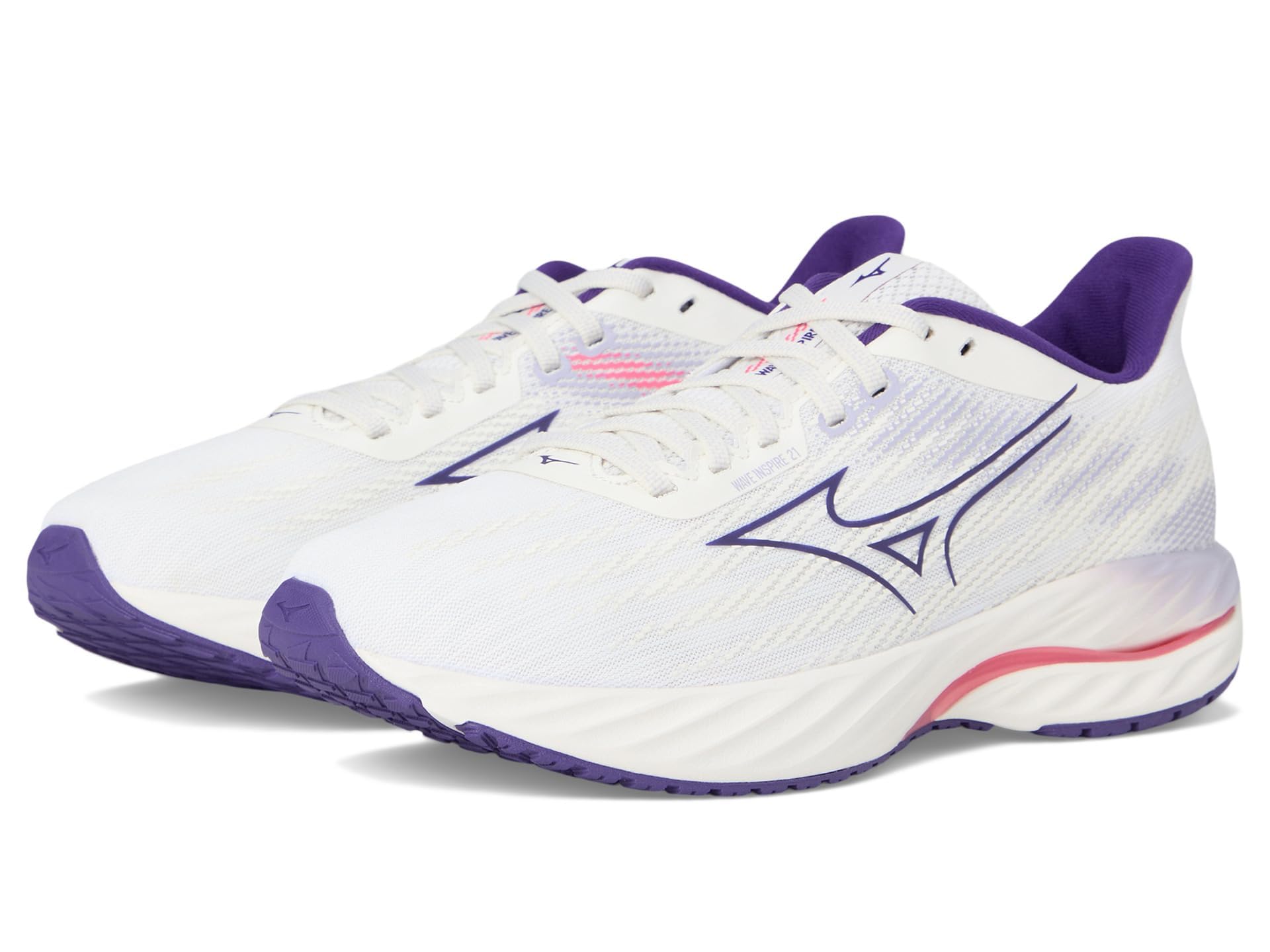
5. Mizuno Women’s Wave Inspire 21 Running Shoe
The stability trainer with a classic profile and arch support that flat-footed walkers can’t quit.
The Wave Inspire 21 earns its spot because it gives you a softer heel landing without the bulky sole that many stability shoes have. It uses MIZUNO ENERZY NXT foam (a cushioning material that absorbs impact) and moderate medial support (a firmer section on the inner side to control overpronation), so your foot transitions smoothly from heel to toe. Owners say it’s one of the few running shoes that skips the thick-sole trend, keeping a classic, sleek profile while still supporting your arch.
Arch support is the defining trait here, and it’s the reason plantar fasciitis sufferers keep coming back. Reviewers point out less back pain after walking, and those with high arches find it accommodates them perfectly. For overpronators specifically, one owner notes it stops their feet from pronating, which means fewer or no backaches after walking. The fit runs true to size for daily wear, though some advise sizing up for running because feet swell.
Be aware: the Wave Inspire runs about a half size smaller than ASICS, so you may need to size up, and one repeat Mizuno buyer found the previous version more comfortable. But if you want a durable, classic-looking stability shoe that works for hiking and daily walking, the Inspire 21 is a quiet standout — it has one of the highest satisfaction rates in this guide, according to owner feedback.
Best fit: high-arched or flat-footed runners who want arch support without a chunky, maximal sole.
Note: size up half a size from your usual ASICS fit for running.
6. New Balance Womens Fresh Foam X 860 V13

A cushy-heeled stability workhorse that carried one owner through an entire Disneyland day without aching feet.
The 860 V13 pairs New Balance’s plush Fresh Foam X cushioning with a supportive medial post (a firmer wedge on the inner sole) to give stability-minded runners a shoe for the long haul. Comfort is the runaway most-discussed trait here, with the cushy heel earning specific, repeated callouts. One owner wore them for the first time at Disneyland — walking all day and night — and reported no foot ache, which is the ultimate all-day test.
Arch support is the second-most praised feature, and it does double duty for plantar fasciitis sufferers. The shoe is built for sustained comfort over all distances, making it a true go-to for daily runners and walkers alike. The traction is excellent, the style is sleek, and the color options get consistent love — the lavender being a particular favorite.
Fit is where this shoe gets tricky. New Balance runs small and narrow for many: owners consistently advise sizing up, and some report manufacturing inconsistency between pairs. One runner who loved the V12 found the V13 softer and bouncier but less stable, with a narrower toe box. If you have wide feet, order wide or size up a full half size.
The strengths
- Plush Fresh Foam X cushioning with a cushy heel
- Great arch support for plantar fasciitis
- Excellent traction for all-day wear
The fit quirks
- Runs small and narrow — size up
- Sizing feels inconsistent between pairs
Reach for it if: you want a plush, cushioned stability shoe for long walks and all-day standing.
Think twice if: you have wide feet or need a firm, stable ride — try the Brooks Ariel instead.
7. New Balance Womens Fresh Foam X 860v15
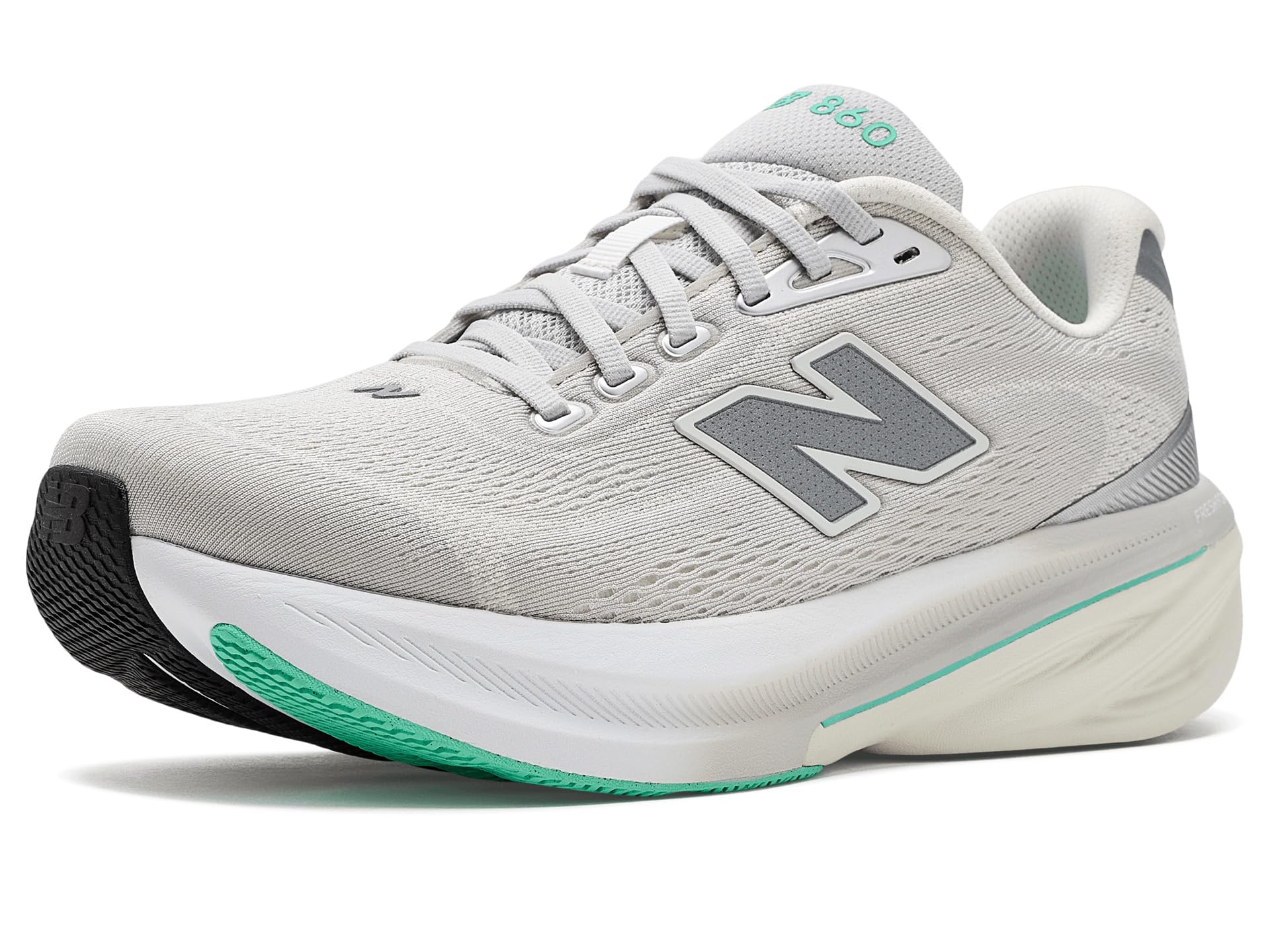
The newest 860, validated in a sports research lab, and the favorite of a healthcare worker who’s tried them all.
The 860v15 is New Balance’s latest stability shoe, validated through the Sports Research lab. It combines innovative Stability Plane technology with Fresh Foam X cushioning, wrapped in a lightweight synthetic upper that keeps feet cool. It’s built for reliability over the long haul, which is exactly what shift workers need.
One healthcare worker who has “worn all the expensive shoes” calls this the best in a long time, praising the arch support, the wide toe box (which helps if you have bunions), and the cushioning — they now own two pairs. One owner, following a podiatrist’s advice for foot and ankle pain, also found relief from lower back pain. Reviewers consistently highlight comfort and quality, and one reports walking 6 miles without any discomfort.
The fit is the defining caveat — it’s mixed, with several finding it too narrow despite ordering wide. One owner received the wrong width entirely. Quality control also has an occasional miss: one pair developed a cracking noise in the left shoe after a single use, though the replacement was fine. For narrow to medium feet, this is a stellar pick; for wide feet, proceed with caution on sizing.
Who it’s for: healthcare workers and anyone on their feet all day who wants a supportive, cushioned shoe with a wide toe box.
Heads up: the fit runs narrow — order wide if you need it, and be ready for occasional QC hiccups.
8. Hoka ONE ONE Womens Arahi 7
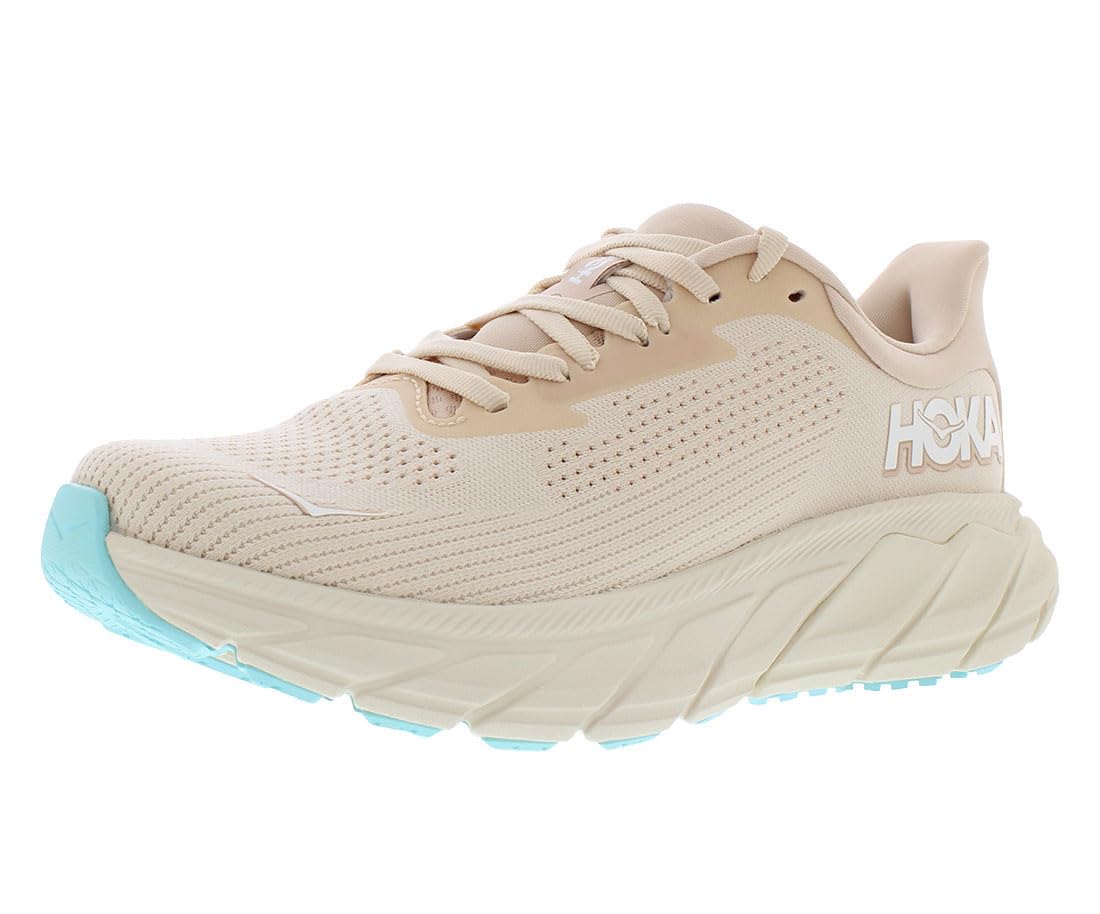
The stability shoe that doesn’t look like one, with a firm footbed that made toe pain disappear.
The Arahi 7 delivers Hoka’s signature plush ride with a twist: patented Frame technology provides the support that other brands build with heavy posts. That means you get Hoka’s famous cushioning without the clunky stability feel. The zonally engineered flat knit upper gives a snug midfoot lockdown, and a plusher tongue with mid-foot ghillies keeps the fit secure. Comfort is the dominant praise — owners note toe pain disappears and the firm footbed provides great arch support.
This is the shoe for teachers and anyone who stands all day, with multiple owners calling it ideal for that exact profession. One runner recovering from a posterior tibial tendon injury found it reduced pain significantly and bought a second pair within a month. Quality is the second-most praised trait, and the design gets fashion-forward compliments. The fit runs true to size for most, with a firm, supportive ride that doesn’t squish.
The split verdict: fit and value for money are the mixed points. Some find it too narrow, and the price tag is a frequent comment — owners love it but acknowledge it’s expensive. Durability has one recurring note: the inner heel fabric can rub off after about 6 months of wear. If you want Hoka’s marshmallow feel with genuine support, this is the one, but be ready for the premium cost.
Why it stands out
- Hoka cushioning with Frame technology, no bulky post
- Firm footbed with great arch support
- Ideal for teachers and all-day standing
Consider this
- Premium price tag that owners acknowledge
- Inner heel fabric can wear after ~6 months
Best for: runners who want maximum cushioning with reliable support and don’t mind paying for it.
pass on it if: you need a wide fit or a budget-friendly stability shoe.
Understanding the Specs
Support Level and Medial Post
Stability shoes use a firmer section of foam on the inner sole to slow your foot’s inward roll. Motion control shoes go further with a denser, wider sole for severe overpronation. Look for “motion control” if you have flat feet or your shoes wear out quickly on the inside edge.
Heel-to-Toe Drop
Drop is the height difference in millimeters between the heel and the toe of the shoe. A higher drop (like 12mm) shifts your weight forward and suits heel-strikers and walking. A lower drop (like 8mm) encourages a more natural midfoot landing, which many daily trainers prefer.
FAQ
How do I know if I overpronate?
What’s the difference between stability and motion control shoes?
Should I size up in stability running shoes?
Can I wear overpronation shoes for walking all day?
Will a stability shoe fix my knee or hip pain?
What is heel drop and why does it matter?
Are these shoes good for plantar fasciitis?
How long do stability running shoes last?
What if I have wide feet and overpronate?
Can I use custom insoles with these shoes?
Final Thoughts: The Verdict
For the majority of shoppers, the women’s running shoes for overpronation winner is the Brooks Ariel GTS 23 because it pairs maximum motion control with the widest fit options and the APMA seal of approval. If you want the best value with genuine stability tech, grab the ASICS GT-1000 14. And for maximum cushioning with reliable support and a fashion-forward look, the Hoka Arahi 7 is the one to reach for.
How We Picked
We do not accept paid placement. Every pick is matched to a real buyer and a real use-case; we do not hands-on test units.
Sources & Methodology
Specifications: manufacturer listings and product documentation. Review insights: verified customer reviews, as of August 2026. Pricing: not shown on this page (it changes often); check the current price via the retailer link.
As an Amazon Associate, Calories Fit earns from qualifying purchases. This does not affect which products we feature.