
Our readers keep the lights on and the coffee maker working hard! As an Amazon Associate, I earn from qualifying purchases.
Specs are compiled from manufacturer listings and verified buyer reviews and can change over time — please confirm the key details on the product page before buying.
A pack shaped for a man’s torso puts strain on your shoulders and back within the first hour. Every pick here is built for a woman’s frame, with shorter back lengths and curved hip belts that shift the load to your hips, not your shoulders. That fit is what makes a trekking pack worth buying — capacity and fabric matter less than how it sits on you.
I’m Mohammad — the founder and writer behind Calories Fit. This guide is built by comparing the manufacturers’ published specifications and the patterns across verified customer reviews, so you get each pick’s real strengths and trade-offs instead of marketing spin.
Whether you’re planning a day hike or a multi-day trek, the right women’s trekking backpack makes the difference between enjoying the view and counting steps until you can take it off.
Our Picks at a Glance


How To Choose The Best Women’s Trekking Backpack
Match the pack to the mission before you fall in love with a colorway. A 20-liter daypack and a 55-liter expedition bag solve completely different problems, and the most comfortable brand for one trip type might be wrong for the other.
Start with your torso length, not your height
This is the mistake beginners make most. While you might be 5’5″, your torso could measure short, medium, or long, and the hip belt should sit on your hip bones — not around your waist. Women’s-specific packs feature shorter back lengths and narrow shoulder harnesses designed for a female frame, so the load rides on your hips rather than dragging your shoulders.
Match capacity to trip duration
A simple rule helps: around 20 liters suits a day hike, 30-40 liters handles an overnight trip, and 50+ liters carries multi-day adventures with a tent and sleeping bag. A pack that holds what you need without excess room keeps the weight down, and a pack too small forces risky external strapping.
Quick Comparison
| Model | Best For | Capacity | Weight | Fit Type | Amazon |
|---|---|---|---|---|---|
| Deuter Aircontact Lite 35+10★ Best Overall | Thru-hiking and multi-day treks | 35+10 L | Lightweight | SL Women’s Fit | Amazon |
| Kelty Redwing 36Best Value | Travel and carry-on hiking | 36 L | 2 lb 9 oz | Women’s Specific Fit | Amazon |
| Mammut Lithium 20Ultralight Daypick | Fast day hikes | 20 L | 710 g | Women’s Specific Fit | Amazon |
| Osprey Tempest 22L | Full-day hikes and biking | 22 L | 2.27 lb | Adjustable women’s fit | Amazon |
| North Face Terra 55 | Multi-day backpacking | 53-57 L | 3 lb 14 oz – 4 lb | Women-specific | Amazon |
| Osprey Renn 50L | Weekend trips | 50 L | 3.5 lb | Adjustable women’s specific fit | Amazon |
| Deuter Futura Pro 38 SL | Ventilated 3-season hiking | 38 L | Lightweight | Standard Female Fit | Amazon |
| Thule Landmark 40L | Travel and anti-theft | 40 L | Lightweight | Unisex, Women’s specific | Amazon |
| Osprey Tempest 44L | Ultralight overnight hikes | 44 L | 3.46 lb | Adjustable women’s fit | Amazon |
In-Depth Reviews
1. Deuter Women’s Aircontact Lite 35 + 10 SL
Our pick — over 4.5★ from 250+ verified ratings; the strongest balance of quality and price.
The pack that survived a 2,600-mile PCT thru-hike with zero back pain.
The Aircontact Lite is the top pick because it is built around the load transfer system that keeps weight on your hips instead of your shoulders. The Aircontact back system and slim ergonomic hip fins are designed for medium loads, so a fully packed 35+10 liters rides with balance and stability. The SL Women’s Fit shortens the back length and narrows the shoulder straps to match a female frame.
Buyers report finishing the entire Pacific Crest Trail (2,600 miles) with no pain in the back, hip belt, or shoulders, and the stretchy mesh held extra volume when needed. The +10 liter expandable lid and removable straps also let you cinch it down for lighter trips, which makes a 35-liter pack flex like a smaller one. At 27.56 inches tall, it carries a 10-inch laptop pocket for travel days too.
What wins on the trail
- Expandable +10 L gives up to a 60 L capacity without extra weight
- SL anatomy-specific fit eliminates shoulder and back strain
- Hydration system ready with a sleeve for a deuter Streamer 3.0 (not included)
What to weigh first
- Some hikers wanting a larger main volume found it small and moved to a 50 L model
- Premium positioning puts it above entry-level budgets
Reach for this if: you want a single pack that handles weekend trips and thru-hikes alike without wrecking your body.
Look elsewhere if: you only need a small 20 L daypack — this starts at 35 L and carries more weight than a day trip needs.
2. Kelty Redwing 36 Women’s
A legendary travel pack that doubles as a plane-friendly carry-on.
Kelty re-engineered the classic Redwing with a perimeter frame and the AMP-Flow ventilated back panel to keep your back cool and dry on long hikes. The women’s version weighs in at 2 lb 9 oz with dimensions of 22x17x10 inches.
Owners mention using it for a two-week trip to Iceland and Norway as a carry-on that fit both in the overhead bin and under the seat, while remaining sturdy and roomy. A petite hiker (5’3″, 98 lb) found it comfortable with plenty of space, and another carried a full week’s gear on the Camino. The Kelty Signature wing pockets and two front zippered pockets keep trail items organized without digging.
Smart compromise: you get the ventilation and frame of a premium pack at a mid-range price, and the women-specific hip belt gets consistent praise for carrying weight well. The trade-off is a 36 L volume that suits travel and short overnights better than full multi-day expeditions.
Pick it if: you fly and hike and want one pack that does both jobs without checking a bag.
skip it if: your trips run past three days — you will want the 50 L class instead.
3. Mammut Lithium 20
Forgot you are wearing it — customers note no weight on the shoulders.
You will barely notice the Lithium 20 on your back: at 710 grams, it is the lightest pack in this guide. The Eva foam shoulder padding (a soft, molded foam) has air channels that let heat escape, so your shoulders stay cool on hot climbs. The 3D Eva foam back panel (a contoured foam layer) also vents air, and the detachable padded hip belt lets you remove weight for a short hike or keep it for full-day support. A trekking pole carrier and an integrated detachable rain cover come standard, so you are ready for rain or rough terrain without extra purchases.
Reviewers point out the pack feels weightless on the shoulders — one reviewer noted, “背負ってみるとザックを背負ってる感じがせず、肩に重みを感じません” — and the stretch mesh back stays cool even in heatwave conditions. The fit adjusts to cover users from 4’11” to 5’11”, and the side phone pouch keeps essentials accessible, though a 473ml water bottle fits snugly in the side pocket.
Trail lightness: this is the pack to grab for summit days and fast hikes where every gram counts. The 20 L capacity is strictly a daypack, not an overnight bag.
Best for: hikers who move fast and hate a sweaty back.
Not for: anyone packing a tent or sleeping bag — there is simply not enough room.
4. Osprey Tempest 22L
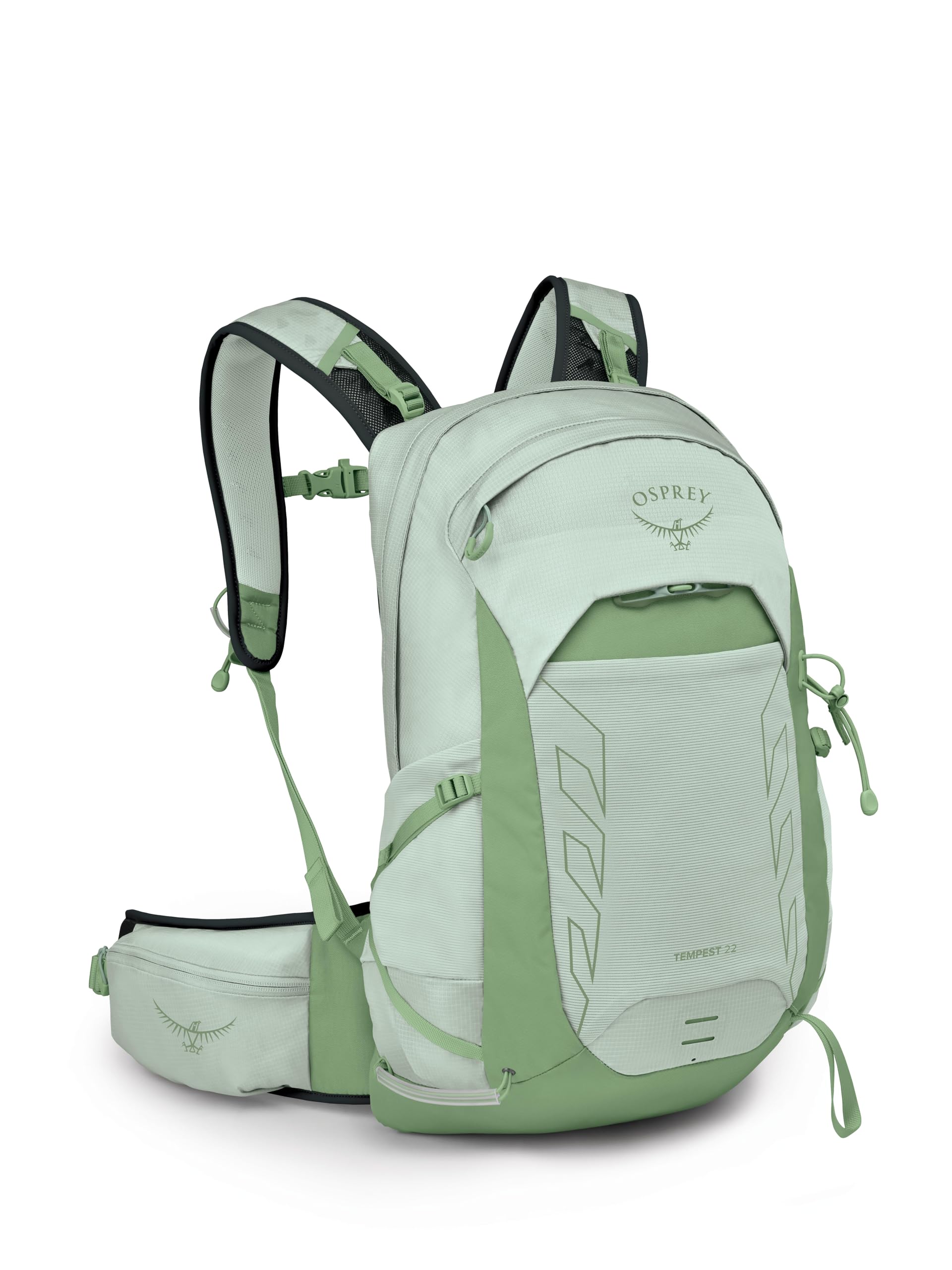
Multi-sport versatility with a breathable carry that handles 14-hour days.
The Tempest 22L pairs a lightweight 2.27 lb build with the AirScape backpanel that keeps the load close to your body and improves airflow to cut sweat. The adjustable sliding yoke and BioStretch hipbelt create a personalized women’s fit, and riders get a LidLock bike helmet attachment plus a Stow-on-the-Go trekking pole system for mixed adventures. Dual-zippered hipbelt pockets hold your wallet, ID, and sunglasses.
Shoppers say it held 4 liters of water on a desert hike and stayed comfortable for a 14-hour Colorado hike, with the back staying dry where other packs soak through. The side pockets are shallow for larger bottles, and the hip pouches are too small for a phone. Despite those limits, the hip belt and shoulder straps lift weight off the shoulders — far superior to cheaper packs, as owners put it.
What earns its keep
- AirScape backpanel keeps your back dry on hot climbs
- Multi-sport attachments for bike helmets, poles, and ice axes
- Fits a 5’3″ frame perfectly with adjustable straps
Where it nicks you
- Hipbelt pockets are too small for a smartphone
- Straps can rub bare shoulders in tank tops
Choose this over the Mammut if: you want water-bladder support and bike-ready attachments in the same small pack.
Think twice if: you routinely carry a larger bottle — the side pockets run shallow.
5. The North Face Women’s Terra 55
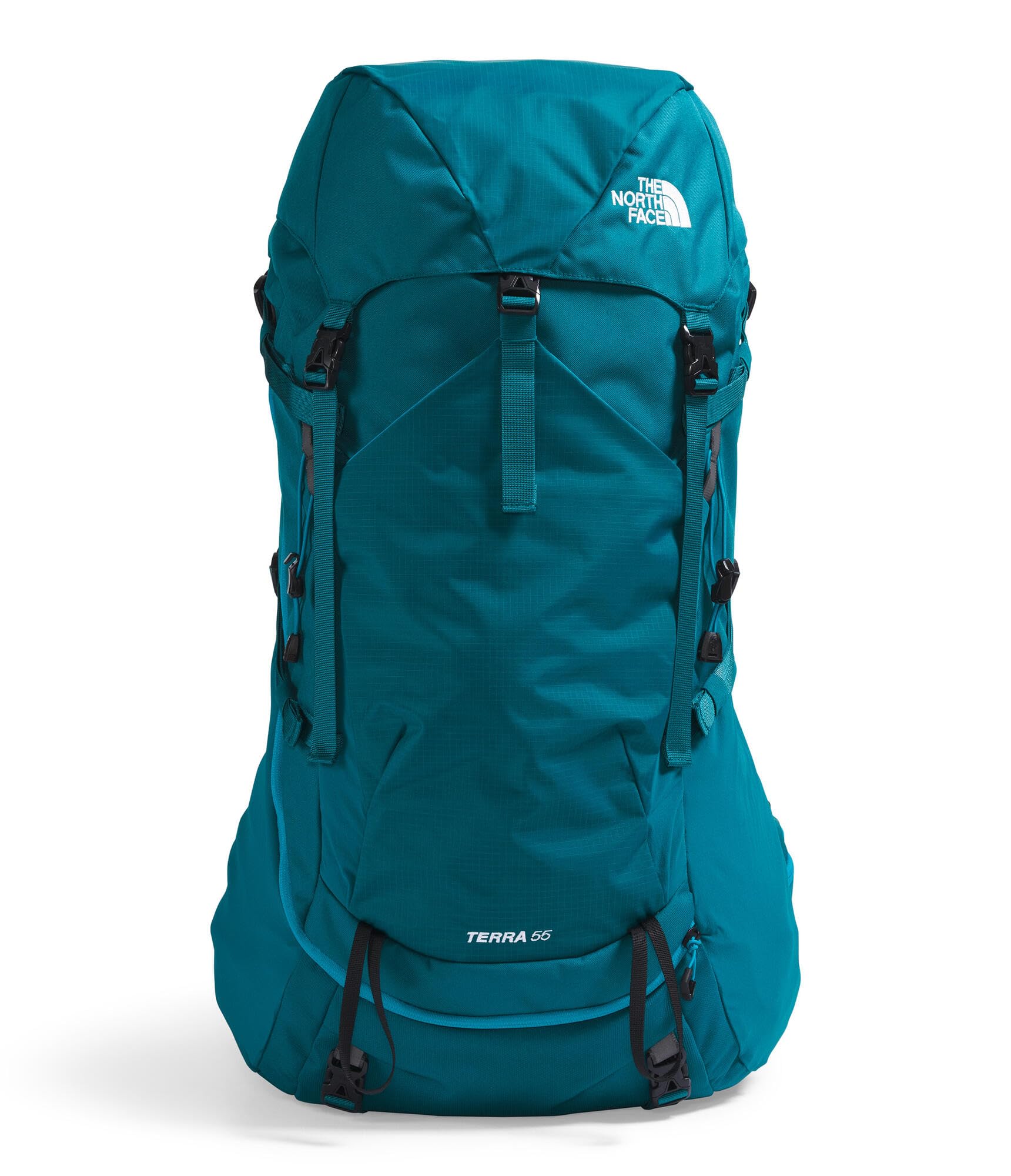
A cinch-top expedition pack with removable frame sheet for tuneable support.
The Terra 55 is built for multi-day backpacking and thru-hiking, with a women-specific padded back panel and shoulder straps tune for comfort and breathability. The removable frame sheet lets you fine-tune stiffness, and the padded hipbelt, load lifter straps, and sternum strap work together to transfer weight effectively. Volume runs 53 liters in XS/S and 57 liters in M/L.
The full-length two-way U-zip opens the top, sides, and bottom of the cinch-top main compartment, which owners say fixes great and gives full confidence for longer hikes. The removable lid has an internal zip pocket and key hook, plus a stuff-it pocket that tightens with an S/R buckle. The main caveat from buyers is limited torso adjustment — one long-torsoed hiker found it ran short — so measure your back carefully.
Expedition value: At a mid-range price, this 55-liter pack competes with bags costing more, and the pole and ice axe attachments plus compression straps handle bulky loads like a sleeping pad.
Reach for this if: you are planning a week-long trek and want one pack with easy access to everything.
Pass it up if: you have a long torso — the limited adjustment range is a real fit risk.
6. Osprey Renn 50L

The first-timer’s backpacking pack that carries 25 lbs without a whimper.
You will carry a two-day load without shoulder pain thanks to the Renn 50L’s AirSpeed suspension (a tensioned backpanel that adjusts to your torso length and lets air flow to reduce sweating) on a LightWire frame (a lightweight metal support) that moves the weight to your hipbelt. At 3.5 lb, it is light enough for a carry-on yet expands to a full 50-liter bag for a two-day trip. A zippered sleeping bag compartment and a floating divider keep your gear organized, so you can find your sleeping bag without unpacking everything.
Buyers report carrying 25 lbs comfortably on their first backpacking hike with no pain, praising the adjustable fit and sturdy build. The rigid back support system is a standout against cheaper imports that have none. The recurring trade-offs are a lack of exterior pockets and one-size-only fit, with stiff straps that can rub shoulders — a real consideration before you buy.
Solid introduction: the Renn 50L gives beginners the support of packs costing more, and the integrated raincover means one less thing to buy. The Daylite compatibility also lets you attach Osprey’s smaller pack for summit days.
Best if: you want one 50-liter pack that grows with you through your first multi-night trips.
Hold off if: you need the option to buy a different size — this one only comes in the one adjustable fit.
7. Deuter Women’s Futura Pro 38 SL

The pack with a spring-frame back panel that cuts sweat by up to 25% on hot climbs.
Deuter’s SL (slim line) packs are shaped from anatomical research, with a shorter adjustable back length and a conical hip belt that fits a woman’s curves. The Aircomfort Sensic Backsystem (a mesh panel on a flexible spring frame) pulls air between your back and the pack; the maker claims it cuts perspiration by up to 25% on long climbs. The ActiveFit pivoting S-shaped shoulder harness and Ergonomic Comfort Lock hip fins (adjustable fins that lock the belt in place) adapt to your body, so the pack moves with you, not against you.
Owners mention the weight distribution feels excellent — one used it for a challenging 7-day trek and found it extremely comfortable, and another perfectly sized it for an 8-day hike. The 38 liters requires smart packing for a one-night tent stay, fitting three nights in mountain huts. The integrated detachable waterproof rain cover and plentiful pockets make it functional, though the base fabric runs relatively fragile.
Ventilation champion: If you overheat fast, the spring-frame airflow is a genuine difference you feel, not a spec-sheet gimmick. Pack carefully if you carry a tent.
Reach for this if: you run hot and want a breathable 38-liter pack for hut-to-hut hiking.
Look elsewhere if: you regularly carry a full tent — the volume is tight for that load.
8. Thule Landmark Backpack 40L
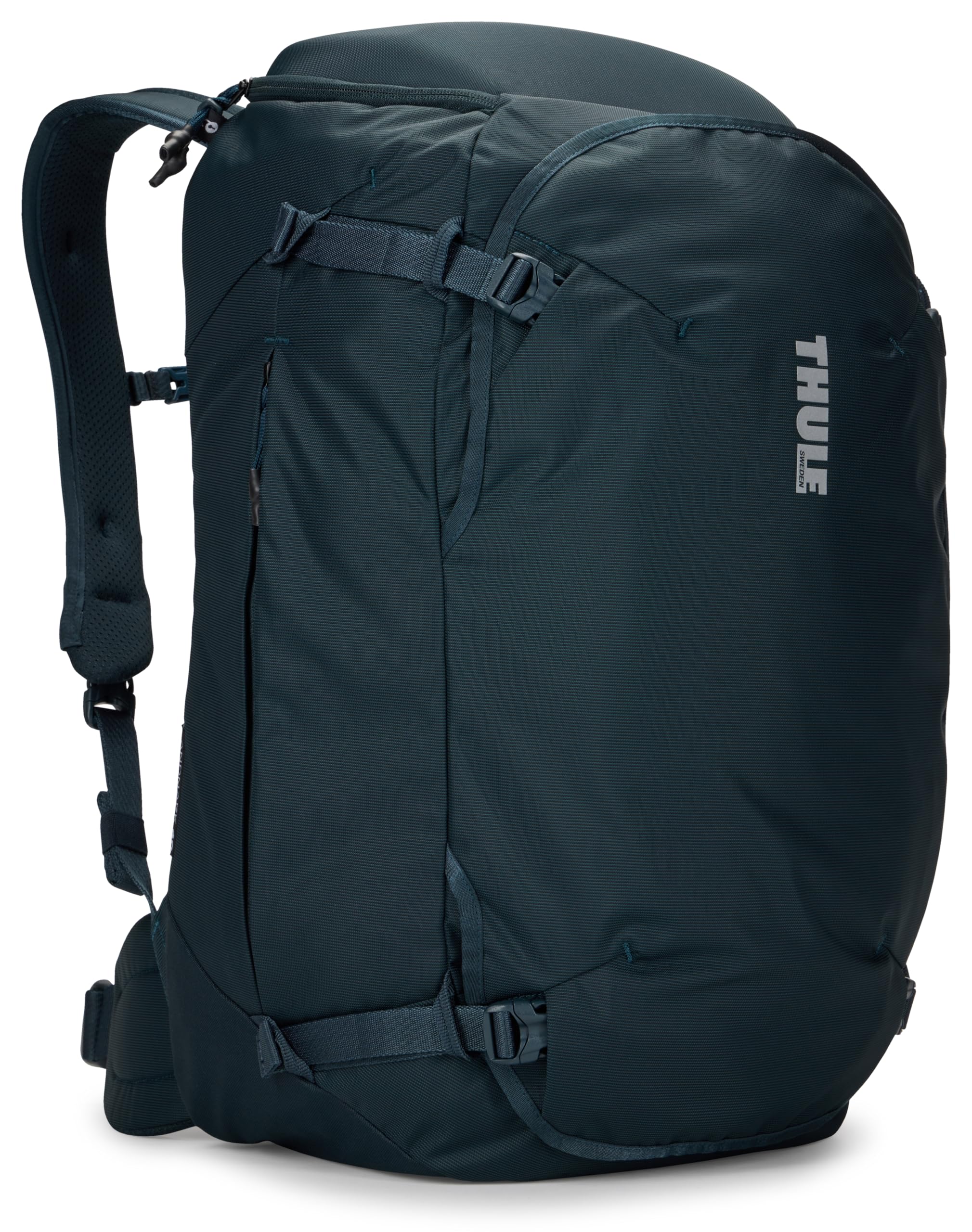
A carry-on adventure pack with a hidden pocket for your passport and cash.
The Landmark 40L is a travel-focused pack with a covert CashStash compartment hidden under the SafeZone — perfect for keeping money and a passport safe from pickpockets. Innovative LoopLocks secure the zipper pulls to the bag to deter theft, and a separate 20L detachable daypack means you get a carry-on and a personal item in one purchase. A 15″ MacBook and 12.9″ tablet fit in dedicated sleeves.
The detachable daypack is the standout feature, with owners calling the 2-in-1 the best luggage purchase they have made. Capacity feedback is mixed: some find it right for carry-on, others smaller than expected, and the material on the daypack wears faster than the main bag.
Why travelers praise it
- Hidden CashStash pocket thwarts pickpockets
- Detachable 20L daypack makes a carry-on plus personal item
- LoopLocks secure zippers against theft
The honest catch
- Capacity runs smaller than some expect for a 40L
- Daypack material wears faster than the main shell
Choose this over the Kelty if: you want two bags in one for urban travel and security, not pure trail performance.
Pass it up if: your only goal is backcountry hiking — the ergonomics favor city-to-hostel travel.
9. Osprey Tempest 44L
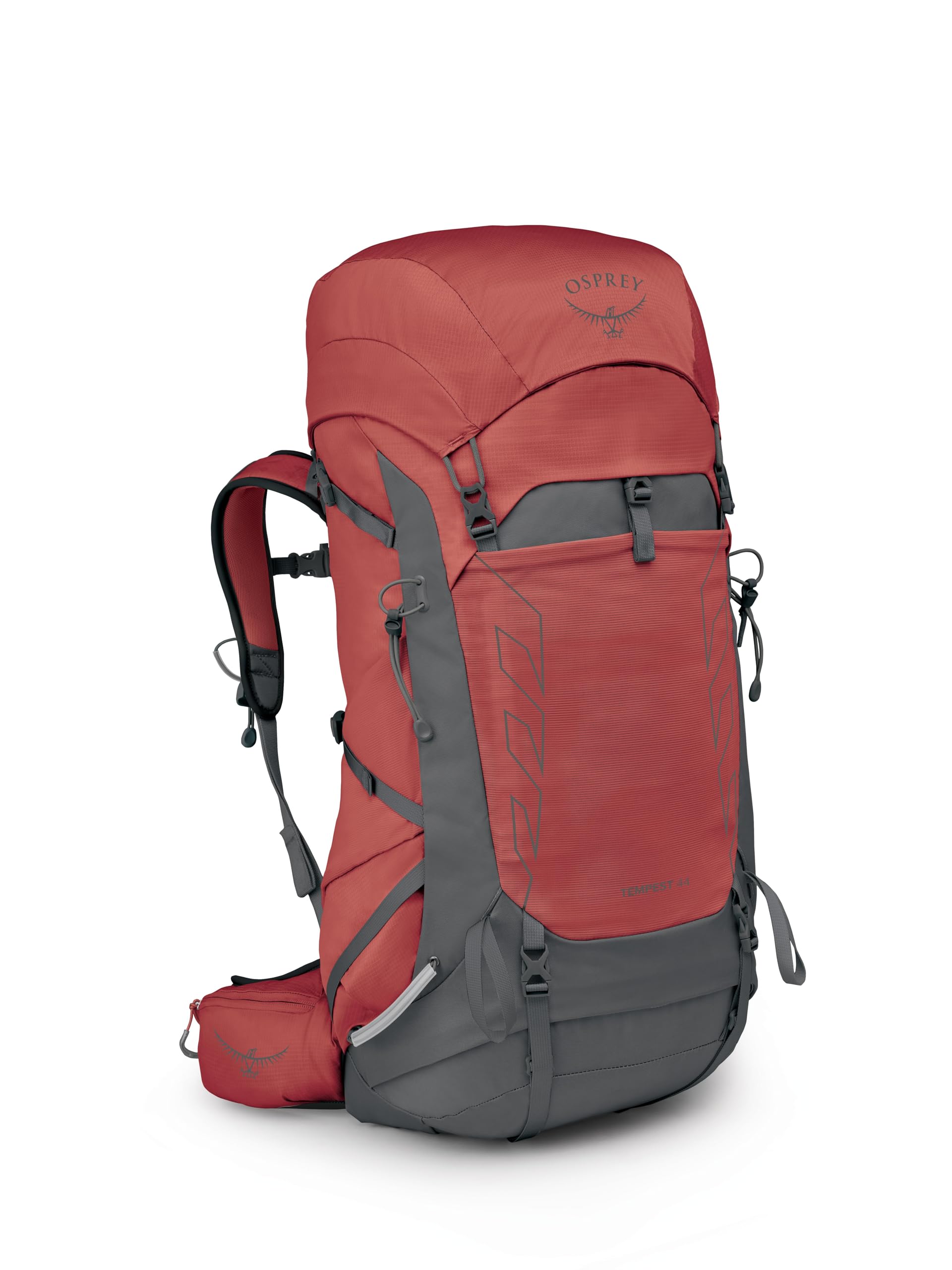
At 44 liters, this pack fits the balance between a daypack and a full expedition bag — enough for a weekend, not too big for a day hike.
The Tempest 44L takes the daypack DNA of its 22L sibling and scales it up for overnight hikes at 3.46 lb. The AirScape backpanel delivers a close-to-body, stable carry with airflow to reduce sweat, and the adjustable sliding yoke plus BioStretch hipbelt personalize the women’s fit. A top-loading main compartment with a floating lid and a separate zippered sleeping bag compartment keep gear organized for 1-2 night adventures.
Customers note the massive interior volume — a 27-inch deep main compartment — swallows full loads internally, with the full-length vertical side zipper giving access without unpacking everything. The women-specific fit is superior to unisex packs, and the durable mesh pockets hold up to wear. The main trade-off is a bear canister that doesn’t fit inside and must strap on top, plus a top-load design that is less convenient than a suitcase-style opening.
Weekend balance: at 3.5 lb, it is light for its size, and the stiff frame stands upright, so you can pack it without it flopping over. The bluesign-approved recycled nylon (a certified eco-friendly fabric) and PFAS-free DWR treatment (a water-repellent coating without harmful chemicals) shrink your environmental footprint.
Pick it if: you want a light, breathable pack for 1-2 night trips without buying a 50+ liter tank.
pass on it if: you must carry a bear canister internally — it does not fit inside.
Understanding the Specs
Capacity in Liters
This is the single most important number. Around 20 liters handles a day hike with water, food, and layers. A 30-40 liter pack covers an overnight or a light multi-day trip, and 50+ liters is expedition territory for a tent and sleeping bag. Match the size to your longest planned trip.
Women’s-Specific Fit (SL, or Slim Line)
A women’s pack is not a smaller men’s pack. It has a shorter back length, narrower shoulder straps, and a curved hip belt designed to sit on the hip bones instead of the waist. This geometry transfers weight to your hips, where your body is built to carry it, reducing shoulder and back strain on long days.
Back Ventilation Systems
Look for a tensioned mesh panel, like Osprey’s AirScape or Deuter’s Aircomfort Sensic. These hold the pack away from your back so air flows between you and the fabric, cutting sweat on hot climbs. The trade-off is a slightly higher pack weight for the extra frame structure.
Hip Belt and Frame
A padded, adjustable hip belt is non-negotiable for anything over 20 liters. The frame — whether a lightweight wire or a removable frame sheet — transfers the load from your shoulders down to your hips. Packs without this support dump all the weight on your shoulders, which you will feel within the hour.
FAQ
Will a women’s trekking backpack fit my body?
What capacity do I need for a day hike?
How many liters do I need for an overnight trip?
Is a heavier pack always more comfortable?
Can I use my trekking pack as a carry-on for flights?
What is the difference between a daypack and a trekking backpack?
Should I buy a pack with a hydration reservoir sleeve?
How do I know if the hip belt sits correctly?
Final Thoughts: The Verdict
For the majority of shoppers, the winner is the Deuter Aircontact Lite 35 + 10 SL because its expandable volume and anatomy-specific fit handle everything from weekend hikes to full thru-hikes without back pain. If you want a flight-friendly travel pack, grab the Kelty Redwing 36. And for ultralight fast day hikes, the Mammut Lithium 20 is the one to reach for.
How We Picked
We do not accept paid placement. Every pick is matched to a real buyer and a real use-case; we do not hands-on test units.
Sources & Methodology
Specifications: manufacturer listings and product documentation. Review insights: verified customer reviews, as of August 2026. Pricing: not shown on this page (it changes often); check the current price via the retailer link.
As an Amazon Associate, Calories Fit earns from qualifying purchases. This does not affect which products we feature.