
Our readers keep the lights on and the coffee maker working hard! As an Amazon Associate, I earn from qualifying purchases.
Specs are compiled from manufacturer listings and verified buyer reviews and can change over time — please confirm the key details on the product page before buying.
The real enemy of a good home practice isn’t flexibility — it’s a mat that slides under your downward dog or bunches up mid-flow. A non-slip mat keeps your hands and feet planted so you can hold poses without sliding. We compared specs and verified reviews to find mats that grip well and cushion your joints.
I’m Mohammad — the founder and writer behind Calories Fit. This guide is built by comparing the manufacturers’ published specifications and the patterns across verified customer reviews, so you get each pick’s real strengths and trade-offs instead of marketing spin.
From extra-thick cushioning to double-sided grip textures, these are the yoga mat non-slip options that earn their place on your studio floor.
Our Picks at a Glance


How To Choose The Best Yoga Mat Non-Slip
Choosing a mat means balancing cushioning against stability. Thicker mats feel great on your knees but can make balance poses feel unsteady. Thinner mats ground you better but punish your joints on hard floors. Your weight, workout style, and floor type determine the best thickness and material.
Thickness: Cushioning vs. Stability
Mat thickness usually runs from about 0.24 inches up to a full 1 inch. A thinner mat around a quarter-inch gives you a firm, stable base that connects you to the floor — ideal for balance-heavy vinyasa flows. A thicker mat, like 10mm or 1-inch, protects knees, hips, and elbows during kneeling poses, restorative yoga, and floor workouts, but the extra give can make standing balance poses slightly less secure.
Material: NBR vs. TPE
NBR (nitrile butadiene rubber) foam is the classic thick, cushioned mat material — soft, airy, and great for joint comfort, though it tends to weigh more. TPE (thermoplastic elastomer) is a newer, lighter, denser material that resists moisture well, springs back to shape, and is often marketed as more eco-friendly. Your grip needs and how much you plan to carry the mat should guide this choice.
Quick Comparison
| Model | Best For | Thickness | Material | Dimensions | Amazon |
|---|---|---|---|---|---|
| Gaiam Thick Yoga Mat★ Best Overall | Joint comfort and cushioning | 0.39″ (10mm) | NBR Foam | 72″L x 24″W | Amazon |
| Circuit Fitness by MarcyBudget Champion | Soft comfort at a budget price | 0.25″ | TPE | 74″L x 24″W | Amazon |
| ROMIX Pro with Alignment LinesForm Focus | Form guidance with grip | 6mm | TPE | 72″L x 24″W | Amazon |
| ROMIX Thick 10mm | Extra cushioning on a budget | 10mm (0.4″) | NBR Foam | 71″L x 23.5″W | Amazon |
| Amazon Basics TPE | Portable, tight-rolling mat | 0.24″ | TPE | 73.6″L x 24″W | Amazon |
| YOTTOY 1/2″ Thick | Plush cushioning with a firm core | 0.5″ (12mm) | TPE | 72″L x 24″W | Amazon |
| KEEP Extra Wide | Extra width for tall practitioners | 7mm (0.28″) | TPE | 72″L x 32″W | Amazon |
| Tone Fitness 1-Inch | Maximum density for sensitive joints | 1″ | NBR Foam | 72″L x 24″W | Amazon |
| UMINEUX Large 6′ x 4′ | Spacious, double-wide practice area | 6mm | TPE | 72″L x 48″W | Amazon |
In‑Depth Reviews
1. Gaiam Thick Yoga Mat
Our pick — over 4.5★ from 46,000+ verified ratings; the strongest balance of quality and price.
The cushion king that turns hard floors into a forgiving surface.
If your knees and hips complain about every floor workout, this is the mat that solves it. At 10mm (0.39″) of high-density NBR foam, it delivers the kind of plush, cushioned support that makes kneeling poses, Pilates, and stretching genuinely comfortable on wood, tile, or concrete. The textured surface helps keep you stable during dry workouts, though the softer feel prioritizes comfort over firmness.
What wins people over is the quality and thickness — over a thousand owners single out each of those. One practiced buyer called it a “thick, cost-effective safety mat” with “cushioned fall protection,” which sums up its appeal for beginners and anyone worried about joint impact. It is 56% thicker than the Circuit Fitness by Marcy below (0.39″ vs 0.25″), a gap you feel the moment you kneel down.
The trade-offs are manageable if you know what to expect. The foam has a noticeable initial odor that typically needs 24–48 hours of airing out. Some owners find the ribbed surface hard to balance on, and a few report tears over time. The carrying strap makes transport easy, but the mat keeps a permanent curve and weighs 1.27 kg — noticeably heavier than the 0.9 kg ROMIX Pro.
Why It Wins
- 10mm NBR foam is genuinely plush for joints on hard floors
- Textured surface limits slipping during dry workouts
- Adjustable carrying strap for easy room-to-room transport
- Crowd favorite with 4.6 stars across 46,384 ratings
The Catch
- Strong chemical smell from the start needs 24–48 hours to fade
- Soft foam means slight toe sink during standing poses
- Some owners find the ribbed surface tricky for balance
Perfect for: beginners, older practitioners, and anyone with joint pain who wants a forgiving, cushioned surface.
Consider otherwise if: you need a firm, stable base for balance-heavy flows and can’t tolerate the initial foam odor.
2. Circuit Fitness by Marcy
A soft, pretty TPE mat that punches above its price tag.
Don’t let the entry-level price fool you — this mat earns its spot on softness and comfort. The TPE (thermoplastic elastomer) construction is lightweight and durable, and the moisture-resistant surface repels sweat so you stay hygienic and the mat wipes clean easily. At 74 inches long, it’s actually 3% longer than the Gaiam above, giving taller practitioners a bit more stretch room.
The thing everyone raves about is the quality and softness, with owners calling it “very soft, nice thickness and durable.” One happy buyer put it plainly: “Very cute yoga mat! It does not slip easily and is very thick.” It’s a great deal for the money, especially if you want a mat that feels comfier than its price suggests.
Several packages arrived without the carry strap, so check your box before relying on it. Grip also gets mixed feedback, with some owners noting it can slip on certain floors. The sakura pink color is a consistent crowd-pleaser, though.
Best value pick: a soft, comfortable TPE mat that overdelivers for the price, as long as you don’t count on the strap.
3. ROMIX Pro with Alignment Lines
The guide-marked mat that helps you find your footing.
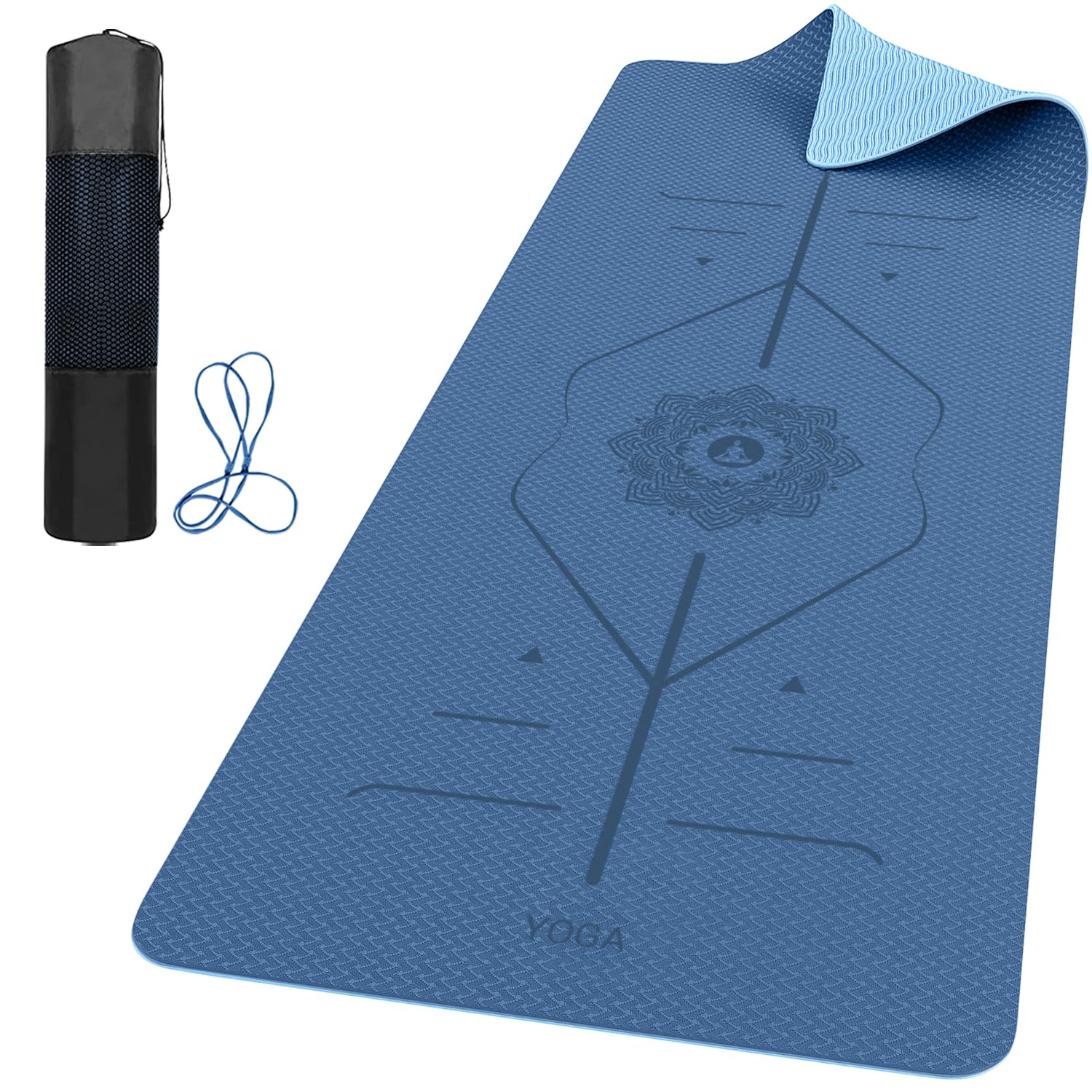
The printed alignment lines on this mat do real work — they give you visual cues for hand and foot placement so you can check your form during home practice without a mirror. The double-sided textured surfaces add grip for yoga, Pilates, and stretching, and the latex-free TPE foam is skin-friendly for regular use.
At just 0.9 kg, this is the lightest mat in this lineup — a full 41% lighter than the Gaiam’s 1.27 kg — which makes it the easiest to sling over your shoulder for studio sessions. A first-time buyer summed up the experience: “Works great for me. Could be a hair thicker but no real other complaints except dust from kids on the floor loves to stick to the bottom.” That dust-sticking note is the main recurring gripe.
The 6mm thickness is a middle ground — cushioned enough for comfort but firm enough for balance. The flip side is that some owners find the surface too “plastic feeling,” with hands sliding during sweaty poses. It’s a solid budget-friendly choice for beginners and home users who want grip feedback, but hotter, sweatier practices might want a more textured surface.
Reach for this if: you’re new to yoga and want alignment guidance plus a light mat for easy carrying.
Look elsewhere if: you practice hot yoga — hands can slide on this surface when it gets slick.
4. ROMIX Thick 10mm
The thick, plush workhorse that keeps your joints happy.
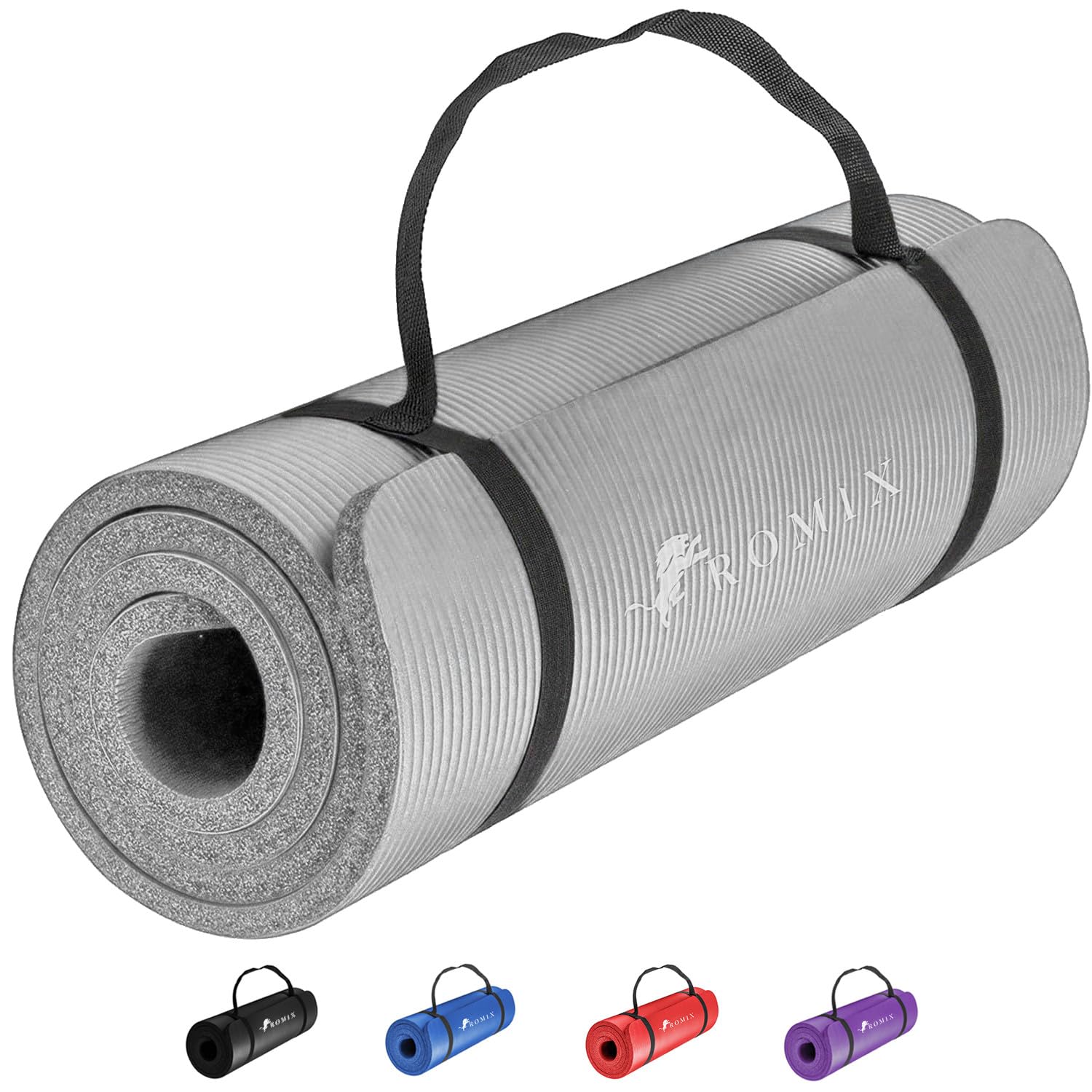
If you’re after serious cushioning without paying premium prices, this 10mm NBR mat delivers. The non-toxic, latex-free foam is soft underfoot and knees, and the 72 x 24-inch surface gives you plenty of room for a range of routines — yoga, Pilates, meditation, stretching, and mobility work. Owners consistently call it comfortable and easily stored.
You get Gaiam-level cushioning in a package that includes both a carry bag and a strap, so transport is genuinely easy. One impressed user noted the “thickness and length is great” and that it’s “very light and easy to put back in sleeve to carry with you.” It weighs just 900 g, which is light for a 10mm mat.
The textured surface improves grip during exercise and supports a more stable workout, though as with most thick mats, very sweaty hands may still slide. It’s a straightforward, no-frills cushion play — right for anyone who prioritizes joint comfort over a razor-thin profile.
Joint-first choice: 10mm of NBR cushioning with a carry bag included, and it’s still light enough to haul around. The best value route to thick comfort.
5. Amazon Basics 1/4 Inch TPE
The slim, travel-friendly mat that rolls up tight.
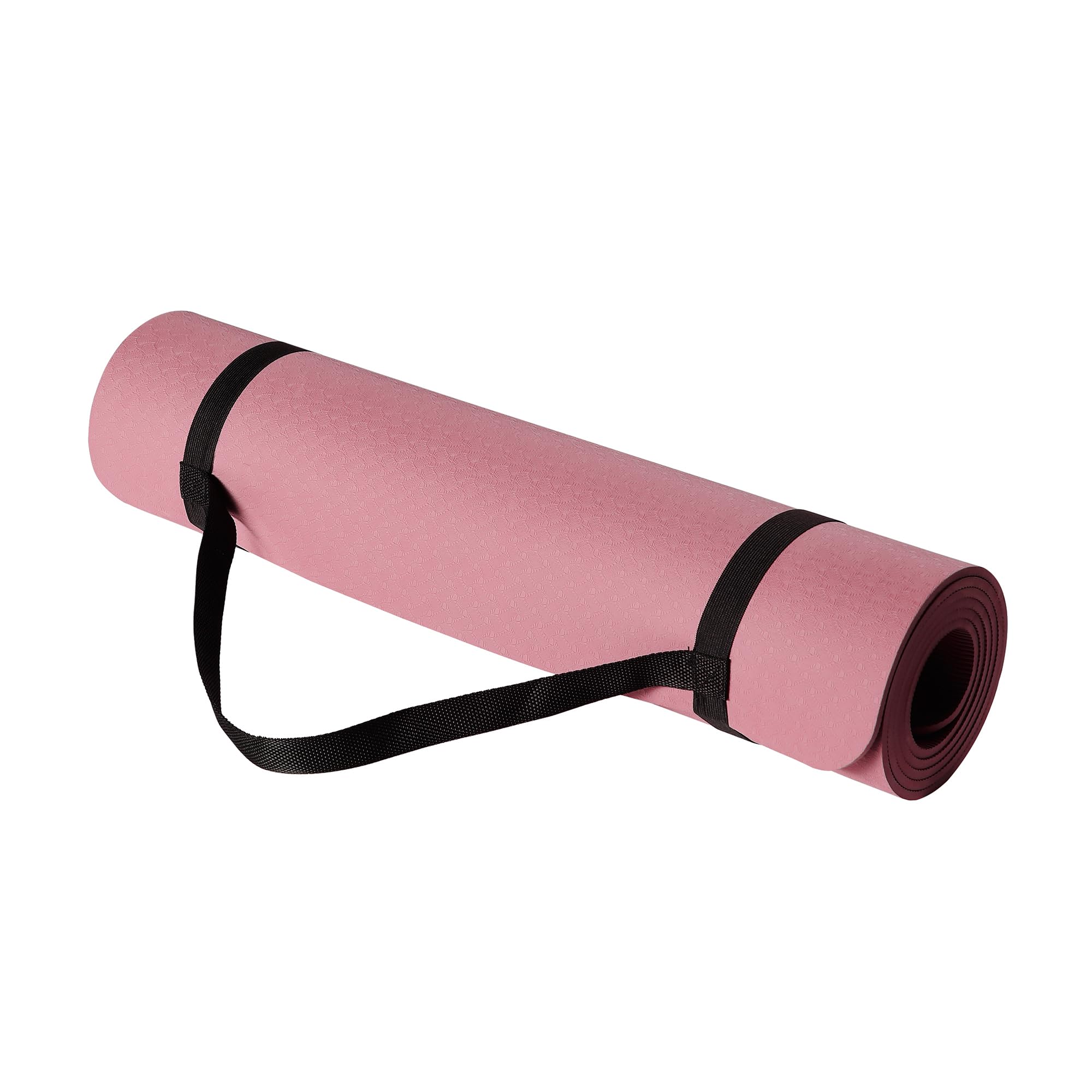
If portability is your priority, this is the thinnest and most packable mat in the lineup at 0.24 inches of TPE. It rolls up tight enough to slip into a bag — a huge plus if you commute to a studio or practice outdoors. Owners love the “soft muted color” and note it’s “very portable, because it’s thinner, and can roll up tight,” especially compared to bulkier thick mats.
The spring-back TPE elasticity maintains its shape while supporting balance and stability during workouts. The non-slip surface provides stable footing for yoga, Pilates, and general fitness at home or outdoors. The 73.6-inch length is generous, and at 2 pounds it’s a featherweight to carry with the included strap.
Thin mats offer less cushioning, and some buyers report slippage and stretching during poses. The color also drew mixed feedback, with some finding it not quite as pictured. Durability reviews are split so far, but for the price and portability, it’s a dependable everyday mat.
What Travels Well
- 0.24″ profile rolls up tight for easy transport
- TPE springs back to keep its shape and grip
- Includes carrying strap; lightweight at 2 lbs
What Holds It Back
- Thin padding means less joint cushioning on hard floors
- Some owners mention slight slippage in sweaty poses
- Color may differ slightly from product photos
Best for: commuters and travelers who need a slim mat that disappears into a bag.
Think twice if: your knees need serious cushioning on hard floors — this one is firm.
6. YOTTOY 1/2-Inch Thick

The 12mm firm-plush hybrid that respects your knees and your balance.
This is the mat for people who can’t decide between cushioning and stability. At a full 0.5 inches (12mm) of TPE, it’s among the thickest in the lineup, but the high-density foam is firm enough that it doesn’t collapse under you during balance poses. The top layer uses granular protrusions to increase friction and absorb sweat, while the reverse side’s water ripple texture grips the floor.
The quality is what separates it for owners — it’s SGS and TUV certified to be free of heavy metals and 10 harmful phthalates, and the one-piece foam process makes it non-toxic, odorless, waterproof, and sweat-proof. One owner who tried a rival 1/2-inch mat found YOTTOY better because the other “was too soft” and showed signs of “rubber creasing and wearing down.” This one stays firm.
At 4 pounds, it’s the heaviest mat here, which is the trade-off for the plushness. Portability and grip both get mixed marks from owners — it’s packable but not featherlight, and very sweaty hands may still want a towel. For kneeling and sitting postures, though, the joint comfort is exceptional.
Pick this for: kneeling poses, restorative practice, and anyone who wants thick cushioning that doesn’t mush out.
skip it if: you carry your mat long distances — at 4 lbs, it’s the heaviest pick here.
7. KEEP Extra Wide 32-Inch
The 32-inch-wide runway that ends edge-slipping for tall yogis.
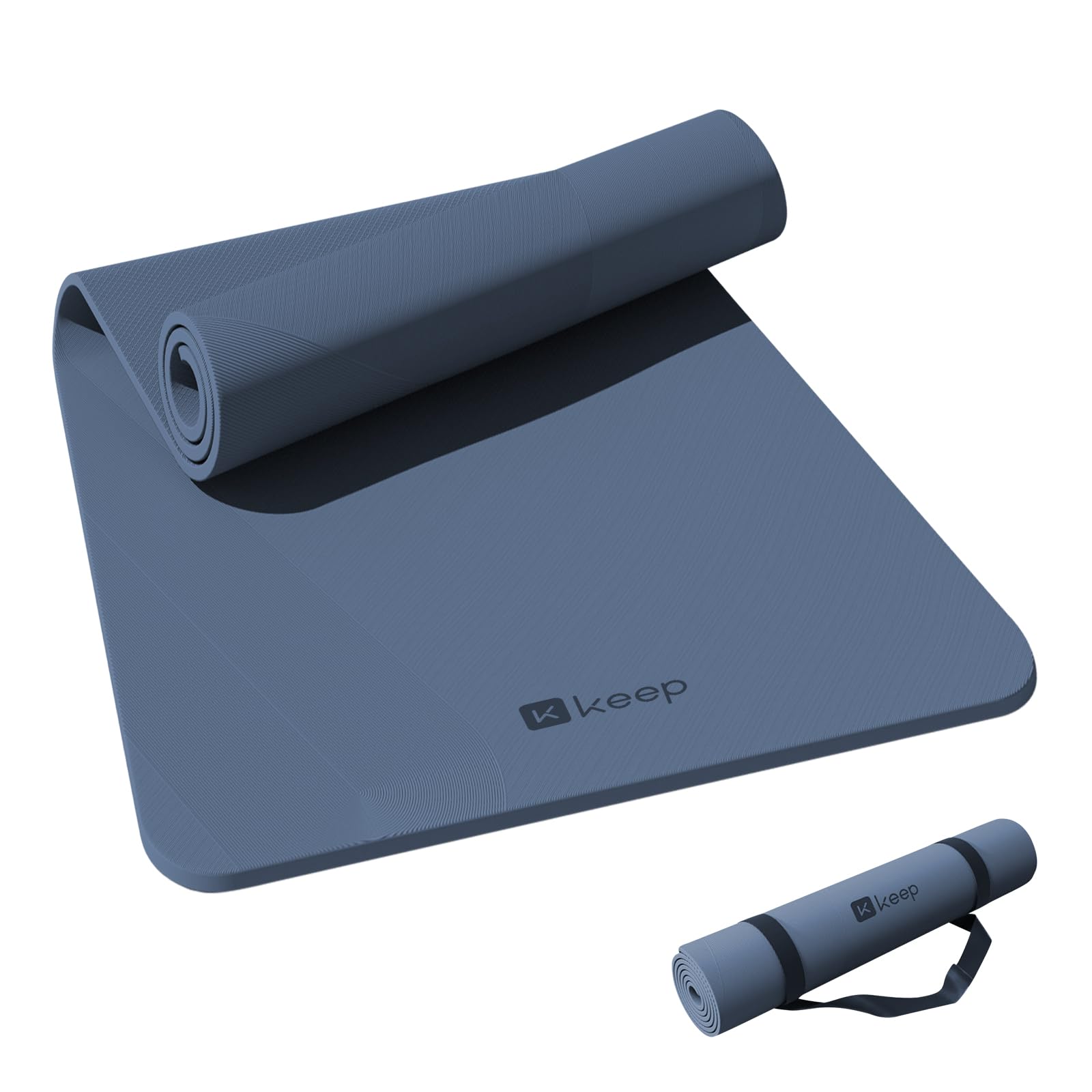
Standard yoga mats are 24 inches wide, which is tight for taller or broader practitioners. This mat breaks the mold at 32 inches wide, giving you 8 extra inches of real estate so your hands and feet stay on the mat during wide-legged poses and deep stretches. One 6’1″ owner confirmed the value: “I love the extra size” and praised the thickness “without compromising support and balance.”
The construction backs up the spaciousness. The 0.28-inch (7mm) TPE padding cushions knees, elbows, and joints, while the fingerprint-like anti-slip texture on top and comprehensive anti-slip pattern on the bottom keep every corner secured — even on wet surfaces. The “grippy ridges on both sides” earn repeated praise from owners.
At 2.86 pounds, it’s impressively light for its size and rolls up with a free adjustable polyester strap. The main caveats: some owners find it doesn’t lay perfectly flat on carpet, wrinkling when stepped on, and the TPE can have a mild initial odor that needs airing out. Durability reviews are mixed but generally positive.
Standout Space
- 32″ width fits tall and broad practitioners comfortably
- 7mm TPE cushions joints without compromising balance
- Double-sided non-slip texture grips well, even wet
Worth Knowing
- May wrinkle or fail to lay flat on carpet
- Some initial odor needs airing out before first use
Perfect for: taller yogis (6’1″ and up) and anyone tired of falling off the edges of a standard-width mat.
Not ideal if: you practice exclusively on thick carpet — it lays flattest on hard floors.
8. Tone Fitness 1-Inch Thick
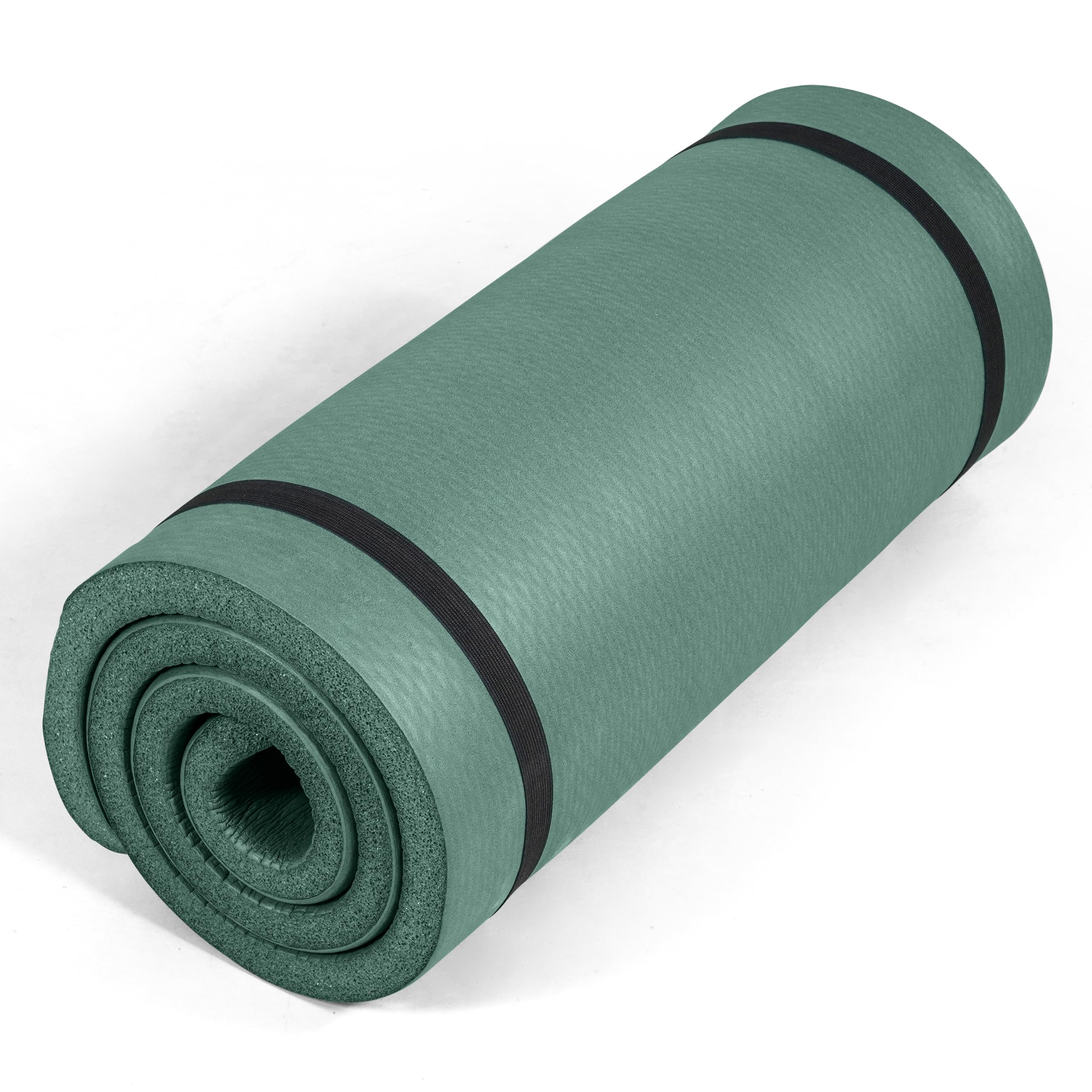
The densest cushion here — a cloud for sensitive joints.
This is the thickest mat in the entire lineup at a full 1 inch, and it’s built for one thing: serious joint protection. The high-density NBR foam is dense rather than spongy, which means it cushions without the “too soft” instability that plagues cheaper thick mats. It’s “perfect for Yin and Restorative yoga,” where you hold poses on your knees and elbows for extended periods.
Owners are emphatic about the comfort — one called it “the best yoga mat I’ve ever had” after 30 years of practice, citing the “1-inch thick” density, no smell, and no curling. The textured NBR surface keeps you grounded “even through hot yoga sessions,” and at 24″ x 72″, it offers standard-but-generous space for most body types.
Several customers note it slides on hardwood floors, which is a concern for hot yoga on wood. The included strap also lets the mat slide out when carried. This is a home-floor mat at heart: comfortable, latex-free, and built for sensitive joints, but not the grippiest on slick surfaces.
Density-first pick: class-leading 1-inch cushioning for knees and hips. It beats every other mat here on plushness, but on hardwood it can slide — pair it with a towel or practice on carpet.
9. UMINEUX Large 6′ x 4′

The double-wide home mat that turns your living room into a studio.
At 6 feet by 4 feet (72″ x 48″), this mat is literally double the width of a standard yoga mat. It’s not for carrying to class — it’s for transforming your home floor into a true practice space where you can change directions without ever worrying about falling off the edge. Owners use it for HIIT, lunges, squats, and floor stretching, not just yoga.
The double-sided non-slip design does real work: the wavy under-surface “makes excellent traction on the floor” and stays put even during burpees and push-ups, while the textured top prevents hands and feet from sliding. One owner replaced a sliding, too-small mat and found this one “nonslip even on hardwood floors.” The high-density 6mm TPE strikes a balance between stability and cushioning.
The thickness gets mixed reviews — some find it “super thick,” others find it “too thin” for very hard floors. Durability is the bigger concern, with several owners noting wear over time, and the care instructions warn that shoes or pet paws may tear the mat. The included 2 Velcro straps and storage bag make it easy to roll up between sessions.
Reach for this if: you do HIIT, floor workouts, or partner practice at home and want one wide surface instead of two mats.
pass on it if: you need to carry a mat to a studio — at 4 feet wide, this one stays home.
Understanding the Specs
Thickness and Density
Thickness is measured in millimeters (mm) or inches, and it directly dictates how much cushion you get. A 6mm mat is a middle ground — firm enough for balance, cushioned enough for comfort. A 10mm or 1-inch mat protects your knees and hips during kneeling poses but adds slight instability for balance work. Density matters too: high-density foam cushions without collapsing, while low-density foam can feel like a marshmallow that offers no support.
Material: NBR vs. TPE
NBR (nitrile butadiene rubber) foam is soft, thick, and affordable — ideal for joint comfort but heavier and less moisture-resistant. TPE (thermoplastic elastomer) is lighter, denser, springs back to shape, resists sweat, and is often marketed as eco-friendly and phthalate-free. If you sweat heavily or carry your mat, TPE is usually the better fit. If you need plush cushioning for sensitive joints, NBR shines.
FAQ
Will a thicker mat make balance poses harder?
Which material is best for hot yoga or heavy sweating?
How long does the new-mat smell last?
Will a 24-inch-wide mat be too narrow for me?
How do I clean my yoga mat without damaging it?
What is the difference between NBR and TPE mats?
Will my mat slide on hardwood floors?
Is a heavier mat better quality?
Final Thoughts: The Verdict
For the majority of shoppers, the yoga mat non-slip winner is the Gaiam Thick Yoga Mat because it’s the crowd favorite — 4.6 stars across more than 46,000 owners — and its 10mm NBR foam delivers the joint cushioning most home practitioners actually need. If you want a portable, tight-rolling everyday mat, grab the Amazon Basics TPE. And for home floor workouts and HIIT, the extra-wide UMINEUX transforms your space without the cost of premium mats.
How We Picked
We do not accept paid placement. Every pick is matched to a real buyer and a real use-case; we do not hands-on test units.
Sources & Methodology
Specifications: manufacturer listings and product documentation. Review insights: verified customer reviews, as of August 2026. Pricing: not shown on this page (it changes often); check the current price via the retailer link.
As an Amazon Associate, Calories Fit earns from qualifying purchases. This does not affect which products we feature.