
Our readers keep the lights on and the coffee maker working hard! As an Amazon Associate, I earn from qualifying purchases.
Specs are compiled from manufacturer listings and verified buyer reviews and can change over time — please confirm the key details on the product page before buying.
You are probably here because your back aches after eight hours in a chair, or you read that sitting all day is quietly shaving years off your life. The fix is simple in theory: walk while you work. A working treadmill desk turns your laptop or monitor into a mobile workstation, letting you burn calories and hit step goals without sacrificing a single email or meeting. This guide breaks down the best options on the market, focusing on the specs that actually matter—motor power, belt length, incline range, and whether the desk attachment is worth it.
I’m Mohammad — the founder and writer behind Calories Fit. This guide is built by comparing the manufacturers’ published specifications and the patterns across verified customer reviews, so you get each pick’s real strengths and trade-offs instead of marketing spin.
Here is the honest truth: the market is flooded with cheap, wobbly pads that fail within months, so we filtered for the models that combine a sturdy motor with a usable desk. This is your complete roadmap to finding the best working treadmill desk that fits your space, your stride, and your budget without the guesswork.
Our Picks at a Glance
How To Choose The Best Working Treadmill Desk
Before you buy, know the two main types of treadmill desks. You can get a dedicated desk with a treadmill built in, or—more common now—a 3-in-1 walking pad (a treadmill with a detachable desk tray). The 3-in-1 gives you flexibility: use it with your existing standing desk or the included tray, so you can walk while you work without committing to a bulky all-in-one unit.
Motor Power and Your Weight
The single most important spec is the motor, measured in horsepower (HP). A 2.5 HP motor is the baseline for a walking pad, capable of supporting most users up to around 300 lbs for walking and light jogging. The GYMAX uses a 2.5 HP motor, while the premium VITALWALK pushes that to a commercial-grade 3.5 HP brushless motor—which means quieter operation and less maintenance. If you are heavier or plan to jog, do not step below the 2.5 HP mark, or you will risk stalling the belt.
Belt Length and Width: The Stride Test
Your height determines the minimum belt length you need. A short deck—like the 40-inch belt on the PACEROCKER—is fine for a slow shuffle, but if you take full strides, you will find your heel hitting the end, as buyers report on the GYMAX. Look for a deck of at least 40 inches for walking, but closer to 46-48 inches if you are above 6 feet tall or want to jog. Width matters less, but the 18-inch belt on the VITALWALK offers a noticeably more stable, less cramped feel than a 16-inch belt.
Auto Incline: The Calorie Hack
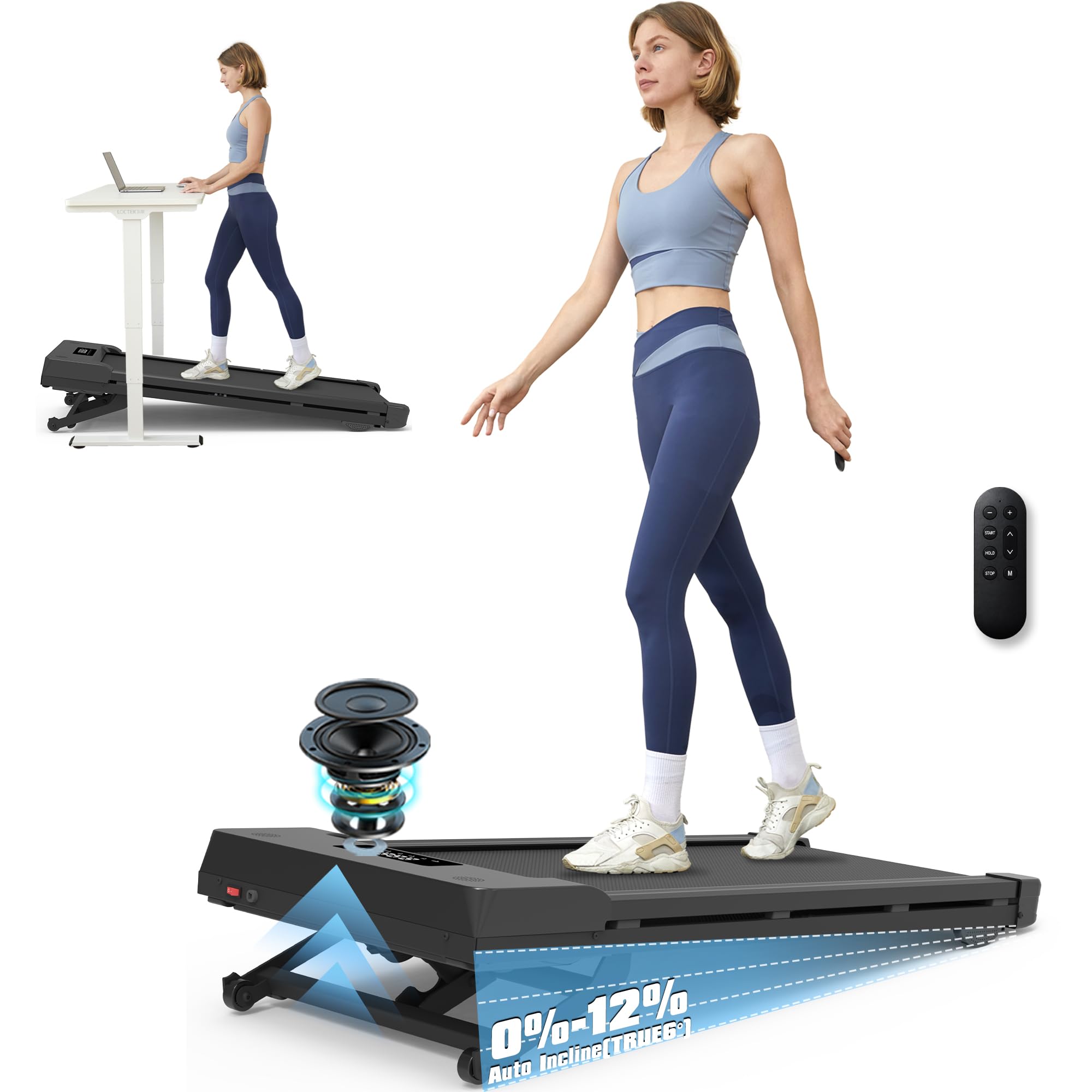
Walking on a flat surface is fine, but walking at an incline is dramatically more effective. An auto incline of 12% (as seen on the PACEROCKER) or even 20% (VITALWALK) simulates hiking uphill, engaging your glutes and hamstrings and boosting calorie burn without you having to walk faster. Some models offer manual incline, which requires you to stop and adjust a lever—a minor inconvenience, but a big convenience win for auto models you can control via remote while typing.
Quick Comparison
| Model | Best For | Motor Power | Deck Size (LxW) | Max Incline | Amazon |
|---|---|---|---|---|---|
| PACEROCKER Walking Pad★ Best Overall | Best Overall / Incline Training | 2.5 HP | 40″ x 16″ | 12% Auto | Amazon |
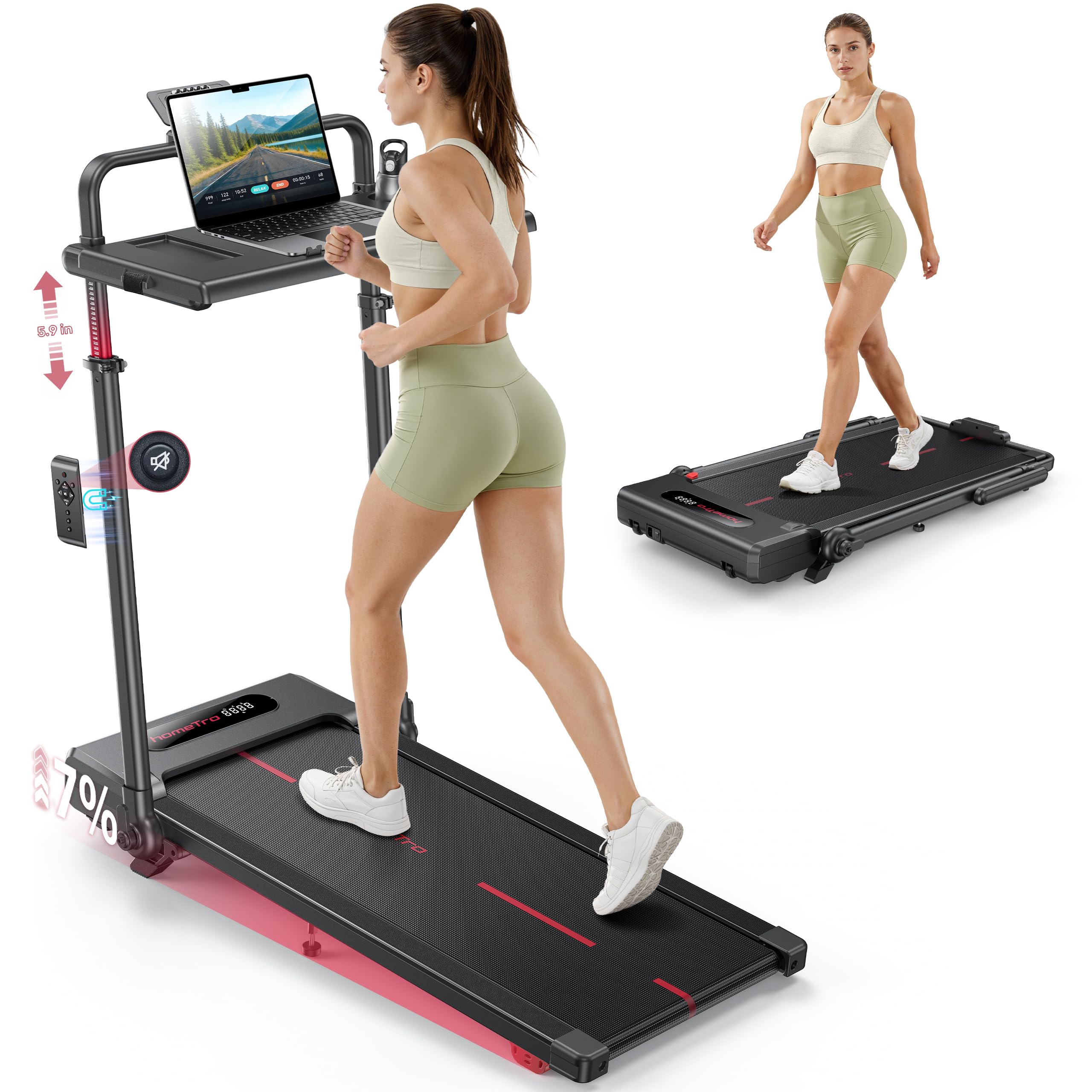
| HomeTro 3-in-1Top Performer | Adjustable Handlebars | 3.0 HP | 39.4″ x 15.75″ | 7% Auto | Amazon |
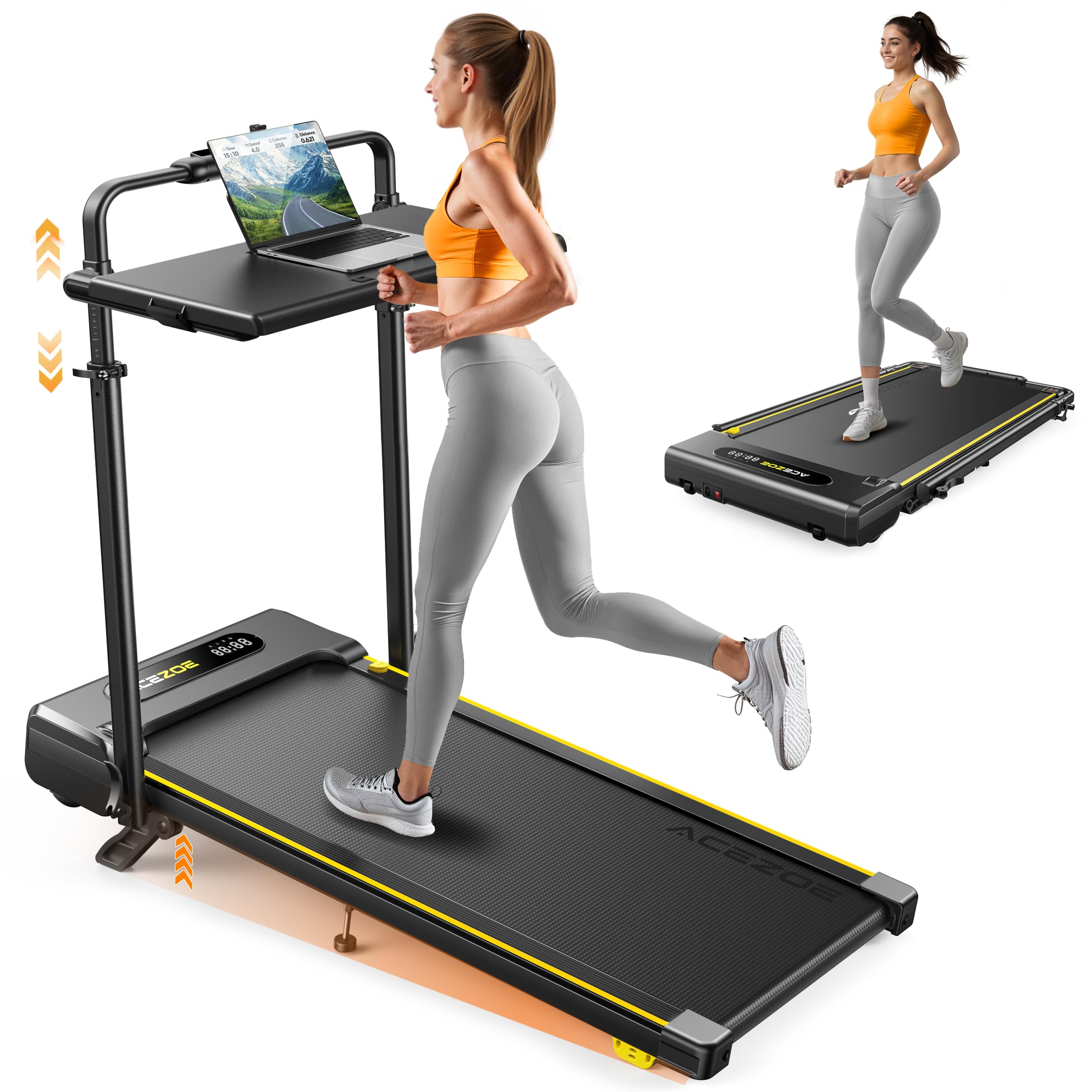
| Acezoe 3-in-1Most Versatile | Versatile App Control | 2.5 HP | 40″ x 16.3″ | 10% Manual | Amazon |
| GYMAX 3-in-1 | Work-From-Home Setup | 2.5 HP | 41″ x 16″ | — | Amazon |
| FINEHORSE Walking Pad | Incline on a Budget | 2.5 HP | 39.4″ x 15.7″ | 13% Auto | Amazon |
| WalkingPad Z1 | Compact 180° Fold | 2.0 HP | 47.6″ x — | — | Amazon |
| Orealla 3-in-1 | Shock Absorption | 3.5 HP | 46.8″ x 20″ | 12% Manual | Amazon |
| WalkingPad P1 | Classic Design / Light Use | 2.0 HP | — x 16.5″ | — | Amazon |
| WalkingPad X218 | Premium Runner’s Choice | 3.5 HP | 55.1″ x 20″ | — | Amazon |
In-Depth Reviews
1. PACEROCKER Walking Pad Treadmill
Our pick — over 4.5★ from 600+ verified ratings; the strongest balance of quality and price.
The quiet overachiever that turns a flat walk into a hill climb under your desk.
What wins people over here is the noise level — or rather, the absence of it. Owners consistently report it runs whisper-quiet, which is non-negotiable if you are taking Zoom calls while you walk. The 2.5 HP motor pairs with a 9-level auto incline system reaching 12%, giving you a genuine calorie-burning boost without breaking a sweat at your keyboard.
It is a heftier unit at 43 pounds, but that weight delivers stability. Owners mention it feels sturdy even at 6’1″ and 200 lbs, and the built-in wheels make it simple to slide under a sofa or bed when the workday ends. The 40″ x 16″ deck is on the shorter side, so it is tune for walking, not running, and the included FitYo app adds scenic routes and coaching if you want a little motivation.
Here is the honest trade-off: the built-in calorie tracking is sensor-based and often inaccurate compared to a wearable. As customers note, the app might show 150 calories burned while your smartwatch says 65-75. Treat the display as a rough estimate and pair it with a fitness tracker if you want real numbers. It does deliver a 3-year warranty, which shows confidence in the build.
What Owners Love
- Remarkably quiet at walking speeds, safe for office or late-night use
- 12% auto incline adds real challenge without extra speed
- Stable and sturdy for users up to 6’6″
- 45 lbs less than the GYMAX, making it easier to move around
The Catch
- Calorie counter is unreliable, treat it as a guess
- Belt is narrow and short; this is for walking only
- App integration can be finicky on some batches
Your Best Bet: If you want a quiet, incline-capable walking pad that slides under a standing desk and just works, this is the one.
Who Should Skip: Runners or anyone over 6’6″ will find the 40-inch deck too short for a full stride.
2. HomeTro 3-in-1 Treadmill
A 3-in-1 workhorse with the most adjustable handlebar we have seen at this level.
If you have ever tried a treadmill desk and found the handlebars digging into your ribs, the HomeTro solves that. Its support handle adjusts through a 32.7–38.6-inch range and rotates 270°, so you can find a natural arm position whether you are 5’2″ or 6’2″. That focus on ergonomics is a huge reason it holds a strong rating.
Under the hood, a 3.0 HP motor pushes the belt up to 7.5 MPH when you raise the handles, and it includes a 7% incline that you can adjust without any tools. The 15.75″ x 39.37″ belt is standard for the category, and the removable desk tray includes a cup holder and phone slot, so your coffee and screen stay put while you walk.
The standout feature is the four workout modes — Walking, Running, Fat Burning, and Office Walking — which tailor the belt behavior to your task. A dual LED screen tracks your speed, distance, time, and calories, and Bluetooth links to a fitness app for training plans. Reviewers point out it folds easily and tucks under a bed, solving the storage problem.
Standout Strengths
- 270° rotating, height-adjustable handlebar fits varied body types
- 3.0 HP motor is noticeably stronger than the 2.5 HP standard
- Four dedicated modes for walking, running, and fat burn
Worth Noting
- Heavier than expected, cumbersome to fold daily
- Desk tray can slide down when raised to the highest position
- Max incline is 7%, lower than the 12% on the PACEROCKER
Reach for this if: You want a full 3-in-1 solution with a sturdy handlebar and a motor that can handle jogging.
Look elsewhere if: You need extreme incline grades or a featherlight pad for daily folding.
3. Acezoe 3-in-1 Under Desk Treadmill
This one fights back against the “handlebar too low” complaint with an adjustable height design.
The Acezoe is built around one key insight: posture. The handlebar height is adjustable, so you don’t have to hunch forward to grip the bars, which protects your back and waist during long walking sessions. It earned a strong 4.6-star average for exactly this kind of thoughtful design.
It weighs 56.9 lbs, making it a middleweight, but the front wheels and foldable frame make it easy to slide under a sofa. The running surface is 40″ x 16.3″, and it offers a 10% manual incline—you have to stop to adjust it, but that incline burns more calories than a flat walk. The 2.5 HP motor supports up to 300 lbs and hits a top speed of 7.5 MPH.
The smart app is a real differentiator here. You can adjust speed, track workout data in real-time, and even join online running competitions with friends to keep yourself accountable. It includes 12 preset programs, and the desk attachment is rated for laptops, making it a true work-and-walk station.
Why It Stands Out: The app integration and adjustable handlebar make it the best pick for families where multiple people of different heights will use it.
Think Twice If: You are above 6’3″ — the 40-inch deck is designed for walking, not extended running strides.
4. GYMAX 3-in-1 Folding Treadmill
The budget-friendly WFH companion with a real desktop, not just a flimsy tray.
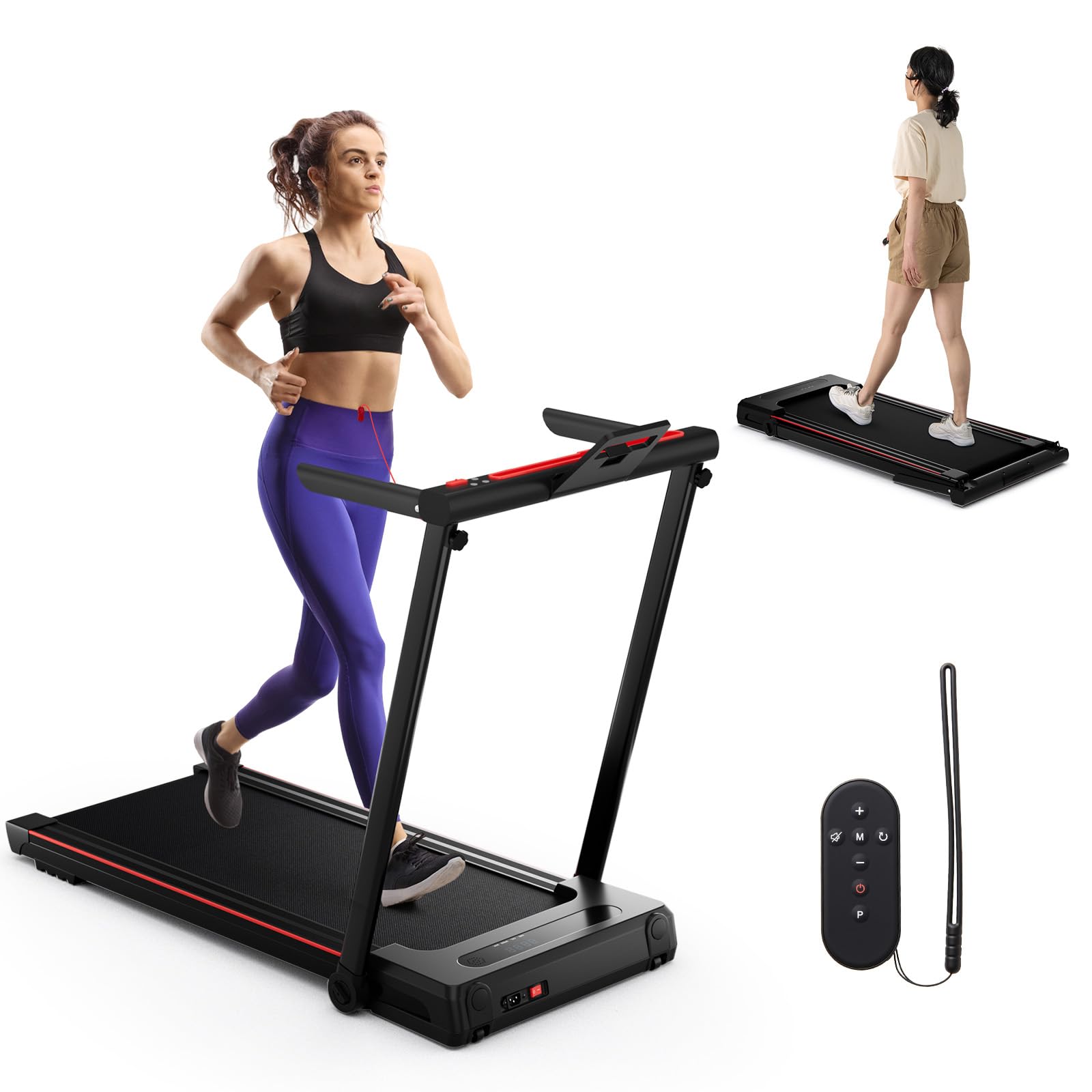
The GYMAX brings a 26.7″ x 13″ table top to the party, which is large enough for a standard laptop plus a mouse. It features three exercise modes: walk with the desk attached, jog holding the handrails, or run with the handrails folded down entirely. That kind of flexibility makes it a strong entry-level pick.
Assembly is the thing everyone raves about — shoppers say it is extremely quick and easy, with one noting it folds completely flat to fit under a couch. The 2.5 HP motor handles walking and light jogging, and the built-in LED display tracks speed, distance, time, calories, and steps. It includes 12 preset training programs so you can vary intensity without fiddling with the remote.
There is a catch regarding size: at 68 pounds, it is 25 lbs heavier than the PACEROCKER, and it lacks any incline function. Buyers also note the deck is short, with one 5’9″ owner mentioning their heel hits the end when slacking off stride. The desk height is non-adjustable, which can be awkward for taller or shorter users.
Where It Excels: If you want a dedicated work-from-home station with a sturdy, good-looking desktop, this delivers at a budget-friendly price.
Where It Falls Short: The non-adjustable desk and lack of incline make it less versatile than the PRACEROCKER, but it is a superb first treadmill desk.
5. FINEHORSE Walking Pad with 13% Incline
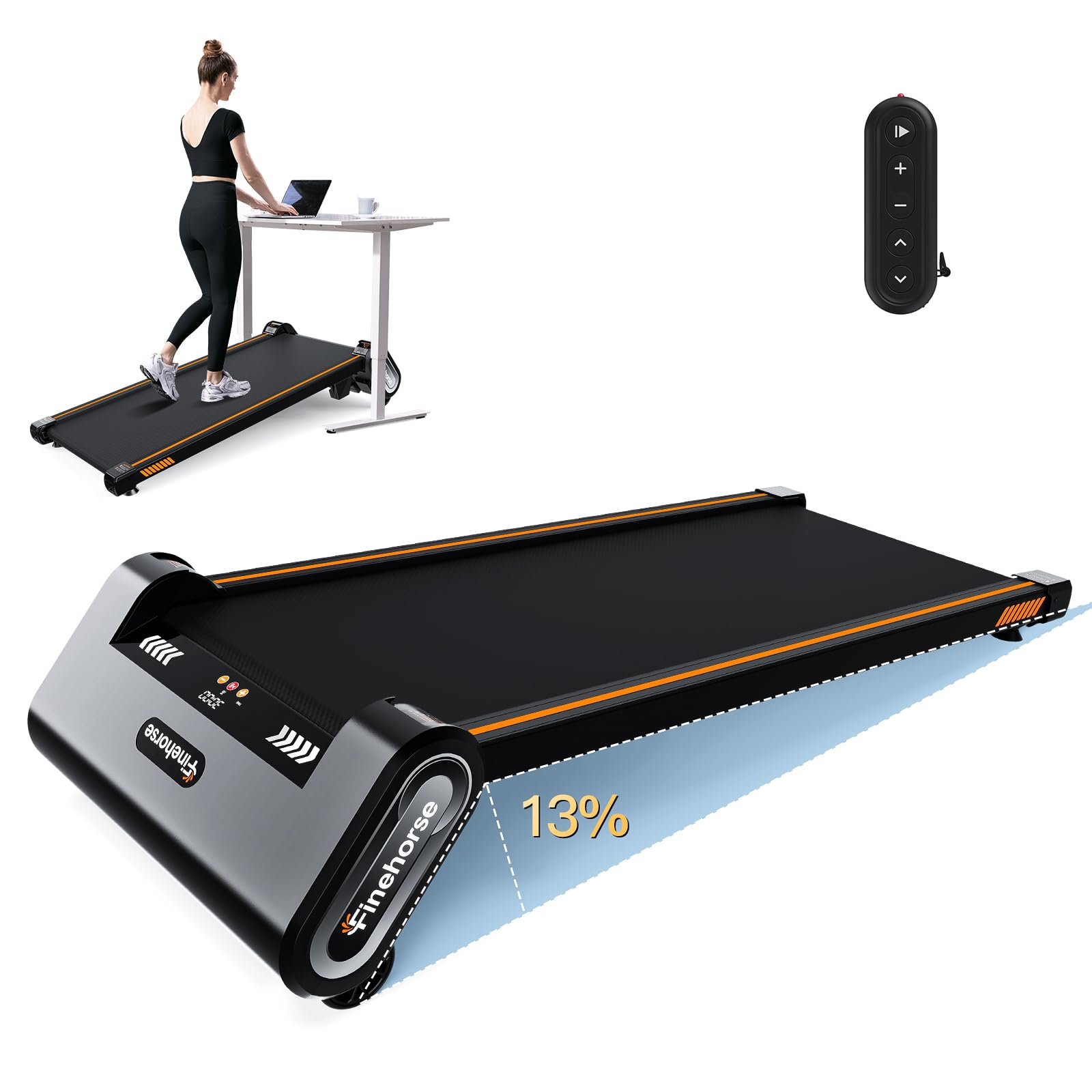
This pad sneaks a high 13% incline into a slim, affordable frame.
The FINEHORSE is a lesson in prioritizing specs. For a mid-range price, it packs a 6-level auto incline that peaks at 13%, beating the PACEROCKER’s 12% and the HomeTro’s 7%. That makes it a fantastic choice if you want to burn calories efficiently without buying a premium machine.
The 2.5 HP motor runs below 45dB, quiet enough for a home office even during conference calls. It supports up to 330 lbs, which is generous for the price, and the 15.7″ x 39.4″ running surface keeps strides stable. Owners appreciate the smooth speed control and the clear LED display, and the remote lets you adjust incline without bending down—a small luxury.
It weighs in at 48.5 pounds, making it one of the lighter incline models, and the foldable design with wheels means it slips under a desk when not in use. The 6-layer belt with 4 shock absorbers and 10 cushioning pads cushions each step to protect knees during daily walking.
The Smart Money Move: This is the best way to get a steep auto-incline without paying premium prices.
The Fine Print: It has no desk attachment, so you will need your own standing desk or a compatible tray to use it while working.
6. AKLUER Walking Pad with Adjustable Desk

The slimmest foldable that still gives taller walkers a longer stride.
If space is your number one constraint, the WalkingPad Z1 is the answer. It folds completely in half, reducing its footprint by 50% when stored flat, and stands just 4.1 inches high when in use. At 50 lbs, it’s easy to wheel under a bed or desk, even though a few owners mention it’s still fairly heavy to heft.
The headline spec here is the 47.6″ walking belt length. That is significantly longer than the 40-inch belts on the PACEROCKER or GYMAX, making it a much better fit for tall users who need a natural stride without your heel clipping the back edge. The low-profile deck also makes stepping on and off feel safer and more confident.
It uses a 2.0 HP brushless motor that is quiet and energy-efficient, with speeds ranging from 1 to 4 mph—perfect for walking while you work. It supports up to 242 lbs, and the simple LED display and remote keep things fuss-free. Owners who pair it with an adjustable standing desk are the happiest.
Why It Wins: The long belt in a slim, foldable body is a rare combination—it solves the two biggest complaints (space and stride) at once.
Consider This: It maxes out at 4 mph, so it’s strictly for walking, not jogging or running.
7. Orealla 3-in-1 Foldable Treadmill

A powerful motor meets a knee-saving cushion system for longer, comfier sessions.
The Orealla targets a specific pain point: joint impact. Its 5-layer slip-resistant belt with 8 silicone shock absorbers and 2 soft rubber pads cushions every footfall. For sensitive knees or ankles, this model’s cushioning system is the best protection during extended walking.
Underneath, a 3.5 HP motor is the strongest in the sub- range, pushing speeds up to 7.5 MPH and supporting 300 lbs. It offers a 12% manual incline, which requires a quick stop to adjust, but gives you serious hill-climbing potential. The 46.8″ x 20″ belt is also wider than most, giving your feet more room to land naturally.
The design is practical: no assembly needed from the start, built-in wheels for moving, and a multi-function LED display showing time, calories, speed, and distance. It offers 12 preset programs and folds compactly to fit under a bed or couch. Buyers consistently note it is remarkably quiet and easy to set up.
The Core Appeal: You get premium-grade shock absorption and a strong 3.5 HP motor without paying a premium price.
The Trade-Off: The 12% incline is manual, not auto, so you have to step off to change the angle.
8. WalkingPad P1 Foldable Treadmill
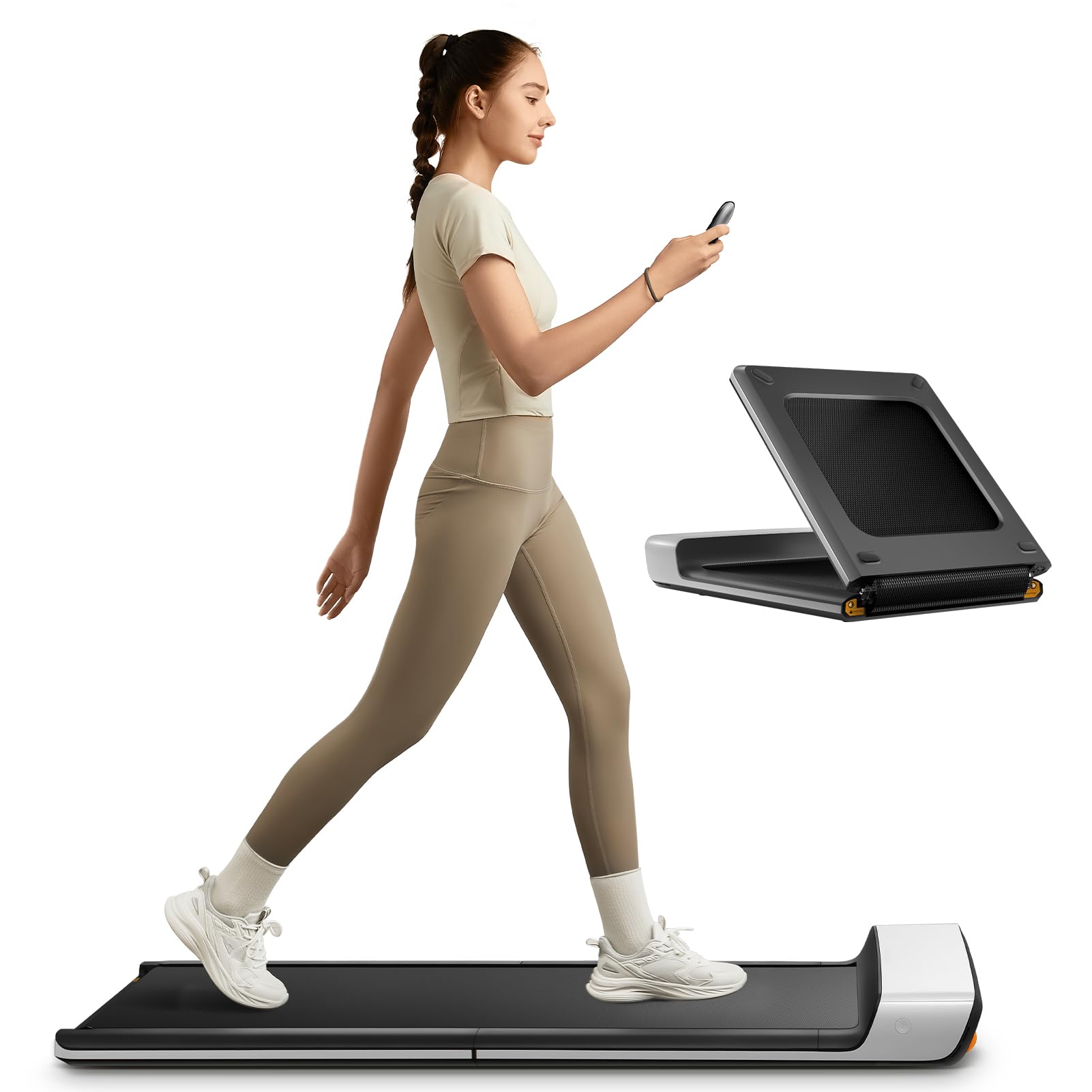
The minimalist’s walking pad with a FootSense feature that starts and stops with your steps.
The WalkingPad P1 is famous for its FootSense control—you step to the front of the belt to start walking and step to the back to pause, no remote fiddling required. That hands-free control is a standout when you are mid-typing and need to slow down quickly. It’s a clean, almost furniture-like design in a light gray aluminum unibody.
The 16.5″ wide belt is a highlight, offering more side-to-side freedom than the 16-inch belts on other models, which helps you feel less confined while walking. The motor is a quiet 2.0 HP unit, pushing speeds from 0.5 to 3.75 mph—enough for a brisk walk but not a jog. It folds in half for storage, and at 62 lbs it’s stable but still wheelable.
Owners have logged serious miles on this thing, with one citing 500+ km walked and 7kg lost. The recurring notes are that it’s silent during meetings and feels solid underfoot. However, buyers do mention the companion app can be buggy—it occasionally overcounts miles or loses data if you don’t open it daily—so treat it as a basic tracker, not a reliable log.
What Delights: The FootSense controls and wide belt make it the easiest, most natural pad to walk on all day.
What Frustrates: The app is the weakest part; the pad itself needs silicone belt oil every few months to stay quiet.
9. WalkingPad X Series Folding Treadmill
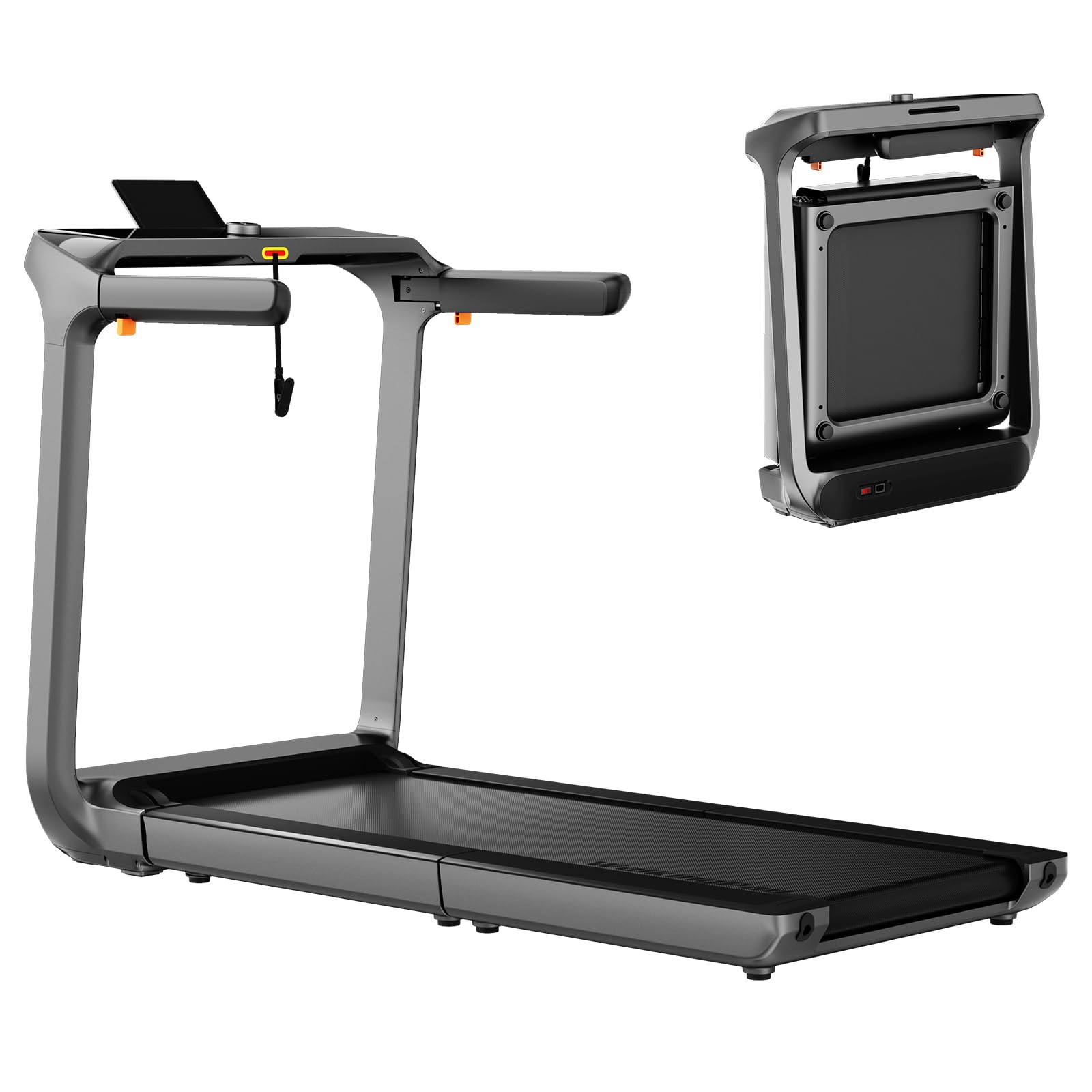
The premium runner’s treadmill that folds vertically to save floor space.
This is the outlier of the group: a true running machine disguised as a compact walking pad. The WalkingPad X218 hits speeds up to 11.5 mph, which means it’s not just for walking—it handles sprints and high-intensity interval training. The 55.1″ x 20″ running surface is the longest and widest here, accommodating a full, natural running stride.
Storage is the magic trick. It uses a tri-fold design that lets the deck fold in half and stand upright, so it takes up a vertical sliver of space rather than lying flat on your floor. At 131 lbs, this is a serious piece of equipment meant to stay in a corner, not be hauled around. The 3.5 HP brushless motor keeps things quiet even at higher speeds.
Control is handled by a smooth rotary dial and a sleek LED display, with a companion app for tracking calories, distance, heart rate, and speed. Buyers are impressed with the build quality and how compact it folds, with several noting it transformed their daily fitness routine. The dual side handrails provide extra stability for runners.
The Investment Justification: If you want a single machine that covers slow office walking and serious sprint training, this replaces both a walking pad and a full treadmill.
The Reality Check: It is the most expensive pick by a wide margin, and the price reflects the premium motor and engineering.
Understanding the Specs
Motor Power (HP)
This is the engine. A 2.5 HP motor is the bare minimum for a walking pad, comfortably moving most users up to 300 lbs at walking speeds. Jump to 3.0 HP or 3.5 HP (like the HomeTro or Orealla) and you gain the ability to jog, plus the motor runs cooler and quieter. Higher HP also means the belt is less likely to stall when you push harder.
Auto vs. Manual Incline
An auto incline (like the 12% on the PACEROCKER or 20% on the VITALWALK) lets you adjust the slope with a remote while you keep typing. A manual incline (like the 10% on the Acezoe) requires you to step off and move a lever. Auto is vastly more convenient for a desk setup because you can change intensity mid-sentence.
FAQ
Is a treadmill desk actually good for you?
How fast should I walk on a treadmill desk?
Will a treadmill desk fit under my existing standing desk?
What is the best speed for weight loss on a treadmill desk?
Is a 2.5 HP motor enough for a treadmill desk?
What does the incline percentage actually mean?
How much maintenance does a walking pad need?
Will a treadmill desk disturb people around me?
Final Thoughts: The Verdict
Across the board, the working treadmill desk winner is the PACEROCKER Walking Pad because it delivers the perfect blend of quiet operation, a steep 12% auto incline, and a price that undercuts rivals. If you want the strongest motor and a fully adjustable handlebar for varied heights, grab the HomeTro 3-in-1. And for heavy-duty users who want the steepest 20% incline and a 400 lb capacity, the VITALWALK Apollo 11 Max is the one to reach for. The crowd favorite is the PACEROCKER—it holds a 4.6-star score across 600+ owners who consistently praise its silence and stability.
How We Picked
We do not accept paid placement. Every pick is matched to a real buyer and a real use-case; we do not hands-on test units.
Sources & Methodology
Specifications: manufacturer listings and product documentation. Review insights: verified customer reviews, as of August 2026. Pricing: not shown on this page (it changes often); check the current price via the retailer link.
As an Amazon Associate, Calories Fit earns from qualifying purchases. This does not affect which products we feature.