
Our readers keep the lights on and the coffee maker working hard! As an Amazon Associate, I earn from qualifying purchases.
Specs are compiled from manufacturer listings and verified buyer reviews and can change over time — please confirm the key details on the product page before buying.
Walking on ice shouldn’t feel like a high-stakes balancing act. That wobbly, heart-in-your-throat shuffle across a frozen driveway is exactly what the best winter shoe cleats are built to eliminate. This guide breaks down the top traction add-ons that strap, stretch, or bind onto your boots so you can walk, hike, and shovel with real confidence instead of crossed fingers.
I’m Mohammad — the founder and writer behind Calories Fit. This guide is built by comparing the manufacturers’ published specifications and the patterns across verified customer reviews, so you get each pick’s real strengths and trade-offs instead of marketing spin.
We’ve compared spike counts, materials, and real-world grip reports to help you choose the winter shoe cleats that match your winter routine, from quick dog walks to work-site shifts.
Our Picks at a Glance


How To Choose The Best Winter Shoe Cleats
You need ice cleats that match how you actually move in winter—whether that’s hiking trails, commuting to work, or standing on a frozen job site. The three specs that decide your safety are the spike material, the frame that holds them, and how they fit your boots.
Match the Spike Type to Your Terrain
For most icy sidewalks and packed snow, stainless steel spikes dig in beautifully and resist rust. If you’re facing hard, glare ice, tungsten carbide is the tougher choice — it’s a very hard metal that bites into slick surfaces that regular steel can skate across. For muddy trails or mixed terrain, a full-foot pattern with heel and forefoot coverage keeps you stable through your natural stride.
Consider the Frame: Rubber vs. Binding
Stretch-on rubber cleats are the go-to for speed and convenience — you pull them over your shoe like a sock and you’re out the door. If you wear heavy work or pac boots, you’ll want a cleat with adjustable straps or a binding system that cinches tight from heel to toe, because stretch rubber alone can pop off wide, bulky soles. Think about how fast you need to gear up versus how firmly the cleat needs to lock on.
Quick Comparison
| Model | Best For | Spike Count | Spike Material | Weight | Amazon |
|---|---|---|---|---|---|
| Tomaje 24 Spikes★ Best Overall | The Best Overall ice and snow grip | 24 per foot | Stainless Steel | 13.6 oz | Amazon |
| TRIWONDER 18 SpikesBest Value | Aggressive traction on a budget | 18 per foot | Stainless Steel | 0.37 kg | Amazon |
| SILANON With Adjustable StrapMost Versatile | Reliable grip with extra security | 24 per foot | Stainless Steel | 0.34 kg | Amazon |
| Limm Standard | Simple daily commutes and shoveling | 24 per foot | Steel | 0.31 kg | Amazon |
| ICETRAX Pro Tungsten | Hard ice and work-ready use | 11 per foot | Tungsten Carbide | — | Amazon |
| SYOURSELF with Straps | A secure fit that lasts all winter | 12 per foot | 304 Stainless Steel | 0.34 kg | Amazon |
| Due North All Purpose | Industrial work on ice and ladders | 12 per pair | Military-Grade Tungsten Carbide | — | Amazon |
| Yaktrax Diamond Grip | A natural stride across varied terrain | Diamond Beads | Case-hardened Steel Alloy | 12.8 oz | Amazon |
| STABILicers Maxx 2 | Heavy-duty security for any boot | — | Steel | 16 oz | Amazon |
In‑Depth Reviews
1. Tomaje 24 Spikes Crampons
Our pick — over 4.5★ from 600+ verified ratings; the strongest balance of quality and price.
The 24-spike workhorse that owners trust on hard ice and rough winter trails alike.
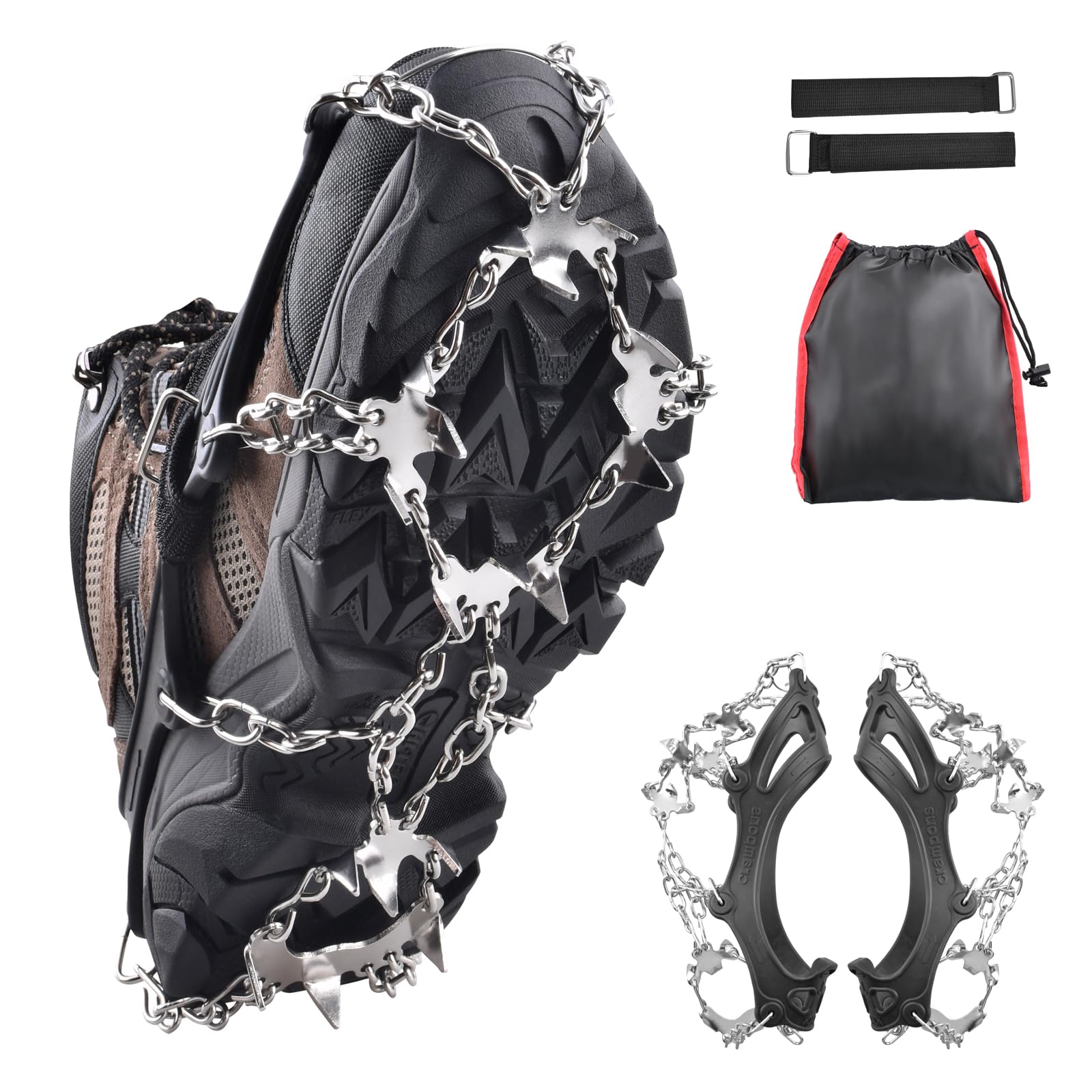
What wins people over here is sheer effectiveness — the most-praised trait in the owner feedback. The 24 stainless steel spikes are welded onto a double chain, and that combination is what makes you feel planted on slick surfaces. This is the pair that owners say is superior to their old stud cleats, holding firm over a 3-mile icy hike with confident grip on inclines and rocks.
The frame is a stretchy, cold-resistant silicone that stays strong down to -30℃, so it won’t tear or snap in deep winter. It folds down small enough to slip into a backpack without hogging space. The adjustable Velcro straps cinch the fit around your boot for extra security, and the included storage bag keeps everything together.
At 13.6 ounces, it’s portable enough to carry “just in case.” The consensus is that sizing matters — a men’s size 8 fits best in a medium. The Velcro straps get mixed reviews: some find them useless on wide boots, while others say they’re fine once you get them positioned. The real-world proof is in the praise: durable spikes hold up under a 240-lb load without bending or breaking.
What Makes It Stand Out
- 24 stainless steel spikes provide excellent traction on ice, snow, mud, and wet grass
- Double-welded chain makes the spikes stronger and more rust-resistant
- Stretchy silicone stays elastic in cold down to -30℃
Minor Trade-offs
- Velcro straps can feel flimsy and may come undone on wide boots
- Getting the right size is essential for the snug, secure fit you want
Reach for this if: you want a dependable, all-around performer for hiking, fishing, and icy commutes that owners consistently rate as effective.
Think twice if: you have very wide boots and need the strap to be a main security feature rather than a backup.
2. TRIWONDER Crampons
An 18-spike grip that feels aggressive underfoot and slips on without a fight.
You get confident footing on icy hillsides, with owners calling the grip “awesome.” Each foot has 18 heat-treated stainless steel spikes (hardened metal that bites into ice) held by reinforced chains, and the rubber is a TPE (thermoplastic elastomer—a flexible plastic) that’s 5 mm thicker than standard rubber, so it stays bendable down to -31 ℉. It fits sneakers, hiking boots, or work shoes.
Buyers who faced real storms report feeling “very confident walking around” on a layer of ice over snow — exactly the scenario winter cleats exist for. The stretch-on design is simple: pull it over the toe, stretch to the heel, and adjust the front wire. Two included Velcro belts add extra security if you want it.
At 0.37 kg, it’s on the heavier side of the stretch-on options — noticeably more substantial than the 0.34 kg SILANON pair above. The main complaint isn’t performance but instruction: the lack of clear guidance on the supplied straps frustrates a few buyers. An 18-month warranty backs the purchase, which is rare at this tier.
Owner Consensus: Traction is the headline — praised most by far — and the quality and safety features follow close behind. The absence of setup instructions is the recurring gripe.
Best for: budget-conscious buyers who want aggressive grip and a generous warranty without paying a premium.
Look elsewhere if: you need clear, step-by-step setup guidance or prefer a lighter stretch-on cleat.
3. SILANON Ice Cleats with Adjustable Strap
Serious bite on hard ice with a full-foot pattern that moves with your natural stride.
“No slipping!” is the review-page refrain here, with owners clearing snowy cars and walkways on solid ice without a worry. The 24 stainless steel teeth per foot are arranged across the heel and forefoot, so you get traction throughout your whole step rather than just at the toe. It’s a system that one owner credits with saving them from treacherous, hidden ice on upstate New York sidewalks.
The adjustable strap adds stability, anchoring the cleat to your footwear so it doesn’t shift mid-stride. Despite the heavier-duty feel, it weighs just 0.34 kg and folds up small enough for a pocket.
Durability gets mixed reviews. Some owners say a pair lasts about four years of heavy use before the spikes wear down, but a few report the toe section sliding off after walking more than 0.5 miles if you skip the Velcro strap. The consistent fix owners recommend: always use the strap.
Features Owners Rely On
- 24 stainless steel teeth per foot for solid grip on ice and rocky terrain
- Adjustable strap keeps the cleat anchored and stable on your boot
- Rubber stays elastic in cold down to -40 ℉
The Honest Catch
- The toe can work loose on longer walks if you don’t use the strap
- Durability is a mixed bag, with some pairs outlasting others significantly
Choose this if: you want full-foot coverage plus an extra strap to stay secure on slippery, unpredictable winter walks.
Pass on it if: you need a cleat that survives years of daily, heavy-duty abuse without any fuss.
4. Limm Ice Snow Traction Cleats

A no-fuss, slip-on traction aid that’s a natural fit for daily commutes and driveway duty.
This is the “leave them by the door” pair — owners say they’re perfect for icy sidewalks and hiking trails, easy to slip on and even easier to slide off. The full-sole pattern uses 24 steel crampons placed on heel and forefoot, which keeps your footing firm whether you’re shoveling snow or walking the dog. One Maine resident reports they fit perfectly over size-13 Merrill’s and Muck boots through a Nor’easter.
The top membrane is a non-tear, non-snap TPE elastic rubber that stays flexible in extreme cold. Lightweight at 0.31 kg — the lightest of the stretch-on options here — these roll up nicely into a purse, work-bag, or pocket. That portability is the selling point for commuters who only need traction for the walk from the car to the office.
Owners warn they can slip off in deep snow if not secured, so adding a strap is the common fix. The spikes hold up on icy driveways without scratching your deck, and they rinse clean easily. Compared to the SILANON’s strapped security, this 24-spike option gives you a lighter, quicker on-and-off fit.
The Take: Grip on ice is the headline — owners call it terrific for sidewalks and trails. The trade-off is a tendency to come off in deep powder without a securing strap.
Perfect for: casual winter walkers and shovelers who value quick, easy gearing up and don’t want heavy hardware on their feet.
Not ideal if: you regularly trek through deep, loose snow where a loose-fitting cleat could get pulled off.
5. ICETRAX Pro Tungsten Grip

A tungsten-tipped gripper that bites into hard ice while keeping you visible after dark.
Where the 24-spike options rely on quantity, the ICETRAX Pro makes a case for quality — 11 strategically placed Tungsten Carbide cleats that dig effectively into hard packed snow and ice. Tungsten carbide is an exceptionally hard metal, which is why owners describe good traction on thin, thick, chunky, and slick ice alike. It’s a setup born in Canadian winters and aimed at work-ready use as much as everyday walks.
The ultra-durable stretch rubber fits bulky winter boots, and the built-in heel and toe pullers make it easy to tug on over a pair of size 13 Rockports. The reflective heels add a safety layer for low-light commutes or roadside work. It’s rated for cold down to -40 degrees Celsius, so the rubber won’t stiffen up when the thermometer tanks.
The one thing to note is sizing — feedback on fit is mixed, with some owners saying it runs true to size while others had issues with the small size. Follow the size chart and use your boot size, not your shoe size, and you’ll avoid the headache. Owners who sized right report the cleats stayed snug over 5 days in Yellowstone winter without ever slipping off.
Why It Earns Its Place
- 11 tungsten carbide spikes provide excellent bite on slick ice
- Reflective heels improve visibility in low-light conditions
- Thick, durable rubber slides easily over work boots
Worth Knowing
- Fit feedback is mixed, so checking the size chart carefully is a must
- Not the pick for those who want maximum spike count per foot
Reach for this if: you face hard, glare ice and want premium tungsten grip with the convenience of a stretch-on design.
Consider another if: you’re between sizes or want the reassurance of more individual spikes underfoot.
6. SYOURSELF Ice Cleats with Straps

A strapped design with thicker rubber that is designed to outlast the winter — and the next one.
The smart upgrade here is a set of spacers at the link between the spikes and the silicone, which stops the spikes from pulling out over time — the common failure point on cheaper cleats. The body itself is made from 2.2mm thicker cold-resistant silicone, doubling up on the material most competitors use. This is the pair owners call “the best decision I’ve made this winter,” reporting zero slips on icy sidewalks.
Beneath that thicker frame sit 12 multi-directional reinforced 304 stainless steel spikes, arranged to keep you steady on varied terrain. The 304 grade steel is more corrosion-resistant than standard stainless, which matters when you’re stomping through salted streets.
The strap system takes a little figuring out — it’s genuinely fiddly for some owners, especially over bulky Muck boots. One owner noted the strap area can tear after heavy use, suggesting this is best treated as a reliable single-winter companion rather than a decade-long investment. The carrying pouch is a nice touch, keeping the cleats folded small in your pocket when you’re not wearing them.
Owner Verdict: Excellent ice grip with zero slips reported, and the strap keeps things secure. The trade-off is a strap that’s fiddly to install on heavy boots and a lifespan that may not stretch to multiple seasons.
Best for: anyone who wants a thicker, more durable rubber frame with the added security of an adjustable strap on everyday winter walks.
skip it if: you need a cleat that survives years of heavy mountain hiking or have boots that are hard to strap around.
7. Due North All Purpose Ice Cleats
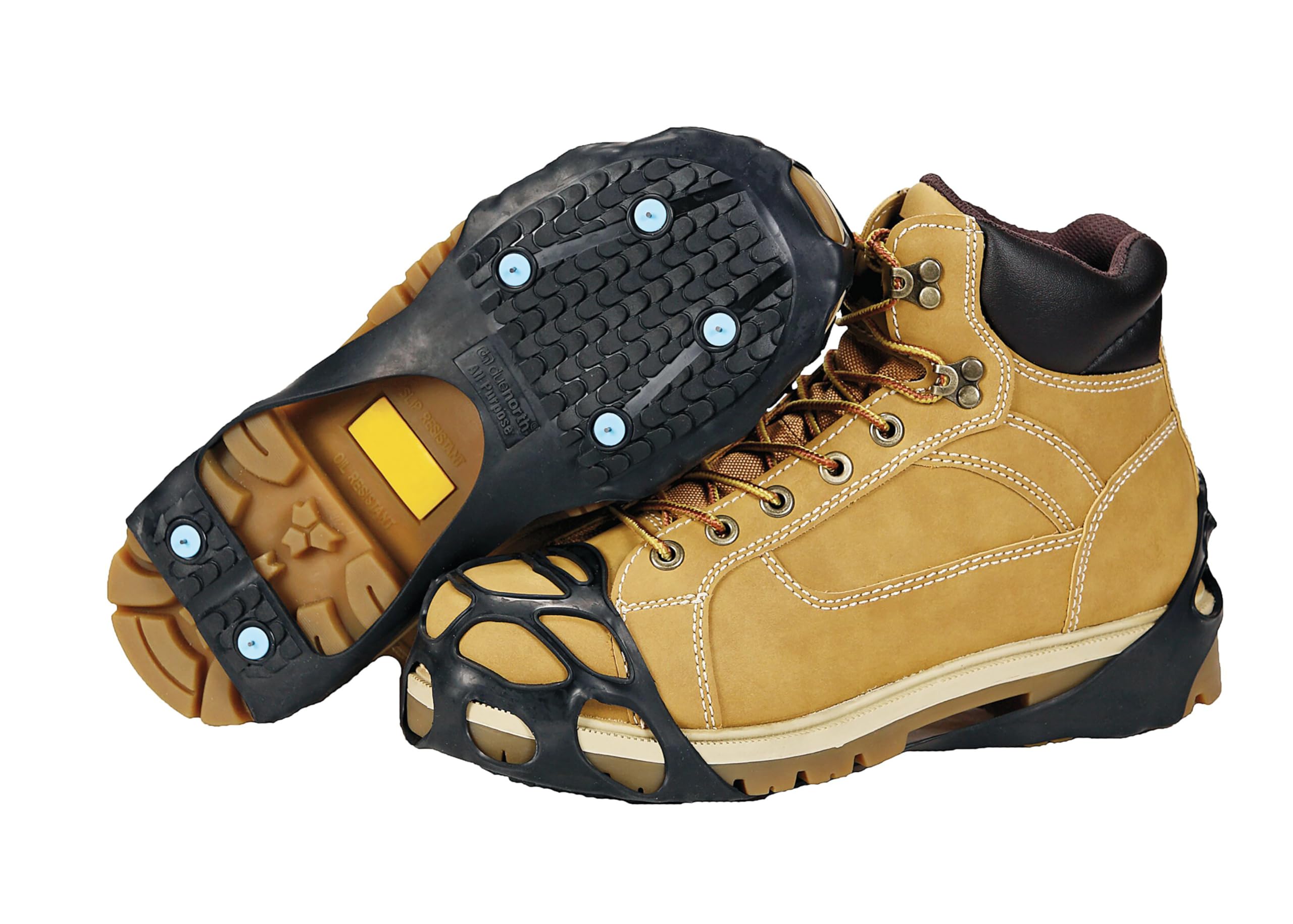
Tungsten spikes on a rubber frame built for ladders, work boots, and years of icy job sites.
This is the cleat that feels like dry pavement on ice — that’s the repeated owner experience for outdoor work on packed snow. The standout feature is the Ice Diamond spikes: military-grade tungsten carbide arranged in a staggered pattern with a water-channeling tread design. With 12 replaceable spikes per pair, you can refresh the grip instead of replacing the whole unit when they wear down.
The design is built around industrial reality. The 100% natural rubber stays flexible in extreme cold, while the exposed heel and mid-sole let you climb ladders and rungs without the cleat getting in the way. The webbed toe-box is shaped to fit work boots snugly. Owners who spend their days on their feet call it a life saver at work, and one noted it’s been going strong for 3+ years.
Sizing is the one real trap — it runs small. A women’s size 9 athletic shoe needed a Large, not a Medium, and a size 11 Sorel boot wanted the Oversized version. Owners who sized up report a durable, secure fit; those who didn’t found it too tight. The full-foot coverage makes it comfortable for all-day wear, not just quick trips.
Built For The Job
- Military-grade tungsten carbide spikes offer aggressive grip on ice
- Replaceable spikes extend the life of the cleat
- Exposed heel design is ideal for climbing ladders
Mind The Fit
- Sizing runs small, so ordering a size up is the common fix
- Can feel too wide for slim hiking shoes
Choose this if: you work outdoors on ice and snow and need a durable, ladder-friendly cleat with spikes you can replace.
Pass it by if: you’re between sizes or only need occasional grip for casual walks.
8. Yaktrax Diamond Grip

The bead-based gripper that swivels away snow so you walk naturally from trail to concrete.
Instead of fixed spikes, the Yaktrax uses patented swiveling diamond beads strung on aircraft-grade steel cables. That swivel is the whole trick: as you step, the beads rotate and shed snow and ice, so nothing packs up underfoot. Owners describe fantastic traction on extreme ice with zero slips, and one crossed a steep, firm glacier with a 35-lb pack without a single slide over 300-400 yards.
The traction points extend across the entire length of your foot, which delivers a stable, low-profile feel that’s comfortable all day. The cold-resistant natural rubber upper band stays flexible in sub-zero temps without cracking, and the easy on-and-off design is among the simplest of any cleat here. It’s the lightest walking experience of the premium group at 12.8 ounces.
The mixed feedback centers on durability — specifically the cables, with some owners reporting breakage after 40 to 50 miles of hard use. Staying on top of maintenance helps: rinse off road salt and dry thoroughly to prevent corrosion. Owners who’ve had a pair for a while recommend this as essential winter gear that transitions smoothly between snow-covered trails, gravel, and concrete.
Why It’s A Favorite
- Swiveling diamond beads prevent snow from building up underfoot
- Traction points run the full length of your foot for stability
- Easy to put on and take off, with a comfortable low-profile feel
The Real Trade-off
- Cables can break after significant mileage, especially without proper care
- Road salt can corrode the steel if not cleaned and dried
Reach for this if: you want easy transitions between icy trails and bare pavement with a natural, low-profile walking feel.
Look elsewhere if: you plan to rack up serious miles and want a spike you can replace rather than a cable system to maintain.
9. STABILicers Maxx 2 Heavy-Duty Traction Cleats
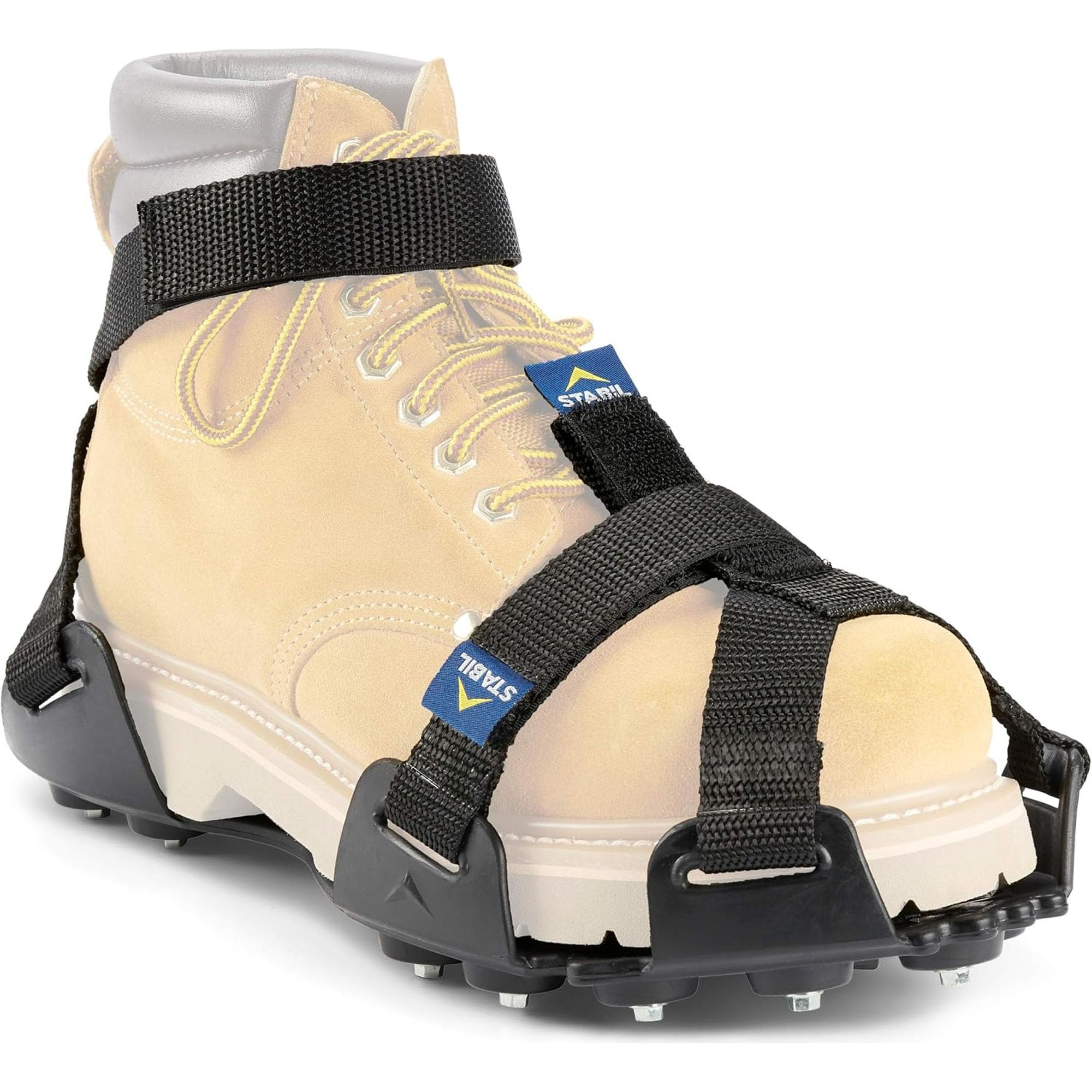
A binding-secured steel cleat with a decades-long reputation for no-nonsense ice grip.
For work-grade traction, this is the one that anchors itself to your boot with an Adjustable Sure-Fit binding system — a series of hook-and-loop straps that secure from heel to toe and hold strong even when wet. This isn’t a stretch-on; it’s a strap-on that locks to your footwear, which is why it doesn’t slide around on your shoes. Buyers report it feels stable with a secure fit, and one calls it the “best ice cleats ever.”
The heavy-duty steel design comes in at 16 ounces, making it the heaviest option here — but that weight is the point. It’s built for icy parking lots, emergency services, and seniors who need to know every step is planted. One owner has trusted their pair since 2008, surviving six years in the Arctic with periodic cleat replacements, which speaks to the long-term value.
Fit is genuinely divisive — the XL size is perfect for many, but the smaller sizes draw complaints about poor sizing. Some owners find the rubber sides too narrow for heavy insulated or pac boots, so it’s best suited to light hiking boots and standard footwear. And heed the warning: these are not for indoor use, as they get slick on linoleum and concrete. The cleat screws should be tightened periodically.
The Long View: Traction is the most-praised quality by far, and quality and ease of use follow. Durability and fit get mixed marks — owners either love the secure feel or struggle with sizing and bulky boots.
Best for: those who want a bombproof, strapped cleat for icy parking lots and emergency-ready grip, and don’t mind the extra weight.
Not for: owners of wide, heavy pac boots who need a stretch-on design, or anyone whose size falls outside the well-fitted XL range.
Understanding the Key Specs
Spike Count and Material
More spikes generally mean more grip points, but the metal matters just as much. Stainless steel is the everyday workhorse — rust-resistant and great for snow and ice. Tungsten carbide is a harder metal that bites aggressively into glare ice, which is why the Due North and ICETRAX models use it despite having fewer spikes. The number you see (like 24 or 18) refers to spikes per foot, so a “24-spike” cleat actually means 24 on each boot.
Frame Type: Stretch-On vs. Strap-On
Stretch-on cleats use elastic rubber (like silicone or TPE) that you pull over your shoe like a sock — fast and easy, ideal for everyday walks. Strap-on or binding designs use adjustable straps to cinch around your boot, offering a more secure fit for heavy work boots and slippery conditions. Consider what you’ll wear them on: bulky pac boots often need the extra security of straps, while sneakers and hikers are fine with stretch-on frames.
FAQ
Will winter shoe cleats fit my running shoes or only boots?
How do I know what size ice cleats to buy?
What is the difference between 18 and 24 spike cleats?
Are tungsten carbide spikes better than stainless steel?
Can I wear ice cleats indoors?
How long do winter shoe cleats last?
Why do my cleats keep falling off my shoes?
What is the difference between a cleat and a crampon?
Final Thoughts: The Verdict
For most buyers, the winter shoe cleats winner is the Tomaje 24 Spikes because it pairs the highest spike count with durable, cold-resistant silicone and a proven track record of effectiveness in owner feedback. If you want the aggressive bite of tungsten on hard ice or a work-ready design for ladders, grab the Due North. And for a natural, low-profile stride that transitions easily from trail to pavement, the Yaktrax Diamond Grip is the one to reach for.
How We Picked
We do not accept paid placement. Every pick is matched to a real buyer and a real use-case; we do not hands-on test units.
Sources & Methodology
Specifications: manufacturer listings and product documentation. Review insights: verified customer reviews, as of August 2026. Pricing: not shown on this page (it changes often); check the current price via the retailer link.
As an Amazon Associate, Calories Fit earns from qualifying purchases. This does not affect which products we feature.