
Our readers keep the lights on and the coffee maker working hard! As an Amazon Associate, I earn from qualifying purchases.
Specs are compiled from manufacturer listings and verified buyer reviews and can change over time — please confirm the key details on the product page before buying.
For a young rider, the biggest time-waster on the mountain isn’t the lift line — it’s crouching down to fight with traditional straps on a freezing slope. That’s the real enemy this guide targets: bindings that slow down the fun, are hard for small hands to open, or just don’t fit growing feet. The good news is that modern youth bindings have evolved, offering quick-entry systems and forgiving flex that get kids back on the snow faster.
I’m Mohammad — the founder and writer behind Calories Fit. This guide is built by comparing the manufacturers’ published specifications and the patterns across verified customer reviews, so you get each pick’s real strengths and trade-offs instead of marketing spin.
From automatic step-in systems to classic strap bindings built for growing riders, this breakdown of the best youth snowboard bindings helps you match the right flex, size, and entry style to your child’s skill level.
Our Picks at a Glance

How To Choose The Best Youth Snowboard Bindings
Buying bindings for a young rider is different than buying for yourself. Kids grow fast, their boots change size, and their muscle strength is still developing, so the binding needs to work with them, not against them. Match the binding to boot size, weight, and skill level, not just looks.
Size and Fit Come First
A binding that’s too big or too small is unsafe and no fun. Check the manufacturer’s size chart for the boot size range, like “Small (US Men’s 4.0-5.5)” or “X-Small”. Getting the size right means their boots lock in securely without being crushed, and their heel stays planted.
Entry Style: Straps vs. Quick-Entry
Traditional strap bindings give a secure, familiar fit but require bending down to fasten each time. Quick-entry bindings, like rear-entry or automatic step-in designs, let riders click in while standing, which can save a lot of energy and time — especially for kids who ride multiple runs a day.
Quick Comparison
| Model | Best For | Entry Style | Size | Skill Level | Amazon |
|---|---|---|---|---|---|
| Nidecker Supermatic Carbon★ Best Overall | Automatic step-in convenience | Automatic Dual-Entry | Small | All levels | Amazon |
| Symbolic Quick-RatchitBudget Champion | Budget-friendly all-rounder | Traditional Buckle | XS-Lady-6-8.5 | All levels | Amazon |
| Nidecker Flow Nexus | Comfortable all-mountain flex | Rear-Entry (Flow) | Small | Beginner to Intermediate | Amazon |
| HEAD RX ONE | Fast step-in for progression | Rear-Entry Reclining | Small | Beginner to Intermediate | Amazon |
| Burton Citizen | Women’s specific comfort | Traditional Buckle | Medium (6-8) | All levels | Amazon |
| Burton Grom | First-timer little kids | Single Strap Buckle | X-Small | Beginner | Amazon |
In‑Depth Reviews
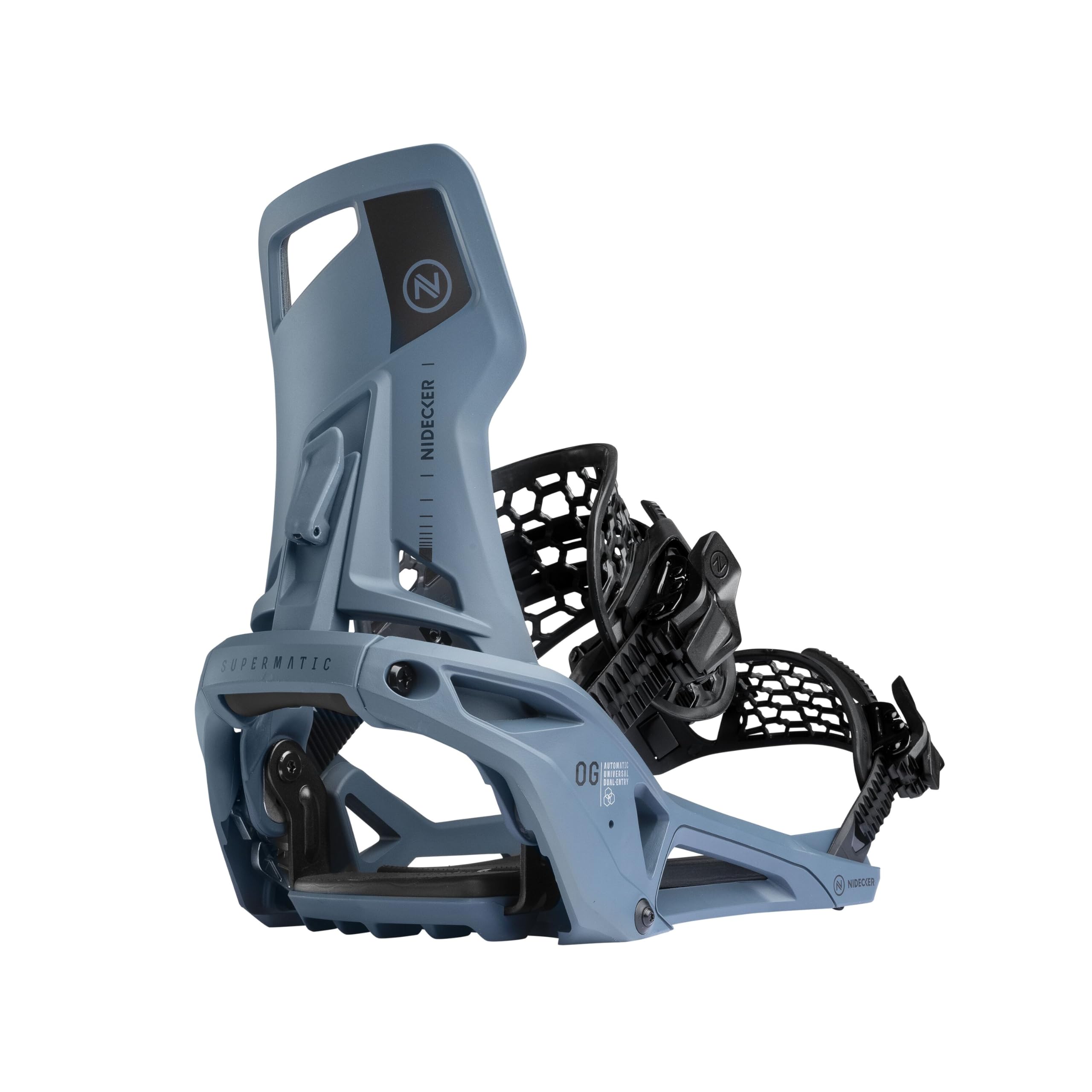
1. Nidecker Supermatic Carbon
Our pick — over 4.5★ from 150+ verified ratings; the strongest balance of quality and price.
Automatic step-in tech that skips the straps entirely.
The standout feature is the automated entry, letting riders click in without touching a strap. This cuts time between runs dramatically, sparing parents from wrestling with buckles on cold slopes.
It’s not just about convenience though. The build quality is the real star, pairing a rigid base for carving and jumps with plush straps and a padded highback to reduce fatigue. At 6 pounds versus the 10-pound Symbolic Quick-Ratchit, the Nidecker is easier for kids to manage.
The main thing to master is the initial learning curve. As owners put it, “It’s kind of hard to get used to them but once you got the movement you are set.” The trick is to loosen the middle strap to get your foot in, and to be mindful that pants can occasionally catch in the mechanism when locking in.
carbon core snap
- The ease of use is what owners rave about most — stepping in and out takes seconds, saving tons of energy on the slopes.
- Build quality feels premium and solid, ready for daily resort abuse.
- Responsive platform gives a locked-in feel without sacrificing comfort on long days.
pricey bindings
- The locking mechanism has mixed feedback; some feel secure, while a few had issues with the release lever breaking early on.
- There’s a slight learning curve to get the hang of the mechanical movement.
fast riders: The rider who wants the fastest, most modern step-in experience and values quality materials that last.
budget buyers: You’re not keen on a short learning curve, or you prefer the universal familiarity of traditional strap bindings.
2. Symbolic 2025 Quick-Ratchit
A budget-friendly package that throws in the extras.
This is the pick for parents who want a complete, wallet-friendly setup that includes everything you need to get started: the bindings themselves, a stomp pad, a leash, and all the mounting screws and discs. That “ready to go” bundle makes it a brilliant entry point for a young rider’s first full season.
It uses a classic buckle closure with a padded EVA baseplate and highback, plus an adjustable toe ramp so you can dial in the fit. At 10 pounds, it’s heavier than the 6-pound Nidecker Supermatic, but owners still find it durable on rails and boxes.
The catch with a budget pick is consistency. While many buyers report it “works great so far” and is easy to get in and out of, there is a stark warning from another buyer: “Broke the very first time we used it.” This suggests you’re trading some long-term durability for the low price and feature set.
quick stops: You need a complete, affordable bindings-and-extras package to get a beginner on the mountain without a big investment.
hard chargers: You expect them to survive several seasons of hard, daily riding — premium options are built tougher.
3. Nidecker Flow Nexus

A rear-entry binding that spreads pressure across the whole foot.
The Flow Nexus is built around reclining highbacks that open wide for fast entry and exit, then lock back down for solid power transfer. This system is a favorite for riders who find traditional toe and ankle straps too restrictive. It’s rated for beginner-to-intermediate skill levels, so it’s designed to grow with a kid who’s just learning to link turns.
Comfort is the defining feature here, thanks to the “Fusion Strap” — a one-piece strap that wraps the entire boot evenly. As owners mention, this “disperses across the foot instead of at the toe or ankle,” which kills the pressure points that cause foot fatigue on long days. The padded footbeds further dampen chatter and impacts.
Being a Flow-style binding, there’s a bit of a learning curve. Owners note “It takes a bit to get used to but once you figure it out it’s faster and convenient.” The trade-off is that the mechanism requires a firm pull to release, and one rare but serious complaint mentions it being hard to get boots out, so sizing needs to be spot-on.
easy entry: Riders who prioritize all-day foot comfort and want the quick convenience of a rear-entry system without spending top dollar.
precision tweaks: You want a traditional strap, or you’re between sizes and can’t get a perfect, snug boot fit.
4. HEAD RX ONE
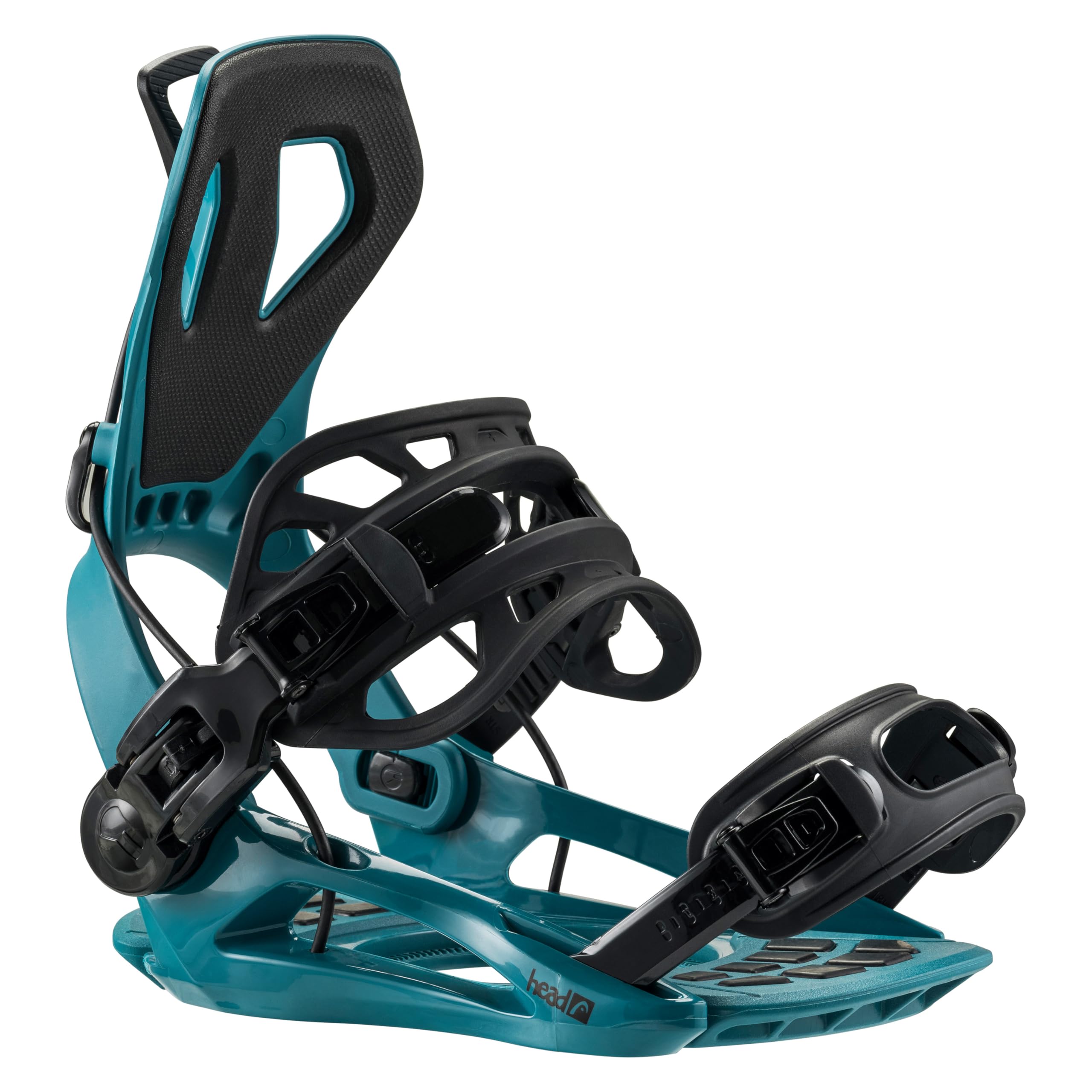
A forgiving flex that helps beginners get more runs in.
The HEAD RX ONE is engineered for progression, with a medium flex (rated Flex Index 3) that delivers a forgiving, playful feel. This is ideal for a young rider who is just learning to control the board, providing enough stability to build confidence without being too stiff and punishing.
The quick-entry design is a huge win for energy conservation. One owner’s experience sums it up perfectly: it “takes me literally like 1/4 of the time to get strapped in i can actually get like 8 more runs a day.” That extra slope time is exactly what a developing grom needs to improve.
Comfort comes from EVA toe and heel base pads plus a 3D comfort strap that molds around the boot. The lightweight FT1 base (a strong PA frame) boost energy transfer so the board reacts quickly. The most honest caveat is that one owner found the toe strap snapped on the first day — a reminder that quick-entry hardware demands care.
resort days: The beginner-intermediate rider whose main goal is maximizing runs and learning in comfort, backed by a two-year warranty.
park rats: You’re concerned about the durability of the small toe strap components under hard, aggressive riding.
5. Burton Citizen
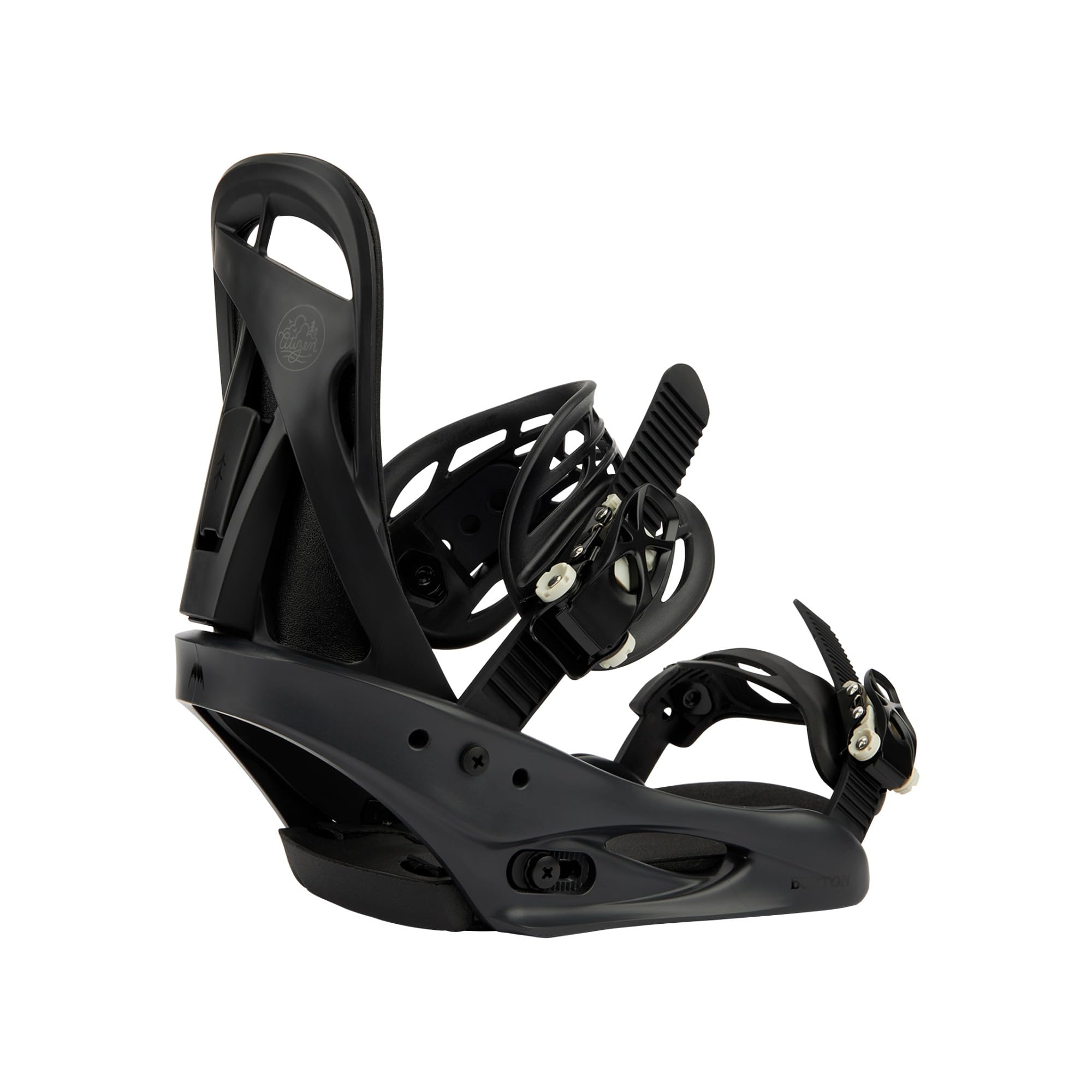
A lightweight, bomb-proof build from a legendary brand.
Burton is a name that carries serious weight in snowboarding, and the Citizen bindings show why. They’re built with a lightweight, “Bomb-Proof” polycarbonate baseplate and a single-component construction that ensures consistent response on any terrain. This is a binding that promises reliability, which is exactly what you want when kids are learning to balance.
The Re:Flex FullBED cushioning system is a standout feature for comfort, minimizing fatigue by providing full underfoot cushioning. It also comes with Burton’s lifetime warranty on the baseplate and a one-year warranty on straps and hi-backs, which speaks to the maker’s confidence in its durability.
The catch here is that it’s a women’s-specific binding, so the sizing is geared toward smaller boots (this one is Medium, fitting US boot sizes 6-8). While that makes it a fantastic option for older girls or riders with smaller feet, one buyer warned the heel cup can be too narrow for some snow boots, so trying them with the actual boots is essential before committing.
versatile all-rounder: young women or small-footed riders who want a premium, cushioned binding with a lifetime warranty on the core component.
soft flex: that your specific snow boots fit the heel area, as one owner found this model too narrow for theirs.
6. Burton Grom
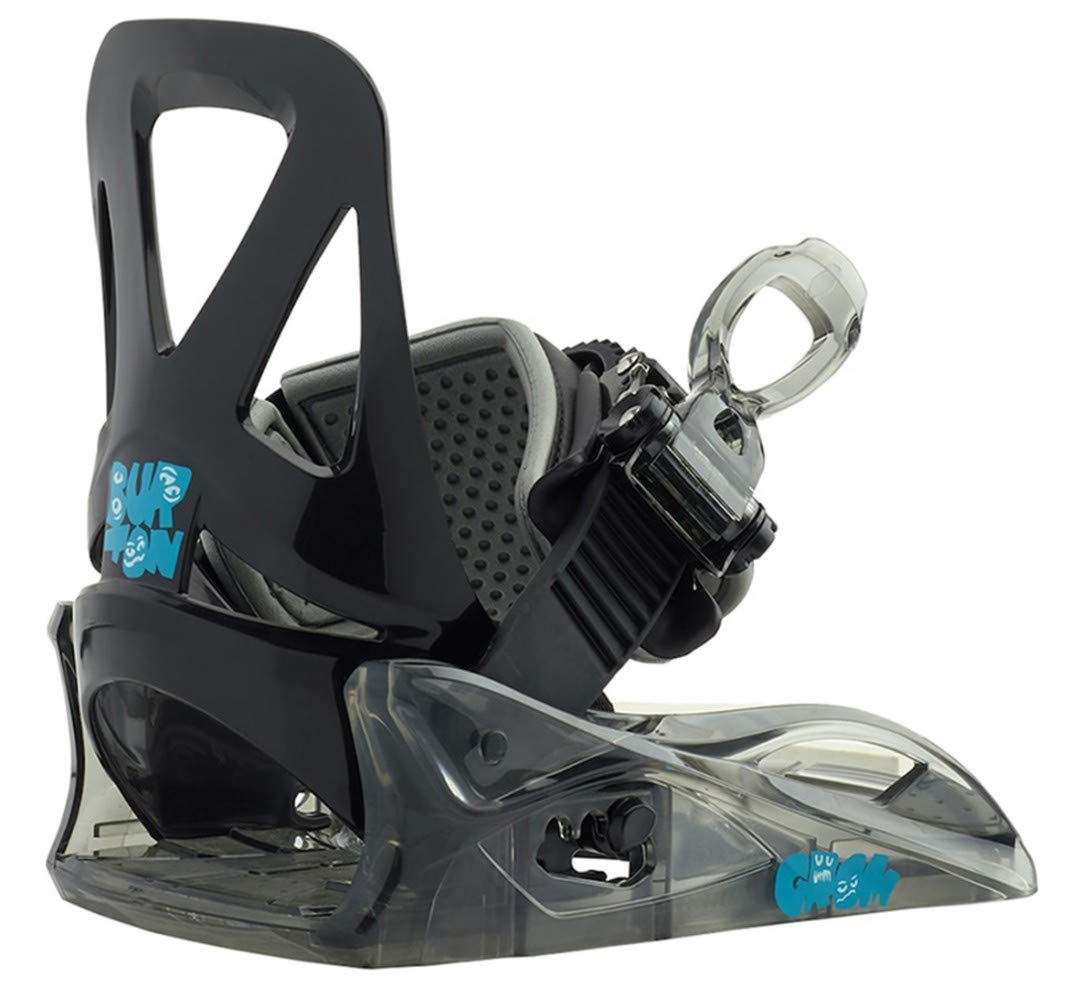
The simplest, lightest binding for a child’s very first day.
The Burton Grom is purpose-built for the youngest beginners, and its genius is in its simplicity. It features just a single strap and a lightweight, single-component hi-back, meaning there’s less to fumble with for tiny hands. It’s rated for beginner skill level and designed to fit the smallest boots (X-Small), making it a perfect first setup for toddlers and little kids.
This simplicity boosts a young rider’s confidence. Because it has one less strap to adjust, getting a wiggly four-year-old ready to ride is dramatically faster. The bindings are compatible with all major mounting systems, so they’ll work with a standard kids’ board, and the “Smack-It Ratchet” buckles are designed to be easy to secure even with mittens on.
The trade-off for that simplicity is a single strap, which offers less precise support than a traditional two-strap design. And with a limited lifespan as a child grows, it’s a short-term investment. As a review notes, it “encajan perfectamente” (fits perfectly) with boots up to a size 32 (EU), which gives a clear idea of the target age range.
kid-friendly flex: the absolute beginner, ages 3-5, who just needs a secure, ultra-simple binding to stand on while they learn the basics.
grows fast: they outgrow the X-Small size and need the extra support of a two-strap binding for real carving.
Understanding the Specs
Flex Index and Entry Style
The flex index tells you how stiff the binding is. A lower index (like the HEAD RX ONE’s Flex Index 3) means a softer, more forgiving flex that’s easier for beginners to bend and control. Entry style is about how you get in: traditional strap bindings are the classic, most familiar style, while rear-entry or automatic bindings (like the Nidecker models) let you step in without bending down, which is faster and less tiring for kids.
Size and Mounting Systems
Size is the single most important spec. It’s based on your boot size, not your kid’s age. For example, “Small (US Men’s 4.0-5.5)” fits a specific boot range, and an “X-Small” fits the tiniest feet. Mounting compatibility matters too — most bindings fit standard 4×4 and channel boards, but always check. A good pick like the Symbolic even comes with multiple discs to ensure it fits your board’s pattern.
FAQ
How do I know what size youth snowboard binding to buy?
What is the difference between rear-entry and traditional strap bindings?
Will a youth binding fit any snowboard?
How long will youth snowboard bindings last?
Is a softer flex better for a beginner child?
Are “step-in” bindings safe for young kids?
Can my child use adult small bindings?
Do I need to buy a stomp pad and leash separately?
Final Thoughts: The Verdict
For most families, the best youth snowboard bindings are the Nidecker Supermatic Carbon, because the automatic step-in design saves so much time and energy that young riders get more runs in and have more fun. If you want a classic two-strap reliable feel with premium cushioning, grab the Burton Citizen. And for a complete, budget-friendly starter kit that won’t break the bank, the Symbolic Quick-Ratchit is the one to reach for.
How We Picked
We do not accept paid placement. Every pick is matched to a real buyer and a real use-case; we do not hands-on test units.
Sources & Methodology
Specifications: manufacturer listings and product documentation. Review insights: verified customer reviews. Pricing: not shown on this page (it changes often); check the current price via the retailer link.
As an Amazon Associate, Calories Fit earns from qualifying purchases. This does not affect which products we feature.