
Our readers keep the lights on and the coffee maker working hard! As an Amazon Associate, I earn from qualifying purchases.
Specs are compiled from manufacturer listings and verified buyer reviews and can change over time — please confirm the key details on the product page before buying.
Wired earbuds skip the battery, pairing, and charging case entirely, so they’re always ready the moment you plug in. This guide breaks down the best models by what actually matters: driver size for bass depth, frequency range for detail, and fit for all-day wear.
I’m Mohammad — the founder and writer behind Calories Fit. This guide is built by comparing the manufacturers’ published specifications and the patterns across verified customer reviews, so you get each pick’s real strengths and trade-offs instead of marketing spin.
You never have to charge a pair of wired earbuds, so they are always ready when you are—if you need studio-grade monitors for gaming or a simple backup pair for the office.
Our Picks at a Glance

How To Choose The Best Wired Earbuds
To pick the right pair, ask yourself three things: what device you plug into, what music you mostly listen to, and how long you plan to wear them. Answer those honestly, and the right model almost picks itself.
Match the Plug to Your Phone
Modern phones split into two camps: those with a 3.5mm audio jack and those with only a USB-C port. A USB-C pair like the Koajim plugs straight into newer Android phones and iPhones, while a 3.5mm pair like the Sony works with laptops, older phones, and gaming handhelds. Some models, including the Aitalk, ship with both plugs in the box so you never need an adapter.
Driver Size Sets the Bass Ceiling
The driver is the tiny speaker inside each bud, and its size in millimeters largely decides how much low-end thump you feel. A 10-millimeter driver like the one in the Linsoul KZ ZS10 Pro moves more air than a 6-millimeter driver, which is why it delivers noticeably deeper, punchier bass for rock and hip-hop.
Frequency Range Reveals the Detail
Frequency range describes the lowest to highest sounds a bud can reproduce, measured in Hertz. A wider span like the Linsoul’s 7Hz–40kHz means you hear sub-bass rumble and airy high-hats that cheaper pairs roll off early. If you stream lossless files, look for a wide range and a DAC chip to match.
Quick Comparison
| Model | Best For | Driver Size | Frequency Range | Connector | Amazon |
|---|---|---|---|---|---|
| Linsoul KZ ZS10 Pro★ Best Overall | Audiophile detail on a budget | 10 mm | 7Hz–40kHz | 3.5mm detachable | Amazon |
| Koajim USB-CBest USB-C Pick | Newer phones without a jack | 6 mm | 16Hz–40kHz | USB-C | Amazon |
| Aitalk G20 | Gaming across consoles and PC | — | — | 3.5mm + USB-C | Amazon |
| Audiovance Vibes 202M | Musicians wanting monitor clarity | — | 8Hz–23kHz | 3.5mm detachable | Amazon |
| Sony Deep Bass | Compact everyday travel pair | 9 mm | — | 3.5mm | Amazon |
| Symphonized Wooden | EMF-conscious daily listening | — | 20Hz–20kHz | 3.5mm | Amazon |
| Shure SE215 Pro | Stage monitoring and travel | — | — | 3.5mm detachable | Amazon |
In‑Depth Reviews
1. Linsoul KZ ZS10 Pro
Our pick — over 4★ from 14,500+ verified ratings; the strongest balance of quality and price.
Five drivers per ear for studio-grade detail most earbuds twice the price can’t touch.
What wins people over is the sound — and it starts with a 10-millimeter hybrid driver setup that pairs four balanced armatures with a magnetic dynamic unit. The result is a frequency range of 7Hz–40kHz, which is a 2.3x wider span than the Koajim USB-C pair below, so you catch sub-bass rumble and treble sparkle that cheaper buds simply roll off. Buyers report it runs “24ohm, 111dB sensitivity = very loud,” meaning it gets plenty loud straight from a phone without needing a separate amplifier.
For the price, the tuning draws repeated comparisons to far pricier gear — owners say it beats Sennheiser HD599s and even the Shure SE-535 on clarity and stereo separation. The 304 stainless steel faceplate looks and feels premium, and the detachable gold-plated cable means you can upgrade the wire later instead of tossing the whole pair. Fit is the one split decision: the resin cavity is molded from cochlea data for a snug seal, but some ears find the buds don’t stay seated properly during heavy movement.
The stock cable is on the short side and tangles, and the L/R markings are unmarked on the wire, so expect a small learning curve on first use. Memory foam tips resolve both comfort and seal for long listening sessions — several owners wore them for 7 hours straight without discomfort.
What Owners Rave About
- Rich bass with clear, unmuffled vocals and wide stereo separation
- 7Hz–40kHz range reveals detail beyond typical budget pairs
- High sensitivity means very loud output from any phone
- Detachable cable adds upgradeability and extends lifespan
Where It Trips Up
- Stock cable is short and prone to tangling
- Fit is mixed — some ears need memory foam tips for a secure seal
- L/R channels unmarked on the cable
Reach for these if: you want audiophile-level detail, deep bass, and upgradeable parts without spending big.
Look elsewhere if: your ears are very small or you need a long, tangle-free cable from the start.
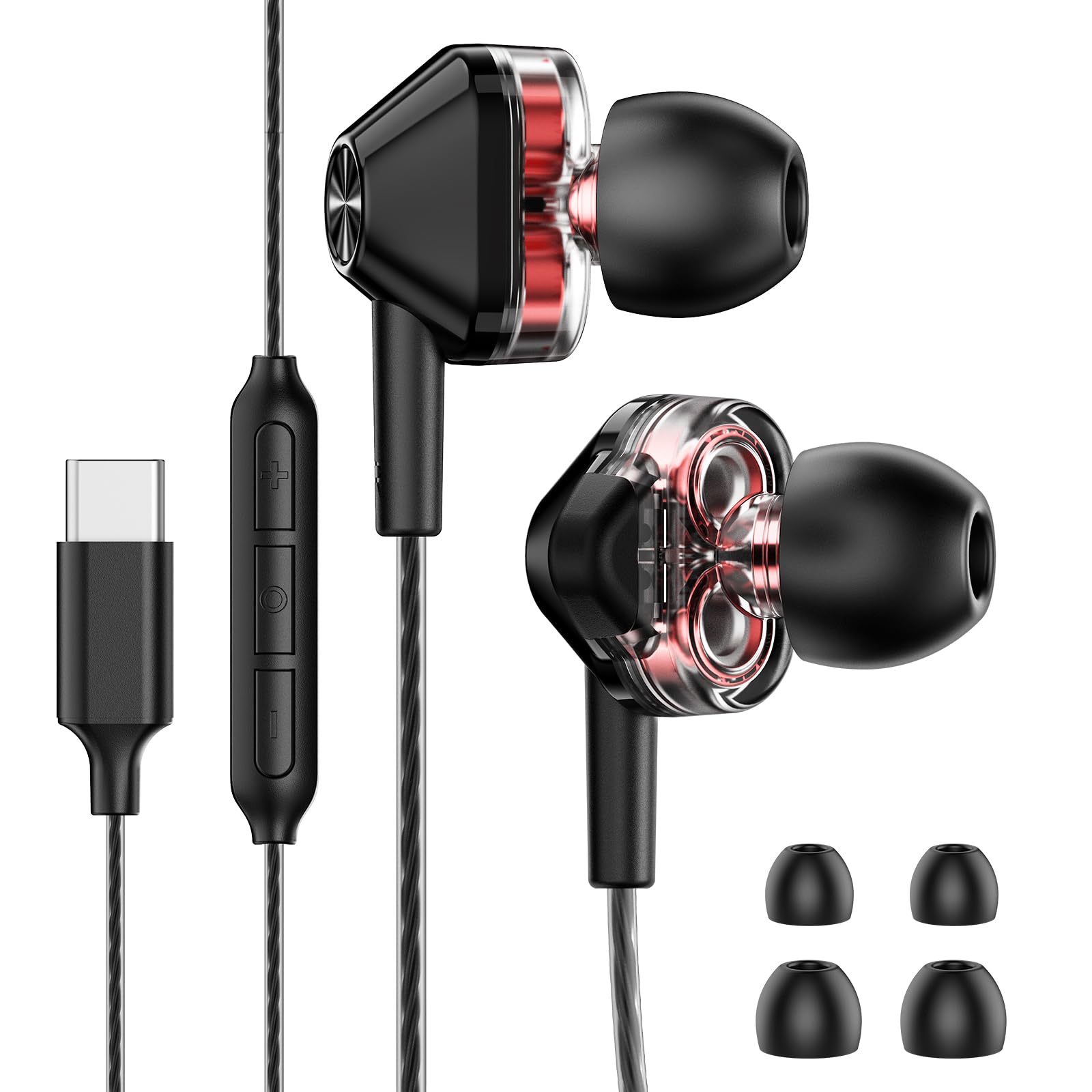
2. Koajim USB-C Wired In-Ear Earbuds
The plug-and-play pair for iPhone 15 and Android owners who ditched the headphone jack.
If your phone only has a USB-C port, this is the direct, adapter-free answer. It pairs dual 6-millimeter dynamic drivers with a high-performance DAC chip (the digital-to-analog converter inside that turns digital files into sound), supporting lossless audio up to 24-bit/192kHz resolution. That chip is why the 16Hz–40kHz frequency range actually delivers punchy bass and crisp highs — and why owners describe max volume as “extremely loud.”
The 5-foot tangle-free cable is reinforced with a bulletproof fiber core, so it shrugs off daily bag abuse, and the aluminium alloy casing protects the plug where most wired buds fail first. The 45A silicone ear tips come in three sizes and form a seal that isolates ambient noise well — several buyers wore them through full 6-to-8-hour work shifts without discomfort. The inline three-button remote handles calls, volume, and voice commands without touching your phone.
The honest trade-off: the 6-millimeter drivers can’t match the low-end weight of bigger 10-millimeter units like the Linsoul above, so bass is noticeable rather than floor-shaking. A few owners also note the wiring feels thin, and the fit is not ideal for very small ear canals despite the three tip sizes.
Why it wins: native USB-C plug-and-play with no adapter, a real DAC for lossless files, and a reinforced cable that survives daily life.
Who it fits best: commuters and office workers on newer phones who want clear calls, solid isolation, and zero battery anxiety — skip it if deep, pounding bass is your priority.
3. Aitalk G20 Gaming Earbuds

One wire that covers every console, handheld, and laptop you own.
This pair works with almost anything you own: it ships with a 3.5mm audio jack (the standard round headphone plug) plus an extra USB-C adapter plug, so it connects to Nintendo Switch, PS5, PS4, Xbox Series X, PC, laptops, and phones. The 45-degree oblique earplug (an angled nozzle that fits the ear canal) and three sizes of soft silicone tips plus ear hooks lock the buds in place—owners note they stay more stable than Bluetooth earbuds during workouts. The magnetic design lets the buds snap together around your neck when idle, which also prevents the cable from tangling.
Gamers get the FootFirst footstep enhancement technology and a Tracker gaming speaker, tuned for clear stereo bass with less distortion so you can place sound direction in 360 degrees. The in-line mic and remote handle chat, play/pause, skip, and volume across mobile games and PC titles. The 3.9-foot anti-wrap wire is built for long-term use, and the flat-cable design earns steady praise for staying knot-free — one owner ran them through 9-plus months of daily use with zero issues.
Comfort is the split decision here: small-ear owners love the fit, but a recurring note says the buds can hurt some ears and feel too large. The cord also runs short for desktop setups, so it suits console controllers and laptops better than a tower PC. An occasional unit has arrived fragile and failed early, which is the risk of a budget dual-plug design.
Best for: multi-device gamers who want one pair for every console, handheld, and laptop without carrying adapters.
Think twice if: your ears run small and sensitive, or your desktop PC sits far from your chair — the cable may not reach.
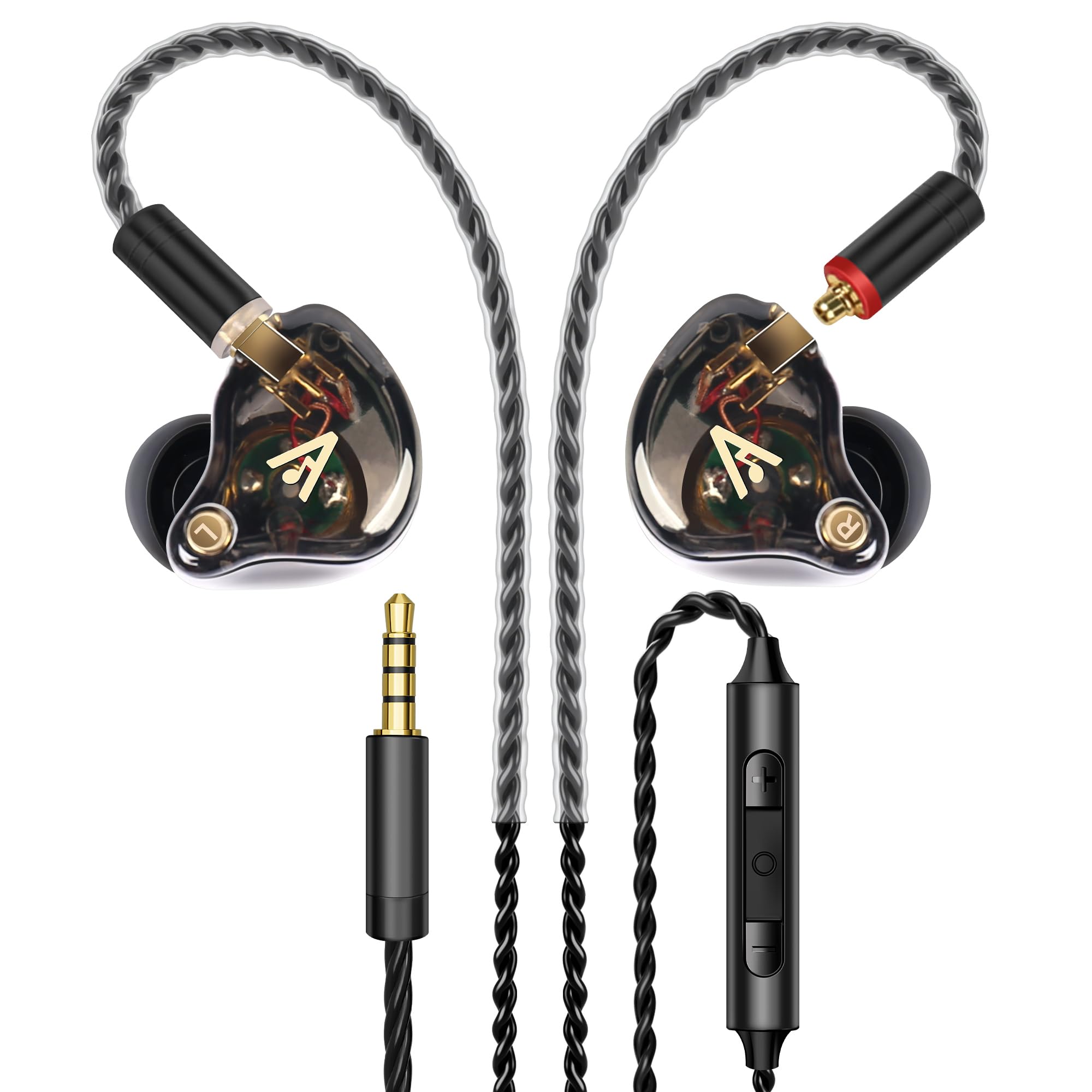
4. Audiovance Vibes 202M
Musician-grade monitoring with a 1-Tesla driver and a cable you can actually replace.
Built for the stage as much as the couch, this pair runs a powerful 1-Tesla driver tuned across an 8Hz–23kHz frequency range for precise, detailed sound. The high-purity, silver-plated, Litz-braided cable keeps transmission stable, and the 24K gold-plated MMCX connectors rotate 360 degrees and detach — so when a cable dies, you swap the wire instead of the whole pair. Owners consistently rank the sound quality as rivaling pairs costing far more, calling it some of the best value under.
The 63-inch cable is long enough for desktop use, and the preformed over-ear earhooks keep it out of your way during workouts or commutes. Six pairs of soft, breathable eartips (two colors, three sizes) plus a snug fit give effective noise isolation, and the inline remote handles calls and playback. The semi-transparent resin shell comes in 10 colors, and a premium carrying case with a carabiner keeps everything organized in a bag.
The catch is volume — owners warn it is “pretty loud so caution” — so keep the dial low at first. iPhone USB-C users report the inline controls don’t map correctly with a direct USB-C connection, and they fix it with a USB-C DAC adapter. Comfort is generally solid, though the over-ear hooks take a moment to get used to.
Why it stands out: a replaceable silver-plated cable and rotating MMCX connectors give it a lifespan most budget pairs lack.
Not for: anyone who needs fuss-free controls on a newer iPhone without carrying a DAC adapter.
5. Sony Deep Bass Wired Earphones

The tiny, durable pair that’s small enough to sleep in and tough enough for the laundry.
Inside this compact shell sits a 9-millimeter neodymium diaphragm driver (the tiny speaker that produces sound), and it punches well above its size—owners say the bass is deep and clear without being overpowering, and the sound routinely beats wireless pairs costing far more. The fit is what makes it a repeat buy: the buds are small enough to lie on your side with, and multiple tip sizes help them stay put. For gaming handhelds like the Switch and Steam Deck, it’s a favorite because of the clean, distortion-free output and effective isolation.
Durability is the quiet hero here. The cable wraps around the included tool for tidy storage, and owners mention pairs surviving years of daily use, including accidental trips through the wash. The inline mic works for calls, though it’s the weakest link — owners describe it as mediocre and note it isn’t recognized by PCs and sounds unclear on PS5. The smart controls are Android-focused, so iPhone users may find limited button support.
If your priority is a dependable, comfortable, genuinely small wired pair for travel or sleep, this is the one. If you need a clear microphone for calls or heavy Zoom use, the wired alternatives with better mics — like the Koajim above — serve you better.
Best for: travel, gaming handhelds, and side-sleepers who need a tiny, comfortable bud that survives real life.
Skip if: call clarity is a top priority — the mic is the weak spot here.
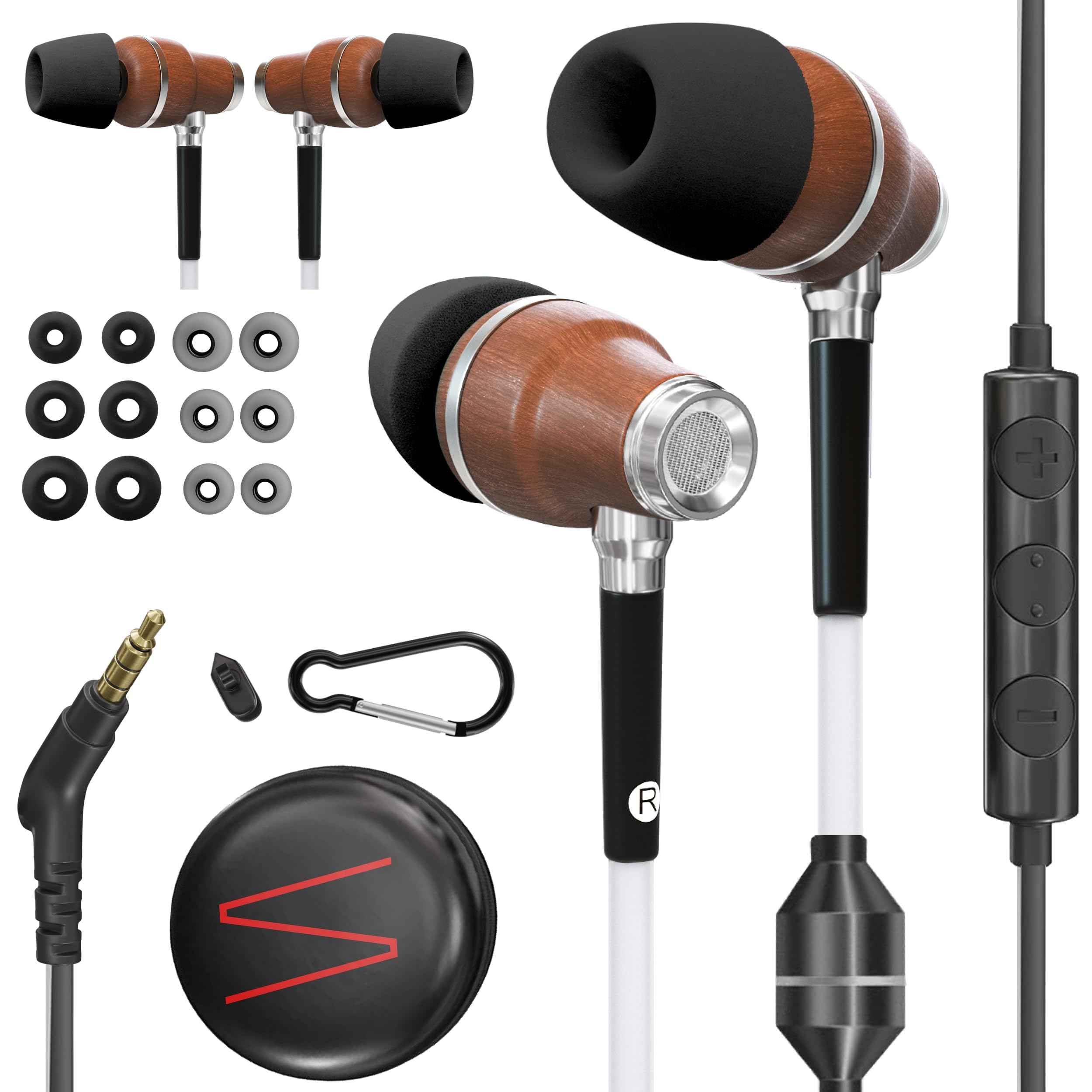
6. Symphonized Premium Wooden Airtube Headphones
Real wood housings and airtube EMF reduction make this the mindful everyday listener.
This pair stands apart for two reasons: the natural wood housing that shapes a rich, warm 3D sound, and the airtube technology designed to reduce EMF exposure (the low-level electromagnetic fields emitted by electronics) while delivering clear audio. The 20Hz–20kHz frequency range covers the full audible spectrum, and owners praise strong bass with crisp highs that need minimal equalization. It’s a popular pick for focused listening — study sessions, piano practice, and highway driving all come up in the reviews.
Comfort is handled with both foam and silicone tips in multiple sizes for an all-day fit, and the tangle-free cable keeps things neat. The 3.5mm aux jack works across phones, laptops, and computers, with a built-in mic and volume control for calls and playback. The wood grain look gets steady compliments, and durability holds up well — one owner even survived a saw cut and fixed the bud easily.
The reliability record is the honest caveat: while many units work flawlessly for years, a few customers note the left side failing around the two-year mark, likely a wire issue. Very small ear canals may also struggle even with the smallest tip, so the fit is not universal.
Why choose it: the only pair here with real wood acoustics plus EMF-reducing airtube tech for quieter-minded listening.
Not ideal if: you want guaranteed multi-year reliability or your ear canals are extremely small.
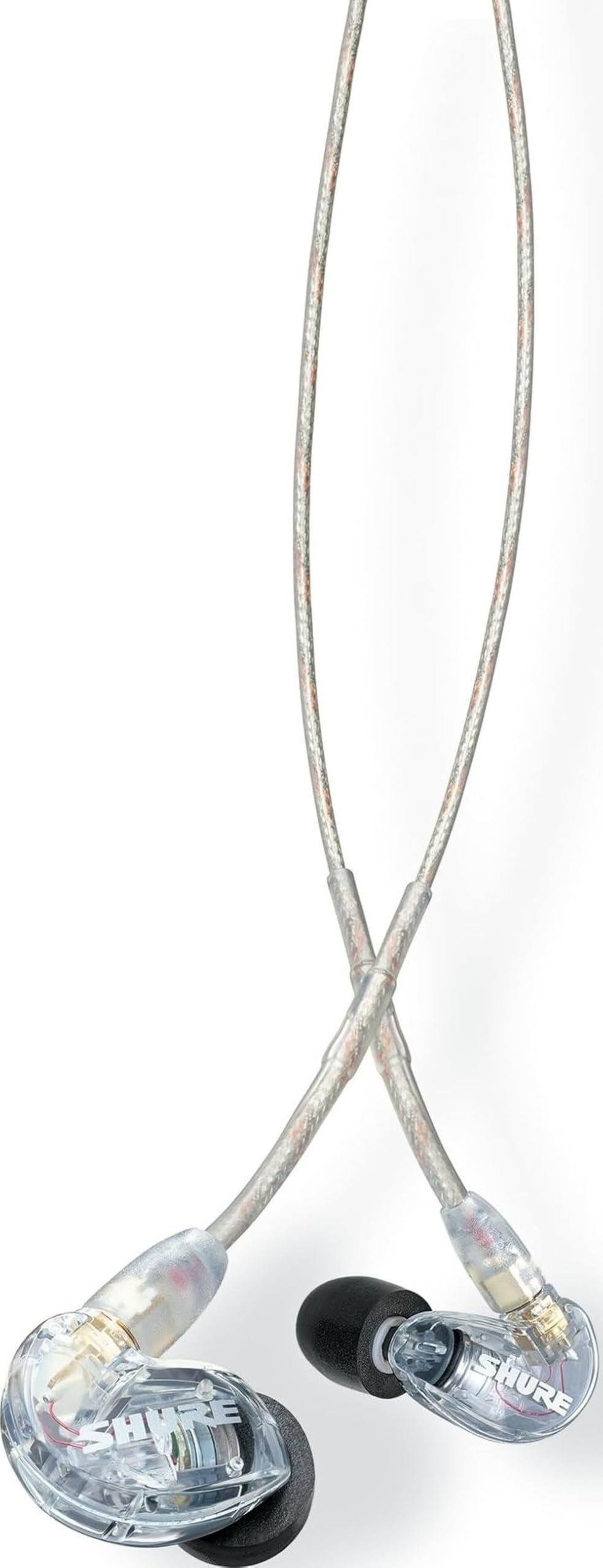
7. Shure SE215 PRO
The professional’s choice for stage monitoring, with isolation that rivals earplugs.
When musicians need to hear themselves on stage over a loud band, this is the wired pair they reach for. A single dynamic MicroDriver delivers detailed, full-range sound with clear highs and deep bass, tuned for both live monitoring and focused personal listening. The sound isolating technology blocks up to 37dB of ambient noise — owners describe it as being “like earplugs” — which makes it exceptional for flights, commutes, and focus sessions. One owner flew 12 hours without discomfort.
The over-ear wireform cable keeps the buds locked in place during movement, and the detachable MMCX connector rotates 360 degrees with a lock-snap mechanism for a personalized fit. When the cable wears out — a known risk with these — you replace only the wire, not the earphones. The kit includes three sizes each of flex and foam sleeves so you can dial in the perfect seal, and a compact zippered carrying case keeps everything protected.
Fit is the genuine trade-off: the seal is superb once achieved, but the over-ear orientation is slow to insert, and foam sleeves can cause ear fatigue during marathon sessions — rubber sleeves solve that. The sound leans balanced and flat rather than bass-forward, so bass lovers may want a quick EQ boost above 6kHz. Motorcycle riders report it holds up to 75 mph with a helmet thanks to that isolation.
Built for: musicians, frequent flyers, and anyone who needs serious noise isolation and replaceable parts over a long lifespan.
Not for: bass-heavy listeners who want a V-shaped tune or anyone who finds over-ear insertion fiddly.
Understanding the Specs
Driver Size and Type
The driver is the tiny speaker inside each earbud, sized in millimeters. Bigger drivers like a 10mm unit move more air, which typically means deeper bass and more physical punch. Driver type matters too—a hybrid setup (like the Linsoul’s 4BA+1DD, which uses four balanced armature drivers and one dynamic driver) uses separate drivers for highs, mids, and lows so each frequency gets its own dedicated hardware, while a single dynamic driver (like the Shure’s) keeps things simple and cohesive.
Frequency Range
This spec, shown as a span like 16Hz–40kHz, describes the lowest to highest sounds a pair can produce. Human hearing generally spans 20Hz–20kHz, so a range that extends beyond both ends, such as the Linsoul’s 7Hz–40kHz, means you’ll hear sub-bass rumble and airy treble detail that cheaper pairs simply can’t output. A narrow range like the Symphonized’s 20Hz–20kHz still covers everything you can hear.
Impedance and Sensitivity
Impedance (measured in ohms) and sensitivity (measured in dB) together decide how loud your phone can drive a pair. A low-impedance, high-sensitivity design like the Linsoul’s 24ohm and 111dB sensitivity gets very loud straight from a phone with no amplifier. Higher-impedance pairs may need a DAC or amp to reach their full potential, which matters if you mostly listen from a laptop.
Detachable Cables and MMCX
A detachable cable is the single biggest durability upgrade you can get. When the wire fails — the most common death of wired earbuds — you replace the cable rather than the whole pair. MMCX connectors (like the Audiovance’s and Shure’s) are the industry standard, rotating 360 degrees and locking into place. This is why pro-grade pairs last years longer than budget models with glued-in cables.
FAQ
Which wired earbuds have the best sound quality?
How long do wired earbuds typically last?
Will USB-C earbuds work with my iPhone 15 or 16?
What is the difference between 3.5mm and USB-C wired earbuds?
Are wired earbuds louder than wireless ones?
Why do my earbuds keep falling out?
Can I use wired gaming earbuds on PS5 and Switch?
Are wired earbuds good for sleeping?
Final Thoughts: The Verdict
For most listeners, the wired earbuds winner is the Linsoul KZ ZS10 Pro because its 10mm hybrid drivers and 7Hz–40kHz range deliver audiophile detail that owners repeatedly compare to gear costing several times more. If you need plug-and-play simplicity on a newer phone, grab the Koajim USB-C. And for musicians or frequent flyers who demand serious noise isolation and replaceable parts, the Shure SE215 Pro is the one to reach for—it’s the crowd favorite with over 10,000 owners behind it, and the only pair here built for the stage.
How We Picked
We do not accept paid placement. Every pick is matched to a real buyer and a real use-case; we do not hands-on test units.
Sources & Methodology
Specifications: manufacturer listings and product documentation. Review insights: verified customer reviews, as of August 2026. Pricing: not shown on this page (it changes often); check the current price via the retailer link.
As an Amazon Associate, Calories Fit earns from qualifying purchases. This does not affect which products we feature.