
Our readers keep the lights on and the coffee maker working hard! As an Amazon Associate, I earn from qualifying purchases.
Specs are compiled from manufacturer listings and verified buyer reviews and can change over time — please confirm the key details on the product page before buying.
The right base layer is the difference between a miserable chairlift ride and a comfortable one. Forget the old idea that wool is scratchy — modern merino fibers are so fine they feel like a second skin, and the right one keeps you dry when you sweat and warm when you stop. This guide ranks the best women’s ski long underwear by fabric weight, fit, warmth, and durability.
I’m Mohammad — the founder and writer behind Calories Fit. This guide is built by comparing the manufacturers’ published specifications and the patterns across verified customer reviews, so you get each pick’s real strengths and trade-offs instead of marketing spin.
To pick the right women’s ski long underwear, match the fabric weight to how hard you’ll work and how cold it gets. The key number is grams per square meter (g/m²), which tells you how much insulation you get.
Our Picks at a Glance


How To Choose The Best Women’s Ski Long Underwear
Fabric weight, measured in grams per square meter (g/m²), is your main choice. 165 g/m² suits high-output days, 250 g/m² handles typical cold weather, and 400 g/m² is for extreme cold or low activity.
Match the weight to your day
If you are skiing hard and working up a sweat, a lighter layer keeps you from overheating. If you are standing around in freezing lift lines, a heavier weight keeps the chill out. Higher activity levels call for lighter weights, so a 165 g/m² layer suits aggressive skiers better than a 250 g/m² one.
Merino versus synthetic
Merino wool naturally resists odor, so you can wear it multiple days between washes, and it regulates temperature so you don’t overheat when you work hard. Synthetic fabrics dry faster but tend to hold smells. If you are skiing multiple days in a row, merino’s odor resistance is a real advantage.
Quick Comparison
| Model | Best For | Fabric Weight | Material | Form | Amazon |
|---|---|---|---|---|---|
| Merino Wool Quarter Zip★ Best Overall | Best Overall | 165 / 250 / 320 g/m² | 100% Merino | Top + Socks | Amazon |
| Helly-Hansen HH LIFA CrewUltra-Light | Ultra-Light | Lightweight | 100% LIFA Fiber | Crew Top | Amazon |
| MERIWOOL 250g Half ZipMidweight Value | Midweight Value | 250 g/m² | 100% Merino | Half Zip Top | Amazon |
| Danish Endurance 180 GSM Set | Best Value Set | 180 gsm | Merino Blend | Top + Bottom | Amazon |
| Icebreaker 175 Everyday | Versatile Year-Round | 175 g/m² | 100% Merino | Crew Top | Amazon |
| MERIWOOL 400g Thermal | Extreme Warmth | 400 g/m² | 100% Merino | Crew Top | Amazon |
| Danish Endurance 250 Set | Extreme Cold Set | 250 g/m² | Merino Blend | Top + Bottom | Amazon |
| Helly Hansen LIFA Merino | 2-in-1 Tech | 225g | 57% Merino / 43% Poly | Crew Top | Amazon |
| Smartwool Classic Thermal Bottom | Best Bottom | Thermal Weight | 100% Merino | Bottom | Amazon |
In‑Depth Reviews
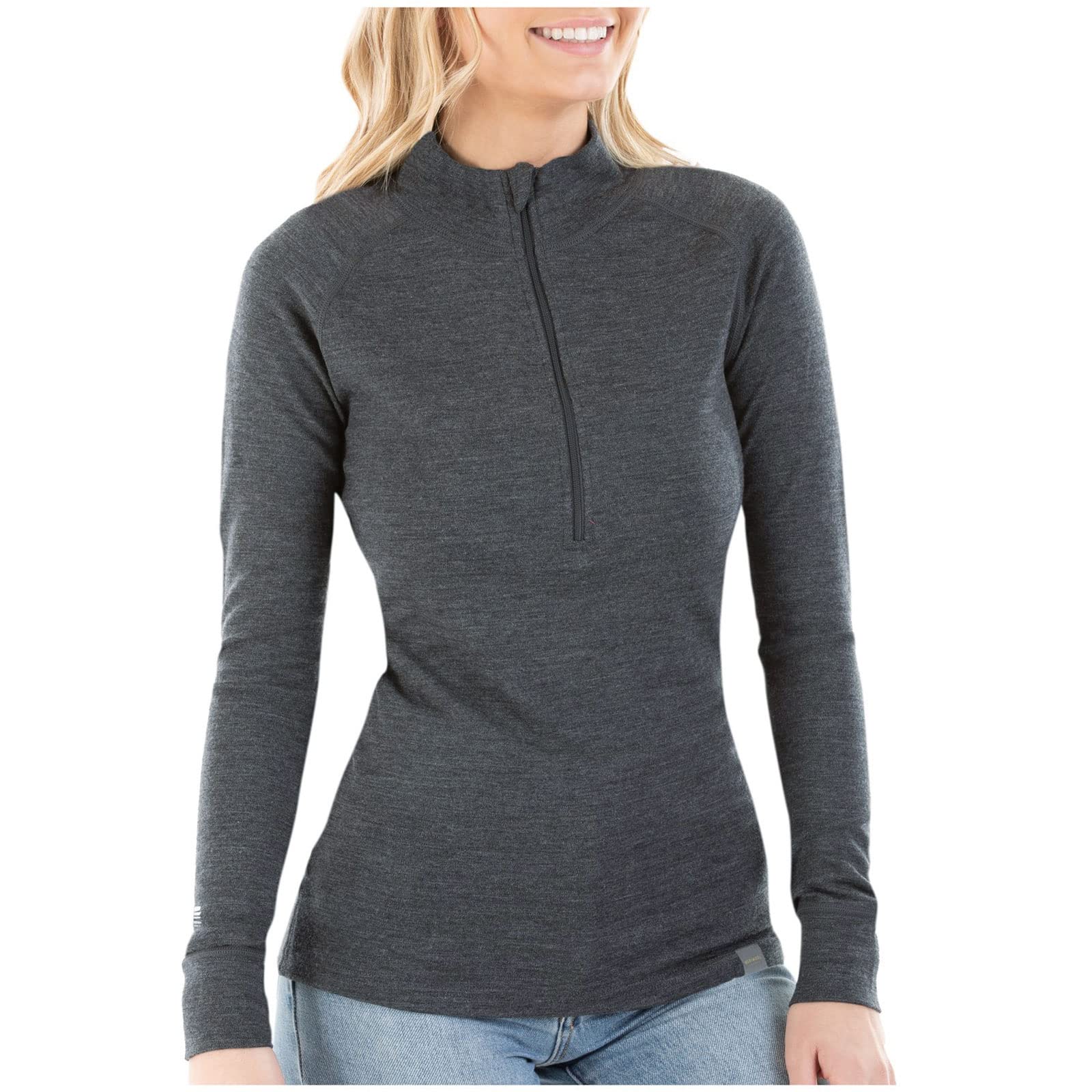
1. 100% Merino Wool Quarter Zip Sweater Women
Our pick — over 4.5★ from 850+ verified ratings; the strongest balance of quality and price.
This top offers three warmth levels and includes a pair of merino socks.
This top is the one buyers keep coming back to because it solves the biggest base layer headache: picking the right warmth. You get your choice of 165 g/m² for active days in 40–60°F, 250 g/m² for standard cold-weather skiing in 25–45°F, or 320 g/m² for frosty lows in 10–35°F. That range means you can match the exact layer to how hard you ski and how cold your home mountain runs.
This pick wins on fabric. At 17.5 microns, the merino fibers are finer than human hair, so it won’t itch even on sensitive skin. Over 180 owners praise the fit, and buyers report it feels “very lightweight (closer to heavy tee than sweater)” yet keeps them warm while active in 30sF. One caveat: it’s “not enough inactive in 15F,” so treat it as an active layer, not a sitting-around one.
It arrives with a pair of hiking socks included, which owners mention run large but are comfortable in bigger shoes. One honest trade-off: a few owners note faint pilling after about 6 wears, and the knit can be snag-prone, so treat it gently. The odor resistance is real — merino resists smells naturally, so you can wear it 3–5 days between washes.
What Riders Love
- Three weight options (165, 250, or 320 g/m²) to match your climate
- 17.5-micron merino feels non-itchy against skin
- Odor-resistant enough for 3–5 days between washes
- OEKO-TEX certified and RWS-certified Australian wool
What To Know
- Knits can snag and may pill after several wears
- Lightest weight falls short when inactive in deep cold
- Included socks run big on smaller feet
Reach for this if: you want one top that covers everything from spring hikes to cold resort days.
Look elsewhere if: you need a sub-zero layer for standing around — the 320 g/m² is the only weight built for that.
2. Helly-Hansen Women’s HH LIFA Crew
A featherweight synthetic that dries fast and disappears under your mid-layer.
If you run hot on the mountain, this is the layer that keeps you from roasting. Built from 100% LIFA fiber, it is quick-dry, very breathable, and super lightweight — the kind of base layer you forget you are wearing until a cold wind hits. Customers note wearing it “in Switzerland and it was perfect,” calling it soft, stretchy, and warm enough during spring conditions.
Quality is the most-discussed strength here, with the fit and warmth close behind. It layers beautifully under a midweight like a Smartwool crew when you need serious warmth, and it works on its own for milder days. The black and white pattern down the sleeves gets compliments, and the cut is fitted without being tight — one owner described it as “not too tight (although it is fitted) and not too loose.”
There are two honest caveats. First, it runs small — one buyer with a 35-inch chest found it tight in the armpits, so sizing up is the safer bet. Second, the material can snag; one owner wore it once and it caught in the front. If you are rough on gear, this lighter knit needs a little more care.
Best for warm-blooded skiers: the quick-dry fabric keeps you dry on high-output days, and it washes well with machine wash and hang dry.
Who it suits: resort skiers who want a light, fast-drying layer under a midweight fleece.
Who should pass: anyone between sizes — the snug fit means sizing up is often the right call.
3. MERIWOOL Womens 250g Half Zip Sweater
The 250 g/m² workhorse that buyers repurchase season after season.
This half-zip is the one you’ll grab for every cold-weather outing. Owners say “I have three of these now from this company,” and at 250 g/m² it’s ideal for 25–45°F. The 18.5-micron merino stays soft against your skin without restricting motion, and the front zipper lets you cool down fast when you heat up on the climb.
The fit earns the most praise, with warmth close behind, and the raglan sleeves let you move freely whether you are poling or reaching for a lift bar. One reviewer noted it “lasted ~5 years until sleeves frayed” — a strong run for any base layer. Owners also love that it stays odor-resistant across 5–7 wears between washes.
The catch is sizing consistency. Several reviewers point out it runs small, while others say it fits true to size — the brand itself acknowledges sizing has changed over time. If you are between sizes, ordering up is the safer move. A few units arrive with small holes, so give yours a quick check on delivery.
Proven longevity: at this price it undercuts bigger brands, and owners consistently report years of use before any fraying.
Best for: skiers who want a reliable midweight top that holds up across multiple seasons.
Think twice if: you are between sizes — the inconsistent fit makes an exchange more likely.
4. Danish Endurance Merino Wool Base Layer Set (180 GSM)
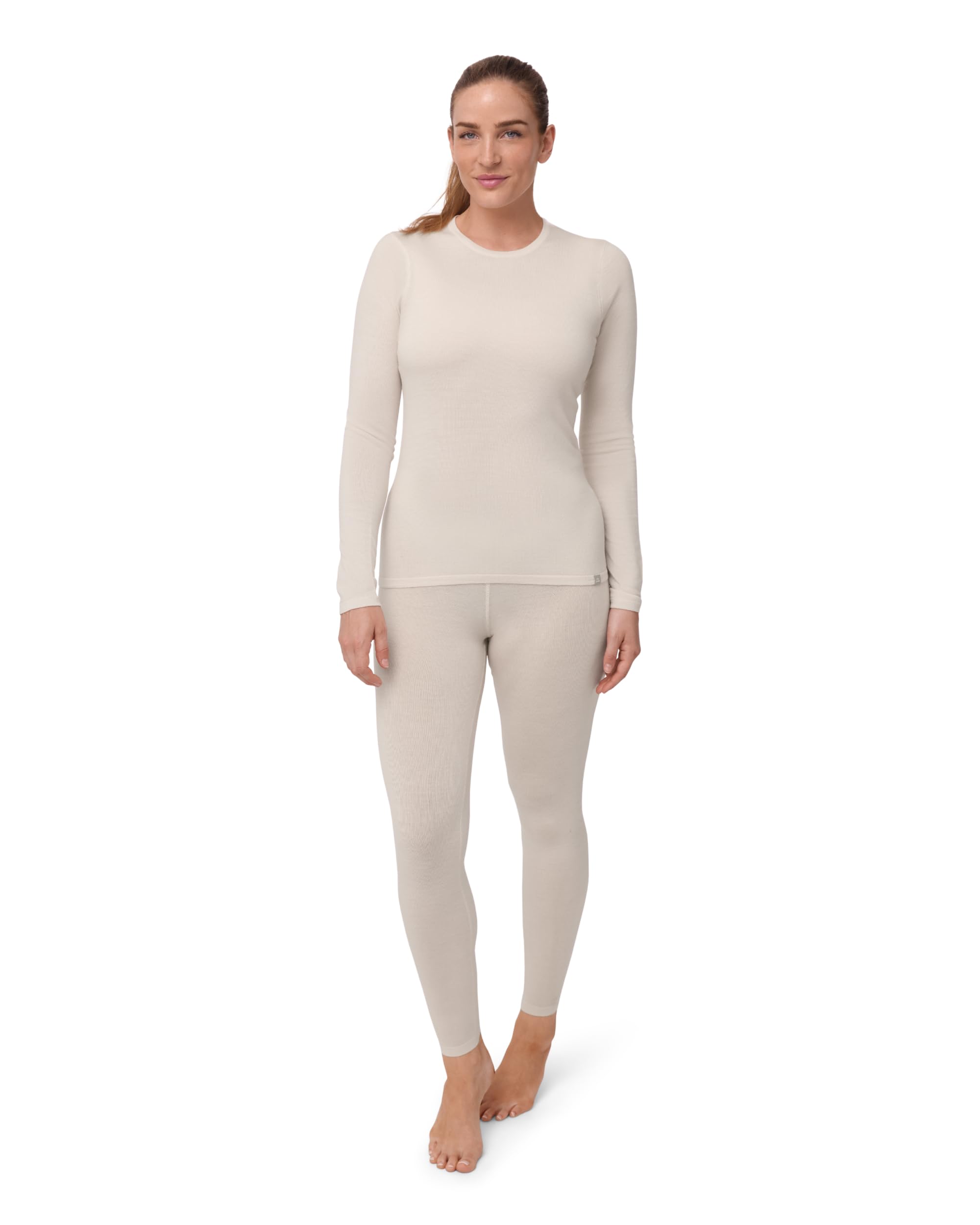
A complete top-and-bottom set that punches above its price with higher wool content than the big names.
This set gives you both halves of your base layer in one box, and buyers consistently call it the value king. At 180 gsm midweight, it is thin enough to layer under everything yet warm enough to handle a 30°F day with a fleece on top. One owner who took it to Iceland said “the fit was comfortably snug without being tight,” and another raved it’s “the best winter longjohns I’ve ever worn, not itchy very soft and warm.”
The brand has real mountain credibility — extreme endurance athlete Rasmus Kragh trekked 1,130 km alone to the South Pole in their merino gear. The wool is mulesing-free and OEKO-TEX Standard 100 certified, and the flat seams and tag-free cut make it comfortable under ski pants all day. One owner in Fairbanks, Alaska found it effective even in winter with a silk underlayer, calling out that the waistband doesn’t dig in.
The honest trade-offs: the fabric is genuinely thin — several buyers describe it as “super thin” — so this is a layering piece, not a stand-alone for deep cold. Pilling gets mixed feedback, with a few owners noting minor pilling at the elbows after repeated wears. Wash cold and air dry and it should stay smooth.
Smart money move: you get more wool content than a comparable Smartwool set for less, and the tag-free flat seams keep it comfortable all day.
Reach for this if: you want a complete, lightweight set that works as a first layer under your ski gear.
Look elsewhere if: you need serious insulation for single-digit days — this 180 gsm weight is built for layering.
5. Icebreaker Merino 175 Everyday Long Sleeve Crewe

This 175 g/m² crew works for both spring hikes and frigid resort days.
If you want one base layer that works year-round, this is it. At 175 g/m², it is light enough for warm-weather hikes on its own, yet pairs perfectly under a shell for “frigid days at the ski resort” as the brand puts it. The 100% merino wool rib-knit fabric is naturally breathable and odor-resistant, and shoppers say it keeps them cozy even at 5°F when layered properly.
The fit and warmth are equally praised, and one buyer mentioned the length is “long enough for jeans or leggings,” which means no cold gap at your lower back on the slopes. The texture is t-shirt-like and slightly sheer, which is why it layers so easily. Owners describe it as “chic alternative to cashmere” — a top that looks good enough to wear alone to dinner after skiing.
There are two notes. It is slightly see-through, so you will want a mid-layer or shell over it on the mountain. And while most owners find it durable, a few report the material can tear, so avoid snagging it on sharp gear. The black color holds up well without fading, even after years of wear.
One top, all seasons: the 175 g/m² weight is the just-right zone for versatility, and the slim-but-not-tight fit flatters without clinging.
Best for: skiers who want a single base layer for every season, from summer hiking to resort days.
Who might pass: anyone needing heavy insulation for extreme cold — this is a midweight, not a heavyweight.
6. MERIWOOL Womens 400g Heavyweight Thermal Shirt

The thickest, warmest layer in this lineup — built for Iceland winters and sub-zero lift lines.
This is the thickest, warmest layer in the lineup. At 400g, it’s the thickest option here, and one owner who wore it in Iceland under a heavy coat said “it was all that I needed to stay warm.” The 18.5-micron merino feels silky, not scratchy, and the feminine cut is shaped rather than boxy, which buyers appreciate.
Warmth is the most-praised aspect, with fit close behind. One owner at 5’7″ and 170 lbs found the Large fits great with no tightness in the armpits and good length to the hips. Another noted it’s “wonderfully thick” yet still layers under a thin sweater or jacket. The odor resistance is strong enough that one buyer “never washes merino” — it airs out between wears and stays fresh.
The trade-offs are about fit and care. Several buyers report it runs small, so sizing up is wise, and the length runs a bit short for tucking into ski pants. It also pills from friction when layered under a shell — a fabric shaver fixes it, but expect some maintenance. Machine washing and drying worked fine despite the hand-wash label, according to one owner.
Serious warmth: the 400g fabric is noticeably denser than the 250g options, making it the go-to for extreme cold and low-activity days.
Reach for this if: you ski in truly cold climates and want a layer that does most of the warmth work by itself.
Think twice if: you run hot or ski aggressively — this heavyweight can overheat a high-output day.
7. Danish Endurance Extreme Warm Set (250 g/m²)

The heavyweight set that survived Medevac work at 45 below zero and kept the owner warm.
This is the set for people who take cold seriously. At a heavyweight 250 g/m², it is the same extreme-cold class of gear Rasmus Kragh wore on his 1,130 km solo trek to the South Pole. One owner who wore it in -45 to -55°F Medevac conditions reported it “performed well,” and another praised it as “so warm, dry, soft and comfortable.”
Comfort and warmth are the twin strengths here, and the all-natural fabric is a point of pride — one owner reported that it is “not mixed with synthetics.” It fits tall frames well; a 5’9″ owner at 150 lbs found the Medium form-fitting, and the tag-free cut keeps it comfortable all day. The wool is mulesing-free and OEKO-TEX Standard 100 certified, so the ethical sourcing matches the performance.
The honest limitations: the fit gets mixed feedback, with several owners finding the waist runs big — one said the “bottoms were a bit bigger than I’d like.” A few also find it slightly itchy, which is unusual for merino at this price. It is also a thinner hand-feel than you might expect for 250 g/m², so it is not as plush as the MERIWOOL 400g. Wash cold and lay flat to dry, and it stays soft.
Proven in the extremes: the 250 g/m² weight plus all-natural merino makes this a set you can trust in genuinely dangerous cold.
Best for: skiers and outdoor workers who face extreme cold and want a complete, breathable set.
Who should pass: anyone with a smaller waist-to-hip ratio — the waistband runs loose.
8. Helly Hansen LIFA Merino Midweight Crew

A clever two-layer design that puts merino on the outside and moisture-wicking LIFA against your skin.
This is the base layer for people who think in systems. It combines a 100% merino wool exterior with a 100% LIFA Stay Warm Technology interior, so the LIFA fibers pull moisture away from your skin while the merino traps warmth. The 225g LIFA Merino fabric sits right between a lightweight and midweight, and the “non-itch” construction lives up to its name — owners consistently praise the fit, quality, and comfort.
What wins people over is the versatility. Buyers describe it as working “great either through layering or by itself for warmth and fit,” and note the cut is “not slim fit so it would fit many body shapes.” That roomier fit makes it a forgiving choice if you are between sizes or prefer a little extra space under a shell. The flat lock seams add comfort against the skin.
The trade-off is the fit philosophy. Because it is not a tight performance cut, it won’t hug your body the way a racing-style base layer does — if you want maximum moisture transfer, a tighter layer is better. It is also a midweight, so for deep sub-zero days you will want a heavier layer or an extra mid-layer on top.
Thoughtful engineering: the 2-in-1 construction gives you the warmth of merino with the dry feel of a synthetic next to skin.
Reach for this if: you want a single layer that balances warmth and moisture management without a tight racing fit.
Look elsewhere if: you want a fitted performance cut — this one is deliberately roomier.
9. Smartwool Women’s Classic Thermal Merino Bottom

The thermal bottom that fits generously, keeps you toasty, and feels like pajamas under your ski pants.
This is the bottom half of your ski system, and it earns every bit of its reputation. Made from 100% merino wool, it regulates temperature so well that one owner said it “kept them toasty under waterproof layers” at 20–40°F with ski pants. The fit is the standout — a roomier cut that a buyer with an hourglass XXL figure found “comfortable, roomy… no wedgie or pulling up,” which is rare praise for base layer bottoms.
Warmth and comfort are the most-discussed strengths, with the softness close behind. Owners love that it doesn’t hold smells — one wears them “multiple days” between washes — and they are easy to care for with a gentle machine wash and hang dry. The generous length suits taller frames; a 5’9″ owner wore a Large comfortably under her jeans. The two-tone design even looks good enough for lounging at home.
The honest trade-offs: the waist runs a little low in the back for some, and the hips run small — a couple of owners wished for a higher rise. Durability gets mixed feedback, with some noting the fabric can wear with heavy use. Fit is the biggest variable: several owners size up for a looser feel, so try them on with your actual ski pants before committing.
The fit champion: this is the most accommodating bottom in the lineup, especially for curvier or hourglass figures who struggle with tight base layers.
Best for: skiers who want a warm, soft, roomy bottom that works under jeans or ski pants.
Who might pass: anyone who wants a high-waisted fit — the rise runs modestly low in back.
Understanding the Specs
Fabric Weight (g/m²)
This is the single most important number on a base layer. Grams per square meter (g/m²) tells you how dense and warm the fabric is. A 165 g/m² layer is light and breathable for high-output days. A 250 g/m² layer is the cold-weather standard. A 400 g/m² layer is serious insulation for extreme cold. Higher activity levels call for lighter fabric weights.
Micron Rating
This measures the thickness of the individual wool fibers. Standard wool sits at 25+ microns, which is what causes that itchy feel. Superfine merino at 17.5–18.5 microns is finer than human hair, which is why it feels soft against sensitive skin. Lower micron numbers mean softer fabric against your body.
FAQ
What weight of merino base layer do I need for skiing?
Is merino wool itchy against the skin?
How often do I need to wash merino base layers?
Should I size up or down in a base layer?
What is the difference between a crew neck and a half zip base layer?
Will merino base layers shrink in the wash?
Is a base layer set better than buying a top and bottom separately?
How do I stop merino base layers from pilling?
Can I wear merino base layers more than one day in a row?
What is the warmest merino base layer on this list?
Final Thoughts: The Verdict
For most skiers, the women’s ski long underwear winner is the 100% Merino Wool Quarter Zip because its three weight options mean you can match the exact layer to your climate and activity level. If you want a complete set without the hassle, grab the Danish Endurance 180 gsm Set for the value. And for extreme cold, the MERIWOOL 400g Thermal is the one to reach for.
How We Picked
We do not accept paid placement. Every pick is matched to a real buyer and a real use-case; we do not hands-on test units.
Sources & Methodology
Specifications: manufacturer listings and product documentation. Review insights: verified customer reviews, as of August 2026. Pricing: not shown on this page (it changes often); check the current price via the retailer link.
As an Amazon Associate, Calories Fit earns from qualifying purchases. This does not affect which products we feature.