
Our readers keep the lights on and the coffee maker working hard! As an Amazon Associate, I earn from qualifying purchases.
Specs are compiled from manufacturer listings and verified buyer reviews and can change over time — please confirm the key details on the product page before buying.
An XC hardtail mountain bike is the sharpest tool you can own if your idea of a great ride is a long climb, a fast descent, and a bike that doesn’t waste your energy bouncing a rear shock. The category’s core trade-off is simple: drop the rear shock for a rigid frame that converts every pedal stroke into forward drive. Both cross-country racers and weekend climbers rely on them, so the real question is which model fits your riding style and budget.
I’m Mohammad — the founder and writer behind Calories Fit. This guide is built by comparing the manufacturers’ published specifications and the patterns across verified customer reviews, so you get each pick’s real strengths and trade-offs instead of marketing spin.
From budget-friendly alley-cat cruisers to race-ready carbon flyers, this breakdown of the best xc hardtail mountain bike cuts through the spec-sheet noise to find the model that matches how you actually ride.
Our Picks at a Glance


How To Choose The Best XC Hardtail Mountain Bike
Choosing a hardtail starts with matching the frame, wheels, and drivetrain to your typical terrain and riding frequency. Frame material, wheel diameter, and drivetrain speed each alter climbing efficiency and descending control.
Frame Material and Weight
Aluminum frames dominate the mid-range because they balance stiffness with affordability, making them light enough for daily trail rides without wrecking your budget. Carbon fiber, by contrast, is the race-day choice — it shaves serious weight and adds vibration damping, but it costs considerably more. If you’ll carry the bike up stairs or mount it on a rack, a lighter frame (carbon or high-end aluminum) makes a real difference.
Wheel Size and Tire Width
Bigger wheels (27.5-inch or 29-inch) roll over obstacles more easily and hold speed better on open trails, while 26-inch wheels feel more nimble and are common on budget bikes. Wider knobby tires, like 2.6-inch, add grip on loose dirt but also add rolling resistance on pavement. Match wheel size to terrain: 29-inch rolls faster on fire roads, while 27.5-inch or 26-inch steers quicker in tight singletrack.
Drivetrain Simplicity vs Range
A 7-speed setup keeps things simple and cheap, but the gaps between gears can feel wide when you hit a steep pitch. More speeds — 9, 18, or 21 — give you a finer ladder of gears, which helps you find a comfortable cadence whether you’re grinding uphill or spinning on flats. More gears add maintenance, as each extra derailleur and shifter component can need periodic tuning.
Quick Comparison
| Model | Best For | Frame | Wheels | Speeds | Amazon |
|---|---|---|---|---|---|
| Schwinn High Timber★ Best Overall | Budget trail entry | Aluminum | 26-inch | 7 or 21 | Amazon |
| Eastern Bikes AlpakaValue Pick | Daily mileage | Aluminum | 29-inch | 9 | Amazon |
| Mongoose Impassse | Wide-tire grip | Aluminum | 27.5-inch | 7 | Amazon |
| Mongoose Switchback | Steep climbs | Aluminum | 27.5-inch | 18 | Amazon |
| Canyon Exceed CF 5 | Race performance | Carbon Fiber | 29-inch | 12 (SRAM SX Eagle) | Amazon |
In-Depth Reviews
1. Schwinn High Timber Mountain Bike
The crowd favorite that gets more riders onto trails than any other model here.
The High Timber is the crowd favorite here — a 16.5-inch aluminum frame wrapped around 26-inch wheels that fit riders from 5’4″ up to 6’2″. The alloy crank delivers smooth gear changes with minimal maintenance, and the twist shifters with a rear derailleur make changing gears quick even for first-timers. It rolls on wide knobby mountain tires that offer stability and balance across all terrains and weather, which is exactly what a budget XC hardtail should do.
Owners consistently praise the ride quality, describing it as smooth and easy to control with good road grip. That said, assembly is a mixed bag: it arrives 80% assembled and needs a Phillips head screwdriver, 2.5-8mm Allen wrenches, and an adjustable wrench, and some buyers report parts like pedals and guide pulley gears breaking over time. Owners mention that “disc rotors rubbed brake pads for 3 weeks, causing uphill friction” — an easy fix by adjusting the brakes, not a fatal flaw.
If you’re 5’7″ or taller, this bike fits you well, and riders at 6’2″ and 230 lbs report it feels light and performs better than expected. The price is fair for what you get, though some customers note it went up after they bought it. For your first hardtail without spending a fortune, this is the one most people should start with.
What Wins Riders Over
- Quality earns the most praise — 149 owners highlight it
- Fits a huge rider range from 5’4″ to 6’2″
- Twist shifters keep gear changes quick and simple
- Wide knobby tires add stability in all weather
The Trade-Offs
- Durability concerns with pedals and guide pulley gear
- Assembly experience varies — some find it terrible
- Disc brakes may need adjustment from the start
Best starting point: If you want a proven, budget-friendly hardtail that fits nearly any adult height, this is your bike.
Think twice if: You expect race-ready shifting or zero assembly work — this needs a bit of mechanical patience.
2. Eastern Bikes Alpaka 29″ Lightweight MTB
The mileage monster built for riders who measure their week in hours on the saddle.
The Alpaka is the pick for the rider who treats the trail as a daily habit, not a weekend treat. It pairs an ultra-light hydroformed 6061 aluminum frame with an Eastern Suspension Fork offering 130mm of travel — meaning it soaks up rocks and roots that would rattle lesser bikes. The 9-speed drivetrain with trigger shifters gives you a noticeably wider gear range than the 7-speed Mongoose Impassse below, with 9 speeds versus 7, for smoother cadence control on varied terrain. Sealed bearing front and rear hubs keep the wheels spinning freely ride after ride.
Owners put serious mileage on this frame — daily 20+ mile rides with no drivetrain or wheel issues reported. The 44mm head tube accepts a tapered conversion, making future fork upgrades easy, and the 29″ x 2.2 tires roll fast on open trails. The reviews sum it up: the bike rides and shifts smoothly and is really well built. Even the warranty backs the confidence — 5 years on the frame and 12 months on all other parts. The recurring gripe is the generic assembly instructions, which owners call confusing and unhelpful until you figure out which steps actually apply.
This is the smart-money pick for the rider who wants hydraulic disc brakes — a serious upgrade over mechanical — and a frame that can take daily punishment. The honest caution is that a few reviewers point out issues like cranks loosening and a rear brake failing on pavement, so a quick post-assembly check is worth your time. For the mileage you’ll log, the Alpaka delivers far more than its price suggests.
Where It Shines
- 130mm front travel for serious bump absorption
- Hydraulic disc brakes stop with real authority
- 5-year frame warranty shows manufacturer confidence
- Sealed bearings keep wheels spinning freely
What To Prepare For
- Assembly instructions are confusing and lack photos
- Some owners hit cranks loosening or brake issues
- 29-inch wheels feel big for smaller riders
Reach for this if: You ride multiple times a week and want hydraulic brakes, sealed hubs, and a frame that handles daily miles.
Look elsewhere if: You want a simple to use out-of-box build — the instructions demand some mechanical sense.
3. Mongoose Switchback Comp Expert

The hill-climbing specialist that keeps pace with bikes costing twice as much.
The Switchback is the answer for riders whose trails start with a brutal climb. It runs a Tectonic T1 aluminum frame with 27.5-inch tires that deliver a stable, smooth ride, and the 18-speed trigger shifters give you a wide range of gears to find the perfect cadence on steep pitches. Shoppers say it climbs hills easily in low gear and keeps pace with Specialized and Trek bikes on the trail — a serious compliment for a bike at this level. The front fork dampens roots and drops well, especially with its lockout feature that you can engage on smooth sections.
Internal cable routing keeps lines neat and protects them from trail debris, while the disc brakes offer stopping power you can count on in all conditions. Assembly is straightforward, though buyers report the handlebar stem ships backwards and needs a 180-degree rotation before your first ride. The one consistent complaint is the grips — after about 15 minutes they cause palm pain, which is an easy and cheap swap. Also note there’s no kickstand, so plan for a wall or a tree when parking.
Compared to the Mongoose Impassse’s 27.5-inch wheels, this same diameter carries a much more capable drivetrain — 18 speeds versus 7 — making it the better choice for actual mountain terrain. If your local loop has real elevation, this is the value-per-dollar winner in the lineup. The catch is fit: one 29-inch inseam rider found the seat too high even at its lowest setting, so tall riders should check the geometry before committing.
Its Competitive Edge
- 18-speed drivetrain masters steep climbs
- Fork lockout improves efficiency on smooth trails
- Internal cable routing adds protection and clean looks
- Keeps pace with premium trail bikes
Know Before You Buy
- Grips cause palm pain after 15 minutes
- Handlebar stem ships backwards — rotate it
- No kickstand included
- Seat height may not suit very tall riders
Choose this for: Riders tackling hilly XC trails who want a wide gear range without a premium price tag.
The honest caveat: Budget for new grips and verify fit if you’re over 6 feet tall.
4. Canyon Exceed CF 5
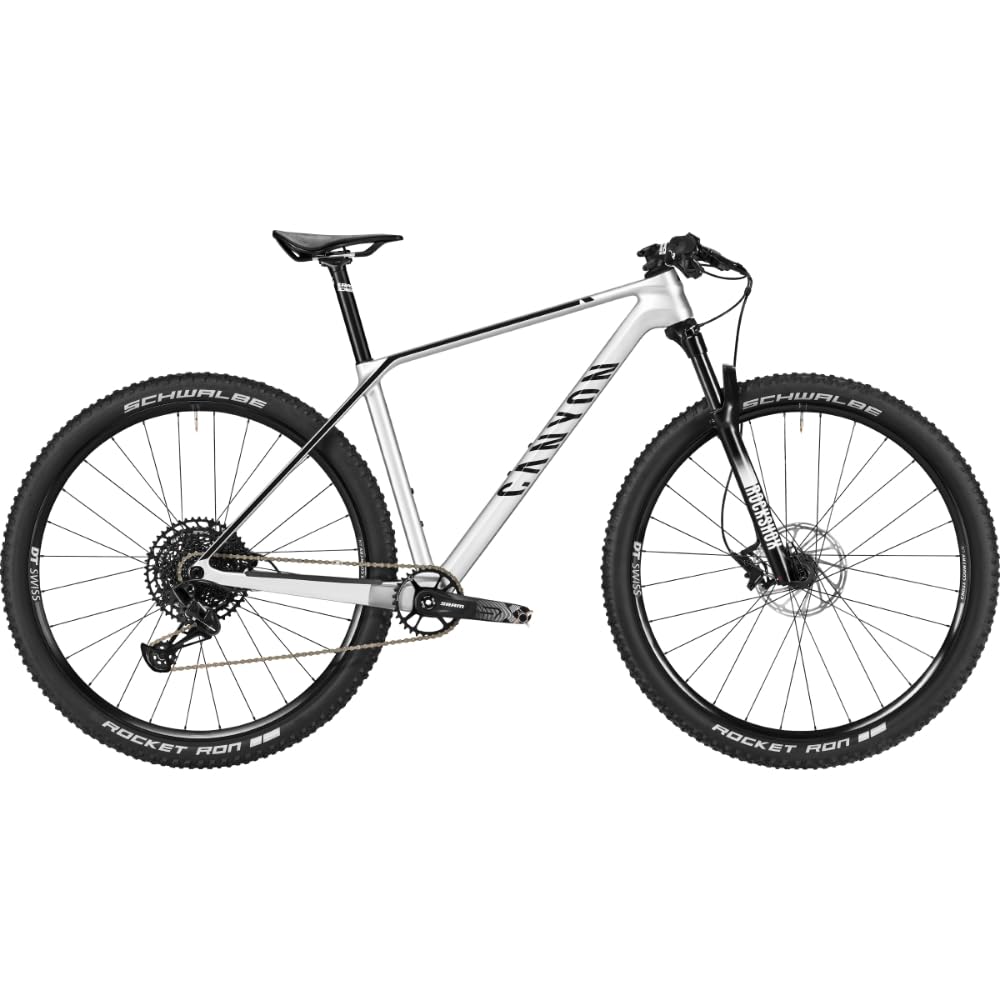
The carbon race machine for riders who measure seconds, not just smiles.
The Exceed CF 5 is built for serious racers who want explosive acceleration and precise handling on any cross-country (XC) course. Its stiff carbon frame transfers your power directly to the wheels, so every pedal stroke pushes you forward. The RockShox Recon RL Remote fork gives you 100mm of front travel (the amount the suspension compresses) and a remote lockout you can flip without taking your hands off the bars, so you can stiffen the ride for climbs instantly. It runs a SRAM SX Eagle drivetrain with a wide gear range for efficient climbing and fast descents, paired with SRAM Level T brakes for reliable stopping power.
Owners who log serious miles — 200+ miles on one bike — report the frame is well built and upgradeable, arriving 95% assembled with pedals and a Torx tool included. The DT Swiss 370 wheels are a standout, with one owner upgrading to a 54t hub for a louder freewheel sound. Tubeless-ready wheels mean you can ditch inner tubes for fewer flats and lower rolling resistance. The reviews sum it up: the bike is light and fast, with owners calling it great value for a carbon frame.
That said, quality control has its moments. Some units arrive with dirt caked on the frame and poor paint finish, and one owner hit a mismatch between the 110mm front wheel boost and the 100mm fork. It’s also heavy overall for a carbon bike — the wheels, fork, and groupset add weight, and the carbon bars and seatpost are upgrades owners suggest. If you’re chasing podium times and want a platform you can build on, this is the one — but inspect every inch on arrival.
The Race Day Edge
- Carbon frame delivers maximum power transfer
- Remote fork lockout adjusts on the fly
- DT Swiss 370 wheels roll fast and true
- Tubeless-ready rims cut flat risk
The Fine Print
- Some units arrive dirty with paint flaws
- Heavier than expected for carbon — upgrades needed
- Wheel boost and fork travel mismatch reported
- Premium price demands close inspection
Built for: Competitive riders and serious build projects who want a carbon foundation they can upgrade over time.
The catch: Give it a full once-over when it arrives — quality control is inconsistent.
5. Mongoose Impassse

The wide-tire bruiser that grips loose dirt like a much pricier machine.
The Impassse is the budget pick that puts grip first. It rolls on 27.5-inch wheels wrapped in 2.6-inch-wide knobby tires — noticeably wider than the 26-inch Schwinn High Timber’s tread — giving you extra traction and stability on loose or uneven terrain. The aluminum hardtail frame keeps weight down, and the suspension fork absorbs bumps for a smooth, controlled ride. It’s built for riders from 5’3″ to 6’0″, making it one of the more inclusive fits at this price point.
The 7-speed drivetrain uses an L-Twoo 1×7 setup with a 14-38 freewheel and a 30-tooth narrow/wide chainring for smooth shifting, and mechanical disc brakes provide reliable stopping in varied conditions. Owners genuinely enjoy the ride — the suspension works well on jumps and nearby trails, and the bike looks sharp in matte black. The honest enthusiasm in the reviews is real: it’s a good bike for the money that handles bumps and uneven surfaces with confidence.
The flip side is durability. The aluminum derailleur hanger earned a specific warning from owners — it broke in two after roughly 12 rides for one, and the replacement also snapped after just 2 rides; there’s no steel option from the manufacturer. Another owner found the front end dangerously weak with several factory damages on arrival. The quality receives mixed feedback, with several reporting cheap parts, so this is a bike for riders who can turn a wrench. If you want maximum tire footprint for minimal spend, the Impassse delivers — just budget for potential derailleur hanger replacements.
The Budget Strengths
- 2.6-inch tires offer outstanding loose-dirt grip
- Fits riders from 5’3″ to 6’0″
- Suspension fork handles bumps and small jumps well
- Narrow/wide chainring keeps the chain planted
The Budget Reality
- Aluminum derailleur hanger breaks — no steel option
- Quality is mixed; several report cheap parts
- Chain pops off during gear shifts for some
- Assembly quality varies from the factory
Best for: Casual riders who want the widest tire footprint at the lowest entry price and don’t mind basic maintenance.
skip it if: You plan on aggressive riding — the derailleur hanger won’t survive heavy abuse.
Understanding the Specs
Fork Travel (mm)
This is how far your front suspension compresses when it hits a bump. More travel, like 130mm, means the fork soaks up bigger rocks and drops for a plusher ride. Less travel, like 100mm, keeps the front end stiffer and more efficient for climbing and smooth trails. For XC riding, expect somewhere between 100mm and 130mm — enough to tame roots without wasting your energy on bob.
Drivetrain Speeds
The number of gears determines how finely you can fine-tune your pedaling effort. A 7-speed setup is simple and budget-friendly but leaves big gaps between gears, so you might struggle to find a comfortable rhythm on steep climbs. An 18-speed or 21-speed gives you a much finer ladder, letting you keep a steady cadence whether you’re grinding uphill or spinning fast on flats. In XC riding, where efficiency is everything, more speeds usually means better climbing range — but also more parts to maintain.
FAQ
What size XC hardtail mountain bike do I need for my height?
Is a 29-inch wheel XC bike faster than a 27.5-inch?
How much assembly does a new hardtail require?
What is the difference between a hardtail and a full-suspension mountain bike?
Are more gears always better on an XC hardtail?
What does fork travel mean for my ride comfort?
How long will a budget hardtail frame last?
Can I upgrade components on a budget XC hardtail later?
Final Thoughts: The Verdict
For most riders, the xc hardtail mountain bike winner is the Schwinn High Timber because it combines proven quality, a huge rider-fit range, and a price that opens the door to trail riding without hesitation. If you want hydraulic disc brakes and the ability to log daily miles, grab the Eastern Bikes Alpaka. And for steep climbs where gear range decides who makes it to the top, the Mongoose Switchback is the one to reach for. The canyon crowd and racers chasing seconds should point straight at the carbon Canyon Exceed CF 5 — just inspect it thoroughly when it lands.
How We Picked
We do not accept paid placement. Every pick is matched to a real buyer and a real use-case; we do not hands-on test units.
Sources & Methodology
Specifications: manufacturer listings and product documentation. Review insights: verified customer reviews, as of August 2026. Pricing: not shown on this page (it changes often); check the current price via the retailer link.
As an Amazon Associate, Calories Fit earns from qualifying purchases. This does not affect which products we feature.