
Our readers keep the lights on and the coffee maker working hard! As an Amazon Associate, I earn from qualifying purchases.
Specs are compiled from manufacturer listings and verified buyer reviews and can change over time — please confirm the key details on the product page before buying.
Forgetting a rain jacket on a hike is a mistake you feel for hours — wet sleeves, a cold core, and a pack that soaks through. The good news is that the best women’s hiking jackets today are lighter and more breathable than ever, so staying dry no longer means feeling like you’re wearing a trash bag. This guide sorts through waterproof shells, insulated softshells, and packable down layers to match the right jacket to the way you actually hike.
I’m Mohammad — the founder and writer behind Calories Fit. This guide is built by comparing the manufacturers’ published specifications and the patterns across verified customer reviews, so you get each pick’s real strengths and trade-offs instead of marketing spin.
From budget-friendly rain shells to premium alpine down layers, the best women’s hiking jacket keeps you dry without weighing you down.
Our Picks at a Glance

How To Choose The Best Women’s Hiking Jacket
Hiking jackets split into two main families: waterproof shells that block rain, and insulated jackets that trap heat. Your choice depends on whether your trails are wet or cold — and for many hikers, the answer is a bit of both.
Waterproofing vs. Breathability
A high waterproof rating means the fabric can withstand a column of water before soaking through — 10,000mm handles a real downpour, while 8,000mm manages steady rain. Just as important is breathability, measured in grams of moisture that can escape per square meter per 24 hours, which keeps sweat from building up inside when you’re working hard.
Insulation Type and Fit
Synthetic insulation like PrimaLoft keeps its loft (the airy structure that traps body heat) even when wet, making it a safer wet-weather choice. Down, on the other hand, offers a higher warmth-to-weight ratio, but packs down small and works best in dry cold. Whichever you choose, a true-to-size fit with room for layers matters more than any single spec.
Quick Comparison
| Model | Best For | Protection | Weight | Packability | Amazon |
|---|---|---|---|---|---|
| 33,000ft Softshell★ Best Overall | Cold Rainy Days | 8,000mm Waterproof | Lightweight | Rolls Up Easily | Amazon |
| Eddie Bauer RainfoilEditor’s Pick | Travel & Commute | 10K Waterproof | Lightweight | Packs Into Pocket | Amazon |
| Pioneer Camp Rain JacketBest Ventilation | Ventilated Hikes | 10,000mm Waterproof | Lightweight | Folds Compact | Amazon |
| Marmot PreCip Eco | Backpacking Shell | NanoPro Waterproof | 255 g | Stuffs Into Pocket | Amazon |
| Helly Hansen Luna | Wet Weather Work | PU Waterproof | Thin & Durable | Easy to Pack | Amazon |
| Rab Nebitron Pro | Alpine Warmth | Pertex Quantum | Lightweight | Compresses | Amazon |
| Mammut Hardshell | Ultralight Rain | 20,000mm Waterproof | 190 g | Packs Into Pocket | Amazon |
| Rab Microlight Alpine | Cold & Dry Trails | Pertex Quantum | 413.5g / 14.6oz | Highly Packable | Amazon |
| Fjällräven Expedition | Cold Weather Commute | Insulated Down | Lightweight | Packable | Amazon |
In‑Depth Reviews
1. 33,000ft Women’s Waterproof Softshell Jacket
Our pick — over 4.5★ from 500+ verified ratings; the strongest balance of quality and price.
The fleece-lined softshell that feels like a cozy layer, yet shrugs off rain at 8,000mm.
You get a jacket that sits between a flimsy rain shell and a bulky winter coat, so you stay dry in a steady drizzle without overheating. The thermal fleece lining keeps you warm, and the 8,000mm waterproof rating (a measure of how much water pressure the fabric can take) handles light rain. What wins people over is the fit — the most-praised aspect by far, with owners consistently mentioning how it covers the tush perfectly and allows layering room underneath. A 5’9″ owner in a size 12-14 found the extra large comfortable and perfectly fitted, and the high/low design (longer in back) keeps your lower back covered when you bend.
You get a removable hood, two inner pockets plus plenty of outside pocket space, and a 2-way center front zipper that lets you open the bottom for easier movement. It rolls up easily for packing, so it disappears into a travel bag without the bulk of a winter coat. Buyers report it stayed dry through wind and rain, and at 21°F it kept a plus-size owner warm over just a thin long-sleeve layer.
The honest trade-off: sizing reads a bit big for some, with a few owners sizing down a full letter. The waterproofing is rated for light-to-moderate rain rather than a deluge — buyers describe it as light rain protection, which is why this shines as a cold-weather daily layer rather than a heavy downpour shell.
Crowd favorite: Fit, quality, and warmth dominate owner feedback, with the fleece lining and packable build earning steady praise.
Reach for this if: you want one warm, packable jacket for cold rainy walks, dog outings, and casual hikes.
Look elsewhere if: you need a hardcore shell for hours in a downpour — this is a softshell, rated for light rain.
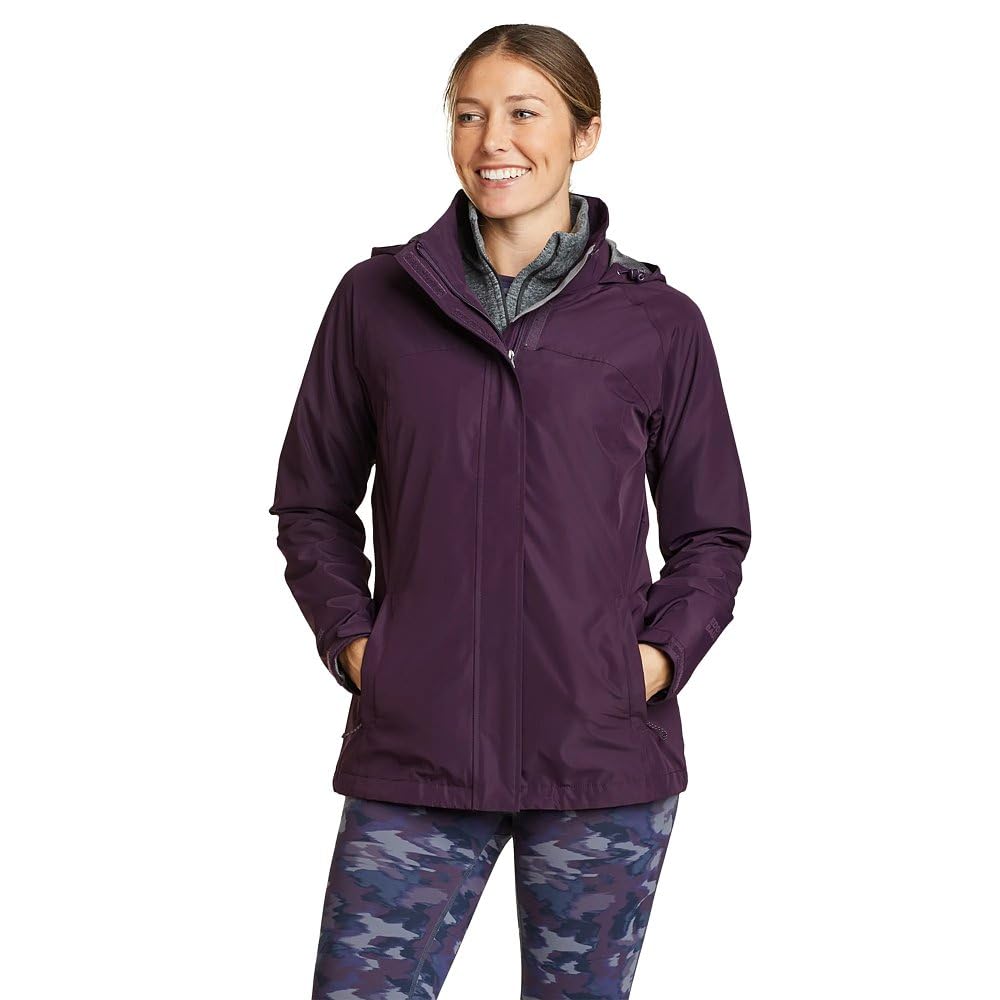
2. Eddie Bauer Women’s Rainfoil Packable Jacket
A 10K waterproof shell from 100% recycled polyester that packs into its own pocket.
What makes the Rainfoil stand apart is the material — buyers repeatedly emphasize that it does not feel like a plastic raincoat, but rather a normal lightweight jacket that happens to be fully waterproof. Built on Eddie Bauer’s WeatherEdge® Plus technology, it delivers 10K waterproof and 10K breathable performance, and every seam is sealed so water cannot sneak through the stitching. The breathable mesh lining keeps you comfortable when you’re moving, and the whole shell packs down into its own right-hand pocket for a carry-on or backpack.
Size L fits a 5’4″ owner well, and the adjustable hood, cuffs, and hem let you dial in the fit; some owners found the hood on the deep side, making it hard to see until adjusted. One delivery driver noted that sealed seams and a true-to-size fit mean it “covers all area of staying dry,” and Alaska and Iceland travelers sized up to layer a down vest underneath without losing weather protection. A 5′ tall owner found the length perfect, describing it as thicker and sturdier than expected from a packable shell.
The trade-off is warmth — this is a shell with a bit of insulation, not a heater, so opinions on warmth run mixed, and there’s no waist drawstring to seal out cold air from below. For cool rainy days it is spot on; for freezing sleet you will want a fleece or down layer beneath it.
Fit is the draw: The flattering shape and correct sleeve length get constant praise — owners mention it feels like a real jacket, not a rain poncho.
Grab it for: trail hikes, travel, and commutes where rain is likely and your bag has to stay light.
skip it if: you expect serious warmth — this is a rain shell, not an insulated winter jacket.
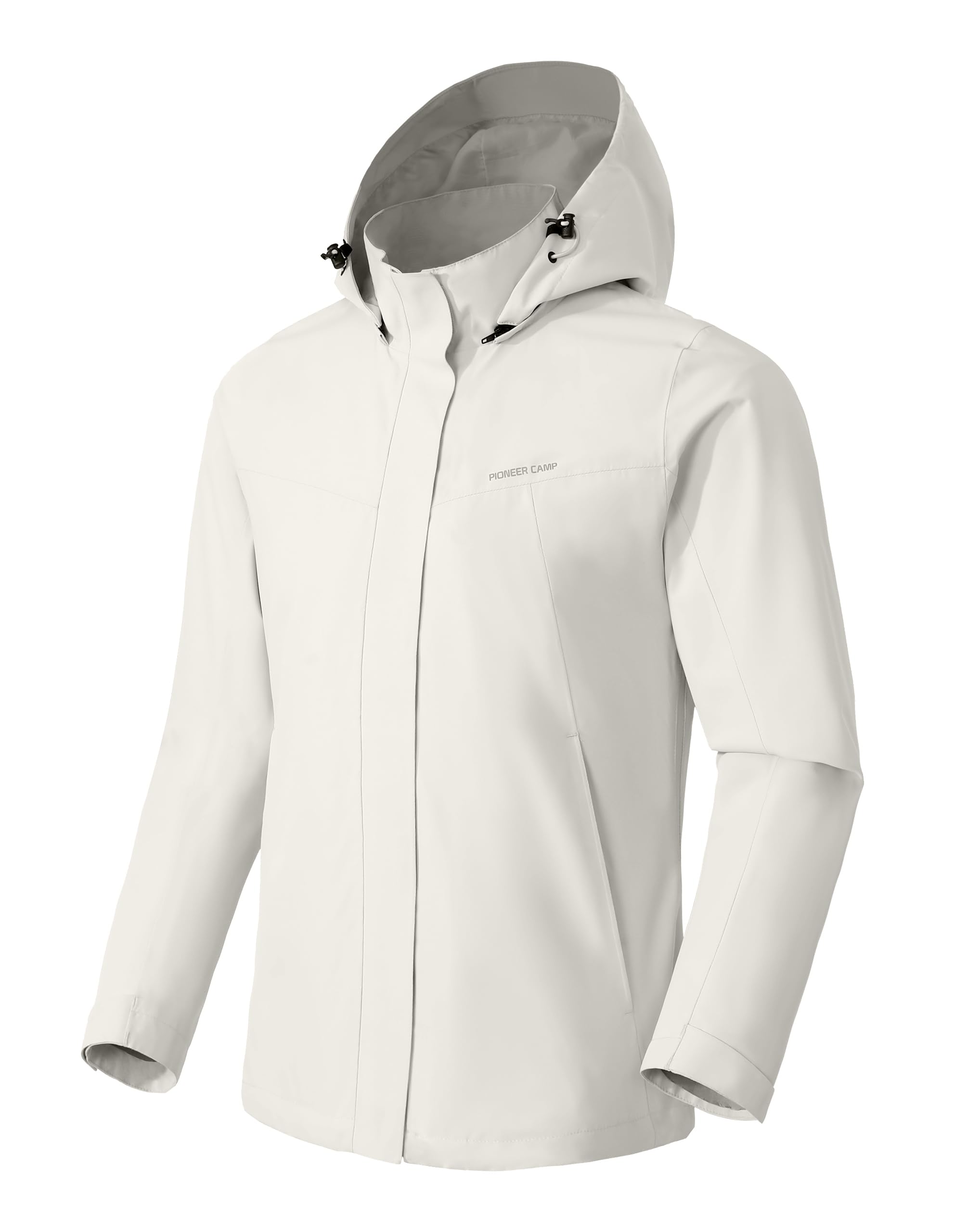
3. Pioneer Camp Women’s Rain Jacket
The rain shell with pit zips and a zip-off hood for hikers who run hot.
When you’re climbing steadily, sweat can become a bigger problem than rain. This jacket tackles that with vent zips under the arms and a zip-off hood, letting you dump heat and customize your coverage mid-trail. The 10,000mm waterproof rating handled a real test: after three hours of rain — one hour heavy — the wearer stayed dry, and another owner watched water bead right off after four hours of steady precipitation.
Quality is the most-praised aspect, with a 5’3″, 180-pound owner fitting an XL over a fleece and describing the features as genuinely nice — dual-direction main zipper, adjustable hood and waist, and a slightly longer tail for coverage. One 5’4″, 132-pound owner found the large fit with a tee and vest underneath, and the bottom zip makes bending easier on the trail.
Here is the honest sizing note: this jacket runs small, and it is the single most-discussed point in the reviews. A few owners warn that you should buy a larger size if you plan to wear a sweater under it, so if you are between sizes, sizing up is the safe play. A 3-star review flagged a color mismatch versus the photos — the quality won praise, but the shade was not what was pictured.
Feature-forward: Pit zips, zip-off hood, and a dual-direction main zip offer ventilation options rare at this level — and the waterproofing proved itself in real downpours.
Choose this for: hikers who sweat easily and want serious ventilation plus solid rain protection.
Size up if: you want to layer a sweater or fleece beneath — a recurring note from nearly everyone who reviewed it.
4. Marmot PreCip Eco Jacket

A 255-gram recycled nylon shell that stuffs into its own pocket and survives jungle downpours.
At just 255 grams, this shell is about the same weight as a can of soda, and it disappears into its own pocket when the rain lets up. The Marmot NanoPro nylon ripstop fabric is fully waterproof and breathable with sealed seams, and the DriClime-lined chin guard adds comfort where your neck meets the zipper — a thoughtful detail for long days out. Owners took it through a Costa Rica jungle downpour and came out completely dry after four straight days of wear.
For active use, the PitZips (underarm vents you unzip to release heat) are the standout feature — cyclists and hikers alike praise them for dumping heat on sweaty climbs, and a long-torso cyclist found the cut ideal for leaning over handlebars with the hood fitting over a helmet. The adjustable hood rolls into the collar when you don’t need it, and the Velcro cuffs plus drawcord hem seal out drafts. Quality is the most-praised aspect, followed closely by fit — a 5’5″, 147-pound owner found the large roomy enough for layering beneath a fall travel wardrobe.
The honest catch comes with time: one meticulous owner woke to find the inner waterproof lining peeling after roughly sixteen months of hard use without washing, like fine flakes inside the shell. The jacket stayed wearable, but it is worth knowing this is a packable performance shell, not a lifetime investment, and the interior can feel sticky against bare skin — best worn over a baselayer.
Trail-verified: Real downpour tests — Costa Rica jungles, rainy bike commutes, Pacific Crest Trail segments — all came back dry, with pit zips earning the most praise.
Reach for it if: you want the lightest, most packable rain shell that still breathes on active climbs.
Think twice if: you expect years of daily wear — the inner lining can peel over time in hard-use cases.
5. Helly Hansen Women’s Luna Rain Jacket
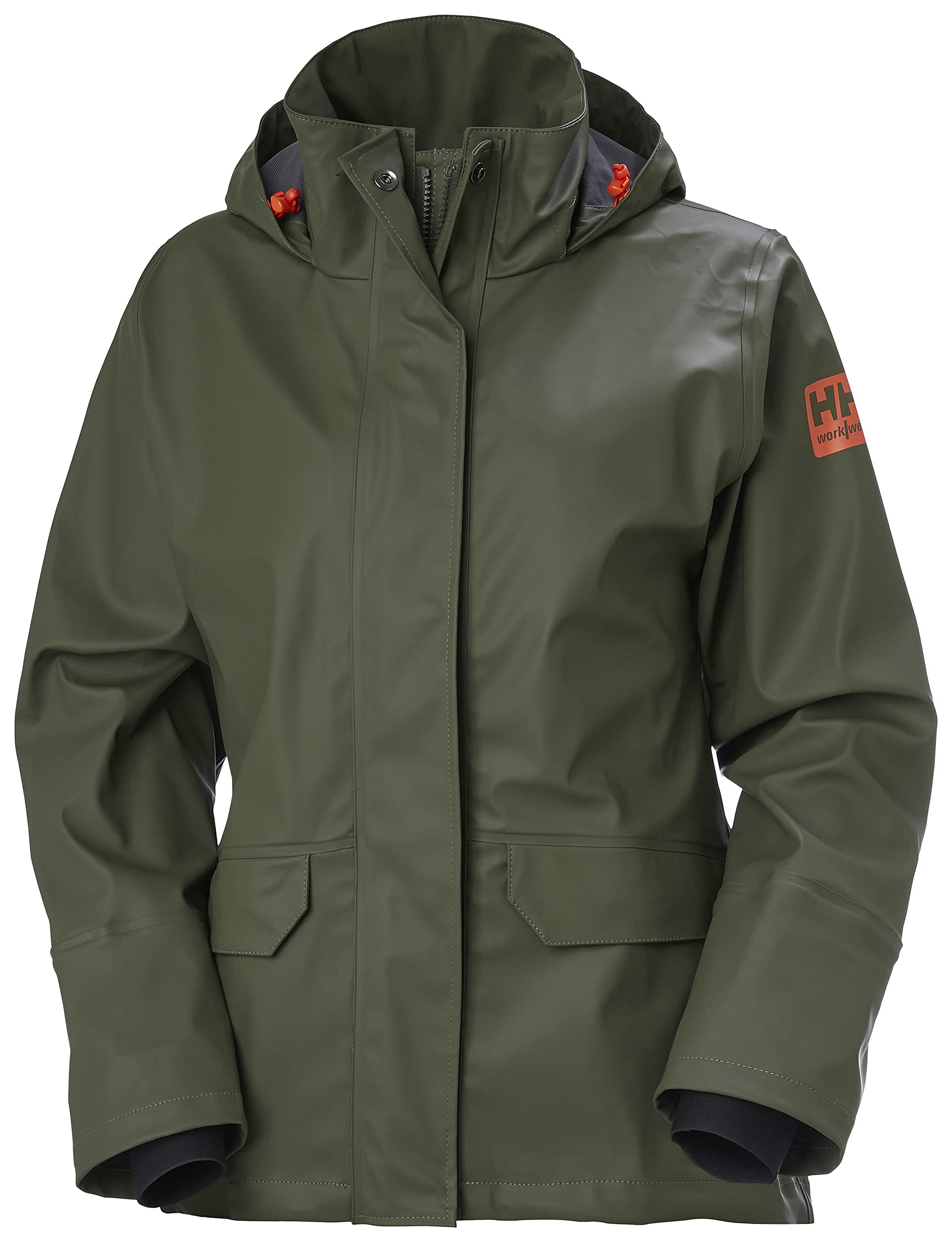
The waterproof windbreaker with neoprene cuffs that stops rain before it reaches your sleeves.
For hikers who battle serious wet weather, the Luna’s neoprene cuffs and pockets are the defining features — the stretchy cuff material hugs your wrists to stop water from running down into your sleeves. The PU (polyurethane) main fabric blocks rain entirely, and the zipper is sealed and essentially concealed, so customers note there is no leak path at all. One owner took it through the Northwest’s relentless rain and sized up to an extra large, calling the fit true to size and the material exactly what the weather demanded.
Quality dominates owner feedback, with one buyer reporting a 21-day Scotland trip where the jacket blocked wind and rain while staying breathable enough to keep the wearer dry and warm with merino layering underneath. True-to-size is the recurring word — a 5’5″, 139-pound athletic owner moved from a small to a medium to fit a fleece beneath for fly fishing, and a 5’3″ owner found the small fit but traded it for a medium to allow a thick hoodie underneath. The adjustable, packable hood is roomy, and the front flap pockets add convenient storage.
The trade-offs are small but real: the texture of the PU fabric (a polyurethane coating that adds waterproofing) got mixed reactions from one buyer who still praised the construction, and breathability went largely untested even by owners who pushed it through storms. For working outdoors in steady rain, the neoprene cuffs and sealed seams make this among the most waterproof picks on this list.
Built for downpours: Sealed seams, a concealed zipper, and neoprene cuffs earned “the best rain gear yet” from owners who hike and work in the wet.
Choose this if: you spend real time in heavy rain and want cuffs and closures that keep every drop out.
Pass if: you hate a technical fabric feel — the PU texture is waterproof, not buttery soft.
6. Rab Women’s Nebitron Pro Hooded Jacket
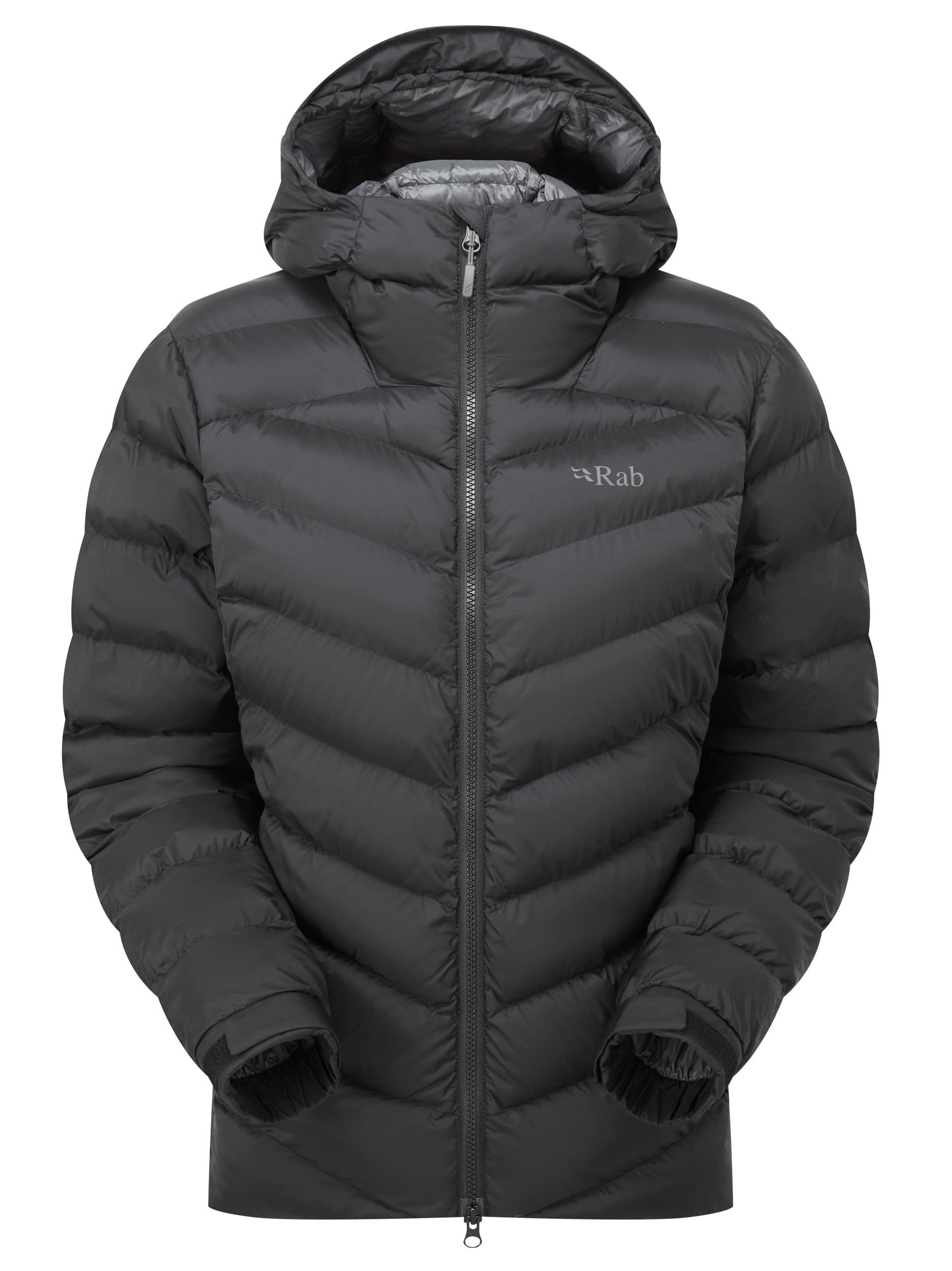
Synthetic insulation that keeps loft and heat even when the weather turns wet.
This jacket answers a specific problem: what keeps you warm when it is cold and raining? The Nebitron Pro is stuffed with Rab’s Cirrus HL recycled synthetic insulation, which holds onto its loft (the airy structure that traps body heat) even when wet — a trick down cannot manage. Fast-drying Stratus sheet insulation sits in the shoulders and cuffs for extra wet-weather resilience, and the Pertex Quantum Pro ripstop nylon outer, made from recycled materials, shrugs off unexpected precipitation and gusting wind.
Built for mountaineering and chilly days at the crag, this is a warmth-focused layer rather than a pure rain shell. One owner took it out in cold rain and came back warm and dry, noting the long sleeves adjust with Velcro and the whole jacket is light enough for winter backpacking. A 4-foot-11 owner chose it for a New York fall and appreciated the true tomato-red color, keeping it for the warmth it delivered.
The catch is that this is a niche piece: if you already own a good rain shell, the Nebitron Pro slots underneath it as the insulated mid-layer for cold-and-damp trips. It is a premium investment for alpine hikers and climbers who need warmth that survives wet conditions, not a do-everything jacket for casual trails.
Wet-weather warmth: Owners confirm it stays warm and dry in cold rain, with sleeves long enough to adjust over gloves — exactly what synthetic insulation promises.
Best for: mountaineering, climbing, and cold-rain hikes where wet-weather warmth is non-negotiable.
Not for: dry, mild trail days — this runs warm and is built for the cold and damp.
7. Mammut Women’s Outdoor Hardshell Jacket
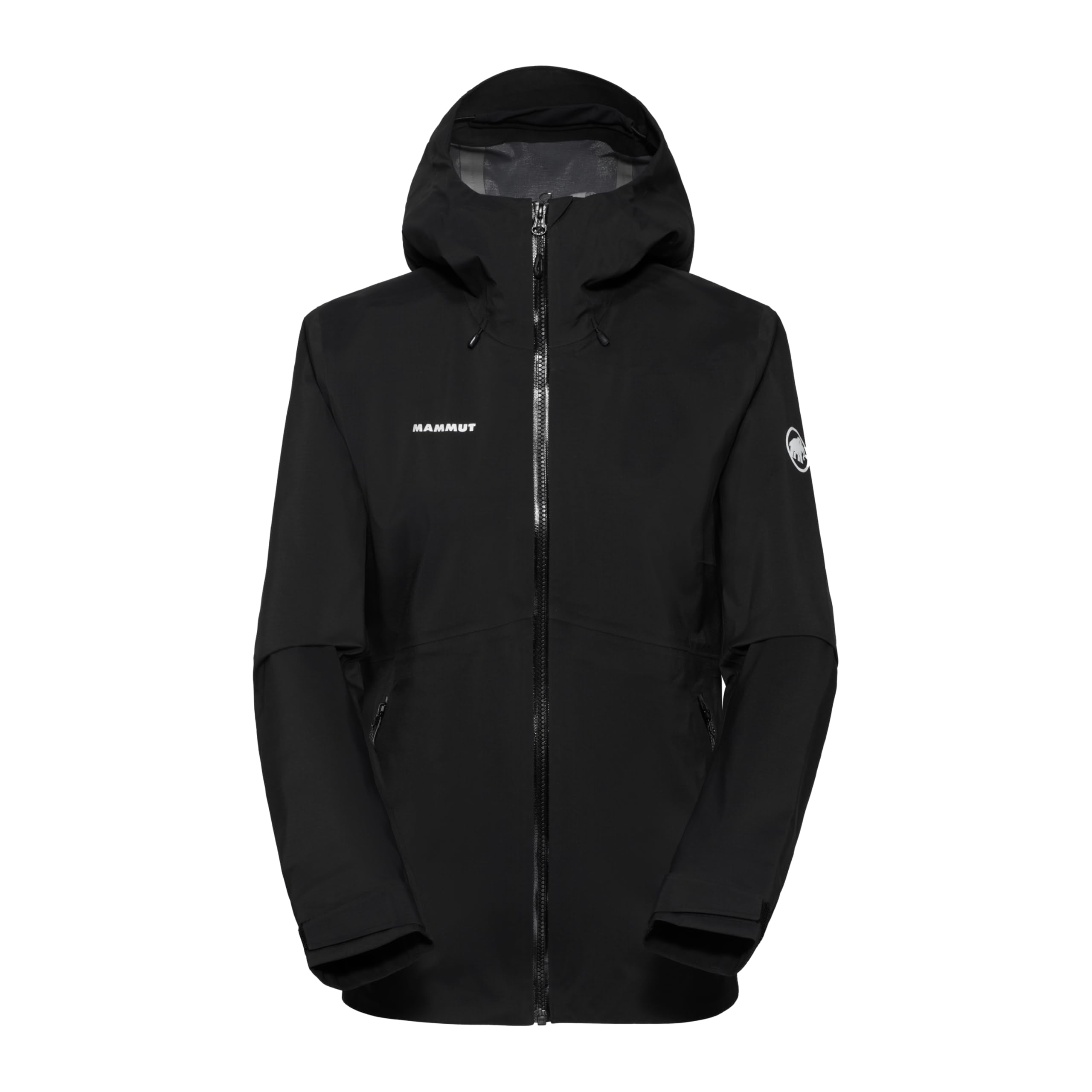
A 190-gram hardshell with 20,000mm waterproofing — the highest rating on this list.
If you count every gram in your pack, this Mammut shell is remarkable: just 190 grams, roughly the weight of a smartphone plus a snack, with a 20,000mm waterproof rating that out-specs every other shell here. That number means the fabric can handle an intense column of water pressure — a genuine downpour test. The 2.5-layer Mammut Dry Active technology packs this protection into a featherweight 100% recycled polyamide package that stuffs into its own large chest pocket.
The breathability rating of 20/m≤/24h helps it control moisture during trail running and mountain climbing, and the athletic fit is cut for freedom of movement. A long-distance hiker took it through five straight hours of steady rain on a thru-hike and found everything underneath still dry — the ultimate test for a rain shell.
Here is the honest split: with only a handful of reviews, feedback is genuinely mixed. The fabric is extremely thin by design — that is what makes it 190 grams — so if you want a shell with some substance to it, this ultralight approach may feel too flimsy for your taste.
Spec king: 20,000mm waterproofing at 190 grams is the strongest waterproof-to-weight ratio on this list — and it survived five hours of continuous rain on a thru-hike.
Reach for it if: you are an ultralight backpacker or trail runner who wants maximum rain protection for minimum pack weight.
Think twice if: you want a substantial-feeling jacket — the thin nylon shell is not for everyone.
8. Rab Women’s Microlight Alpine Down Jacket
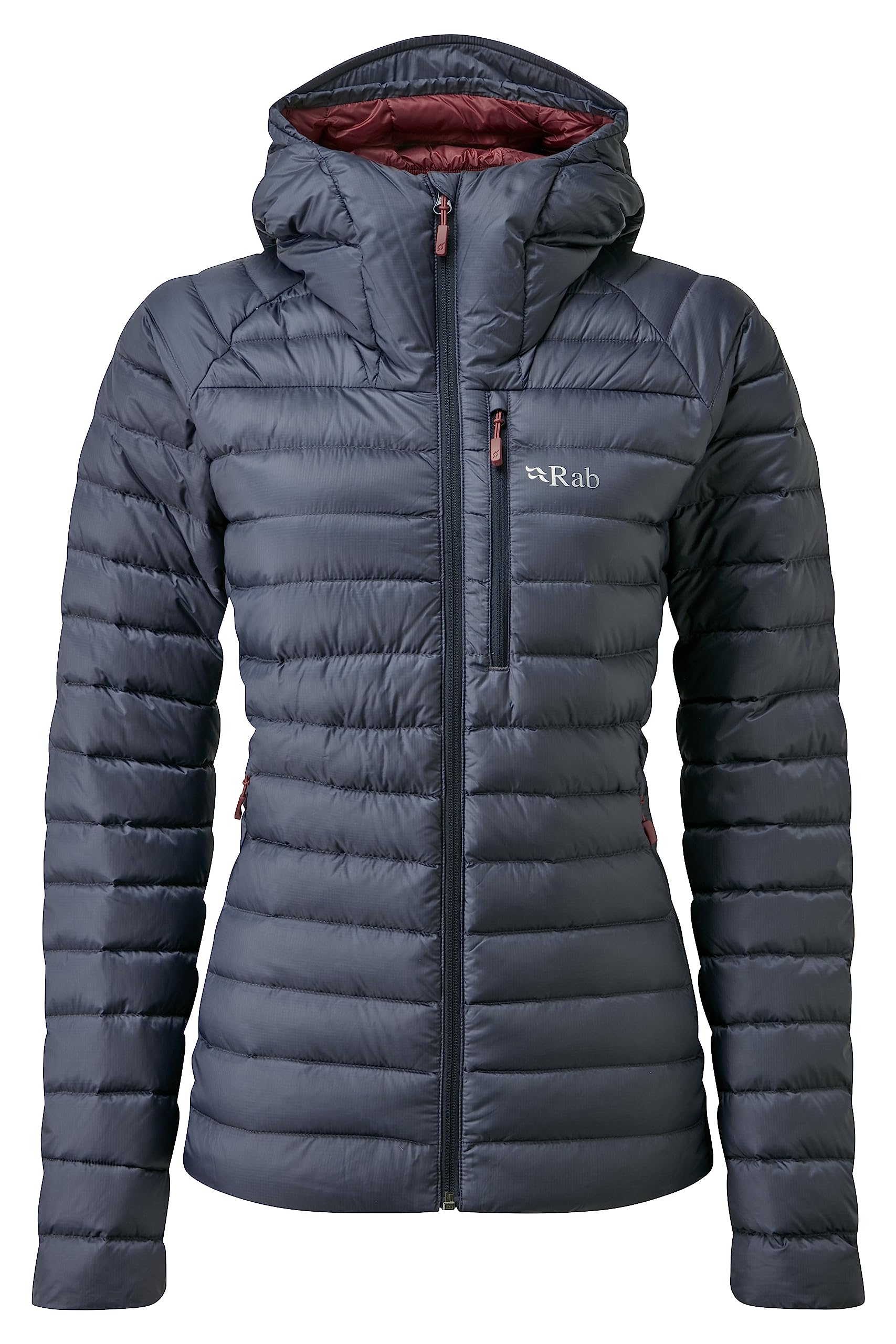
A 700-fill down hoody at 413.5g that packs small but traps heat like a much heavier coat.
Warmth is what owners talk about most with this one, and the numbers back it up: 700-fill ethically sourced down with a water-repellent treatment traps body heat and dries quickly, all in a jacket that weighs just 413.5 grams (14.6 ounces). The Pertex Quantum outer (a lightweight nylon shell) is water- and wind-resistant for light flurries and chilly gusts, and the micro baffles around the body and shoulders keep the down evenly distributed, with smaller nano baffles under the arms for better breathability when you start to work up a sweat.
Owners describe it as warmer than a Patagonia nano puff and perfectly flattering on a pear shape, with a longer length that covers the hips and bum. A size large fit a women’s 14 true to size with room to slip it under a shell, and an owner who wore it on a snowy metal bench stayed warm for four hours straight. The green color drew compliments, the fit drew praise for accommodating wide hips, and the sleeve length was called out as ideal.
The catch is durability — a recurring mixed note. One owner who hiked two 14ers (peaks over 14,000 feet) without any scrambling found herself covered in feathers after just two wears, with down escaping quickly. Occasional feathers can pop through the fabric, which is typical of down jackets but worth knowing if you are hard on your gear. Sizing also runs slightly large — one owner at 5’6″, 140 pounds exchanged a medium for a small.
Warmth wins: Owners consistently call it warm, flattering, and light — “perfection” was the word one used, praising the fit and the stunning color.
Best for: cold, dry trails where you want serious warmth in a packable, hip-covering cut.
pass on it if: you often brush against rocks and branches — down can escape through the face fabric over time.
9. Fjällräven Expedition Pack Down Hoodie
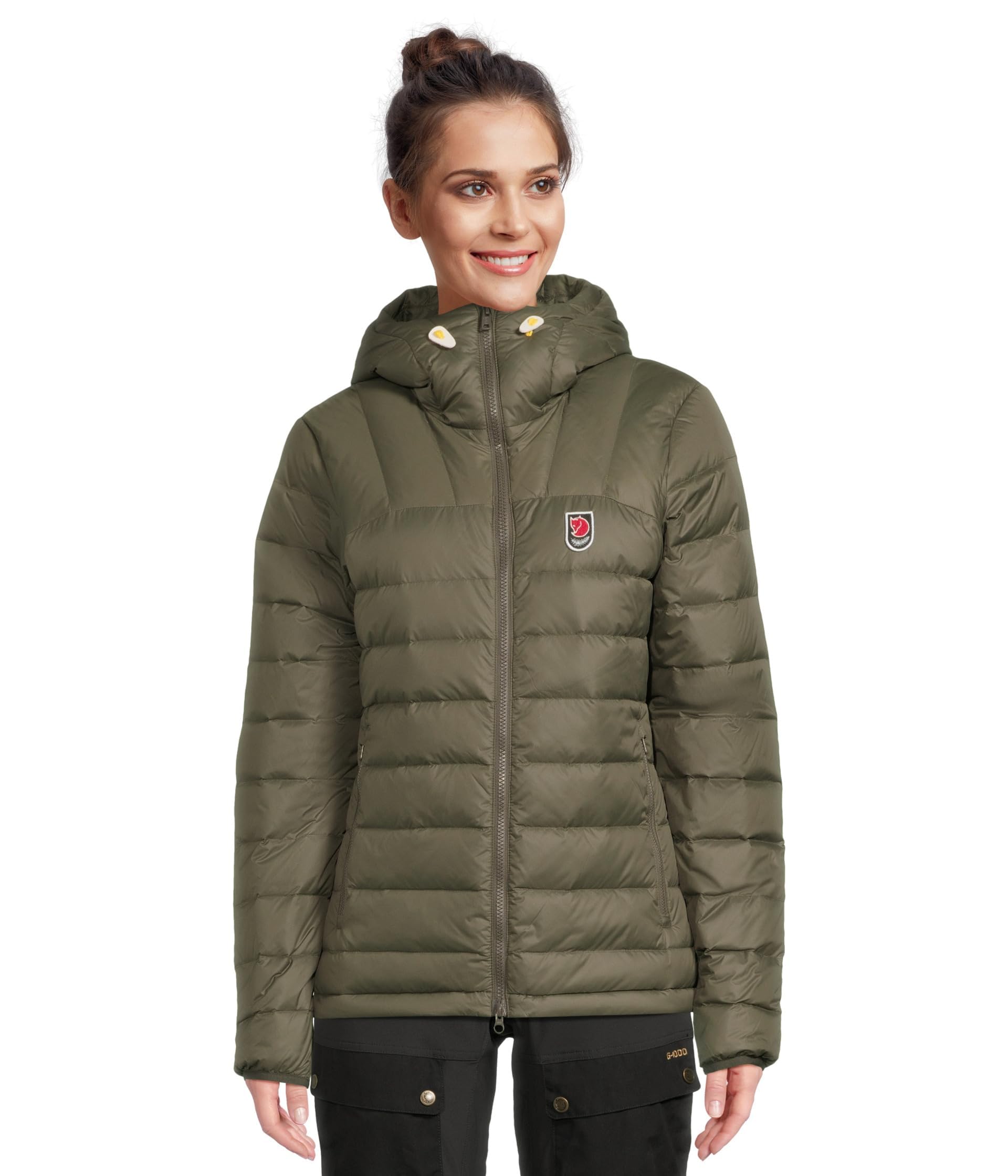
The Swedish classic: ethical down warmth with a soft fleece collar and three zippered pockets.
Owners call this one “my favourite jacket ever,” and the details explain why. The Expedition Pack Down Hoodie pairs a lightweight outer and lining in 100% recycled polyamide with high-quality ethically produced down padding, plus synthetic padding reinforced over the shoulders where pack straps rub. The front collar is lined with soft fleece for comfortable wearing and chin protection when you zip up fully — a touch that surfaces in nearly every owner review.
Two kinds of hood-adjusting straps let you fine-tune the fit, and two hand pockets plus an inside pocket, all with zippers, keep your essentials secured. An XS fit a petite 155-centimeter owner (about 5’1″) perfectly, and a daily bike commuter found it blocked neck wind and kept hips warm on the ride in — no chill sneaking up the back. Sizing follows the size table accurately, and owners describe the quality as high with a fit that delivered exactly what the chart promised.
The honest limitation: for deep winter this is too thin — it is an insulated midlayer or spring-autumn jacket rather than an arctic parka. The warm-weather crowd should note it runs as a layer, not a standalone cold-weather solution, though owners recommend it without hesitation for shoulder-season hiking and commuting.
Favorite-ever status: The fleece-lined collar, adjustable hood straps, and three zippered pockets make this a daily-wear insulated jacket that owners genuinely adore.
Reach for this if: you want a well-made, ethical down midlayer for spring-to-autumn hikes and bike commutes.
Look elsewhere if: you need a deep-winter parka — this is a lightweight layer, not a heavy coat.
Understanding the Specs
Waterproof Rating (mm)
This number tells you how much water pressure the fabric can withstand before it soaks through. A rating of 8,000mm handles steady rain, while 10,000mm and above manages genuine downpours — the Mammut shell at 20,000mm is the most hardcore here. Higher is better, but it often means less breathability, so match the rating to the weather you actually hike in.
Breathability (g/m²/24hr)
Measured in grams of moisture that can escape per square meter per 24 hours, this spec decides whether you end up sweaty inside on a climb. A jacket with high breathability like the Eddie Bauer’s 10K rating lets sweat vapor escape while keeping rain out — the difference between feeling clammy and feeling comfortable on the ascent.
FAQ
How do I layer a waterproof shell with a down jacket for hiking?
Which is better for hiking — down or synthetic insulation?
How should a women’s hiking jacket fit for layering?
What does a waterproof rating of 10,000mm actually mean for me?
How do I wash a waterproof or down hiking jacket without ruining it?
What are PitZips and why would I want them?
Is a packable rain jacket as protective as a full hardshell?
How long does a hiking jacket’s waterproofing last?
Can I wear a hiking rain jacket for cycling or commuting?
What is the difference between a softshell and a hardshell jacket?
Final Thoughts: The Verdict
If you want one dependable pick, the women’s hiking jacket winner is the 33,000ft Softshell because it blends warmth, waterproofing, and daily wearability at a value that is hard to match. If you want a featherlight shell that disappears into your pack for travel and real downpours, grab the Eddie Bauer Rainfoil. And for cold, dry trails where warmth matters most, the Rab Microlight Alpine is the one to reach for.
How We Picked
We do not accept paid placement. Every pick is matched to a real buyer and a real use-case; we do not hands-on test units.
Sources & Methodology
Specifications: manufacturer listings and product documentation. Review insights: verified customer reviews, as of August 2026. Pricing: not shown on this page (it changes often); check the current price via the retailer link.
As an Amazon Associate, Calories Fit earns from qualifying purchases. This does not affect which products we feature.