
Our readers keep the lights on and the coffee maker working hard! As an Amazon Associate, I earn from qualifying purchases.
Specs are compiled from manufacturer listings and verified buyer reviews and can change over time — please confirm the key details on the product page before buying.
Working out on concrete, asphalt, or packed grass is brutal on your knees, ankles, and your gear. A flimsy mat slides away after a few jumps, and a too-thin one lets every impact travel straight through. The right outdoor mat stays put and cushions impact, letting you focus on the rep.
I’m Mohammad — the founder and writer behind Calories Fit. This guide is built by comparing the manufacturers’ published specifications and the patterns across verified customer reviews, so you get each pick’s real strengths and trade-offs instead of marketing spin.
We broke down thickness, grip, and weight across the top contenders to help you find the best workout mats for outside that genuinely survive sun, sweat, and heavy landings.
Our Picks at a Glance

How To Choose The Best Workout Mats for Outside
Buying a mat for the outdoors is different from picking one for your living room. You need something that laughs at temperature swings, resists UV damage, and handles the rough texture of concrete or stone without shredding. Focus on three core things: thickness for impact protection, material for durability, and surface grip for safety.
Thickness: Your Joints’ Best Friend
Outdoor surfaces are unforgiving. A mat that is too thin will transfer the shock of every jump, step, or deadlift straight into your knees and spine. Look for mats measured in inches — a 0.79-inch thick tile absorbs far more impact than a 0.24-inch mat. Thicker mats also resist buckling under treadmills or weight racks.
Grip and Weight: The Anti-Slide Combo
A sliding mat is a safety hazard. On hard, flat concrete, a textured bottom surface increases friction. But the real secret is weight — a heavier mat physically resists the lateral forces of jumping rope or doing burpees. A 14.4 kg mat versus a 2.3 kg mat is the difference between one that stays planted and one that creeps backward mid-set. Check the weight in pounds or kilograms before you buy.
Quick Comparison
| Model | Best For | Thickness | Weight | Dimensions | Amazon |
|---|---|---|---|---|---|
| AIRHOP 48 Sq Ft Tiles★ Best Overall | Heavy Home Gym & Equipment | 0.79 inches | 14.4 kg | 24″ x 24″ (12 tiles) | Amazon |
| SUPERJARE 48 Sq Ft TilesPremium Pick | Quiet, Cushioned Flooring | 0.79 inches | — | 24″ x 24″ (12 tiles) | Amazon |
| BesWin 8′ x 4′ Mat | Spacious Multi-Workout Areas | 0.25 inches | 11 pounds | 98″ x 48″ | Amazon |
| FEECCO Jump Rope Mat | High-Impact Jump Rope | 7mm (0.28 inches) | 6.5 lbs | 53.9″ x 35.8″ | Amazon |
| Cheete Oval Mat | Multi-Purpose Conditioning | 0.19 inches | 2.3 kg | 48″ x 36″ | Amazon |
| Cheete 3-Layer Oval Mat | Silent, Durable Jumping | 0.19 inches | 2.59 kg | 48″ x 36″ | Amazon |
| dofopo 71″ Jump Rope Mat | Budget Concrete Protection | 0.24 inches | 1.6 pounds | 71″ x 24″ | Amazon |
In‑Depth Reviews
1. AIRHOP 0.79in Thick Exercise Mats
Our pick — over 4.5★ from 250+ verified ratings; the strongest balance of quality and price.
A heavyweight tile system that converts a bare patio into a real gym floor.
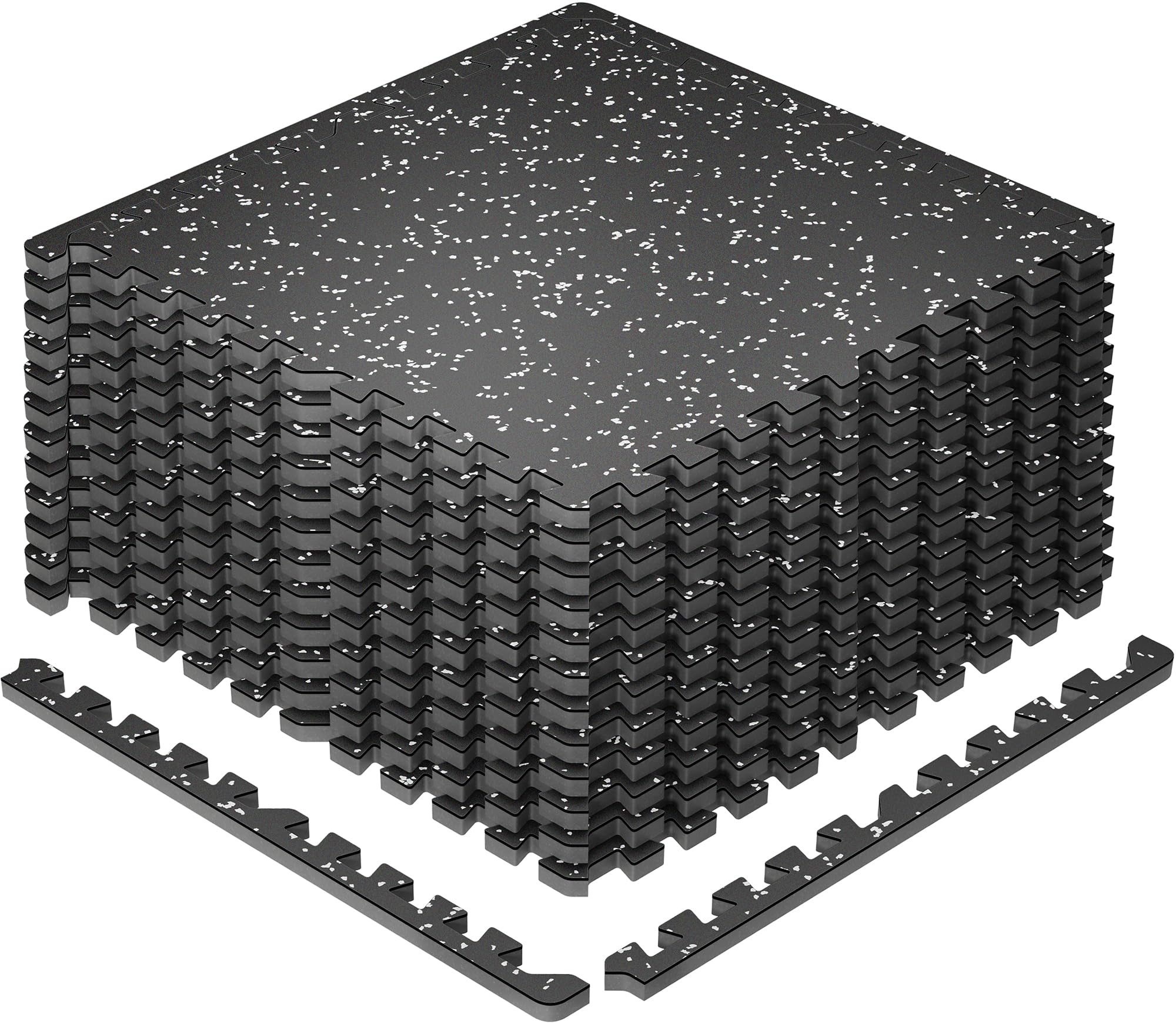
If you are building a permanent outdoor training zone for heavy lifting or cardio machines, the AIRHOP tiles are the foundation to start with. This set of 12 interlocking tiles covers 48 square feet, and a beefy 14.4 kg total weight makes the whole assembly feel like permanent flooring rather than a portable mat. Each tile measures 24″ x 24″ with a 0.79-inch thickness. That deep EVA foam core is what protects your floor and your joints from loaded barbells and dropping dumbbells.
The dual-layer build is the standout: a textured rubber top grips your shoes and equipment, while the high-density EVA bottom absorbs shock and muffles noise. The material is also PVC-free, lead-free, and BPA-free, so you aren’t introducing harsh chemicals to your outdoor space. Assembly is genuinely tool-free — the interlocking locks snap together and stay put, and you can detach and reconfigure the shape whenever you need. Owners note it easily handles kids’ taekwondo practice and holds up well in training rooms, which tells you the durability is real.
The main trade-off is the smell. Buyers report a noticeable rubber odor that takes a few days to dissipate — a common quirk with new rubber flooring, so plan to air it out before installing it in a closed garage. Compared to the 0.79” SUPERJARE alternative, this set is the heavier, more premium-feeling choice, and the crowd with nearly 300 ratings rates it higher for good reason.
Why it wins the gym slot
- Real shock absorption for heavy gear: 0.79-inch thick EVA core
- Non-slip rubber top keeps equipment planted mid-lift
- Waterproof surface cleans with a damp cloth
The honest setup cost
- New-rubber odor lingers for days, per owner reports
- Heavy at 14.4 kg, so it is a permanent setup, not a take-anywhere mat
Ideal for: Home gym owners who want one permanent, cushioned platform for weights, machines, and kids’ activities on concrete or garage floors.
Not for: Anyone needing a roll-up, portable mat they can carry to a park.
2. SUPERJARE 0.79” Extra-Thick Mats
Plush and thick enough to muffle a rowing machine’s clatter.
SUPERJARE takes the same 12-tile, 48-square-foot format as our top pick but tunes it for a different feel. Each 24″ x 24″ tile is 0.79 inches thick, with an EPDM rubber top over a high-density EVA foam base. The result is a surface that owners describe as “plush” — noticeably softer underfoot than standard gym tiles, which makes it a favorite for yoga, stretching, and bodyweight circuits where comfort beats raw rigidity.
Where this mat separates itself is noise control. The thick foam core is fantastic at muffling the sound of a rowing machine or treadmill, so your outdoor workout won’t echo through the neighborhood. Assembly is straightforward with interlocking edges, and each tile includes 2 detachable borders so you can finish the edges square and neat. The brand explicitly addresses the rubber-odor issue with a “no annoying rubber odor” upgrade, which is a real differentiator versus the AIRHOP.
The catch, as owners note, is that “plush” isn’t ideal for everything. One report notes it is too cushy for a Peloton — the bike wobbles on the soft surface — so if your primary machine is a spin bike, this is not the base for you. There are also isolated reports of the surface developing a dark film over time, so regular cleaning is part of the deal. For a quiet, comfortable outdoor gym floor, though, this is the top-tier option.
The comfort edge
- Exceptionally thick and soft for yoga, stretching, and floor work
- Muffles machine noise far better than thin mats
- Low-odor rubber upgrade from the brand
Where it wobbles
- Too cushioned for stationary bikes, which need a firm base
- Some owners mention a dark residue needing repeated cleaning
Reach for this if: your outdoor setup is about comfort — yoga, floor stretches, rowing, and bodyweight work.
Look elsewhere if: you plan to mount a heavy spin bike or need a firm, rigid lifting platform.
3. BesWin Large Exercise Mat

One giant roll-out surface for sprawling, jumping, and lifting.
If you’d rather not assemble a puzzle of interlocking tiles, the BesWin gives you one solid, unrolled surface. The 8′ x 4′ version measures 98 inches long and 48 inches wide, so you and a partner can spread out for cardio circuits, HIIT, MMA drills, and stretching. At 11 pounds, it stays put during exercise but still rolls up for easy storage when you’re done.
The cushioning comes from a high-density foam core, and at 0.25 inches thick, it sits somewhere between a thick yoga mat and a full gym tile. That’s plenty for bodyweight work, planks, and jump rope, and the shoe-friendly top means you can train with sneakers on without tearing the surface. It is also proudly non-toxic — certified under US ASTM-F963, plus phthalate-free and latex-free — which matters when you’re sweating on it outdoors.
The durability story is mixed, with some owners reporting surface flaking over time, so this is best treated as a high-use consumer mat rather than an industrial-grade slab. It also arrives tightly rolled and needs a couple of days under weight to lay completely flat, so don’t plan to use it the same day it arrives. For a budget-to-mid price, the sheer coverage and versatility make it a strong value for a multi-sport outdoor area.
Why it covers everything
- Two-person size: 98″ x 48″ of continuous workout space
- Non-toxic and shoe-friendly for versatile training
- Protects concrete floors from ropes, kettlebells, and drops
What to expect
- Needs days to lose the shipping curl
- Some owners see surface flaking with heavy use
Best for: partners or multi-sport athletes who want one large, roll-away surface for mixed workouts on a patio or garage floor.
Not ideal for: heavy static equipment like treadmills, where a thicker tile is safer.
4. FEECCO Jump Rope Mat

A heavyweight 7mm pad that refuses to slide even under heavy rope work.
Jumping rope on pavement is a recipe for shin splints and shredded ropes. The FEECCO pad exists specifically to fix that. At 7mm (0.28 inches) thick and weighing 6.5 lbs, it is built to stay planted. The non-slip back grips concrete and hard floors, and that weight gives it the inertia to resist creeping backward as you jump — a problem that plagues lighter yoga mats.
The 53.9″ x 35.8″ oval surface is wider than most standard jump mats, so the 36-inch width gives taller and bigger athletes room to land without stepping off the edge. The high-density PVC texture is softened compared to typical PVC, which helps absorb impact and reduce knee strain when you’re pounding out hundreds of jumps. Customers note it prevents shin splints and survives months of daily use.
Its portability is the real selling point for outdoor use — it rolls up and comes with a free carry bag, making it easy to throw in the trunk for a park session. The catch is that on very soft or uneven surfaces like carpet or pavers, it can still shift slightly; it’s happiest on flat, hard ground. If jump rope is your primary outdoor sport, this is the specialist pick that beats the thinner generic mats.
The jumper’s advantage
- 7mm thickness cushions knees during high-rep jumping
- 6.5 lb weight plus non-slip back keeps it planted on concrete
- Comes with a carry bag for easy park trips
The ground honesty
- Can still slide slightly on carpet or uneven pavers
- Not big enough for full-body floor workouts
Grab this if: jump rope is your main outdoor cardio — it protects your shins, knees, and rope on hard ground.
skip it if: you need a full-body mat for stretching and floor work alongside your jumping.
5. Cheete Jump Rope Mat

The multi-sport oval that handles rope, yoga, and dance with zero fuss.
The Cheete oval mat is the practical all-rounder for outdoor conditioning. Its 48″ x 36″ surface is large enough to keep a jump rope from catching on the ground while giving you room for stretching, yoga, or a quick dance workout. A high-quality rubber build with an added wear-resistant layer on top means it shrugs off the scuffs and scrapes that come with regular outdoor use, a problem that shortens the life of thinner mats.
The bottom features a tire-tread pattern that provides excellent anti-skid grip and soundproofing, so your feet plant firmly and your rope thuds quietly. The 2.3 kg weight is noticeable — in a good way — because you can feel it won’t slip while you jump. Owners love it for everything from serious jump rope training to daily Tai Chi practice on bare feet, praising its soft, well-padded feel. It rolls up compactly for easy storage and transport.
Watch the sizing: some reviewers point out the 48-inch width feels short for their stride, and at 0.19 inches thick, it won’t cushion heavy landings like a thicker mat. It’s also not the easiest to lug around. Still, for an entry-to-mid priced all-rounder for home or park workouts, it balances size, weight, and cost better than most.
The daily-driver strengths
- Wear-resistant top layer survives concrete and rope scuffs
- Tire-tread bottom grips hard so it stays put mid-jump
- Versatile for rope, yoga, dance, and kids’ play
Know the limits
- On the short side for taller jumpers
- 0.19-inch thickness is moderate, not max cushioning
Choose it for: a budget-friendly, multi-purpose mat that moves easily between jump rope, yoga, and floor stretches.
Pass if: you are a taller athlete needing more length or maximum joint protection.
6. Cheete 3-Layer Oval Mat

A three-layer build that mutes the thud of every landing.
This Cheete mat solves the same problems as its sibling but with a smarter construction. It adds a layer of jersey fabric on top of the traditional rubber core — without adding extra weight — creating a surface that is both softer underfoot and wears much longer than single-layer mats. That double wear resistance is the key upgrade, directly addressing the “my mat wore through too fast” complaint common to cheaper options.
The three-layer structure breaks down cleanly: a jersey fabric top cushions and silences, a rubber middle layer provides high resilience for strenuous exercise, and a bottom tire pattern grips the ground to prevent slipping. Weighing just 2.59 kg, it remains light enough to roll up and carry, yet heavy enough to feel stable during use. One owner reports it “almost entirely mutes the sound of jumping on hardwood indoors,” which bodes well for outdoor noise concerns.
At 48″ x 36″ with the same 0.19-inch thickness as the standard Cheete, it shares the size caveat — some find it not large enough. The stability is solid but not perfect, with one report noting it tends to slip backward slightly during intense jump rope sessions. For a mid-range price, this is the better-built, quieter version of the classic oval mat, and its versatility as a VR mat, pet mat, or equipment mat is a nice bonus.
The upgrade that matters
- Jersey fabric top adds durability and near-silent landings
- Lightweight at 2.59 kg yet stable enough for workouts
- Multi-use: rope, yoga, VR, pet, and equipment mat
Still worth noting
- Same 48″ length, which isn’t ideal for long strides
- Can drift backward slightly during continuous jumping
Pick this over the standard Cheete if: you want the quieter, more durable fabric top without paying for a heavy tile system.
Think twice if: you need a longer jump surface or absolute zero slide on every terrain.
7. dofopo 71″ Jump Rope Mat

The longest mat in the lineup at a price that protects your budget and your rope.
The dofopo mat attacks the biggest jump-rope problem — catching your rope on the edge — with pure length. At 71 inches, it is dramatically longer than the oval options, giving you plenty of forward-backward room to land your jumps without hitting concrete. That makes it a smart pick for beginners who haven’t dialed in their accuracy yet, or for any jumper who likes a generous target zone.
It’s built from high-quality TPE (thermoplastic elastomers), a material softer than PVC, which provides excellent cushioning to soften the impact on your knees and joints. The double-sided non-slip textured surface increases friction and reduces noise, so you can train on a patio without disturbing the neighbors. It works well on hardwood, tile, garage floors, and flat outdoor concrete, and it comes with a free carry bag so you can take it to the park.
The honest trade-off is weight and thickness. At just 1.6 pounds and 0.24 inches thick, it is light enough to slide on certain surfaces — one owner reports it sliding about 6 inches per 50 jumps on carpet. It is also thinner than the FEECCO or the tile systems, so it’s not built for max shock absorption. For a budget entry point that guards your rope from concrete wear, it’s a solid, practical choice, but it shines brightest on flat, hard ground rather than plush surfaces.
The long-game win
- 71-inch length prevents rope catch better than any oval mat
- Soft TPE cushions joints with every jump
- Lightweight with a free carry bag for travel
Where it’s light
- Slides on carpet only 1.6 pounds of hold-down weight
- 0.24-inch thickness is modest for heavy impact
Best for: beginners and casual jumpers on a budget who want a long, forgiving surface for concrete or garage floors.
Not for: high-volume athletes who need a heavier, thicker pad to prevent knee fatigue.
Understanding the Specs
Thickness (Inches vs. mm)
This is the single most important number for joint protection. Thickness is measured in inches (like 0.79″) or millimeters (like 7mm, which equals 0.28″). A thicker mat absorbs more impact from jumps and dropped weights. For heavy lifting or high-impact cardio, aim for 0.5″ or thicker. For jump rope and bodyweight work, 0.25″ to 0.3″ provides decent cushioning. Thicker also means firmer support for machines, but too soft can make equipment wobble.
Weight and Stability
On a mat spec sheet, weight is a feature, not a burden. A heavier mat (measured in kg or pounds) physically resists sliding during dynamic movements. A light mat under 2 kg will creep backward during jump rope. A heavy tile system weighing 14.4 kg acts like permanent flooring. Think about your surface: if you train on smooth, hard concrete, weight plus a textured bottom is your best defense against slipping.
Material: Rubber, TPE, and EVA
Your mat’s material decides how long it lasts, how well it grips, and how it smells. Rubber (often recycled) is the toughest and grippiest, but it can smell strong at first. TPE (thermoplastic elastomers) is softer and lighter, giving you good cushioning with less weight. EVA foam sits as a cushioning base layer in tile systems, absorbing shock and cutting noise. PVC is durable but a bit harder. Look for free-from certifications like BPA-free or phthalate-free to avoid harsh chemicals.
Surface Area and Shape
Bigger isn’t always better, but it matters for specific sports. An oval or rounded mat saves weight and looks sleek, but a long rectangular mat gives you more forward-backward room for jump rope. A tile system covers a large fixed area (like 48 sq ft) and can be configured to your space. Consider your primary workout — if you do yoga, you want length; if you jump rope, you want length plus width; if you lift, you want a stable, continuous square area.
FAQ
Can I leave my workout mat outside permanently in the sun and rain?
What is the ideal thickness for jumping rope on concrete?
How do I stop my exercise mat from sliding around on the ground?
Are rubber workout mats safe for my knees if I am lifting heavy weights?
How do I clean a mat that I use outdoors?
Is a 48-inch long oval mat big enough for jump rope?
What does EVA foam do in an exercise mat?
Is there a difference between a mat for outdoor concrete and one for indoor wood floors?
Will a heavy tile mat system protect my garage floor from dumbbells?
How long will a rubber jump rope mat last with regular outdoor use?
Final Thoughts: The Verdict
For most people, the workout mats for outside winner is the AIRHOP 48 Sq Ft Tile Set because it offers the best mix of thickness, stability, and floor protection for a permanent outdoor gym. If you mostly jump rope and need portability, grab the FEECCO 7mm Mat for its grippy, knee-saving design. And for a budget-friendly option that won’t shred on concrete, the dofopo 71″ Mat is the one to reach for.
How We Picked
We do not accept paid placement. Every pick is matched to a real buyer and a real use-case; we do not hands-on test units.
Sources & Methodology
Specifications: manufacturer listings and product documentation. Review insights: verified customer reviews, as of August 2026. Pricing: not shown on this page (it changes often); check the current price via the retailer link.
As an Amazon Associate, Calories Fit earns from qualifying purchases. This does not affect which products we feature.