
Our readers keep the lights on and the coffee maker working hard! As an Amazon Associate, I earn from qualifying purchases.
Specs are compiled from manufacturer listings and verified buyer reviews and can change over time — please confirm the key details on the product page before buying.
Choosing a running watch used to mean picking between a bulky GPS unit that barely tracked your route and a fancy smartwatch that died by lunchtime. That trade-off is gone. The watches here pair serious multi-band GPS with heart-rate sensors and battery life measured in days, not hours — so you can train hard, recover smart, and stop hunting for a charger before every run.
I’m Mohammad — the founder and writer behind Calories Fit. This guide is built by comparing the manufacturers’ published specifications and the patterns across verified customer reviews, so you get each pick’s real strengths and trade-offs instead of marketing spin.
From featherlight race-day options to rugged adventure companions, these are the wrist watch for running standouts that earn their spot on your wrist with accurate tracking and marathon-ready endurance.
Our Picks at a Glance
![Apple Watch Series 11 [GPS 46mm]](https://m.media-amazon.com/images/I/6129OfG4gfL.jpg)
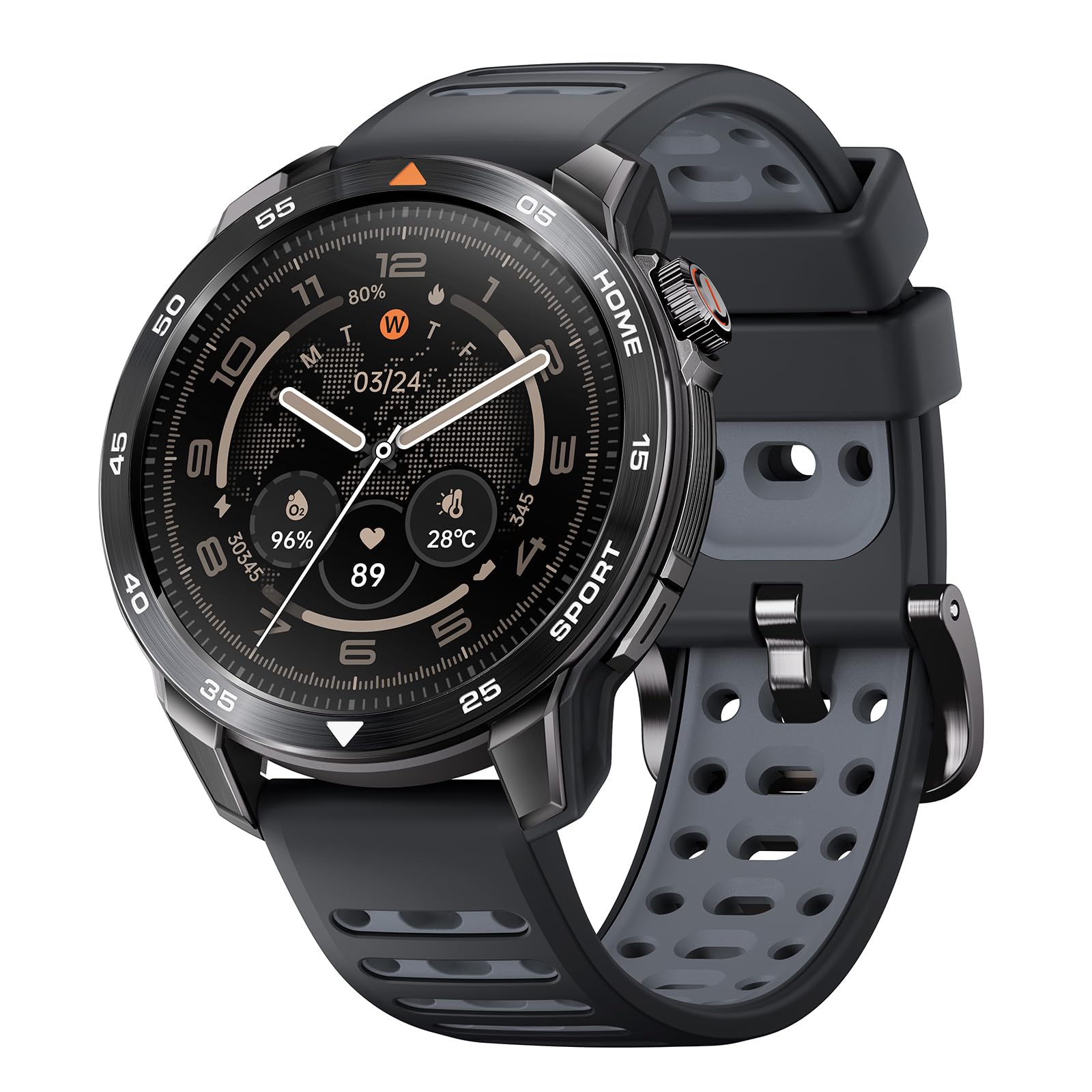
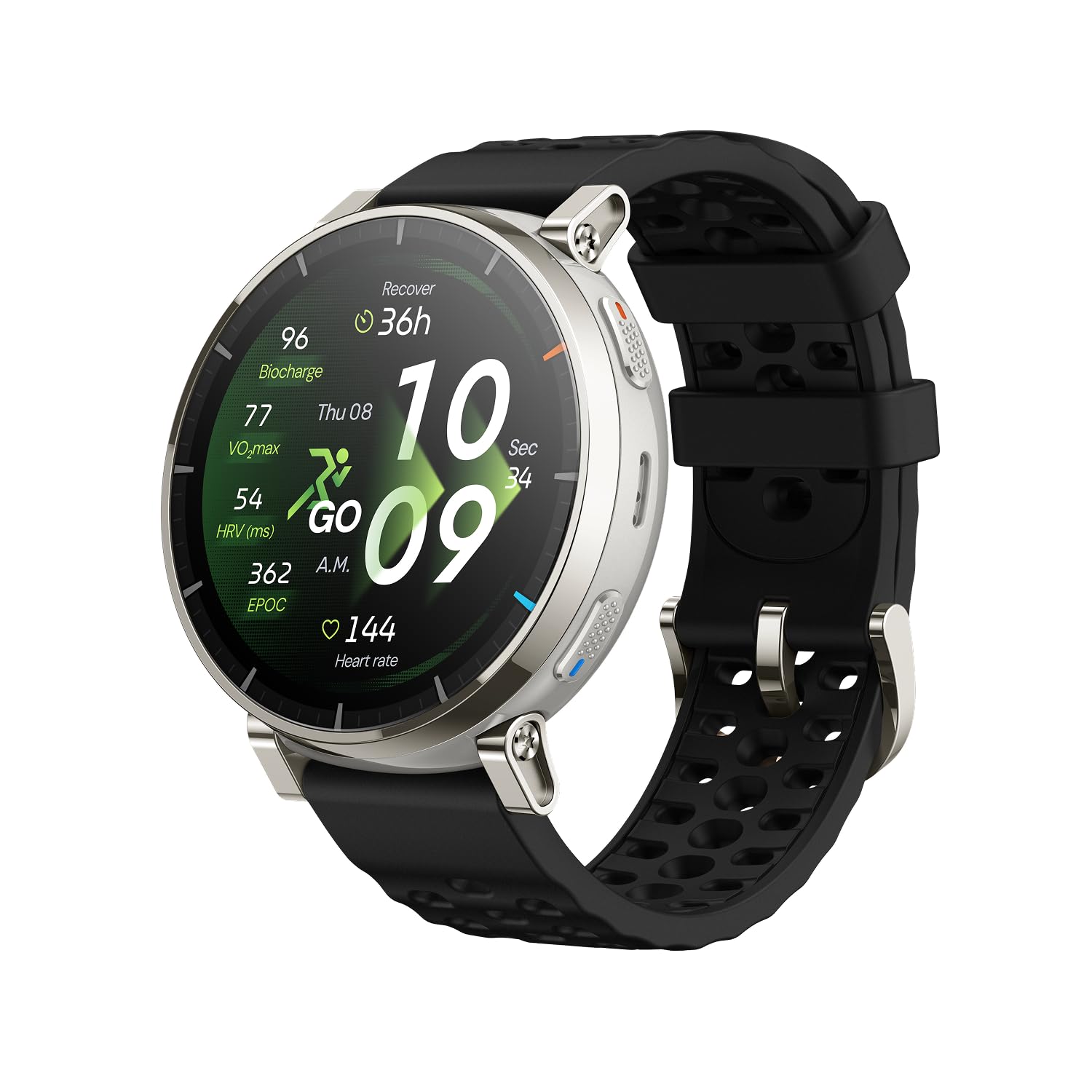
How To Choose The Best Wrist Watch for Running
Your perfect running watch depends on one question: what kind of runner are you? A weekend jogger needs something simple with long battery life. A marathon trainer wants advanced metrics and structured plans. A trail runner needs rugged navigation. Matching the watch to your routine beats buying the most expensive option every time.
GPS Accuracy: The Core of Every Run
Dual-band GPS (a receiver that uses two frequency bands — L1 and L5 — to lock onto satellites) is the gold standard here. It keeps your route, pace, and distance accurate even in high-rise canyons or under heavy tree cover where single-band GPS gets wobbly. If you run the same loop daily, look for this feature; it’s the difference between a true 5K and a 5.2K that messes with your pacing.
Battery Life: Days vs. Hours
Battery specs are quoted two ways: daily smartwatch use (with notifications and heart rate on) and GPS mode (when tracking a run). A watch with 20 days of daily use might only last 20 hours in GPS mode — and that’s fine. What matters is whether the battery survives your longest run plus your daily wear without becoming a second charging chore.
Training Metrics: Data That Makes You Faster
Beyond pace and distance, the best running watches track heart rate, cadence (steps per minute), stride length, and recovery time. Advanced watches add training load, VO2 Max (an estimate of your aerobic fitness), and lactate threshold (the point where your body fatigues quickly). If you’re serious about improving, these metrics turn every run into a lesson.
Quick Comparison
| Model | Best For | Battery (Daily) | GPS Mode | Weight | Amazon |
|---|---|---|---|---|---|
| Apple Watch Series 11★ Best Overall | iPhone users wanting full smartwatch + health | 24 hours | — | 1.28 oz | Amazon |
| mibro GS Pro2Best Battery | Budget runners who want training plans | 20 days | 20 hours | — | Amazon |
| Amazfit Active 3Best Offline Maps | Runners who want offline maps on a budget | 12 days | — | — | Amazon |
| COROS PACE 4 | Serious runners who want accuracy + lightweight | 19 days | 41 hours | 32g | Amazon |
| Garmin Forerunner 970 | Triathletes and data-hungry runners | 15 days | 26 hours | — | Amazon |
| SUUNTO Race S | Runners who want offline maps + navigation | 13 days | 30 hours | 60g | Amazon |
| COROS PACE 3 | Runners who want great value + accuracy | 17 days | 38 hours | 30g | Amazon |
| SUUNTO Run | Minimalist runners who want light + simple | 12 days | 20 hours | 36g | Amazon |
| Polar Street X | Gym + trail runners who want a flashlight | 10 days | 43 hours | 48g | Amazon |
| Garmin Instinct 2 Solar | Adventure runners who need rugged durability | Unlimited w/ solar | 48 hours w/ solar | — | Amazon |
| Samsung Galaxy Watch Ultra | Android users wanting LTE + advanced coaching | ~3 days | — | — | Amazon |
In‑Depth Reviews
1. Apple Watch Series 11 [GPS 46mm]
Our pick — over 4.5★ from 2,500+ verified ratings; the strongest balance of quality and price.
The smartwatch that thinks it’s a running coach — and mostly pulls it off.
The Series 11 earns the top spot by blending serious runner features into a device you’ll never want to take off. It’s the crowd favorite — a 4.7-star reputation across 2,000+ owners — with what the review pages describe as “really long” battery life that fast-charges to 8 hours of use in just 15 minutes. That means a quick top-up while you’re tying your shoes gets you through a full morning run plus the commute.
For runners, the killer features sit in the health and safety suite. You get advanced metrics like Pacer, Heart Rate Zones, and training load — powered by Apple Intelligence from your nearby iPhone — alongside safety nets that detect a hard fall or severe car crash and can alert emergency services automatically. Water resistance to 50m means it’s fine for swim workouts and rainy runs without a second thought.
The beauty of the Series 11 is how it disappears into your life. At just 1.28 ounces, it’s light enough to wear while sleeping — which is exactly when it tracks your sleep score and overnight Vitals. The trade-off is the one-day battery; at 24 hours of normal use, it’s a daily charge, not a weekly one. That’s the honest catch for marathoners who want to leave the charger at home.
Why Runners Love It
- Fast charge: 15 minutes for up to 8 hours of use
- Advanced safety: fall detection and crash detection built in
- Health suite: ECG, high/low heart rate alerts, sleep score
- Water resistant to 50m for swim and rain
The Daily Trade-Off
- 24-hour battery needs a daily charge
- Requires an iPhone for full functionality
- 46mm case might feel large for smaller wrists
The verdict: The best all-around pick for iPhone users who want a running watch that’s also a full smartwatch — owners consistently rate the build quality and battery life as top-tier.
Think twice if: You’re an ultramarathoner who needs multi-day GPS tracking without a charger; look to the dedicated sports watches below.
2. mibro GS Pro2 GPS Running Watch
A battery champion that goes 67% longer between charges than its closest rival.
In GPS mode, it still holds up for 20 hours, so a long trail run won’t leave you stranded without tracking. Owners confirm it: “Battery life is as described,” the review pages report.
It’s built specifically for runners, not general smartwatch users. The dual-band GPS delivers faster signal acquisition and precise route tracking, whether you’re weaving through city streets or parked on a park loop. The built-in Mibro Coach creates personalized training plans based on your habits, tracking pace, cadence, and stride length in real time.
The physical design impresses too — a sharp-looking stainless steel case with a bright, clear screen that one owner called ideal for tracking high school cross country workouts, with smooth Strava uploads. At 5ATM water resistance, it’s rain-ready and pool-safe. The main gripe from larger-wristed buyers is the strap, which runs a bit short and could use another inch.
What Wins People Over
- 20-day daily battery, 20 hours in GPS mode
- Dual-band GPS for accurate city tracking
- Built-in personalized training plans
- Stainless steel case with bright AMOLED screen
What to Know
- Band runs short for larger wrists
- One owner reported band damage after a month
- No offline maps or music storage
Reach for this if: You want a dedicated running watch that barely ever needs charging — the 20-day battery trounces most smartwatches by a wide margin.
Look elsewhere if: You need turn-by-turn navigation or want to leave your phone at home for music; this keeps things focused on the run itself.
3. Amazfit Active 3 Smart Watch
Premium build and free offline maps at a price that feels like a steal.
The Amazfit Active 3 is the value pick that refuses to feel like one. The stainless steel frame with sapphire glass (a scratch-resistant synthetic crystal) gives it a premium heft, while the 1.32″ AMOLED display stays readable under direct sunlight — the sunlight-readable AMOLED display is a detail owners consistently call out. The phrase “better than the price suggests” comes up repeatedly in the review pages.
For runners, the headline feature is free offline maps with turn-by-turn directions and automatic rerouting. You can download a trail, explore confidently, and never need your phone. The GPS pulls from six satellite systems, and the built-in running workouts range from 5K to full marathon distances with personalized Zepp Coach guidance.
It also tracks the advanced stuff serious runners care about: running power, lactate threshold, and ground contact time. Battery life hits 12 days, which is solid though not class-leading — the mibro above beats it by 8 days. Owners love the bright display and accurate GPS, with a few noting the app could use more polish.
The standout: The 1.32″ AMOLED sapphire glass display — readable in bright sun, protected from scratches, and the sapphire glass and stainless steel frame are the build highlights owners mention most.
The honest trade-off: 12-day battery is good but not great, and the companion app’s customization options lag the polish of the watch itself.
Best for: Runners who want premium materials, free offline maps, and advanced metrics without paying flagship prices.
Not for: Ultrarunners who need 20+ days of battery between charges; the Active 3 is a daily-wear companion, not a multi-week expedition tool.
4. SUUNTO Run GPS Sport Watch
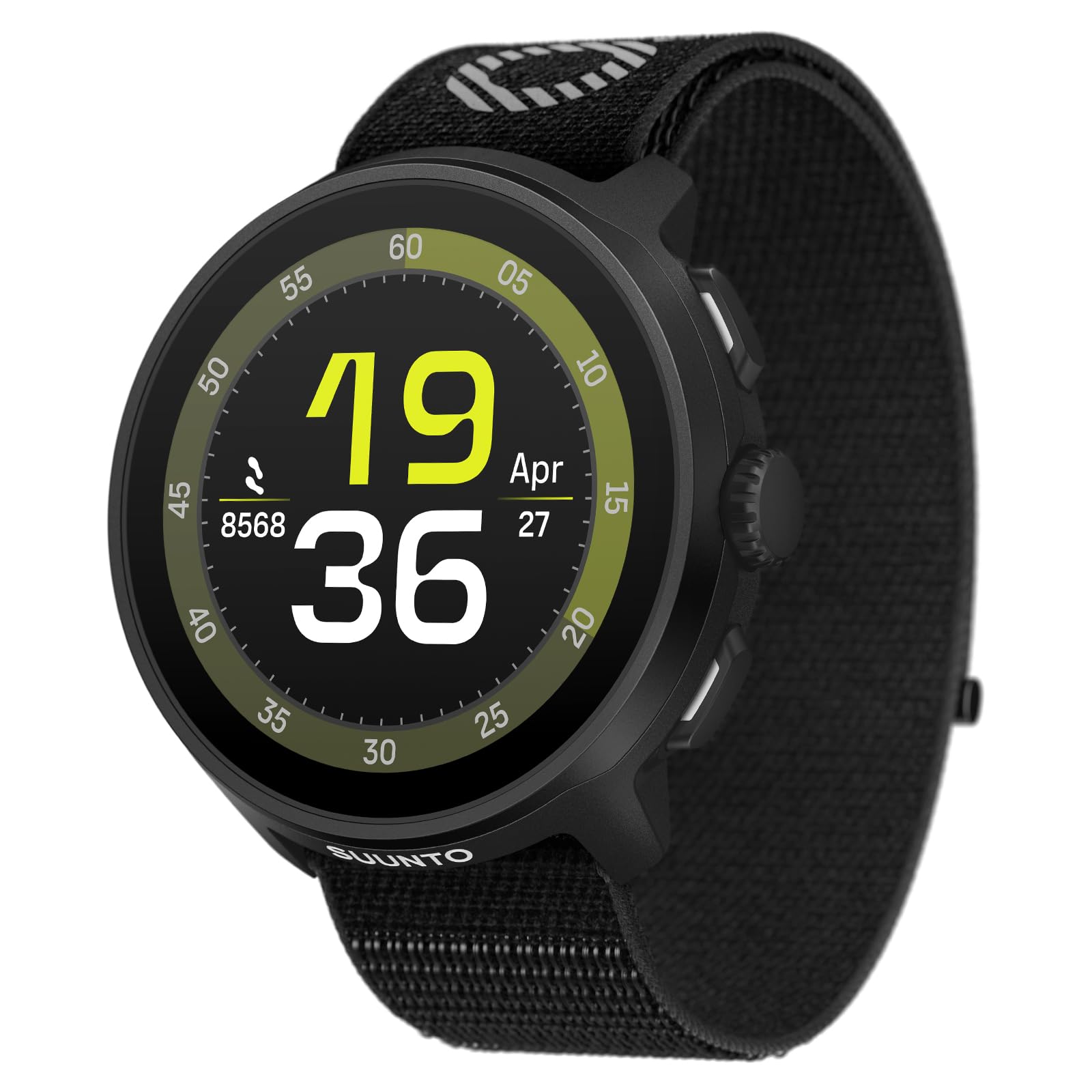
Featherweight comfort at 36g with pro-grade navigation that won’t weigh you down.
The SUUNTO Run is proof that a running watch doesn’t need to feel like a brick. At just 36g with the textile velcro strap, it’s among the lightest options here — you’ll genuinely forget it’s on your wrist. That’s a real advantage for tempo runs and intervals where every ounce of swing matters. The velcro closure makes it quick to adjust mid-run, and owners call it “surprisingly comfortable.”
Despite the light weight, it packs dual-frequency GPS (a more precise positioning system that uses two satellite frequencies) for accurate tracking in the city, countryside, or dense forest. You get 20 hours of training with high-precision GPS, plus a full recharge in just one hour when you’re running low. It tracks training load and Training Stress Score (a measure of how hard your body has worked) to help you avoid overtraining.
The 1.32″ AMOLED touchscreen with a crown is clear and readable, and the SUUNTO App gives detailed post-run analysis. There’s even 4GB of offline music storage for phone-free runs. The catch? Heart rate accuracy gets mixed reviews — some owners find wrist-based readings less reliable than expected, so interval purists might want a chest strap for precise HR data.
What Owners Praise
- 36g weight with velcro strap — forget it’s there
- Dual-frequency GPS with breadcrumb navigation
- 1-hour full recharge, 20 hours of GPS training
- 4GB offline music for phone-free runs
Where It’s Honest
- Mixed feedback on wrist-based heart rate accuracy
- App lacks some weekly/monthly training schedule features
- No NFC contactless payments
Confident pick for: Minimalist runners who want a light, capable watch with great navigation and quick charging — the velcro band and 36g feel are the standouts.
Consider another if: You need rock-solid wrist heart rate for interval training; the consensus is that it’s good but not perfect.
5. COROS PACE 3 GPS Sport Watch

The budget-friendly runner’s dream with a 38-hour GPS battery that outlasts watches twice its price.
The COROS PACE 3 is what happens when a running-focused brand builds a value watch without cutting the important corners. At 30g with the nylon band and 11.7mm thin, it’s designed for 24/7 wear — and that’s a spec owners notice immediately. It’s the definition of a light, distraction-free running companion.
The battery is the headline: 38 hours of continuous GPS tracking or 24 days of daily use on a single charge. That’s more GPS endurance than watches that cost three times as much. The dual-frequency satellite chipset keeps tracks accurate even in high-rise cities, and the breadcrumb navigation helps you follow a route you built in the COROS App without getting lost.
Owners consistently describe it as the best running watch for the money, with weeks-long battery life and fantastic GPS tracking. The honest trade-offs: connectivity is mixed for some, and the silicone band runs a touch small with a stiff clasp that takes effort to fasten. Larger replacement bands are easy to find, but it’s worth knowing before you buy.
The clincher: 38 hours of GPS tracking at this price is class-leading — you’re buying marathon-ready endurance for a budget-tier figure.
The catch: The band sizing is snug for bigger wrists, and some owners find the sync connection occasionally finicky.
Pick this if: You want maximum GPS battery and running-focused accuracy without spending flagship money — the value equation is tough to top.
skip it if: You need a touchscreen AMOLED display or built-in music; the PACE 3 keeps things functional and focused, not flashy.
6. COROS PACE 4 Ultralight Sport GPS Watch
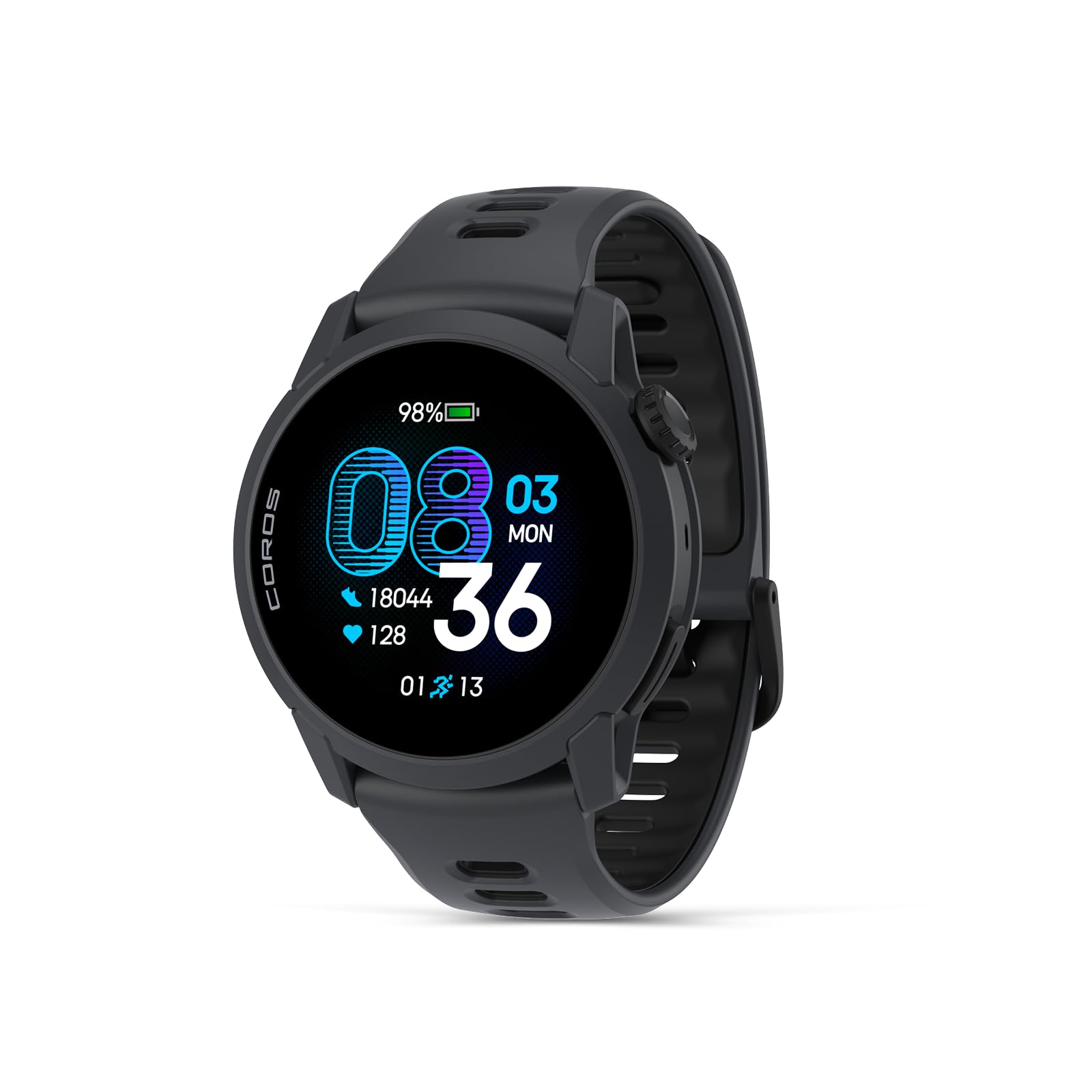
An ultralight 32g upgrade that delivers a 164% sharper display than its predecessor.
The COROS PACE 4 takes everything runners loved about the PACE 3 and sharpens it. The 1.2″ AMOLED touchscreen delivers 164% higher resolution than the PACE 3, which means vibrant colors and crisp lines that stay readable in all environments thanks to auto-adjusting brightness. At 32g with the nylon band, it’s lighter than an energy gel — a comparison COROS itself makes, and it’s accurate.
The battery gets a boost to 41 hours of continuous GPS use and 19 days of daily battery — beating its predecessor by 3 hours of GPS and 2 days of daily use. New voice features let you record workout logs by speaking, set alarms, or create target workouts hands-free. It’s controlled by a tactile digital crown, two buttons, and a smooth touchscreen for intuitive use even at high intensity.
The review consensus is strong: a college athlete who switched from Garmin after 10+ years called it lighter, cleaner, and a third of the price, while another owner praised its accuracy after a 12-mile run with music and max GPS settings that still left 75% battery. The recurring note is to add a screen protector since the mineral glass can scratch — a small cost for an otherwise brilliant running watch.
The Upgrade Highlights
- 41 hours GPS battery, 19 days daily use
- 164% higher resolution AMOLED than PACE 3
- 32g ultralight with nylon band
- Voice recording and voice control features
- Customizable Action Button for one-tap access
Small Caveats
- Mineral glass screen may need a protector
- 4GB storage, but no offline maps
- Voice features require setup to use fully
The standout: The 164% sharper AMOLED display plus 41-hour GPS battery makes this the best all-around runner’s watch for the price — owners most often praise the GPS accuracy and the 41-hour battery.
Be aware: The screen is glass, not sapphire, so a screen protector is a smart first accessory.
7. Polar Street X GPS Running Watch
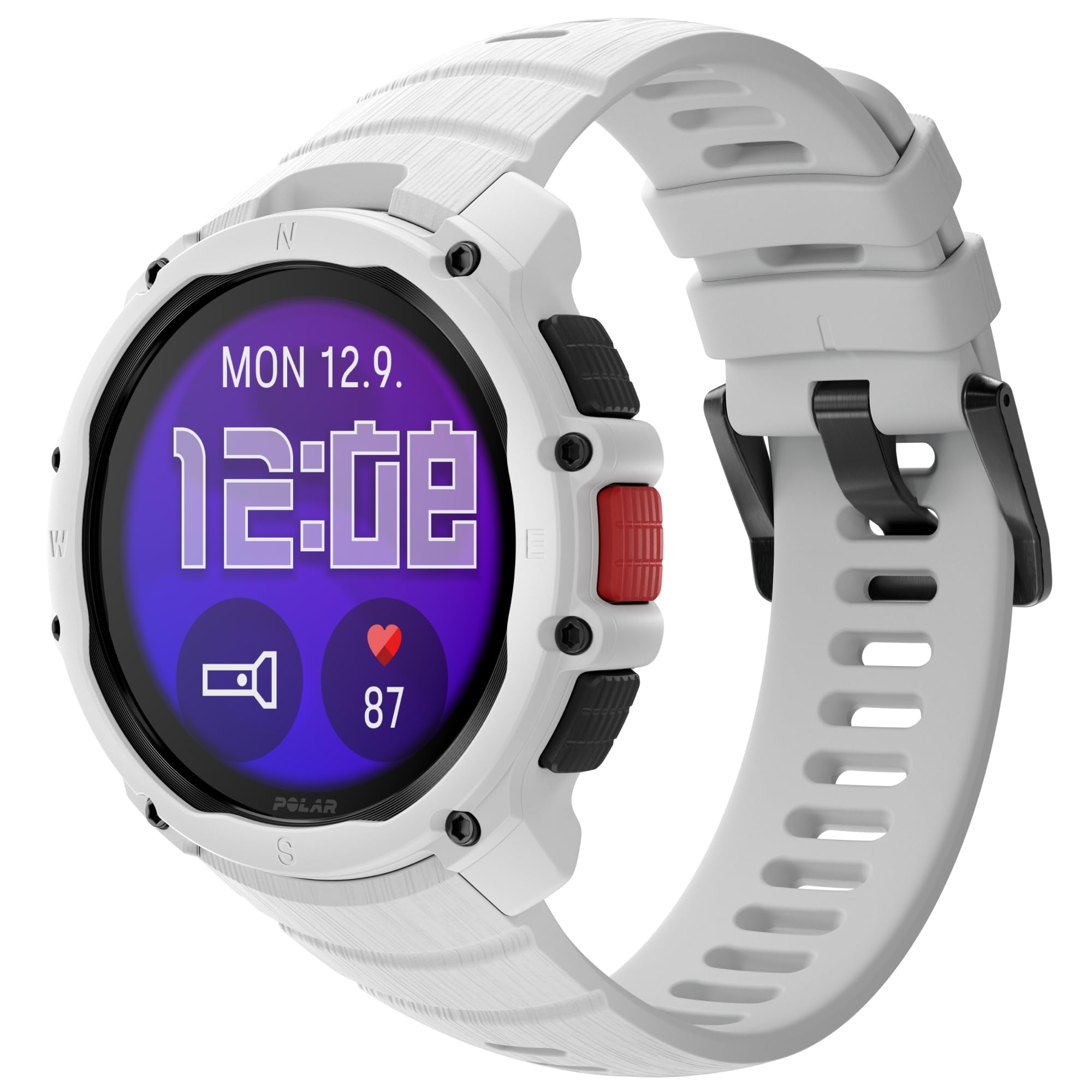
A rugged, flashlight-equipped runner that blends gym versatility with trail confidence.
The Polar Street X is designed for the runner who lives in the city by day and hits the trails on weekends. It’s shock-resistant with 50m water resistance — ready for rain, gym sessions, and daily impact — and light enough at 48g for all-day comfort. The built-in flashlight (with white and red modes) is a standout feature that owners genuinely love for early morning or late-night visibility.
With 170+ sport profiles, it covers running, strength, HIIT, and cycling, making it a versatile hybrid-training companion rather than a single-purpose device. The wrist-based heart rate monitor gives real-time effort data without needing a chest strap, and route guidance with back-to-start navigation keeps you oriented on unfamiliar trails.
The battery is solid: up to 10 days of daily use and 43 hours of GPS tracking — that GPS figure beats watches costing far more. Owners praise the tactile buttons as top-tier and note the Polar Flow ecosystem is preferred over Garmin for its detailed data. The honest trade-off is GPS track accuracy, which some owners call imperfect in dense urban areas, and the app’s limited watch customization options.
What wins people over: The battery and flashlight combo — one owner measured a 48-hour drop from 49% to 10% with workouts, notifications, and sleep tracking running, calling it “spectacular.”
The honest downside: GPS tracks aren’t always perfect in tight city blocks, and the companion app doesn’t let you customize watch faces or notifications granularly.
Best for: Hybrid athletes who split time between the gym, city runs, and trail sessions and want rugged durability with a useful flashlight.
Not ideal for: GPS purists who obsess over street-level route accuracy; you’ll want a dual-frequency watch instead.
8. Garmin Instinct 2 Solar

A solar-powered tank that never needs charging if you spend 3 hours a day outside.
The Garmin Instinct 2 Solar is the adventure runner’s ultimate companion. With solar charging giving unlimited battery in smartwatch mode — assuming 3 hours per day in direct sunlight — this is the watch that genuinely frees you from the charger. In GPS mode, it stretches to 48 hours with continuous solar charging. Owners consistently report 17-26 day battery cycles between charges.
It’s built to take a beating: water-rated to 100 meters, thermal and shock resistant, with a fiber-reinforced polymer case and scratch-resistant Corning Gorilla glass. The multi-GNSS support (GPS, GLONASS, and Galileo satellite systems) plus a 3-axis compass and barometric altimeter make it a legitimate outdoor navigation tool. Tracback routing guides you back along your path when you’ve wandered off trail.
For runners, it tracks VO2 Max, provides daily workout suggestions, and monitors all-day health including heart rate, sleep, Pulse Ox, and Body Battery energy monitoring. The monochrome display is readable in direct sunlight (though the backlight is dim), and the 5-button interface has a learning curve but becomes second nature. The honest note: solar adds a few percent of charge per day unless you disable features — it’s a top-up, not a magic battery.
Why It Endures
- Unlimited battery with daily 3-hour solar exposure
- 48 hours GPS with solar charging
- Water rated to 100m, shock and thermal resistant
- Multi-GNSS plus ABC sensors (altimeter, barometer, compass)
The Reality Check
- Monochrome display with dim backlight
- Solar is a slow top-up, not a full charger
- 5-button dual-function interface has a learning curve
Reach for this if: You’re an outdoor adventurer who wants a rugged watch that can survive anything and barely ever needs a wall charger — owners rave about it taking a beating and tracking sleep superbly.
Think twice if: You want a bright AMOLED screen or a touchscreen; this is a button-driven, function-first tool.
9. SUUNTO Race S GPS Sports Watch

A lightweight navigator with offline maps and 30 hours of premium GPS tracking.
The SUUNTO Race S is built for runners who refuse to get lost. It packs global offline maps with 2km zoom-out, route navigation, points of interest, and find-back navigation — plus weather forecasts, storm alerts, and sunrise/sunset alarms. The dual-band GNSS tracks L1 and L5 frequencies from five satellite systems, so your route stays precise even in high-rise cities and complex outdoor terrain.
At 60g and 11.4mm thin, it’s remarkably compact for a watch with this much navigation power. The 1.32″ AMOLED display is high-resolution at 466dpi — crisp enough to read maps clearly. It offers 95+ sports modes and professional training values like TSS, CTL, HRV, and VO2 Max to help you analyze every workout. Battery life hits 30 hours in performance mode with best GPS accuracy, or 13 days in daily use.
The big 30-hour GPS battery and fast 1-hour recharge mean you can train through a long weekend without seeking an outlet. Owners praise the GPS performance and appearance, with one calling it better than a Garmin Fenix 6s on navigation and altitude. The honest caveat: wrist heart rate isn’t perfectly accurate for some, and the app can have a learning curve.
The standout: Offline maps with turn-by-turn navigation at a 60g weight — owners most often praise the dual-band GPS accuracy and route precision, and the compact build makes it an all-day-wearable navigator.
The honest note: Some owners find wrist-based heart rate readings less accurate than expected during hard efforts, so a chest strap is worth considering for interval work.
The pick for: Trail runners and explorers who need full navigation without carrying a phone — the offline maps and 30-hour GPS battery make this a serious tool.
Look elsewhere if: You want flawless wrist heart rate for structured intervals; accuracy here is mixed among owners.
10. Samsung Galaxy Watch Ultra (2025)
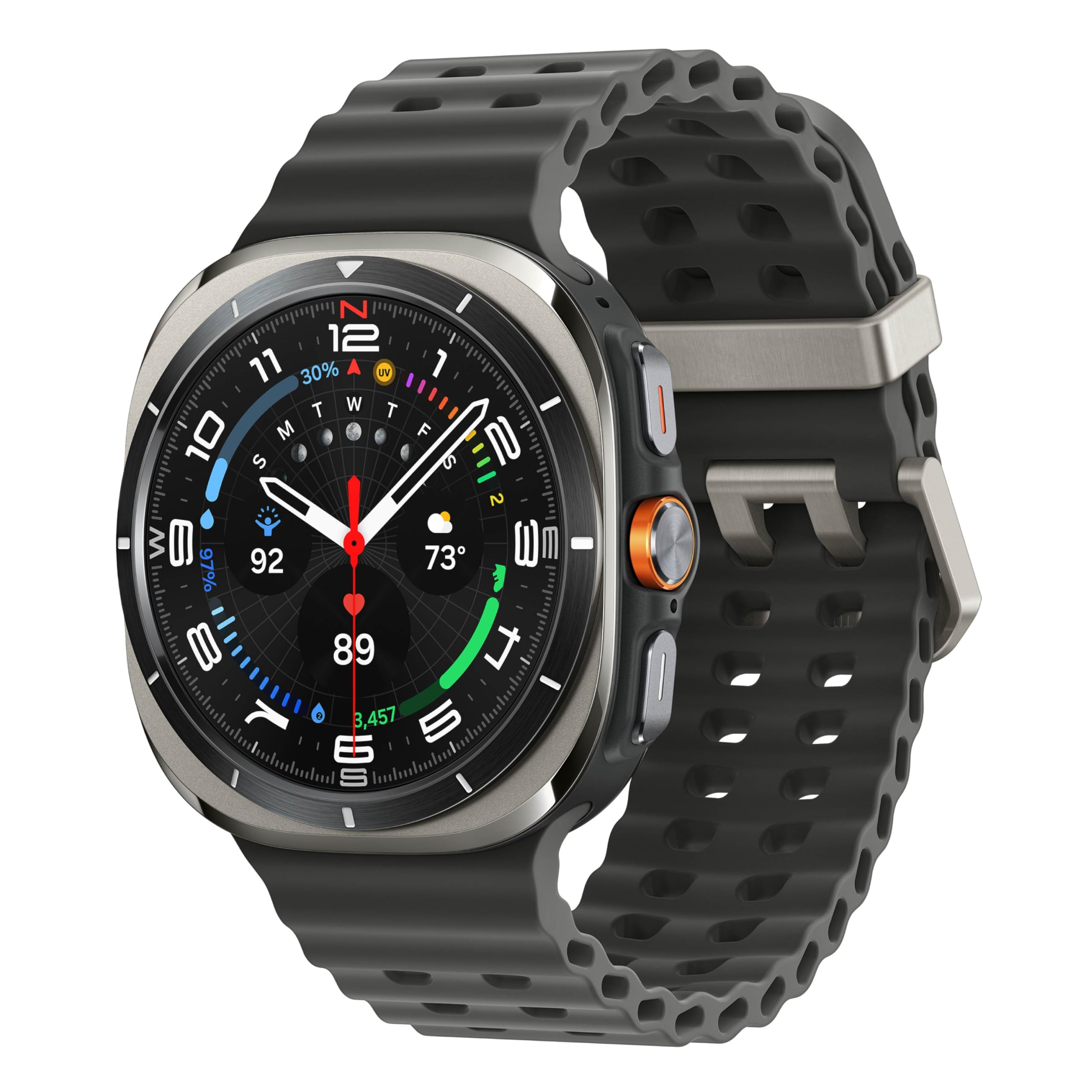
A titanium tough watch with LTE that lets you leave your phone behind entirely.
The Samsung Galaxy Watch Ultra is the premium Android answer to the Apple Watch, built tougher for runners. The titanium casing is Samsung’s most durable yet, with 10ATM water resistance — that’s enough for ocean swimming, not just rain. The dual-frequency GPS keeps tracking accurate even in tricky environments, and the LTE connectivity means you can take calls, stream music, and get notifications without your phone nearby.
For runners, the personalized Running Coach analyzes factors like your age, weight, oxygen levels, and heart rate to guide you through your run. The Advanced Sleep Coaching helps you recover properly, and the Energy Score with Galaxy AI summarizes your overall wellness several times a day based on yesterday’s sleep, activity, and heart rate.
The battery is genuinely long-lasting at a little over 3 days per charge per one owner — impressive for a full-featured smartwatch, though still a fraction of what dedicated sports watches deliver. The quality is undeniable with 82 owners praising it in reviews, and one owner’s watch even flagged an irregular heartbeat that prompted a medical check. The trade-offs: battery life gets mixed feedback (some find it drains fast), and it requires an Android phone to work.
The Android Advantage
- Titanium casing with 10ATM water resistance
- LTE for phone-free calls, texts, and music
- Personalized Running Coach and AI Energy Score
- Advanced Sleep Coaching for recovery
The Trade-Off
- ~3 days battery is short vs. dedicated running watches
- Mixed feedback on battery drain rate
- Android phones only; no iPhone support
The pick for: Android users who want the most capable smartwatch that also tracks runs seriously — the titanium build and LTE independence are class-leading here.
Consider another if: You’re training for ultramarathons and need multi-week battery life; this is a daily-charge device, not an expedition tool.
11. Garmin Forerunner 970

The triathlete’s dream machine with a built-in flashlight and sapphire lens.
The Garmin Forerunner 970 is the premium pick for runners who want every metric available. It’s Garmin’s brightest AMOLED touchscreen with button controls, wrapped in a lightweight titanium bezel and sapphire lens for serious scratch resistance. The built-in LED flashlight is a genuinely useful feature for early morning or late-night runs — a small touch that owners love.
The battery is impressive: up to 15 days in smartwatch mode and 26 hours in GPS mode. That means a full training week with daily GPS runs and no charging anxiety. The training features go deep — running economy to understand your energy efficiency, step speed loss to see how much you’re slowing on foot strike, and running tolerance to prevent overtraining. Garmin Coach creates personalized training plans that adapt to your performance and recovery.
It’s a multisport powerhouse: auto-transition detects changes between swim, bike, and run in triathlons, and the built-in microphone and speaker let you take calls from your wrist. The wrist-based running dynamics track cadence, stride length, and ground contact time, plus running power for a continuous measure of your effort. Owners praise it as “the best sports smartwatch” with a ~2-week battery and scratch-proof sapphire — though the learning curve is steeper than an Apple Watch, and a few note the bezel can scratch with heavy abuse.
The Pro Features
- 15-day smartwatch battery, 26 hours GPS
- Built-in LED flashlight for dark runs
- Titanium bezel with sapphire lens
- Multisport auto-transition for triathlons
- Full-color built-in maps with multi-band GPS
The Honest Caveats
- Steeper learning curve than consumer smartwatches
- Some buyers report bezel scratches over time
- Premium price tag for the full feature set
The verdict: The definitive choice for serious runners and triathletes who want pro-grade accuracy, deep training metrics, and a bright AMOLED display — owners most often praise the build quality and the depth of training metrics.
Think twice if: You’re a casual jogger who just wants basic tracking; the depth here is overkill if you don’t plan to use training plans and recovery insights.
Understanding the Specs
The Battery Spec That Actually Matters
Manufacturers quote two battery figures: daily smartwatch mode and GPS tracking mode. Daily mode includes notifications, heart rate, sleep tracking, and the display — that’s your everyday number. GPS mode is the real endurance test, measuring how long the watch lasts while actively tracking a run. A watch with 10 days daily but only 20 hours GPS is fine for most runners; ultramarathoners should seek 30+ hours GPS like the SUUNTO Race S or the COROS PACE 4 with 41 hours.
Dual-Frequency GPS vs. Standard GPS
Standard GPS uses one satellite frequency and works well in open areas. Dual-frequency (or dual-band) GPS uses two frequencies — L1 and L5 — to lock onto satellites more reliably through obstacles. It’s a real upgrade for city runners who weave between tall buildings and trail runners under dense tree cover. It’s the difference between a wobbly, inconsistent pace and a steady, verifiable distance.
FAQ
Do I need a chest strap with a wrist-based heart rate monitor?
Which watch has the best battery life for marathon training?
What’s the difference between 5ATM and 10ATM water resistance?
Can I leave my phone at home with a running watch?
What’s the difference between a running watch and a smartwatch?
Is a bigger battery always better for a running watch?
Will a running watch work with my iPhone or Android?
How accurate are GPS running watches in cities?
Final Thoughts: The Verdict
For most runnersbuilding their routine, the wrist watch for running winner is the Apple Watch Series 11 because it pairs serious runner features with a full smartwatch experience — the battery fast-charges to 8 hours of use in just 15 minutes, and the ECG, fall detection, and crash alerts are the most complete safety suite in this lineup. If you want multi-day battery and focused running metrics, grab the COROS PACE 4 for its 41-hour GPS endurance and featherlight 32g build. For triathletes and data-hungry runners, the Garmin Forerunner 970 is the definitive choice with its pro-grade accuracy, built-in flashlight, and 15-day battery. And if you’re a trail explorer who refuses to get lost, the SUUNTO Race S delivers offline maps and 30 hours of premium GPS tracking at a lightweight 60g. The one honest nudge: with thousands of owners giving the Apple Watch Series 11 a 4.7-star rating, it’s the safest bet if you want a watch that does everything well — just be ready for a daily charge.
How We Picked
We do not accept paid placement. Every pick is matched to a real buyer and a real use-case; we do not hands-on test units.
Sources & Methodology
Specifications: manufacturer listings and product documentation. Review insights: verified customer reviews, as of August 2026. Pricing: not shown on this page (it changes often); check the current price via the retailer link.
As an Amazon Associate, Calories Fit earns from qualifying purchases. This does not affect which products we feature.