
Our readers keep the lights on and the coffee maker working hard! As an Amazon Associate, I earn from qualifying purchases.
Specs are compiled from manufacturer listings and verified buyer reviews and can change over time — please confirm the key details on the product page before buying.
Finding a women’s mountain bike helmet that actually fits is harder than it should be — most unisex models sit awkwardly on smaller head shapes or slide around on descents. Modern helmets fix this with adjustable dial systems and women’s-specific sizing that lock in place without pressure points. This guide digs into the safety tech that matters (MIPS and Koroyd), the ventilation that keeps you cool on climbs, and the fit systems that make a helmet disappear on your head.
I’m Mohammad — the founder and writer behind Calories Fit. This guide is built by comparing the manufacturers’ published specifications and the patterns across verified customer reviews, so you get each pick’s real strengths and trade-offs instead of marketing spin.
You want a lid that protects without feeling like a brick, and the women’s mountain bike helmet choices below balance safety certifications, airflow, and comfort for real trail riding.
Our Picks at a Glance

How To Choose The Best Women’s Mountain Bike Helmet
Mountain biking demands a helmet that stays put on rough descents. A road helmet won’t cut it — you need deeper coverage at the back of the head and a visor to block sun and branches. Here’s what separates a good trail lid from a great one.
Safety Systems: MIPS vs. Koroyd
MIPS (Multi-directional Impact Protection System) is a slip-plane layer inside the helmet that reduces rotational forces when your head hits the ground at an angle — the most common type of crash impact. Koroyd is a honeycomb-like material that crushes on impact to absorb energy while staying ventilated. Some premium helmets combine both. Don’t skip a helmet without at least one of these systems if you’re riding technical trails.
Ventilation and Airflow
Mountain biking is aerobic — you’re climbing hard, then descending fast. More vents with internal channeling means more airflow over your head, which keeps you cooler and your goggles fog-free. Look for at least 14 vents for trail riding; 20 or more is better for hot climates or aggressive climbing.
Fit Systems That Actually Stay Put
The retention system (the dial at the back) is what keeps the helmet snug. A 270-degree dial like VaporFit adjusts around your whole head circumference; simpler ratcheting systems adjust in the back only. Choose a system you can fine-tune one-handed while riding, so you can loosen it mid-climb.
Quick Comparison
| Model | Best For | Safety Tech | Vents | Weight | Amazon |
|---|---|---|---|---|---|
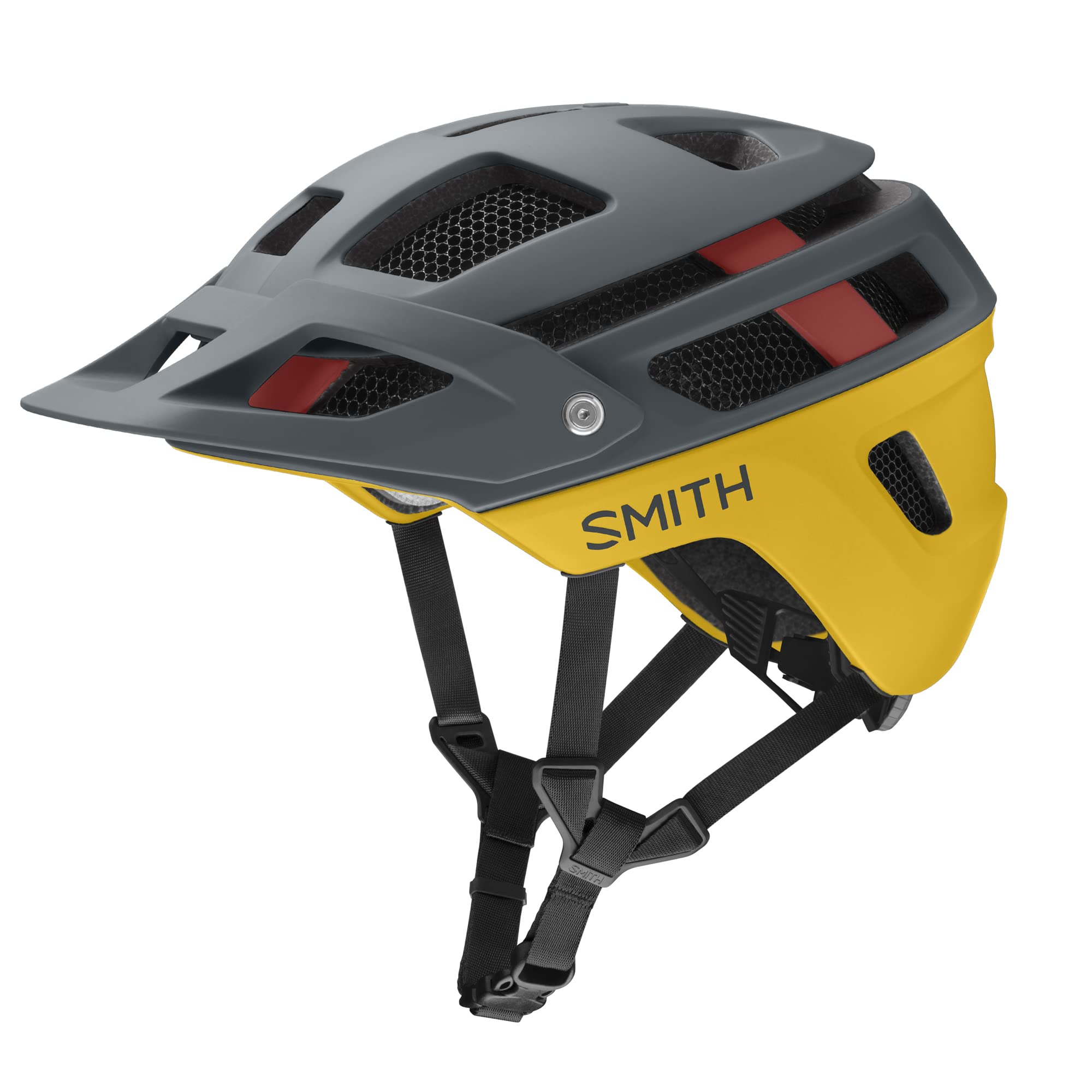
| SMITH Forefront 2★ Best Overall | All-day trail comfort + max protection | Koroyd + MIPS | 20 | — | Amazon |
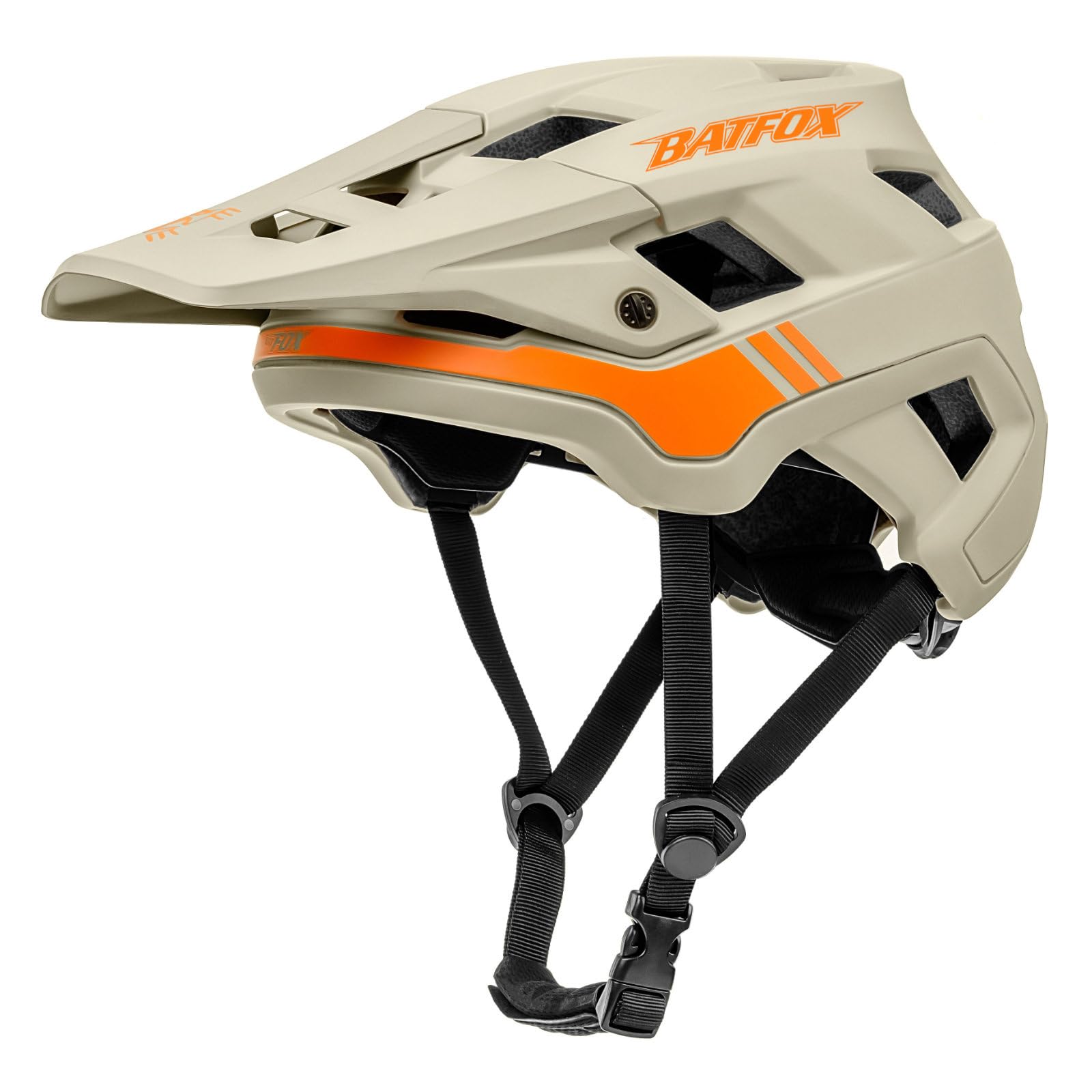
| BATFOX LA303Best Value | Budget trail riding with crash confidence | EPS + PC shell | 18 | 390 g | Amazon |
| Retrospec RowanStyle Pick | Sun protection + comfy fit for climbs | EPS + PC shell | 14 | 16 oz | Amazon |
| Wildhorn Corvair | Large heads that other brands don’t fit | EPS foam | Multiple | 310 g | Amazon |
| Bell Revolution MIPS | MIPS on a budget | MIPS | 14 | 11.68 oz | Amazon |
| Giro Radix MIPS | Goggle-friendly all-mountain riding | MIPS | Wind Tunnel | 1.5 lb | Amazon |
| LAZER Tonic KinetiCore | Lightweight commutes + trail rides | KinetiCore | — | 240 g | Amazon |
| POC Tectal | Enduro coverage + RECCO rescue reflector | EPS reinforced | Ventilated channels | 0.35 kg | Amazon |
| SMITH Engage MIPS | Trail versatility with zonal Koroyd | Koroyd + MIPS | 20 | — | Amazon |
In‑Depth Reviews
1. SMITH Forefront 2 MTB Cycle Helmet
Our pick — over 4.5★ from 950+ verified ratings; the strongest balance of quality and price.
The full-coverage premium lid that vanishes on your head while guarding every angle.
You get full-head coverage with the Forefront 2, not just the top: the shell wraps around your front, back, and sides. Inside, a honeycomb Koroyd layer (a material that crushes on impact to absorb energy) works with the MIPS rotation-reduction system (a slip-plane layer that reduces rotational forces on angled impacts). That dual-layer approach is why it’s CPSC and CE EN 1078 certified for real crash protection. It holds a 4.7-star average across 900+ owner ratings, the highest on this list.
On the trail, its 20 fixed vents push consistent airflow over your head, and the Ionic+ liner (a silver-threaded fabric) activates with sweat to keep you cool and your goggles clear. The VaporFit dial gives you 270 degrees of one-hand adjustment, and the visor clicks into three positions so you can stow glasses up top mid-ride. It’s noticeably airier than the Retrospec Rowan’s 14 vents, which matters on long, sweaty climbs.
What wins people over is the build quality — buyers consistently call it durable, glove-like, and better-looking than rivals. The honest trade-off is the price: it’s the premium pick of this list, and riders who want maximum safety tech without the cost can find simpler shells for half the money.
The Full-Send Safety Suite
- Dual Koroyd and MIPS protection absorbs straight-on and rotational impacts
- 20 fixed vents keep airflow consistent on hot climbs
- 270-degree VaporFit dial customizes fit around your whole head
The Premium Catch
- Sits at the top of the price range for this list
- Buyers report the included bag is ventilated but basic
Best for: riders who want the most comprehensive protection and are willing to pay for it.
Think twice if: you’re on a strict budget and can live without the Koroyd honeycomb layer.
2. BATFOX Mountain Bike Helmet
A crash-tested budget shell that proves you don’t need to overpay for protection.
This BATFOX lid makes a serious claim for its price point: Owners mention it “survived high-speed rocky trail crash” with the rider walking away. That’s the kind of real-world proof that matters more than any spec sheet. It wraps a tough polycarbonate outer shell around an EPS foam liner (the impact-absorbing material inside) for durability without the excess weight — all at 390 g, which is light enough to forget you’re wearing it.
The 18 wind-tunnel vents with internal channeling keep air moving mile after mile, and the big visor shields your eyes from sun and overhanging branches. It comes in M (54-57cm), L (58-61cm), and XL (61-63cm), so most women’s heads will find a snug fit via the adjustable dial. The washable, removable padding and chin pad keep things fresh on hot rides.
Quality is the most-praised aspect here, and the fit earns strong mentions too. The recurring gripes are minor: the visor is screw-on rather than snap-on, and there’s no rear light or magnetic buckle. But for the money, buyers consistently say it beats paying triple for a name brand.
The Confidence Builder: verified crash survival at a budget price makes this the smart-money pick for new trail riders.
The Limitation: it skips MIPS and the visor can break off if handled roughly.
3. Retrospec Rowan Mountain Bike Helmet
The affordable lid with a visor that actually points at the trail, not the sky.
The Rowan’s visor is its quiet hero. Buyers specifically praise that it shields the brow and nose from sun “while so many other helmet visors point to the sky” — a small detail that makes a big difference on afternoon rides. It’s adjustable and detachable, so you can position it exactly where you need it or remove it entirely for road rides.
Underneath, you get dense EPS foam and an in-mold polycarbonate shell (where the outer layer is fused to the foam liner for durability without weight). At 16 oz, it’s light enough to avoid neck strain on long adventures, and the removable, washable padding wicks away sweat ride after ride. The ErgoKnob dial system lets you fine-tune the fit precisely to your head shape.
Fit and quality tie as the most-praised aspects, and several owners call it “as good as any expensive helmet” they’ve owned. The honest catch: one buyer found a tight spot above the temples that caused pain on long rides — so this isn’t the cushion-king of the list. It’s also note some buyers recommend sizing up.
The Trail-Smart Design: sun-blocking visor plus a dial fit makes this a standout at its price.
The Fit Note: if you’re between sizes, go up a step for comfort on extended rides.
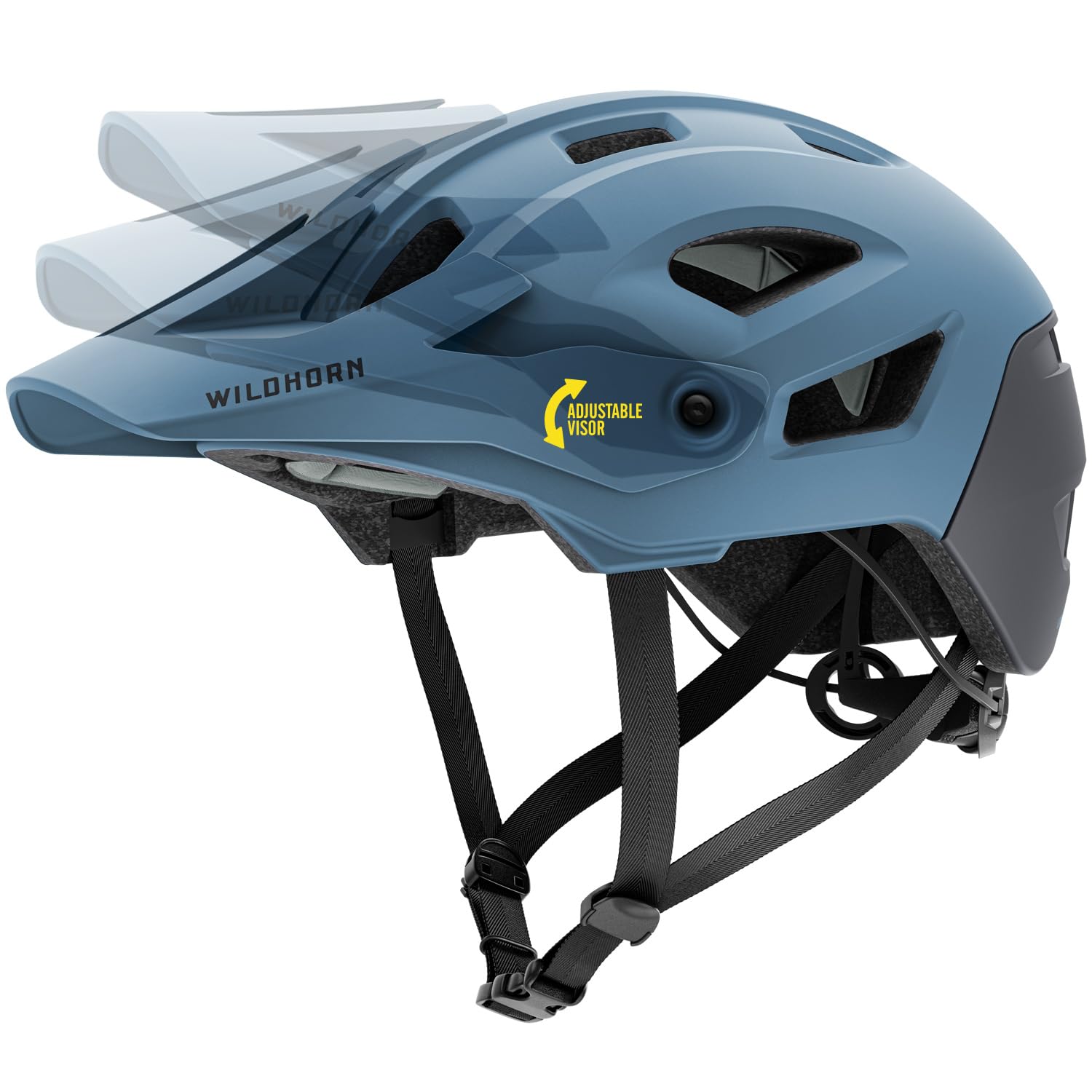
4. Wildhorn Corvair MTB Bike Helmet
The rare lid built for larger heads that S/M sizes from other brands just can’t handle.
If you’ve ever squeezed into a helmet that left a red line across your forehead, this one is for you. The Corvair’s L/XL size fits a 58.5cm head comfortably, and owners with large heads report that S/M options from other brands simply didn’t work — this one fits perfectly. The adjustable dial system lets you fine-tune the fit for stability on rugged terrain, and the straps adjust easily without fuss.
At 310 g, it’s noticeably light — several customers note they forget they’re wearing it. The multiple vents and internal airflow channels keep you cooler on warm trail days and challenging climbs, and the adjustable visor helps reduce sun glare and trail debris. Extra foam inserts are included so you can customize the padding thickness to your head shape.
Appearance is what owners praise most, with the Smoke Blue color earning specific love. Fit and lightweight design follow close behind. The one caveat from a handful of buyers: the chin strap clasp feels a little loose. It’s not a safety issue, but it’s worth a quick check before your first ride.
Reach for this if: you have a larger head circumference that standard sizes don’t accommodate.
Look elsewhere if: you need MIPS protection for aggressive descending.
5. Bell Revolution MIPS Bike Helmet

The affordable entry point into real MIPS rotation protection from a trusted name.
You get genuine MIPS (the slip-plane layer that reduces rotational forces on angled impacts) without the premium price with the Bell Revolution. It’s the cheapest way to get MIPS on this list, and it complies with the U.S. CPSC Safety Standard for Bicycle Helmets. At 11.68 oz, it’s also one of the lighter options here, so your neck stays comfortable on long climbs.
The dial fit system is easy to adjust, and the 14 vents provide adequate airflow for trail and commuter riding. It fits head sizes 54-61cm and is recommended for ages 14 and up. Quality is the most-praised aspect, with owners calling it a solid value for the MIPS tech included. It’s versatile enough for road, mountain, and fitness riding.
The honest trade-off is the fit: it runs small, and buyers with larger heads report it barely fits at max adjustment. Some owners also note the strap needs perfect adjustment to avoid discomfort and that the plastic overlay can peel in heavy sun. This is a basic shell — fine for casual riding, but daily trail warriors may want more padding.
The Smart Budget Play: genuine MIPS for less than most brands charge for a non-MIPS shell.
Who It’s Not For: riders with larger heads or those who want premium padding for all-day epics.
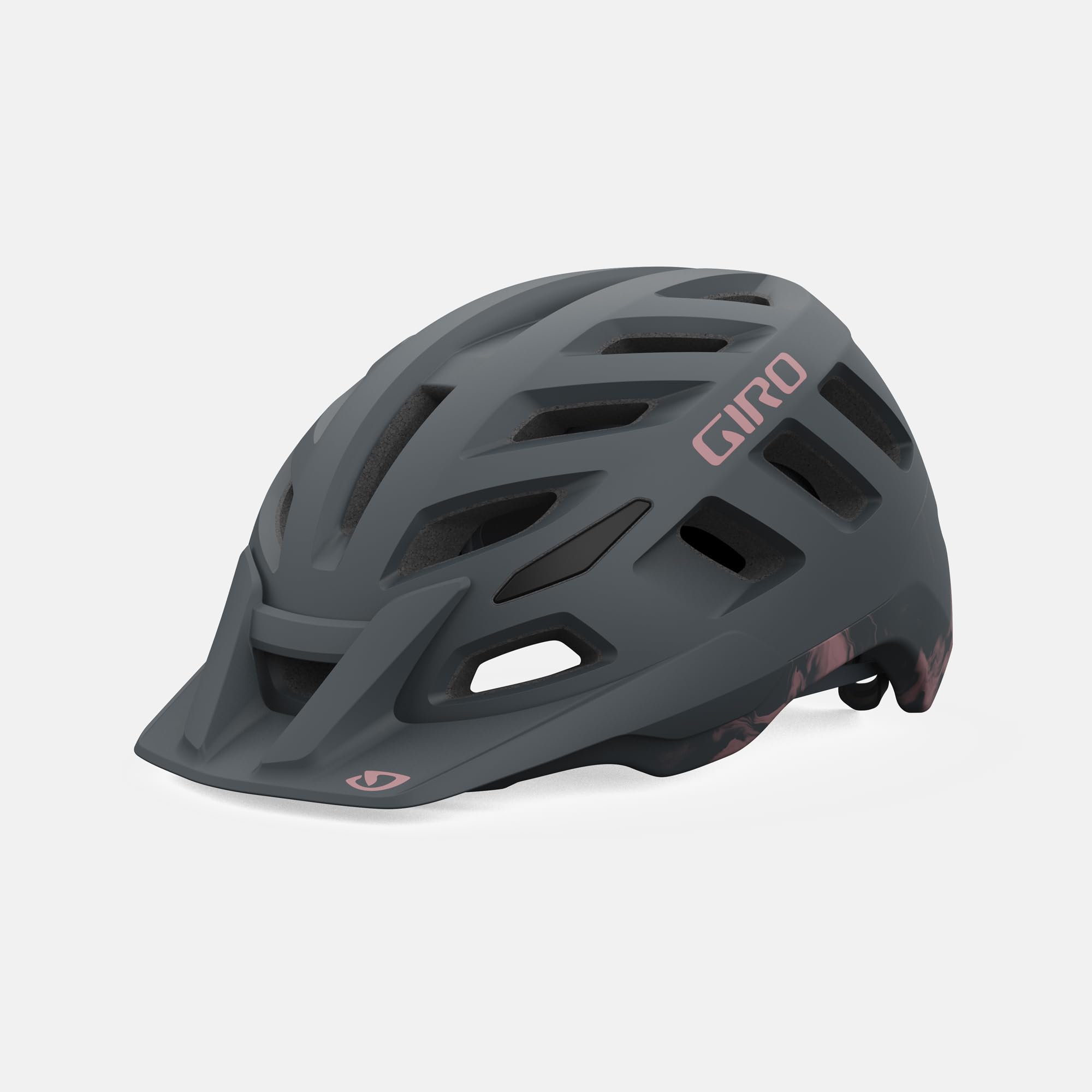
6. Giro Radix MIPS Adult Dirt Bike Helmet
The deep-coverage trail helmet with a visor that flips up for goggle storage on the fly.
It uses a hardshell with an in-mold Hardbody lower wrap — meaning the polycarbonate lower shell is permanently fused to the EPS liner for durability without extra weight. Full coverage extends lower on the back of the head, which is exactly where trail riders need protection on rear-first impacts.
The P.O.V. visor is the standout feature: it adjusts in indexed steps, including three riding positions plus a high position for storing goggles above your brow. You can move it with one hand while riding, which is genuinely useful on descents. Inside, the Roc Loc 5 fit system is the industry benchmark for a reason — it lets you tune both the fit tension and the fore-aft tilt of the helmet in seconds. Fit is the most-praised aspect here, and the Wind Tunnel ventilation system gets strong mentions for keeping heads cool.
The recurring note from owners: there are no built-in goggle or headlamp guides, so some riders fashion their own with zip ties. It’s a minor DIY for what’s otherwise a comfortable, secure, and well-ventilated trail companion. A large head (23.5″) fits comfortably with a bandana underneath.
Best for: all-mountain riders who need deep coverage and one-hand visor adjustability.
The caveat: budget for zip-tie goggle mounts if you run a headlamp or goggles regularly.
7. LAZER Tonic KinetiCore Bike Helmet

At 240 g, this is the lid you’ll forget you’re wearing — until you need it.
LAZER’s KinetiCore is a different take on impact protection: instead of adding a separate layer like MIPS, it builds crumple zones directly into the helmet structure that disperse impact energy on impact. The result is a helmet that’s both protective and remarkably light — 240 g, which is significantly lighter than most of the field here. That weight savings translates directly to less neck fatigue on long rides.
Buyers who’ve crashed in it report walking away with clear brain scans after a deer collision. The adjustment knob in the back creates a perfect fit, and the air vents keep your head cool even on warm days. Several owners specifically chose the white color for visibility and to reflect radiant heat.
Fit is what owners praise most, followed by quality and weight. One buyer called it “the best fitting and most comfortable helmet I have used,” even with a larger head. The honest consideration: LAZER is less well-known than Bell or Giro in the U.S., but the safety engineering here is legit — One owner notes it scored well in Virginia Tech helmet lab testing.
The Weight Champion: 240 g with integrated crumple-zone protection is a rare combination.
The Trade-off: fewer vents than the 20-vent Smith options, so hot-climate riders may want more airflow.
8. POC Tectal

The enduro-focused shell with a rescue reflector that could help search teams find you.
The Tectal is built specifically for mountain biking, from trail riding to enduro — and it shows in the details. It offers more coverage at the temples and back of the head than a standard half-shell, which is exactly where enduro crashes land. The adjustable peak lifts up to store goggles or sunglasses underneath, and a goggle clip keeps them secure when you’re not wearing them.
The standout feature is the integrated RECCO reflector — a passive device trusted by rescue services worldwide that makes you easier to locate if you get lost or injured in the backcountry. That’s a safety net you simply won’t find on most helmets at any price. The unibody PC shell (a single-piece polycarbonate outer layer) and reinforced EPS liner improve structural stability while keeping weight at just 0.35 kg.
Build quality is what owners praise most, with comfort and fit close behind. The 360° size adjustment system creates a precise, secure fit, and the ventilated airflow channels keep you cool even in hot conditions. Owners consistently call it “lightweight” and “most comfortable,” with one noting the increased back-of-head coverage over half-shells. The trade-off: it’s a premium price for the RECCO feature, and riders who stay on well-marked trails may not need it.
The Backcountry Safety Net: RECCO reflector plus deep coverage makes this the choice for remote trail riding.
The Consideration: you’re paying for the rescue-tech feature even if you never ride that far out.
9. SMITH Engage MIPS Mountain Bike Helmet

The all-mountain workhorse that brings Smith’s Koroyd honeycomb protection to a slightly lighter price.
Smith’s Engage sits between the budget Bell and the premium Forefront 2, giving you zonal Koroyd coverage (the honeycomb material that crushes on impact) plus the MIPS rotation-reduction system. It complies with U.S. CPSC, CE EN 1078, and AS/NZS 2063 safety standards — triple certification that covers you on trails worldwide. If you ride in different countries, this is the one that meets every major standard.
Like its big sibling, it uses 20 fixed vents for consistent airflow and Ionic+ lining for sweat-activated odor control. The visor adjusts into two positions, which is slightly less flexible than the Forefront 2’s three, but still enough to block sun or store glasses. It sits deeper on the back of the head than some competitors, which owners specifically note as a plus for trail riding.
Quality is the most-praised aspect here, with fit close behind. Owners call it “airy and lightweight AND maximum protection,” and the MIPS system adds trail confidence. The honest gripes: the buckle can be hard to fasten one-handed, and some riders find they sweat more and need to loosen it mid-ride. Colors also run muted — one owner swapped purple for white wanting more pop.
Best for: riders who want Koroyd+MIPS protection at a slightly lower entry point than the Forefront 2.
skip it if: you want the three-position visor and full Koroyd coverage of the top-end Forefront.
Understanding the Specs
MIPS vs. Koroyd vs. KinetiCore
MIPS (Multi-directional Impact Protection System) is a low-friction layer between the helmet shell and the foam liner that lets your head slide slightly on angled impacts, reducing rotational forces on the brain. Koroyd is a honeycomb-like material built into the helmet that crushes on impact to absorb energy while staying breathable. KinetiCore uses crumple zones molded directly into the structure. All three are valid approaches — the best one is the one you’ll actually wear because it fits comfortably.
Vent Count and Internal Channeling
More vents don’t automatically mean more airflow — the internal channels that route air over your head matter just as much. A helmet with 20 strategically placed vents and good channeling (like the Smith options) will keep you cooler than one with 30 poorly designed vents. For mountain biking, look for at least 14 vents to handle climbing heat and descending speed. The trade-off: more vents can mean a slightly less protective shell, so premium helmets balance venting with deeper coverage.
FAQ
Is a women’s mountain bike helmet different from a men’s?
How do I know which size helmet to buy?
Is MIPS worth the extra money on a mountain bike helmet?
How long does a mountain bike helmet last?
Can I wear a mountain bike helmet for road cycling?
What does the visor on a mountain bike helmet actually do?
How should a mountain bike helmet fit on my head?
Are lighter helmets always better?
What is the RECCO reflector in the POC Tectal?
Can I use a mountain bike helmet for e-bike riding?
Final Thoughts: The Verdict
For most trail riders, the women’s mountain bike helmet winner is the SMITH Forefront 2 because it combines Koroyd and MIPS dual protection with 20 vents and a 270-degree fit dial — the most complete package on this list. If you want genuine MIPS at a budget price, grab the Bell Revolution MIPS. And for riders with larger heads who’ve struggled with standard sizes, the Wildhorn Corvair is the one to reach for.
How We Picked
We do not accept paid placement. Every pick is matched to a real buyer and a real use-case; we do not hands-on test units.
Sources & Methodology
Specifications: manufacturer listings and product documentation. Review insights: verified customer reviews, as of August 2026. Pricing: not shown on this page (it changes often); check the current price via the retailer link.
As an Amazon Associate, Calories Fit earns from qualifying purchases. This does not affect which products we feature.