
Our readers keep the lights on and the coffee maker working hard! As an Amazon Associate, I earn from qualifying purchases.
Specs are compiled from manufacturer listings and verified buyer reviews and can change over time — please confirm the key details on the product page before buying.
You want a smoke alarm that connects directly to your home’s wiring so you never worry about dead batteries during the night. But not all hardwired units are the same — some use different sensors, others have backup batteries that last a decade, and a few can talk to each other across your whole house. A wrong pick can trigger false alarms from cooking or leave you unprotected during a blackout.
I’m Mohammad — the founder and writer behind Calories Fit. This guide is built by comparing the manufacturers’ published specifications and the patterns across verified customer reviews, so you get each pick’s real strengths and trade-offs instead of marketing spin.
Whether you are replacing a ten year old detector or wiring a new build, understanding which sensor and backup battery works for your home is the key to choosing the best wired smoke alarm for your family’s safety.
Our Picks at a Glance


How To Choose The Best Wired Smoke Alarm
Choosing a wired alarm means balancing sensor type, backup battery, and interconnect features for your home.
Sensor Type: Ionization vs. Photoelectric
Ionization sensors detect particles from fast-flaming fires — think a grease fire or a paper fire that spreads quickly. Photoelectric sensors are better at sensing smoldering fires, like a cigarette burning in a sofa. Many modern units use one type, but the best coverage comes from having both types or a dual-sensor unit in different parts of the house.
Backup Battery: 9V, AA, or Sealed 10-Year Lithium
Your alarm still needs power during a blackout. A 9V battery backup is standard and easy to replace, but it needs yearly swaps. AA battery backups last longer and are also user-replaceable. A sealed 10-year lithium battery means no battery changes for the entire life of the alarm, but once it dies, you replace the whole unit.
Interconnect Capability
Interconnected alarms are wired together so when one detects smoke, every connected unit sounds the alarm. This is critical for multi-story homes because a fire in the basement will wake you on the second floor. Most models interconnect with their own brand, so stick with one brand for the whole house.
Quick Comparison
| Model | Best For | Sensor Type | Backup Battery | Interconnect | Amazon |
|---|---|---|---|---|---|
| BRK First Alert 9120BFF/ SMI100-AC★ Best Overall | Best Overall | Ionization | 9V | Up to 12 alarms | Amazon |
| 9120BA Hardwired Ionization Smoke AlarmValue Single-Unit | Value Single-Unit | Ionization | 9V | Up to 12 alarms | Amazon |
| First Alert SMI105-ACLow Maintenance | Low Maintenance | Precision Detection | 10-Year Sealed Lithium | Yes | Amazon |
| Kidde 20SAR | Fast Fire Detection | Advanced (25% faster) | AA (2x) | Yes | Amazon |
| First Alert 9120LBLA | Long Battery Backup | Ionization | 10-Year Sealed Lithium | Up to 12 alarms | Amazon |
| Kidde 20SAR 2-Pack | Multi-Unit Bundle | Advanced | AA (2x) | Yes | Amazon |
| Siterlink GS562A | Budget Multi-Pack | Photoelectric | 9V | Up to 12 alarms | Amazon |
| First Alert 9120B 5-Pack | Whole Home Value | Ionization | 9V | Yes | Amazon |
In‑Depth Reviews
1. BRK First Alert 9120BFF/ SMI100-AC Smoke Detector
Our pick — over 4.5★ from 19,000+ verified ratings; the strongest balance of quality and price.
The crowd-favorite hardwired alarm that thousands of homes trust for simple, reliable fire protection.
You get a loud 85-decibel alarm that cuts through sleep, and the ionization sensor catches fast-flaming fires before they spread. Buyers report a 10-minute swap for existing wired units, with the same plug system and no rewiring needed. The 9V battery backup keeps watch even when the power goes out, and you can link up to 12 compatible BRK or First Alert alarms so the whole house sounds off together.
The included 9V battery can sometimes cause false alarms. Some owners suggest replacing it immediately upon installation to avoid random chirping. Over a thousand owners praise the installation as the best part of the experience.
Why owners pick this
- Piggyback connector means you don’t need to rewire anything.
- Interconnects with up to 12 other BRK/First Alert alarms.
- Loud 85 dB alarm you can hear across the house.
The honest trade-off
- Included 9V battery can trigger false alarms — swap it day one.
- Packaging feels cheap compared to premium models.
Who it fits: Homeowners who want a proven, straightforward swap for an existing wired alarm without learning a new wiring setup.
Who should hesitate: Anyone who wants a sealed 10-year battery to eliminate battery changes entirely.
2. 9120BA Hardwired Ionization Smoke Alarm with Battery Backup
A no-frills hardwired alarm that does exactly what it says — and costs less than dinner out.
This is the alarm for a straightforward replacement of a ten-year-old detector without overthinking. It wires directly into your 120V system and uses a standard 9V battery so it keeps working during a blackout. The ionization sensor is tuned to fast-flaming fires, and because it links with up to 12 other First Alert or BRK alarms, one unit can wake up the entire floor. Owners mention it is an easy DIY job — just turn off the breaker, swap the old unit, and you are done.
The big difference from the SMI100-AC below is the backup battery: this one uses a user-replaceable 9V rather than a 10-year sealed lithium. That means you will swap the battery every year or so, but it also keeps the upfront cost noticeably lower.
Why it wins
- Simple 120V hardwire installation — no electrician needed.
- Interconnects with up to 12 units for whole-home coverage.
- Budget-friendly price for a single replacement.
The trade-off
- Requires annual 9V battery changes.
- No photoelectric sensor for smoldering fires.
Perfect for: Quick single-unit replacements where you want the lowest cost without sacrificing interconnect capability.
Consider another pick if: You want to avoid battery changes entirely for a decade.
3. First Alert Hardwire Smoke Alarm with 10-Year Battery Backup | SMI105-AC
The alarm that banishes battery ladders for a full decade — install it and forget it.
First Alert uses Precision Detection technology here, which the company says meets new industry standards to cut down on nuisance alarms from cooking steam while still giving you early warning for real fires. The standout feature is the built-in 10-year battery backup. You never hunt for a 9V in the drawer again. If the power goes out, the sealed lithium battery takes over for the entire life of the alarm. The interconnect works with other compatible alarms, so when one sounds, they all do.
What owners love most is the easy replacement process — it snaps into existing First Alert ceiling mounts using the same plug system, and no rewiring is needed. The trade-off is that when the battery finally dies after ten years, you replace the whole unit, not just the battery.
What makes it special
- Sealed 10-year lithium battery — zero battery swaps for a decade.
- Precision Detection reduces false alarms from cooking.
- Quick Connect Plug for easy installation.
The honest catch
- Sealed battery means replacing the whole unit at end-of-life.
- Some customers note missing mounting screws in the box.
Best for: Anyone who climbs a ladder to change batteries less and less — this is a low-maintenance solution for a decade.
skip it if: You already have a drawer full of 9V batteries and prefer the lowest upfront cost.
4. Kidde Smoke Detector, Hardwired with AA Battery Backup, 20SAR
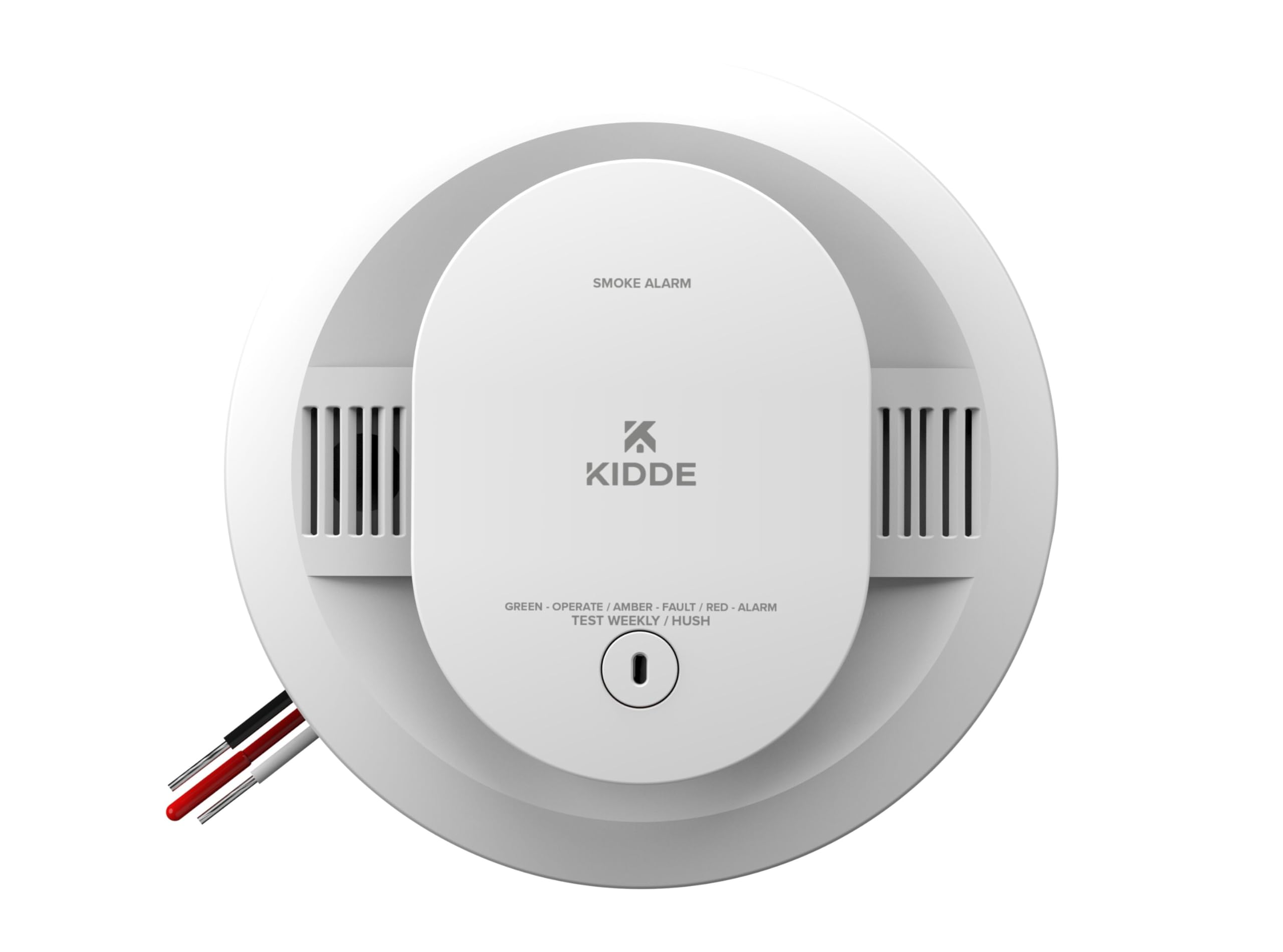
Kidde claims this alarm detects smoke 25% faster than standard units — a meaningful edge in a fast-moving fire.
The 20SAR uses advanced sensing technology that the manufacturer says distinguishes cooking steam from real smoke, which reduces those middle-of-the-night false alarms. It is hardwired to your 120V system and includes two AA batteries for backup (they come in the box). The interconnect capability means all Kidde alarms on the same circuit sound together, and the 85-decibel alarm with a flashing red LED gives you both audio and visual warning.
Where this alarm shines is the reduced false alarm promise — owners say it is sensitive without being jumpy around cooking. The base is slightly larger than older Kidde units, so it covers existing ceiling holes without touch-up painting. The main complaint is that it uses a specialized AA battery that can be hard to find locally.
Why choose Kidde
- Detects smoke 25% faster than standard models.
- Advanced tech reduces false alarms from cooking and steam.
- Base covers larger ceiling holes — no paint needed.
What to watch for
- Uses specialized AA batteries that are harder to find.
- A few reviewers point out units failing within 18 months.
Reach for this if: You want the fastest possible detection speed and have existing Kidde units for easy interconnect.
Look elsewhere if: You need a simple universal replacement battery (standard 9V is easier to find).
5. First Alert 9120LBLA Hardwired Ionization Smoke Alarm with 10 YR Battery Backup

A hardwired ionization alarm with a sealed 10-year lithium backup — no more 9V swaps every year.
This is the same reliable 9120B platform many owners already trust, but with a built-in lithium battery that lasts a decade instead of a replaceable 9V. The ionization sensor detects fast-flaming fires, and the 120V hardwire keeps it running off your home’s power. During an outage, the 10-year battery takes over without you touching a thing. It interconnects with up to 12 other First Alert or BRK hardwired alarms.
Owners note the base diameter matches existing First Alert footprints, so swapping in a new unit leaves no unpainted patch on the ceiling. A few shoppers say that the unit does not always include the mounting screws or the connection wires shown in the product photos, so check the box before you start the job.
What stands out
- 10-year sealed lithium battery — low-maintenance.
- Same footprint as older models, no paint touch-ups.
- Interconnects with up to 12 units for whole-home alert.
The downside
- Some units come without mounting screws or wiring harness.
- Higher per-unit cost than the 9V version of the same alarm.
Ideal for: Upgrading a home full of old 9V alarms to a no-maintenance system that lasts a decade.
Think twice if: You are on a tight budget and do not mind changing a 9V battery once a year.
6. Kidde Hardwired Smoke Detector, AA Battery Backup, 2 Pack
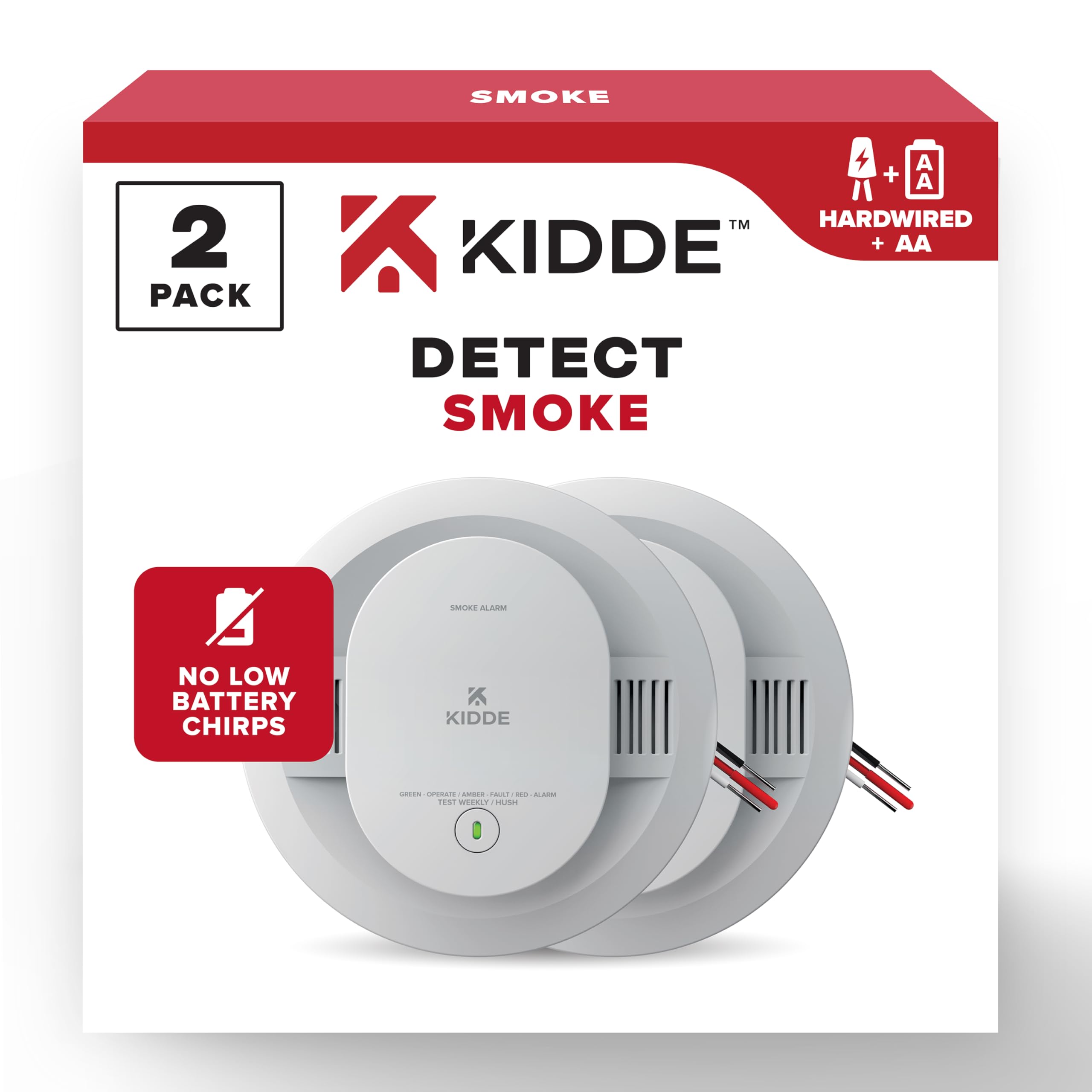
A two-pack of Kidde’s latest hardwired alarms that interconnect easily and cost less per unit than buying singles.
This is the same 20SAR model Kidde sells individually, but bundled as a two-pack to save you a few dollars per unit. You get the same hardwired 120V AC installation, the same AA battery backup, and the same interconnect capability that sounds every alarm on the circuit. The enhanced sensing technology is designed to reduce false alarms from cooking, and the 85-decibel alarm with 3 long beeps and a red LED leaves no doubt when there is danger.
Owners like the easy replacement — the base fits existing ceiling holes without modification. The reliability feedback is mixed, with a few units failing within three months. If you are replacing an entire floor, the two-pack is a solid value, but buy from a retailer with a good return policy just in case.
Value highlights
- Two-pack for a lower per-unit cost than singles.
- Enhanced sensing to cut down on false alarms from cooking.
- 85 dB alarm with red LED and 3-beep pattern.
What to know
- Some owners mention failures within 3 months of installation.
- AA batteries less standard than 9V for future replacement.
Perfect for: Replacing multiple Kidde units on one floor where you want brand continuity and a slight discount per detector.
Think twice if: You need a single alarm or prefer the simplicity of a 9V battery system.
7. Siterlink Hardwired Interconnected Smoke Detectors, Photoelectric, GS562A
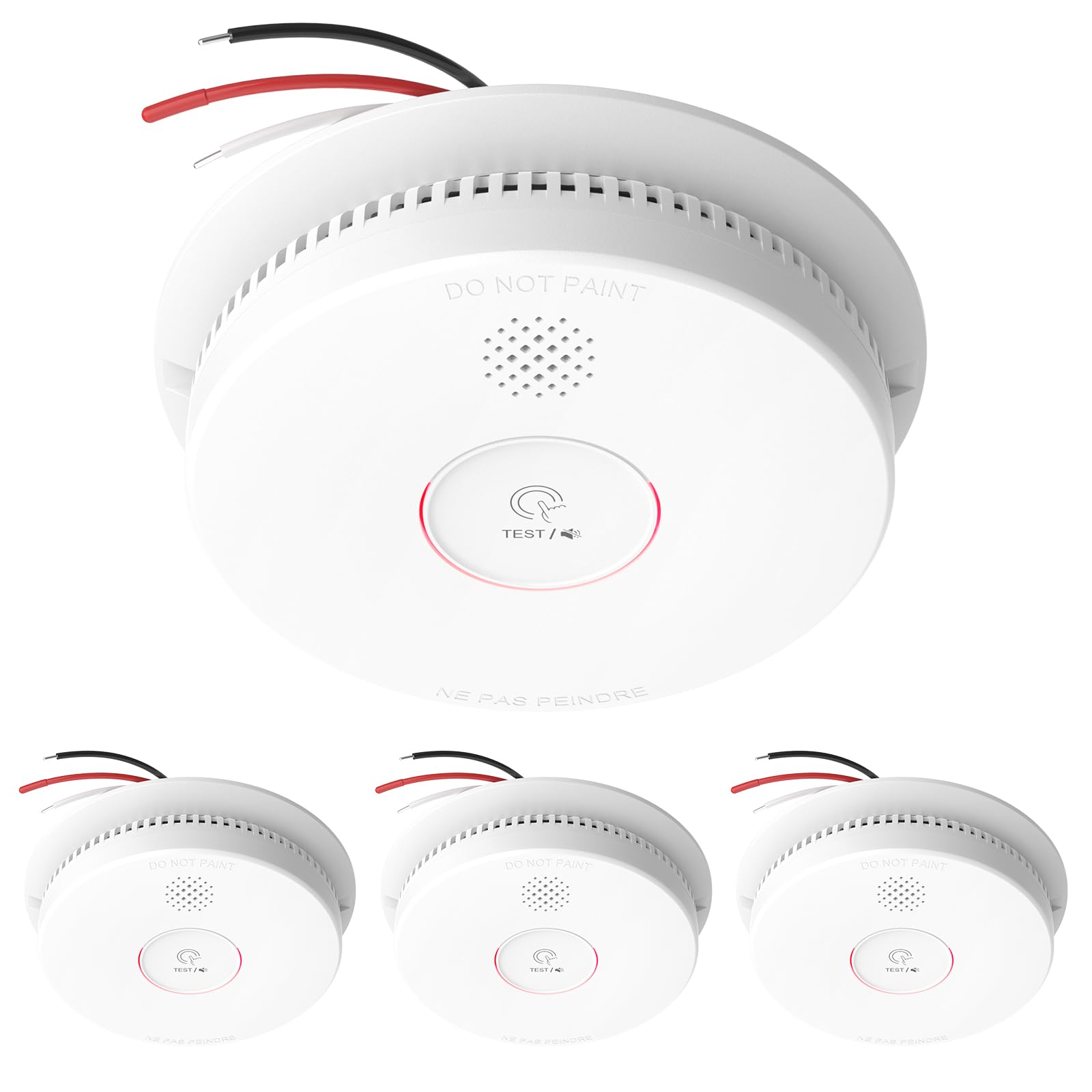
A photoelectric hardwired alarm with a 10-hour silence mode — built for bedrooms where false alarms ruin sleep.
Siterlink uses a photoelectric sensor, which means it is better at detecting smoldering fires (the kind that fill a room with smoke before bursting into flame). It meets the latest UL 217 9th edition standard to reduce nuisance alarms from cooking fumes and water vapor. A handy mute button silences the alarm for up to 10 hours, so a burnt piece of toast does not wake the kids at 2 AM. The interconnect system supports up to 12 alarms, and the backup is a standard 9V battery.
Owners say the swap from an older FireX system took under an hour for five units, with no modifications to existing ceiling boxes. The hidden LED indicator is soft enough for a child’s bedroom. A few note the alarm goes off occasionally without obvious smoke, so it may be more sensitive than some prefer.
Why it stands out
- Photoelectric sensor is ideal for smoldering fire detection.
- 10-hour mute button prevents sleep disruption from nuisance alarms.
- Hidden soft LED suitable for bedrooms and children’s rooms.
Honest feedback
- Some customers note occasional false alarms without visible cause.
- Uses a standard 9V battery that needs annual replacement.
Best for: Bedrooms and nurseries where a soft LED and long mute period matter more than the highest sensitivity.
pass on it if: You want an ionization sensor specifically for fast-flaming fire detection.
8. First Alert 9120B 120 Volt Hardwired Smoke Alarm With Battery Back Up 5 Pack

The five-pack that lets you replace every alarm in your home in a single afternoon for a single purchase.
This is the same 9120B platform — 120V hardwired, 85 dB alarm, ionization sensor, 9V battery backup — but sold as a five-unit bundle. That makes it the easiest way to do a whole-home replacement without buying individual boxes. Each unit includes tamper-resistant locking pins and a single test/silence button. The interconnect capability lets all five sound together if one detects smoke.
Owners consistently say the installation is a breeze — the connector works without modifications or wire stripping, and the fit matches existing First Alert footprints perfectly. Batteries come included, so you do not need to buy nine additional 9Vs. The only recurring note is that the 9V batteries can be temperamental; some owners suggest replacing them preventively every year to avoid late-night chirping.
Value highlight
- Five units for one price — covers an entire home in one order.
- Connector works without stripping or modifying wires.
- Comes with 9V batteries included in the box.
One note
- 9V batteries can be temperamental — replace them annually.
- Ionization-only sensor (no photoelectric for smoldering fires).
Perfect for: A complete home replacement where you want a proven, simple alarm that costs less per unit than buying five singles.
Not for: Anyone who wants a sealed 10-year battery or a photoelectric sensor for smoldering fire detection.
Understanding the Specs
Ionization vs. Photoelectric Sensor
An ionization sensor (what most First Alert models use) detects small particles from fast-flaming fires — think a cooking grease fire or a burning paper. A photoelectric sensor (used in the Siterlink model) picks up larger particles from smoldering fires, like a cigarette burning in a sofa. Neither is better; they cover different fire types. The best protection uses both types in different parts of your home.
Backup Battery Type
The backup battery keeps the alarm working during a power outage. A standard 9V battery is cheap and easy to find, but you need to replace it annually. AA battery backups (like the Kidde 20SAR) last longer between swaps. A sealed 10-year lithium battery (found on the SMI105-AC and 9120LBLA) eliminates battery changes entirely, but when it dies, you replace the whole alarm unit, not just the battery.
FAQ
How long does a hardwired smoke alarm last?
Can I interconnect a new alarm with old ones from a different brand?
What does the orange interconnect wire do?
Will any hardwired alarm fit my existing ceiling wiring?
What is the difference between a 9V battery backup and a sealed 10-year lithium battery?
Is an ionization sensor better than a photoelectric sensor?
Do wired smoke alarms work during a power outage?
Why does my new smoke alarm chirp even with a fresh battery?
Can I install a wired smoke alarm myself without an electrician?
Final Thoughts: The Verdict
For most buyers, the best wired smoke alarm is the BRK First Alert 9120BFF/ SMI100-AC because it combines proven reliability, a loud 85 dB alarm, easy no-rewire installation, and interconnect capability for a very accessible price. If you want zero battery maintenance for a decade, grab the First Alert SMI105-AC with its sealed 10-year lithium backup. And for whole-home replacement at the best per-unit value, the First Alert 9120B 5-Pack is the one to reach for — every room covered in one box.
How We Picked
We do not accept paid placement. Every pick is matched to a real buyer and a real use-case; we do not hands-on test units.
Sources & Methodology
Specifications: manufacturer listings and product documentation. Review insights: verified customer reviews, as of July 2026. Pricing: not shown on this page (it changes often); check the current price via the retailer link.
As an Amazon Associate, Calories Fit earns from qualifying purchases. This does not affect which products we feature.