
Our readers keep the lights on and the coffee maker working hard! As an Amazon Associate, I earn from qualifying purchases.
Specs are compiled from manufacturer listings and verified buyer reviews and can change over time — please confirm the key details on the product page before buying.
You need a tall hiking boot to stop that sickening ankle roll when a hidden root or loose rock catches your sole as you side-step. But a bad tall boot punishes you harder than a bad low one — a too-stiff collar rubs raw, a narrow toe box crushes your toes on descents, and a heavy pair turns a 10-mile day into a marathon of regret. This guide picks the women’s tall hiking boots that deliver genuine support, waterproofing, and all-day comfort without making you pay in blisters.
I’m Mohammad — the founder and writer behind Calories Fit. This guide is built by comparing the manufacturers’ published specifications and the patterns across verified customer reviews, so you get each pick’s real strengths and trade-offs instead of marketing spin.
Whether you face wet Pacific Northwest switchbacks, frozen Michigan winters, or rocky alpine passes, the right pair keeps you stable and dry. Here is the definitive list of the best women’s tall hiking boots for every terrain, climate, and foot shape.
Our Picks at a Glance
How To Choose The Best Women’s Tall Hiking Boots
A tall hiking boot is a serious investment in how your feet feel after a long day on the trail. Here is what matters most when you are narrowing the field.
Shaft Height and Ankle Support
A proper tall boot wraps your ankle and extends at least toward your mid-calf. This extra height acts like a stabilizer — it resists the lateral twist that causes sprains on uneven, rocky ground. Look for a shaft that feels snug around the heel and lower leg without pinching your shin when you flex forward.
Waterproofing and Breathability
A waterproof membrane such as Gore-Tex or KEEN.DRY keeps moisture out from puddles and rain, but it also traps sweat if the boot does not breathe. A well-engineered waterproof boot lets vapor escape so your feet stay dry from the inside out. If you hike in hot weather or do high-output miles, breathability is just as critical as rain protection.
Traction for the Terrain You Hike
Lug depth, rubber compound, and tread pattern determine grip on wet rock, loose dirt, and snow. Deeper multi-directional lugs (around 4-5mm) offer bite on mud and soft ground. Rubber compounds such as Vibram Megagrip are formulated to stick to wet surfaces without being so sticky that they catch and trip you on dry rock.
Toe Box and Width Fit
Your feet swell on long descents and warm days. A roomy toe box lets your toes splay naturally for balance and prevents blisters on the sides of your feet. Many tall boots now offer a “wide toe box” design, especially from brands like KEEN and Orthofeet. If you have bunions, hammer toes, or simply hate cramped toes, prioritize a boot that allows forefoot spread.
Quick Comparison
| Model | Best For | Waterproofing | Traction | Weight (per boot) | Amazon |
|---|---|---|---|---|---|
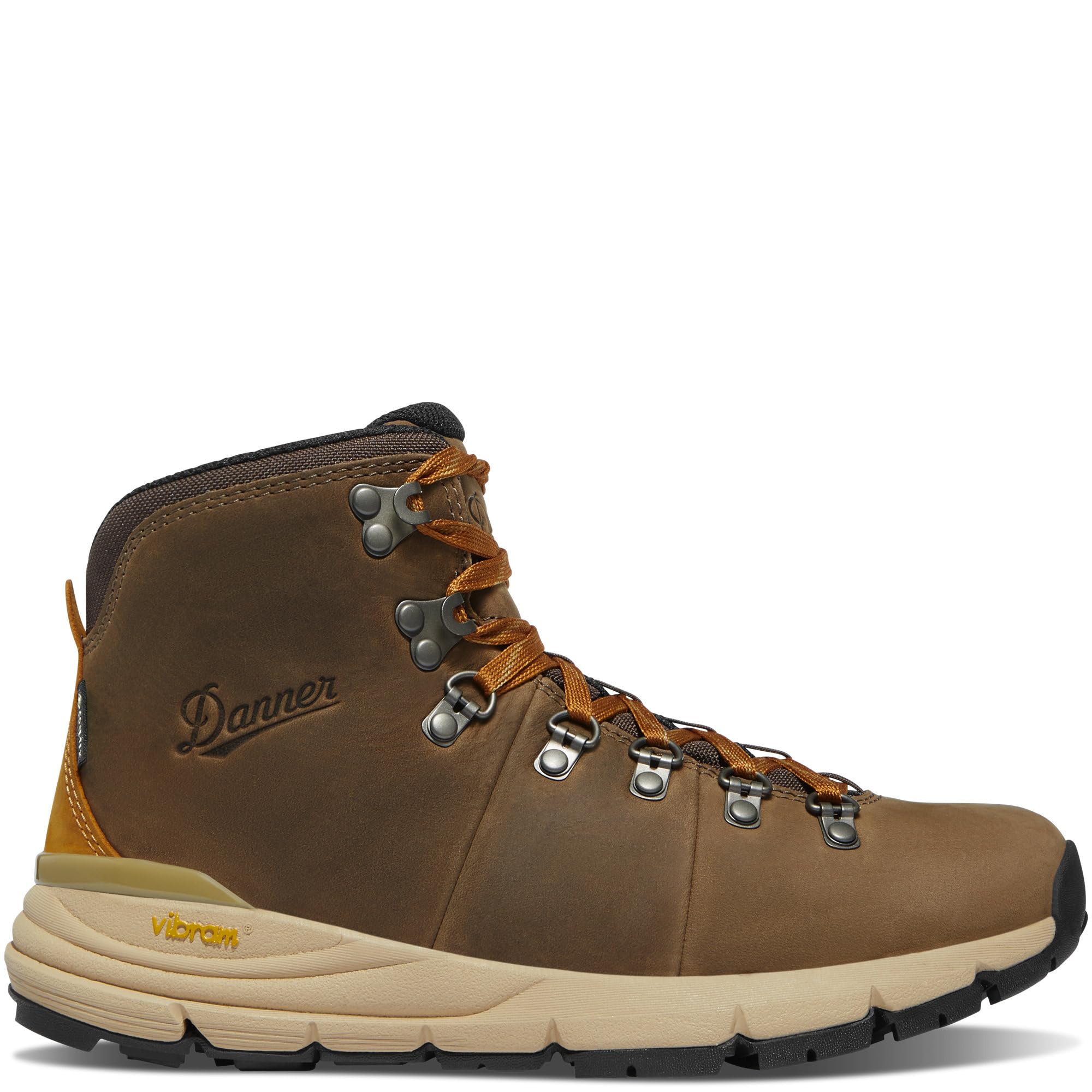
| Danner Mountain 600★ Best Overall | All-Round Hiking & Durability | Gore-Tex | Vibram Megagrip | — | Amazon |
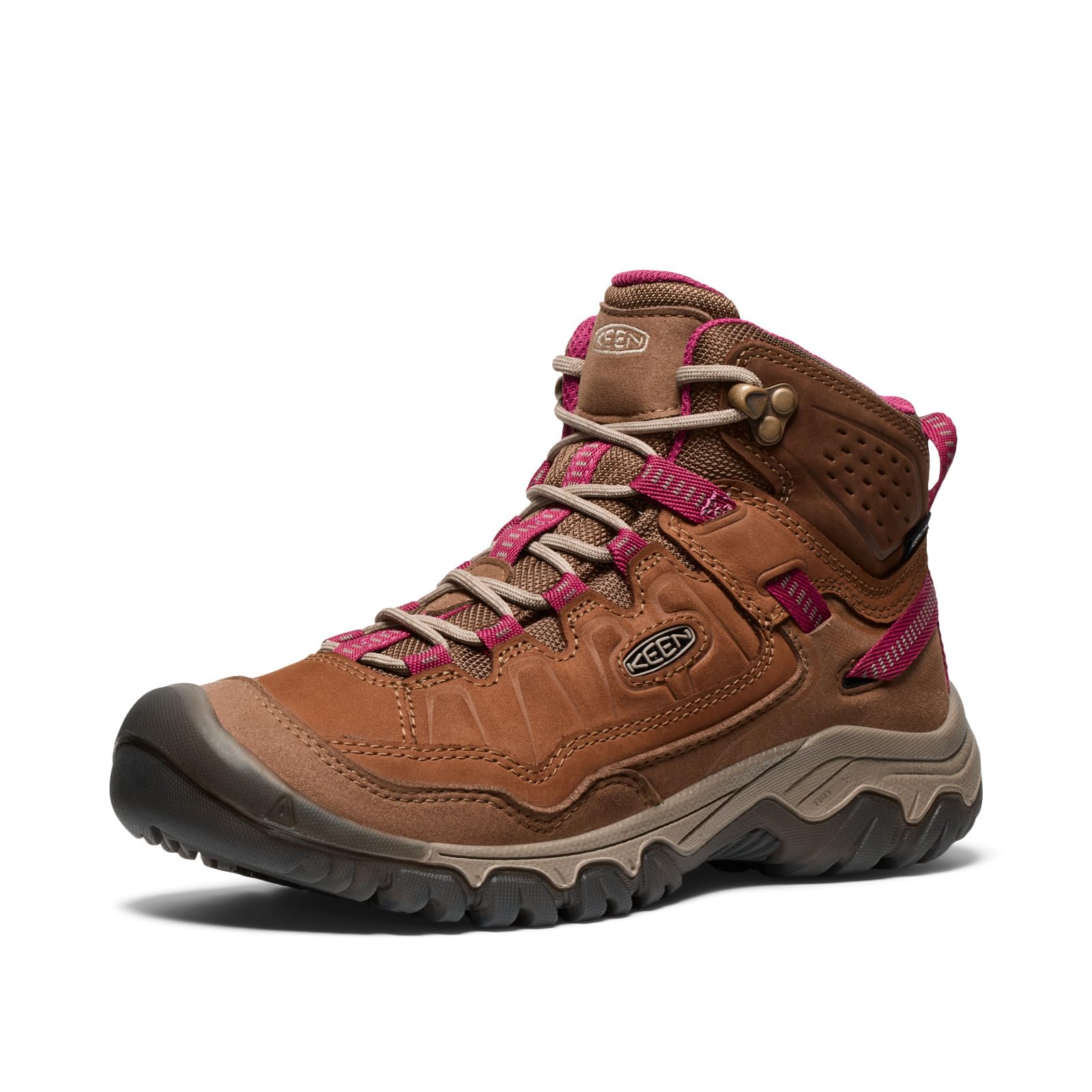
| KEEN Targhee 4 MidPremium Ankle Lock | Proven Durability & Ankle Protection | Yes | Non-marking Rubber | — | Amazon |
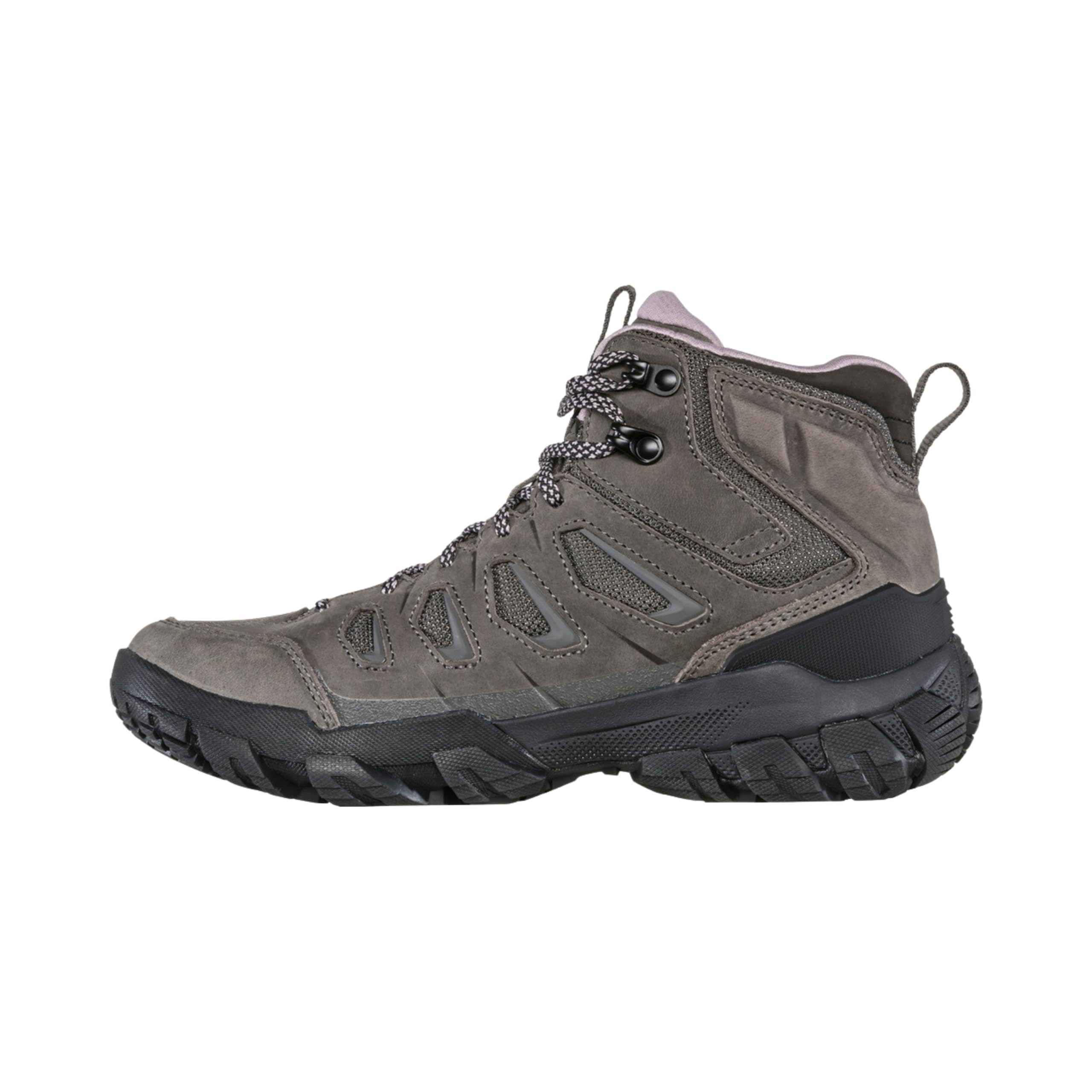
| Oboz Sawtooth X MidNarrow-Foot Specialist | Narrow Feet & Technical Stability | B-DRY | Trail Tread Rubber | 19.4 oz | Amazon |
| KEEN Revel IV High Polar | Snow & Freezing Temps | KEEN.DRY | KEEN.FREEZE Rubber | — | Amazon |
| KEEN Nxis Evo Mid | Lightweight Hiking & Running Shoe Feel | Engineered Knit Waterproof | All Terrain Rubber | — | Amazon |
| Viakix Monterra Mids | Budget-Friendly Comfort & Lightweight | Yes | Grip360 Rubber, 4mm lugs | 11.7 oz (size 7) | Amazon |
| Orthofeet Dakota | Foot Pain & Wide Toe Box | Yes | Lugged Sole | — | Amazon |
| Orthofeet Carmel | Slip-On Ease & Orthopedic Support | Yes | Lugged Sole | — | Amazon |
| SCARPA Terra GTX | Bony Feet & Wide Forefoot | Gore-Tex Extended Comfort | Vibram Energy II / XS Trek | 1 lb 1 oz (half pair, size 38) | Amazon |
| Kenetrek Mountain Extreme | Hunting & Technical Mountain Terrain | Yes | — | — | Amazon |
In‑Depth Reviews
1. Danner Mountain 600 Hiking Boots for Women
Our pick — over 4.5★ from 600+ verified ratings; the strongest balance of quality and price.
The tall boot that feels broken-in from the moment you lace it up.
Nothing derails a long-planned hike faster than a boot that needs weeks of blister-inducing break-in. The Danner Mountain 600 sidesteps that entirely — owners consistently report wearing them straight from the start on 20-mile days at 5,000 feet of elevation on wet, rocky terrain, with zero hot spots. The secret is a triple-density comfort footbed that absorbs shock and a rubberized EVA midsole that cushions every step, so your feet do not ache even after hours of descending.
What really sets this boot apart for the long haul is its recraftable design — Danner’s team can resole and recondition the whole boot, extending its life years beyond a typical glued-on sole. The Vibram Megagrip outsole with self-adapting lugs gives you grip on wet rock and loose dirt alike. The crowd favorite comes in at 4.6 stars across 646 owners, and the most-discussed aspect — comfort, with 154 owners calling it out — is not just a spec-line claim.
What Wins People Over
- Comfortable immediately — minimal to no break-in required, even for narrow heels and high arches
- 100% waterproof Gore-Tex liner keeps feet dry through creek crossings and rain
- Recraftable design means you can resole them instead of trashing them
- Roomy toe box with ample room for thick socks
The Honest Trade-Off
- Leather split at the instep reported by a long-term owner after 9 months, which affected waterproofing
- Not insulated — you will want warmer socks or a dedicated winter boot for sub-freezing hikes
Your everyday trail champion: If you want a single boot that handles everything from weekend backpacking to daily dog walks without punishing your feet, this is the one.
Think twice if: You need serious insulation for deep winter hiking — this boot is a three-season workhorse best paired with wool socks in colder weather.
2. KEEN Women’s Targhee 4 Mid Height Waterproof Hiking Boots
Built for hikers who want a tall boot that locks the ankle without locking the toes.
The Targhee 4 Mid earns its reputation from owners who need genuine ankle stability on wet, uneven Pacific Northwest trails. The mid-height shaft provides noticeable resistance against ankle roll, while the wide toe box — a hallmark of KEEN’s design — gives toes room to spread on long descents. The sole is formed in one piece, which explains why quality is the second most-praised aspect among owners, trailing only comfort.
Waterproofing is consistent: reviewers report completely dry feet through mud, gravel, and wet conditions. The boot runs slightly large and wide, so you can size up for thick winter socks or stay true-to-size if you prefer a snug fit with a standard sock. The trade-off is that the lacing system does not cinch as tightly as some would like, and a few owners mention the boot lacks aggressive arch support — a minor swap if you use your own orthotic.
Your go-to for wet, uneven terrain: The Targhee 4 Mid delivers dependable ankle protection and a forgiving toe box that makes it a standout on technical, waterlogged trails.
3. Oboz Women’s Sawtooth X Mid B-DRY Hiking Boot
A tall boot engineered for narrow feet that demand serious arch and ankle support.
If every standard boot feels like your heel is swimming, the Oboz Sawtooth X Mid is a relief. It fits narrow feet excellently — an owner with a 9.5 foot (normally 9-9.5) reports a perfect fit with great ankle support and a stiff, stable sole that does not slip on rocky terrain. The O FIT insole is molded to each shoe for a fit that many describe as “locked in” from the first step, and the Adaptive Cushioning Technology midsole softens heel strikes without sacrificing efficiency.
The B-DRY waterproof membrane works as advertised, though the boot does run small. Most owners recommend ordering a full size up to accommodate thick hiking socks. The weight is noticeable at 19.4 oz per boot — it is not a lightweight sneaker-boot — but the stability payoff is clear: the aggressive, stiff sole offers excellent grip and protection on technical trails. The boot runs warm, so it is best suited for cooler climates and shoulder-season backpacking.
Best for narrow, high-arched feet: The Sawtooth X Mid delivers the most secure heel lock in this list, with arch support that genuinely saves your ankles on uneven ground.
skip it if: You have wide feet or prefer a light, flexible sneaker-like feel — the stiff platform and narrow fit make this a specialist tool, not an everyday walker.
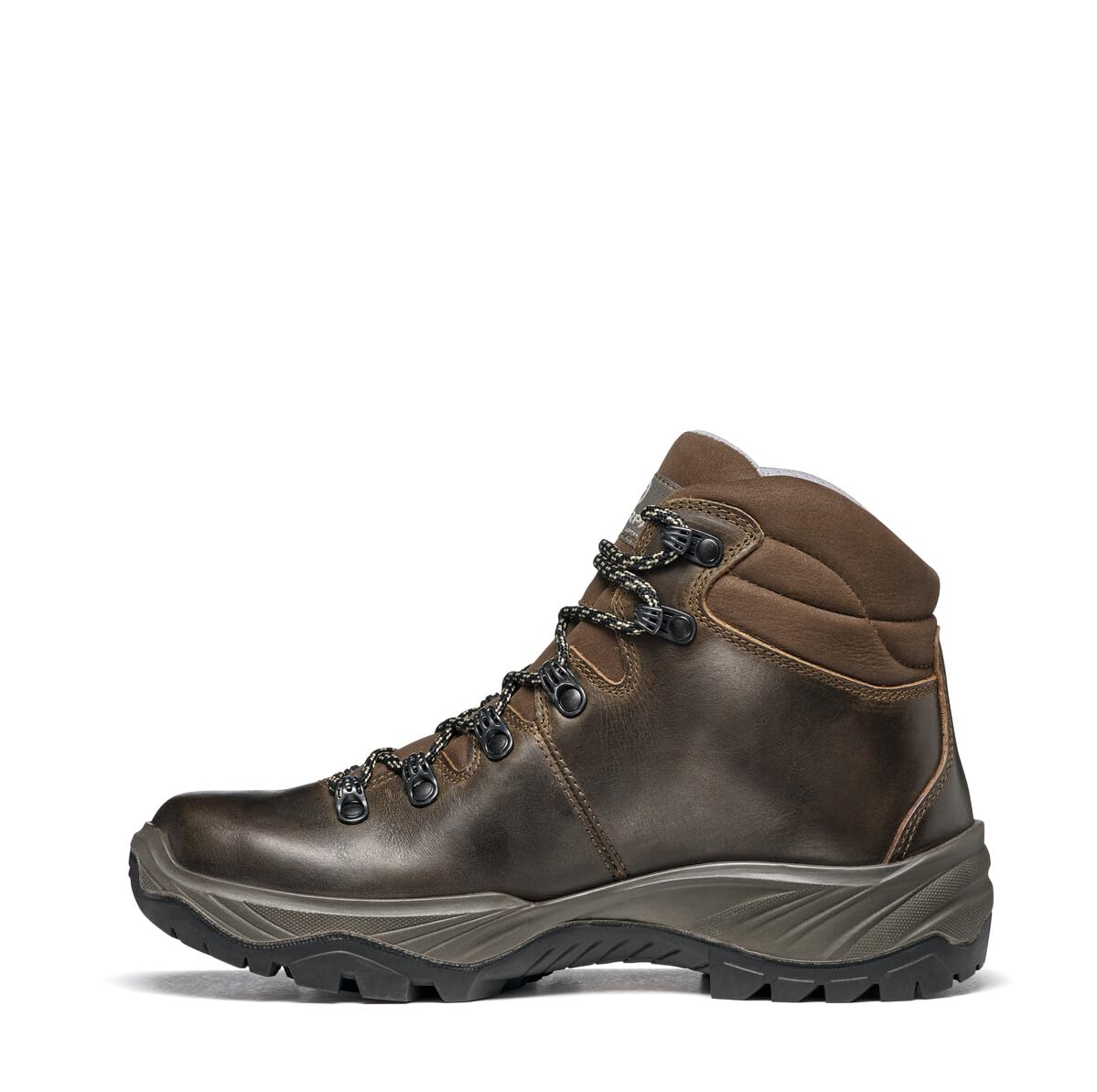
4. SCARPA Women’s Terra GTX Hiking Boots
An Italian leather boot that accommodates wide forefeet and bunions with zero break-in pain.
The SCARPA Terra GTX solves a specific problem for hikers with bony feet, narrow heels, and wide forefeet — exactly the combination that typically causes blisters in standard boots. The 1.8mm suede and nylon upper is soft from the first wear, and at 1 lb 1 oz per half-pair (size 38), it is remarkably light for a full leather tall boot. Owners who wore them straight onto the slopes of Ben Nevis in Scotland report no rubbing, no blisters, and dry feet even in heavy rain.
The Vibram Energy II outsole with XS Trek compound offers dependable traction on mixed terrain, though one owner noted the grip is “sketchy” on wet, smooth rock — not as aggressive as a dedicated scrambling boot. The Gore-Tex Extended Comfort membrane breathes well enough for day hikes, but the boot runs warm; it shines in cooler climates rather than desert heat. Sizing is key here: most owners recommend going down a half size or even a full size from your typical sneaker size, so try them on with your intended sock thickness before the first real trek.
Your mountain-ready companion for bony feet: The soft leather, wide forefoot fit, and sub-1-pound weight make the Terra GTX the most comfortable tall boot for hikers who normally dread break-in.
5. KEEN Revel IV High Polar
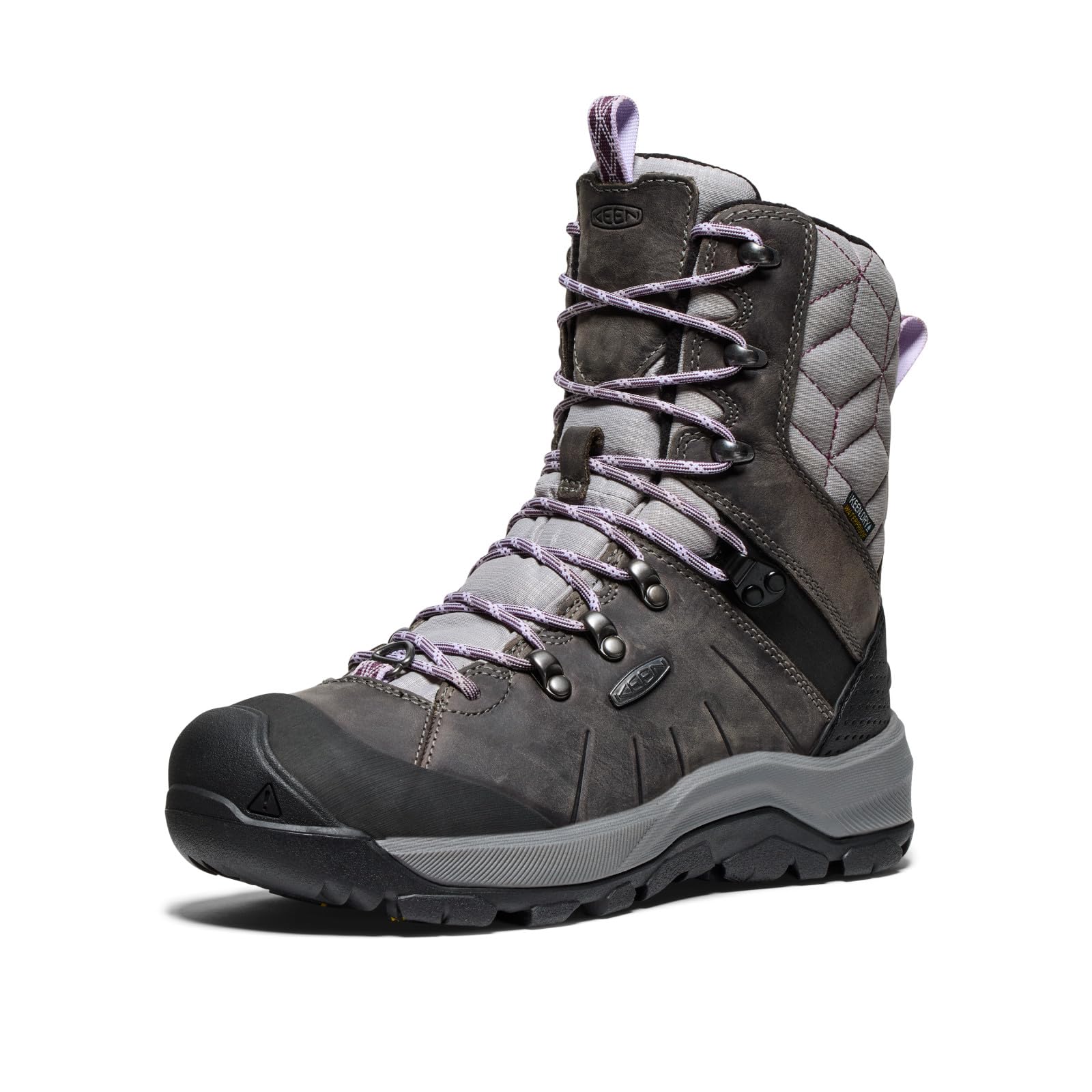
The calf-high boot that stays warm and grippy when temperatures drop below freezing.
At 26°F with thin socks, the Revel IV High Polar keeps feet warm — buyers report wearing them comfortably down to -2°F with thin socks, thanks to the insulated build and KEEN.DRY waterproof membrane. The calf-high shaft provides more coverage than any other boot in this list, locking out snow and slush. The KEEN.FREEZE rubber outsole with 5mm multi-directional lugs delivers high traction on icy sidewalks and packed snow, making it a go-to for Michigan winters and daily 3-mile dog walks through snow.
The trade-off is weight and stiffness. The boot is not lightweight, and the shin area is notably rigid until broken in. A few owners mention the top hook breaking after the first day of use, so treat the lacing hardware gently. The roomy toe box — a KEEN signature — fits comfortably with thick socks, and sizing up by half is a common recommendation. If your winter involves a mix of hiking, snow play, and even biking on icy paths, this insulated tall boot covers it all.
Your reliable winter companion: The Revel IV High Polar offers the best cold-weather traction and calf-high coverage in this list, ideal for snowy hikes and below-freezing dog walks.
6. Orthofeet Dakota Orthopedic Women’s Hiking Boots

Built to quiet foot pain — bunions, high arches, and bad knees included.
The Dakota is not a casual hiking boot. It is designed specifically for people who struggle with chronic foot conditions — bunions, high arches, Morton’s neuroma — and who otherwise shy away from long treks. Customers note wearing them for 12 straight days in Alaska, through rain and snow, with feet “staying warm and dry” and zero fatigue. The secret is the Ortho-Cushion system: a built-in orthotic insole with arch support, a shock-absorbing sole, and a pressure-free wide toe box that prevents the cramping that ruins a hike.
The boot is also slip-resistant and includes a removable insole if you prefer your own custom orthotics. The trade-off is durability and sturdiness — some owners feel the sole could be thicker for sharp, rocky terrain, and others note the ankle opening is loose for narrow ankles. It is a hands-free slip-on design, which is genuinely convenient for getting in and out quickly. If your feet hurt in every other boot, this is the one that finally works.
Your relief from foot pain: The Dakota’s wide toe box, orthotic insole, and cushioned sole make it the best option for hikers with bunions, high arches, or knee sensitivity who thought they could not do long hikes anymore.
7. Orthofeet Carmel Orthopedic Women’s Hiking Boots
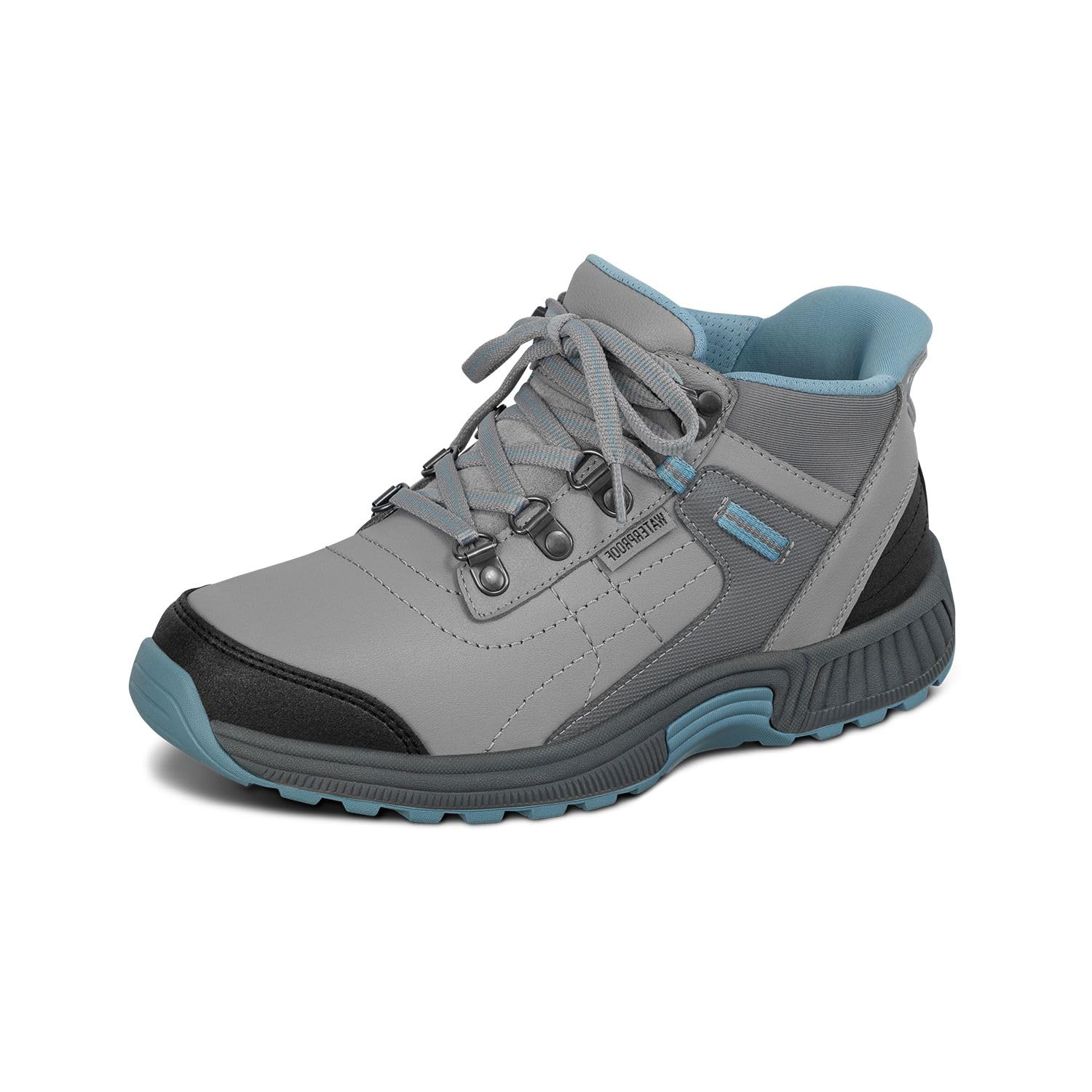
The slip-on tall boot that delivers orthopedic support without needing to bend over and lace.
The Carmel is the Dakota’s sibling with one key difference: it is designed as a true hands-free slip-on. Owners with drop foot, neuropathy, and mobility limitations report that these are the first boots they have ever been able to get into and out of without help. The Ortho-Cushion system and Arch Booster provide the same foot-pain relief as the Dakota — high arches feel supported, bunions are left untouched, and the wide toe box gives toes space to spread.
The downsides are honest: the boot is heavier and the slip-on tongue does not tighten as thoroughly as a traditional lace-up, so the fit around the ankle can feel loose. A few owners found the soles detached after some use, and the boots are not truly non-slip on wet cement despite the claim. For daily walks, light hiking, and all-day wear around town with foot pain, the Carmel is a godsend — just do not expect technical trail performance on steep, wet scrambles.
Best for mobility-limited hikers: The Carmel’s slip-on mechanism and orthotic support make it the most accessible tall boot for anyone who struggles with bending or lacing, without sacrificing foot-pain relief.
8. Kenetrek Womens Mountain Extreme Insulated Hiking Boot with 400 gram Thinsulate

The heavy-duty boot that feels like a stabilizer brace for your ankles on steep, technical terrain.
The Kenetrek Mountain Extreme is the most serious boot in this list — it is built for wildlife biologists, hunters, and anyone who spends 12-hour days in the backcountry carrying loads. Reviewers point out packing out a deer on a steep ridge with next-to-no foot pain on the first wear, thanks to the high ankle shaft that provides outstanding support against rolling. The 400-gram Thinsulate insulation keeps feet warm into the single digits, though one owner found the warmth insufficient for deep snow — results vary by individual circulation and activity level.
The boot is stiff from the start and requires intentional break-in, but the payoff is a supportive platform that grips rocks, leaves, and branches without slipping. The sole is exceptionally durable and resists punctures from thorny terrain. The downside is the cost and weight — this is a premium, expedition-level tool, not a casual day hiker. If you are a serious solo hiker or hunt in rugged terrain, the confidence from this boot’s stability is worth the money.
Your expedition-grade stabilizer: The Kenetrek Mountain Extreme delivers the highest level of ankle support and cold-weather insulation for demanding backcountry workloads, but it demands a real break-in and a real budget.
9. KEEN Women’s Nxis Evo Mid Waterproof Boots
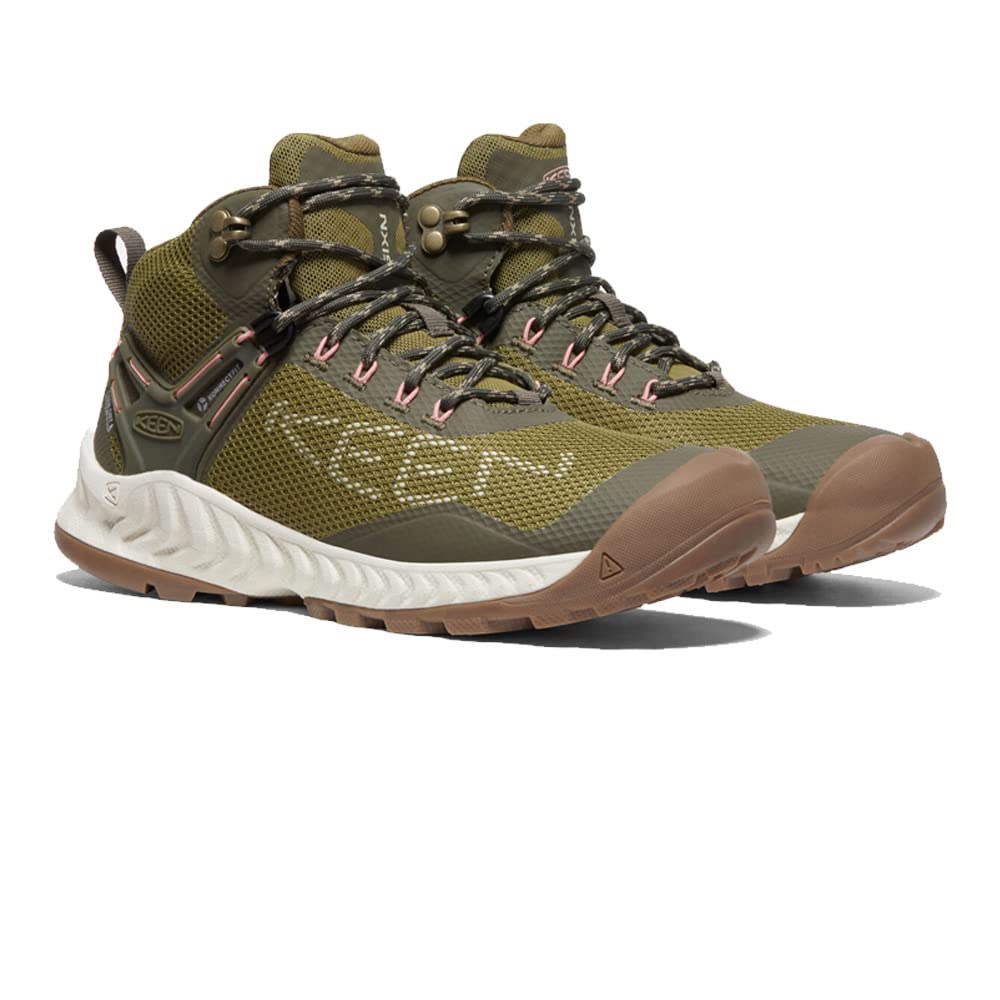
A tall boot that moves like a running shoe — fast, responsive, and barely needing a break-in.
The Nxis Evo Mid is KEEN’s answer to hikers who want a high-top boot without the clunky feel. The engineered knit upper is flexible and light, giving it a running-shoe stride on pavement and trail alike. Buyers report hiking 19 miles in Yosemite with no blisters and a 5-mile Yellowstone hike with no issues — the combination of a roomy toe box and great arch support means you do not spend the last mile of the day counting steps.
Waterproofing is reliable: the knit upper, treated with a waterproof membrane, handles puddles and wet grass easily. The trade-off is that the boot fits narrow compared to other KEEN models. The “traditional wider footwear form” that KEEN advertises does not extend to the Nxis — owners with medium-to-narrow feet love it, but wide-foot buyers find it too tight and have no wide-width option. The eyelet hooks can also snag laces, so tie them carefully.
Your highest-miler for narrow feet: The Nxis Evo Mid is the most comfortable tall boot for high-mileage days on mixed terrain — as long as your foot is not too wide for its streamlined fit.
10. Viakix Womens Waterproof Hiking Boots (Monterra Mids)
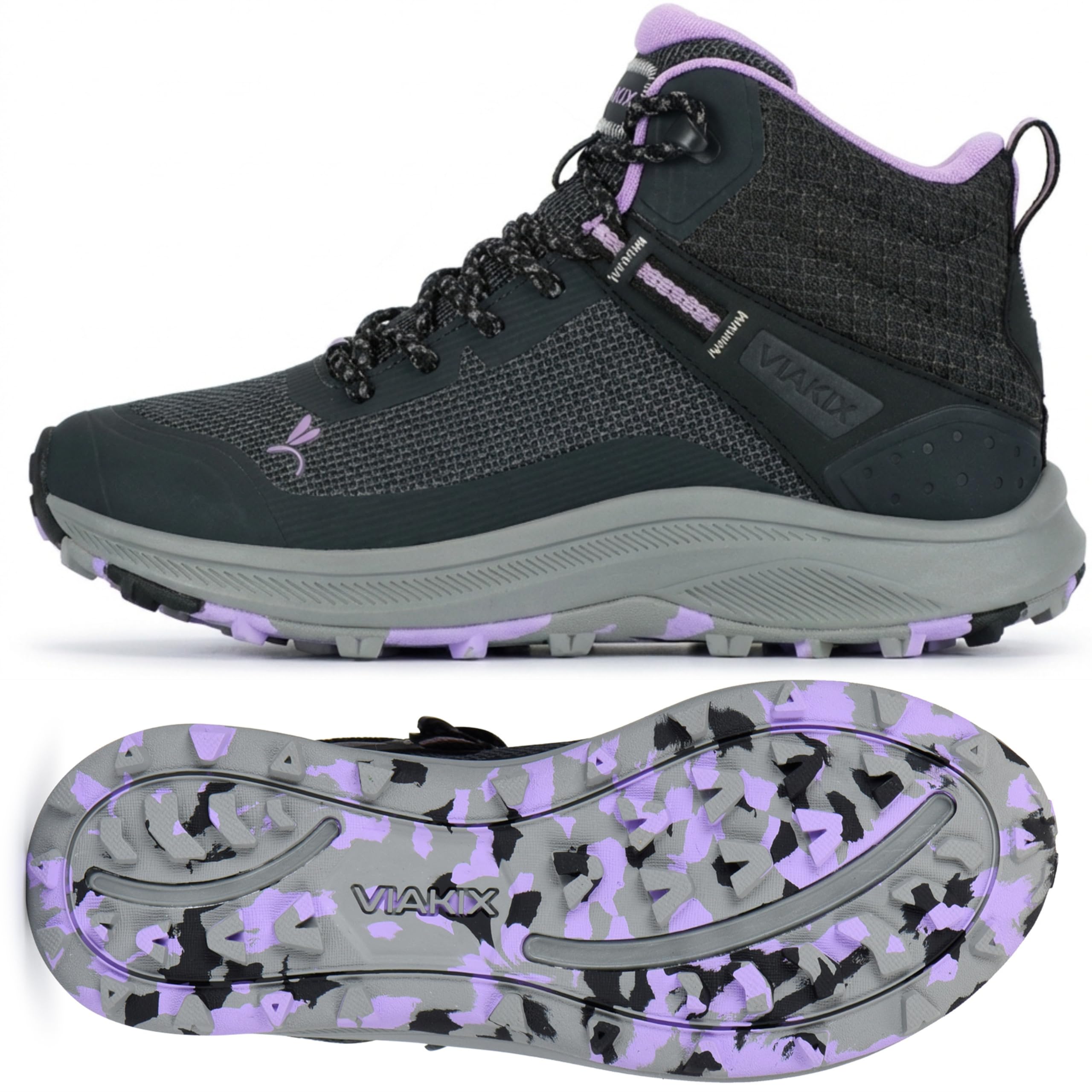
A ridiculously light boot that handles 66k-step days without causing a single blister.
At 11.7 oz per boot (size 7), the Viakix Monterra Mids are the lightest tall boots in this list by a wide margin. The featherweight build means you forget you are wearing tall boots at all — a huge advantage on long, fast day hikes. Owners walked over 66,000 steps across the Badlands, Custer State Park, and the Black Hills with zero blisters, warm and dry feet. The Grip360 rubber outsole with 4mm lugs provides confident traction on dirt, gravel, and wet rock.
The boot is vegan, uses a cushioned removable insole, and has an 8mm heel-to-toe drop that feels natural for most walkers. The main trade-off is fit — the toe box is generous, but the midfoot and heel run narrow, so wide-footed owners may find it tight. An owner with wide feet used a shoe expander to make it work. The waterproof claim is unverified in many reviews, but early owners mention dry feet through puddles and snow. For the price, this is an astonishing value for a tall hiking boot.
Best value tall boot for lightweight hikers: The Viakix Monterra Mids deliver a barely-there feel, solid traction, and blister-free comfort at a price that is tough to top.
pass on it if: You have wide feet or need maximum waterproofing reliability for sustained wet conditions — the narrow midfoot and unproven waterproofing make it a fair-weather or moderate-terrain boot.
Understanding the Specs
Waterproof Membrane
A waterproof boot uses a thin membrane — like Gore-Tex or KEEN.DRY — that blocks liquid water from the outside while letting water vapor (sweat) escape. A boot without a membrane (or with a simple spray-on treatment) will saturate through in rain or wet grass. A good membrane keeps you dry on the inside for hours of wet hiking. Look for a specific membrane name rather than just “waterproof” — that usually signals a tested, durable layer.
Lug Depth and Rubber Compound
Lugs are the raised treads on the sole. For tall hiking boots, 4mm to 5mm lugs offer good bite on soft ground, mud, and snow. Deeper lugs dig in; shallower lugs are better for mixed pavement and trail. The rubber compound — such as Vibram Megagrip — determines how the rubber sticks to wet rock. A sticky compound (like Megagrip) gives confidence on smooth, wet surfaces but wears faster on abrasive rock. A harder compound lasts longer but slides more on wet stone. Match the compound to your primary terrain.
FAQ
Should I size up for tall hiking boots?
How long do tall hiking boots last?
Can I use custom orthotics in tall hiking boots?
How do I break in stiff tall boots?
Are tall hiking boots only for winter?
Why does my hiking boot rub on my heel?
How do I clean and waterproof my hiking boots?
What is the difference between a mid boot and a tall boot?
Can tall boots cause shin pain?
How important is the toe box width?
Final Thoughts: The Verdict
For the majority of shoppers, the best women’s tall hiking boots winner is the Danner Mountain 600 because it delivers immediate comfort, a recraftable construction that extends its life, and proven waterproof performance on long, rugged hikes. If you face snowy winters and need serious insulation, grab the KEEN Revel IV High Polar. And for hikers with foot pain or bunions who thought they could not wear tall boots, the Orthofeet Dakota is the one to reach for.
How We Picked
We do not accept paid placement. Every pick is matched to a real buyer and a real use-case; we do not hands-on test units.
Sources & Methodology
Specifications: manufacturer listings and product documentation. Review insights: verified customer reviews, as of July 2026. Pricing: not shown on this page (it changes often); check the current price via the retailer link.
As an Amazon Associate, Calories Fit earns from qualifying purchases. This does not affect which products we feature.