
Our readers keep the lights on and the coffee maker working hard! As an Amazon Associate, I earn from qualifying purchases.
Specs are compiled from manufacturer listings and verified buyer reviews and can change over time — please confirm the key details on the product page before buying.
You take a hard spill on a patch of black ice once, and every winter step turns into a gamble. Women’s boots with ice cleats built in fix that by fusing traction into the sole itself, so you never have to remember, carry, or install a separate set of spikes.
I’m Mohammad — the founder and writer behind Calories Fit. This guide is built by comparing the manufacturers’ published specifications and the patterns across verified customer reviews, so you get each pick’s real strengths and trade-offs instead of marketing spin.
If you commute on icy sidewalks, hike frozen trails, or stand for hours on an iced-over lake, finding the right pair of women’s boots with ice cleats built in means you can walk through winter with confidence instead of caution.
Our Picks at a Glance
How To Choose The Best Women’s Boots with Ice Cleats Built In
Not every integrated cleat system works the same way. Some use fixed steel studs that bite into hard ice. Others use a retractable mechanism you flip out when you hit a slick patch and tuck away on dry pavement. The right choice depends on where you walk most.
Studded vs Retractable Cleats
Fixed studs (like carbide-tipped spikes embedded in the tread) give immediate, always-on grip. They are ideal if you spend most of your time on ice and packed snow. The trade-off is that they feel slippery on bare floors, and as buyers report, they can scratch indoor surfaces. Retractable cleats let you walk normally on concrete or tile, then engage the spikes when you step onto an icy patch. The mechanism adds complexity, and a few owners mention the cleats loosening or falling off over time.
Warmth and Temperature Rating
Look for a comfort range that matches your coldest days. Many winter boots with built-in cleats are rated down to -40°F. That rating depends on insulation layers — neoprene, fleece, Thinsulate, or heat-reflective foil all trap heat differently. A boot that is warm at -40°F may be too hot for a mild winter walk, so match the insulation to the climate where you actually live.
Waterproofing and Durability
A waterproof membrane (GORE-TEX is the most common) keeps slush and snowmelt from soaking your feet. Extended rubber coverage around the lower boot adds protection against punctures and abrasion. Check whether the manufacturer offers a solid warranty, because a leaky boot in freezing weather is not just uncomfortable — it is dangerous.
Quick Comparison
| Model | Best For | Traction Type | Weight | Temp Rating | Amazon |
|---|---|---|---|---|---|
| MUCK Arctic Ice Mid★ Best Overall | All-around winter performance | Vibram Arctic Grip rubber | 4.5 lbs | -40°F | Amazon |
| Icebug Stavre BUGrip GTX | Active hiking on ice | Carbide studded (17 studs) | — | Not specified | Amazon |
| NORFIN Klondike 2 | Ice fishing / standing on ice | Retractable cleats (2 per boot) | 5 lbs | -40°F | Amazon |
In‑Depth Reviews
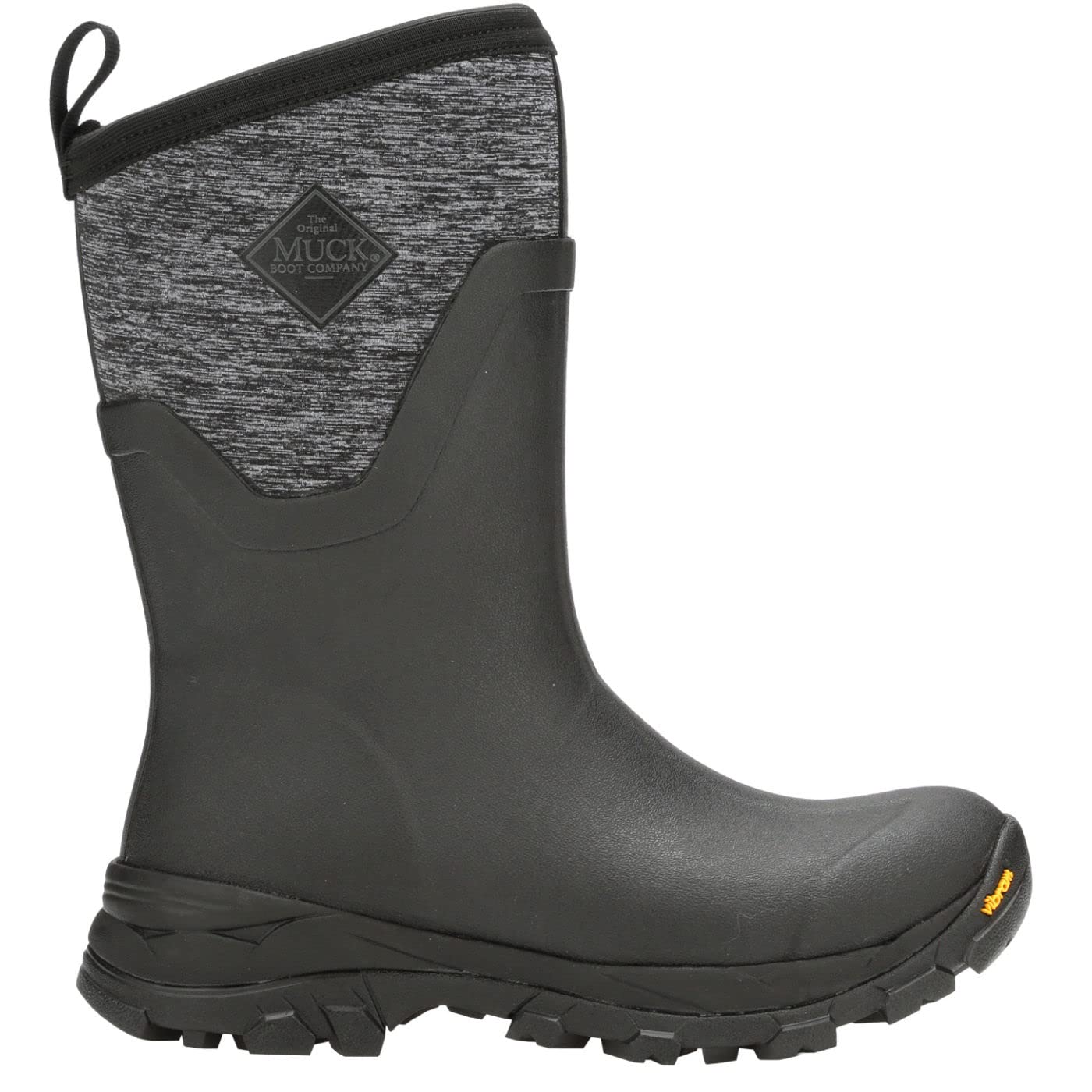
1. MUCK Women’s Arctic Ice Mid Boot + Vibram Arctic Grip A.T.
Our pick — 4.5★ from 400+ verified ratings; the strongest balance of quality and price.
This boot turns black ice into a surface you can trust without thinking twice.
The defining feature here is the Vibram Arctic Grip All Terrain outsole (a rubber compound designed to stick to wet ice — the most slippery winter surface). Paired with a XS Trek Evo compound, this sole grabs snow, mixed loose surfaces, and hard pack too. You get the grip of a dedicated winter boot without the loud clatter of exposed studs on dry ground. At 4.5 pounds, it is noticeably lighter than the NORFIN Klondike 2, which comes in at 5 pounds, an 11 percent difference. That means your legs feel fresher on long walks through deep snow.
Under the upper, a 5mm CR Flex-Foam neoprene layer makes the boot 100 percent waterproof while stretching with your foot to prevent blisters and chafing. The fleece lining adds warmth, and the comfort range is rated from -40°F to 40°F. That means it handles brutal cold yet stays wearable on milder winter days. Customers note walking through 22 inches of snow without a drop of moisture inside, and they praise the boot’s ability to stay warm and dry during hours of outdoor use. The bioDEWIX antimicrobial footbed manages odor — a small but real bonus for daily wearers.
Nothing here is perfect. The fit runs large for some owners, and the stiff construction makes driving difficult according to a few reviewers. The pull-tab helps with the stiff shaft — a few owners say they can even pull the boots on hands-free — but the stiffness is a trade-off for the durability you get. If you need a boot for serious snow shoveling, dog walks, or standing on a frozen jobsite, this is the crowd favorite for good reason.
Why owners love it
- Vibram Arctic Grip delivers traction on wet ice, packed snow, and loose surfaces without removable spikes
- Full neoprene and fleece construction keeps feet warm and waterproof from -40°F up to 40°F
- Lighter than competing boots at 4.5 pounds — legs feel less tired after long slogs
The trade-offs
- Runs large for some buyers — order carefully or size down
- Very stiff upper makes driving uncomfortable or impossible for several owners
- An occasional unit is reported with premature leaking, so buy from a retailer with a solid return policy
Reach for this if: you want one do-it-all winter boot that grips wet ice, keeps you warm down to -40°F, and sheds snow without needing to flip out or attach cleats.
Look elsewhere if: you spend most of your winter on dry pavement and only hit ice occasionally — the Vibram outsole is tune for icy conditions, and the stiffness may not suit casual city errands.
2. Icebug Womens Stavre BUGrip GTX Hiking Boot with Carbide Studded Traction Sole
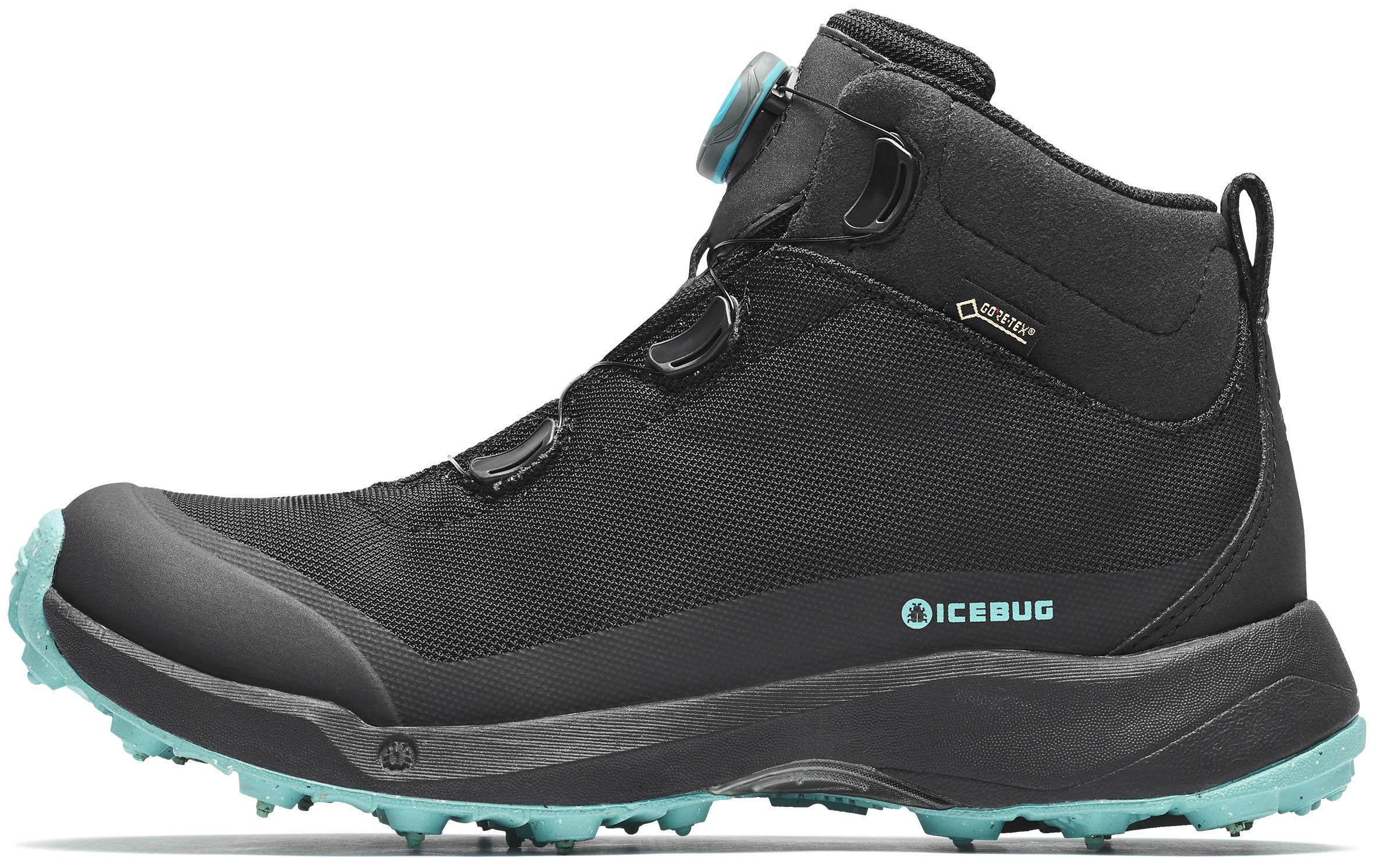
This hiker lets you run across solid ice without a second thought.
Icebug’s BUGrip system uses 13 to 19 integrated steel studs embedded directly into the rubber sole — these are fixed carbide-tipped spikes that bite into glare ice on contact. The Stavre model features a GORE-TEX membrane (a breathable waterproof layer) that blocks slush and water while allowing sweat vapor to escape, keeping your feet dry on long treks. Mid-ankle height gives you freedom of movement while still sealing out snow, and buyers confirm it is waterproof even after submersion in tidal water.
What sets this boot apart from the MUCK is active traction.: reviewers point out they can actually run on ice without fear of falling, and they walk on frozen trails and icy sidewalks with the same confidence as dry pavement. The warmth is not rated to extreme sub-zero temps like the -40°F of the other two picks, but paired with wool socks, owners say feet stay toasty during snow relocation and winter dog walks. The trade-off is that the studs will scratch hardwood and tile floors — buyers explicitly warn not to wear them indoors after an ice storm because they damage surfaces. Fit is also tricky to nail down: a few shoppers say one size is too small and the next too large, with the ankle band hitting a blister-prone spot above the heel for some feet.
If you are an active winter walker, hiker, or dog-owner who faces ice and packed snow daily, the fixed carbide studs of the Icebug give you the highest level of slip protection in this lineup. It is not the boot for standing still in -40°F cold for hours, but for moving across ice, it is class-leading.
Why it stands out: The 17+ carbide studs dig into pure ice like no rubber compound can — Buyers call them “standouts” for icy sidewalks and trails., and one buyer says the boots “greatly reduce my fear of falling.”
Honest limitation: The fixed studs scratch indoor floors, so you need to swap shoes before walking inside. Fit runs inconsistent, and the warmth is lower than the other two picks if you stand still in extreme cold.
Grab these for: daily winter hiking, dog walking, or any active use on ice and hard-packed snow where you need maximum bite and don’t mind swapping shoes indoors.
Pass if: you need a boot for standing still on ice for hours (ice fishing, outdoor work) at sub-zero temperatures — the warmth here is moderate, and the studs don’t work well on bare floors.
3. NORFIN Klondike 2 -Winter Boots for Fishing, Hunting and Hiking – Anti Slip – Retractable ice Cleats

This insulated boot lets you flip out cleats when ice appears and tuck them away on dry ground.
The Klondike 2 uses a pair of retractable cleats built into the rubber outsole — you flip them forward when you step onto ice and slide them back when you hit pavement. That is a real advantage over the fixed studs on the Icebug: you can walk into a store or your home without scratching floors. The EVA material (a lightweight foam rubber that absorbs shock) makes these boots surprisingly light and not bulky — a big plus for anyone who has wrestled with heavy rubber muck boots. At 5 pounds, they are the heaviest of the three, but owners describe the weight as manageable and the fit as true to size for many.
Warmth is the standout here. An inner Thinsulate layer (a synthetic fiber insulation that traps heat) provides heat insulation and wicks moisture away, while a heat-reflective foil layer deflects cold and retains body heat. The temperature rating goes down to -40°F. One buyer took them ice fishing on a frozen lake in Fairbanks, Alaska, at -13°F and reported warm feet and no slipping. That same buyer would buy them again. The removable insole adds to the comfort and makes drying easier.
The catch is that cleat durability draws sharp complaints. Multiple buyers report the ice cleats falling off on the first fishing trip, and the screws rust and back out quickly. The fit is polarizing — some owners mention the size is right on while others find the cut awkward. And a few owners warn that the third-party seller delays refunds. If you get a well-built pair, the warmth and flip-out convenience are excellent for the price. If you get one with loose cleats, it is a frustrating experience.
What owners praise
- Flip-out cleats let you walk on ice and then retract them for bare floors and pavement
- Thinsulate plus heat-reflective foil keeps feet warm at -13°F and down to -40°F per the rating
- Light EVA construction is less bulky than typical winter work boots
Frequent frustration
- Cleats have been reported falling off during the first use and screws rusting or backing out
- Fit is divisive — some call it true to size, others say it runs small or has an awkward cut
- Sole stiffness forces a penguin-like stride and the third-party return process can be slow
Choose this for: ice fishing, standing on frozen lakes, or any situation where you need extreme warmth with the ability to retract the cleats when you step onto a boat or cabin floor.
skip it if: you need a boot you can rely on for daily winter commuting — the cleat durability and fit inconsistency make this a risk for everyday wear. Buy from a retailer with a generous return window.
Understanding the Specs
Vibram Arctic Grip vs BUGrip vs Retractable Cleats
There is no universal “best” traction system for ice. Vibram Arctic Grip uses a special rubber compound that becomes tacky on wet ice — it works silently and on dry pavement too, so it is the most versatile. BUGrip from Icebug uses fixed carbide-tipped steel studs that physically bite into the ice, giving you the most aggressive grip for hiking and running. Retractable cleats let you toggle between cleats and flat rubber, which is great for mixed conditions but adds a mechanical part that can break. Match the system to how much of your walking is actually on ice.
Temperature Rating and Insulation
A boot rated to -40°F means it can keep your feet safe at that temperature while you are moderately active. The insulation does the work: neoprene (like the 5mm layer in the MUCK) flexes with your foot and seals out water, Thinsulate (like the NORFIN) traps heat without adding bulk, and GORE-TEX (like the Icebug) blocks water while letting moisture escape. If you stand still for long periods in extreme cold, prioritize the thickest insulation and the lowest temperature rating. If you move actively, a GORE-TEX boot with moderate insulation and wool socks may serve you better.
FAQ
What is the difference between built-in ice cleats and strap-on crampons?
Can I wear boots with fixed carbide studs indoors?
How long do built-in ice cleats last?
Are these boots suitable for everyday winter commuting?
How do I clean and store winter boots with built-in cleats?
Will these boots fit wide calves or wide feet?
Can I wear these boots in wet snow without my feet getting cold?
Are women’s boots with built-in ice cleats worth the higher price compared to adding strap-on cleats?
Final Thoughts: The Verdict
For most people, the best women’s boots with ice cleats built in is the MUCK Arctic Ice Mid because its Vibram Arctic Grip compound works on wet ice and dry ground without studs, retractable parts, or floor damage. If you need active ice traction for hiking and you do not mind swapping shoes indoors, the Icebug Stavre BUGrip GTX gives you carbide studs that let you run on solid ice. And for extreme cold and mixed surfaces where you want the option to retract your cleats, the NORFIN Klondike 2 delivers warmth down to -40°F with flip-out convenience, though cleat durability is a gamble worth checking before you buy.
How We Picked
We do not accept paid placement. Every pick is matched to a real buyer and a real use-case; we do not hands-on test units.
Sources & Methodology
Specifications: manufacturer listings and product documentation. Review insights: verified customer reviews, as of July 2026. Pricing: not shown on this page (it changes often); check the current price via the retailer link.
As an Amazon Associate, Calories Fit earns from qualifying purchases. This does not affect which products we feature.