
Our readers keep the lights on and the coffee maker working hard! As an Amazon Associate, I earn from qualifying purchases.
Specs are compiled from manufacturer listings and verified buyer reviews and can change over time — please confirm the key details on the product page before buying.
Protecting your young athlete starts with one piece of gear above all others: a youth football helmet. It is not about colors or logos — it is about how the shell and padding handle the hits your player takes every practice and game. This guide skips the marketing to focus on real safety features, fit systems, and durability that keep a player safe all season long.
I’m Mohammad — the founder and writer behind Calories Fit. This guide is built by comparing the manufacturers’ published specifications and the patterns across verified customer reviews, so you get each pick’s real strengths and trade-offs instead of marketing spin.
Whether you are equipping a first-year flag player or a seasoned middle-school linebacker, finding the right protection starts here with the best youth football helmets that balance certified safety, a dependable fit, and the ruggedness needed to handle a full practice schedule.
Our Picks at a Glance

How To Choose The Best Youth Football Helmets
A helmet is your kid’s primary defense on the field, so picking one goes beyond just matching the team colors. Focus on three critical areas to make the right call.
Safety Certifications and Ratings
Look for a helmet that meets the NOCSAE standard (National Operating Committee on Standards for Athletic Equipment, the baseline for all regulated play) — this is the baseline for all regulated play. Beyond that, independent lab tests like the Virginia Tech Helmet Ratings give you a clearer picture of how a model performs against real-world impacts. A 5-star rating there means the helmet has been tested against many impact scenarios, not just the minimum requirement — so you know it reduces concussion risk across more hit types.
Fit, Weight, and Adjustability
A helmet that wobbles or pinches offers less protection. The best youth helmets use systems like inflatable rear liners (an air bladder you pump up for a snug fit that moves with the head) or TPU cushioning (thermoplastic urethane pads that absorb force in hot or cold weather, not just at room temperature). Weight matters too — a 5-pound helmet on a young neck is very different from a 3.4-pound one, especially by the fourth quarter when fatigue sets in.
Included Components and Build Quality
Some helmets arrive ready to play with a facemask, chin strap, and jaw pads included. Others ship as just the shell and liner, meaning you will have to buy the facemask separately — check the listing carefully so you are not caught off guard before the first practice. The outer shell material — usually polycarbonate (a tough, impact-resistant plastic) or ABS (acrylonitrile butadiene styrene, another rigid plastic) — and the inner liner material (expanded polystyrene foam, or EPS, which crushes to absorb energy, or TPU pads) also tell you a lot about durability and how the helmet manages impacts.
Quick Comparison
| Model | Best For | Weight | Facemask Included | Liner Type | Amazon |
|---|---|---|---|---|---|
| Riddell SpeedFlex Youth★ Best Overall | Premium Protection | 5 lb | Yes | Expanded Polystyrene | Amazon |
| Schutt Youth Vengeance A11Top Safety Rated | Top Safety Rating | 3.8 lb | Yes | TPU | Amazon |
| Schutt F7 LX1 Youth | Advanced Impact Tech | 3.4 lb | No | Foam | Amazon |
| Riddell Victor Youth | Solid Value | 4.4 lb | Yes | Expanded Polystyrene | Amazon |
In‑Depth Reviews
1. Riddell SpeedFlex Youth Helmet
Our pick — over 4.5★ from 800+ verified ratings; the strongest balance of quality and price.
The heavy-hitting champion parents trust for the most demanding seasons.
It offers the most comprehensive protection package of any helmet here, and that starts with its build. The polycarbonate shell (a tough, impact-resistant plastic) and the expanded polystyrene (EPS) inner liner (the same crushable foam used in bike helmets) work together to absorb energy from hard hits. It weighs 5 pounds — which is 1.2 pounds heavier than the Schutt Youth Vengeance A11 — but that added weight comes from the Patented Side Impact Protection (PSIP) system, designed to reduce forces from hits to the side of the head. The Ratchet-Loc chin strap lets you dial in tightness without fighting buckles. Owners of the Riddell SpeedFlex Youth consistently praise its quality; one buyer called it a “worthy investment” for a 7th grader playing rough football. Buyers report that the confidence it inspires is its biggest win.
Elite build, real confidence: The Riddell SpeedFlex is the pick for parents who want the most comprehensive protection package and are willing to pay for the extra heft and cost. The crowd favorite — a near-perfect rating from over 800 owners — confirms that the safety-focused design is worth the money for serious players.
A heavier load for younger necks: At 5 pounds, this is the heaviest helmet on the list. A smaller or first-year player may tire faster in it, especially compared to the 3.4-pound Schutt F7 LX1. Think twice if your athlete is on the smaller side or just starting out.
Reach for this if: your young athlete is at an age where contact is frequent and high-impact — the protection and durability justify the premium position.
Look elsewhere if: your player is lightweight or still building neck strength; a lighter helmet may be a smarter starting point.
2. Schutt Youth Vengeance A11
Lab-tested protection that does not break the bank or weigh down a growing player.
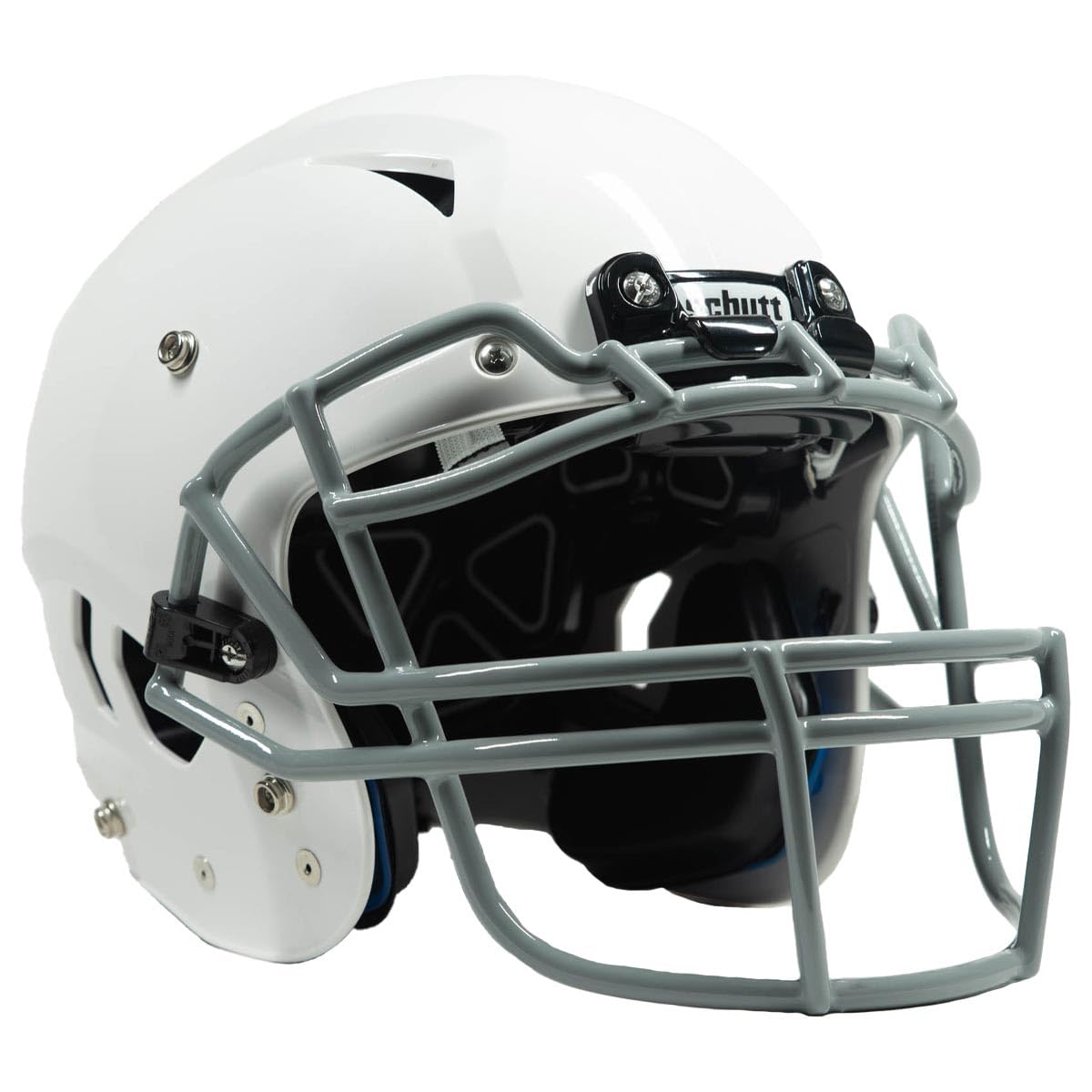
This Schutt model holds a distinctive credential you do not see on every helmet — it earned a 5-star safety rating in the Virginia Tech Helmet Ratings, among the most respected independent impact tests in the sport. That means the protection is backed by lab data across many impact scenarios, not just a marketing claim. The secret is the full TPU cushioning (thermoplastic urethane pads that resist hardening in cold weather and stay effective in heat), which Schutt says absorbs more impact across a wider variety of temperatures than any other helmet on the field. At 3.8 pounds, it is over a pound lighter than the Riddell SpeedFlex, so a young player feels less neck fatigue by the fourth quarter. The carbon steel facemask adds durability. The catch: the non-inflatable liners provide a secure fit but cannot be fine-tuned with an air pump. Buyers mention the fit can be tricky — some find it perfect, others say it runs a little big — so measure your child’s head carefully. Also, the helmet does not come with a chin strap, which adds an extra purchase.
Independent proof of performance: The Virginia Tech 5-star rating is the headline here, and it is backed by consistent owner praise for the value and quality — a highly-rated pick among thousands of owners. The TPU cushioning is a serious advantage in variable weather.
Fit requires attention and a strap is not included: The non-inflatable liner means you cannot tweak the fit on the fly, and the helmet does not come with a chin strap, which adds an extra purchase most parents do not expect. Check the fit carefully before the season starts.
Ideal if: independent lab ratings are your #1 decision factor and you want a mid-range price with premium safety credentials.
Not the best if: you want an inflatable custom fit system or a ready-to-play package with all accessories included.
3. Schutt F7 LX1 Youth Football Helmet
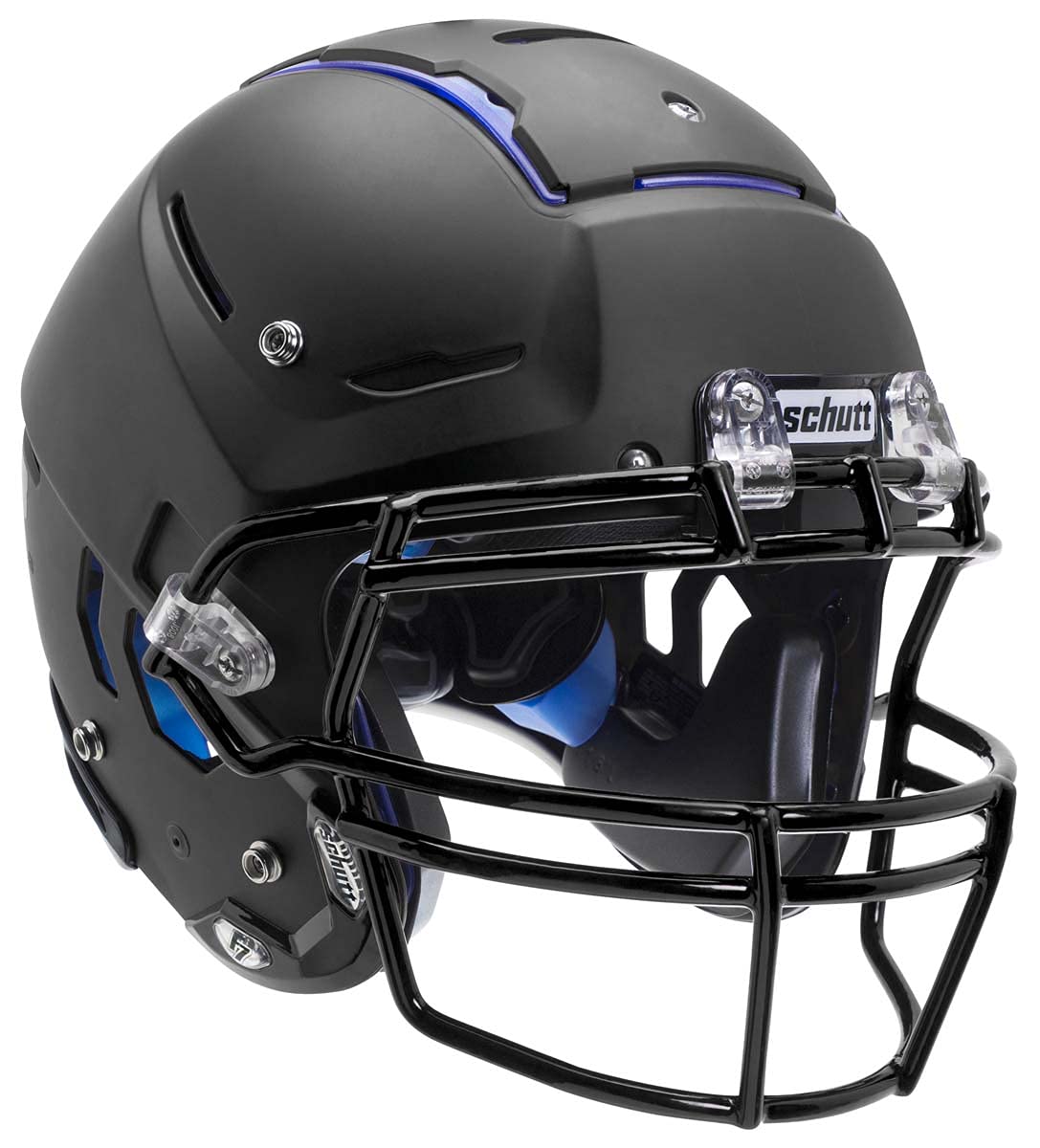
The featherweight contender with a trick up its shell against rotational forces.
At just 3.4 pounds, it is the lightest helmet in this lineup — 1.6 pounds lighter than the Riddell SpeedFlex — and that weight savings comes from the SureFit inflatable Air Liner (an air bladder system you pump up to wrap the back and sides of the head for a custom fit without added bulk). The real standout is the 3-Dimensional Tektonic Plates: panels on the shell that move independently in multiple directions to improve how the helmet handles rotational forces (the twisting kind of impact linked to concussions). The TPU cushioning (thermoplastic urethane) carries over from Schutt’s top-tier line, so you get good impact absorption in all temperatures. However, this helmet ships with the facemask NOT included — you must buy one separately, which adds to cost and setup time. The default 1.25-inch jaw pads can dig into larger cheeks, so owners recommend swapping them for 0.75-inch pads (a simple Velcro change). A few owners mention hardware issues like screws falling out, though most praise the fit and quality once set up.
Rotational force tech in a light package: The Tektonic Plates and inflatable liner are unique features that directly address how modern helmets fight concussion risks. The 3.4-pound weight is a huge advantage for player comfort and neck stamina.
Facemask sold separately and fit fine-tuning needed: Budget for a facemask and possibly smaller jaw pads. The separate purchase is the most common frustration. If you are okay with a little extra setup, this is a very capable, forward-thinking helmet.
Best for: a parent who wants cutting-edge rotational impact protection and a very light helmet, and does not mind buying a facemask separately.
skip it if: you need an all-in-one ready-to-play package or your child has a larger face that will need the pad swap.
4. Riddell Victor Youth

A balanced choice that delivers Riddell’s core safety features without the top-tier price.
This helmet brings many of the same safety fundamentals as the Riddell SpeedFlex — including the Patented Side Impact Protection (PSIP) system — but in a simpler, more affordable package. It weighs 4.4 pounds, which splits the difference between the 5-pound SpeedFlex and the 3.4-pound Schutt F7 LX1. The fitted liner system uses expanded polystyrene (EPS) foam (the same crushable material used in the SpeedFlex) and a removable, moisture-resistant liner cover that helps with sweat and odor over a long season. The included facemask and chin strap mean it is ready to go from the start, which simplifies things compared to the Schutt F7 LX1. One owner called it “same as school’s but half the price.” Build quality is praised well over 15 times in buyer reviews. However, some customers note screws popping off during use, so you need to check the hardware regularly. Comfort opinions are also mixed, so a correct initial fit is essential.
Riddell safety DNA at a friendlier cost: The PSIP protection and EPS liner mirror the technology in the premium models. The included accessories (chinstrap and facemask) make it a true all-in-one solution.
Screw durability is the weak spot: A few helmets have hardware that loosens during practice. It is not a widespread failure, but it is the most common owner complaint. Check the screws regularly, especially in the first few weeks.
Pick this for: a budget-conscious purchase that still wants proven Riddell side-impact protection and a complete helmet from the start.
Consider something else if: you want the lightest possible helmet or need an inflatable fit system for fine-tuning.
Understanding the Specs
TPU Cushioning vs EPS Foam
TPU (thermoplastic urethane) is a pad-like material that stays flexible and effective across a wide temperature range — it does not get rock-hard in freezing weather or too soft in heat. EPS (expanded polystyrene) foam is the crushable foam used in bike helmets; it absorbs one big impact well but is essentially single-use after a heavy hit. TPU liners tend to be lighter and more consistent over time and temperature, while EPS is a proven, cost-effective standard.
Inflatable vs Non-Inflatable Liners
An inflatable liner uses an air bladder you pump up with a small hand pump to tighten the fit around the back and sides of the head. This gives you a precise custom fit and compensates for changes in head size (which kids grow through fast). A non-inflatable liner relies on fixed foam pads that cannot be adjusted — you choose a size and hope the shape matches your child’s head. Inflatable systems add a little weight but offer much better long-term adjustability.
FAQ
What does NOCSAE certification mean for a youth football helmet?
What is the Virginia Tech Helmet Rating and why does it matter?
How do I measure my child’s head for a youth football helmet?
Does a lighter helmet mean less protection?
Will a Schutt facemask fit a Riddell helmet?
How often should I replace a youth football helmet?
Can my child use a football helmet for other sports like lacrosse or hockey?
What does PSIP mean on a Riddell helmet?
Why does the Schutt F7 LX1 not come with a facemask?
How tight should a youth football helmet fit?
Final Thoughts: The Verdict
If you want one dependable pick, the youth football helmets winner is the Riddell SpeedFlex Youth because it combines an elite build, proven side impact protection, and a near-flawless reputation among thousands of owners — even if it carries the most weight. If you want lab-verified safety without the premium price tag, grab the Schutt Youth Vengeance A11. And for a very lightweight helmet with advanced rotational force technology, the Schutt F7 LX1 Youth is the one to reach for.
How We Picked
We do not accept paid placement. Every pick is matched to a real buyer and a real use-case; we do not hands-on test units.
Sources & Methodology
Specifications: manufacturer listings and product documentation. Review insights: verified customer reviews, as of July 2026. Pricing: not shown on this page (it changes often); check the current price via the retailer link.
As an Amazon Associate, Calories Fit earns from qualifying purchases. This does not affect which products we feature.