
Our readers keep the lights on and the coffee maker working hard! As an Amazon Associate, I earn from qualifying purchases.
Specs are compiled from manufacturer listings and verified buyer reviews and can change over time — please confirm the key details on the product page before buying.
Choosing your next running watch can feel overwhelming when every model promises better tracking and longer battery life. The real challenge is finding a watch that fits your training style, wrist size, and habits without overspending or drowning in unused data.
I’m Mohammad — the founder and writer behind Calories Fit. This guide is built by comparing the manufacturers’ published specifications and the patterns across verified customer reviews, so you get each pick’s real strengths and trade-offs instead of marketing spin.
We have focused specifically on models that balance training depth with everyday wearability, covering everything from entry-level GPS to high-end triathlon watches. Here is our complete breakdown of the best women’s running watches for every goal and budget.
Our Picks at a Glance


How To Choose The Best Women’s Running Watches
The best running watch for you depends on how often you run, what data you actually use, and how comfortable the watch feels on your wrist all day. Here are the key factors to consider before you buy.
Battery Life That Matches Your Routine
A watch that dies mid-run is useless. If you run daily or train for long events, look for a model that lasts at least a week in smartwatch mode. Casual users can get away with a shorter battery, but Nothing kills motivation faster than a dead watch before your morning jog.
Display Type and Outdoor Readability
AMOLED screens offer vibrant colors and great contrast indoors, but some runners prefer transflective displays that stay readable in direct sunlight without draining battery. Think about where you run most — bright trails or gym treadmills — before choosing.
Training Features vs. Simplicity
Some watches give you advanced metrics like VO2 max, HRV, and recovery time. Others focus on core GPS and heart rate tracking. Choose metrics that improve your runs, not ones that just look good on paper.
Quick Comparison
| Model | Best For | Battery Life | Display | GPS Mode | Amazon |
|---|---|---|---|---|---|
| Garmin Forerunner 165★ Best Overall | Everyday training & value | 11 days | AMOLED | 19 hours | Amazon |
| COROS PACE 3Best Battery | Ultra-light & long battery | 17 days | Transflective | — | Amazon |
| Garmin Lily 2 ActiveStyle Pick | Style-first fitness | 9 days | Touchscreen | Built-in GPS | Amazon |
| Garmin vivoactive 6 | Versatile daily health | 11 days | AMOLED | GPS Enabled | Amazon |
| Garmin Forerunner 745 | Triathlon & structured training | 1 week | MIP | 30 hours (UltraTrac) | Amazon |
| Garmin Venu 3S | Lifestyle + running | 10 days | AMOLED | GPS | Amazon |
| POLAR Vantage V3 | Offline maps & recovery tools | 8 days | AMOLED | 140 hours training | Amazon |
| Garmin Forerunner 970 | Premium triathlon & navigation | 15 days | AMOLED | 26 hours | Amazon |
In‑Depth Reviews
1. Garmin Forerunner 165
Our pick — over 4.5★ from 4,500+ verified ratings; the strongest balance of quality and price.
The runner’s daily driver that balances data depth with pure wearability.
This watch starts with an easy-to-use AMOLED touchscreen that is bright enough for any outdoor run, yet keeps traditional button controls so you never fumble with sweaty fingers. You get built-in GPS that tracks your pace, distance, and a wrist-based heart rate monitor that owners find spot-on accurate. The 43mm case fits comfortably on smaller wrists while still offering a clear display for quick glances mid-stride.
Battery life hits up to 11 days in smartwatch mode and 19 hours in GPS mode — enough for a full week of daily training plus a long weekend run without hunting for the charger. Buyers report even longer if you turn off notifications and the always-on display: one owner noted 13 days of real-world use. The watch also pulls in personalized daily suggested workouts that adapt to your recovery and performance.
What wins people over is the sheer quality and functionality — owners consistently praise how it does exactly what they need without unnecessary complexity. The morning report gives you an overview of sleep, recovery, and training outlook alongside HRV and weather before you even lace up. Leave your wallet at home: Garmin Pay handles contactless payments on the go.
What you get
- 11-day battery lasts a full week of training
- AMOLED display with button + touch control
- Daily suggested workouts adapt to your recovery
- Garmin Pay contactless payments built in
Consider this
- Silicone band can irritate sensitive skin — easy to swap
- Recovery times occasionally feel extreme for light activity
Your daily running partner: If you want a reliable, accurate watch that covers GPS tracking, health monitoring, and smart notifications without overcomplicating things — this is your pick.
Think twice if: You need triathlon-specific features or music storage on your wrist; the Forerunner 165 focuses squarely on running and basic fitness.
2. COROS PACE 3
The featherweight that keeps running long after others have stopped.
At just 30g with the nylon band and an ultra-slim 11.7mm profile, this watch practically disappears on your wrist — you will forget you are wearing it during a long run or all day at work. But the standout number is the 17-day battery average life, which blows past the Garmin Forerunner 165’s 11 days by an impressive margin. Owners confirm the real-world experience: one reviewer noted 10 days with 4 workouts per week and 2 weeks idle.
The always-on 1.2″ transflective touchscreen stays readable in direct sunlight, though the display is noticeably dimmer than a phone screen. Dual-frequency GPS keeps your tracks accurate even in dense city environments, and the watch records air pressure and elevation gain for trail runs. It covers running, trail run, bike, swim, strength, and snow sports.
The thing everyone raves about is how user-friendly the COROS app is and how fast the watch charges. Owners mention the BPM, steps, and calorie readings are within 1-2 points of certified gym machines. The trade-off is a dim non-adjustable screen, a dated notification interface, and no streaming music — you must load MP3s directly. Sleep tracking can also miss the mark for some.
Why it wins
- 17-day average battery — best in class by far
- 30g weight with nylon band for zero-distraction wear
- Dual-frequency GPS locks on fast and stays accurate
- Fast charge gets you days of use in minutes
Keep in mind
- Screen is dim and non-adjustable in bright sun
- No music streaming — MP3 download only
- Notification UI feels dated and basic
Go for it if: Battery life is your top priority and you want a watch so light it feels like part of you. Perfect for runners who train daily and hate charging.
Look elsewhere if: You need a bright AMOLED screen, on-wrist music streaming, or polished smartwatch features — the COROS is a pure training tool.
3. Garmin Lily 2 Active
The fashion-first fitness watch that hides its tech under a patterned lens.
Unlike the sporty look of most running watches, the Lily 2 Active uses a metal watch case and a unique patterned lens that, with a tap, reveals a bright touchscreen display. At 38mm, it is designed specifically for smaller wrists — buyers with petite wrists call it a perfect fit that transitions easily from workout to dinner. It still packs built-in GPS for tracking outdoor runs.
You get up to 9 days of battery life between charges, and with GPS (satellite positioning) turned on it still lasts over 5 days — enough for a long race weekend. That is far shorter than the COROS PACE 3’s 17-day battery, but the Lily 2 Active trades endurance for style: it packs sleep score, respiration tracking, Body Battery energy monitoring, menstrual cycle and pregnancy tracking, and hydration tracking into a watch that looks like jewelry.
Owners consistently praise the “jewelry-like” feel that does not scream fitness tracker. The watch includes Garmin Coach training plans for 5K, 10K, and half-marathon, plus on-screen workouts for strength, HIIT, and yoga. The catch is a slight learning curve to navigate the interface, a weak vibration motor that can miss alerts, and a proprietary charger. The display also wakes slowly compared to competitors.
Beauty with brains: If you want a running watch that looks like a traditional bracelet rather than a sports gadget, this is your match. It tracks everything a runner needs while complimenting your outfit.
4. Garmin vivoactive 6
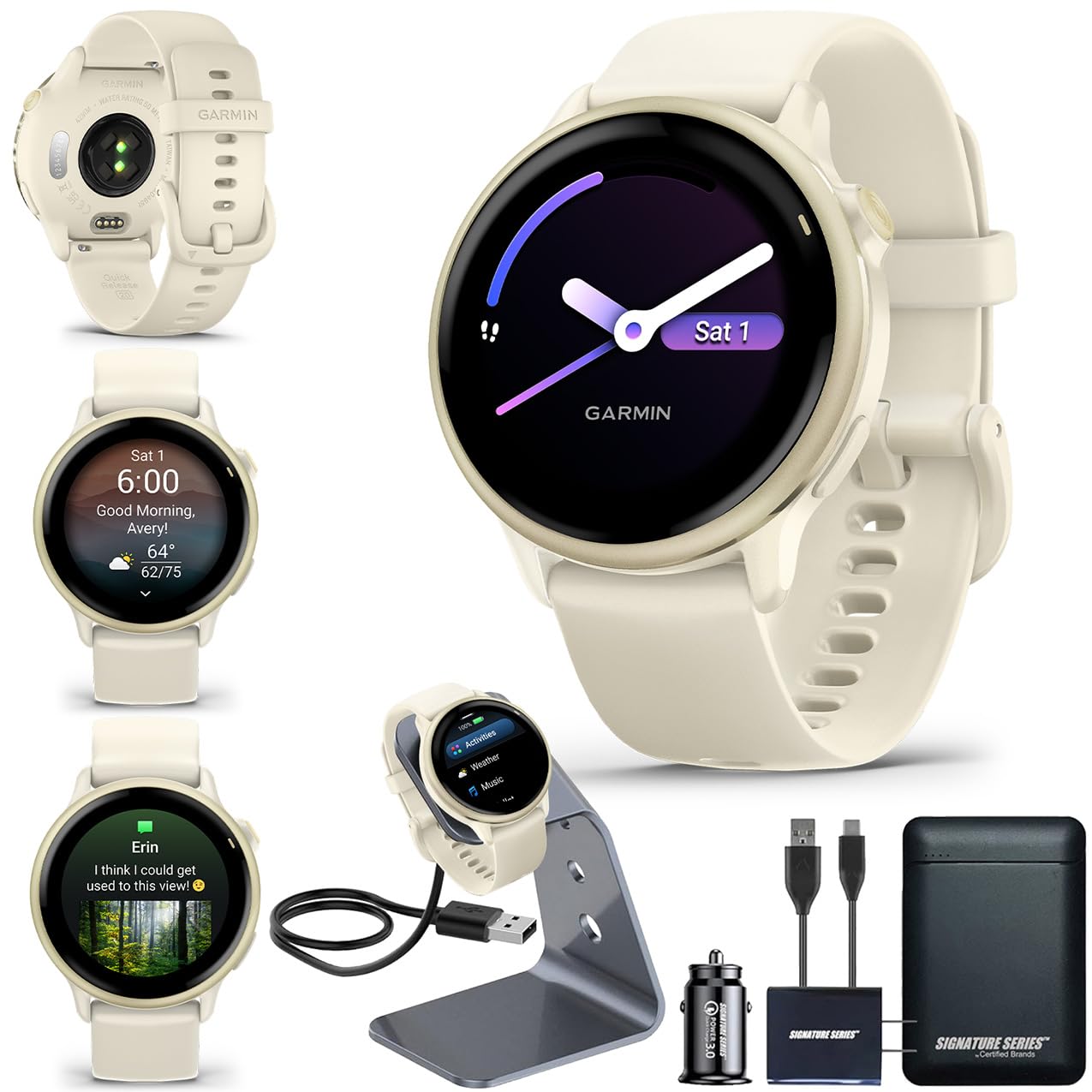
A health-first smartwatch that handles running without overwhelming you.
This watch balances fitness tracking with everyday smartwatch features. You get a bright AMOLED display and up to 11 days of battery life in smartwatch mode. With over 80 built-in sports apps — walking, cycling, golf, swimming, HIIT, wheelchair workouts — it is more versatile than a pure running watch. The watch also takes phone calls, sends texts, and tracks weather and moon phases when paired with your phone.
Sleep tracking is a key focus here: Sleep Coach gives you a tailored sleep score, and the Body Battery energy monitoring combined with HRV status tells you when you are fully charged or need rest. The smart wake alarm gently vibrates to wake you at the optimal moment within your sleep cycle. It includes auto nap detection so daytime rests are also recorded.
Buyers highlight the comfortable soft band and bright outdoor display. The recurring note is that battery drains faster when using apps, and the sleep tracking accuracy gets mixed feedback — some find it precise, others notice it slipping over time. An occasional digital glitch has been noted, but overall functionality remains strong for daily wear.
Daily driver: If you want a watch that does running, health tracking, and smart features like calls and texts in one comfortable package, this is a great fit. The sleep coaching and Body Battery are genuinely useful for understanding your energy.
5. Garmin Forerunner 745

The triathlon powerhouse that puts data on your wrist without the bulk.
Built for swim-bike-run athletes, the Forerunner 745 uses multiple satellite systems (GPS, GLONASS, Galileo) to track your workouts with precision. You get daily workout suggestions based on your current training load and VO2 max (a measure of your aerobic fitness), plus you can sync structured workouts from TrainingPeaks or TrainerRoad directly to the watch. The 1.2″ MIP (memory-in-pixel) screen is a balance for small wrists — buyers with smaller frames report it fits perfectly.
Battery life reaches up to 1 week in smartwatch mode, 6 hours in GPS mode with music, and up to 30 hours in UltraTrac mode. That GPS-with-music number is notable: you can store and play up to 500 songs from your wrist using streaming services like Spotify, Amazon Music, or Deezer. The watch covers running, triathlon, cycling, pool swimming, track running, and more.
Owners swear by its accuracy for stair counting, heart rate, steps, body battery, sleep, and respiration. One detail owners mention: the “red” band is more pinkish-orange in person. The watch lacks a touch screen, which some find dated, and battery life drops significantly with regular GPS and music use. An owner noted that after extended use the battery degraded to about 2 days by 2026.
For the multi-sport grinder: If you train across swimming, cycling, and running and want on-wrist music plus deep training metrics like VO2 max, lactate threshold, and recovery time — this watch delivers. The MIP display stays visible in bright sun.
6. Garmin Venu 3S
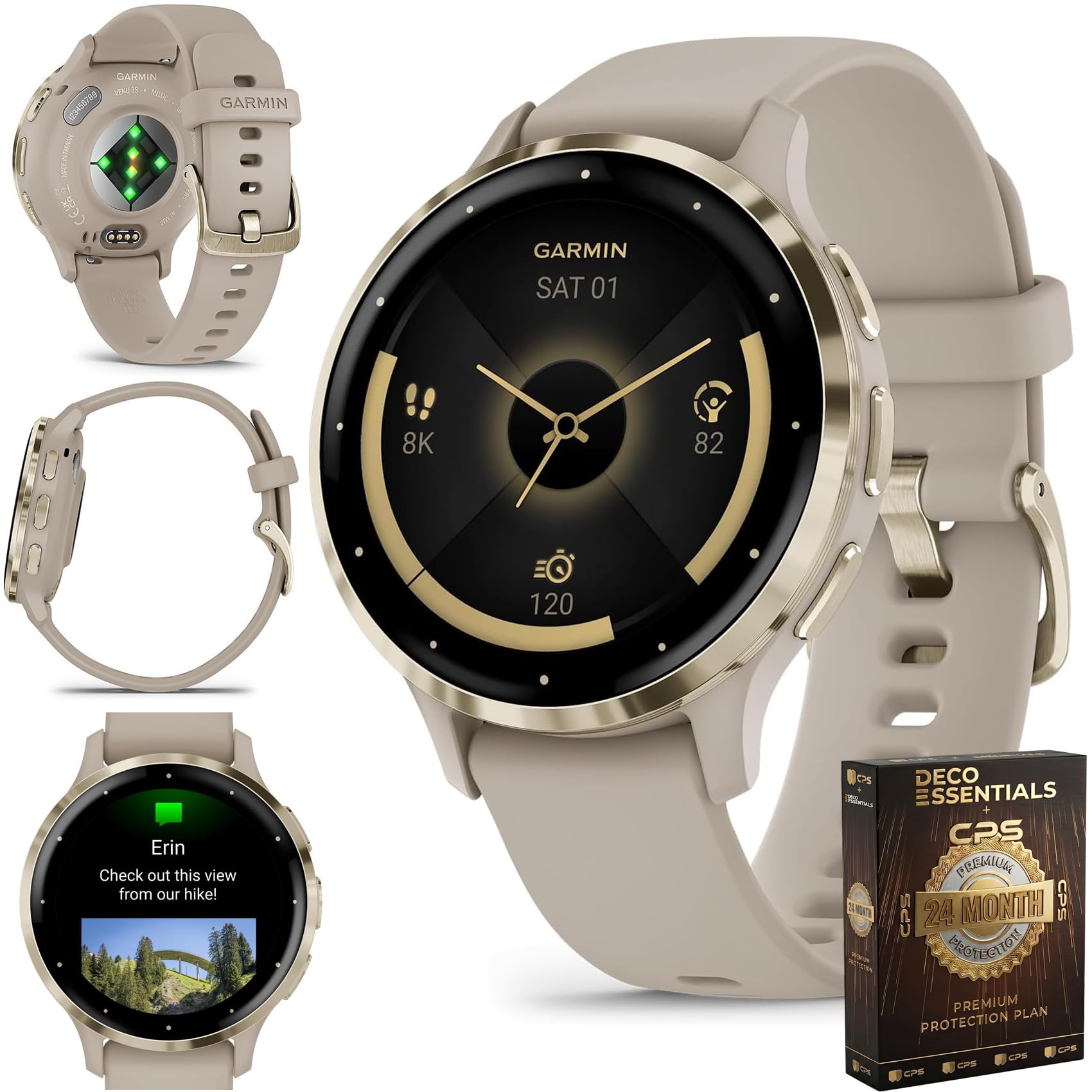
The running watch that doubles as a daily wellness coach.
Designed with a bright AMOLED display and a 41mm case featuring a stainless steel bezel, the Venu 3S looks more like a traditional smartwatch than a running computer. You get up to 10 days of battery life in smartwatch mode — owners mention charging just once a week even with daily workouts. The watch can make and take phone calls from your wrist and use your phone’s voice assistant to reply to texts.
Body Battery energy monitoring gives you personalized insights based on sleep, naps, stress levels, and workouts. You also get a sleep score with personalized coaching on how much rest you need, plus HRV status to understand your health. Wheelchair mode tracks pushes instead of steps, and the automatic nap detection logs daytime rest with impact notes on Body Battery.
What stands out in owner feedback is the vast improvement over previous brands — many switched from Fitbit and Apple Watch and found Garmin’s stats far more insightful. The watch covers running, weights, yoga, and pilates. The only missing piece is LTE; you must keep the watch synced via Bluetooth to your phone for calls and messages. Some buyers prefer aftermarket metal bands to avoid silicone skin irritation.
For the active lifestyle enthusiast: If you want a polished smartwatch that excels at running but also tracks stress, sleep, and overall wellness in a stylish package — this is your watch. The 10-day battery is a nice bonus.
7. POLAR Vantage V3

The adventure watch that brings offline maps to your wrist.
This watch features the sharpest AMOLED touchscreen in the Polar lineup, with a large display and customizable dashboards for quick access to your key metrics. The dual-frequency GPS works with downloadable maps that include detailed contouring for a topographic experience right on your wrist. You can navigate unfamiliar trails without needing your phone, making this a solid pick for runners who explore off the beaten path.
Battery life is rated for up to 140 hours of training time and up to 8 days of regular use on a single charge. The watch covers over 150 sports and includes the most comprehensive suite of training and recovery tools Polar offers. The sensors are good and the chest monitor is even more accurate for runs. Notifications from your iPhone are viewable, though you cannot directly interact with apps from the watch.
Buyers who love Polar praise the quality, capability, and overall look. However, the battery life gets mixed feedback — some report wonderful battery life while others mention inconsistent recharge rates taking 5-10+ hours, which creates tracking gaps. A small number of customers note reliability issues, including screens that stopped working. The watch is best for committed Polar fans who value mapping features over absolute reliability.
For the Polar loyalist: If you are already in the Polar ecosystem and want offline maps with detailed contouring plus dual-frequency GPS for trail running, this watch delivers. Be aware that battery consistency varies.
8. Garmin Forerunner 970

The triathlon flagship that leaves nothing on the table.
This is Garmin’s premium running and triathlon watch, featuring our brightest AMOLED touchscreen with button controls, a lightweight titanium bezel, and a sapphire lens that resists scratches. A built-in LED flashlight adds awareness during early morning or late-night runs — a simple touch that owners find genuinely useful. Battery life hits up to 15 days in smartwatch mode and 26 hours in GPS mode, comfortably lasting two weeks of heavy training.
You get running economy metrics and step speed loss data (with the optional HRM 600 monitor), plus running tolerance that shows the real impact running has on your body. Training readiness combines sleep quality, recovery, training load, and HRV status to tell you when to push and when to rest. Full-color built-in maps with multi-band GPS and dynamic round-trip routing let you confidently explore new routes.
The watch includes an ECG (electrocardiogram) app to record your heart rhythm and check for signs of atrial fibrillation (for those 22+ in supported countries). Multisport auto-transition detects sport changes between swim, bike, and run so you can focus on racing. Owners call it the best sports smartwatch they have owned, praising the display and GPS accuracy. The value-for-money gets mixed feedback due to the high cost, but for serious triathletes, the depth of data is class-leading.
Flagship features
- 15-day battery with 26-hour GPS mode
- Sapphire lens + titanium bezel for durability
- Full-color maps with multi-band GPS navigation
- ECG app and built-in LED flashlight
The trade-off
- Highest price in this lineup — a true investment
- Steeper learning curve than simpler watches
- 47mm size may feel large on smaller wrists
For the serious triathlete: If you want the absolute best training data, navigation, battery life, and build quality Garmin offers — and you compete across swim, bike, and run — the Forerunner 970 is the flagship to reach for.
skip it if: You only run a few times a week and do not use advanced metrics like running economy, ECG, or multisport auto-transition. A simpler, lighter watch will serve you better.
Understanding the Specs
Battery Life: Smartwatch vs. GPS Mode
The battery number you see on the box is usually the “smartwatch mode” rating, which assumes minimal GPS use. Real-world battery life depends on how often you use GPS tracking, stream music, and keep the display always on. A watch with 11-day smartwatch battery might only last 19 hours with continuous GPS — enough for a week of daily runs but not for a 24-hour ultra.
AMOLED vs. Transflective Displays
AMOLED screens offer vibrant colors, deep blacks, and great indoor visibility. Transflective displays reflect ambient light, meaning they are perfectly readable in direct sunlight without draining battery — a key advantage for trail runners. The trade-off is that transflective screens look dimmer and less colorful indoors. Choose based on where you run most.
FAQ
Do I need a running watch with music storage?
What is the best watch for small wrists?
How accurate is wrist-based heart rate monitoring?
Can I use a running watch for swimming?
What does Training Readiness actually tell me?
How long should the battery last for weekly training?
Is AMOLED worth the cost compared to a transflective display?
Can I receive phone calls and texts on my running watch?
What is dual-frequency GPS and do I need it?
How does Garmin Coach help me train for a race?
Final Thoughts: The Verdict
If you want one dependable pick, the best women’s running watch is the Garmin Forerunner 165 because it delivers accurate GPS tracking, an 11-day battery, and daily suggested workouts at a price that does not sting. If battery life is your obsession, the COROS PACE 3 with its 17-day average is the clear choice — and at 30g you will barely feel it. For those who want a stylish watch that tracks running and health equally well, the Garmin Lily 2 Active proves a fitness tracker can actually look like jewelry.
How We Picked
We do not accept paid placement. Every pick is matched to a real buyer and a real use-case; we do not hands-on test units.
Sources & Methodology
Specifications: manufacturer listings and product documentation. Review insights: verified customer reviews, as of July 2026. Pricing: not shown on this page (it changes often); check the current price via the retailer link.
As an Amazon Associate, Calories Fit earns from qualifying purchases. This does not affect which products we feature.