
Our readers keep the lights on and the coffee maker working hard! As an Amazon Associate, I earn from qualifying purchases.
Specs are compiled from manufacturer listings and verified buyer reviews and can change over time — please confirm the key details on the product page before buying.
Your heel lands at the same height as your toes in zero drop hiking shoes — exactly as your foot sits when you stand barefoot on level ground. That one design change reshapes your stride on a rocky climb, a muddy descent, or a long dirt path. This guide covers nine models that deliver a flat platform without losing traction, comfort, or trail durability.
I’m Mohammad — the founder and writer behind Calories Fit. This guide is built by comparing the manufacturers’ published specifications and the patterns across verified customer reviews, so you get each pick’s real strengths and trade-offs instead of marketing spin.
Whether you are new to minimalist footwear or you already insist on a 0mm heel-to-toe drop, these zero drop hiking shoes actually deliver on the promise.
Our Picks at a Glance

How To Choose The Best Zero Drop Hiking Shoes
Finding the right zero drop hiking shoe means understanding a few key specs that affect how your foot feels mile after mile. Here is what matters most.
Stack Height and Cushion
Stack height is the amount of material between your foot and the ground. A low stack (around 25mm or less) gives you more ground feel — you sense rocks and roots underfoot, so your ankle adjusts naturally. A higher stack (29mm or more) adds cushion for longer days on hard-packed trails but reduces that sensory feedback. Mid-level cushion works for most hikers.
Outsole and Traction Pattern
The rubber compound (the material the sole is made of) and lug depth (the height of the tread knobs) determine grip. Vibram Megagrip and Altra’s MaxTrac are two commonly used compounds that stick well on wet rock and loose dirt. Lug depth matters too — deeper lugs (around 3.5mm or more) bite into mud and soft ground, while shallower lugs roll smoother on packed surfaces.
Waterproofing vs Breathability
A waterproof membrane (a thin liner inside the shoe that stops water getting in) keeps your feet dry through puddles and rain, but it also traps heat and sweat. For warm-weather hikes or stream crossings where water goes over the ankle, a non-waterproof shoe that dries fast is often the better choice. For cold, wet conditions, a waterproof liner keeps feet dry.
Toe Box Shape
The toe box (the front section of the shoe covering your toes) needs to let your toes spread naturally when you push off. A wide, foot-shaped toe box gives your big toe room to align straight forward. A narrow toe box can cramp your toes and cause blisters on descents. Toe box shape is the most common difference between zero drop shoes that fit great and ones that do not.
Quick Comparison
| Model | Best For | Drop | Stack Height | Outsole | Amazon |
|---|---|---|---|---|---|
| ALTRA Lone Peak 9★ Best Overall | Trail running + day hiking | 0 mm | 25 mm / 25 mm | MaxTrac | Amazon |
| Xero Shoes Xcursion FusionBest Value | Waterproof minimalist hiking | 0 mm | 10 mm sole + 3.5 mm lugs | FeelTrue rubber | Amazon |
| ALTRA TIMP 5Premium Pick | Fast trail runs + rugged terrain | 0 mm | 29 mm | Vibram Megagrip | Amazon |
| Belleville Mini-Mil | Tactical + rough terrain hiking | 0 mm | 2 mm midsole | Vibram Tarsus | Amazon |
| Xero Shoes Ridgeway | Light day hikes + everyday wear | 0 mm | Thin stack | Xero rubber | Amazon |
| Merrell Wrapt Mid | Waterproof mid-height hiking | 0 mm | Mid cushion | Aggressive rubber | Amazon |
| FLUX Adapt Trail Runner | Sensory-friendly trail running | 0 mm | Mid cushion | Trinity Tread | Amazon |
| Vivobarefoot Tracker Textile | Barefoot purists + all-weather | 0 mm | Thin | Vivobarefoot rubber | Amazon |
In‑Depth Reviews
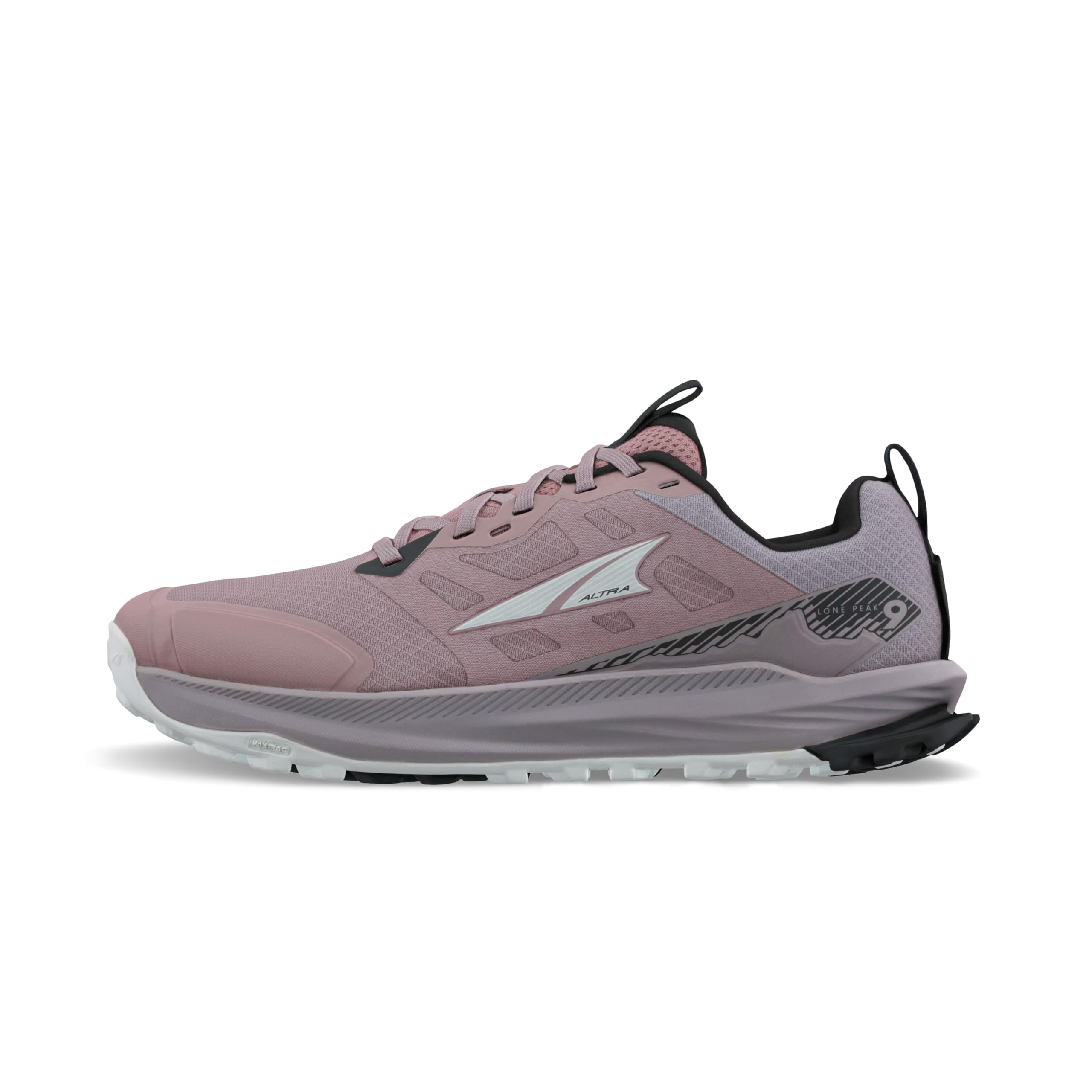
1. ALTRA Women’s Lone Peak 9 Trail Running Shoe
Our pick — 4.5★ from 750+ verified ratings; the strongest balance of quality and price.
The crowd‑tested legend that balances grip, toe room, and zero drop without compromise
The roomy toe box (the front section that lets your toes spread) is what wins people over. It gives your toes space to fan out, which matters a lot on descents and rocky stretches. The stack height (the amount of material underfoot) sits at 25mm front and back, so you get a moderate cushion that still lets you feel the trail. The MaxTrac outsole (Altra’s proprietary rubber compound) keeps you steady on wet rock and loose dirt — buyers report the tread is “super grippy” and prevents slipping on wet surfaces.
This is a non-waterproof shoe, but the recycled ripstop mesh upper (the fabric covering your foot) dries fast after creek crossings or rain, so you are not squelching for miles. The Lone Peak has been through eight earlier versions for a reason. It nails the zero drop promise with a wide toe box and a secure midfoot (the middle section that holds your arch). Compared to the ALTRA TIMP 5 below, this one has a slightly roomier forefoot (the front half of the shoe) and a lower stack height, which some find more stable on technical terrain.
The occasional durability concern comes up — a few owners note the sole can wear faster on pavement, and the price is not the lowest in this roundup. But across hundreds of buyers, the fit and comfort win consistently.
What owners praise most
- Roomy toe box with zero drop — no blisters even on long days
- MaxTrac outsole grips wet rock and dirt reliably
- Light enough for trail running yet stable for hiking
The honest trade-off
- Not waterproof — feet get wet in rain or creek crossings
- Sole durability is mixed; some wear faster on hard surfaces
Your best bet if: you want the most proven zero drop trail shoe with a spacious toe box and dependable grip for mixed terrain.
Think twice if: you need a fully waterproof boot or a very thin, minimalist sole — the 25mm cushion is moderate, not barefoot thin.
2. Xero Shoes Xcursion Fusion Waterproof Hiking Boot
A lightweight waterproof boot that keeps your feet dry without weighing you down
Water resistance is the thing owners mention most here — the seam-sealed inner bootie (a waterproof layer inside the shoe) and water-resistant membrane behind the mesh do their job in wet grass and light rain. The 10mm FeelTrue sole (Xero’s thin rubber outsole) with 3.5mm lugs (tread knobs) gives you decent bite on loose ground while still letting you feel the trail. At 13.7 ounces per boot (men’s 9), it is noticeably lighter than most waterproof boots. The zero drop platform and wide toe box let your toes relax, which helps with balance on uneven ground.
Fit is where opinions split. Some owners say the toe box is not wide enough for E-width (extra-wide) or high-arch feet, and sizing up can cause heel slip (your heel lifts inside the shoe). A few report the sole pulling apart after short use, though many others describe the boot holding up well after months of daily wear. Against the ALTRA Lone Peak 9, this Xero boot is lighter and fully waterproof, but the fit is narrower and the quality consistency is more mixed.
the balance here is a waterproof zero drop boot that costs less than most competitors — just size carefully and inspect the sole early.
What stands out
- Fully waterproof membrane keeps feet dry in wet conditions
- Very lightweight for a waterproof hiking boot — 13.7 oz each
- Zero drop with wide toe box promotes natural foot movement
Fit and durability notes
- Toe box runs narrow for some — not ideal for wide feet
- Sole separation reported by a few owners after limited use
Reach for these if: you want a waterproof zero drop boot at a solid price and you have narrow-to-medium width feet.
Look elsewhere if: you need a genuinely wide toe box or you prioritize reliability over every other factor.
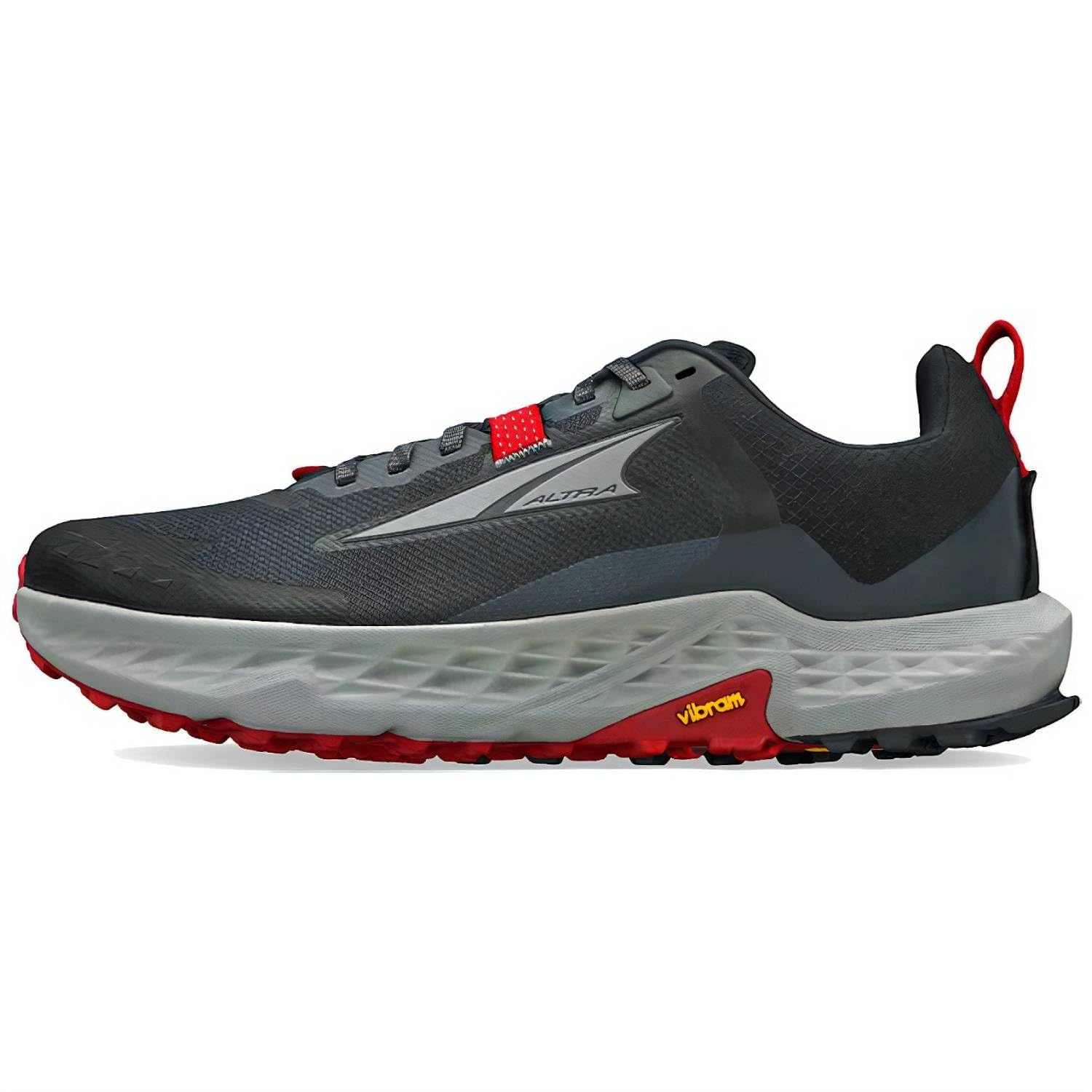
3. ALTRA Men’s TIMP 5 Trail Running Shoe
More cushion and a stickier outsole for those who hit rough terrain at speed
The TIMP 5 uses a 29mm stack height paired with Altra’s EGO MAX foam (a bouncy, lightweight cushion material), so you get a plush but responsive ride that absorbs sharp rocks without losing trail feel. The Vibram Megagrip outsole (a high-traction rubber compound from a specialist brand) is the star here — according to the maker, it provides “outstanding grip on both wet and dry surfaces,” and owners confirm it is insanely grippy on pavement and indoor flooring as well as dirt. At 9.8 ounces it is over an ounce lighter than the Lone Peak 9, making it a strong choice for fast day hikes or trail runs.
The trade-off is a narrower toe box than other Altra models. Several owners note the fit is tighter, especially through the midfoot (the middle section of the shoe), and recommend sizing up half a step. Compared to the Lone Peak 9, the TIMP 5 has a higher stack and less roomy forefoot (front section), but the Vibram outsole lasts longer and grips harder on polished rock. Quality and material construction are praised consistently — the shoe does not fall apart after a season like some others here.
This is not an everyday walker. Its stiff build and aggressive tread shine on the trail, not the sidewalk.
Top strengths
- Vibram Megagrip provides outstanding traction on wet and dry surfaces
- 29mm cushioned stack absorbs impact without sacrificing ground feel
- Lightweight build at 9.8 oz ideal for fast-paced hiking and running
Things to check
- Toe box is narrower than Lone Peak — size up half a size
- Too stiff for casual pavement walking or everyday use
Grab these for: technical trails where you need serious grip and you are moving fast enough to need the extra cushion.
Skip them if: you need a roomy toe box for wide feet or you plan to wear the shoe off the trail.
4. Belleville Mini-Mil Hiking Barefoot Shoe
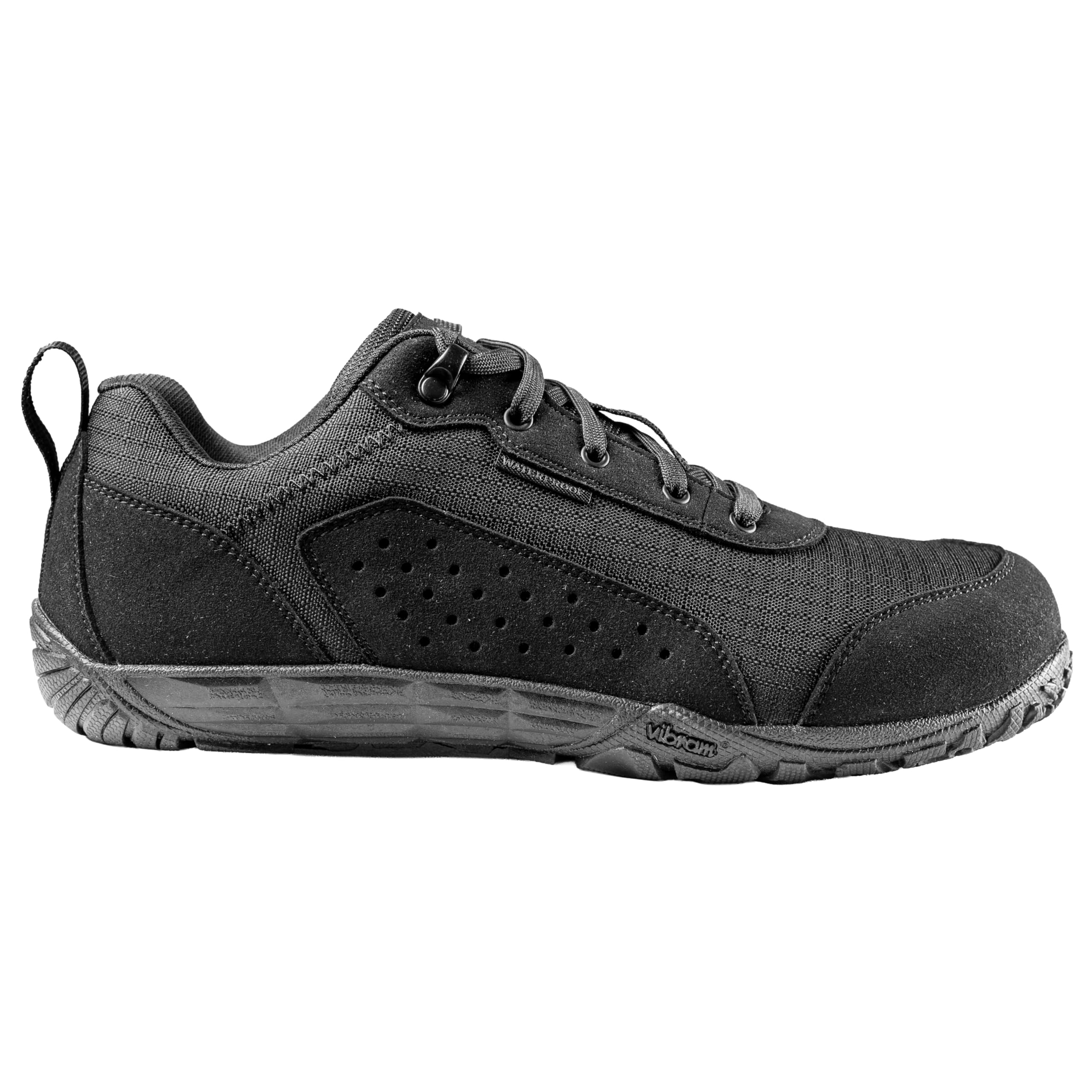
Military‑grade minimalist shoe built for rough use with a 2mm shock‑dispersing midsole
The Belleville Mini-Mil brings a tactical background to zero drop hiking. The Vibram Tarsus outsole (an oil- and slip-resistant rubber compound) grips well on varied surfaces, and the 2mm die-cut midsole (a thin layer that absorbs shock) protects your foot while keeping high ground feel. Buyers describe it as flexible, comfortable, and surprisingly durable — after 30 miles on rough terrain, the shoe “still looks new.” The wide toe box accommodates fan-shaped feet well, and the low-cut synthetic suede upper with camo SuperFabric patches (reinforced textile panels) breathes better than all-leather boots.
Fit is the main discussion point. Several owners note the shoe runs large and recommend sizing down half, while others find the wide size still feels narrow. If you have genuinely wide feet, this may not be roomy enough despite the “wide toe box” claim. Against the Xero Ridgeway, the Mini-Mil has more protective structure and a more durable sole, but it weighs a bit more. Quality is praised consistently — the materials feel premium and the Strobel construction (a method where the upper is stitched directly to the sole) keeps the sole flexible over time.
This is a solid mid-value option for hikers who want minimal cushion with military-grade build quality.
Why it shines
- Vibram Tarsus outsole with oil and slip resistance for varied terrain
- 2mm shock-dispersing midsole provides protection without losing ground feel
- Highly durable construction — lasts through rugged use
Watch out for
- Wide size still feels narrow to some — try before buying
- Runs large; sizing down half a size is often needed
Perfect for: those who need a tough, flexible barefoot-style shoe for hiking, shooting, or work.
Not for: anyone with wide feet who needs genuine room through the forefoot.
5. Xero Shoes Ridgeway Mesh Low Hiking Shoe
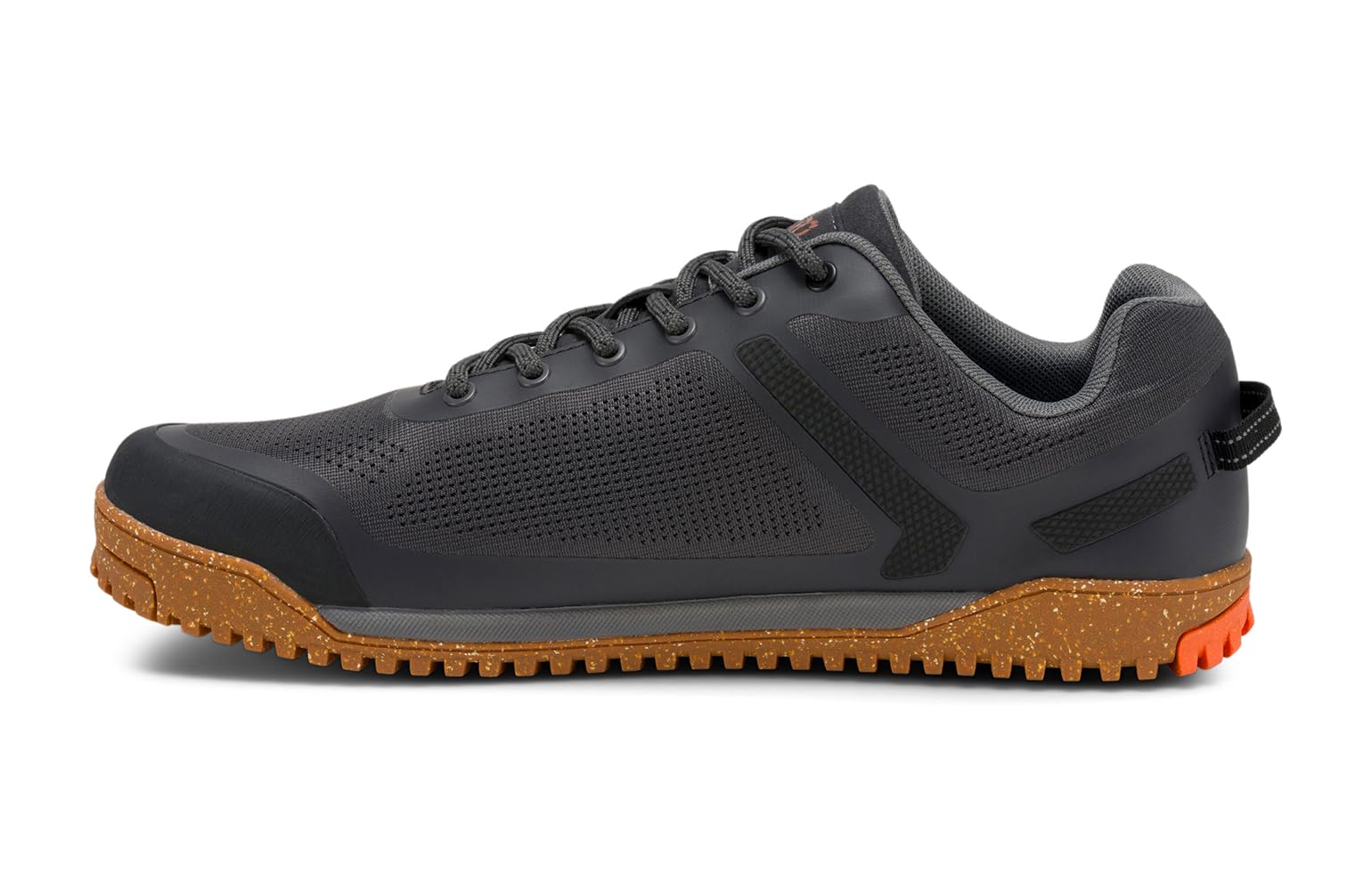
A lean, leather‑trimmed hiker that fits like a glove — if you nail the size
The Ridgeway is a low-top hiking shoe with a wide toe box and zero drop that appeals to minimalists who want a little more structure than a sandal. The leather upper is praised for its quality, and the shoe offers instant comfort — no break-in period required according to owners. It works well for light day hikes and city walking where you want ground feel without going full barefoot.
Sizing is consistently touchy. Many owners say the Ridgeway runs half to one and a half sizes smaller than other Xero models, so ordering your usual size often results in a return. The sole is also stiffer than other Xero shoes like the Prio or HFS (Xero’s flat training and running shoes) — great for hiking stability, but less flexible for everyday wear. Against the Belleville Mini-Mil, the Ridgeway looks more casual and feels lighter on the foot, but the traction is less aggressive on loose terrain.
This is a decent entry-level zero drop hiker for those on a tighter budget, but the sizing gamble makes it less reliable than the ALTRA picks above.
What stands out
- Quality leather upper with comfortable fit once sized correctly
- Zero drop and wide toe box support natural foot movement
- No break-in needed — comfortable from the first wear
Know before you buy
- Sizing is inconsistent — runs small for many buyers
- Sole is stiffer than other Xero models, less ideal for everyday wear
Best for: light hikers and walkers who value instant comfort and a natural toe shape.
Not ideal if: you need a consistent size or you plan to tackle technical, rocky terrain regularly.
6. Merrell Mens Wrapt Mid Waterproof
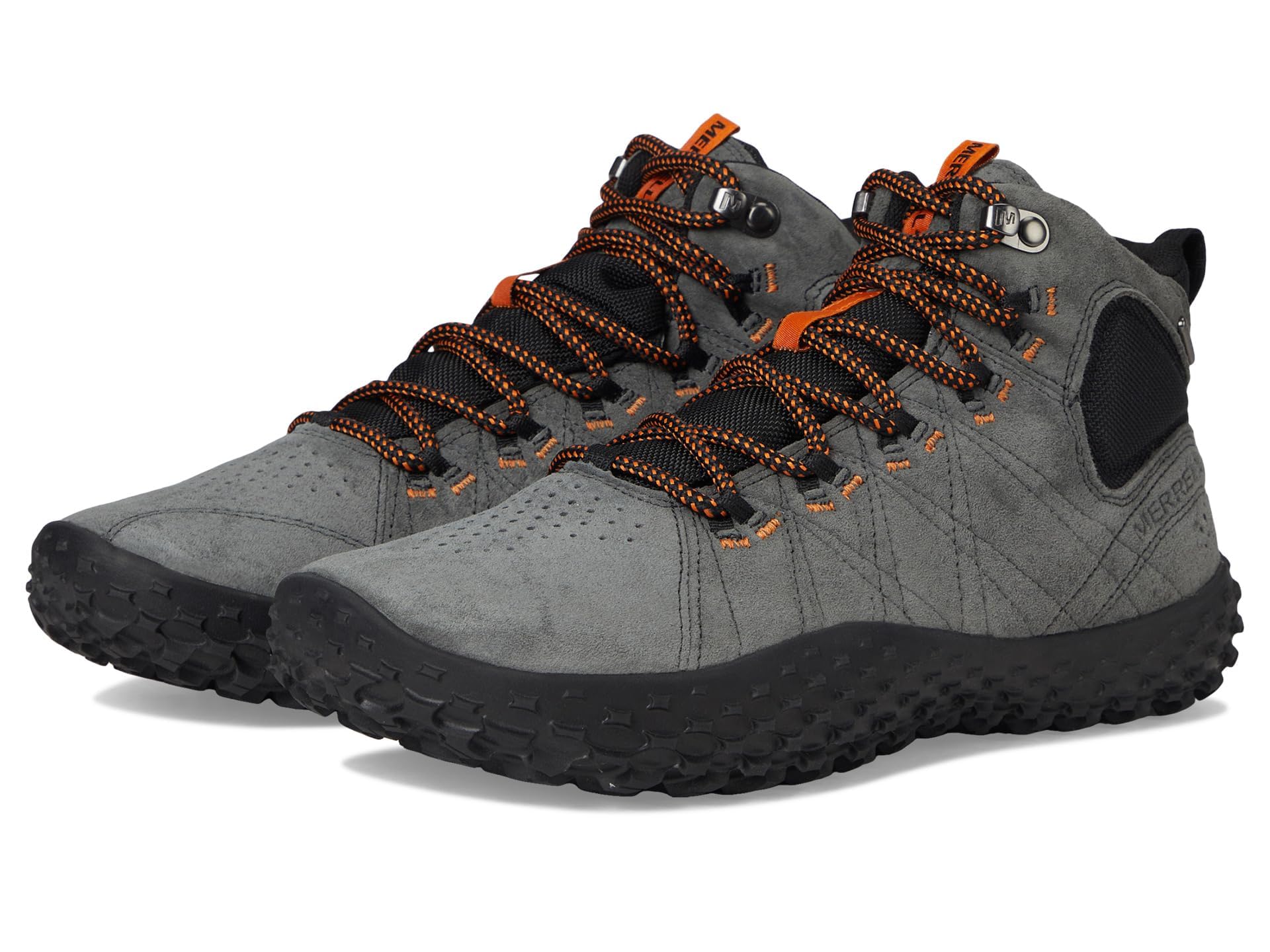
A zero‑drop mid‑height boot with aggressive rubber that clings to everything
The Merrell Wrapt Mid brings the brand’s barefoot collection fit into a mid-height waterproof package. The aggressive rubber outsole delivers what owners call “extreme grip” and “unbelievable traction” on everything from wet pavement to loose gravel. Comfort is the top praise — one 69-year-old user walks 5 miles daily in Hells Canyon without pain, and many note the arch support reduces knee and foot strain on long days.
Water resistance is effective: owners mention water beads right off the surface. The toe box is comfortable for most foot shapes, though some with wider feet say it is narrower than they hoped. Compared to the ALTRA Lone Peak 9 WP Mid, the Merrell Wrapt costs less and has a more pronounced arch support, but it also has a stiffer sole and a heavier feel. The laces are a recurring frustration — they come undone consistently, which is easy to fix by replacing them.
This is a strong zero-drop option for hikers who need ankle support, waterproofing, and a rubber sole that refuses to slip.
Strengths
- Aggressive rubber outsole with extreme grip on wet and dry surfaces
- Waterproof construction keeps feet dry in rain and puddles
- Comfortable with good arch support for long days on the trail
Weaknesses
- Laces come undone frequently — plan to swap them
- Toe box may be too narrow for wide-footed hikers
Choose these for: wet, rugged trails where ankle support and slip resistance matter most.
Avoid if: you have very wide feet or you prefer a fully flexible barefoot sole with no arch support.
7. FLUX FOOTWEAR Adapt Trail Runner
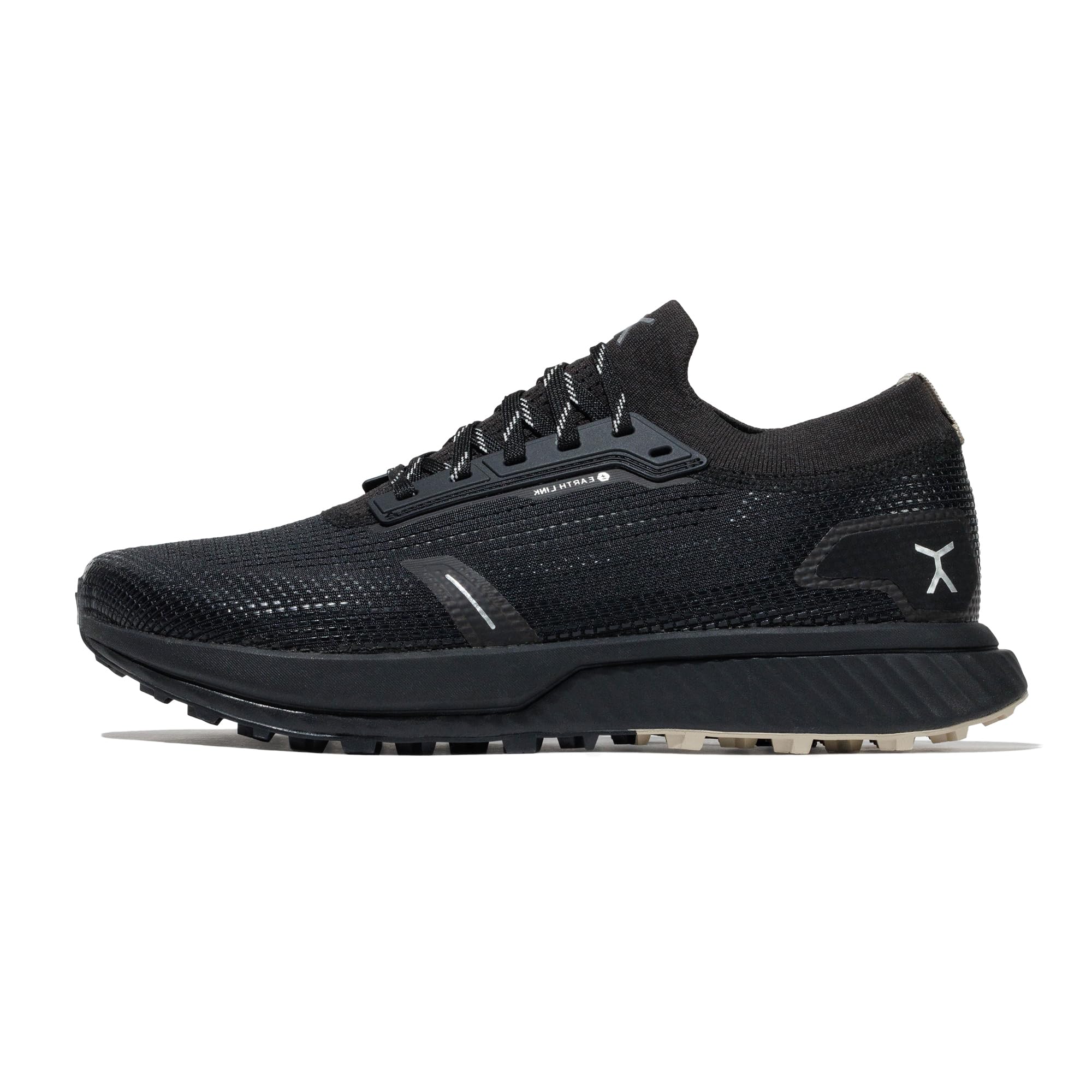
A knit‑upper trail runner that feels like a second skin — once you find the right size
The FLUX Adapt uses a breathable knit upper (the fabric covering your foot) and a wide toe box that owners describe as “the most comfortable shoes I have ever worn.” The zero drop platform promotes a natural rolling forward motion, and the Trinity Tread outsole provides decent grip on varied terrain. One runner says the grounding feature (Earth-Link Tech) makes their entire body function better while running — though this is a subjective benefit, not a published spec.
The recurring issue is sizing: multiple customers note the shoes run nearly two sizes too small, so ordering up is essential. The tight opening loosens with wear, but the initial fit can be off-putting. Compared to the ALTRA TIMP 5, the FLUX has a more forgiving upper material and a less aggressive tread, making it better for casual trail use but less capable on steep, muddy climbs.
If you get the size right, this is a wonderfully comfortable zero drop shoe for easy trails and daily wear. If you get it wrong, returns are straightforward but annoying.
Praised for
- Incredible comfort with a wide toe box and flexible knit upper
- Zero drop feel aids natural foot movement and running form
- Durable build that holds up well over time
The sizing catch
- Runs extremely small — size up significantly from your usual
- Tight opening makes it hard to slide on initially
Best for: runners and hikers who prioritize comfort and a natural stride over aggressive traction.
Not for: anyone who wants a consistent, predictable fit straight from the start.
8. Vivobarefoot Tracker Textile AT Mens Barefoot Hiking Boots
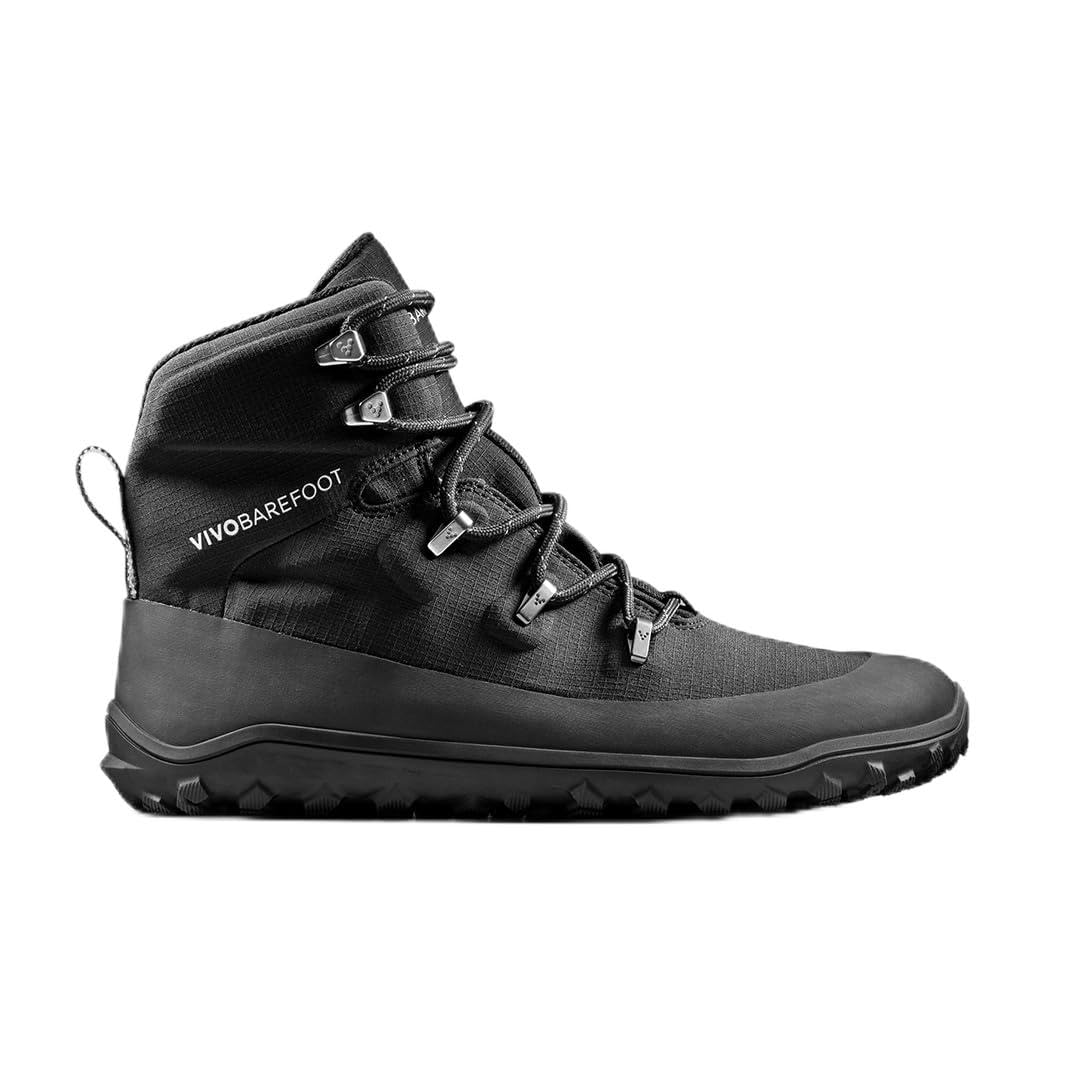
A thin‑soled barefoot boot for purists who want maximum ground feel with waterproof protection
The Vivobarefoot Tracker Textile gives you a thin, puncture-resistant sole (the outsole designed to resist sharp objects) that lets you feel every contour of the trail — exactly what barefoot enthusiasts are after. It is fully waterproof, with a membrane that kept owners’ feet dry through snow, slush, and water crossings in the Canadian Rockies. It is the most expensive shoe in this roundup, and buyers who make the leap say it is “worth every penny” for the combination of comfort, ground feel, and waterproof protection.
Durability is the main concern. While some owners say the boot is “super comfortable and durable,” others report the sole starts coming apart within a month or two of regular use. That split is something to weigh seriously given the price tag. Against the Xero Xcursion Fusion, the Vivobarefoot Tracker has a thinner sole and a more natural footbed (the inner shape of the shoe), but it costs more than double and has weaker quality consistency according to some reviews.
If you want true barefoot feel in a waterproof boot and you are willing to gamble on durability, this is the pick. If you need a boot that lasts several seasons, the ALTRA Lone Peak 9 WP Mid is a safer bet.
What makes it special
- Thin, puncture-resistant sole provides maximum ground feel
- Waterproof membrane keeps feet dry in snow and water
- Very comfortable with no break-in period reported
The durability question
- Mixed durability — some shoppers say sole separation within months
- Premium price without consistent long-term reliability
Best for: barefoot purists who want waterproof protection and thin-soled feel on moderate trails.
Not for: budget-conscious buyers or those who need a boot that will last through multiple seasons of heavy use.
Understanding the Specs
Drop (Heel-to-Toe Offset)
Drop is the difference in height between the heel and the forefoot. A zero drop shoe means both are at the same level, which encourages a more natural midfoot (middle of the foot) or forefoot strike. This reduces impact on the knees and hips compared to traditional shoes with a raised heel.
Stack Height
Stack height measures the amount of material between your foot and the ground. A lower stack (around 10mm to 25mm) gives you more ground feel, letting your foot feel rocks and roots. A higher stack (29mm to 33mm) adds cushion for longer days but reduces sensory feedback.
FAQ
What is a zero drop hiking shoe exactly?
Will zero drop hiking shoes hurt my feet at first?
Are zero drop hiking shoes the same as barefoot shoes?
How long do zero drop hiking shoes last?
Can I run in zero drop hiking shoes?
Are zero drop shoes good for plantar fasciitis?
Do I need to size up in zero drop hiking shoes?
Are zero drop hiking shoes good for wide feet?
Can I use zero drop hiking shoes for backpacking with a heavy pack?
How do I transition from traditional hiking boots to zero drop?
Final Thoughts: The Verdict
Across the board, the zero drop hiking shoes winner is the ALTRA Lone Peak 9 because it combines zero drop with a wide toe box, proven MaxTrac grip, and a moderate 25mm stack height that works for both hiking and trail running — and thousands of owners back it up. If you want a waterproof boot with ankle support, grab the Merrell Wrapt Mid. And for pure barefoot enthusiasts who prioritize ground feel over all else