
Our readers keep the lights on and the coffee maker working hard! As an Amazon Associate, I earn from qualifying purchases.
Specs are compiled from manufacturer listings and verified buyer reviews and can change over time — please confirm the key details on the product page before buying.
A bad pair of backpacking boots can end a trip before it really starts. You know the feeling — blisters before the first camp, sore ankles on the descent, wet socks from an afternoon creek crossing. The right pair feels so natural you forget you’re wearing them. You focus on the view, not your feet.
I’m Mohammad — the founder and writer behind Calories Fit. This guide is built by comparing the manufacturers’ published specifications and the patterns across verified customer reviews, so you get each pick’s real strengths and trade-offs instead of marketing spin.
The best women’s backpacking boots balance support, traction, and waterproofing without needing weeks of painful break-in, because the trail is hard enough without your footwear fighting you.
Our Picks at a Glance


How To Choose The Best Women’s Backpacking Boots
A backpacking boot is safety gear as much as footwear. When you carry 30 pounds on your back for miles, your boots take every step for you. Here’s what separates a summit-worthy boot from one that ends your trip early.
Weight and ankle support — the real trade-off
A boot that weighs nearly 20 ounces per boot supports your ankle through every uneven step but asks more of your leg muscles mile after mile. Lighter boots around 17 ounces feel faster but offer less lateral stiffness. You trade protection for speed. Know your terrain before you pick a side.
Waterproofing — membrane vs treatment
Most backpacking boots use a membrane like Gore-Tex, B-DRY, or KEEN.DRY. These let sweat vapor out while keeping rain and creek water out. A boot without a membrane will drain faster when wet but soaks through immediately. For multi-day trips with wet crossings, a membrane is a comfort multiplier. For dry desert trails, it is extra cost and heat.
Heel drop and your calves
The heel drop is the height difference between the heel and the toe inside the boot. A 15 mm drop tilts you forward slightly and takes strain off your Achilles — common on supportive backpacking boots. An 8 mm drop feels flatter and more natural for walking but demands more from your calf muscles on uphill sections. Neither is better. It is about what feels right for your gait.
Fit — the one thing that decides everything
Every boot in this list runs a little differently. Some demand a half-size up. Some squeeze a wide foot even in the wide version. Some feel perfect from the start while others need 50 miles to soften. The reviews below tell you exactly what real buyers discovered. Read the fit note before you click add to cart.
Quick Comparison
| Model | Best For | Weight (per boot) | Heel Drop | Waterproof | Amazon |
|---|---|---|---|---|---|
| Merrell Moab 3 Mid★ Best Overall | All-around comfort, zero break-in | 1.5 lbs (pair) | — | Membrain waterproof | Amazon |
| Oboz Sawtooth X Mid B-DRYTrail-Ready Support | Arch support on rocky terrain | 19.4 oz / 550 g | 8 mm | B-DRY waterproof | Amazon |
| Oboz Sawtooth II MidClassic Performer | Classic support, farm-to-trail durability | 17.3 oz / 490 g | 15 mm | Water-resistant leather/textile | Amazon |
| Salomon Quest Element Gore-tex | Maximum ankle support | 505 g | — | Gore-Tex waterproof | Amazon |
| KEEN Pyrenees Mid | Classic all-leather durability | 20.2 oz / 573.8 g | — | KEEN.DRY waterproof | Amazon |
| Columbia Geoterra Outdry Leather | Wet-weather grip, affordable | — | — | Outdry waterproof | Amazon |
| Danner Mountain 600 Leaf GTX | Premium comfort, no break-in | — | — | Gore-Tex waterproof (recycled) | Amazon |
| Kenetrek Mountain Extreme | Hardcore backcountry, multi-season | 2 lbs (pair) | — | Windtex waterproof | Amazon |
In‑Depth Reviews
1. Merrell Women’s Moab 3 Mid Waterproof Hiking Boots
Our pick — over 4.5★ from 3,500+ verified ratings; the strongest balance of quality and price.
The crowd-favorite that feels broken in from the first mile and keeps 20 million hikers stepping forward.
You want a boot that does not need weeks of painful softening. The Moab 3 delivers that. Owners say it is comfortable right from the start, with a wide toe box that lets your toes spread naturally under a load. The Vibram outsole grips rocky trail and slick mud alike — buyers report “sturdy boots, perfect for rocky trails” with no ankle roll and no blisters when worn with hiking socks. The recommendation to size up half a size is consistent across dozens of reviews. If you normally wear a 10, order an 11.
The 4.6-star consensus across a huge base of owners praises the ankle support, arch support, and water resistance that keeps feet dry in rain and snow. The comfort is the thing people rave about most — nearly 700 owners single it out. A few note the laces are long. That is about the worst of it. This boot has been the world’s bestselling hiker for a reason, and version 3 only sharpens that with a softer midsole and grippier rubber. The trade-off is that it is not a mountain-heavy boot for technical terrain. On well-maintained trails and moderate backpacking, it is the gold standard.
What wins people over
- Comfortable from the first wear — zero painful break-in period
- Vibram outsole provides excellent grip on wet rock, mud, and loose trail
- True wide toe box fits thick socks and natural toe splay
- Solid water resistance keeps feet dry through rain and wet grass
The honest downsides
- Laces are long and can be annoying to manage
- Not built for heavy off-trail or technical scrambling
- Some owners wish for more lateral stiffness under very heavy packs
Reach for these if: you want a reliable, comfortable boot for day hikes and multi-day backpacking on moderate trails without any break-in hassle.
Look elsewhere if: you need a stiff, mountaineering-grade boot for off-trail or technical terrain with heavy loads.
2. Oboz Women’s Sawtooth X Mid B-DRY Hiking Boot
A supreme pizza for your feet with arch support that saves ankles on jagged terrain.
This boot has all the fixings. The adaptive cushioning midsole smooths out rough trail while the B-DRY waterproof membrane keeps sweat out and creek water away. At 19.4 ounces per boot (550 grams) and an 8 mm heel drop, it feels substantial. The extra ounces buy you a burlier build. Buyers call it the “best Oboz style for their feet.”
The arch support is the standout — 14 owners praise it. The aggressive sole is stable and slip-resistant on rocky trails, and the laces stay put. The catch is fit. While some find it super comfortable with ample toe room, others report odd sizing that makes feet hurt. The “wide” version is still too narrow for some wide feet. Quality and waterproofing earn consistent praise. This is a boot for hikers who prioritize support over lightness and are willing to test their size carefully.
The winning feature: the arch support and aggressive outsole that plants you firmly on loose, rocky trail.
The honest catch: fit runs mixed — some love it, some find the sizing off. Buy from a place with a good return policy.
Best for: hikers who need serious arch support and plan to tackle rocky, uneven trail where stability matters more than weight.
Think twice if: you have wide feet — the “wide” option may still feel tight, and fit feedback is inconsistent.
3. Oboz Women’s Sawtooth II Mid Hiking Boot
The thru-hiker favorite that is lighter than its Sawtooth X sibling and feels like slippers from day one.
At 17.3 ounces (490 grams) with a 15 mm heel drop, the Sawtooth II is both lighter and more tilted forward than the Sawtooth X. That lower weight means less fatigue over long miles, while the taller drop takes pressure off your Achilles on long uphills. The dual-density EVA midsole gives cushioning and stability, and the nylon shank adds underfoot support for rocky sections. Owners mention being comfortable from the first wear with an aggressive truck-tire-like grip that plants you on uneven stone.
One buyer calls it their third pair over eight years, wearing them daily for farm work through tough conditions. The comfort earns the most praise. The trade-off is that some find it requires a slow break-in — one report of heel blisters after 15 miles on a 40-mile hike despite correct lacing. And a few customers note it is not fully waterproof; water can pass through in a deep puddle. This is a breathable mid boot ideal for dry, warm climates where you want support without a waterproof membrane trapping heat.
The standout trait: aggressive outsole tread modeled on Idaho’s Sawtooth mountain range — excellent grip on rock and loose trail.
The practical limit: go in knowing it needs a deliberate break-in, and treat it as water-resistant rather than waterproof for deep wet crossings.
Perfect for: hikers who prefer a lighter, breathable boot with strong traction and do not need full waterproofing.
skip it if: you need guaranteed waterproofing for wet conditions or want a boot that is comfortable immediately with zero break-in.
4. Salomon Women’s Quest Element Gore-tex

Ankle support so strong one owner calls it like wearing ice skates — in the best possible way.
If you have weak ankles or a history of rolling them, this boot is your insurance. The ankle support is consistently called supreme, with one buyer reporting no rolling despite a history of injuries after a 6.5-mile hike. The Gore-Tex membrane delivers genuine waterproofing — owners confirm it stays dry through mud and creeks, and the sole is firm enough for granite. At 505 grams per boot it is not light, but the stability makes the weight worth carrying.
The comfort is praised, but there are two common notes. It runs half a size too big, so size down. And the top shaft can rub the skin raw on the first few wears if you do not layer socks correctly. The waterproofing holds up to the ankle height; in sustained heavy rain water can enter from the top. But for creek crossings and wet grass, it is excellent. The crowd favorite across 301 ratings gives it a solid 4.1 stars, with the ankle support being the deciding factor for anyone who has ever twisted an ankle on a downhill.
The big reason to buy
- class-leading ankle support for hikers prone to rolling
- Genuine Gore-Tex waterproofing that handles creek crossings
- Firm sole is stable on granite and uneven rock
What to watch
- Runs half a size large — order down
- Top shaft can rub on first wears; wear tall socks
- Heavier build, not the fastest option for day hikes
Reach for these if: ankle stability is your top priority and you want Gore-Tex waterproofing that works.
Look elsewhere if: you want a light, fast boot with no break-in and prefer a lower cut around the ankle.
5. KEEN Women’s Pyrenees Mid Height Waterproof Hiking Boots

All-leather traditional boots that eliminate foot and back pain for hikers who want old-school durability.
Full-grain leather and a KEEN.DRY membrane make this boot feel like it stepped out of a 1980s catalog in the best way. It is built tough, weighing 20.2 ounces per boot (573.8 g), and owners say it eliminates foot and back pain. The classic European styling hides a modern waterproof and breathable liner that seals out precipitation. The wide toe box accommodates thick socks for cold-weather trips.
Comfort and quality are the most-praised aspects. One owner has worn their pair for barn work and hiking for nearly three years. However, fit is mixed — the toe box can be too short for some, curling the toes against the front. And a few reviewers point out sole detachment after a few months of light use. KEEN’s customer service responded with a full store credit in those cases. This is a boot for those who love the look and feel of full leather and are willing to accept some break-in variability.
The big strength: high-quality all-leather construction with a wide toe box and excellent ankle support that stands up to daily use.
The honest downside: some owners find the toe box short, and a few report sole adhesion issues that KEEN generally resolves with store credit.
Best for: hikers who value classic leather construction and a roomy toe box, and plan to wear them for daily work as well as weekend trips.
Think twice if: you have long toes that need an extra half-inch, or you want a lighter boot for fast-and-light backpacking.
6. Columbia Women’s Geoterra Outdry Leather
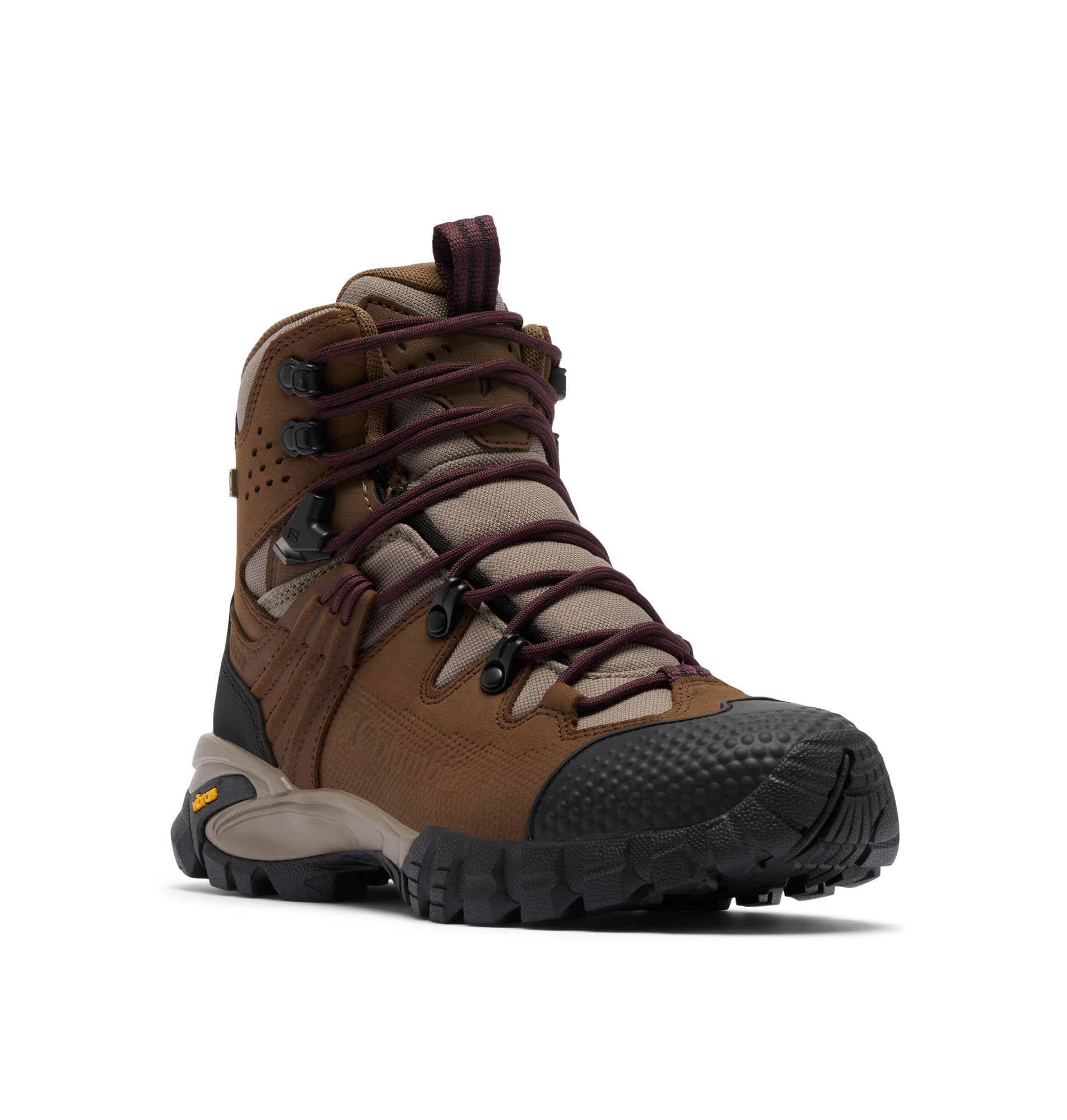
A solid wet-weather ally with a Vibram outsole, but watch the sizing — it runs very small.
Columbia’s Outdry waterproof technology and a Vibram outsole make this boot a strong choice for soggy conditions. The ankle-high shaft keeps wet grass and shallow puddles out. Owners confirm the waterproofing works, and the Vibram sole delivers grip on both dry and wet terrain. It comes in a brown color with dark purple laces that buyers appreciate.
The catch is sizing. Multiple shoppers say it runs small. One true 8.5 buyer describes the boot looking like “a kid’s shoe” and had to exchange for two sizes bigger. Another says the size 8.5 is too small. The comfort is also mixed — some find it excellent, while one calls the comfort a zero out of ten. It also lacks ventilation, making it too hot for summer use. Consider this a good option for wet, cool-weather day hikes if you can nail the sizing. Size up generously.
The strong point: Outdry waterproofing combined with a Vibram outsole gives confident wet-terrain traction.
The big caveat: sizing is inconsistent and runs small — plan to order two sizes up. Also too warm for summer use.
Best for: wet-weather day hikes and cool-condition backpacking where guaranteed waterproofing is the priority.
pass on it if: you hike in warm or dry climates, or if you dislike the hassle of sizing exchanges.
7. Danner Mountain 600 Hiking Boots for Women
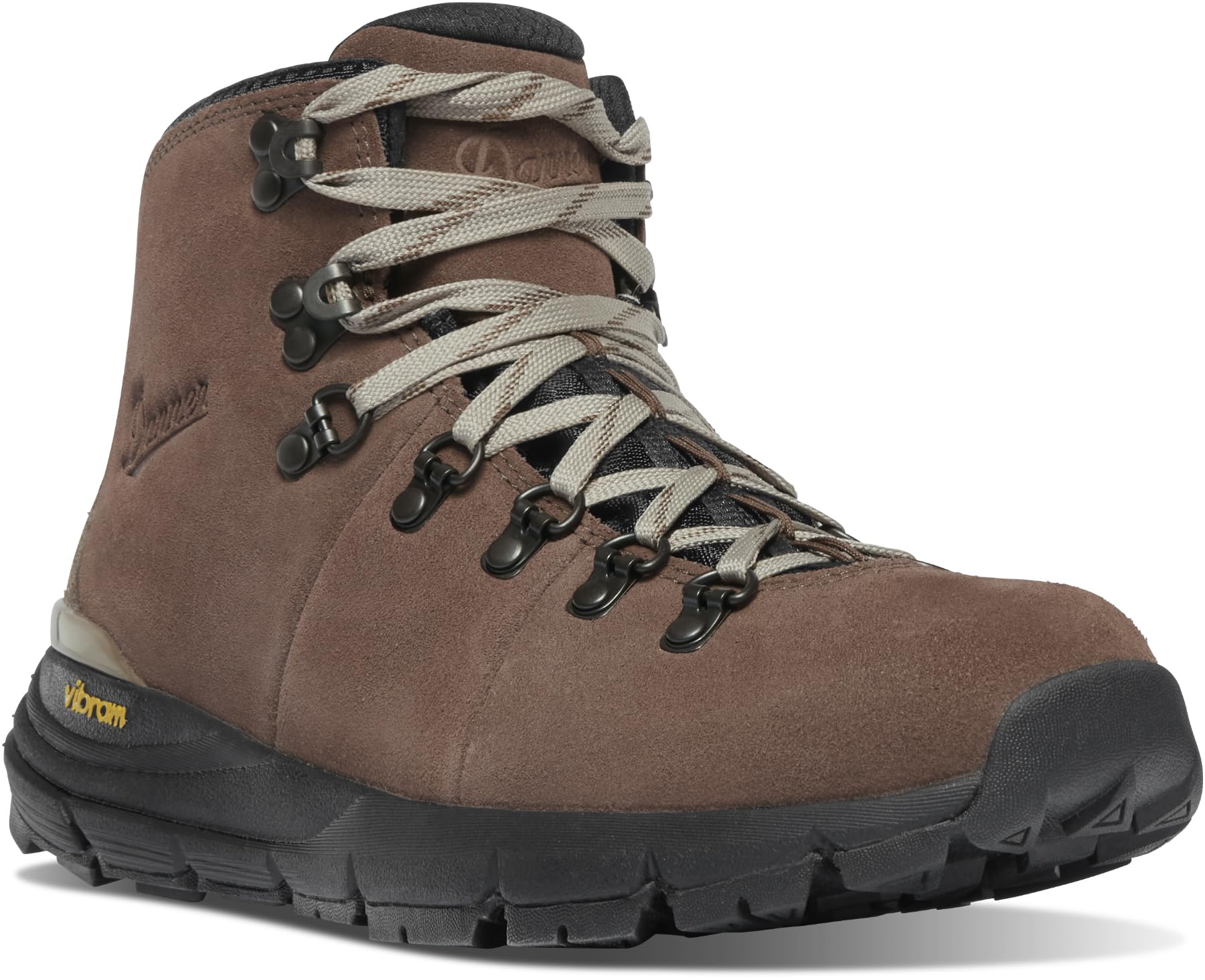
No break-in needed, Gore-Tex waterproof, and the first recraftable Mountain 600 Danner has ever made.
Danner took its best-selling hiker and made it even better. The Mountain 600 Leaf GTX uses a 100% waterproof Gore-Tex liner made from recycled materials, and a Vibram Megagrip outsole with self-adapting lugs that grip all terrain. Owners consistently say it is comfortable from the moment you put it on. One buyer with a history of foot problems — narrow heel, high arch, Morton’s neuroma — reports no pain after a mile walk. Another wore them on a 20-mile hike with 5000 feet of elevation on rocky, wet terrain and says they kept feet dry and safe.
The recraftable design means Danner’s team can resole and recondition the boots, keeping them on the trail for years. Quality and comfort are the top praises from owners, and the fit accommodates thick socks without feeling cramped. The only recurring note is one report of leather splitting at an eyelet after nine months, which the owner felt was not covered by warranty. That is a rare complaint in a boot that otherwise earns a near-perfect consensus. If you want a premium boot that needs zero break-in and can be rebuilt, this is your pick.
The premium advantages
- Zero break-in — comfortable from the first wear
- Recraftable by Danner — can be resoled and reconditioned
- Vibram Megagrip with self-adapting lugs for all-terrain traction
- Accommodates narrow heels and high arches
The small trade-offs
- Premium price point, not a budget option
- Occasional report of leather splitting at eyelet after months of use
Reach for these if: you want a premium, comfortable, long-lasting boot with no break-in that can be rebuilt for years of use.
Look elsewhere if: your budget is tight or you need a lighter trail-runner-style boot for fast day hikes.
8. Kenetrek Women’s Mountain Extreme Non-Insulated Hiking Boot
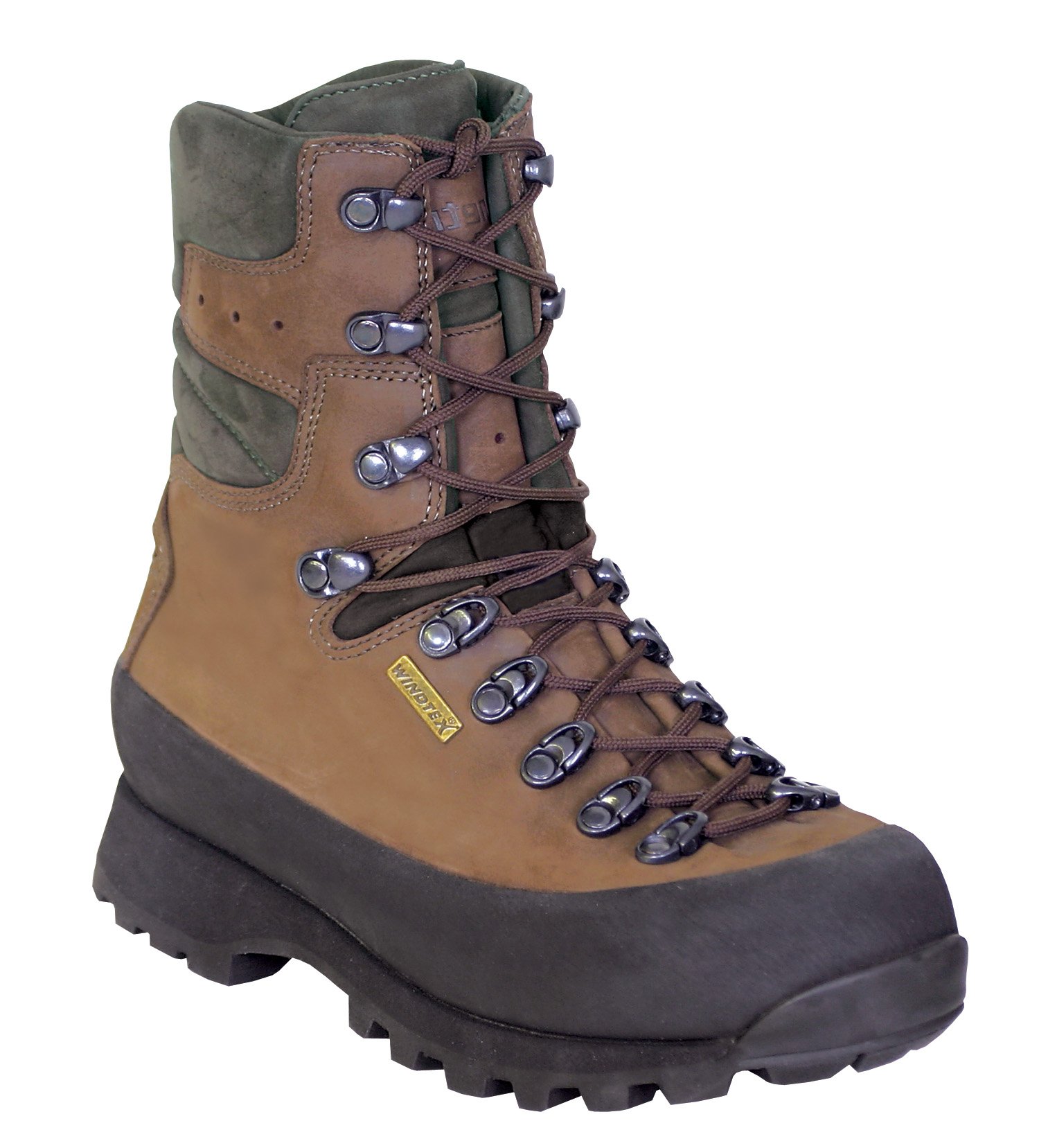
A hardcore backcountry boot built for sheep hunters who spend years refining every detail.
Kenetrek was born from the frustration of hunting boots that left feet screaming after a day in the mountains. The Mountain Extreme is the result. It uses a Windtex waterproof membrane, a patented K-Talon outsole with deep relief and open tread for serious bite in snow, mud, and rock, and double and triple stitching in high-stress areas. The rubber sole guard protects the leather from abrasive damage — a design Kenetrek pioneered. At a 10-inch height, it offers maximum ankle support.
Owners call them comfortable, lightweight for the durability they offer, and true to size. One buyer who planned a New Zealand hiking trip says they are “wonderful from the first time you put them on.” But they demand break-in — about 50 miles before the full-grain leather softens properly. The stiffness is intentional; it feels like a “slow-to-break-in” boot that will last for years. Breathability is poor, so they run warm. And the K-Talon outsole can be slippery on wet roots and rocks despite excellent grip on dirt and scree. This is a specialist tool for serious off-trail hiking and hunting, not for casual day walks.
The defining feature: bombproof construction with a Windtex waterproof membrane, rubber sole guard, and the patented K-Talon outsole for serious bite in snow and mud.
The hard truth: requires 50 miles of break-in, poor breathability, and the outsole can be slick on wet, smooth surfaces like roots and wet rock.
Best for: experienced backpackers and hunters tackling off-trail, alpine terrain who want a boot that will last for years and support heavy loads.
it’s not for you if: you hike on well-maintained trails, want no break-in, or need a boot for warm-weather use where breathability matters.
Understanding the Specs
Heel Drop
The heel drop is the height difference between the heel and toe inside the boot. A 15 mm drop tilts you slightly forward, shifting weight to the ball of your foot and easing strain on the Achilles. This helps on long uphills. An 8 mm drop feels flatter and more natural for walking but demands more from your calf muscles. A lower drop is better for technical, uneven terrain; a higher drop is more comfortable for maintained trails. Pick based on your gait and the terrain you hike most.
Waterproof Membrane
A membrane like Gore-Tex, B-DRY, KEEN.DRY, or Windtex is a thin layer bonded inside the boot that lets sweat vapor out while blocking liquid water from getting in. A boot with a genuine membrane is fully waterproof for creek crossings and rain. A water-resistant treatment without a membrane can repel light rain but will soak through in standing water. For multi-day trips with wet crossings, a membrane is essential. For dry desert trails, it adds cost and heat with little benefit.
Boot Weight
Boots are measured in ounces per boot. A boot at 17 ounces (490 grams) feels faster and causes less leg fatigue over 15 miles. A boot at 20 ounces (573 grams) offers more protection and lateral stiffness but asks more from your legs. Every extra ounce on your feet is roughly equivalent to five extra ounces on your back in terms of energy cost. Know your daily mileage and pack weight before deciding how much weight you are willing to carry on your feet.
Outsole Rubber
The outsole is the rubber on the bottom. Vibram is the most common premium rubber, known for grip on wet and dry surfaces. The tread pattern also matters: aggressive, wide-spaced lugs bite into mud and loose scree, while tighter, shallower lugs are better on hard-packed trail. Some brands use proprietary compounds like Kenetrek’s K-Talon or Oboz’s Sawtooth pattern. A good outsole keeps you upright on the one steep, wet section that separates a good hike from a bad fall.
FAQ
Do women’s backpacking boots need to be waterproof?
What is a good weight for a backpacking boot?
How much break-in time do new backpacking boots need?
Should I size up for backpacking boots?
What is the difference between a mid and high boot height?
Can I wear backpacking boots for everyday use?
Are boots with a Vibram outsole always better?
How do I know if I need a boot with a wide toe box?
Can backpacking boots be resoled?
What does heel drop mean for my hiking comfort?
Final Thoughts: The Verdict
If you want one dependable pick, the women’s backpacking boots winner is the Merrell Moab 3 Mid because it combines proven comfort, a wide toe box, and solid water resistance all in one package that needs zero break-in. If you need maximum ankle support and Gore-Tex waterproofing, grab the Salomon Quest Element Gore-tex. And for premium durability with recraftable construction, the Danner Mountain 600 Leaf GTX is the one to reach for.
How We Picked
We do not accept paid placement. Every pick is matched to a real buyer and a real use-case; we do not hands-on test units.
Sources & Methodology
Specifications: manufacturer listings and product documentation. Review insights: verified customer reviews, as of July 2026. Pricing: not shown on this page (it changes often); check the current price via the retailer link.
As an Amazon Associate, Calories Fit earns from qualifying purchases. This does not affect which products we feature.