
Our readers keep the lights on and the coffee maker working hard! As an Amazon Associate, I earn from qualifying purchases.
Specs are compiled from manufacturer listings and verified buyer reviews and can change over time — please confirm the key details on the product page before buying.
Your legs feel heavy by noon, your ankles swell on long flights, and the wrong pair of stockings either slides down or cuts into your skin. The trick is matching the compression strength to your actual day — then finding a pair that holds its position without a fight.
I’m Mohammad — the founder and writer behind Calories Fit. This guide is built by comparing the manufacturers’ published specifications and the patterns across verified customer reviews, so you get each pick’s real strengths and trade-offs instead of marketing spin.
For most people, the best women’s support stockings knee high boil down to three things: how much squeeze you need, how long they hold their shape, and whether they actually stay up by lunchtime.
Our Picks at a Glance

How To Choose The Best Women’s Support Stockings Knee High
Knee-high support stockings squeeze your ankle hardest and ease off as they go up. That graduated pressure pushes blood back toward your heart, so your legs feel less heavy at the end of the day. But the compression strength, the fabric, and the toe design all change the experience dramatically.
Compression Level — the number that changes everything
The unit is mmHg (millimeters of mercury), which measures how much pressure the stocking applies. Light compression (8-15 mmHg) is for mild tiredness, long flights, or a first try — it feels like a gentle hug on your calf. Moderate (15-20 mmHg) suits long shifts on your feet or pregnancy swelling, so your ankles don’t puff up by hour 8. Firm (20-30 mmHg) is what nurses and travelers often need — it really pushes fluid out — but it is harder to get on and can feel restrictive on a short calf. Pick the lowest level that solves your symptom, not the highest you can tolerate.
Fabric and breathability
Cotton and bamboo-viscose blends feel gentler on skin and breathe better, but they are thicker. Nylon-and-spandex sheers are invisible under trousers and dry faster, but some people find them less forgiving on hot days. If you have sensitive skin or run warm, natural-fiber blends (like 70% cotton) often cause less itching and irritation.
Toe style — closed, open, or sheer
Closed-toe stockings give full foot coverage, so your toes stay warm and your shoe line stays smooth. Open-toe designs let your toes breathe and are popular for sandal weather or post-surgery use where the foot needs monitoring. Sheer-toe hose has a transparent panel that stays hidden under peep-toe shoes. Your choice depends mainly on footwear and if you want the band around your toes to feel snug or loose.
Fit and sizing
Do not guess your size. Measure your calf circumference at the widest point and check it against the brand’s chart. A band that is too tight will leave red rings and hurt; one that is too loose will slide down before lunch. Many of the reviews here mention that sizing varies significantly between brands, so the same letter can fit very differently.
Quick Comparison
| Model | Best For | Compression | Material | Pairs | Amazon |
|---|---|---|---|---|---|
| FITRELL 3 Pairs 20-30 mmHg★ Best Overall | All-day firm support | 20-30 mmHg | Nylon / Spandex blend | 3 | Amazon |
| Cute Compression 20-30 mmHgBest Look | Pregnancy & style | 20-30 mmHg | Polyester | 3 | Amazon |
| Doctor’s Select Bamboo 8-15 mmHgBest Value | Gentle daily wear | 8-15 mmHg | Bamboo Viscose | 3 | Amazon |
| Bamboo 15-20 mmHg | Beginner-to-mid support | 15-20 mmHg | 45% Viscose from Bamboo | 3 | Amazon |
| LEVSOX Cotton 20-30 mmHg | Sensitive skin | 20-30 mmHg | 70% Cotton | 3 | Amazon |
| ABSOLUTE SUPPORT A101 15-20 mmHg | Sheer summer coverage | 15-20 mmHg | Nylon / Spandex | 1 | Amazon |
| +MD Open Toe 20-30 mmHg | Varicose & post-procedure | 20-30 mmHg | Unknown knit | 2 | Amazon |
| ABSOLUTE SUPPORT A111 15-20 mmHg | Open-toe everyday | 15-20 mmHg | 80% Nylon, 20% Spandex | 1 | Amazon |
In‑Depth Reviews
1. FITRELL 3 Pairs Compression Socks for Women and Men 20-30 mmHg
Our pick — 4.5★ from 38,500+ verified ratings; the strongest balance of quality and price.
The crowd-favorite 20-30 mmHg that tens of thousands wear through 12-hour shifts without complaint.
This is the pair that keeps showing up in discussions about real, noticeable relief. Owners consistently say their legs feel “lifted” and that the swelling they dealt with all day simply does not happen. The 20-30 mmHg compression level is firm enough to handle the worst of pregnancy or airline travel, yet people with 13.75″ calves report the S/M fits without the top band digging in. The smooth toe and full cushioned sole mean you can wear them inside sneakers or work boots without a hotspot.
A small minority find the compression feels closer to a lighter level than the labeled 20-30 mmHg, and a few mention the stitching at the ankle junction can fray with heavy use. Compared to the flimsier feel of the cheaper 3-pack options, these have a denser, more substantial knit that holds up better after repeated washing. For the price of a lunch out, you get three pairs that genuinely change how your legs feel by the end of a shift.
What wins people over
- Tens of thousands of buyers report legs feeling better and swelling reduced
- Stays in place all day — no mid-shift yanking up
- smooth toe and cushioned sole make them comfortable inside any shoe
The honest trade-off
- Some owners feel the actual compression is a notch below 20-30 mmHg
- A few units have shown stitch separation at the foot-ankle junction after several washes
Reach for these if: you need reliable firm compression for long shifts, pregnancy swelling, or travel — and you want a 3-pack that is already proven by a massive owner base.
Think twice if: you have very sensitive calf skin or need a sheer, invisible look under skirts.
2. Cute Compression Socks for Women – 3 Pairs 20-30 mmHg Graduated Support
The one that makes immediate pregnancy swelling reduction the headline — feet fit shoes again.
Owners mention that Upon putting them on, deep soreness and blood pooling eased noticeably.. The 20-30 mmHg compression here is described as strong but not painful, with a soft cushioned interior that one person compared to “walking barefoot on something fluffy.” The patterns and colors earn praise — these are not clinical-looking hose — and the packaging includes a little keychain, which is a nice touch when you are gifting them.
The fit is the main variable: a few owners say the calf band felt very tight, and some found the ankle section too loose, which created wrinkles. If you have wide calves or are between sizes, the larger option may work, but the sizing runs a touch small. Compared to the FITRELL above, these are slightly less compressive per some buyers, but the trade-off is a prettier sock that is easier to pull on. They work especially well for moms-to-be who want the swelling gone without looking like they are wearing medical gear.
Why owners love them
- Immediate relief from pregnancy swelling and foot discomfort.
- Soft, cushioned interior is genuinely comfortable against the foot
- Cute patterns and colors that hide varicose veins well
What to know before buying
- Sizing can be tricky — the calf band may feel tight and the ankle section loose for some
- A few buyers felt the compression was below the 20-30 mmHg label
Best for you if: pregnancy has made your feet and ankles unrecognizable and you want cute socks that actually bring the swelling down.
Skip them if: you have large calves and cannot risk a tight band — measure your calf first.
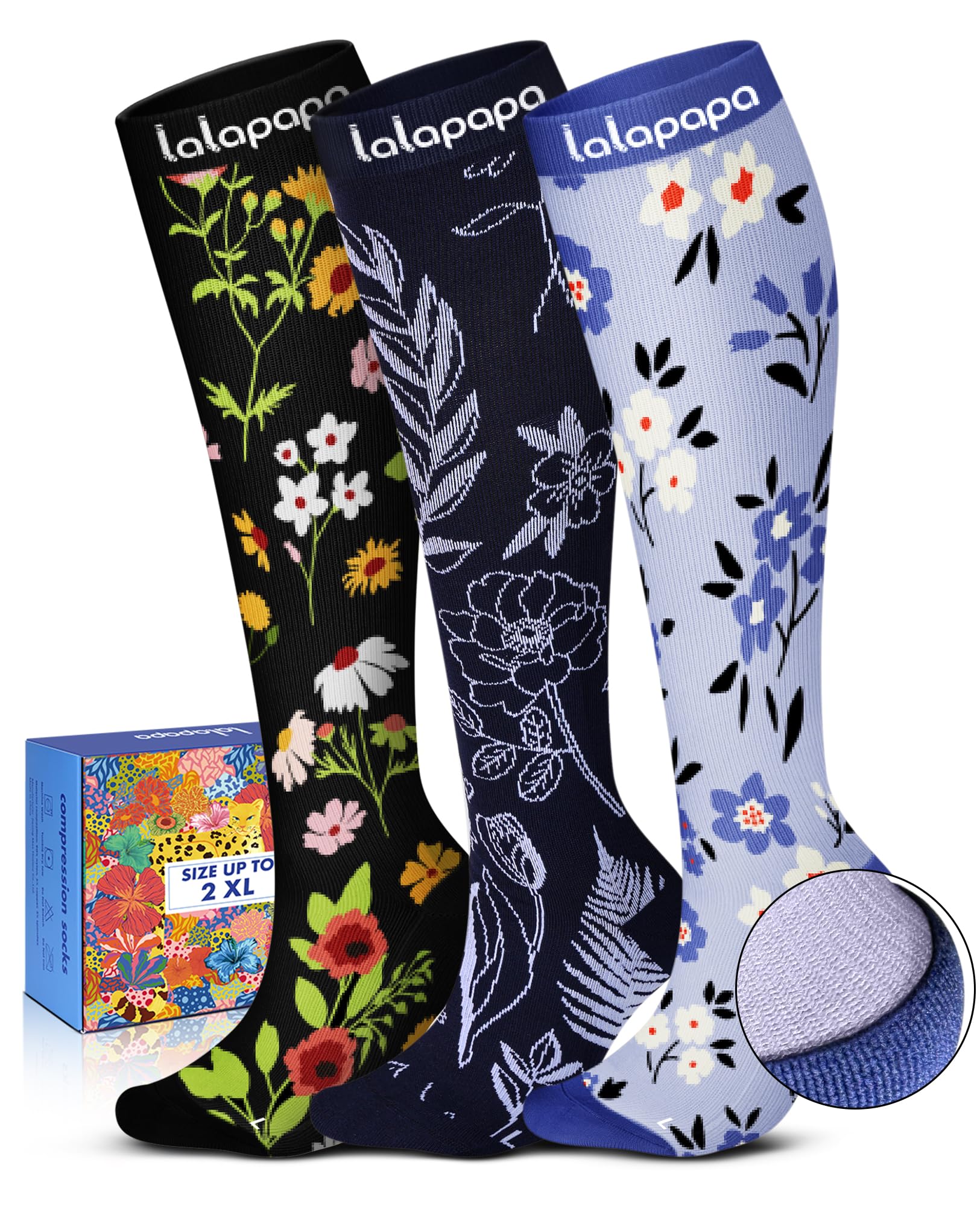
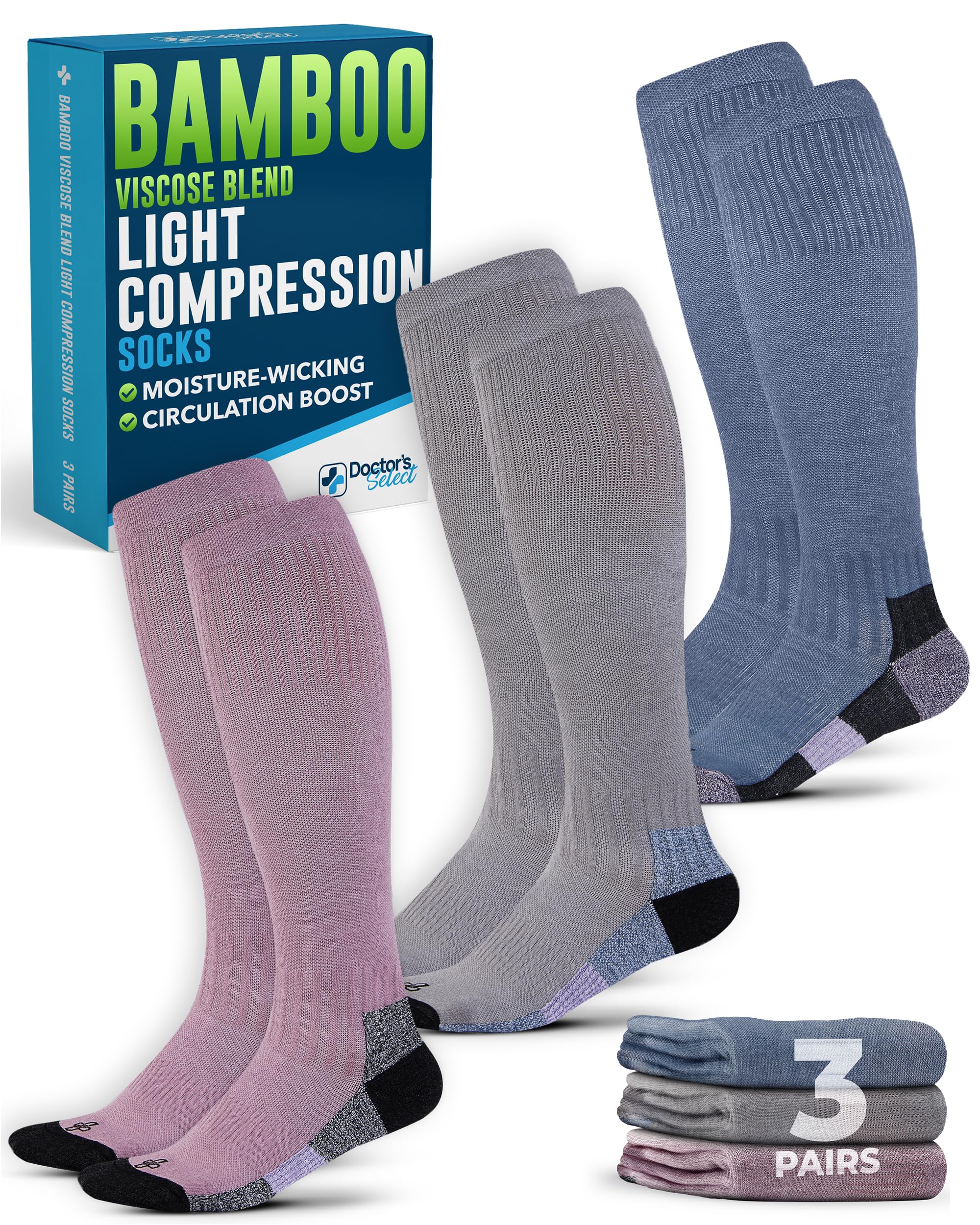
3. Doctor’s Select Bamboo Viscose Light Compression Socks for Women & Men – 3 Pairs, 8-15 mmHg
The light-touch favorite — 8-15 mmHg that “holds” without strangling, as owners who tried five brands put it.
This is the pair for anyone who found 20-30 mmHg too aggressive. At 8-15 mmHg, the squeeze is gentle — think a supportive hug rather than a medical wrap — and the bamboo-viscose fabric is noticeably softer and more breathable than nylon blends. Customers note these are comfortable even in summer heat and humidity, and they wash well as long as you hang them dry. The floral print adds a touch of style that makes them look more like fashion socks than medical aids.
The lighter compression means they will not fight serious edema the way the FITRELL or Cute Compression socks do. They are best for mild fatigue, general all-day comfort, or as a first step into compression wear. Compared to the Doctor’s Select bamboo offering, the FITRELL has compression pressures of 20-30 mmHg versus 8-15 mmHg, so if you need real squeeze, step up. But as a starting point for healthy legs that just get tired, these are tough to top for the price of a three-pack.
What makes them a favorite
- Bamboo viscose fabric is soft, lightweight, and breathes in hot weather
- Gentle compression that is easy to put on and comfortable all day
- Owners who tried multiple other brands consistently prefer these
The only caveat
- Light 8-15 mmHg will not help moderate-to-severe swelling or varicose vein symptoms
- Some owners found them warm because of the thicker knit
Grab these if: you just want a comfortable, soft pair for all-day wear without feeling squeezed — and you prefer natural fibers.
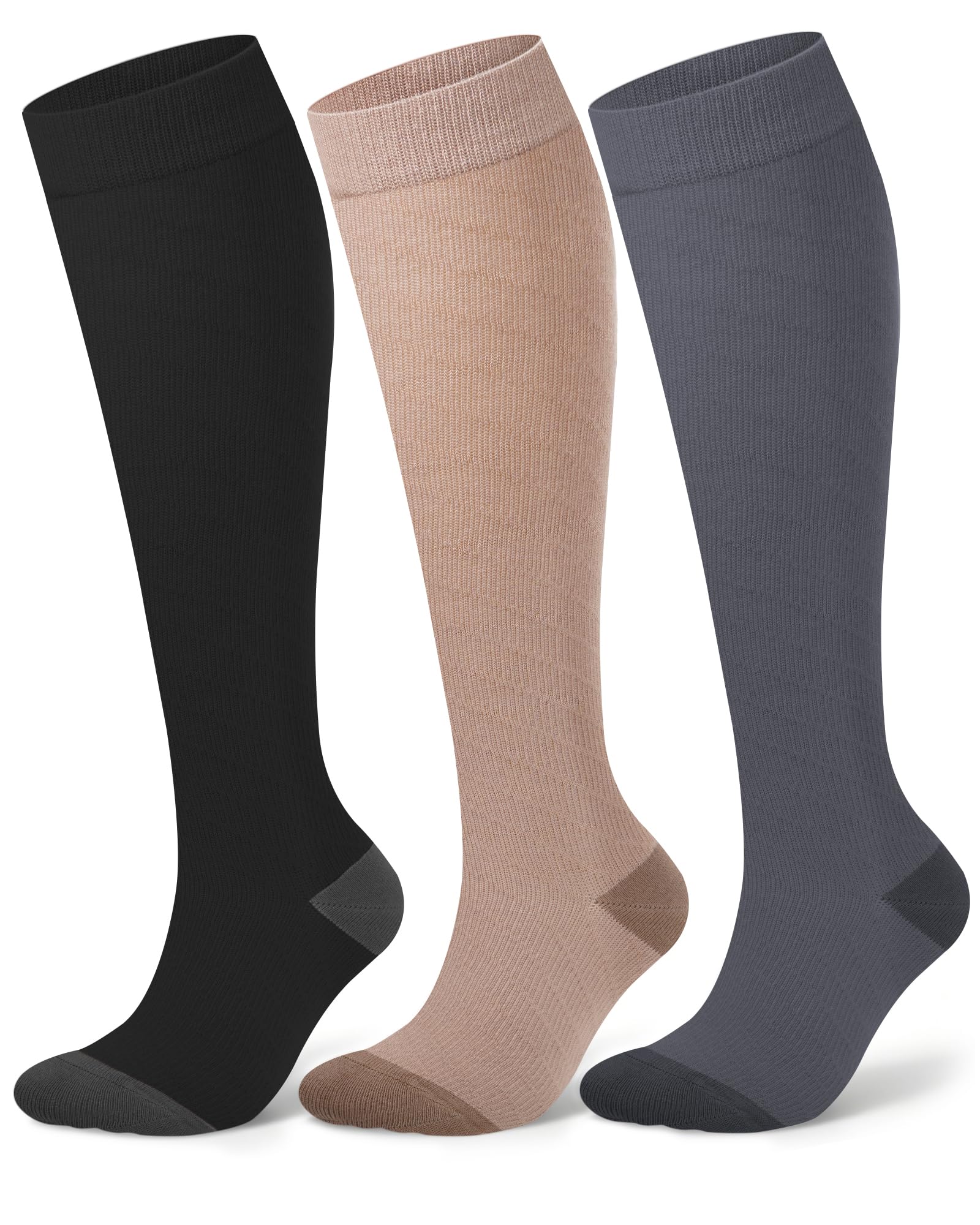
4. Compression Socks for Women 15-20 mmHg, Viscose from Bamboo, 3-Pair Knee High
The mid-level entry point — 15-20 mmHg that is firm enough for a 10-hour shift but soft enough for a beginner.
This sits exactly in the middle of the compression spectrum: stronger than the Doctor’s Select light option but gentler than the 20-30 mmHg pairs. The fabric is 45% viscose from bamboo, which gives it a skin-friendly feel that some describe as soft and cloud-like. Owners who wore these for 10-hour shifts say they did not slide down, and that leg soreness at the end of the day was noticeably less. The reinforced heel has color-coded markings that help you align the sock correctly in the dark.
A few buyers noted that the fit was not consistent across all three pairs in the pack — one color was an inch shorter than the others, which changed the pressure point. And for hiking or very active days, a couple of owners found they crept down slightly. Compared to the FITRELL, these are less compressive and less durable over many washes, but they are also softer against the skin and easier to put on. A solid middle ground for someone graduating from light compression.
Strengths owners highlight
- Soft bamboo blend is comfortable against the skin and not hot
- Good support for long shifts without being hard to pull on
- Reinforced heel with color-coded alignment is a thoughtful touch
Watch out for
- Occasional length inconsistency between the three pairs in the box
- Hiking or high-activity wear caused some to slide down
Pick these for: a daily shift sock that is comfortable from morning until clock-out, especially if you are new to mid-level compression.
Consider a stronger option if: you need the same support level day after day and want guaranteed consistency between pairs.
5. LEVSOX Cotton Compression Socks for Women & Men 20-30 mmHg

The cotton compression sock for anyone whose skin hates nylon — 70% cotton construction breathes better and stops allergic reactions while delivering firm 20-30 mmHg compression..
If your legs break out in a heat rash or itching from standard compression hose, this is likely your answer. The fabric is 70% cotton, which owners say feels cooler and causes far less irritation than synthetic blends. The compression is a full 20-30 mmHg — heavy-duty enough to prevent edema on a 9-hour flight — and the toe area has no irritating seam. Buyers with wide feet and narrow 13″ calves report it fits well without pinching, and the band at the top does not cut into the leg.
The trade-off is length. Several owners found that from ankle to knee, these run long — they had to roll the top down a couple of inches to stop them from pulling past the knee. They also require a bit of effort to pull on; some use a sock-aid device. Compared to the FITRELL, these feel thicker and more substantial but are less accommodating for shorter legs. If you have sensitive skin and need firm compression, the breathable cotton makes the extra length worth sorting out.
Why sensitive-skin buyers love them
- 70% cotton construction breathes better and stops allergic reactions
- No irritating seam in the toe area
- 20-30 mmHg compression prevents leg swelling during long travel.
A note on fit
- Ankle-to-knee length can be too long, requiring the top to be rolled down
- Hard to put on without a sock-aid due to the firm compression
Choose these if: standard compression fabric causes itching or rashes and you still need a full 20-30 mmHg level of support.
Think twice if: you have shorter legs or cannot deal with the extra length at the top band.
6. ABSOLUTE SUPPORT Made in USA – Sheer Compression Socks for Women 15-20 mmHg A101
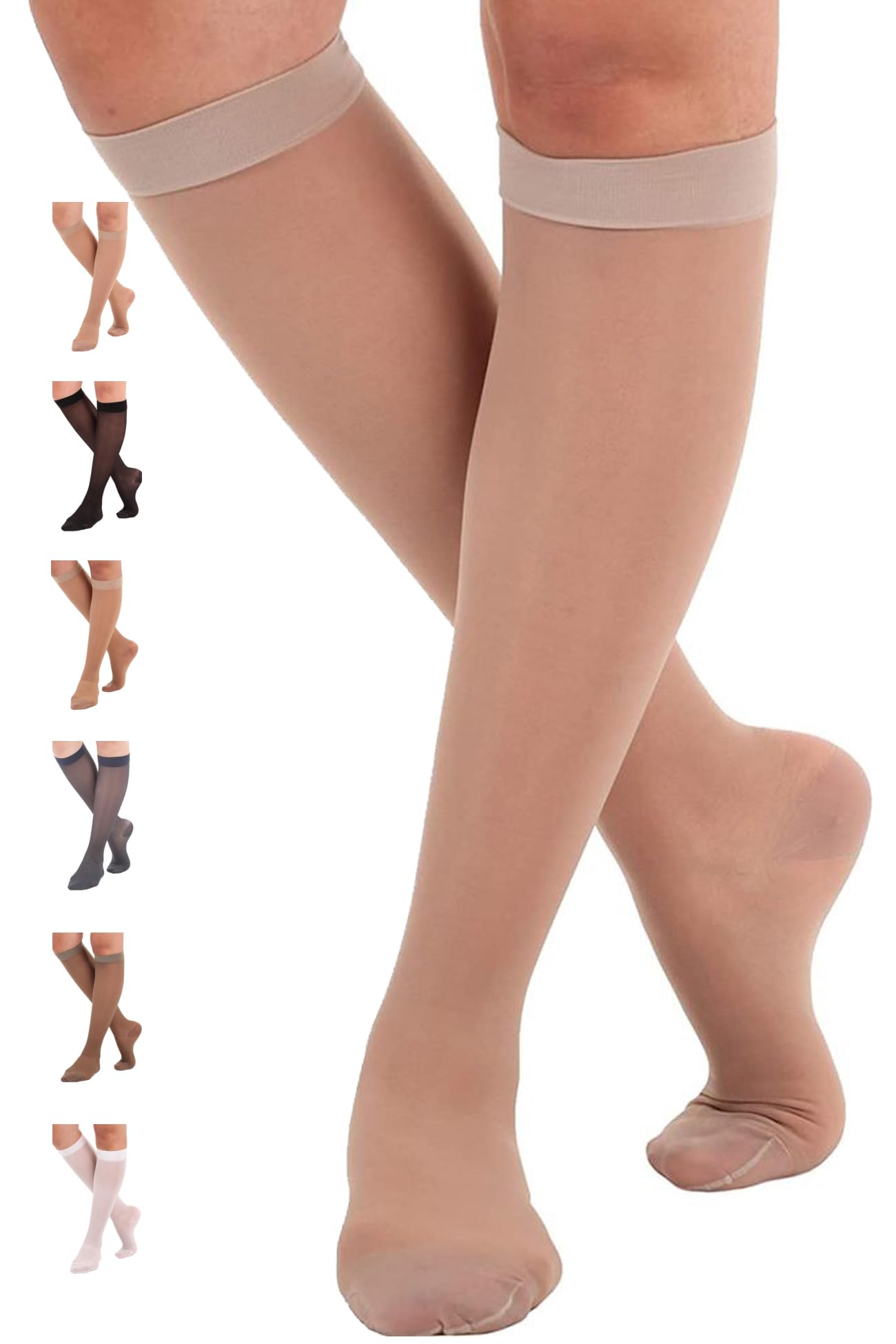
A sheer 15-20 mmHg that disappears under clothes — made in the USA and built for hot summer pavement.
These are pantyhose-level invisible under trousers or skirts, which matters if you want support without the sport-sock look. The 15-20 mmHg compression is noticeable enough to help with tired legs after hours of walking, but thin enough that your feet do not overheat in July. Owners say they are comfortable to put on, stay put for most of the day, and wash well without losing shape. The “nude” shade blends naturally with light-to-medium skin tones.
The biggest theme from owners is fit. People with slender calves and narrow feet (size 8.5 A width) say these are perfect. Everyone else — particularly those with size 10+ feet or thicker calves — found them too short and prone to sliding down after a few hours. The sheer material also means less durability if you catch them on a rough toenail or a Velcro strap. Compared to the cotton LEVSOX, these are far less durable but much more discreet. Best kept for office wear or a night out rather than a construction site.
Why they stand out
- Sheer nylon fabric is practically invisible under pants and skirts
- Comfortable for hot climates — breathable and light
- Made in the USA with consistent quality
What holds them back
- Only one pair per pack and the single price adds up
- Fit works best for narrow, petite legs; larger sizes tend to ride down
Best for: anyone who wants support they can wear with a dress or dress pants without anyone knowing.
Skip if: you have larger calves or prefer the sturdiness of a cotton or bamboo blend.
7. +MD 2 Pairs 20-30 mmHg Compression Socks, Knee High Open Toe
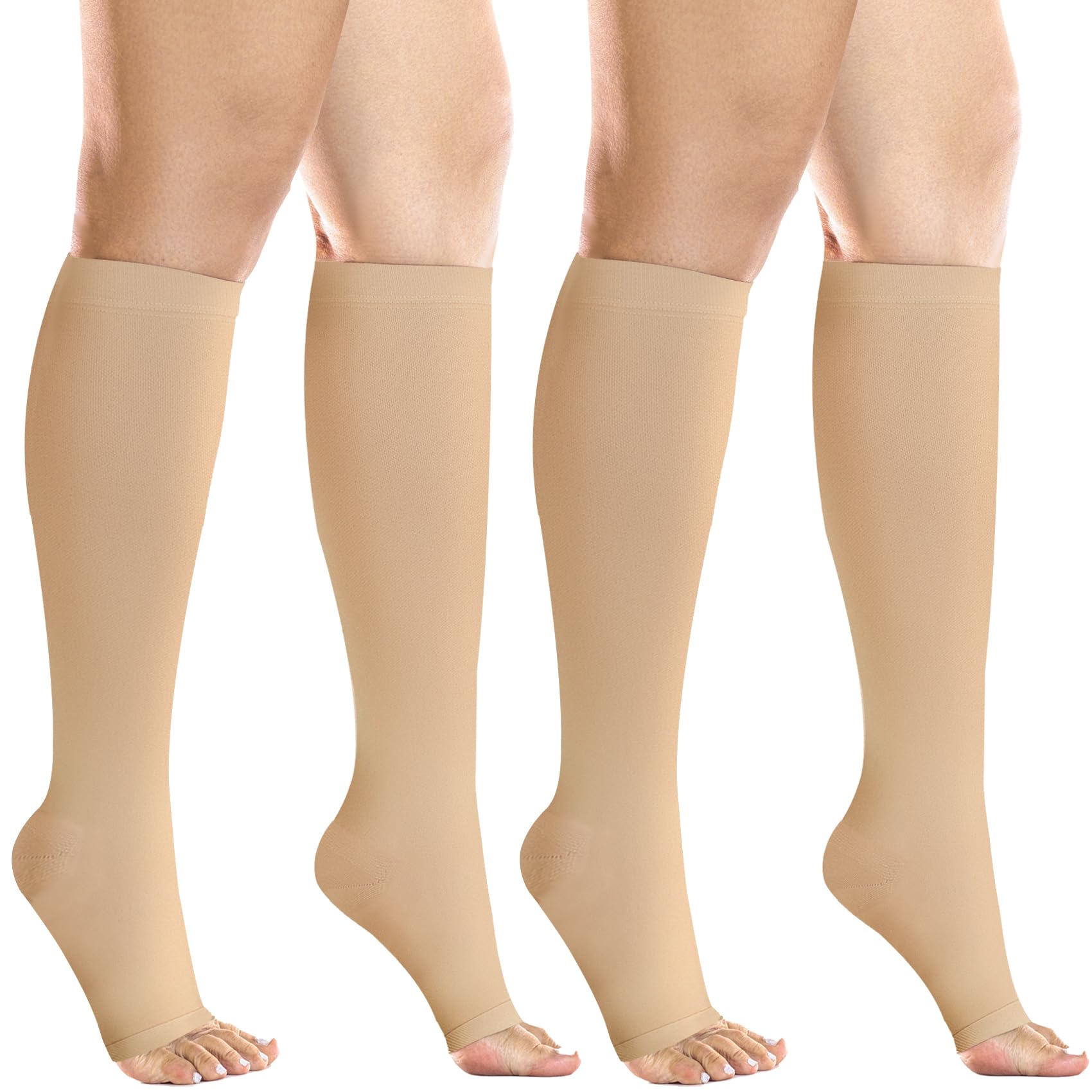
The open-toe 20-30 mmHg that lets your toes breathe while your veins get the squeeze they need.
This is a specific tool for a specific job. The open-toe design makes it ideal for post-procedure wear where you need to check your toes, for summer sandals, or for anyone whose toes feel cramped in closed stockings. The 20-30 mmHg compression is the real deal — owners with varicose vein symptoms and leg swelling report significant relief, and the included foot-cover slider makes getting them on easier than you would expect for this compression level.
The issue that keeps coming up is durability and sizing. After several washes, the open-toe ribbing can start to roll up, creating a discomfort inside shoes. Some owners found that the stockings got noticeably larger after washing and wearing, which changes the fit. And a strong warning from a couple of buyers: sizing up by two sizes is necessary if you have average or larger legs, or the band can cut off circulation. If you get the sizing right and use the slider, they work well — but they are less forgiving than the FITRELL or LEVSOX.
What works well
- Open toe is great for warm weather, sandals, and medical monitoring
- 20-30 mmHg compression relieves varicose vein symptoms.
- Comes with a foot-cover slider that simplifies putting them on
Pain points to know
- Toe opening can roll up after washing, creating an uncomfortable ridge
- Sizing is tricky — most owners suggest ordering two sizes larger than usual
Ideal for: anyone who needs open-toe compression for recovery, sandal season, or if you have had issues with toe crowding.
Not for you if: you want a set-and-forget fit — these require careful sizing and gentle laundry care.
8. ABSOLUTE SUPPORT Women Knee High Compression Socks 15-20 mmHg, A111

A long-running Made-in-USA sheer knee-high with 15-20 mmHg that stays put for people with narrow feet.
If you have slender ankles and a smaller foot (size 6 to 6.5), this is a match. The open-toe, reinforced-heel design is comfortable and does not snag on nails, and the 15-20 mmHg compression is gentle enough for first-time users while still providing help with mild swelling. Owners say the natural beige color looks good with capris and dresses, and the durability is solid for a sheer stocking — one pair that washes well can last quite a while.
The downsides are around sizing and the toe band. People with larger feet (size 10.5-11) find the foot section too short, which creates tightness at the widest part of the foot. The open-toe ribbing can also feel loose, as some owners note it does not have enough grip to stay taut across the toes. Compared to the +MD open-toe option, these are less compressive and cheaper per pair, but they also lack the heavy-duty construction. A good budget-friendly sheer option if your measurements line up with the size chart.
Why owners keep buying
- Sheer and discreet under clothes, with a skin-tone color that works well
- Made in the USA and holds up well to washing
- Gentle 15-20 mmHg compression that is easy to pull on
Who should look elsewhere
- The foot section runs short — not great for size 10+ feet
- Toe band can feel loose and lacks grip, causing it to bunch
Go for these if: you have narrow feet and want a reliable, sheer, everyday support stocking that is American-made.
Pass if: your shoe size is above 9 or you need stronger compression than 15-20 mmHg.
Understanding the Specs
mmHg — Compression Level
This number tells you how much pressure the stocking applies to your leg. It is measured in millimeters of mercury (mmHg). Light (8-15 mmHg) is for mild fatigue or long flights — it helps prevent minor puffiness. Moderate (15-20 mmHg) helps with everyday swelling and is common for nurses and teachers — it keeps ankles from ballooning on an 8-hour shift. Firm (20-30 mmHg) is what doctors often prescribe for varicose veins and significant edema — it really forces fluid out, but it is harder to put on.
Graduated Compression
All support stockings should be “graduated” — meaning they are tightest at your ankle and gradually loosen as they go up your calf. This design helps push blood back toward your heart. If a stocking has the same pressure everywhere, it can trap blood in your ankle instead of helping it move. Every product on this list uses graduated compression, which is the right approach.
Open Toe vs Closed Toe
Closed-toe stockings cover your entire foot, so your toes stay warm and your shoe line stays smooth. Open-toe designs leave your toes exposed, which is cooler, better for sandals, and useful if you need to check your toes for circulation or swelling after surgery. The trade-off is that open-toe stockings can roll up at the opening or feel loose around the metatarsal area (the widest part of your foot before your toes).
Fabric and Sensitivity
Nylon and spandex blends are the most common because they are thin and strong. But some people find them itchy or hot. Cotton and bamboo-viscose blends are softer and breathe much better, but they are thicker and do not dry as fast. If you have a known skin sensitivity or run hot, look for a high cotton percentage or a bamboo viscose label. If you need an invisible look under work clothes, sheer nylon is the way to go.
FAQ
How tight should knee-high support stockings feel?
Will 20-30 mmHg stockings hurt my circulation?
Can I wear knee-high support stockings to bed?
How long does a pair of support stockings normally last?
Do I need a prescription for 20-30 mmHg stockings?
Can support stockings help with varicose veins?
Should I size up if I have wide calves?
Is 15-20 mmHg enough for a 12-hour nursing shift?
Why do my support stockings keep sliding down?
Can I wear support stockings during pregnancy?
Final Thoughts: The Verdict
For most people, the best women’s support stockings knee high is the FITRELL 3-Pack 20-30 mmHg because it delivers proven firm support at a price that makes the three-pack a no-brainer. If you have sensitive skin and want cotton fabric, grab the LEVSOX Cotton 20-30 mmHg. And for light, gentle compression that feels more like a comfort sock than medical gear, the Doctor’s Select Bamboo 8-15 mmHg is the one to reach for.
How We Picked
We do not accept paid placement. Every pick is matched to a real buyer and a real use-case; we do not hands-on test units.
Sources & Methodology
Specifications: manufacturer listings and product documentation. Review insights: verified customer reviews, as of July 2026. Pricing: not shown on this page (it changes often); check the current price via the retailer link.
As an Amazon Associate, Calories Fit earns from qualifying purchases. This does not affect which products we feature.