
Our readers keep the lights on and the coffee maker working hard! As an Amazon Associate, I earn from qualifying purchases.
Specs are compiled from manufacturer listings and verified buyer reviews and can change over time — please confirm the key details on the product page before buying.
You want to know your real exertion level during a run, a HIIT session, or a sleep cycle without a chest strap digging into your ribs. A wrist heart rate monitor puts that data right on your arm with no extra hassles, but not every model reads your pulse accurately through movement and sweat. This guide cuts through the marketing to help you choose the wrist-based tracker that actually delivers honest numbers for your specific routine.
I’m Mohammad — the founder and writer behind Calories Fit. This guide is built by comparing the manufacturers’ published specifications and the patterns across verified customer reviews, so you get each pick’s real strengths and trade-offs instead of marketing spin.
Whether you are a dedicated runner tracking pace zones or someone who simply wants a constant read on their cardiovascular health during the day, finding the right wrist heart rate monitor is about matching its sensor accuracy and battery life to the demands of your lifestyle.
Our Picks at a Glance

How To Choose The Best Wrist Heart Rate Monitor
Picking the right wrist-worn tracker depends on matching its sensor tech and battery stamina to how you actually move. A casual walker has different needs than a marathon runner, and the gap between an entry-level band and a premium smartwatch is wide. Focus on these three pillars to avoid buyer’s remorse.
Optical Sensor Quality & Fit
Every wrist-based monitor uses an optical sensor that shines light through your skin to detect blood flow. A snug, comfortable fit is non-negotiable here — if the band shifts during exercise, the reading wobbles. Higher-end models from Garmin and Samsung use more advanced algorithms to filter out motion noise during running or weightlifting, while budget bands may struggle with rapid movements.
Battery Life vs. Features
There is a direct trade-off between screen brightness, GPS usage, and how many days you get between charges. A premium AMOLED smartwatch with always-on display might give you 2-3 days of heavy use, while a basic fitness band can push past two weeks. Think about your charging tolerance — a runner doing daily GPS workouts drains faster than someone wearing it for all-day step counting.
GPS & Smartphone Integration
If you want route maps for outdoor runs without carrying your phone, you need built-in GPS. Some models rely on your phone’s GPS, which saves battery but tethers you to your pocket. Also check app compatibility — the Garmin Connect, Fitbit, and Samsung Health ecosystems vary in subscription costs and data depth.
Quick Comparison
| Model | Best For | Heart Rate Tech | Battery Life | Built-in GPS | Amazon |
|---|---|---|---|---|---|
| Garmin Forerunner 165★ Best Overall | Serious Runners & Data Lovers | Wrist-based HR | Up to 11 days | Yes | Amazon |
| TIFOZEN Health TrackerBudget Champion | Budget & Style | Wrist-based HR | Up to 10-15 days | No | Amazon |
| MorePro Fitness TrackerTop Performer | Value & All-Day Wellness | Wrist-based HR | Up to 7 days | No | Amazon |
| Xiaomi Smart Band 10 | Battery Endurance Champions | Wrist-based HR | Up to 21 days | Via phone | Amazon |
| FITVII Screenless Tracker | Minimalist & No-Distraction Users | Wrist-based HR | Up to 10 days | Via phone | Amazon |
| Mindrose Smart Watch | Price-Performance Balance | Wrist-based HR | 6-7 days heavy use | Via phone | Amazon |
| Fitbit Charge 6 | Health Ecosystem Integrators | Wrist-based HR | Up to 7 days | Yes | Amazon |
| Garmin Vivoactive 5 | Versatile Everyday Athletes | Wrist-based HR | Up to 11 days | Yes | Amazon |
| Samsung Galaxy Watch 7 | Smartphone Integration & Design | BioActive Sensor | ~30 hours (typical) | Yes | Amazon |
In‑Depth Reviews
1. Garmin Forerunner 165
Our pick — over 4.5★ from 4,000+ verified ratings; the strongest balance of quality and price.
The running-first smartwatch that turned quality and accuracy into the most-praised feature among thousands.
This is the watch that runners, gym-goers, and even swimmers consistently rave about because it nails the basics perfectly. They praise the outstanding battery life — in smartwatch mode you get up to 11 days, and with the always-on display turned off you can stretch it even further. The wrist-based heart rate tracking is described as spot-on, which is the entire point of a monitor like this.
For serious fitness tracking, it comes fully loaded. You get built-in GPS for pace and distance, 25+ activity profiles, and personalized daily suggested workouts that adapt to your recovery. The 43mm fiber-reinforced polymer case keeps it lightweight, and the 20mm silicone band is comfortable enough for all-day wear. A few owners switch to a nylon strap if the silicone irritates, but that is an easy fix.
The Forerunner 165 offers an 11-day battery life, while the Fitbit Charge 6 offers a typical 7 days, and its GPS acquisition is much faster — locking in seconds rather than minutes. The AMOLED touchscreen is bright enough for direct sunlight, and smart notifications from your phone keep you connected. The main trade-off is that you lose the Google ecosystem features and ECG of the Charge 6, but for pure training insight, the Garmin wins.
Why It Dominates
- Exceptional battery life — up to 11 days (13 with always-off display)
- Highly praised heart rate and GPS accuracy
- Lightweight design with a bright, readable AMOLED screen
- Free adaptive training plans and detailed recovery insights
The Realistic Trade-off
- Silicone band irritates some skin; an aftermarket band solves it
- No advanced training load/status metrics found on pricier Garmins
- Requires a chest strap for maximum HR zone accuracy during intervals
Your training partner: This is the pick for anyone who wants deep, honest metrics from a trusted brand without the constant fear of a dead battery.
Worth noting: It lacks the video-call reply ability of a full smartwatch — it is a fitness-first device.
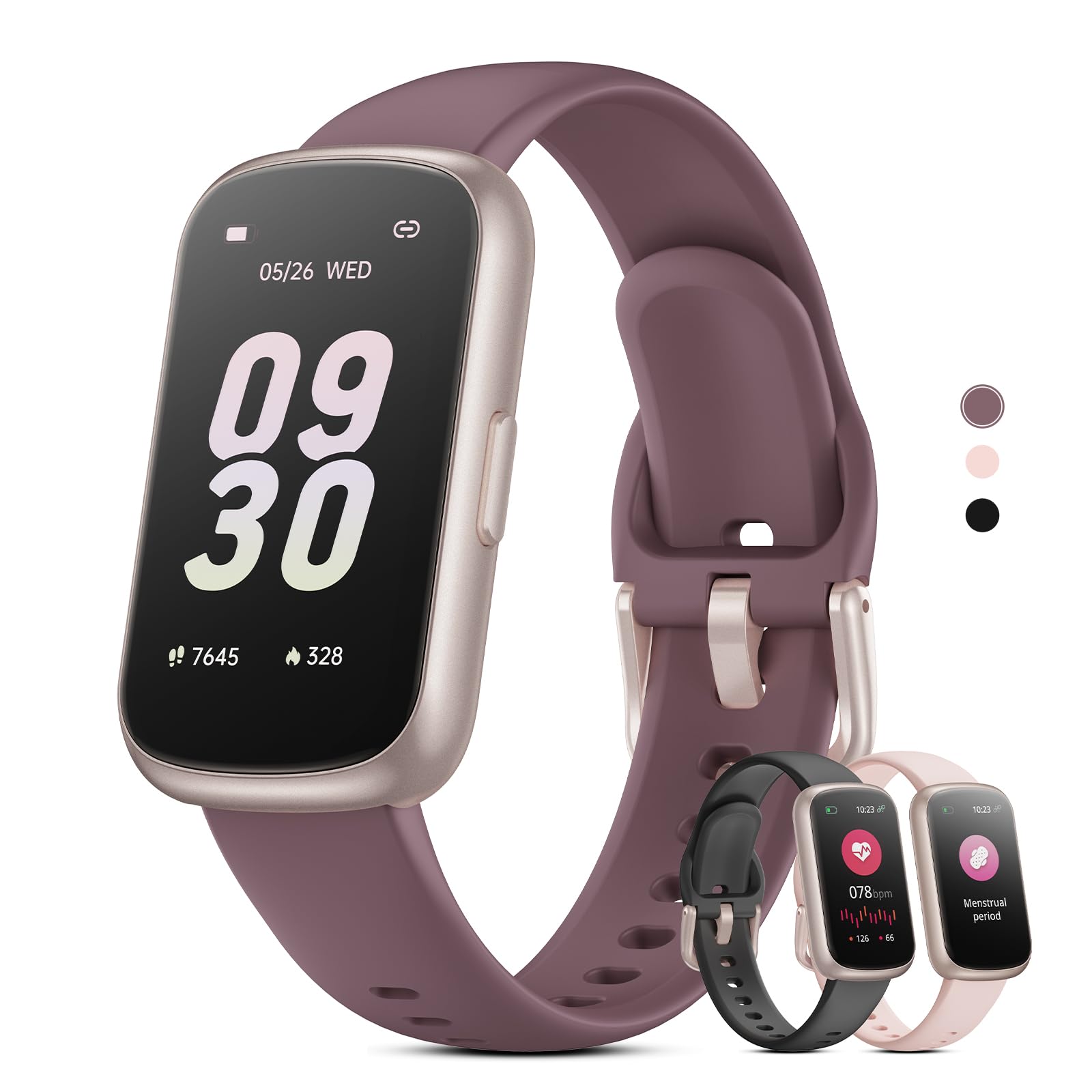
2. TIFOZEN Health Fitness Tracker Smart Watch
A budget-friendly entry point that focuses on value and appearance rather than absolute precision.
This is the entry-level option for someone who wants basic 24/7 heart rate monitoring, blood oxygen tracking, and sleep analysis without spending over the odds. The slim 1.47-inch touch display and three included soft silicone bands give you enough style variety for daily wear. The 200mAh battery is rated for up to 10-15 days of typical use, which is genuinely competitive even against trackers costing three times as much.
What wins people over is the value for money — it offers a lot of features without the complexity. You get step counting, distance, calorie tracking, and 24 sport modes. It even supports female menstrual cycle tracking and has over 165 customizable watch faces. The catch is durability: some users report the device failing after the first week, though the seller offers a replacement or refund in those cases. The band closure is also a minor frustration, as the left strap must tuck under the right.
A smart starting place: This is very much a “try it and see” device for budget-conscious buyers who prioritize looks and features over long-term reliability or advanced GPS tracking.
Best for: Casual users looking for an affordable style accessory with basic health tracking.
skip it if: You need durable reliability and accurate GPS route mapping; look at the Garmin Forerunner 165 above.
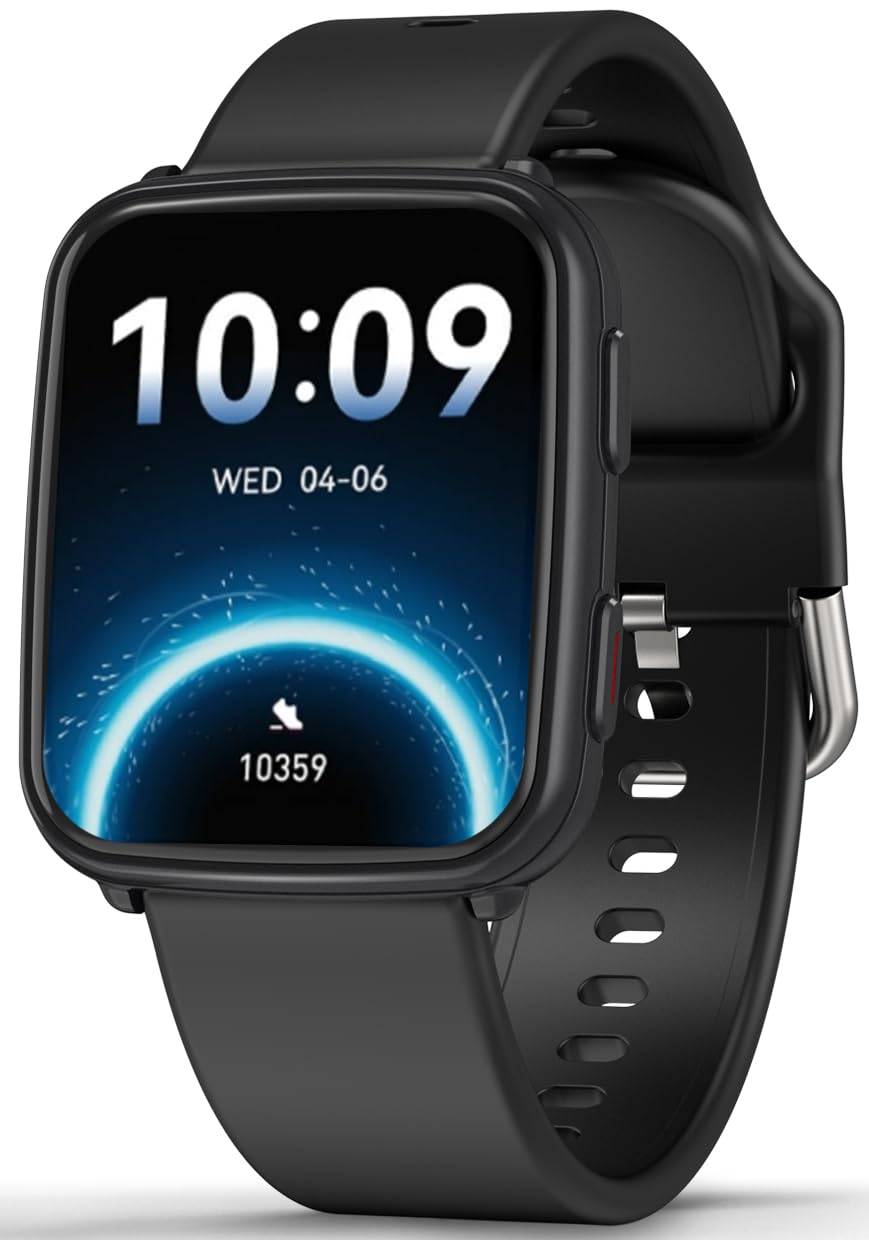
3. MorePro Fitness Tracker
A value-packed tracker that feels like a premium device at a mid-range price point.
This tracker punches above its weight by offering 24/7 heart rate, blood pressure, and blood oxygen monitoring in a comfortable, sleek package. Buyers consistently say it is better than pricier brands, and the reason is clear: 120+ sport modes cover everything from running to ball sports, the 230mAh battery lasts up to 7 days, and the 1.47-inch screen is bright without being bulky. It also supports intuitive menstrual cycle tracking, which adds genuine utility for half the population.
The real draw is the combination of features and comfort. It feels barely there on the wrist, even during sleep. The app is straightforward, and notifications for calls and messages work reliably. The one compromise is blood pressure accuracy — several users note it is good for trends but not as precise as a dedicated arm cuff. If you need medical-grade accuracy, you still need a clinical device. The IP68 waterproofing handles rain and hand-washing, though the manufacturer’s instructions probably say to avoid hot showers.
Exceptional value: For the price, this is the best all-rounder for anyone who wants detailed health tracking without a monthly subscription or a complicated setup.
Ideal for: Fitness beginners and wellness-focused users who want an easy-to-use, comfortable daily companion.
Limitation: If you need turn-by-turn GPS navigation or music storage, this model relies on your phone for those functions.
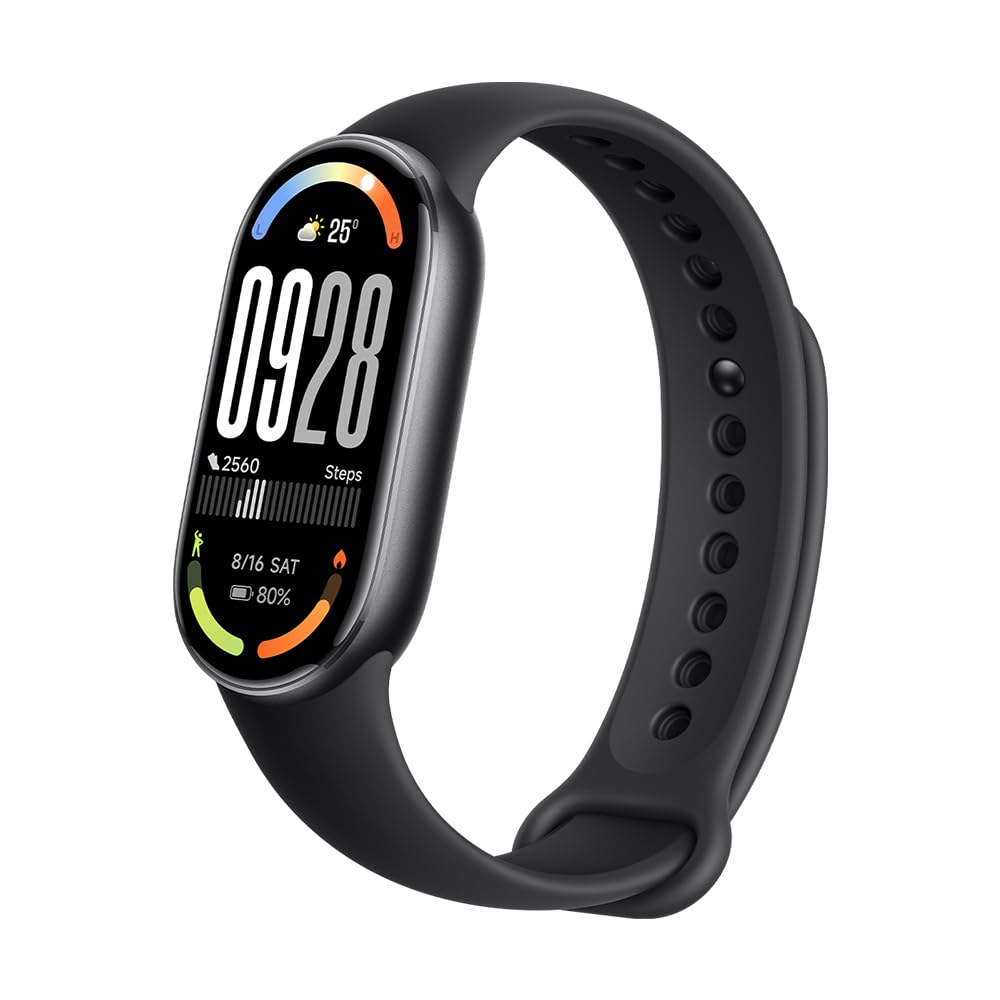
4. XIAOMI Mi Smart Band 10
An incredible battery champion that gives you 21 days of use on a single charge.
This is the band for people who hate plugging things in. The 200mAh battery, combined with the efficient HyperOS 2 platform, delivers up to 21 days of normal use, and a full recharge takes just one hour. The 1.72-inch AMOLED display with 1500 nits brightness is easily readable in direct sunlight, which is a huge plus for outdoor runners.
For all its longevity, the Xiaomi Smart Band 10 is a capable health tracker. It offers comprehensive sleep monitoring with stage analysis, 24/7 heart rate tracking, and a new high-precision electronic compass for swimming direction. It tracks over 100 sport modes and can connect to your phone’s GPS for route mapping. The drawbacks are real: the screen is prone to scratching, and the Xiaomi Fit app only supports the metric system, requiring a third-party workaround for imperial units.
A brilliant casual tracker: The battery is class-leading, and the screen is gorgeous for the price — but it is a fitness band, not a full smartwatch.
Best for: Users who prioritize battery life above all else and want a bright, always-clear display for outdoor workouts.
Consider instead: The Garmin Forerunner 165 if you need more sturdy sports analysis and built-in GPS.
5. FITVII Screenless Fitness Tracker
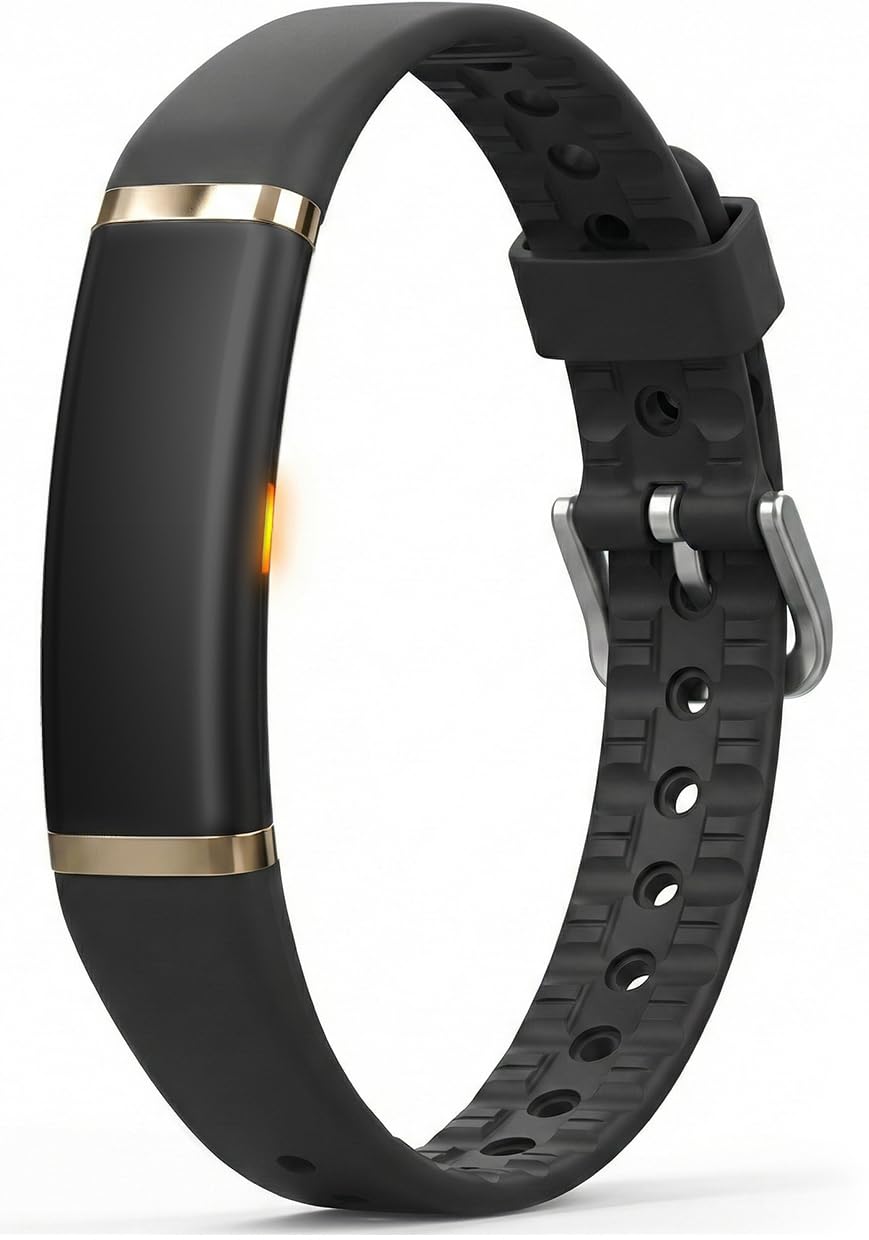
A screenless band for those who want heart rate data without any visual distractions.
If you hate the glare of an always-on screen or simply do not want another glowing rectangle on your wrist, this is the solution. The FITVII is an ultra-slim wearable that tracks heart rate, blood pressure, blood oxygen, HRV (heart rate variability), sleep patterns, and daily steps — all in the background. It has no display, so there is nothing to tap, swipe, or stare at. You just check the data later in the app. The absence of a screen is a feature, not a compromise.
Comfort is the standout quality. Buyers consistently say they forget they are wearing it, and the battery life is excellent — up to 10 days on a charge. It comes with S and L bands to fit wrists from 6.22 to 9.45 inches, and there are no hidden subscription fees. The IP68 waterproof rating means it handles hand washing and rain, though the manual cautions against hot showers and diving. The primary limitation is that it offers no real-time feedback during a workout beyond the vibration alerts, so it is better suited for passive tracking than active session guidance.
A truly unique form factor: Perfect for people who want the data but not the screen — just be prepared for minimal on-the-go feedback.
Reach for this if: You want a distraction-free wearable for all-day health logging and sleep tracking.
Think twice if: You need to see your heart rate during a run or read a notification at a glance.
6. Mindrose Smart Watch Health Fitness Tracker

A cost-effective Fitbit alternative that delivers style, battery, and a surprising blood pressure sensor.
This watch surprises owners with its build quality and feature set. It offers 24/7 heart rate, blood oxygen, and blood pressure monitoring alongside 115 sport modes and GPS connectivity via your phone. The 1.47-inch HD color full touch screen is curved and easy to read, and the battery impresses — expect 6-7 days of heavy use or up to 10-12 days with lighter daily wear. The magnetic USB charger is convenient, and the 3-year manufacturer warranty adds significant confidence.
What really stands out in the feedback is the blood pressure sensor accuracy. Buyers report it reads within 5 points of a dedicated arm-cuff device, as long as you wear the band snugly. The Da Fit app is well-laid out, though the “Quick View” function name actually refers to raise-to-wake. A few minor quibbles: the pulse reading on the watch face does not update in real time unless you take a manual reading, and the sleep tracking is basic compared to a dedicated sleep ring. But for the price, it is tough to top.
Why It’s a Standout
- Accurate blood pressure trends and measurements for the category
- Excellent battery life — about 5% daily drain
- 3-year manufacturer warranty is a rarity at this price
- Magnetic USB charging is quick and easy
The Minor Gripes
- Pulse display on watch face only updates on manual reading
- Some app function names are confusing
- GPS is tethered to your phone, not built-in
Best for: Budget-conscious shoppers who want a stylish, feature-packed watch with a rare long-term warranty.
Not for: Runners who need accurate outdoor route mapping without their phone; get the Garmin Forerunner 165 instead.
7. Fitbit Charge 6

The Fitbit that finally integrates Google Maps, Wallet, and YouTube Music controls into your fitness routine.
This is the fitness tracker for people deep in the Google ecosystem. The Charge 6 connects directly to compatible gym equipment for real-time heart rate display on treadmills and ellipticals. It also includes built-in GPS, Google Maps turn-by-turn directions, tap-to-pay with Google Wallet, and YouTube Music controls. The 24/7 heart rate monitor is the core feature, and it offers ECG, SpO2 monitoring, and skin temperature tracking for a full health picture.
The battery life is a solid 7 days under typical use, and the slim design fits petite wrists well, which is a common pain point with larger smartwatches. The free 3-month Google Health Premium membership is a nice trial, but the subscription is needed for deeper analytics after that. Some owners mention significant GPS inaccuracies — a run may show 0.3 miles instead of a full mile — and the calorie burn estimate can seem exaggerated. The app also has occasional sync issues with the iPhone Health app. For pure heart rate monitoring without the brand premium, the Garmin Forerunner 165 offers more reliable tracking and a longer battery.
Best for Google users: If you use Google Maps and Wallet daily and want a slim tracker that plays nicely with gym equipment, this is your match.
Reach for this if: You want ECG capabilities and smooth Google app integration on your wrist.
pass on it if: Accurate GPS for running and calorie tracking are your top priorities; the Garmin Forerunner 165 leads on both.
8. Garmin vívoactive 5

A health-first smartwatch that combines a bright AMOLED display with an incredible 11-day battery life.
This is Garmin’s answer for people who want the health insights of a Forerunner but in a more lifestyle-oriented design. The bright AMOLED display is stunning and readable in direct sunlight, making it a pleasure to use every day. It tracks over 30 built-in sports apps including swimming (with yardage tracking), and its Body Battery energy monitoring gives you personalized insights based on sleep, naps, and stress. The sleep score and HRV status are particularly praised for helping owners understand their recovery.
Battery life is a genuine high point — up to 11 days in smartwatch mode (or 5 days with the display always on). It also supports music storage for Spotify, Amazon Music, and Deezer, so you can run without your phone. The silicone band is comfortable, and owners with sensitive skin report no irritation from the heart rate monitor. The main compromise versus the Forerunner 165 is that the Vivoactive 5 lacks the advanced training metrics like training load status and does not offer the same depth of running-specific analytics. It is a wellness watch first, a running watch second.
A fantastic everyday companion: The Vivoactive 5 is a strong balance of style, battery life, and health tracking for the daily athlete.
Ideal for: Swimmers, walkers, and general fitness enthusiasts who want a reliable smartwatch with a beautiful screen and long battery.
Not for: Hardcore runners seeking detailed recovery recommendations and advanced training metrics; the Forerunner 165 is a better fit.
9. Samsung Galaxy Watch 7

A full-featured smartwatch that uses Galaxy AI to deliver an Energy Score and advanced heart tracking.
The Galaxy Watch 7 brings Samsung’s best tech to your wrist, including a 1.5-inch Super AMOLED display with sapphire crystal glass for scratch resistance. The BioActive sensor is the star here — it uses Galaxy AI to filter out body movement for more accurate heart rate readings during exercise. It also offers sleep apnea detection, an improved sleep tracking algorithm, and a personalized Energy Score that tells you how ready your body is for the day.
The design is premium, with a lightweight aluminum case and 5ATM/IP68 durability for swimming and water sports. The ecosystem lock-in is also a factor: it works best with a Samsung phone, and some features like the blood pressure monitoring require calibration with a traditional cuff. The elegant design and integration are the main draws, making it a strong choice for anyone already invested in the Samsung universe.
What Shines
- Stunning 1.5″ Super AMOLED with sapphire crystal for durability
- Galaxy AI improves heart rate accuracy by filtering movement
- Sleep apnea detection and comprehensive health insights
- Fast charging and enough storage for music (32GB)
The Realistic Catch
- Battery life is limited to about a day with heavy use — daily charging needed
- Best features are locked to the Samsung ecosystem
- Some premium health metrics require a Samsung phone
Best for: Samsung phone users who want the most advanced AI-driven health monitoring and a premium smartwatch design.
Think twice if: You prioritize multi-day battery life over smart features; the Garmin Forerunner 165 lasts much longer.
Understanding the Specs
Optical vs. ECG Heart Rate Sensors
Most wrist monitors use an optical sensor — a green or red LED that shines light through your skin to detect blood volume changes. This is sufficient for steady-state activities like walking or jogging. An ECG sensor (found on the Fitbit Charge 6 and Samsung Galaxy Watch 7) takes a quick electrical reading of your heart’s rhythm using electrodes on the band. ECG is more accurate for detecting arrhythmias, but it requires a few seconds of stillness to take a reading. Optical sensors work continuously; ECG is a spot-check feature.
Battery Life in Smartwatch Mode
Manufacturers state battery life in two scenarios: smartwatch mode (typical wear with occasional use) and GPS mode (continuous location tracking during a workout). A 7-day smartwatch battery like the Fitbit Charge 6 may only last 12 hours in continuous GPS mode. The Xiaomi Smart Band 10’s 21-day claim is in a low-feature mode with no always-on display. If you run daily with GPS and an always-on screen, cut the stated battery life by roughly half to three-quarters for a realistic estimate.
FAQ
How accurate is a wrist heart rate monitor compared to a chest strap?
Does the monitor need to be worn tightly to work?
Will a wrist heart rate monitor interrupt my sleep?
Can I swim with a wrist heart rate monitor?
How long does the battery last on a typical wrist HR monitor?
Do I need a subscription to see my heart rate data?
Is a built-in GPS necessary for heart rate zone training?
What is the difference between an optical sensor and a BioActive sensor?
Can I use any wrist heart rate monitor with an iPhone?
Final Thoughts: The Verdict
Across the board, the best wrist heart rate monitor is the Garmin Forerunner 165 because it combines proven accuracy, a bright AMOLED display, and exceptional battery life into a package that runners and gym-goers both love. If you want the longest battery life without the smartwatch bulk, the Xiaomi Smart Band 10 is incredible value. And for the deep integration of a premium smartwatch with AI-driven health insights, the Samsung Galaxy Watch 7 is the one to reach for.
How We Picked
We do not accept paid placement. Every pick is matched to a real buyer and a real use-case; we do not hands-on test units.
Sources & Methodology
Specifications: manufacturer listings and product documentation. Review insights: verified customer reviews, as of July 2026. Pricing: not shown on this page (it changes often); check the current price via the retailer link.
As an Amazon Associate, Calories Fit earns from qualifying purchases. This does not affect which products we feature.