
Our readers keep the lights on and the coffee maker working hard! As an Amazon Associate, I earn from qualifying purchases.
Specs are compiled from manufacturer listings and verified buyer reviews and can change over time — please confirm the key details on the product page before buying.
Nothing ruins a perfect day on the mountain faster than frozen, aching fingers that just won’t warm back up. You need winter ski gloves that block the wind, shed the snow, and keep your hands agile enough to handle zippers, poles, and pass gates without pulling them off every five minutes. The challenge is that warmth, dexterity, and durability rarely come in one package — and the wrong pair leaves you miserable by the second run.
I’m Mohammad — the founder and writer behind Calories Fit. This guide is built by comparing the manufacturers’ published specifications and the patterns across verified customer reviews, so you get each pick’s real strengths and trade-offs instead of marketing spin.
Whether you carve groomers all weekend or chase powder every storm, these are the best winter ski gloves that actually deliver on warmth, waterproofing, and lasting build quality without the hype.
Our Picks at a Glance

How To Choose The Best Winter Ski Gloves
You need ski gloves that match your typical conditions and how much finger movement you want. A resort skier riding lifts in 20°F weather needs different gloves than a backcountry tourer skiing in single digits. Here is what separates a great glove from one that leaves you miserable.
Waterproofing and Breathability
A waterproof membrane — like Gore-Tex, BD.dry, or CZone — keeps snowmelt from soaking your hands. But breathability is just as important: a glove that traps sweat leaves you clammy and cold during high-exertion runs. Look for a membrane that lets moisture vapor escape while sealing liquid out. The best designs pair a waterproof insert with a durable shell so the glove stays dry inside regardless of how long you ski.
Insulation Type and Weight
More insulation is not always better. Thick insulation warms your hands but kills dexterity — you lose feel for zippers, buckles, and your phone. Brands use synthetic fills like PrimaLoft or Hi Loft that trap heat without excessive bulk. Light insulation (around 110g) works for mild days and high-output skiing; heavier fills (230g and up) suit extreme cold or low-output activities like snowmobiling. Removable liners let you adjust warmth across seasons.
Cuff Style: Gauntlet vs Under-Cuff
Gauntlet cuffs extend well past your wrist and fit over a jacket sleeve, sealed with a drawcord or Velcro to block snow from entering. This is the standard for resort skiing and deep powder days. Under-cuff gloves are shorter and tuck inside your jacket, offering a cleaner look and lighter weight — good for milder conditions or when you do not want bulk under your wrist guards. Some gloves also include a wrist leash so you can pull them off for a mid-run photo without losing them.
Palm Material and Grip
Leather palms — especially goat or cow leather — offer the best grip on ski poles and resist abrasion from repeated use. Synthetic palms like Rubbertec or polyurethane cost less and weigh less but may wear faster against sharp ski edges and pole straps. A textured grip finish helps in wet conditions, preventing your hand from slipping off a pole during a hard carve.
Extra Features That Matter
Touchscreen-compatible fingertips let you check trail maps or change music without exposing your skin to wind. A nose-wipe panel — usually a soft fleece patch on the thumb — is a small but appreciated detail on cold chairlift rides. Some gloves include zippered stash pockets on the back of the hand for a lift pass or hand warmer packet. Removable liners simplify drying and extend the glove’s useful life across multiple seasons.
Quick Comparison
| Model | Best For | Waterproofing | Insulation | Palm Material | Amazon |
|---|---|---|---|---|---|
| MCTi Ski Gloves★ Best Overall | All-round skiing & snowboarding | TPU membrane insert | 3M Thinsulate | Reinforced grip palm | Amazon |
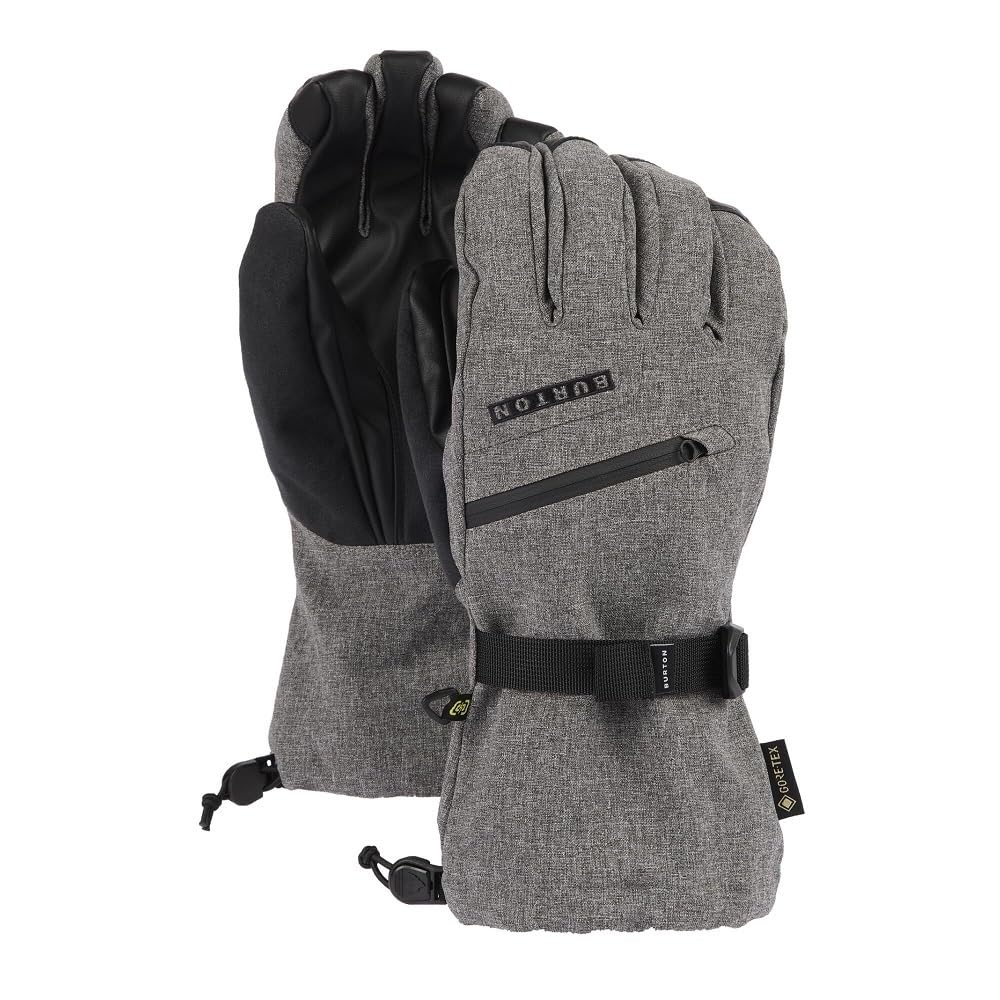
| Burton Gore-TEX Insulated GlovesPremium Pick | Snowboarding & resort skiing | Gore-TEX | Insulated with removable liner | Goat shell leather | Amazon |
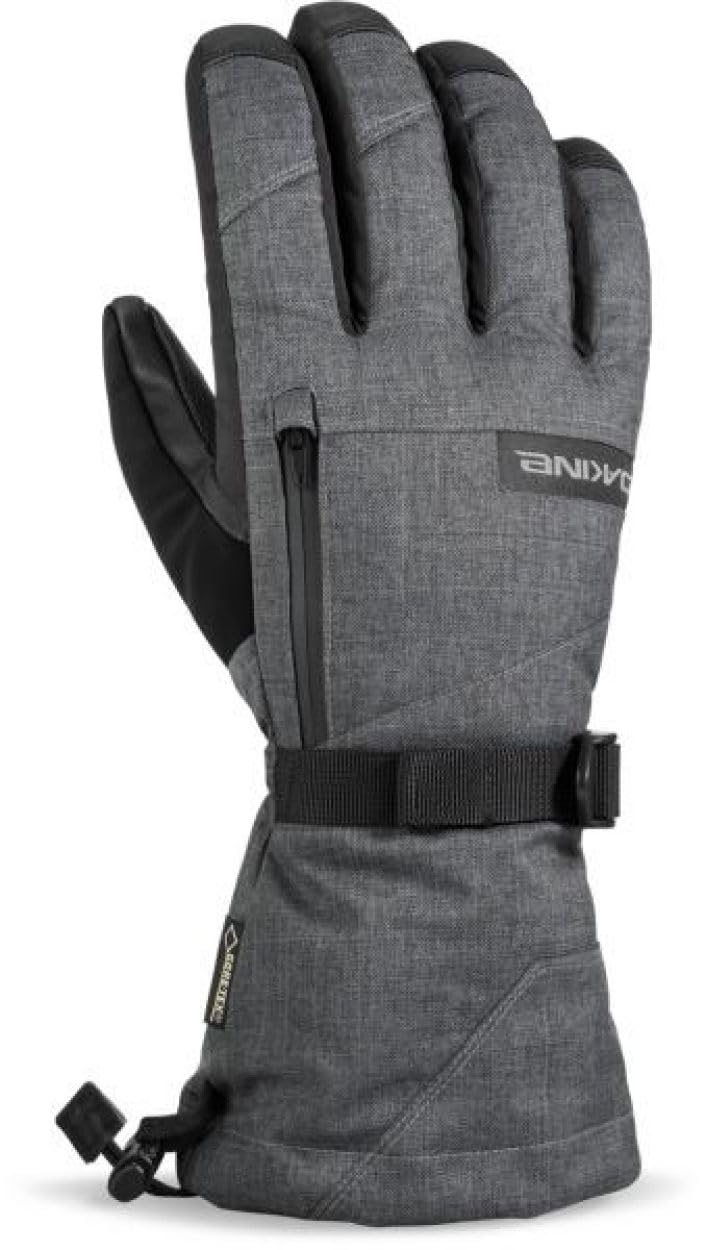
| Dakine Mens Titan Gore-Tex Snow GlovePro Grade | Skiing & snowboarding, pass-pouch users | Gore-Tex ePE | Hi Loft (110/230g) | Rubbertec | Amazon |
| SHOWA TEMRES 282-02 | Extreme cold, wet sports, ice fishing | 100% liquid-proof TEMRES | Acrylic fleece liner, rated to -58°F | Textured polyurethane | Amazon |
| Gordini Mens Gore-tex Storm Glove | Deep snow & backcountry | Gore-Tex waterproof/windproof | Megaloft synthetic | Clutch recycled synthetic leather | Amazon |
| Black Diamond Mercury Mitts | Mountaineering & extreme cold | BD.dry waterproof/breathable | PrimaLoft, removable liner | Goatskin leather | Amazon |
| Hestra CZone Mountain 5-Finger | Alpine skiing & snowboarding | CZone waterproof/breathable | Bemberg/polyester fleece lining | Impregnated goat leather | Amazon |
| Swany X-Cell 2.1 Leather Gloves | Serious resort & backcountry skiing | Dryfinger II monolitic insert | Triplex Alpha / PrimaLoft Gold | Grain & nubuck leather | Amazon |
| Hestra Army Leather Heli Ski Glove | All-mountain skiing & touring | G-Loft (not membrane-based) | G-Loft | Goat leather / Triton polyamide | Amazon |
In‑Depth Reviews
1. MCTi Waterproof Ski Gloves (3M Thinsulate)
Our pick — 4.6★ from 12,000+ verified ratings; the strongest balance of warmth, waterproofing, and price.
A true ski glove with a gauntlet cuff that seals over your jacket sleeve and keeps snow where it belongs — outside.
The MCTi is the pick that gets the ski-specific basics right at a value price. A waterproof TPU membrane insert keeps snowmelt out while still breathing, and 3M Thinsulate insulation keeps hands warm on a slow chairlift without turning them into oven mitts. The headline feature — and the reason it belongs in a ski roundup where a knit-cuff work glove does not — is the long gauntlet cuff: a drawstring cinches it down over your jacket sleeve, so a fall into powder does not pack snow up your wrist.
The details are practical. A zippered pocket on the back of the hand holds a hand-warmer packet or a lift ticket, an adjustable wrist strap and elastic keep the fit secure, and a wrist leash lets you pull a glove off to fish out your phone without dropping it in the snow. The nylon shell and reinforced palm hold up to pole grips and edging. With more than 12,000 ratings at 4.6 stars, owners consistently call them warm, dry, and a lot of glove for the money.
The trade-offs are what you would expect at this price: they run bulky, so fine-dexterity tasks like buckling a boot are easier with a thinner glove, and extreme sub-zero days or elite backcountry touring call for a pricier leather or Gore-TEX pair. But for resort skiing, snowboarding, and general snow play, they cover the essentials a ski glove needs — and size up if you are between sizes, as the fit runs a touch snug.
Ski-ready warmth
- Long gauntlet cuff with drawstring seals over the jacket sleeve to keep snow out
- 3M Thinsulate plus a waterproof TPU membrane keep hands warm and dry
- Zippered pocket, wrist leash, and adjustable strap at a value price
The trade-offs
- Bulky for fine-dexterity tasks
- Fit runs a touch snug — size up if between sizes
- Not built for extreme sub-zero or hard backcountry use — step up to leather or Gore-TEX for that
Reach for these if: you want an affordable, true gauntlet ski glove with real warmth and waterproofing for resort days and snow play.
Look elsewhere if: you need minimal-bulk dexterity or premium leather warmth for extreme cold and backcountry touring.
2. Burton Men’s Gore-TEX Insulated Gloves – Waterproof Winter Snowboard Gloves with Touch Screen Tech & Removable Liner
The Gore-TEX shield that keeps fingers warm through storm days and off-piste adventures
Burton’s Gore-TEX Insulated Gloves are a top-tier pick for riders who push hard and stay out all day. The Gore-TEX membrane delivers serious waterproofing — owners mention zero snow or water ingress even through deep off-piste snowboarding. A removable liner lets you adjust warmth between cold mornings and warm après-ski, and the pre-curved fit helps your grip on the board without fighting stiff material. The long, adjustable wrist leashes mean you can pop them off for a quick photo without losing a glove.
The outstanding quality and warmth are the consensus standouts. The removable liner gets particular praise for adding versatility across conditions. Buyers describe them as the best gloves, reporting they used them for snowboarding all off-piste with zero snow or water getting in, and that the liner keeps you warm while also allowing you to clean your goggles without scratches. The Gore-TEX liner adds warmth that holds even in wind. On the flip side, the sizing can be off — a few owners find the finger length short, so trying them on or ordering up is wise. The premium price is higher than many ski gloves, but the build and warmth justify it for frequent riders.
These gloves work well across a wide temperature range — owners use them from 10°F blizzards up to 50°F spring days, with or without the liners. For dedicated skiers and snowboarders who want a do-everything glove, this is a strong contender.
Gore-TEX waterproof
- Gore-TEX membrane keeps hands bone-dry through wet snow and storms
- Removable liner adds warmth when needed and dries fast
- Quality and durability earn high marks from long-term owners
Stiff initial feel
- Sizing runs short in the fingers for some; consider sizing up
- Higher price than many alternatives
- Not the best choice for extremely cold days below 0°F without liner
snowboarding: frequent skiers and snowboarders who need a reliably waterproof, warm glove with the flexibility of removable liners across varying conditions.
light use: you are on a tight budget — the premium price is real, but the build and Gore-TEX performance justify it for heavy use.
3. Dakine Mens Titan Gore-Tex Snow Glove
The snow glove that dries faster than your jacket after a powder day
Dakine’s Titan Snow Glove packs Gore-Tex ePE waterproofing (a breathable membrane that keeps water out while letting sweat escape) with a clever design detail: a removable mid-weight storm liner that zips out for quick drying. The Hi Loft insulation (110/230g) hits a balance — warm enough for cold chairlifts but not so bulky that you lose feel for your ski poles. An external zippered pocket on the back of the hand is perfect for a digital pass card or hand warmer packet, and the one-hand cinch gauntlet seals easily over a jacket sleeve.
The warmth and quality are what owners praise most. The drying speed gets special mention — the removable liner and shell dry extremely quickly between days. Several owners note the zipper pouch is a standout for scanning lift passes through gates. One buyer with frost-nipped fingers reports these are the only gloves that have kept his hands warm since his accident. The durability does draw mixed feedback: while many find them well-built, a few report tears or durability issues after limited use. The fit can run small, so check the size chart carefully.
For skiers who do multiple days in a row and want a glove that dries out overnight, the Titan’s removable liner is a practical advantage that simpler gloves just do not offer.
resort skiing: all-mountain skiers and snowboarders who want a waterproof, quick-drying glove with a pass pocket and the flexibility of removable liners.
backcountry: durability is your primary fear — a small number of customers note early wear on seams or fabric.
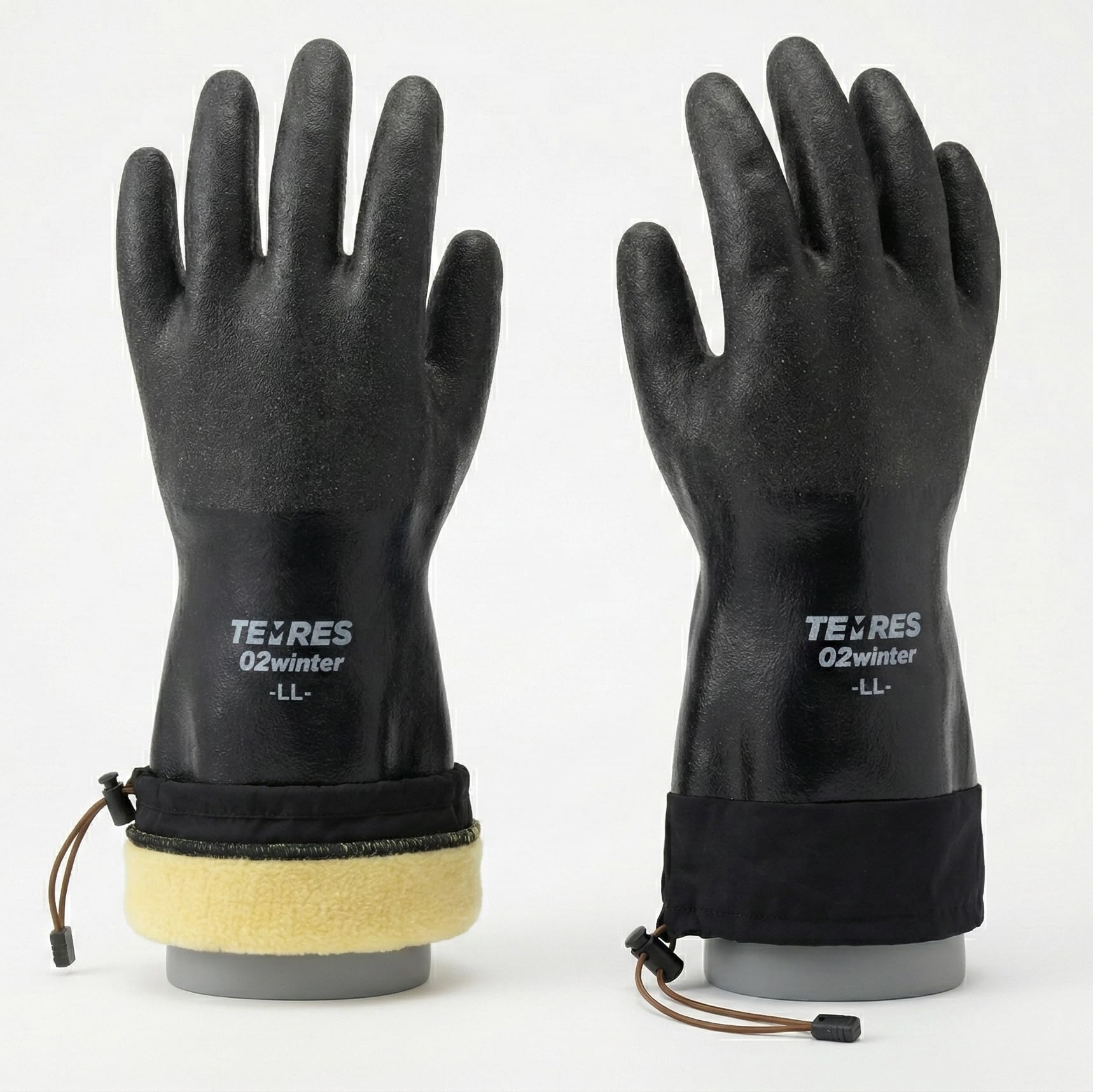
4. SHOWA TEMRES 282-02 Waterproof Insulated Winter Work Gloves, Breathable Polyurethane, Integrated Drawstring Gauntlet Snow Cuff, Thermal Fleece for Skiing, Ice Fishing
The sub-zero specialist that handles slush, ice, and full submersion without leaking
SHOWA’s TEMRES 282-02 is a different breed — a 100% liquid-proof polyurethane glove with a thermal acrylic fleece liner rated to -58°F (-50°C). That means you can dunk your hands in ice water and they stay dry. The integrated nylon gauntlet with a drawstring toggle seals around your jacket sleeve to keep snow and debris out during deep-snow activities. The textured grip finish gives you a secure hold on wet ski poles, frozen tools, or fishing gear.
Warmth and quality are the top praises, and the waterproofing is a standout — reviewers point out excellent performance in wet conditions, with one noting it performed well on Denali, keeping hands warm to around 15°F. The dexterity is better than expected for a fully waterproof glove, allowing reasonable finger movement for zippers and buckles. However, the fit runs small: the most common advice is to order one to two sizes up. The inner lining can feel rough against the skin after extended wear, and the 0.46-ounce weight makes it noticeably lighter than leather ski gloves — a trade-off for all-day wet work.
These are not the warmest glove in this list for static cold (standing still in bitter wind), but for active use in wet, sloppy conditions — skiing through freezing rain, ice fishing, or kayaking in winter — they are nearly unbeatable at the price.
cold labor: wet, sloppy conditions — skiing in rain, ice fishing, or any scenario where full submersion is a real risk.
deep snow: you want the warmest glove for standing still in bitter cold — the acrylic fleece liner is good but not as thick as a leather glove with heavy insulation.
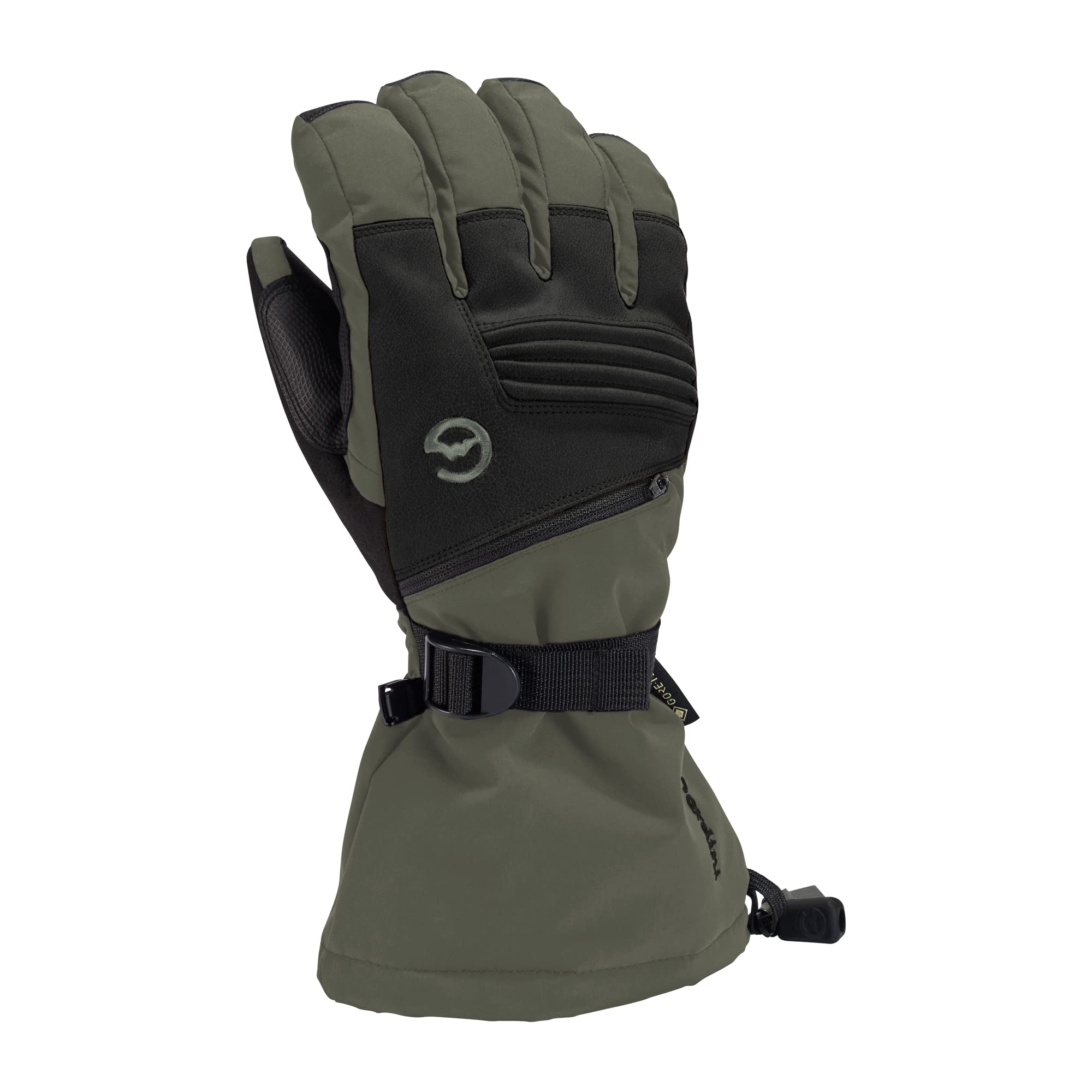
5. Gordini Mens Gore-tex Storm Glove
The storm-day glove with a hidden pocket for chemical hand warmers
Gordini’s Storm Glove is built for deep snow and cold chairlifts. The Gore-Tex insert keeps water and wind out while letting sweat escape, so your hands stay dry during high-output skiing. The Megaloft synthetic insulation provides warmth without excessive bulk, and the back-of-hand zippered pockets let you insert a chemical hand warmer for extra heat on frigid days. Extended gauntlet cuffs with drawcord closures seal over your jacket sleeve to block snow — essential for deep powder days. The clutch recycled synthetic leather palm is more abrasion-resistant and breathable than conventional cow grain leather.
Warmth and quality lead the praise, with owners appreciating the wrist leashes that prevent losing gloves during backcountry transitions. The hand warmer compartment and the improved elastic cinch string on the gauntlet get positive mentions. The fit runs large — some owners intentionally size up to fit heated liners underneath, while others find XXL fits over thick liners comfortably. Durability is a mixed point: most find the gloves well-made for the price, but a few report stitching issues or the fabric wrist-strap tab tearing out. The warmth is adequate for most resort skiing but some find it not warm enough for single-digit temperatures without the hand warmer pocket filled.
For the price, the Gore-Tex Storm Glove delivers strong waterproofing and useful features that rival gloves costing more.
wet conditions: you ski in wet, snowy conditions and want the convenience of a zippered hand-warmer pocket plus reliable Gore-Tex waterproofing at a mid-range price.
warm days: you ski only in dry, cold conditions — the hand warmer pocket adds bulk, and simpler gloves may be lighter and cheaper.
6. BLACK DIAMOND Men’s Mercury Mitts
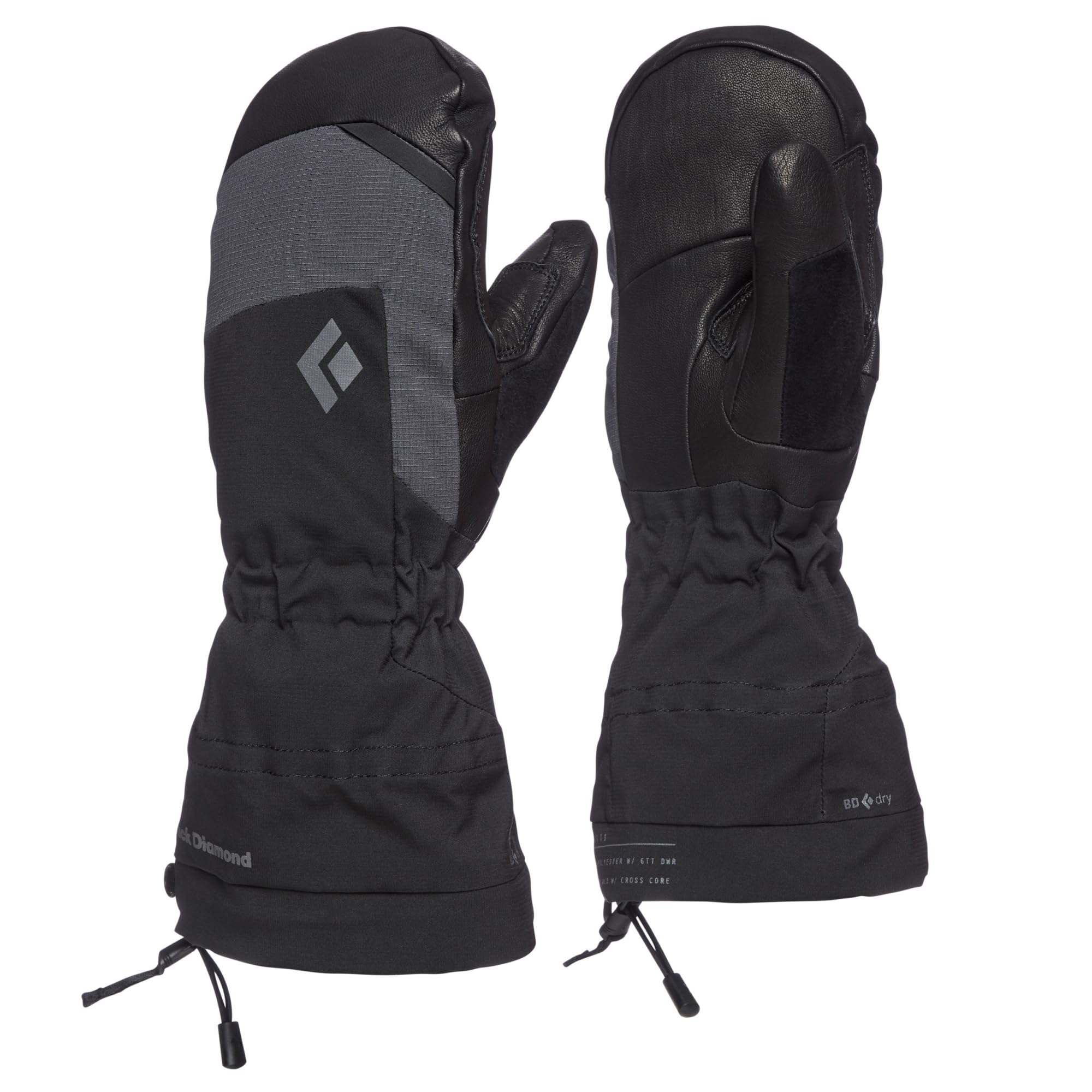
The pro-grade mitt that keeps fingers warm when the thermometer reads below zero
Black Diamond’s Mercury Mitts are designed for the harshest alpine conditions — think mountaineering, winter camping, and skiing in single-digit temperatures. The BD.dry membrane provides waterproof, breathable, windproof protection, while PrimaLoft insulation traps heat effectively. The removable liner lets you dry the mitts out between multi-day trips or swap liners across seasons. The 100% goatskin leather palm with an additional reinforcement layer stands up to rocky terrain, rope handling, and the general wear of dedicated mountain use. At 268 grams, these are lighter than many full-leather mitts while still delivering warmth.
The warmth is the headline feature — owners call them the warmest gloves they have ever owned. One buyer used them for the coldest football game they had ever attended and reported their hands stayed warm the entire time. Another owner notes that his husband went skiing in below-zero temps and came back with sweaty hands inside the mitts. The quality and comfort are consistently praised. However, fit is a mixed point: some find them roomy, while others say sizing is significantly off — it is worth checking the size chart and considering sizing up. A few owners expected more warmth below 0°F, particularly for thumbs, and the price is high enough to make this a long-term investment.
For skiers who face extreme cold regularly — backcountry days, lift-served pow in the Rockies, or ice fishing — the Mercury Mitts offer pro-grade warmth that justifies the cost.
Warm mitt design
- Exceptional warmth for sub-zero skiing and mountaineering
- Goatskin leather palm with reinforcement for abrasive terrain
- Removable liner speeds drying between multi-day trips
No finger dexterity
- Fit can be unexpected; many owners recommend sizing up
- The premium price is high — a serious investment
- Some report thumb warmth drops below 0°F
extreme cold: extreme cold skiing, mountaineering, and anyone who needs pro-grade warmth below 0°F — the Mercury Mitts deliver that without excessive weight.
fine tasks: you ski mostly in mild conditions above 20°F — the warmth and price are overkill for resort days.
7. Hestra Unisex CZone Mountain 5-Finger Glove

The compact alpine glove that prioritizes feel and dexterity over extreme bulk
Hestra’s CZone Mountain 5-Finger Glove is a precise alpine tool rather than a thick winter fortress. The CZone waterproof and breathable insert keeps hands dry while the impregnated goat leather palm provides a durable, tactile grip. The long cuff fits over a jacket sleeve to seal out snow, and the Wolf Paw construction reinforces the fingertips at the most wear-prone seams. The Bemberg/polyester fleece lining is soft against the skin and medium-weight — warm enough for active skiing but not for standing still in bitter cold.
Owners appreciate the overall build quality and warmth for skiing in conditions around 30°F. The Velcro wrist strap and snow lock effectively prevent snow ingress during deep days. However, the glove is not built for extreme cold: some owners note that fingertips get cold when wet in snowy, windy conditions. A few also point out the glove lacks a wrist loop, which some find essential for quick removal. At half a pound, these are lighter than many leather ski gloves, making them a strong choice for skiers who prioritize dexterity and a clean feel over maximum insulation.
These gloves suit skiers who want a refined, well-made alpine glove that handles most resort days without the bulk of a heavy insulated winter glove.
all-mountain: you want a dexterous, waterproof alpine glove for active skiing in moderate cold — the goat leather palm and CZone insert are a great combination for all-day resort use.
budget buy: you ski in extreme cold below 15°F or need a glove that stays warm when wet — the lighter insulation is not suited for those conditions.
8. Swany Men’s X-Cell 2.1 Sports Moisture-Wicking Quick-Drying Warm Durable Flexible Leather Winter Gloves

The leather heirloom glove that skiers keep for a decade or more
Swany’s X-Cell 2.1 is a premium leather ski glove built for longevity. The full grain and nubuck leather palm with a reinforced digitized palm offers serious abrasion resistance against ski edges and pole straps. The Triplex Alpha insulation system — a combination of different weights of PrimaLoft Gold Insulation with Cross Core technology — delivers warmth without turning your fingers into sausages. The Dryfinger II monolitic insert is 100% waterproof while still allowing moisture to escape. A zippered utility heat pocket on the back of the hand can hold a hand warmer packet, ski pass, or small items.
The quality and warmth are equally praised. The soft, supple leather is a standout — owners who replaced an 18-year-old pair note the same excellent durability and build. The glove is warm enough for very cold hands and has been used at Whistler, Grand Targhee, and Jackson Hole. The zippered pocket works perfectly for ski passes or cash. However, the wrist cuff could be longer for some, and the waterproofing is intended for snow, not rain — a few owners note the need for extra waterproofing in slush conditions. The price is high, but owners consider it well worth the money for the lifespan.
For skiers who want a single pair that lasts many seasons — and who appreciate real leather, warm insulation, and thoughtful features — the X-Cell 2.1 is a compelling investment.
Moisture-wicking liner
- Grain leather palm is soft, durable, and ages beautifully
- Triplex Alpha insulation with PrimaLoft Gold for warm hands
- Zippered pocket for ski pass or hand warmer
Thin insulation
- High price — a real investment
- Wrist cuff may be short for some jacket styles
- Waterproofing is for snow, not heavy rain or slush
active sports: serious skiers who want a long-lasting, warm leather glove that handles resort and backcountry days — the construction and materials justify the price over time.
freezing temps: you need a budget-friendly option or ski mainly in slushy rain where waterproofing demands are higher than snow.
9. Hestra Army Leather Heli Ski Glove, 5-Finger Snow Glove for Skiing & Snowboarding for Men & Women

The 9-year veteran that outlasts cheaper gloves by multiple seasons
Hestra’s Army Leather Heli is among the most respected ski gloves on the market — built with a goat leather palm and Triton polyamide backhand (a tough nylon fabric) for a balance of grip, durability, and flexibility. The G-Loft insulation (a synthetic fiber fill) provides solid warmth without making your hands feel like clubs. A snow lock and Velcro cuff closure seal out powder, and the long gauntlet fits easily over a jacket sleeve to prevent snow entry. These gloves have a proven track record: one owner reports using the same pair for nine winters, with the leather remaining pliable and tough with minor nicks.
Quality and warmth overwhelmingly lead the discussion. The exceptional construction is the most-mentioned aspect — these gloves are built to last, with the leather, fabric, and stitching holding up remarkably over multiple seasons. Owners find them comfortable in conditions ranging from -20°F to around 25°F. The wide gauntlet covers without bunching up under a jacket sleeve. The con is that the G-Loft is not the warmest insulation for extreme cold — a few owners note that fingertips get chilly below 0°F after the liner packs out. The sizing runs large, so careful reference to the size chart is important. The high price makes these a long-term investment, but owners widely agree they are worth the cost given the lifespan.
The Hestra Army Leather Heli is a benchmark in the ski glove world — it does not promise the most warmth or the cheapest price, but it delivers reliable, repairable performance that heavy users appreciate over years.
Durable leather palm
- Exceptional build quality — many shoppers say 5-10 years of use
- Goat leather palm provides excellent grip and durability
- Snow lock and long gauntlet seal out powder effectively
Stiff break-in
- High price reflects the long-term value, not budget-friendly
- Insulation is good but not the warmest for extreme cold below 0°F
- Sizing runs large; check the chart and consider sizing down
ski patrol: you want a ski glove that lasts years — the Hestra Army Leather Heli is built for durability and repairable performance.
casual wear: you need the warmest possible glove for bitter cold below 0°F — the G-Loft insulation is good but not the warmest option here.
Understanding the Specs
Waterproof Membranes
A waterproof membrane is a thin layer inside the glove that blocks liquid water from getting in while allowing water vapor (sweat) to escape. Gore-Tex is the most common — it keeps your hands dry during wet snow and chairlift rides. BD.dry (Black Diamond’s own membrane) and CZone (Hestra’s version) work the same way. Not all ski gloves use a membrane; some rely on a water-resistant shell treatment that works fine for light snow but fails under sustained wetness. For all-day skiing in wet conditions, a glove with a Gore-Tex or equivalent insert is the safer choice.
Insulation Weight and Warmth
Insulation is measured in grams — typically 110g, 170g, or 230g — with higher numbers meaning more heat retention. A 110g glove is good for high-output skiing on mild days; a 230g glove is better for cold chairlifts or low-output activities. The material matters too: PrimaLoft and Hi Loft are synthetic fills that retain warmth even when damp. Some gloves use removable liners, letting you swap between a light liner for spring days and a thicker one for winter storms. A removable liner also dries faster between ski days.
Palm Material and Grip
Leather palms — usually goat, cow, or sheepskin — offer the best combination of grip, durability, and longevity. Goat leather is thinner but very tough; cow leather is heavier and more abrasion-resistant. Synthetic palms like polyurethane or Rubbertec are lighter and cheaper but wear faster against ski edges and pole straps. A textured grip finish helps in wet or icy conditions, preventing your hand from slipping when you need it most. Gloves with an extra reinforcement patch on the palm or fingers last longer for skiers who handle gear often.
Cuff Style and Fit
Gauntlet cuffs extend several inches past your wrist and fit over your jacket sleeve, sealed with a drawcord or Velcro to keep snow out. This is the standard for resort skiing and powder days. Under-cuff gloves are shorter and tuck inside your jacket sleeve, offering a sleeker fit that works well with wrist guards or warm-weather skiing. Some gloves also include a wrist leash — a strap that wraps around your wrist so you can pull the glove off for a photo or snack without dropping it. A good fit means the glove is snug but not tight, with no bunching in the fingers.
FAQ
How should winter ski gloves fit?
Are Gore-Tex ski gloves worth the extra cost?
Can I use work gloves for skiing?
What temperature rating do I need for ski gloves?
How do I dry ski gloves overnight?
Are leather ski gloves better than synthetic?
What is the difference between a ski glove and a snowboard glove?
Can I use touchscreens with ski gloves?
How long should a good pair of ski gloves last?
What is the best way to store ski gloves between seasons?
Final Thoughts: The Verdict
For most skiers, the best winter ski gloves winner is the MCTi Waterproof Ski Gloves because it delivers a proper gauntlet cuff, 3M Thinsulate warmth, and a waterproof membrane at a price that leaves room in your gear budget. If you want the benchmark for long-term durability and resort performance, grab the Burton Gore-TEX Insulated Gloves. And for extreme cold and wet conditions where a full waterproof seal is non-negotiable, the SHOWA TEMRES 282-02 is the one to reach for.
How We Picked
We do not accept paid placement. Every pick is matched to a real buyer and a real use-case; we do not hands-on test units.
Sources & Methodology
Specifications: manufacturer listings and product documentation. Review insights: verified customer reviews, as of July 2026. Pricing: not shown on this page (it changes often); check the current price via the retailer link.
As an Amazon Associate, Calories Fit earns from qualifying purchases. This does not affect which products we feature.