
Our readers keep the lights on and the coffee maker working hard! As an Amazon Associate, I earn from qualifying purchases.
Specs are compiled from manufacturer listings and verified buyer reviews and can change over time — please confirm the key details on the product page before buying.
Forgetting you are wearing your dad’s old running shoes is the moment the wobble starts, right when you need the most stability. A powerlifting shoe fixes that instantly, turning your feet into a solid platform that pushes power straight through the floor. This is your guide to picking the best women’s powerlifting shoes without the marketing noise.
I’m Mohammad — the founder and writer behind Calories Fit. This guide is built by comparing the manufacturers’ published specifications and the patterns across verified customer reviews, so you get each pick’s real strengths and trade-offs instead of marketing spin.
The right pair gives you a firm, flat or slightly raised heel so your ankles stay neutral, your knees track better, and you can drive heavier weight safely — all things a cushioned trainer just kills.
Our Picks at a Glance


How To Choose The Best Women’s Powerlifting Shoes
Choosing a powerlifting shoe is very different from buying everyday sneakers. The wrong cushioning can actually steal your power and hurt your form. Focus on a few key things to get the perfect pair for your feet and your lifts.
Sole Height: Flat vs. Raised Heel
The sole is the most important part. A completely flat sole (zero drop) connects your foot directly to the ground, which is ideal for deadlifts. A raised heel — usually around 0.75 inches — shifts your weight forward slightly, helping you achieve a deeper squat with less ankle mobility. Think about what you prioritize: deadlift-first means go flat, squat-first points you to a raised heel.
Fit and Foot Shape
Your foot shape matters a ton here. Some brands run narrow and suit slim feet, while others offer more room in the toe box. If you have a wider foot, you often need to go half a size up. The closure also matters — a lace-and-velcro strap system locks your foot in place way better than laces alone, stopping any heel slip when you push heavy weight.
Quick Comparison
| Model | Best For | Sole Type | Closure | Weight | Amazon |
|---|---|---|---|---|---|
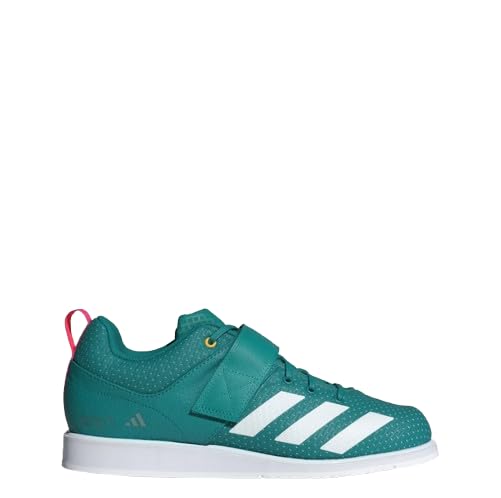
| Adidas Powerlift 5★ Best Overall | All-around Best Overall | Raised Heel | Laces | 1 lb | Amazon |
| Reebok Legacy Lifter IIPremium Squat Specialist | Premium squat performance | Raised Heel (22mm) | Lace + Strap | Heavier | Amazon |
| Otomix Stingray EscapeDeadlift Specialist | Ultra-flat deadlift & bodybuilding | Flat Sole | Laces | Ultra-light | Amazon |
| Adidas Dropset 3 | Versatile cross training | Flat (6mm drop) | Laces | 2.43 lb | Amazon |
| CORE Force Black | Value raised-heel lifter | Raised Heel (0.75 in) | Lace + Strap | Moderate | Amazon |
| CORE Bodybuilding Shoes | Flat sole, budget choice | Flat | Lace + Strap | Moderate | Amazon |
| Generic Weightlifting Shoes (B0BKW82YRW) | Wide feet, beginner friendly | Raised Heel | Lace + Strap | Moderate | Amazon |
| Osterland Weightlifting Shoes | Budget-friendly stability | Raised Heel | Lace + Strap | Moderate | Amazon |
In-Depth Reviews
1. Adidas Unisex-Adult Powerlift 5 Weightlifting Shoes
Our pick — over 4.5★ from 350+ verified ratings; the strongest balance of quality and price.
The crowd favorite that nails a strong balance of support and daily comfort.
Squatting in these feels like your feet are cemented to the floor. The stable sole and mild heel rise help you sit deeper into the hole without needing insane ankle mobility, which is why fit is the number one thing people rave about. They are true to size — a 12 fits like a Nike 11.5-12 — so ordering your regular shoe size usually works.
You get a flat, firm sole that transfers every pound of force straight into the floor—something running shoes with squishy cushioning cannot do. Buyers report it is a “standout” for squats, helping you isolate your quads and reduce lower-back strain. The trade-off: the label looks a little cheap, and the laces wear down faster than the rest of the shoe.
Lifter-approved positives
- Stable, non-compressible sole for heavy loads
- True-to-size fit with good overall comfort
- Affordable entry point for a major brand
Honest trade-offs
- Uncomfortable for walking or cardio
- Narrow midfoot can feel tight for wider feet
Your go-to lifter if: you want a proven, high-rated shoe that improves squat mechanics while staying affordable.
Think twice if: you need a shoe for both lifting and casual wear — this one stays in the gym bag.
2. Reebok Womens Legacy Lifter Ii
A narrow, supportive workhorse built for serious squat depth and ankle relief.
If your squat depth is limited by tight ankles, the 22mm heel on these is a real solution — it takes the strain off your lower back and lets you sit deeper instantly. The fit is stiff and secure, almost like a boot, which is exactly what you want under a heavy bar. Arch support gets a lot of praise here; your foot is locked in place with the laces and a velcro strap.
The trade-off is the narrow last. This shoe is not kind to wide feet, and a few found the straps were not functional straight from the start. It is also heavier than standard trainers, so it stays in the gym. Owners mention it is “well worth the money” for the improvement in squat form.
Depth enhancer: the 22mm heel makes this a top choice for anyone whose squat is limited by ankle mobility. Go half a size up if you are between sizes.
Not for cross-training: this is a dedicated lifting shoe, not a versatile trainer.
Reach for this if: you prioritize squat depth and love a snug, supportive fit.
Look elsewhere if: your feet are on the wider side.
3. Otomix Women’s Stingray Escape Bodybuilding Weightlifting MMA & Wrestling Shoes
A feather-light flat sole that disappears on your foot and connects you to the floor.
For deadlifting and bodybuilding, a thick heel gets in the way. The Otomix Stingray uses a full flat sole that gives you total ground feel, making it popular not just for lifting but for wrestling and Krav Maga too. The quality is praised widely, and people love how incredibly comfortable and lightweight it feels — one retail manager reported wearing them for 9+ hour shifts.
The fit runs slightly wide, which is great for normal feet but less ideal if you have very narrow feet. Durability gets mixed marks: some owners found stitching issues over time. At 1 lb, these are a full pound lighter than most lifting shoes, making them easy to pack for the gym.
Ground connection: the flat, sewn-on sole provides superior traction and stability for deadlifts, not squats.
Fit caution: runs a bit wide, and the insole may shift — some owners glued it down.
Your pick if: you are a deadlift-first lifter or do bodybuilding and want a shoe that feels like a second skin.
skip it if: you need a raised heel for squats.
4. Adidas Unisex-Adult Dropset 3 Trainer

A stable, wearable trainer that bridges lifting and daily gym movement.
If you do CrossFit, HIIT, or just want one shoe that does it all, the Dropset 3 is your answer. Its 6mm midsole drop gives you a flat platform for stable squats and deadlifts, but still has enough cushion for box jumps and lunges. The Traxion outsole keeps your footing secure, and the upper is made with at least 50% recycled content, which is a nice touch. Quality and comfort are the top things owners highlight.
The catch here is fit. The Dropset 3 runs half a size small, so definitely order up, and it is not for wide feet — several owners found it too narrow. Also, this is not a shoe for running or outdoor walking; it is tune for the gym floor only.
Versatile strength
- Flat, stable platform good for most lifts
- Good cushioning for dynamic movements
- Made with recycled materials
Versatile weakness
- Runs small; size up half a size
- Narrow fit not suitable for wide feet
Best if: you want one reliable shoe for a varied gym routine including lifting and light cardio.
Not for: runners or lifters with wide feet.
5. Core Weightlifting Shoes Force Black

A budget-friendly raised-heel option that aims high but has a quality catch.
At this price point, getting a 0.75-inch raised heel with a lace-and-strap closure is a real value proposition. The heel and platform are rigid, which helps fix issues like your toes coming up during the squat drive. Owners love the grip and look, and for the price, the quality feels solid.
However, fit is a mixed bag — some find it great, others say it runs tight across the front of the foot. The bigger issue is durability: a few customers note the lace loops breaking after just one or two uses. Going half a size up is a safe bet if you do not want a super tight squeeze.
Smart value: gives you the mechanics of an expensive lifting shoe for less.
Build note: the lace loops are a weak point — handle them with care.
Grab this if: you want a cheap entry into raised-heel lifting without the premium price tag.
pass on it if: you want durability that survives aggressive weekly training.
6. CORE Bodybuilding Shoes – Squat Shoes for Men and Women
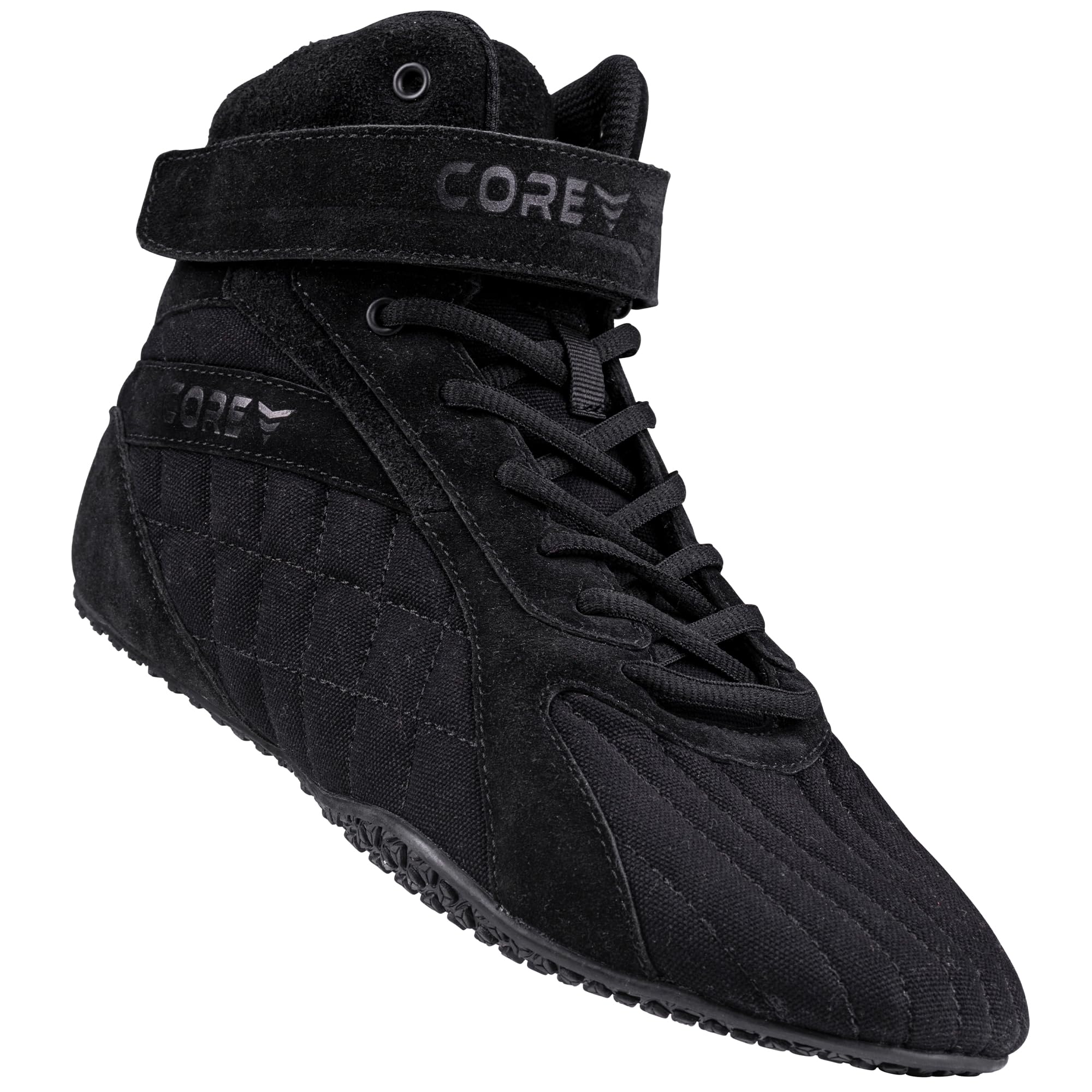
A flat, budget-friendly shoe that delivers great traction if the fit works for you.
The flat sole on this shoe gives you excellent traction on the gym floor — one reviewer noted no slipping even on carpet. It is well-made and comfortable for squats and lunges, with ankle straps that hug your ankles well. The support is good enough that a lifter with 14+ years of experience called it the best leg day shoe they had ever worn.
You hear two complaints repeatedly: sizing is inconsistent, and the toe box is too narrow for wide feet. One buyer measured the insole width on a size 8.5 at only 84mm and found it too tight. Another mentioned the toes are a bit pointy. If you have wide feet or are between sizes, you should approach with caution.
Solid grip: the flat, non-slip sole is perfect for stable deadlifting and squatting.
Sizing warning: runs narrow and small; definitely size up if you are on the edge.
Works well if: you have narrow or standard-width feet and want a flat sole for a good price.
it’s not for you if: your feet are wide or you fall between standard shoe sizes.
7. Weightlifting Shoes, Powerlifting Shoes Gym Shoes for Crossfit Lifting Footwear
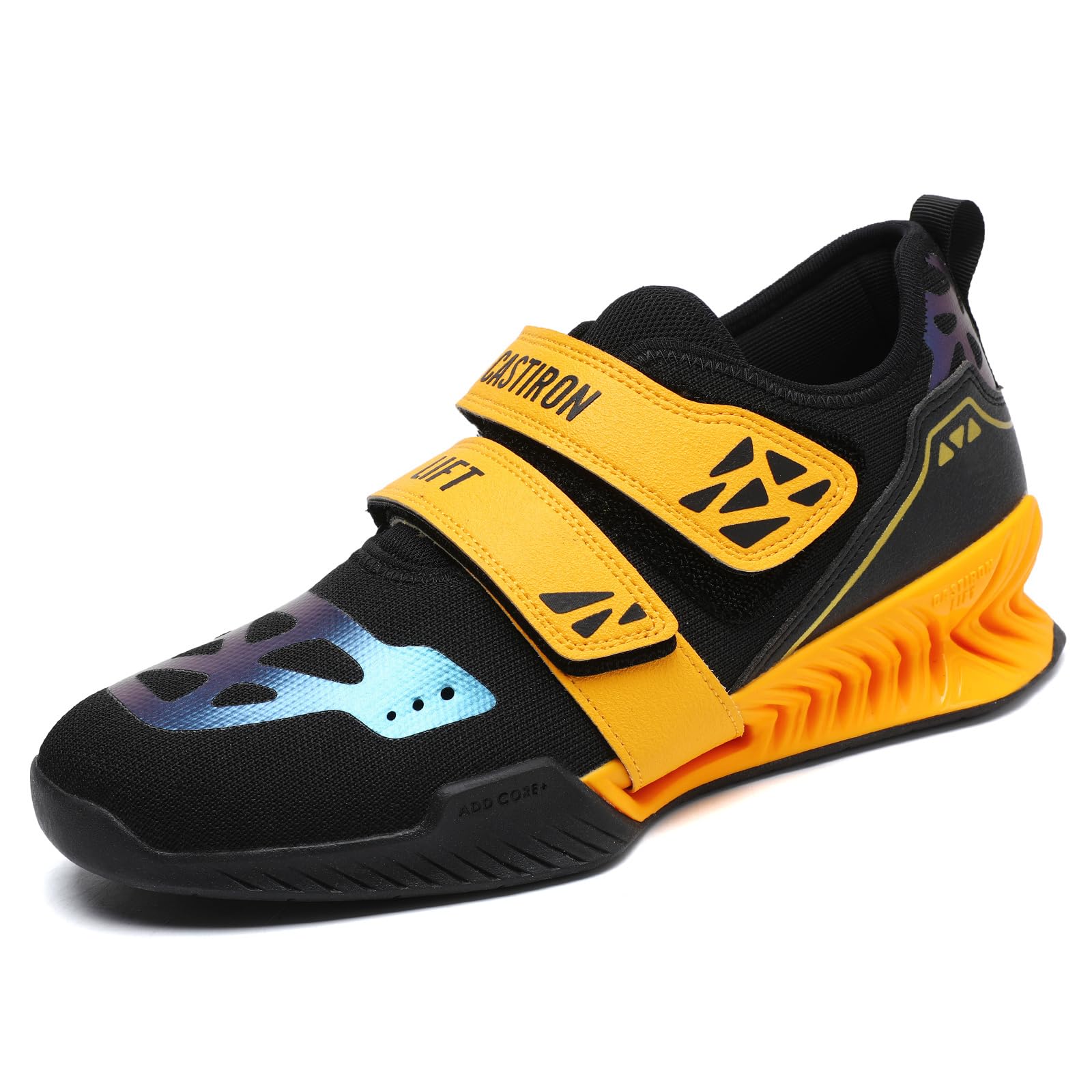
A comfortable raised-heel shoe that is actually built for wider feet.
One of the few raised-heel options that is friendly to wider feet. The fit is described as a “snug, perfect glove” by one buyer with a wide size 8.5 women’s foot who wears a men’s size 6. The velcro straps and solid angled sole make you feel planted for leg exercises.
The quality is praised, but the color scheme gets mixed reactions. One owner called them “ugly” and had to paint the straps black. Durability seems solid overall, though one buyer mentioned the black velcro flap curls over time. It runs true to size for standard feet; those with wide feet should go up half a size.
Wide-foot friendly
- Gives wide feet a snug, supportive fit
- Good stability for squats and deadlifts
- Durable construction holds up over a year
Style and details
- Color looks cheap or mismatched to some
- Velcro flap may curl with heavy use
Best for: beginners and lifters with wider feet who need a comfortable, stable raised heel.
Not for: anyone who cares about the shoe looking sleek.
8. Osterland Weightlifting Shoes: High-Performance Footwear for Gym Powerlifting
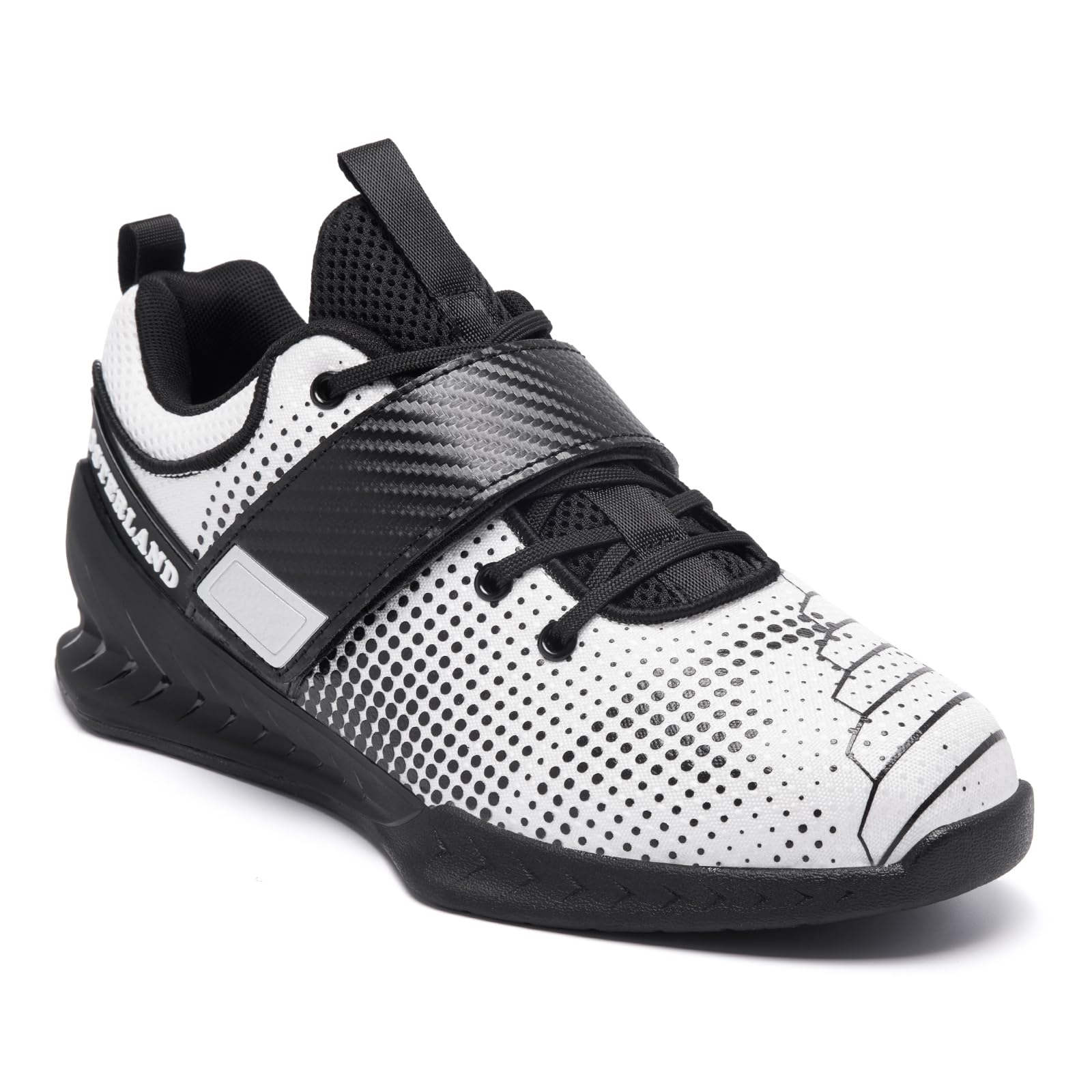
A surprisingly stable budget shoe that helps you squat deeper without the big-brand cost.
If your wallet says no to Adidas and Reebok, the Osterland is a genuine contender. The solid hard rubber outsole has zero compression under heavy weight — it feels nothing like a squishy running shoe. The heel lift gives you that deep squat mobility that helps quad activation, and owners consistently say it reduces lower back strain. Quality is the most praised aspect, which is impressive for the price tier.
It runs narrow and a little big, so most buyers recommend sizing down half a size. The big durability issue is the pull tab on the tongue — one owner reported it ripped after three months with once-a-week use. Also, the toe box is stiff, which can cause discomfort for some during longer sessions.
Stable platform: the hard outsole and moderate heel provide excellent support for squats and deadlifts.
Wear and tear: the pull tab is fragile, and the toe box takes time to break in.
Your pick if: you need an affordable shoe that offers real stability for deep squats.
look elsewhere if: you need a shoe that can handle frequent high-volume training right from the start.
Understanding the Specs
Sole Height and Drop
This is the single most important spec. A raised heel (often 0.75 inches or about 22mm) tilts your pelvis forward, helping you squat deeper even if your ankles are tight. A flat sole (zero drop) keeps your foot horizontal for deadlifts, letting you pull from a neutral position. Do not get a raised heel for deadlift-dominant training, and do not get a flat sole if you struggle with squat depth.
Closure System: Laces vs. Lace + Strap
A pair of laces alone can allow heel slip when the weight gets heavy. A velcro strap over the midfoot locks your foot down, preventing that slide and making the shoe feel like a single solid unit. If you are lifting near your max, a lace-and-strap closure is worth the extra seconds to put on.
FAQ
Are powerlifting shoes true to size?
Can I use powerlifting shoes for deadlifts and squats?
How long do powerlifting shoes last?
What is the difference between 0.75 inch and 22mm heel?
Should I get a flat sole or a raised heel?
Can I walk in powerlifting shoes?
Are expensive powerlifting shoes better than cheap ones?
Do I need powerlifting shoes as a beginner?
What is the best women’s powerlifting shoe for wide feet?
Why does my shoe have a velcro strap?
Final Thoughts: The Verdict
For most people, the women’s powerlifting shoes winner is the Adidas Powerlift 5 because it combines the highest owner satisfaction with a proven, stable design that improves squat mechanics immediately. If you want a dedicated deadlift shoe, grab the Otomix Stingray Escape for its feather-light, ultra-flat sole. And for a space-efficient one-shoe gym solution that also handles dynamic work, the Adidas Dropset 3 is the one to reach for.
How We Picked
We do not accept paid placement. Every pick is matched to a real buyer and a real use-case; we do not hands-on test units.
Sources & Methodology
Specifications: manufacturer listings and product documentation. Review insights: verified customer reviews, as of July 2026. Pricing: not shown on this page (it changes often); check the current price via the retailer link.
As an Amazon Associate, Calories Fit earns from qualifying purchases. This does not affect which products we feature.