
Our readers keep the lights on and the coffee maker working hard! As an Amazon Associate, I earn from qualifying purchases.
Specs are compiled from manufacturer listings and verified buyer reviews and can change over time — please confirm the key details on the product page before buying.
If you are new to climbing or ready to move past beat-up rental shoes, the biggest question is not which shoe looks coolest — it is which one fits your foot shape and climbing style without leaving you in agony between routes. A good women’s climbing shoe should feel snug, not punishing, and should let you feel footholds you would otherwise skate off. The wrong pair kills your confidence on the wall before you even start.
I’m Mohammad — the founder and writer behind Calories Fit. This guide is built by comparing the manufacturers’ published specifications and the patterns across verified customer reviews, so you get each pick’s real strengths and trade-offs instead of marketing spin.
Whether you are just starting at the gym or chasing your first outdoor sends, this guide to best women’s rock climbing shoes cuts through the fit confusion to match you with the pair that actually works.
Our Picks at a Glance

How To Choose The Best Women’s Rock Climbing Shoes
The right climbing shoe balances comfort and performance, with trade-offs shifting based on whether you gym-boulder twice a week or project cracks outdoors.
Fit Is Everything — Climbing Shoes Are Not Street Shoes
A climbing shoe should feel tight across the instep and snug at the heel, with toes slightly curled but not cramped. The crowd-sourced rule across every shoe here is to size down at least a half size from your typical sneaker size, and sometimes a full size to two sizes. Leather shoes will stretch with use; synthetic uppers will not give as much, so buy snug but not painful.
Shape: Flat vs Moderate vs Aggressive
Flat shoes (also called neutral lasts) keep your foot in a natural, relaxed position. They are best for all-day comfort and for beginners who are still learning to trust their feet. Moderate shoes have a slight downturn and mild asymmetry — they curl your toes just enough to grip on steep terrain without killing your arches on vertical climbs. Aggressive shoes are sharply downturned and highly asymmetrical; they are for overhangs and bouldering, but they are punishing to wear for long sessions.
Sole Rubber and Thickness
Thicker rubber (4mm to 5mm) lasts longer and edges better on tiny footholds, but reduces sensitivity for smearing on slabs. Brands like Vibram XS Edge offer excellent durability and edging performance, while softer compounds like Vibram XS Grip 2 provide more feel on friction-dependent moves. Beginners can start with thicker, stiffer soles and move to thinner, softer rubber as their footwork improves.
Closure: Laces vs Velcro
Laces give you micro-adjustability across the whole foot, which is great for dialing in fit as leather stretches. Velcro (hook and loop) straps are faster on and off — ideal for gym sessions where you switch between climbs and rests — but offer less precision in tension across the forefoot. There is no wrong choice; pick based on how often you plan to remove the shoes.
Quick Comparison
| Model | Best For | Closure | Sole Thickness | Profile | Amazon |
|---|---|---|---|---|---|
| La Sportiva Tarantula★ Best Overall | Best Overall / Starter | Velcro | 5mm FriXion RS | Flat / Low Asymmetry | Amazon |
| SCARPA Helix LaceVersatile All-Rounder | Versatile Trad & Sport | Laces | 3.5mm Vibram XS Grip 2 | Flat / Slight Asymmetry | Amazon |
| Evolv Elektra | Indoor Performance Value | Laces | — | Moderate | Amazon |
| La Sportiva Tarantula Boulder | All-Day Gym Sessions | Velcro (Hook & Loop) | 5mm FriXion RS | Flat / Low Asymmetry | Amazon |
| La Sportiva Finale | Stepping Up to Intermediate | Laces | 4mm Vibram XS Edge | Pointed / Medium Asymmetry | Amazon |
In‑Depth Reviews
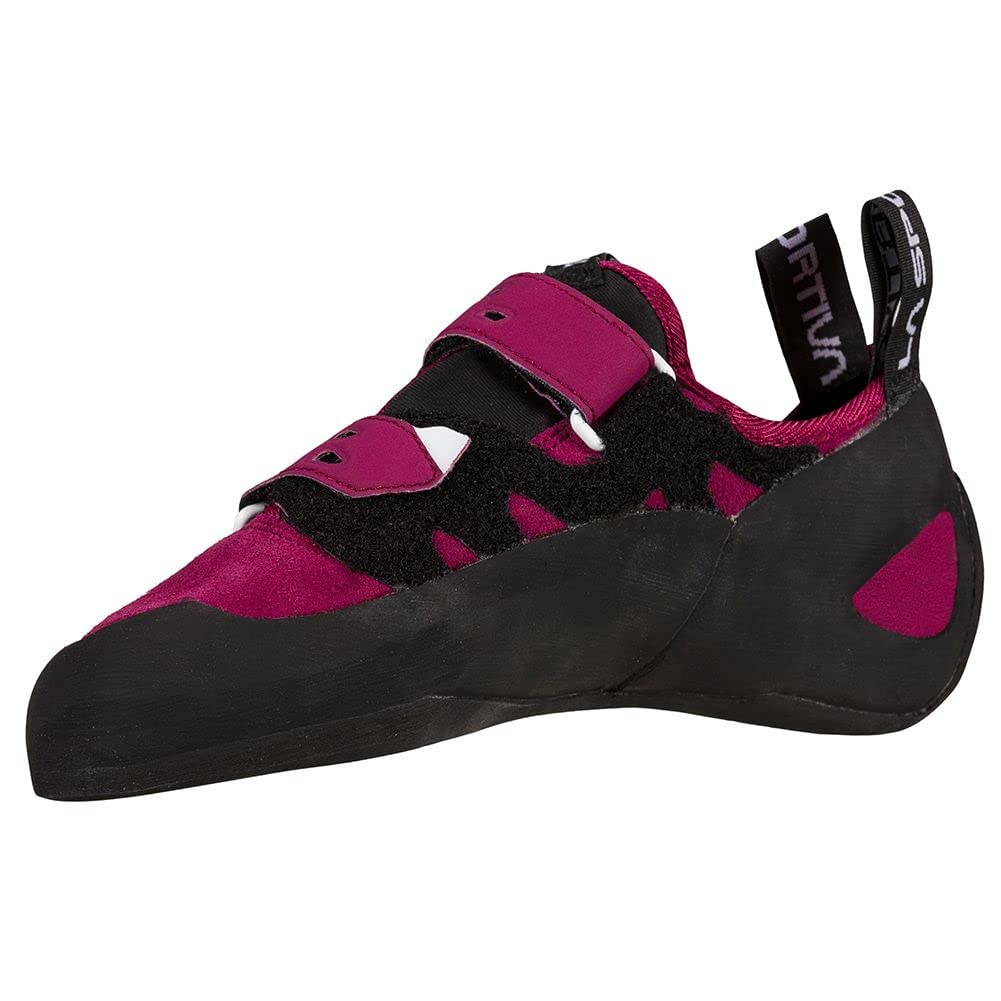
1. La Sportiva Womens Tarantula All-Around Rock Climbing Shoe
Our pick — over 4★ from 200+ verified ratings; the strongest balance of quality and price.
The beginner-friendly flat shoe that skips the brutal break-in period.
This pick is the crowd favorite for good reason: it combines a forgiving, flat profile with a 5mm FriXion RS sole that sticks to gym holds and beginner-friendly outdoor routes (rated up to 5.10-grade climbs). The Velcro closure makes it the fastest shoe to yank off between burns — a real advantage during long gym sessions. The Tarantula measures 14 x 6 x 5 inches, so the toe box is roomier than many entry-level shoes, but the trade-off is a less precise fit for narrow feet.
The mixed feedback on fit is real: plenty of owners find it perfect after sizing down one full number (one went from street 8.5 to 7.5), while others note the high back can cause heel blisters. The interior lining also sheds a bit over time, leaving a faint orange residue on bare feet after 30-plus wears — though performance itself is unaffected. Quality is the aspect praised most here, with 18 owners singling it out, and the crowd sums it up well: it is “the most tolerable tight shoe” you will own.
Why it works for most: The Tarantula is durable after months of regular use, comfortable enough for hours on the wall, and flat enough to teach you proper footwork without punishing your arches. It runs small, so order a full size below your street shoe for the right snug fit.
The honest limitation: If you have very narrow feet or a low-volume heel, the slightly roomy toe box and potential heel slip may frustrate you — the SCARPA Helix below offers a tighter heel pocket for that foot shape.
Reach for this if: You are new to climbing or want an affordable, low-hassle gym shoe that you can wear all session without counting the minutes until you take them off.
Think twice if: You have narrow heels that slip in neutral shoes, or you are already projecting steep overhangs where a downturned shoe would give you more toe power.
2. SCARPA Women’s Helix Lace Rock Climbing Shoes
A lace-up neutral shoe that molds to your foot and sticks to dusty holds.
At 7.1 ounces per half pair (size 38), the Helix is noticeably lighter than many competitors its size, and the 3.5mm Vibram XS Grip 2 outsole delivers excellent friction on slick indoor volumes and gritty outdoor slabs. The flat profile with slight asymmetry strikes a smart balance: it keeps your toes comfortable for all-day trad climbing while giving just enough shape to bite into small edges. The Vibram XS Grip 2 rubber is softer than the Tarantula’s FriXion RS, which means more sensitivity on smears but slightly less durability on sharp granite edges.
Fit is the dominant topic among owners, and it runs small — most buyers size up a half to a full size from their street shoe (one going from 8.5 to 9.5). The suede upper (1.8mm thick) stretches a half to a full size as you climb in it, so a snug initial fit is the goal. A few units arrived with signs of wear or torn boxes, which suggests checking the return policy before committing, but the consensus is that the grip in dust and the sturdy toe for tiny crevices make up for quality-control quirks. Owners on local climbing teams wear these daily and call them “the most comfortable neutral climbing shoe for average-shaped feet.”
What wins people over
- Laces let you dial in tension across the whole foot, so leather stretch is manageable
- Soft Vibram XS Grip 2 rubber feels planted on dusty or polished holds
- Lightweight at 7.1 oz — you barely notice them on approach hikes
The honest trade-offs
- Sizing is inconsistent: you may need to go up a full size or more to avoid pain
- A few buyers received shoes that looked pre-owned or arrived with construction defects
Best for: Anyone who prefers lace adjustability over Velcro convenience, especially if you climb both indoor routes and outdoor trad lines where comfort over a long day matters.
skip it if: You want a shoe that fits true to size from the start — this one demands patience for break-in and the right sizing strategy.
3. Evolv Elektra Climbing Shoe – Women’s
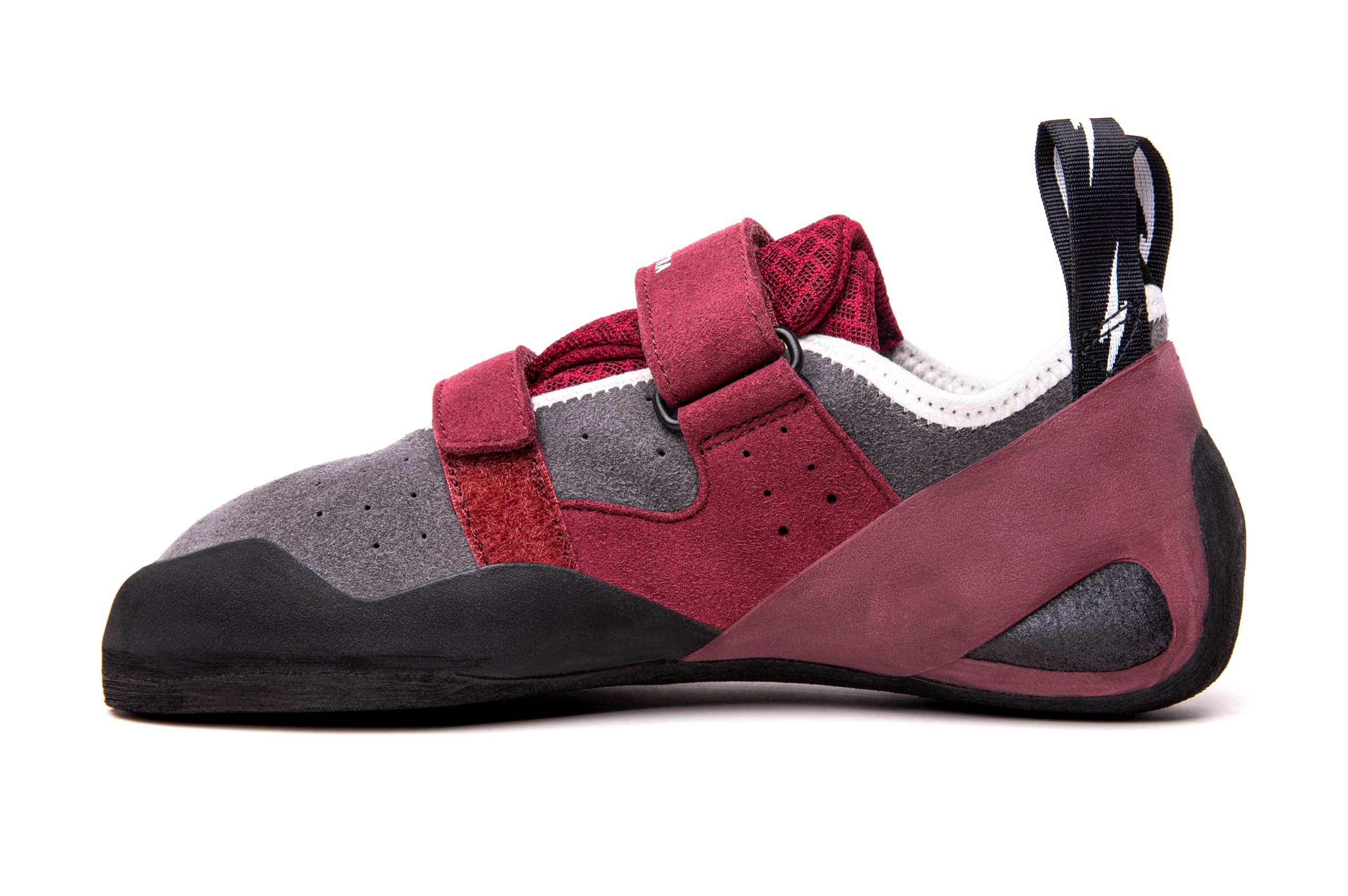
A moderate downturn that rewards climbers ready to leave flat shoes behind.
The Elektra is a step up from a pure beginner shoe — its moderate shape curls your toes just enough to lock onto small footholds on overhangs without the punishing cramp of a fully aggressive last. The lace closure gives you the same micro-adjustability as the SCARPA Helix, and owners who used it for bouldering report that it “improved bouldering performance” noticeably compared to flat rentals. The build quality and materials earn praise even from reviewers whose sizing did not work out — “excellent craftsmanship” is a recurring theme.
Sizing is the Elektra’s biggest hurdle, and it is the most extreme of any shoe here. The data shows massive variation: some wear their street size (6 street, 6.5 in the Elektra), while others had to go up two full sizes (8.5 street needed a 10.5 in the Elektra). One owner who normally wears an 8.5 found even the 10.5 “fit perfectly” after going two sizes up. A few unlucky buyers received what appeared to be child-sized shoes instead of the women’s model. The takeaway is clear: order from a retailer with a free returns policy and be prepared to exchange.
Performance upside: Once you nail the size, the moderate downturn and excellent materials make this a sharp indoor climbing shoe for gym sessions where you want more toe power than a flat shoe provides.
The sizing catch: The inconsistency in sizing is a real inconvenience — many owners loved the shoe but returned it because they could not find a fit. Order two sizes up from your street size as a starting point.
Grab this for: Intermediate gym climbers who want a moderate, performance-oriented shoe and are willing to play the size-exchange game to get there.
Look elsewhere if: You want a shoe that fits predictably on the first try, or you have wide feet — the narrow sizing window makes this a gamble for every foot shape.
4. La Sportiva Womens Tarantula Boulder All-Day Climbing Shoes
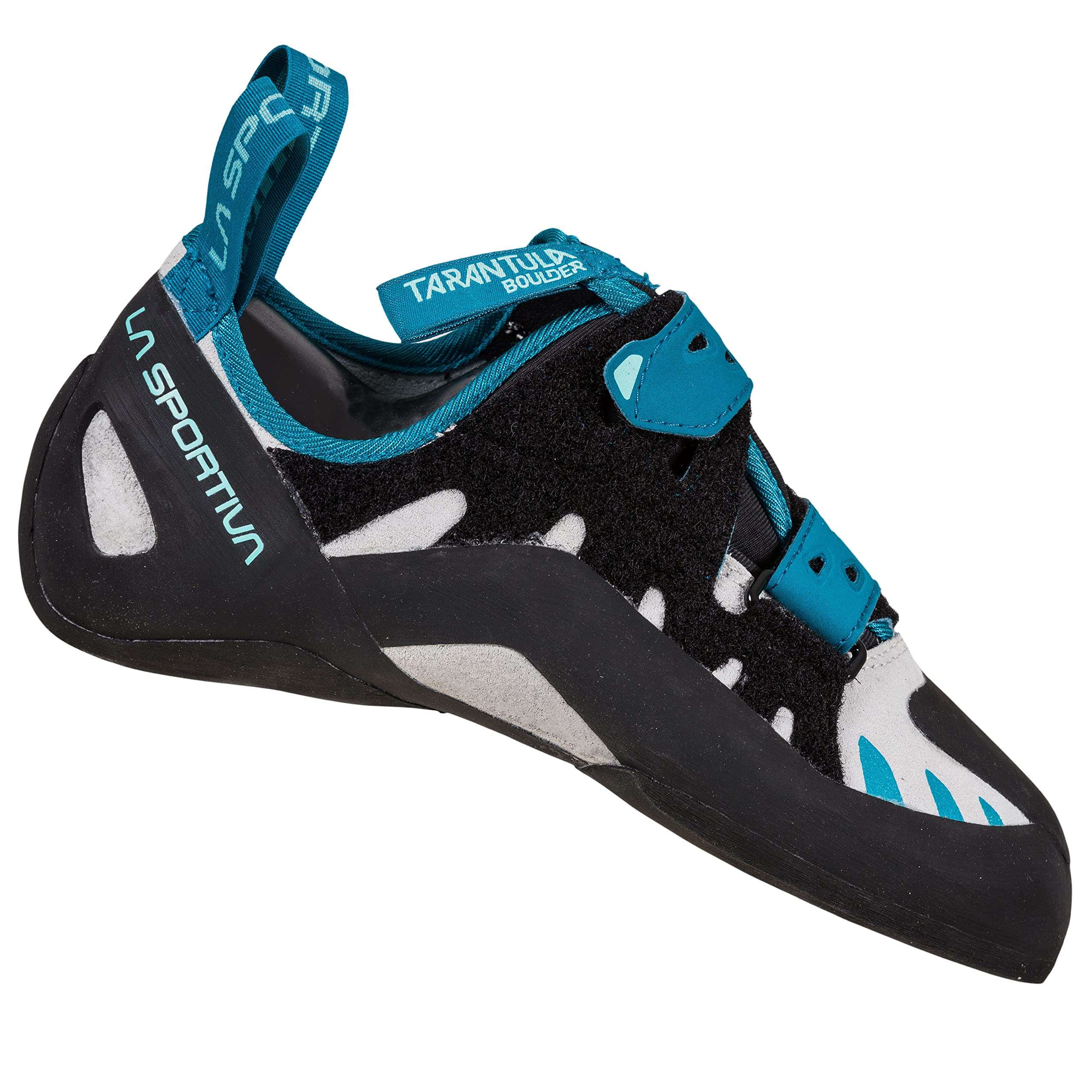
The same forgiving flat last with a higher volume fit for wider feet.
The Tarantula Boulder shares the Tarantula’s DNA — the same 5mm FriXion RS sole, the same flat profile with no downturn, the same low asymmetry — but it comes in a higher volume build with a medium-wide fit. That makes it a better match for climbers with wider forefeet who found the standard Tarantula too narrow. The “all-day” label is earned: the flat shape lets your foot relax on vertical terrain, and the Velcro closure keeps entry and exit quick between routes. It is rated as an introductory shoe with a stiffness of 4 out of 5, meaning it offers more support for new climbers still developing ankle stability.
Quality is the top praise, but comfort scores are mixed — the main complaint is that the heel counter digs into the Achilles area. Several owners note that the back of the shoe “pinches at the heel” or “rubs on my ankles weird,” and while some hope it improves with break-in, others returned the shoe for that reason. The sizing is more predictable than the Elektra: most buyers go half a size up from their street shoe (street 8 to a 7.5-8) and find the fit perfect. For beginners who do not mind the potential ankle rub, the consensus is that these are “great for someone just getting into climbing.”
What owners appreciate
- Higher toe volume suits medium-wide feet better than the standard Tarantula
- Velcro straps eliminate pressure points that laces can create across the instep
- Stiff sole (4/5) supports proper footwork for newcomers
What holds it back
- Heel digging is the most-reported issue — a few buyers could not break past it
- Sizing still requires a half-size up, and the heel pinch does not stretch much
Choose this if: You have medium-to-wide feet and want an affordable flat shoe with Velcro convenience for long gym sessions.
Pass if: You have a low-volume heel that needs a precise, non-slip pocket — the SCARPA Helix’s lace closure will likely serve you better.
5. La Sportiva Womens Finale Rock Climbing Shoes

A progressive laced shoe that graduates with you from gym to crag.
The Finale sits one tier above the Tarantula line: it is designed for climbers who have outgrown introductory shoes and are refining their technique. The sole is a 4mm Vibram XS Edge, which is thinner and harder than the 5mm FriXion RS used on the entry-level La Sportivas — it edges beautifully on tiny footholds and lasts longer on abrasive rock. The pointed toe with medium asymmetry is more aggressive than the flat Tarantula but less punishing than a fully downturned bouldering shoe, making it a true progressive shape. Owners describe it as “not too aggressive” and praise it as a comfortable everyday gym shoe that also handles outdoor routes.
Fit and comfort are both top-rated aspects here — unusual for climbing shoes. The sizing is more predictable than the other picks: the data shows most buyers go down half a size from their street shoe (street 8 to 7.5-8) and find the fit spot-on. The shoes are comfortable from day one, according to the majority of owners, and one climber who wore them for 1.5 years before finally wearing a hole in the toe from dragging. A few buyers received used-looking pairs with torn boxes, which is a quality-control concern, but the overwhelming feedback is that these shoes hold up well both indoors and outdoors. The 4mm Vibram XS Edge rubber provides “excellent grip” on heel hooks and edging moves without sacrificing too much sensitivity.
Why it earns the top score: At 4.6 out of 5, the Finale has the highest rating of any shoe here, and the fit/comfort scores are both unanimously positive. It is the shoe that owners buy a second time — which is the strongest signal in climbing footwear.
The honest caveat: The price is the highest on this list, and the leather upper stretches over time, so you need to tolerate a snug initial fit during the first few sessions.
Buy it for: Moving from beginner to intermediate climbing — it gives you edge precision and lasting comfort on long route days.
Skip it for: Pure bouldering on steep overhangs, where a more aggressive downturn would give you better heel security and toe hooking power.
Understanding the Specs
Last Shape and Asymmetry
The “last” is the mold the shoe is built around, and it determines how the shoe fits your foot. A flat last (like the La Sportiva Tarantula) keeps your toes in a natural, relaxed position — comfortable for long sessions but less powerful on steep terrain. An asymmetrical last curves the shoe so your big toe is drawn toward the center, concentrating force on small footholds. More asymmetry equals more precision but also more pressure on your foot’s outer wall. Beginners should start with flat, low-asymmetry shoes and only move to moderate or aggressive lasts as their footwork and toe strength develop.
Rubber Compound and Sole Thickness
The most common rubbers in this category are Vibram XS Edge, Vibram XS Grip 2, and La Sportiva’s own FriXion RS. XS Edge is a harder compound (good durability and edging), XS Grip 2 is softer (better friction on slippery holds), and FriXion RS splits the difference. Sole thickness ranges from 3.5mm to 5mm: thicker soles last longer and provide more support for beginners still learning precise foot placement, while thinner soles let you “feel” the rock and smear on slabby terrain. A 4mm to 5mm sole is the right range for a first shoe.
Lining and Stretch
Unlined leather (like the SCARPA Helix and La Sportiva Finale) stretches significantly — up to a full size over the shoe’s life. Synthetic uppers and lined leather stretch much less, so you should buy them snug from day one. Manufacturers typically note “no lining” (leather) or “forefoot lining” (partial synthetic) in the specs. If you see “no lining,” expect stretch and size accordingly; if you see “forefoot lining” or “full lining,” buy tight and plan for minimal give.
Closure System: Laces vs Velcro
Laces allow you to tension each zone of the foot independently — loose over the toes, snug at the instep. This is valuable for leather shoes that stretch unevenly. Velcro (hook-and-loop) systems use two or three straps and are faster to remove between climbs. Neither is inherently better; the choice depends on your tolerance for fiddling with laces mid-session. The trade-off is precision (laces) versus speed (Velcro).
FAQ
How should women’s climbing shoes fit compared to street shoes?
What is the difference between a flat and a downturned climbing shoe?
Can I wear climbing shoes for hiking or walking around the gym?
How long should a pair of women’s climbing shoes last?
Should I buy Velcro or lace-up climbing shoes as a beginner?
Can I return climbing shoes if the fit is too tight?
What is the best women’s climbing shoe for wide feet?
Are expensive climbing shoes worth it for a beginner?
How do I clean and maintain my climbing shoes?
What does “women’s specific fit” mean in climbing shoes?
Final Thoughts: The Verdict
For the majority of shoppers, the best women’s rock climbing shoes winner is the La Sportiva Tarantula because it nails the beginner-to-intermediate balance of comfort, durability, and flat-footed precision without demanding a brutal break-in period. If you want a versatile lace-up that performs on dusty outdoor rock and molds to your foot over time, grab the SCARPA Helix. And for the climber ready to move past introductory gear toward technical edging and longer routes, the La Sportiva Finale is the one to reach for — just be ready for a snug first week as the leather settles into your foot shape.
How We Picked
We do not accept paid placement. Every pick is matched to a real buyer and a real use-case; we do not hands-on test units.
Sources & Methodology
Specifications: manufacturer listings and product documentation. Review insights: verified customer reviews, as of July 2026. Pricing: not shown on this page (it changes often); check the current price via the retailer link.
As an Amazon Associate, Calories Fit earns from qualifying purchases. This does not affect which products we feature.