
Our readers keep the lights on and the coffee maker working hard! As an Amazon Associate, I earn from qualifying purchases.
Specs are compiled from manufacturer listings and verified buyer reviews and can change over time — please confirm the key details on the product page before buying.
If your feet ache after a long walk, the culprit might be the shoes you are wearing right now. Most walking shoes lift your heel higher than your toes, which forces your body into an unnatural forward lean and can strain your knees, hips, and lower back. Zero drop walking shoes solve that by keeping your heel and forefoot at the same level, so your posture stays aligned and your feet move the way nature intended. The right pair transforms a painful stroll into a genuinely comfortable mile.
I’m Mohammad — the founder and writer behind Calories Fit. This guide is built by comparing the manufacturers’ published specifications and the patterns across verified customer reviews, so you get each pick’s real strengths and trade-offs instead of marketing spin.
The search for the best zero drop walking shoes depends on finding a pair that combines a flat platform, a genuinely wide toe box, and the right cushioning for your daily terrain — whether that is pavement, trail, or a long shift on your feet.
Our Picks at a Glance
How To Choose The Best Zero Drop Walking Shoes
Zero drop shoes level the playing field — literally. Your heel and forefoot sit at the same height, which promotes a more natural mid-foot or forefoot strike. But not all zero-drop shoes feel the same underfoot. Here is what separates daily walkers from occasional wearers.
Cushioning Level: High vs. Minimal
High-cushion models (28mm stack height or more) feel plush underfoot, like walking on a padded mat. They work best for long pavement miles or hard floors. Minimalist soles (often under 15mm) give you more ground feel and strengthen your foot muscles, but they can be a shock if you are used to thick sneakers.
Toe Box Shape: The Room Factor
A wide toe box lets your toes spread naturally for balance and grip. If the shoe pinches your toes together, you lose the benefit of the zero-drop platform. Look for branded shapes like Altra’s FootShape or any shoe that explicitly calls out a wide anatomical toebox.
Traction and Outsole
Walking on pavement is different from walking on loose gravel or wet grass. A sticky rubber outsole with multi-directional lugs gives you bite on trails. A smoother flat outsole is quieter on sidewalks. Choose based on where you walk most.
Quick Comparison
| Model | Best For | Stack Height | Weight | Outsole | Amazon |
|---|---|---|---|---|---|
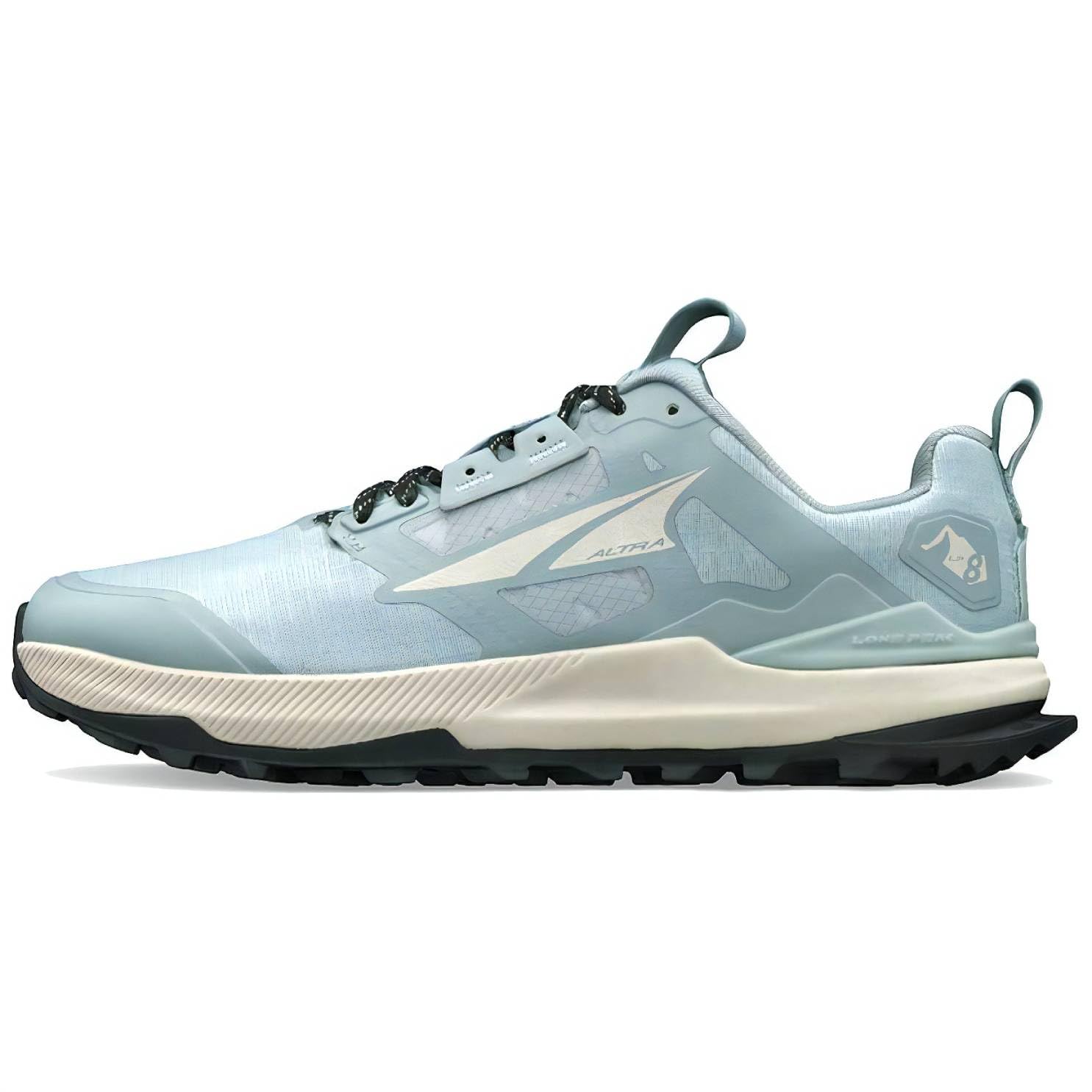
| ALTRA Lone Peak 8★ Best Overall | Trail & long-distance walking | 25 mm | 10.7 oz | MaxTrac | Amazon |
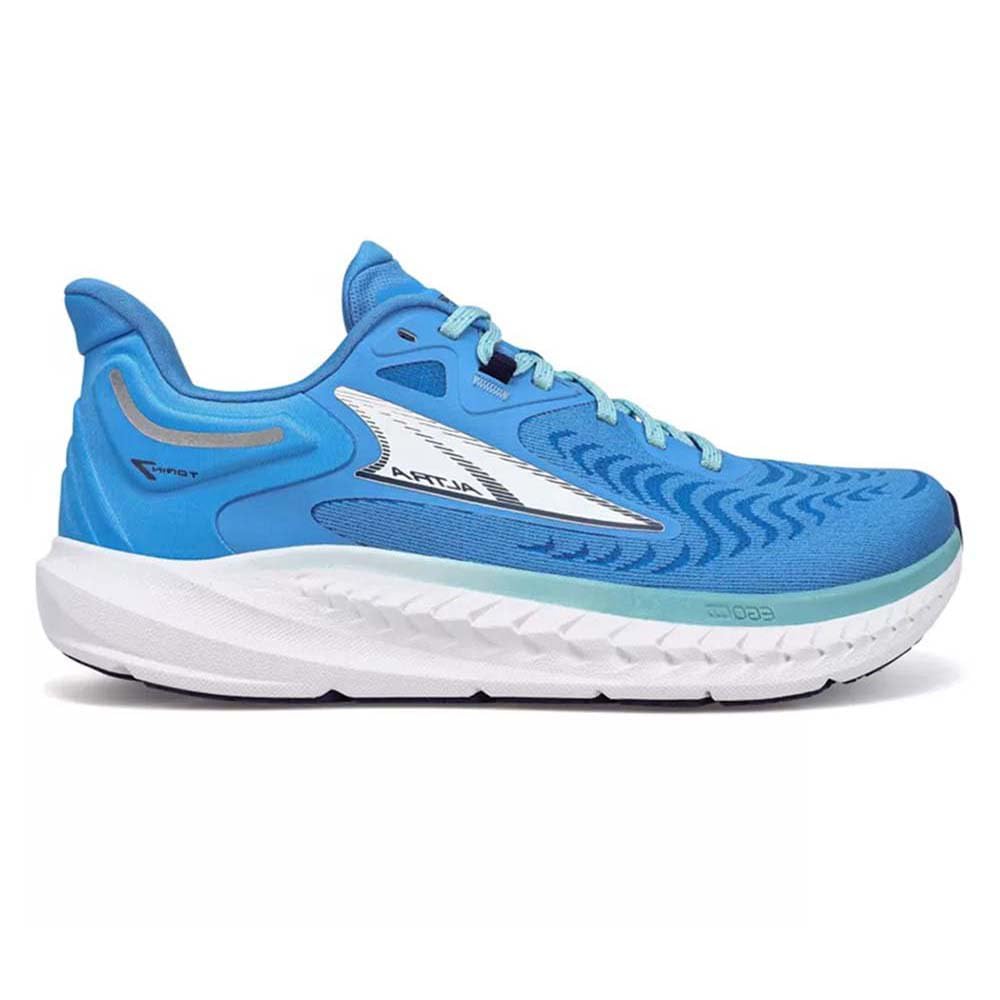
| ALTRA Torin 7Premium Pick | Road & pavement walking | 28 mm | 8.3 oz / 9.8 oz | FootPod | Amazon |
| FLUX Adapt Knit Trainer | All-day wear & light training | — | Lightweight | Flexible sole | Amazon |
| Hike Theora Pro | Budget-friendly arch support | — | Lightweight | Flexible sole | Amazon |
| Hike Flame | Slip-on zero-drop entry | — | Lightweight | Flexible sole | Amazon |
In‑Depth Reviews
1. ALTRA Women’s Lone Peak 8 Trail Running Shoe
Our pick — over 4.5★ from 750+ verified ratings; the strongest balance of quality and price.
The trail shoe that solves hiker’s toe — and keeps you pain-free mile after mile.
What wins people over is the sheer comfort from a toe box that actually lets your toes splay naturally. The Lone Peak 8 is built on Altra’s FootShape fit, which gives your feet room to breathe through the midfoot and the toe area. The zero drop puts your heel and forefoot at the same 25mm height off the ground, which aligns your posture for a low-impact landing on steep rocky trails. Buyers report that the wide toe box “prevents hiker’s toe” — that painful jamming of toes into the front of the shoe — even on hikes covering 5+ miles over loose dirt and rock.
The MaxTrac outsole delivers sticky traction on any surface, from loose gravel to wet roots. An “excellent fit for wide toe box” is a recurring theme, with owners noting the toe guard protects the fabric and the dark upper hides stains well. The shoe weighs 10.7 oz (303g) and uses a refined ripstop mesh upper that adds rugged durability. Owners describe the ride as responsive yet comfortable thanks to the Altra EGO midsole foam —cushioned enough for all-day wear but not marshmallowy soft. Some note the shoe is so reliable that they are on their sixth pair, and one review mentions it helped with plantar fasciitis flare-ups after spending ten days on their feet.
The recurring trade-off is sizing consistency for those who wear medical insoles; a few found that their foot slides side-to-side when using custom orthotics but feels fine without them. The general advice across the reviews is to go half a size up if you have wide feet. This same model has a higher review count than the other picks — it is the clear crowd favorite for anyone who wants a zero-drop walking shoe that does not quit.
The Roomiest Toe Box
- Wide FootShape toe box prevents jamming and hiker’s toe
- MaxTrac outsole provides superior grip on loose dirt and rock
- Versatile enough for hiking, trail running, and everyday walks
The Sizing Catch
- Some owners with medical insoles report side-to-side slide; better without them
- Go half a size up for a comfortable wide fit
Best for daily walkers and trail hikers: If you want a shoe that keeps your feet aligned and pain-free on any terrain, this is the one to grab.
Think twice if: you wear custom orthotics — the footbed shape works best as-is without extra insoles.
2. ALTRA Women’s Torin 7 Road Running Shoe
The plush road shoe that feels like walking on marshmallows — without the heel lift.
The Torin 7 takes a different approach from the Lone Peak. It is built for pavement, not trails. The stack height is 28mm — the tallest cushioning in this lineup — giving you a soft, pillowy landing that owners describe as “extremely comfortable, like walking on marshmallows.” Despite the high stack, the shoe stays light at 8.3 oz (for the women’s version) or 9.8 oz (men’s). The FootPod outsole encourages natural movement underfoot, and the zero drop keeps your posture straight. The thing everyone raves about is the roomy toe box combined with plush cushioning — even owners with narrow feet appreciate the space, as it helps bunions and neuromas.
Owners mention that the zero drop improves posture and aligns hips and knees, with one noting that it “relieves neuroma pain” and prevents bunion progression. The engineered mesh upper is breathable and looks sleek enough for casual everyday wear. Owners who cover a lot of ground — 15,000 steps a day — say the Torin 7 provides good support after seven months of use, though the heel does start to wear. One review sums it up by saying “my toes are happy.”
The honest downside, compared to the Lone Peak, is that the Torin 7’s cushioning lacks responsiveness for longer runs, with some owners noting their feet feel heavy or tired on very long distances. A few also mention that the shoe runs tighter than previous Torin versions and the stock shoelaces are too short. One owner reports it caused a plantar fasciitis flare-up. This is less of an all-terrain shoe and more of a dedicated road or gym-floor companion. If your walking is all on hard surfaces, the extra 3mm of stack over the Lone Peak is a real comfort advantage.
Plush Pavement Ride
- Tallest cushioning at 28mm stack height for soft landings
- Very lightweight for a high-cushion shoe (8.3 oz)
- Sleek design works for casual daily wear
The Pavement Limit
- Not for trails — the outsole is smooth, not lugged
- Some owners find the fit tighter than past Torin versions
- Lacks responsiveness for longer runs or fast walking
Reach for this if: you walk exclusively on roads, sidewalks, or gym floors and want the softest ride possible.
Look elsewhere if: you need trail grip, or you want a more responsive shoe for long-distance walking or jogging.
3. FLUX FOOTWEAR Adapt Knit Trainer
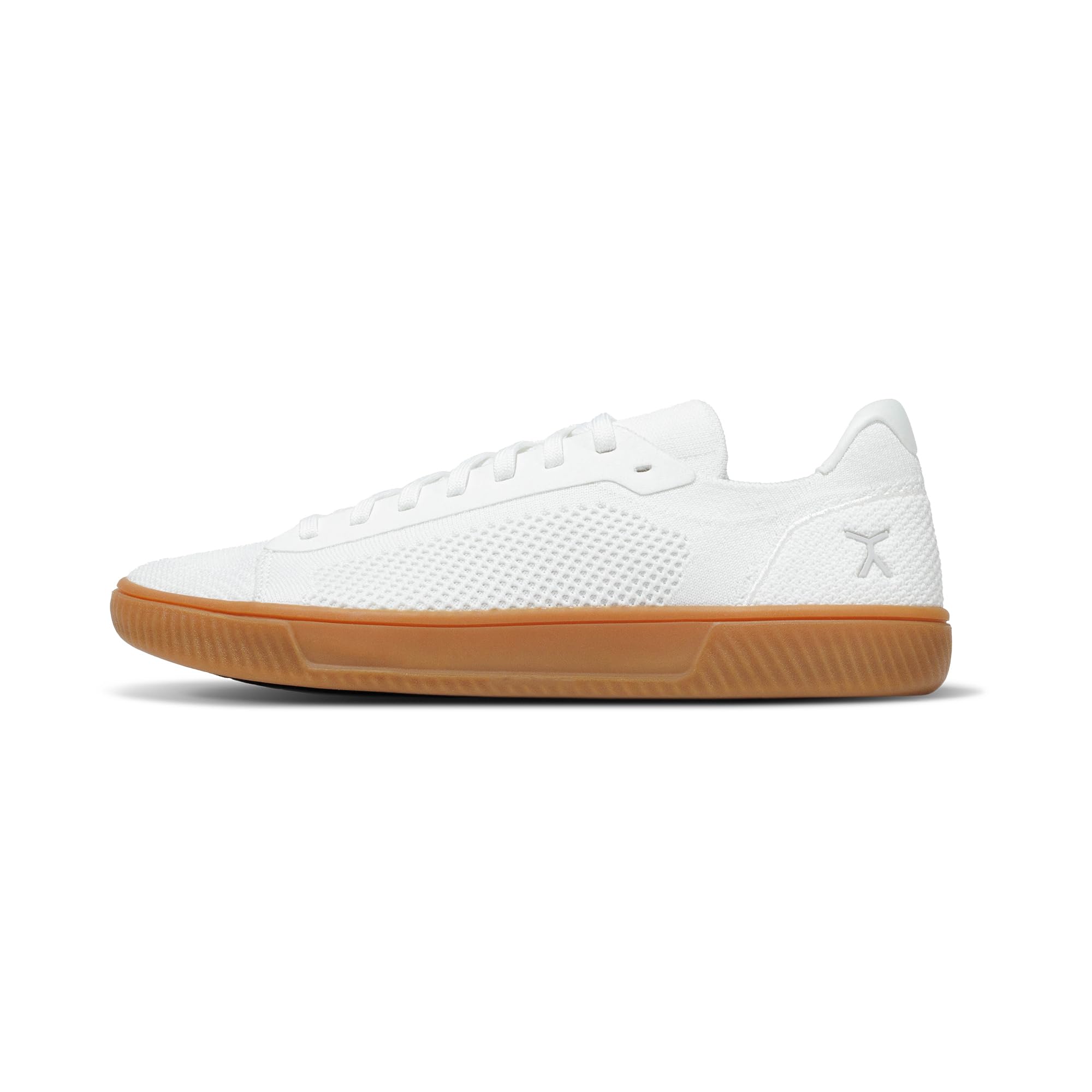
A sleek, sock-like shoe for anyone who wants barefoot benefits without the gym-shoe look.
The Adapt Knit Trainer balances lifestyle style with natural-foot function. Its knit upper is very stretchy — like wearing a sock — and the wide toe box and zero-drop sole give your toes room to splay while keeping your foot level. A buyer who spends all day on their feet says, “Flux are the most comfortable shoes I own.” The shoe is machine washable, which is a huge plus if you wear them daily. It also features an Earth-Link grounding system, a tech that connects you to the earth’s natural electric charge. Customers note it works great for both the gym and daily errands, calling it “perfect” for those who need a non-rocker base that does not hurt the knees.
There is no arch support built in — the shoe is designed for people with healthy arches or those transitioning to barefoot-style footwear. One owner shared that foot pain “gone!” after switching. The biggest catch is the length; the shoe runs short for many, with consistent advice to order at least half a size up, or even a full size up. The knit upper also feels less secure for high-intensity moves like burpees or sprints, so it shines as a lifestyle or walking shoe rather than a cross-training tool. If you are new to barefoot shoes, owners recommend starting with a few hours a day, not a full day immediately.
Sleek everyday walker: The Adapt Knit Trainer is the most stylish zero-drop shoe here, and the washable knit makes it low-maintenance for daily wear. The lack of arch support is purposeful — it lets your foot work naturally, but that means it is not for everyone.
Ideal for: anyone wanting a minimalist barefoot shoe that looks like a normal sneaker and goes straight in the washing machine.
Not for: people who need arch support or those with very narrow feet who might find the wide toe box overwhelming.
4. Hike Footwear Theora Pro Barefoot Shoes
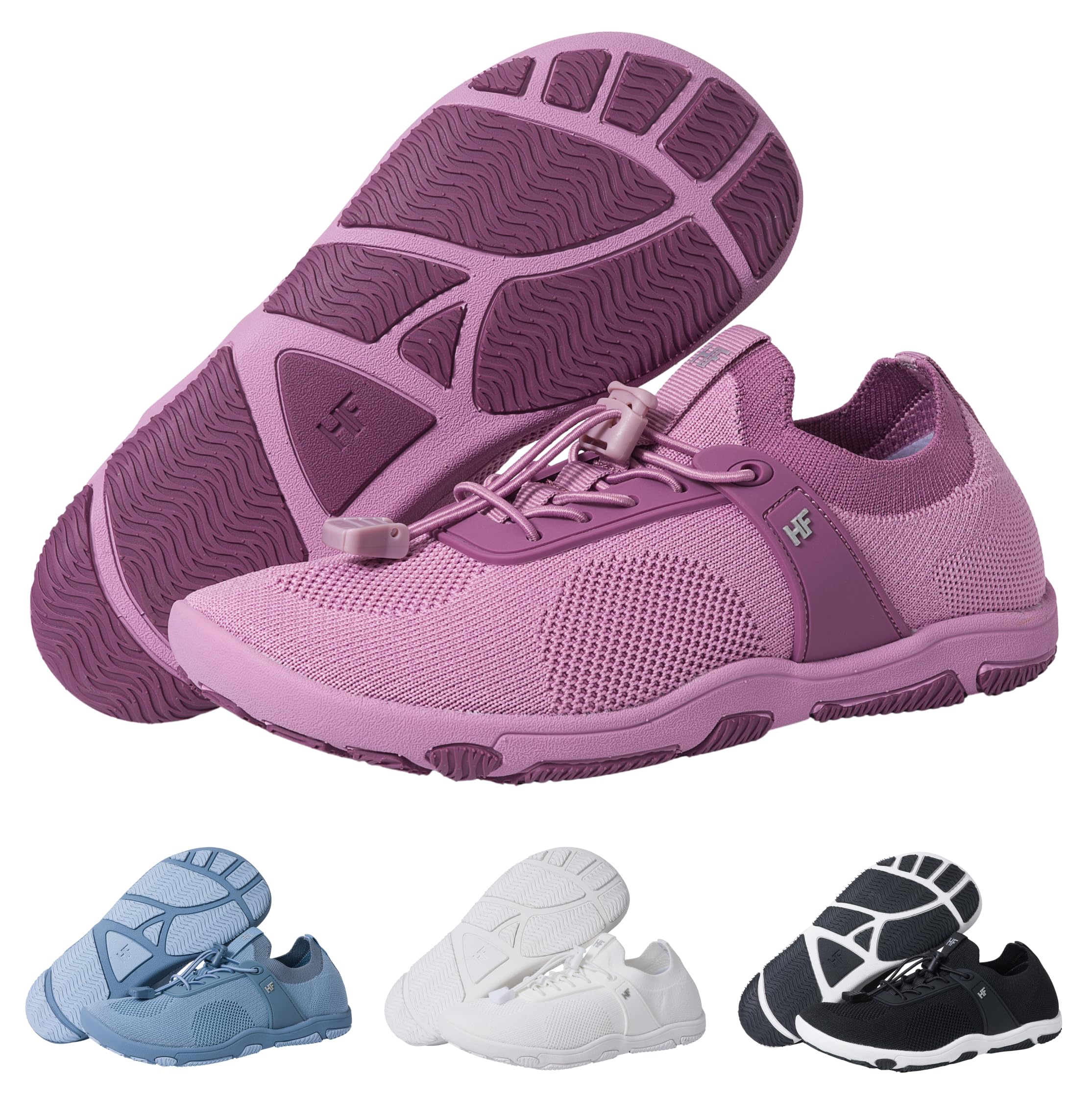
An entry-level barefoot shoe that adds arch support — rare in this category.
Most zero-drop minimalist shoes leave the arch completely unsupported, which can be jarring for feet used to conventional sneakers. The Theora Pro is different: it includes enhanced arch support that provides extra stability and cushioning without undermining the zero-drop platform. Reviewers point out that this helps with knee pain — one owner notes they “have bad knees and need shoes that support me,” and after wearing these, the pain disappeared. The shoe is lightweight, has a wide toe box for natural toe splay, and uses a flexible sole to let you feel the ground.
The Theora Pro comes in several colors (light blue, dark blue, light green, light grey with pink) and uses a convenient slider tie instead of laces. One owner says they now own four pair. It is also affordable enough that you can try barefoot-style walking without a big investment. The breathable, flexible upper lets your feet move naturally all day. Some owners mention the shoes are “super comfy” for all-day wear and work well with custom orthotics.
The honesty check: fit is a regular pain point. Many owners say the shoes run short in the toe and advise ordering one size up. Others note that if you have genuinely wide feet, the toebox may still not be wide enough. A smaller number flag that the sole feels thin with no cushioning and may need an insole. Sole durability is also a mixed mention — some owners find it wears quickly. The Theora Pro is a genuine bargain, but you have to nail the sizing.
Surprising Arch Comfort
- Enhanced arch support is rare in zero-drop shoes
- Very lightweight and breathable for all-day wear
- Slider tie is convenient and easy to adjust
The Sizing Gamble
- Runs short in the toe; order at least one size up
- Not wide enough for genuinely wide feet
- Sole may wear faster than pricier competitors
Best for: first-time barefoot buyers who want extra arch support and a low price of entry.
Skip if: you have very wide feet or need a durable outsole for rough trails — the Lone Peak is sturdier.
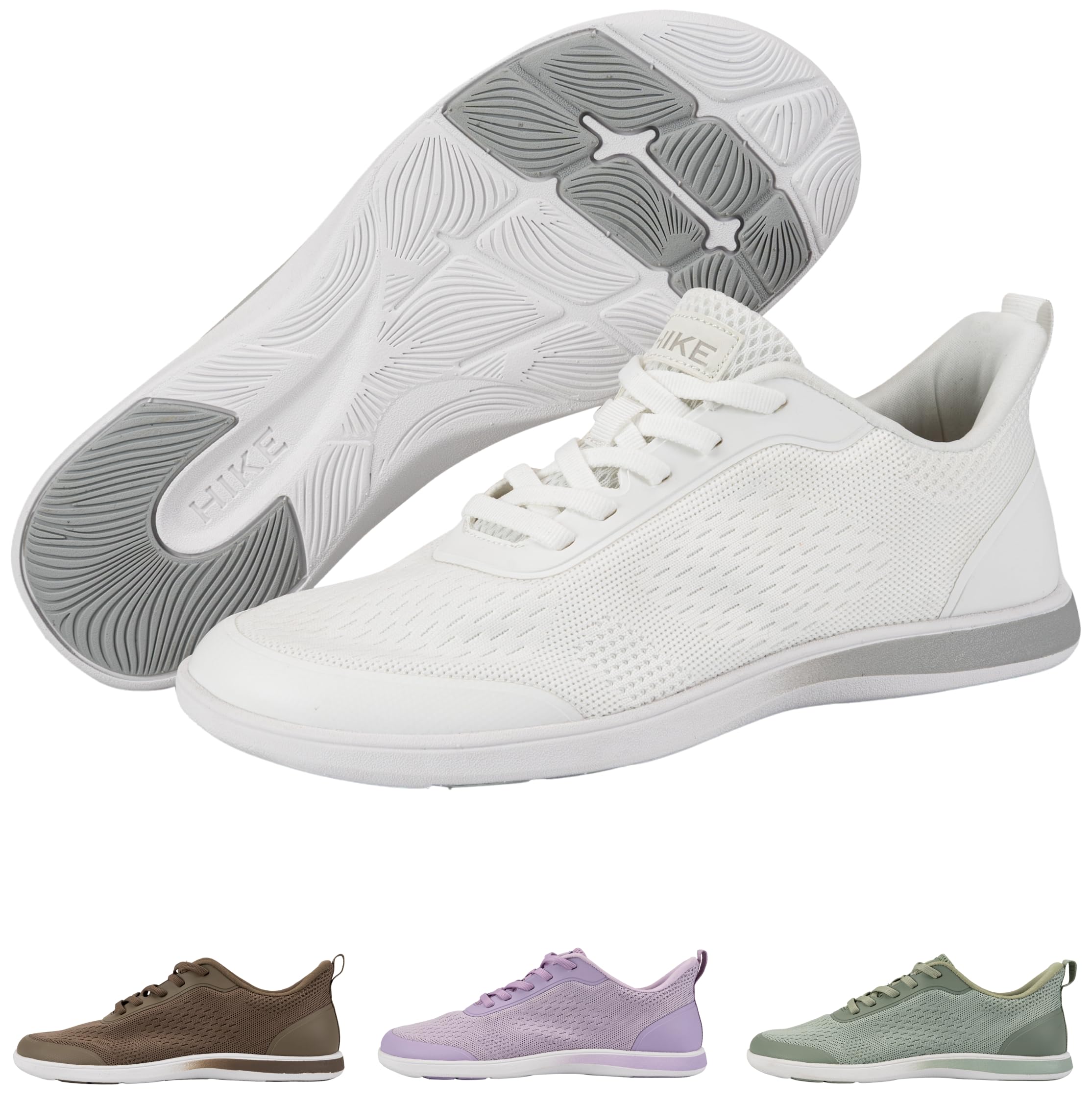
5. Hike Footwear Flame Barefoot Shoes
A simple, slip-on barefoot shoe for those who value convenience above all else.
The Hike Flame is the easiest shoe to get in and out of in this lineup — it is a true slip-on with no laces to tie. The zero-drop sole keeps your foot level, the wide toe box allows natural splay, and the flexible sole gives you ground feel. A buyer reports that balance noticeably improved while wearing them. The shoe is lightweight and breathable. At its price point, it is an accessible way to try zero-drop walking shoes without a big commitment.
Comfort is the top aspect that owners praise, with some calling it “very comfortable” and noting that the “light weight and great for walking” feel is spot-on. One reviewer who owns several pairs of premium brands (Skechers and Vionic) says the Flame beats them all for arch support and balance. The slip-on design means no fussing with laces, making it a grab-and-go shoe for casual errands or short walks.
The trade-offs here are more significant than with the other picks. Several shoppers say the shoe runs large, not short, which is the opposite of the Theora Pro. Others say the sole is too flexible and lacks any real support — one owner even says the shoe caused a toe injury because the upper did not hold the foot firmly enough. The shipping process can be slow, as the shoes ship from China despite the listing appearing local. Returns are inconvenient, requiring a trip to a post office. If you decide to try the Flame, check the return policy before buying. It is a functional slip-on for casual use, but not a shoe for long hikes or heavy walking days.
Convenience over durability: The Flame is the easiest zero-drop shoe to slide into, but the lack of structure and support makes it best for light, short walks. It is a decent experiment, not an everyday companion.
Best for: someone who wants a no-fuss, low-cost slip-on to test zero-drop walking around the house or on short errands.
Not for: long daily walks, trail use, or anyone who needs reliable arch support — the ALTRAs or the Theora Pro are better bets.
Understanding the Specs
Drop (Heel-to-Toe Offset)
This is the height difference between the heel and the forefoot, measured in millimeters. Conventional walking shoes typically have an 8mm to 12mm drop, which lifts your heel higher than your toes. Zero drop means 0mm — your foot sits flat, which encourages a more natural mid-foot strike. It reduces pressure on the knee and lower back but takes a short adjustment period if you are used to a lifted heel.
Stack Height (Cushioning Thickness)
Stack height measures the amount of material between your foot and the ground. A higher stack (like the Torin 7’s 28mm) gives more cushioning for hard surfaces, while a lower stack provides more ground feel and stability. In zero-drop shoes, a higher stack still keeps your heel and forefoot level, so you get the plush ride without losing alignment.
FAQ
How long does it take to adjust to zero drop shoes?
Can zero drop walking shoes help with plantar fasciitis?
What is the difference between zero drop and barefoot shoes?
Do I need to size up for zero drop walking shoes?
Can I wear zero drop shoes for running?
Are zero drop shoes good for people with knee pain?
Can I use custom orthotics with zero drop shoes?
How long do zero drop walking shoes last?
Final Thoughts: The Verdict
Across the board, the best zero drop walking shoes winner is the ALTRA Lone Peak 8 because it combines the roomiest toe box, superior MaxTrac traction, and 25mm of balanced cushioning into a shoe that works on trails, pavement, and everything in between. If you walk only on roads and want the most plush landing, grab the ALTRA Torin 7. And for a budget-friendly entry with surprising arch support, the Hike Footwear Theora Pro is the one to reach for.
How We Picked
We do not accept paid placement. Every pick is matched to a real buyer and a real use-case; we do not hands-on test units.
Sources & Methodology
Specifications: manufacturer listings and product documentation. Review insights: verified customer reviews, as of July 2026. Pricing: not shown on this page (it changes often); check the current price via the retailer link.
As an Amazon Associate, Calories Fit earns from qualifying purchases. This does not affect which products we feature.