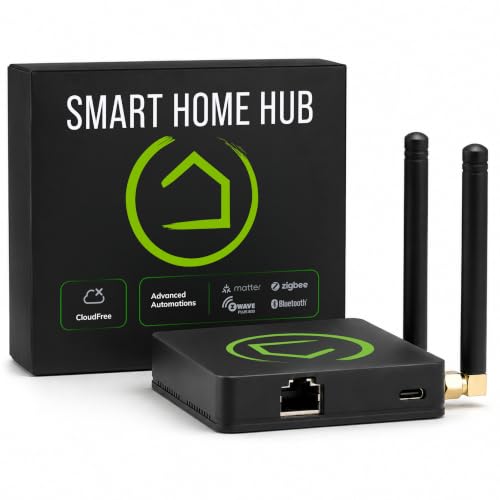
9 Best Z-Wave Long Range Devices | Skip the Range Extenders

Our readers keep the lights on and the coffee maker working hard! As an Amazon Associate, I earn from qualifying purchases.

Specs are compiled from manufacturer listings and verified buyer reviews and can change over time — please confirm the key details on the product page before buying.

If you have ever seen a smart garage door opener or a linked light switch lose its mind halfway across a big house, you already know the pain Z-Wave Long Range is designed to fix. Older Z-Wave gear bounces its signal from device to device, which works fine in a small apartment but falls apart when a device at the far end of the property cannot find the next repeater. This guide collects the best Z-Wave Long Range devices that skip the hop-by-hop mess — they talk directly to your hub from across the house, the yard, or even the workshop out back.

I’m Mohammad — the founder and writer behind Calories Fit. This guide is built by comparing the manufacturers’ published specifications and the patterns across verified customer reviews, so you get each pick’s real strengths and trade-offs instead of marketing spin.

if you need a hub to run the whole show, a switch that works in a three-way circuit without an extra add-on, or a siren you can trigger from the far end of an acre, these are the z-wave long range devices worth your attention in 2025.

Our Picks at a Glance
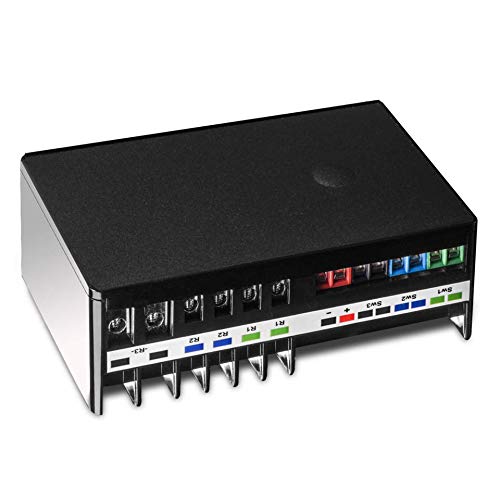
Zooz Z-Wave Long Range MultiRelay ZEN16 800LR
Best OverallZooz Z-Wave Long Range MultiRelay ZEN16 800LR4.7★505 ratingsThree independently controlled relays in one box, ready for garage doors, sprinklers, and gas fireplaces. This is the device that keeps popping up in owner anecdotes as the most versatile piece of Z-Wave hardware they own.Check Price on Amazon
Zooz 800 Series Z-Wave Long Range On/Off Switch ZEN71 800LR
Pro SwitchZooz 800 Series Z-Wave Long Range On/Off Switch ZEN71 800LR4.5★192 ratingsA direct 3-way on/off switch that requires no companion add-on, with a slim 1.16-inch depth.Check Price on Amazon
HomeSeer Smart Light Switch (WS300), 800 Series Long Range Z-Wave Technology
RGB SwitchHomeSeer Smart Light Switch (WS300), 800 Series Long Range Z-Wave Technology3.8★17 ratingsA wall switch that uses an RGB LED to show you what is happening in your home — at a glance. The HomeSeer WS300 looks like a standard paddle switch until you notice the glowing ring around it.Check Price on Amazon

How To Choose The Best Z-Wave Long Range Devices

Picking the right ZWLR gear is not about grabbing the shiniest gadget — it is about knowing which part of your home automation is failing and matching the device to that specific gap. A siren that sits in a detached garage, a lock on a front gate, and a light switch in a finished basement all need different features, even though they all use the same long-range protocol.

Hub First, Devices Second

ZWLR only works if your hub supports it natively. The Hubitat C-8 Pro and the Aeotec Z-Stick 10 Pro both handle ZWLR from the start, but older hubs (like a first-generation SmartThings v2) will treat an 800-series switch as a standard mesh device. Buy your long-range hub before you fill a cart with sensors and relays.

Device Purpose vs. Device Type

An 800-series Z-Wave chip in a wall switch behaves exactly like any smart switch until you program it for long range. A scene controller with ZWLR is overkill if you only need on/off control for a single light — but it becomes invaluable when you want one button press to trigger a half-dozen actions across a large property. Match the device’s functionality to your automation goal, not the other way around.

Security and Code Management

ZWLR devices support S2 encryption, which means the signal between the device and the hub is fully locked down. For a door lock like the Kwikset HomeConnect 620, that security is non-negotiable. For a garage-door relay, you may also appreciate the ability to assign and delete user codes remotely — the Kwikset allows up to 250 custom codes, so you can hand out temporary access to a dog walker or contractor without ever handing over a physical key.

Quick Comparison

Model Best For Chip / Protocol Key Feature Power Amazon
Zooz ZEN16 800LR★ Best Overall Garage / Valve / Appliance Control 800 Series / Z-Wave LR 3 Independent Relays (15A, 15A, 20A) USB-C or 12-24V AC/DC Amazon
HomeSeer WS300RGB Switch RGB Status & Multi-Tap Scenes 800 Series / Z-Wave LR 14 Scene Triggers / RGB LED Line / Neutral (120V) Amazon
Aeotec Z-Stick 10 Pro USB Hub / Bridge for PC 800 Series + Zigbee 3.0 Dual Radio / Up to 1 Mile Range USB 2.0 (Bus-Powered) Amazon
Kwikset HomeConnect 620 Keyless Entry / Smart Lock 700 Series / Z-Wave LR 250 User Codes / Auto-Lock 4x AA Batteries (12-Month Life) Amazon
Hubitat Elevation C-8 Pro Central Smart Home Hub ZWLR + Zigbee 3.0 + Matter 1.5 Local Processing / No Subscription USB-C / Wall Adapter Amazon

In‑Depth Reviews

★ Best Overall

1. Zooz Z-Wave Long Range MultiRelay ZEN16 800LR

Our pick — over 4.5★ from 500+ verified ratings; the strongest balance of quality and price.

3 RelaysUSB-C Power

Three independently controlled relays in one box, ready for garage doors, sprinklers, and gas fireplaces.

This is the device that keeps popping up in owner anecdotes as the most versatile piece of Z-Wave hardware they own. It packs three dry-contact relays (15A, 15A, and 20A) into a single module, meaning one unit can handle up to three garage doors or a combination of a pond pump, a gas fireplace, and landscape lights — all controlled independently from your hub. The 800-series chip brings Z-Wave Long Range speed and coverage, so a sprinkler valve 300 feet from the house will still respond instantly.

Power is delivered via USB-C (a standard 5V supply, not a phone charger) or through a 12-24 V AC/DC source, which makes it easy to steal power from a garage-door opener. The crowd favorite — 4.7 stars across 500+ owners — while reliability is the most-praised aspect by a wide margin. On the wiring side, owners note that initial pairing with SmartThings or Hubitat may require a brief trip to Zooz support for a custom driver, but after that, the device is described as a set-and-forget unit that restores its last state after a power failure.

The honest trade-off: the ZEN16 is not a plug-and-play gadget for a beginner. It expects you to understand dry-contact wiring, and it offers no voltage at the switch terminals — that is intentional, but it means you need to read the manual. If you are comfortable with low-voltage wiring, however, this is the most relay for your dollar in the entire Z-Wave catalogue.

Why it wins

  • Three fully independent relays expand a single Z-Wave node into a multi-zone controller.
  • USB-C or 12-24V AC/DC power means no dedicated outlet needed in most garage or mechanical-room setups.
  • Built-in auto-on and auto-off timers work even without a hub once programmed.

The setup hurdle

  • Requires a Z-Wave hub that supports advanced configuration — it will not work fully with Ring, Vivint, or Wink.
  • Jumper wires and power adapter are not included, so you need a separate purchase to get it running.

Best for: Anyone who needs to automate multiple high-current devices (garage doors, pumps, fireplace) from a single point in the home.

Think twice if: You want a simple on/off plug or if your hub is a basic alarm panel like Ring or Vivint — partial relay control only.

Pro Switch

2. Zooz 800 Series Z-Wave Long Range On/Off Switch ZEN71 800LR

Direct 3-Way1.16″ Deep

A straightforward on/off switch that supports direct 3-way wiring without an add-on companion switch.

The ZEN71 800LR adds wireless on/off control to your lights with the latest 800-series chip for faster range and communication. It works as a direct 3-way switch with a standard dumb switch on the other end (neutral required), and can also be used as a single-pole switch. At just 1.16 inches deep, it fits into shallow electrical boxes easily.

At just 1.16 inches deep, it slides into cramped boxes, and it supports direct 3-way wiring with a standard dumb switch on the other end. The internal relay always controls the load; there is no scene control mode — this is a pure on/off switch. Owners note that the faceplate color is slightly darker than standard white wall plates, a minor cosmetic detail.

What it does well

  • Direct 3-way switch without an add-on — uses a standard mechanical switch on the other end.
  • Ultra-slim 1.16-inch depth fits in tight single-gang boxes.
  • 800-series Z-Wave chip provides faster communication and extended range.

The small quirks

  • Faceplate color is slightly off-white compared to standard builder-grade plates — a cosmetic detail.
  • Hub compatibility is limited; does not work with basic Z-Wave alarm panels or Wink.

Ideal for: Homeowners who need a simple, reliable Z-Wave on/off switch that works in a 3-way circuit without a costly add-on companion.

Consider another option if: You require a scene controller with multiple buttons — the ZEN71 is a pure on/off switch.
RGB Switch

3. HomeSeer Smart Light Switch (WS300), 800 Series Long Range Z-Wave Technology

RGB LED Indicator14 Scene Triggers

A wall switch that uses an RGB LED to show you what is happening in your home — at a glance.

The HomeSeer WS300 looks like a standard paddle switch until you notice the glowing ring around it. That LED can display any of ten named colors plus one custom user-defined color — set it to glow red when the garage door is open, green when the front door is locked, or blue when the HVAC is cooling. The paddle itself supports multi-tap scene control: tap once, twice, up to five times, or hold the paddle down, and each gesture triggers a different automation, for a total of up to 14 programmable scenes.

Installation uses terminal screws instead of pigtail wires, which some electricians prefer for a cleaner box. The switch is rated for single-pole or three-way circuits (neutral required) and works as a Z-Wave repeater, extending the mesh for other devices. On the compatibility side, the WS300 pairs immediately with HomeSeer HS4 and Home Assistant, where its full feature set (LED control, multi-tap, smart bulb mode) works without extra configuration. The major gap: SmartThings users have no driver support, so the switch behaves as a basic on/off device on that platform — no LED programming, no scene triggers.

What it brings

  • RGB LED indicator shows home status (door open, motion detected, alarm armed) directly on the switch.
  • Multi-tap paddle supports up to 14 distinct scene triggers from a single switch location.
  • Smart bulb mode disconnects the internal relay for use with smart bulbs that need constant power.

The compatibility warning

  • Not compatible with SmartThings for anything beyond basic on/off — no LED or scene control.
  • Deeper than some modern Z-Wave switches — may crowd a shallow electrical box.

Best match for: HomeSeer or Home Assistant users who want a status-at-a-glance light switch and multi-tap scene control at a single location.

Not for: SmartThings owners — the advanced features are completely locked without a proper driver.

Hub Dongle

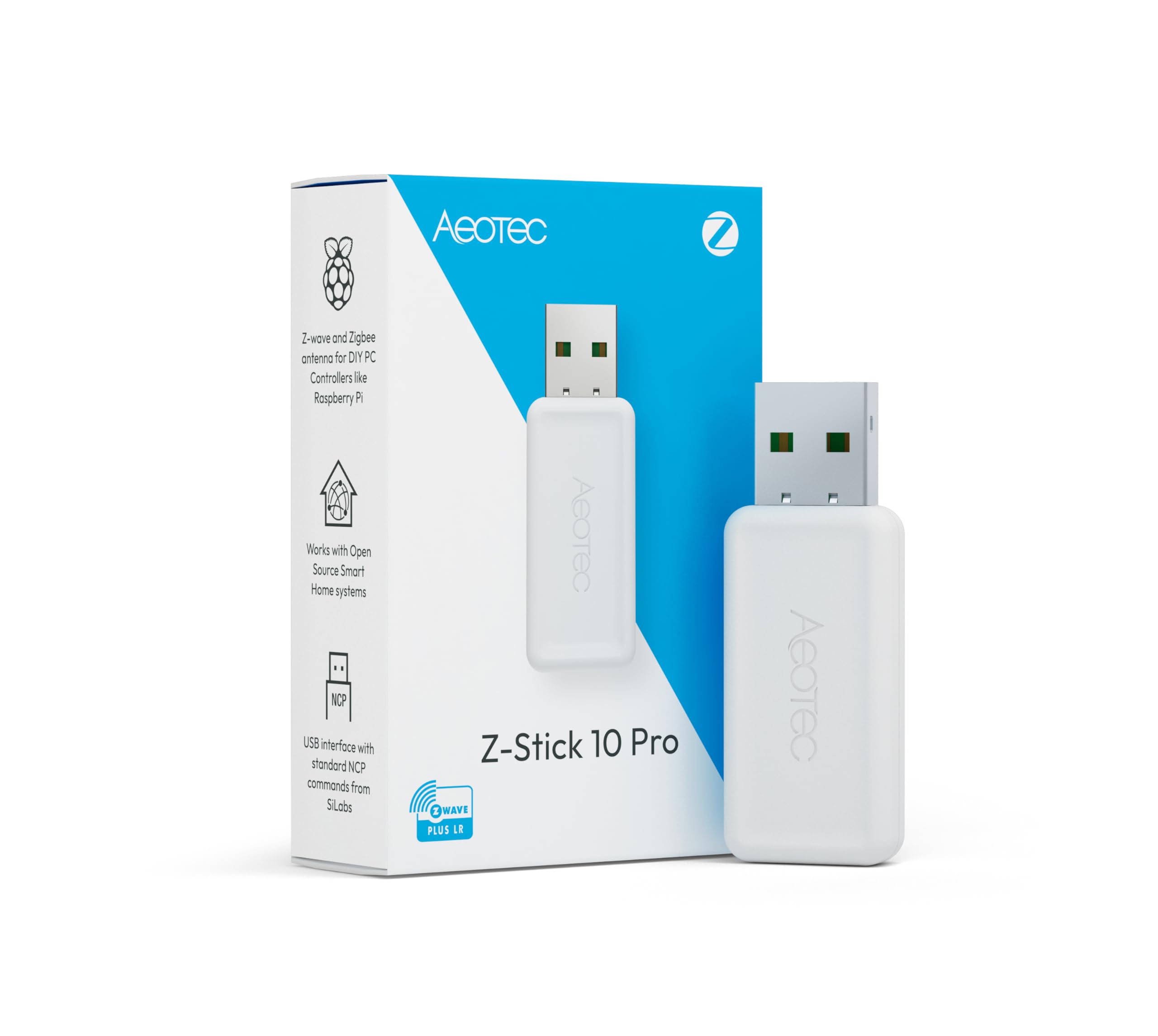
4. Aeotec Z-Stick 10 Pro – Zigbee 3.0 & Z-Wave 800 Series USB Adapter

Dual RadioUp to 1 Mile Range

A dual-radio USB stick that unifies Z-Wave Long Range and Zigbee 3.0 into one compact dongle for Home Assistant.

The Z-Stick 10 Pro is the heart of a DIY smart home. It plugs into any USB port on a PC, a Raspberry Pi, or a server running Home Assistant, Z-Wave JS, or Zigbee2MQTT — no cloud, no subscription, just a direct USB bridge. The Z-Wave side uses the 800-series chip (EFR32ZG23) with Long Range support for up to a mile of open-air coverage, and the Zigbee side uses a separate 3.0 chip (EFR32MG21) for similarly strong range. Together they replace what used to require two separate sticks, saving a USB port and eliminating the coordination headaches of keeping two dongles in sync.

Compatibility is among the most-praised attributes — the stick is plug-and-play with Home Assistant on Linux, Windows 10+, and macOS, and works with over 8,000 devices across both ecosystems. Owner reports confirm it is instantly recognized on Proxmox VMs, Raspberry Pi 5 boards, and even Docker containers, with only minor hiccups on Windows virtual machines. The form factor is deliberately slim — the short body does not block adjacent USB ports on a tight motherboard. The only real setup friction comes from the initial firmware update some Zigbee2MQTT users need to perform, but once that is done, the connection is described as “rock solid” for months at a time.

Why it is the hub pick

  • Dual radio (Z-Wave 800 LR + Zigbee 3.0) means a single dongle handles both major low-power protocols.
  • Up to one mile of Z-Wave range in open air — covers an entire property.
  • Compact USB design does not block adjacent ports on a server or Raspberry Pi.

One consideration

  • Requires a compatible host system (Home Assistant, Zigbee2MQTT, Z-Wave JS) — not a standalone hub.
  • Windows VM passthrough can be finicky; best results come from native Linux or a dedicated Pi.

Ideal for: The Home Assistant enthusiast who wants Z-Wave Long Range and Zigbee in one dongle, with no monthly fees and full local control.

Not the right fit for: Anyone who wants a pre-configured hub with an app — this stick needs a computer to drive it.

Smart Lock

5. Kwikset HomeConnect 620 Z-Wave Long Range Keypad Smart Lock

250 User CodesAuto-Lock

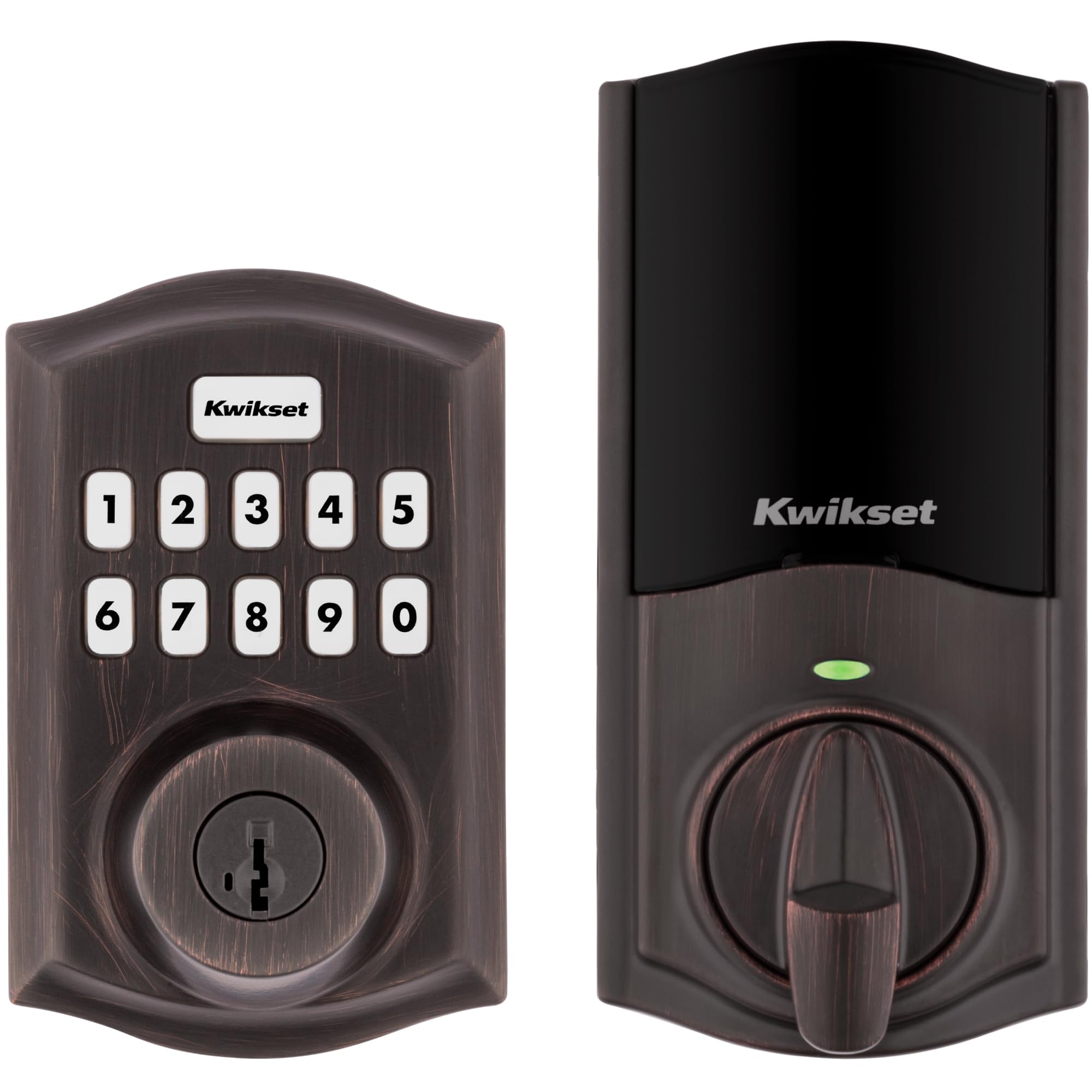
A Z-Wave Long Range deadbolt that manages up to 250 user codes and auto-locks behind you — no hub required for basic keypad use.

The HomeConnect 620 is the first mainstream lock to bring Z-Wave Long Range to the door. The Z-Wave 700-series radio (still LR-enabled) connects directly to a compatible hub — like the Hubitat or Aeotec stick — from the far end of the property, so a front gate or a detached garage lock stays online without any repeater. The touchscreen keypad supports up to 250 custom user codes, plus one programming code, so you can give temporary access to cleaners, guests, or contractors and delete it when the job is done. The auto-lock timer is adjustable in five increments (30 seconds, 1, 3, 5, or 10 minutes), and the lock remembers its schedule even if the hub is offline.

Battery life is quoted at 12 months from a set of 4 AA alkaline batteries (included). One quirk reported by owners: on left-opening doors, the keyway sits upside down relative to the keypad. It is still functional, but the mismatch may annoy anyone who notices the orientation. Integration with Ring Alarm and SmartThings is smooth from the start, though some owners needed tech support for the initial Z-Wave pairing. The lock itself (the “dumb” keypad part) consistently earns 5-star reviews — the only frustration comes from the Z-Wave side, which requires a dedicated hub.

Why the lock works

  • Z-Wave Long Range covers a whole property from a single hub connection — no mesh needed for the lock.
  • 250 user codes make it easy to manage access for contractors, cleaners, or extended family.
  • Auto-lock adjustable from 30 seconds to 10 minutes gives flexibility without hub dependency.

A couple of notes

  • Keyway is upside down on left-opening doors — functional but visually asymmetrical.
  • Initial Z-Wave pairing may require tech support if the hub does not auto-detect the device.

Reach for this if: You need a long-range smart lock for a distant gate or a property with outbuildings, and you want the flexibility of 250 user codes.

Look elsewhere if: You do not already own a Z-Wave hub — the lock works as a basic keypad deadbolt without one, but the “smart” features require a separate hub purchase.

Brain of the House

6. Hubitat Elevation C-8 Pro Smart Home Hub

No SubscriptionZWLR + Matter 1.5

A locally processed smart home hub that supports Z-Wave Long Range, Zigbee 3.0, and Matter 1.5 — with zero ongoing fees.

Hubitat C-8 Pro does something increasingly rare in smart home hardware: all its rules and automation run on the hub itself, not on a cloud server. If your internet goes down, your lights still respond to motion sensors, your locks still auto-lock, and your Z-Wave Long Range devices still communicate. The hub natively supports ZWLR, so the signal reaches the far corners of a large property directly, rather than hopping from device to device. It also covers Zigbee 3.0, Matter 1.5, and Bluetooth, making it a single box that manages a multi-protocol home without multiple bridges.

Setup involves a web-based interface (the hub is headless — no screen) that leans into Rule Machine for customization. The learning curve is real: owners describe the UI as “clunky” and note that the initial device integration requires more study than a plug-and-play system like Philips Hue. However, the trade-off is enormous flexibility — compatibility is the most-praised feature, and owners consistently say it works with older Z-Wave devices that newer hubs have abandoned. The platform receives free continuous updates with no paywall, and there is no subscription for core functionality. The catch: it is a serious tool for serious enthusiasts, not a gift for a non-technical relative.

What makes it powerful

  • Local processing means automations and security rules work even during an internet outage.
  • Multi-protocol support (ZWLR, Zigbee 3.0, Matter 1.5, Bluetooth) consolidates multiple bridges into one hub.
  • No subscription fees for core automation, local control, or software updates.

The honest trade-off

  • The interface is unintuitive and requires reading documentation — not beginner-friendly.
  • Alexa integration can be hit-or-miss depending on your specific device mix; some users report it failing.

Best for: A home automation enthusiast who owns devices from multiple ecosystems and wants a single hub to rule them all, locally and without monthly costs.

Consider an alternative if: You want a simple plug-and-play hub with a polished mobile app — Hubitat demands patience and a willingness to experiment.

Understanding the Specs

800-Series Z-Wave Chip

The 800 series is the latest generation of Z-Wave silicon. Compared to older 500- or 700-series chips, it offers faster communication, better noise immunity, and native support for Z-Wave Long Range. In practical terms, a device with an 800 series chip talks to your hub more quickly and maintains a reliable link across a larger house without needing intermediate repeaters. Every Zooz device in this list uses an 800 series chip; the Kwikset lock uses a 700 series chip that still supports ZWLR, but the 800 series is the current benchmark.

Z-Wave Long Range (ZWLR)

Traditional Z-Wave is a mesh protocol: each device repeats the signal for its neighbors, so range is limited by the density of devices. ZWLR changes the architecture — it allows a single hub to talk directly to a device up to a mile away in open air, using a dedicated radio channel. That means no hop-by-hop delay for a lock at the end of the driveway and no worry about a dead spot where the mesh falls apart. Your hub must support ZWLR hardware (like the Hubitat C-8 Pro or the Aeotec Z-Stick 10 Pro) for the long-range feature to activate; otherwise, the 800-series device falls back to standard mesh operation.

FAQ

Will a Z-Wave Long Range device work with my existing Z-Wave hub?
It depends on your hub’s hardware. ZWLR requires a hub with an 800-series Z-Wave chip (or a 700-series chip with LR firmware). The Hubitat C-8 Pro and the Aeotec Z-Stick 10 Pro both support ZWLR natively. Older hubs like the SmartThings v2 hub can still include the device, but it will operate in standard mesh mode — you will not get the extended range or direct-to-hub communication.
How much real range does Z-Wave Long Range add indoors?
Manufacturers often advertise up to one mile in open air. Indoors, with walls and floors, the practical range drops but still far exceeds standard Z-Wave mesh. Buyers report reliable connections from a detached garage 200-300 feet from the hub through two exterior walls. Actual range depends on building materials — concrete and metal framing reduce it more than wood and drywall.
Do I need a separate subscription for Z-Wave Long Range?
No. ZWLR is a hardware radio standard, not a service. There is no monthly fee to use it. Your only costs are the devices and a compatible hub. The Hubitat C-8 Pro, for example, requires no subscription for local automation or Z-Wave control.
Can Z-Wave Long Range and standard Z-Wave devices work on the same hub?
Yes. A hub that supports ZWLR also works with older Z-Wave devices in standard mesh mode. The two protocols share the same radio but use different channels automatically. You can mix an 800-series scene controller with a 500-series motion sensor in the same network — the hub manages the difference behind the scenes.
Is Z-Wave Long Range more secure than standard Z-Wave?
It supports the same S2 security protocol that standard Z-Wave Plus uses, meaning the signal between the device and the hub is fully encrypted. There is no increase or decrease in security because of the longer range — eavesdropping protection is identical.
Will a ZWLR device drain its battery faster than a standard Z-Wave device?
ZWLR devices can use slightly more power during transmission because they boost the radio signal to reach farther. For a battery-powered device like a door lock, the difference is minor — the Kwikset HomeConnect 620 still achieves a 12-month battery life on four AA cells. For mains-powered devices like wall switches and relays, the power draw is negligible.
Does every Z-Wave device with an 800-series chip automatically use Long Range?
No. The 800-series chip supports ZWLR, but the device must be paired in Long Range mode with a compatible hub to enable it. If you pair an 800-series switch with an older hub that does not support ZWLR, it simply falls back to standard Z-Wave mesh operation. Check your hub’s documentation for LR mode before assuming you will get the extended range.
Can I use Z-Wave Long Range with a Ring or Vivint alarm system?
Generally, no. Closed alarm panels like Ring, Vivint, ADT, and Qolsys do not support ZWLR. Some devices (like the Zooz ZEN16 relay) will pair with them in standard mode but offer only partial control — often just one relay instead of all three. For full ZWLR functionality, you need an open Z-Wave hub like Hubitat, Home Assistant, or HomeSeer.
How many ZWLR devices can I connect to one hub?
The Z-Wave specification allows up to 232 devices per network in standard mode. ZWLR has a lower limit because it uses a different scheduling approach for the long-range channel — typically around 128 LR devices per hub. Most homeowners will never hit that ceiling, but large commercial installations should check their hub’s specific LR capacity.

Final Thoughts: The Verdict

For most people, the z-wave long range devices winner is the Zooz ZEN16 800LR MultiRelay because it delivers three independent high-current relays — more physical control per Z-Wave node than anything else on the list. If your priority is a single hub that handles everything without monthly fees, grab the Hubitat C-8 Pro. And for pure DIY range at the lowest entry cost, the Aeotec Z-Stick 10 Pro turns any PC into a dual-protocol powerhouse.

How We Picked

We do not accept paid placement. Every pick is matched to a real buyer and a real use-case; we do not hands-on test units.

Sources & Methodology

Specifications: manufacturer listings and product documentation. Review insights: verified customer reviews, as of July 2026. Pricing: not shown on this page (it changes often); check the current price via the retailer link.

As an Amazon Associate, Calories Fit earns from qualifying purchases. This does not affect which products we feature.

Related Guides

Please use a real email you check. If it's fake or mistyped, your message won't reach us and we can't reply — wrong addresses are rejected automatically.