4 Best Zero Drop Trail Running Shoes | Crafted Beyond the Brand

Our readers keep the lights on and the coffee maker working hard! As an Amazon Associate, I earn from qualifying purchases.

Specs are compiled from manufacturer listings and verified buyer reviews and can change over time — please confirm the key details on the product page before buying.

Finding a trail running shoe that keeps your heel and toe level — zero drop — without sacrificing grip, cushioning, or toe room is harder than it sounds. Many so-called “zero drop” shoes squeeze your toes or use a drop that isn’t actually zero, leaving you with foot pain instead of the natural stride you wanted. This guide highlights four zero-drop trail shoes that combine a 0mm drop, reliable traction, and a comfortable fit.

I’m Mohammad — the founder and writer behind Calories Fit. This guide is built by comparing the manufacturers’ published specifications and the patterns across verified customer reviews, so you get each pick’s real strengths and trade-offs instead of marketing spin.

if you need a shoe for rocky mountain trails or daily walks on dirt paths, the right pair of zero drop trail running shoes can transform your comfort and stride — here are the models that truly deliver.

Our Picks at a Glance

ALTRA Men's Lone Peak 9 Trail Running Shoe
Best OverallALTRA Men’s Lone Peak 9 Trail Running Shoe4.6★999 ratingsA legendary trail shoe that combines zero-drop stability with the widest toe box in its class. The Lone Peak 9 is the shoe that nearly a thousand trail runners chose as their go-to — it holds a 4.6-star rating across 999 reviews.Check Price on Amazon

How To Choose The Best Zero Drop Trail Running Shoes

Switching to zero drop trail shoes isn’t just about the number under the heel. You need to think about toe space, outsole rubber, cushion thickness, and how the shoe fits your foot shape. Here are the key factors that separate a great pair from one that ends up in the back of the closet.

The Real Meaning of Zero Drop

Zero drop means the heel sits at the exact same height as the toe — a 0mm difference. This keeps your foot in a more natural position, similar to walking barefoot. It encourages a midfoot or forefoot strike rather than a heavy heel strike, which can reduce impact on your knees and lower back. If you are used to traditional running shoes with an 8-12mm drop, your calves and Achilles will need time to adapt.

Toe Box Width and Shape

Your toes need room to splay naturally for balance on uneven ground. A wide toe box helps prevent blisters, bunions, and that cramped feeling on long descents. Some brands offer a truly anatomical shape that widens at the front, while others are simply “wide” in every dimension. Look for a toe box that lets your biggest toe lie straight, not angled inward.

Outsole Grip and Tread Pattern

Trail running places high demand on grip. You need lugs (the rubber knobs on the outsole) that bite into soft dirt and still hold on damp rock. Outsole rubber compounds like Vibram Megagrip or MaxTrac are specifically engineered for mixed terrain. A shoe with shallow or widely spaced lugs may slip on loose gravel or wet roots.

Cushioning and Stack Height

Zero drop shoes come in three cushion ranges: minimalist (very thin sole, maximum ground feel), moderate (mid level protection for rocky trails), and maximalist (thick sole that still keeps the heel-toe level). The trade-off is straightforward — more cushion protects your feet from sharp stones but reduces your connection to the trail surface, which some runners say hurts stability.

Quick Comparison

Model Best For Weight Stack Height Outsole Amazon
ALTRA Lone Peak 9★ Best Overall Best Overall / Trail Versatility 11.15 oz / 316 g 25 mm / 25 mm MaxTrac Amazon
Xero Shoes Speed Force 2 Ultra-Light Barefoot Feel Grippy Outsole Amazon
Topo Athletic Pursuit 2 Premium Traction & Roomy Fit 8.6 oz (W7) Vibram Megagrip Amazon
FLUX FOOTWEAR Adapt Runners Everyday Comfort / Natural Movement Sturdy Sole Amazon

In‑Depth Reviews

★ Best Overall

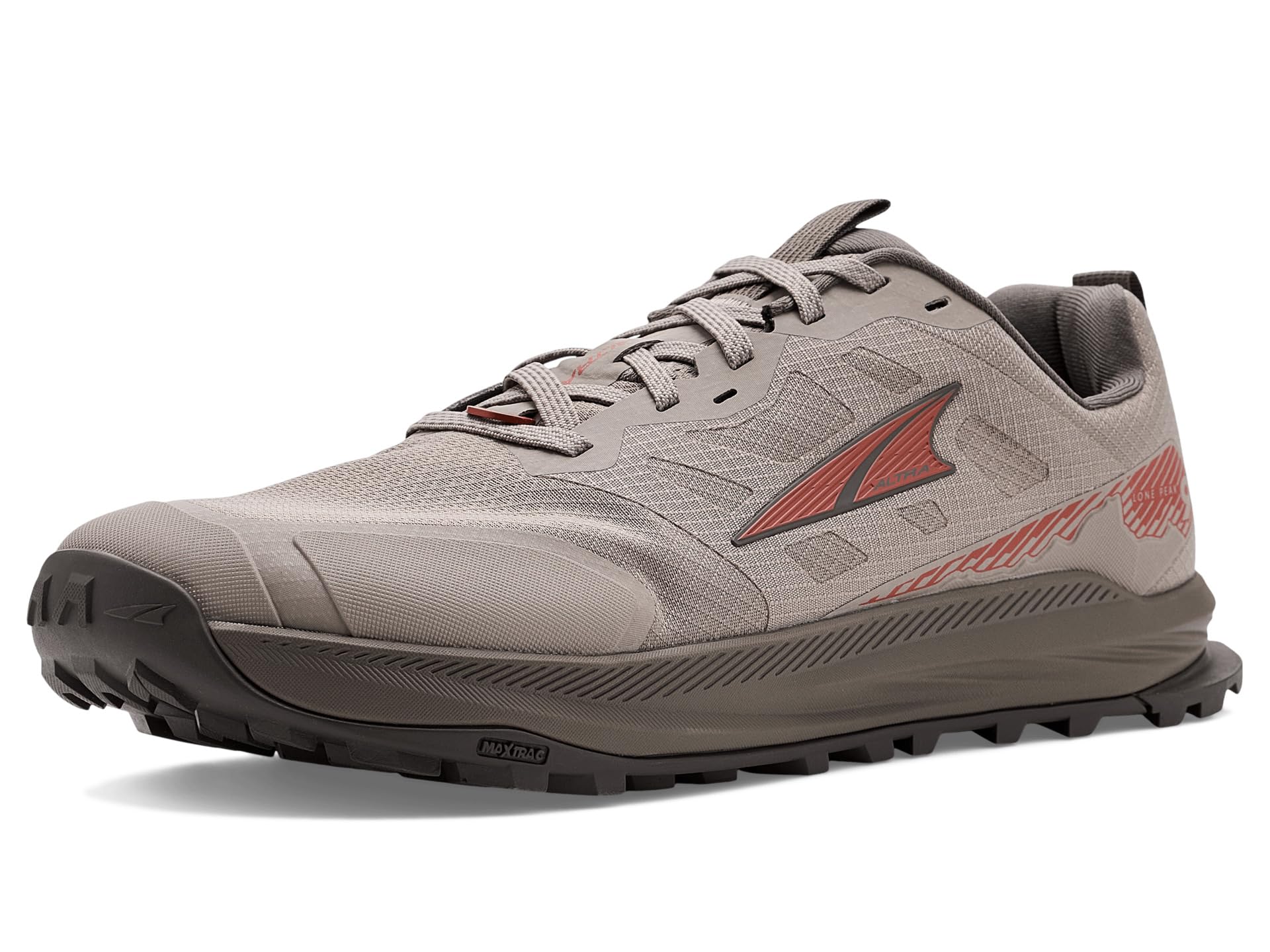
1. ALTRA Men’s Lone Peak 9 Trail Running Shoe

Our pick — over 4.5★ from 950+ verified ratings; the strongest balance of quality and price.

MaxTrac Outsole25mm Stack Height

A legendary trail shoe that combines zero-drop stability with the widest toe box in its class.

The Lone Peak 9 is the shoe that nearly a thousand trail runners chose as their go-to — it holds a 4.6-star rating across 999 reviews. The reason is simple: it delivers a flat 0mm drop and a roomy toe box (what Altra calls their “roomiest” fit) without turning into a sloppy slide inside the shoe. The stack height is 25mm at both heel and toe, so you get moderate cushioning that protects your feet from sharp rocks while still letting you feel the trail beneath you. The outsole uses MaxTrac rubber, a compound designed to stay sticky on loose dirt, wet rock, and dry terrain alike — and the Stoneguard insert shields the bottom of your foot from debris without making the sole feel like a plank.

The lone biggest praise from owners is the appearance (mentioned 113 times), followed closely by comfort (107 mentions). One long-time buyer put it plainly: “I love these shoes! The toe box is excellent.” The same reviewer noted the sole has great traction and the shoe fits their orthopedic arch supports well — a combination that is rare in zero-drop designs. Another runner who switched to the Lone Peak 9 said it resolved years of foot and hip pain, while a third reported it helped shrink bunions and ended plantar fasciitis symptoms. These are strong signals that the toe box shape and zero-drop platform work together to change how your foot lands.

That said, fit gets some mixed feedback (79 mentions). Around half of those who flagged fit say the shoe runs slightly large and suggest going half a size down. Durability is also a mixed note (41 mentions) — most owners find the build holds up for high-mileage training, but a few report the upper wears faster than expected. Compared to the Topo Athletic Pursuit 2 below, the Lone Peak 9 is a touch heavier at 11.15 oz (316g) versus the Pursuit 2’s 8.6 oz (W7), so if pure featherweight speed is your goal, the Topo might edge ahead. But for an all-around trail companion that handles everything from daily runs to multi-day hikes, this shoe earns its top spot.

Why It’s the Top Pick

  • Proven 0mm drop with a 25mm / 25mm stack height that balances protection and ground feel
  • MaxTrac outsole provides sticky grip across varied terrain — wet rock, dirt, and snow
  • Stoneguard insert protects against sharp rocks without making the sole rigid
  • Roomiest toe box in the lineup, helping bunions and toe crowding

What to Consider

  • Runs slightly large; many owners recommend going half a size down
  • At 11.15 oz it is heavier than some minimalist rivals
  • Durability feedback is mixed, with a few owners noting upper wear on rocky trails

Reach for this if: you want a proven, do-it-all zero-drop trail shoe that lets your toes spread naturally and grips confidently on mixed terrain. It is ideal for runners who cover varied distances and don’t want to gamble on an unknown fit.

Think twice if: you are chasing the absolute lightest shoe on the list — the Lone Peak 9 is built for durability, not featherweight speed, and its 11.15 oz weight reflects that.

Barefoot Feel

2. Xero Shoes Women’s Speed Force 2 Barefoot Zero Drop Running Shoe

Ultra-Lightweight5000-Mile Sole Warranty

The near-weightless zero-drop shoe that puts your foot closest to the trail surface.

The Speed Force 2 from Xero Shoes is built for runners who want the thinnest possible barrier between their foot and the ground. It is a minimalist shoe through and through — zero drop, a low-to-ground profile, and a breathable mesh upper designed for road running and cross-training as much as for trails. The standout claim is the 5,000-mile sole warranty, which tells you the manufacturer believes the outsole will outlast most competitors. With a rating of 4.4 stars across 77 reviews, it is less proven by volume than the Lone Peak 9, but owners who love it really love it — one reviewer noted “this shoe seems to be helping my back,” attributing the relief to the perfectly flat platform that keeps their spine straight.

Comfort is the aspect owners praise most — 24 reviewers single it out. One owner wore these for 9-10 hour shifts on their feet and even hiked the Grand Canyon in them, calling them their “favorite pair.” Another, who has wide feet and high arches, found the Speed Force 2 more comfortable than their Hoka and Nike shoes. The lightweight design (exact weight is not listed in the data, but multiple owners describe it as “very lightweight”) makes it easy to pack for travel or throw into a gym bag for after-work runs.

The catch is fit: 18 owners flagged this as a mixed point, with some saying the shoe is long but too narrow at the midfoot and toe box. One buyer mentioned that the shoe pinched their pinky toe even with adjustments, and another found the rough stitching near the tongue made the shoe unwearable without socks. If your feet are on the wider side, the Lone Peak 9 or the Topo Pursuit 2 below offer more room. Also, there is a transition note: an experienced barefoot runner says beginners should “start slow” because the lack of cushioning demands stronger foot muscles and a shorter stride at first. This shoe is not for someone who wants plush underfoot protection on rocky terrain.

Who it fits best: Runners who already have barefoot-minimalist experience and want a shoe that disappears on the foot — no extra weight, no bulky cushion, just a thin, flat sole with a grippy rubber base. The 5,000-mile sole warranty adds serious long-term value if the shoe fits you well.

The honest trade-off: The narrow fit rules out broader feet, and the minimal cushioning means you feel every sharp stone. One owner reported the lack of a heel pull-strap makes the shoe hard to put on, and the tongue stitching can irritate barefoot wearers. This is a specialist tool for the barefoot devotee, not a universal pick.

Best for: experienced barefoot runners who prioritize ground feel and ultra-light construction over plush cushioning or a spacious toe box.

Not for: runners with wide midfeet or toes, or anyone new to zero-drop who needs a softer transition — the near-barefoot sole leaves little room for error on rocky trails.

Premium Grip

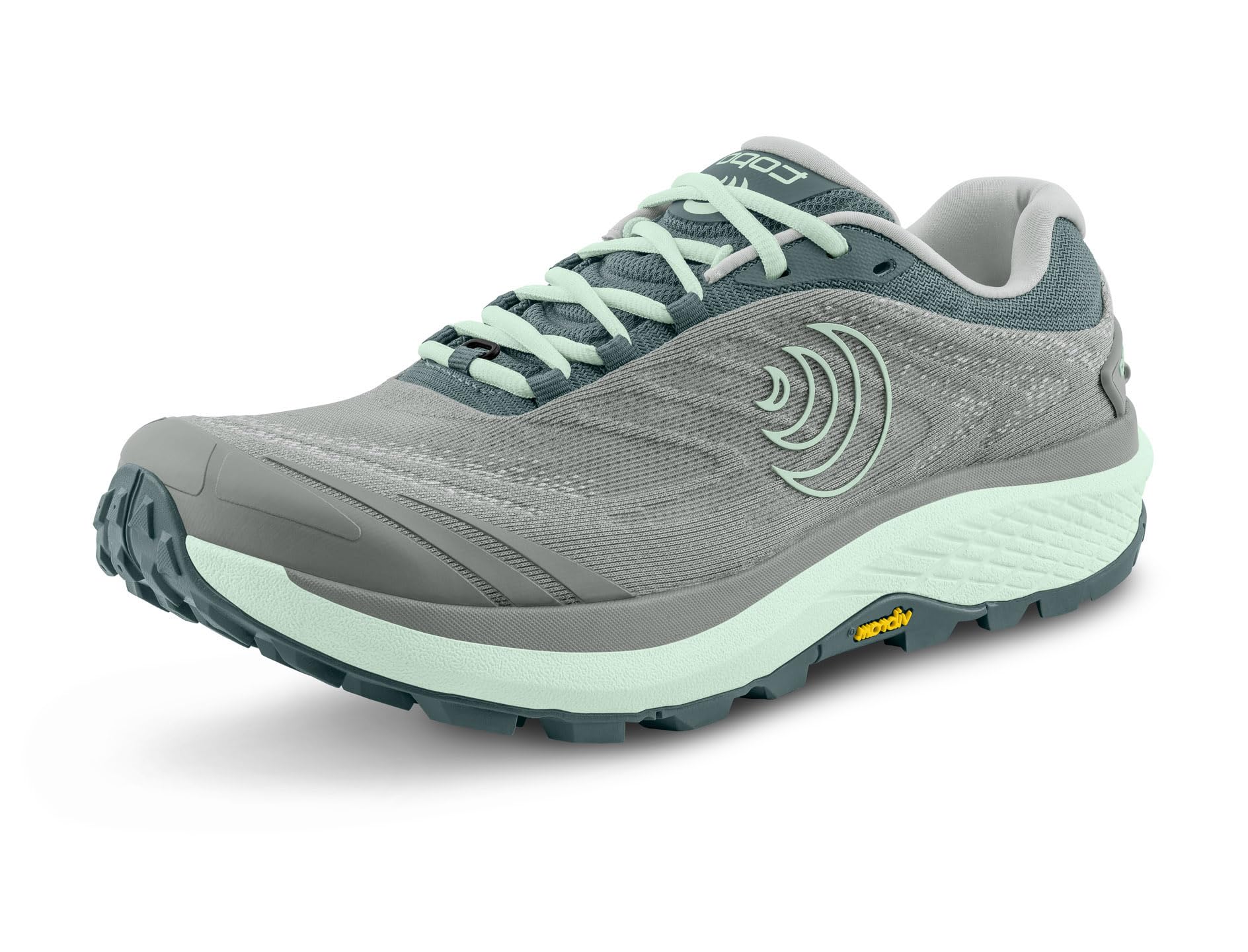
3. Topo Athletic Women’s Pursuit 2 – Lightweight 0MM Drop Laced Running Shoes

Vibram Megagrip OutsoleZipFoam Midsole

A zero-drop shoe that pairs premium Vibram traction with a toe box designed for natural splay.

Topo Athletic built the Pursuit 2 around a clear idea: give trail runners a completely neutral 0mm drop, a roomy anatomical toe box, and an outsole from the undisputed leader in grip — Vibram Megagrip. The result is a shoe that feels precise on loose terrain and wet surfaces without the clunkiness of heavier trail shoes. At just 8.6 oz for a women’s size 7, it is notably lighter than the Lone Peak 9 (which weighs 11.15 oz), making it a strong option for runners who cover longer distances and want less weight swinging with each stride. The midsole uses Topo’s own ZipFoam formula, which is designed to be softer and more responsive than the previous version, so the ride feels lively without sacrificing the flat platform.

The toe box earns the most praise from owners — 17 reviewers mention it positively, calling it “wide” and “excellent” for letting toes spread naturally. One buyer who is 75 years old and walks a lot said these shoes are “comfortable to wear all day” because of the large toe box and low heel drop. Another runner described the Pursuit 2 as their “favorite trail running shoe for a great price,” noting the wide toe box and good sole traction. The shoe also includes an FKT insole designed for quick drainage in wet conditions — a thoughtful detail for runners who cross streams or run in heavy rain.

Durability gets mixed reviews, with a few owners reporting that the shoe lace loop ripped off. One customer observed the shoe is “expensive” and after a month of use could not yet speak to long-term build quality. There is also an odd-fit report: one buyer found the forefoot too shallow, compressing the top of their foot, and the arch support misplaced — pressing into the heel bone rather than the arch. That experience seems less common (the shoe still holds a 4.4-star rating across 87 reviews), but it is note if you have a high-volume foot. Compared to the Lone Peak 9, the Pursuit 2 is lighter and uses a more premium outsole brand (Vibram vs. MaxTrac), but it has far fewer reviews and a smaller fan base, so the long-term reliability picture is less clear.

Why it stands out: The Vibram Megagrip outsole is the gold standard for trail traction — if you run on slick rock, loose gravel, or muddy descents, this shoe gives you more bite than the MaxTrac sole on the Lone Peak 9. And at 8.6 oz, it is around 2.5 oz lighter per shoe, which adds up over a 10-mile run.

The honest limitation: The smaller review pool (87 ratings vs. 999 for the Lone Peak) means durability data is thin. The lace-loop issue and the odd-fit report suggest quality control may be less consistent than you would expect at this price tier. Also, there is no men’s-specific version of the Pursuit 2 in the data — only women’s sizing is listed for this exact model.

Reach for this if: you want the best possible outsole grip on a zero-drop platform, and you value a lightweight shoe with a spacious toe box that does not feel sloppy through the heel.

skip it if: you need a men’s fit — this product is listed for women — or you prefer the proven, more-reviewed durability of the Lone Peak 9’s build.

Comfort-First

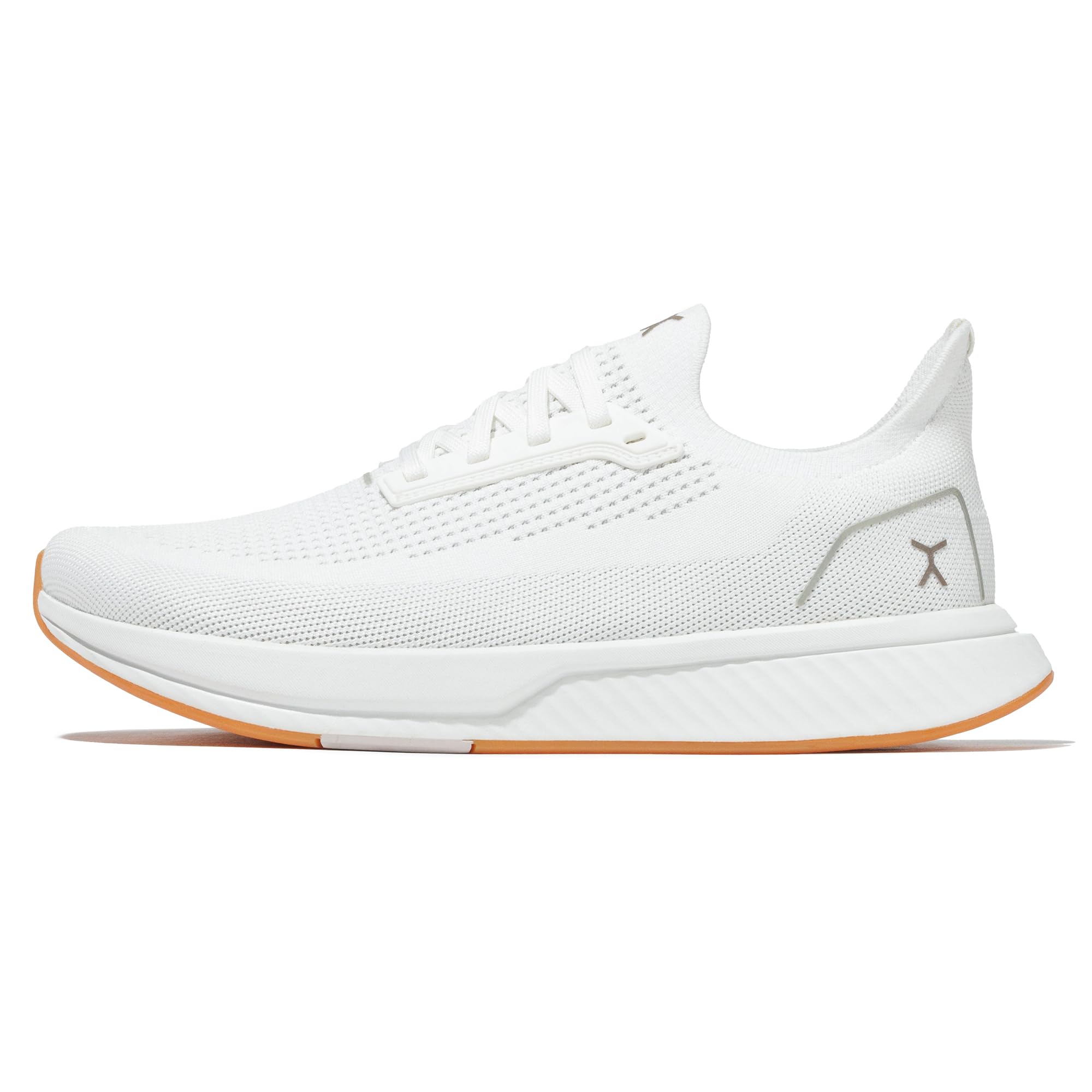
4. FLUX FOOTWEAR Adapt Runners for Women and Men – Wide Toe Box, Zero Drop Sole

Machine WashableUnisex Fit

A zero-drop shoe built for all-day wear that you can toss in the washing machine.

The FLUX FOOTWEAR Adapt Runners are designed for natural movement first and trail running second. The brand is clear about its philosophy: “modern shoes limit your mobility,” so this shoe uses a wide toe box and zero-drop platform to let your foot move as it would barefoot. What sets the Adapt Runner apart from the other three picks is its machine-washable construction (cold cycle, gentle detergent, air dry) and its unisex sizing — it is listed for both men and women. Comfort is the single most praised aspect, with 260 owners mentioning it, and quality follows at 134 mentions. One buyer called it “hands down the most comfortable shoe” they have ever owned, wearing it through Rome and Pompeii without knee or foot pain despite prior knee surgery.

The data describes a textured insole that one owner compared to a “foot massage,” and the stretchy material gives the upper a sock-like feel that keeps the wide toe box from looking or feeling clownish. Another buyer, an automotive painter, uses these for 15,000 steps a day and says the shoe reduced their knee, back, and foot pain. The 942 reviews and 4.2-star rating show a broad base of owners who are generally satisfied, though the score is slightly lower than the Lone Peak 9’s 4.6 and the Pursuit 2’s 4.4.

The biggest trade-off is fit: a whopping 183 owners flagged it as mixed, which is the most-discussed aspect after comfort. Multiple buyers report the Adapt Runners “run small” and recommend going up half a size. One buyer with high arches and wide feet found the arch too tight, causing pain after just 30 minutes — and noted the shoe did not stretch out over time. Durability also gets mixed feedback: one nurse who wears them constantly said the inside heel wore out after about six months of moderate wear, while another owner who wore a pair for four years doing yard work found them “extremely durable.” That split suggests durability varies depending on use and foot shape. Compared to the Lone Peak 9, the Adapt Runner is cheaper in feel — more of an everyday natural-movement shoe than a dedicated trail weapon. It works for light trails and walking, but for serious rocky terrain, the Lone Peak or Topo offer better underfoot protection.

What Works Well

  • Machine washable — a rare feature that keeps the shoe fresh after muddy or sweaty runs
  • Unisex sizing and wide toe box make it accessible to many foot shapes
  • 260 owners praise comfort, with many reporting relief from foot, knee, and back pain
  • Stretchy, sock-like upper gives a secure feel without laces feeling necessary

Watch Out For

  • Runs small — most owners recommend sizing up half a size, and even then the arch may feel tight
  • Durability split: some owners mention sole separation or heel wear after six months
  • Less underfoot protection for rocky trails compared to the Lone Peak 9 or Pursuit 2

Best suited for: walkers, travelers, and casual runners who want a zero-drop shoe for light trails plus everyday wear — the machine-washable design and sock-like comfort are tough to top for daily use.

Look elsewhere if: you need serious rock protection for technical trail runs, or you have high arches and wide feet — the Arch support from 36 mixed reviews suggests a tight fit that may not work for you.

Understanding the Specs

Zero Drop vs. Low Drop

Zero drop means the heel and toe are exactly level — a 0mm difference. Low drop shoes (often 3-5mm) still sit slightly lower than traditional 8-12mm running shoes, but they are not truly zero. For the shoes on this list, “0mm Drop” is the defining spec because it forces your foot into a more natural, midfoot-strike pattern. If a shoe claims “zero drop” but the heel is even 2mm higher, it changes your stride and defeats the purpose.

Stack Height and Cushioning

Stack height measures the thickness of the sole under your foot, usually in millimeters. A 25mm stack, as seen on the Lone Peak 9, offers a moderate amount of cushion that protects you from sharp rocks while still letting you feel the trail. Thinner stacks — like those on the Xero Speed Force 2 — give you more ground feel but less impact protection. There is no “right” number; it depends on the terrain you run and how much feedback you want from the ground beneath you.

Outsole Rubber and Lugs

The outsole rubber compound determines how well the shoe grips on wet rock, loose dirt, or packed snow. Vibram Megagrip (on the Topo Pursuit 2) and MaxTrac (on the Lone Peak 9) are both high-traction compounds, but Vibram is widely considered the gold standard for technical terrain. Lugs are the raised rubber knobs — deeper lugs (3-5mm) bite into soft ground, while shallower lugs work better on hard-packed trails. A shoe with very flat lugs may slip on steep, loose sections.

FAQ

Do I need to break in zero drop trail running shoes?
Most zero drop shoes require a gradual transition, especially if you are switching from traditional running shoes with a high heel-to-toe drop. The Lone Peak 9 is noted by several reviewers as needing no break-in, while the FLUX Adapt Runners have stretchy material that adapts quickly. For the Xero Speed Force 2, experienced users recommend starting slow if you are new to barefoot-style shoes to let your calf muscles and Achilles tendon adjust.
Can I use zero drop trail shoes for road running or everyday walking?
Yes — the Lone Peak 9 and Topo Pursuit 2 are designed primarily for trails but handle pavement fine. The FLUX Adapt Runners are marketed specifically for everyday comfort and walking, and the Xero Speed Force 2 is described as suitable for road running and cross-training. The main difference is outsole durability: aggressive trail lugs can wear faster on asphalt, so the Lone Peak and Topo are better for mixed surfaces.
How do I know if I need a wide toe box?
If you experience toe crowding, blisters between your toes, or bunions in standard-width running shoes, a wide toe box can help. The Lone Peak 9 offers the roomiest fit (Altra calls it their “roomiest toe box”), while the Topo Pursuit 2 and FLUX Adapt Runners also have anatomical toe boxes. Reviews for the Xero Speed Force 2 indicate it runs narrow for some wearers. A simple test: trace your foot on paper while standing — if the widest part of your forefoot is broader than the shoe’s footprint, you need a wider toe box.
What is the difference between zero drop and barefoot shoes?
Both have a 0mm heel-to-toe drop, but barefoot shoes (like the Xero Speed Force 2) have a much thinner sole — often 4-10mm total — and very little cushioning. Zero drop trail shoes (like the Lone Peak 9) still have a moderate stack height (25mm) to protect your feet from rocks. Barefoot shoes give you maximum ground feel but less protection; zero drop cushioned shoes give you a natural foot position with more impact absorption.
How long do zero drop trail running shoes typically last?
Durability depends on the shoe and the terrain. The Lone Peak 9 has mixed durability feedback, with most owners finding it holds up for high-mileage training. The Xero Speed Force 2 comes with a 5,000-mile sole warranty, indicating strong outsole longevity. The FLUX Adapt Runners show a split in data — one owner reported sole separation at the heel after six months, while another wore a pair for four years doing yard work. On rocky trails, all shoes wear faster, especially the outsole lugs.
Can I machine wash my zero drop trail shoes?
Only the FLUX FOOTWEAR Adapt Runners are explicitly stated as machine washable — cold cycle with gentle detergent, then air dry away from sunlight. The manufacturer warns that machine drying could cause shrinking. For the ALTRA, Topo, and Xero shoes, hand cleaning with mild soap and water is safer to avoid damaging the midsole foam or upper materials.
Do zero-drop shoes help with plantar fasciitis or back pain?
Customer reviews in the data report relief from plantar fasciitis and back pain after switching to zero-drop shoes. One Lone Peak 9 reviewer said it “resolved plantar fasciitis symptoms,” and a Xero Speed Force 2 owner noted it “seems to be helping my back” due to the flat platform. However, everyone’s biomechanics are different — some people find that switching too fast aggravates their calves or Achilles. Many runners report relief, but results vary by individual.
How do I choose between the Lone Peak 9 and the Topo Pursuit 2?
Both are zero drop with a wide toe box, but the Lone Peak 9 has a 25mm/25mm stack height and a MaxTrac outsole, while the Topo Pursuit 2 uses a Vibram Megagrip outsole and weighs around 2.5 oz less (8.6 oz for the Topo vs. 11.15 oz for the Lone Peak). If you prioritize max grip on wet rock and a lighter shoe, the Topo is the better choice. If you want a proven track record (999 reviews vs. 87) and the roomiest toe box in the lineup, the Lone Peak 9 is the safer bet. The Lone Peak also has a Stoneguard insert for rock protection that the Topo does not mention.
Are these shoes suitable for wide feet or bunions?
The Lone Peak 9 is the top pick for wide feet and bunions — multiple reviewers report that it “does not aggravate bunions” and even “helped shrink them.” The Topo Pursuit 2 also has a wide toe box praised by 17 reviewers. The FLUX Adapt Runners have a wide toe box but a tight arch that may not suit all wide feet. The Xero Speed Force 2 is the narrowest of the four and is not recommended for wide feet or bunions, based on fit feedback.
What socks should I wear with zero drop trail shoes?
Most owners wear thin or no-show socks to maintain the natural fit. The Lone Peak 9 roomy toe box accommodates thicker socks if needed for cold weather, but the Xero Speed Force 2 may feel tight with anything thicker than a thin sock. Some reviewers of the Xero shoe noted they could wear it “barefoot or with thin socks.” For the FLUX Adapt Runners, the stretchy sock-like upper means thin socks keep the fit snug — thicker socks may exacerbate the tightness that some customers note.

Final Thoughts: The Verdict

Across the board, the zero drop trail running shoes winner is the ALTRA Lone Peak 9 because it balances proven trail grip, a truly roomy toe box that helps with foot issues, and moderate cushioning that works on both rocky trails and everyday walks. If you want premium outsole traction and a lighter build for longer runs, grab the Topo Athletic Pursuit 2. And for daily natural movement with the bonus of machine-washable convenience, the FLUX FOOTWEAR Adapt Runner is the one to reach for — just be sure to size up half a step.

How We Picked

We do not accept paid placement. Every pick is matched to a real buyer and a real use-case; we do not hands-on test units.

Sources & Methodology

Specifications: manufacturer listings and product documentation. Review insights: verified customer reviews, as of July 2026. Pricing: not shown on this page (it changes often); check the current price via the retailer link.

As an Amazon Associate, Calories Fit earns from qualifying purchases. This does not affect which products we feature.

Related Guides

Please use a real email you check. If it's fake or mistyped, your message won't reach us and we can't reply — wrong addresses are rejected automatically.