
Our readers keep the lights on and the coffee maker working hard! As an Amazon Associate, I earn from qualifying purchases.
Specs are compiled from manufacturer listings and verified buyer reviews and can change over time — please confirm the key details on the product page before buying.
You need a steel or composite toe that protects your feet, but you still have to walk, stand, and move all day. The wrong pair feels like carrying bricks on each foot—the seven models here solve that. This guide compares weight, comfort, durability, and real-life wear to find a pair that works for your shift.
I’m Mohammad — the founder and writer behind Calories Fit. This guide is built by comparing the manufacturers’ published specifications and the patterns across verified customer reviews, so you get each pick’s real strengths and trade-offs instead of marketing spin.
Whether you work on concrete floors, move through a warehouse, or stand for ten-hour construction shifts, finding a pair of best women safety shoes means balancing protection with all-day wearability—and these reviews dig into exactly how each model handles that balance.
Our Picks at a Glance

How To Choose The Best Women Safety Shoes
Women safety shoes are not scaled-down men’s boots. Women’s feet have a narrower heel and higher arch; a women-specific model prevents blisters, fatigue, and toe pain. The three specs that matter most are toe material, shoe weight, and outsole slip resistance. Steel toes offer the strongest impact protection but add weight; composite toes are lighter and non-metallic (no metal detector issues); alloy toes sit in the middle — lighter than steel, stronger than composite. Your work environment decides the rating you need: electrical hazard (EH) for live wires, static dissipative (SD) for electronics, or slip-resistant (SR) for wet floors.
Toe Protection Type
Steel toe is the classic — heavy, strong, and rated for impact. Alloy toe is lighter because it uses aluminum or titanium, and it passes the same safety standard. Composite toe uses non-metal materials (carbon fiber, Kevlar, plastic) so it is the lightest option and does not conduct cold or heat — a plus for outdoor work in winter. All three meet ASTM F2413 standards, but steel generally lasts longer in abrasive conditions while composite can crack under extreme repeated impact.
Weight and Cushioning
Every extra ounce on your foot multiplies fatigue across a shift. A lighter shoe (under 2 pounds a pair) lets you walk faster and stand longer. Look for a midsole material like EVA (ethylene-vinyl acetate — a lightweight foam that absorbs shock) or a brand-specific system such as KEEN.ReGEN or Timberland PRO 24/7 Comfort System, which are engineered to bounce back after thousands of steps rather than flattening out by lunch.
Outsole and Safety Ratings
Slip resistance is measured by ASTM F3445-24 SR — it means the outsole passed a standardized test on wet or oily surfaces. Electrical hazard (EH) rated shoes have a sole that can withstand 18,000 volts, protecting you if you step on a live wire. Static dissipative (SD) shoes prevent a buildup of static electricity, which is critical around flammable materials or sensitive electronics. Match the rating to your job site, not to your shoe preference.
Quick Comparison
| Model | Best For | Toe Type | Weight | Safety Rating | Amazon |
|---|---|---|---|---|---|
| Wolverine Floorhand★ Best Overall | All-around waterproof work boot | Steel Toe | — | — | Amazon |
| Carhartt Frontier ChelseaAlso Great | Heavy-duty construction, long shifts | Steel Toe | — | ASTM F2413-24 EH, ASTM F3445-24 SR | Amazon |
| Timberland PRO Intercept | Long shifts, breathable comfort | Steel Toe | 1.98 Pounds | Electrical Hazard | Amazon |
| CAT Venward CT | Retro-style, lightweight protection | Composite Toe | — | — | Amazon |
| PUMA Safety Iconic Suede | Style-forward, static dissipative environments | Composite Toe | 2 Pounds | ASTM F2413-18 SD | Amazon |
| KEEN Sparta II Alloy Toe | All-day walking, warehouse work | Alloy Toe | 2.1 Pounds | — | Amazon |
| New Balance Fresh Foam Cremorne | Athletic feel, travel-friendly | Composite Toe | — | Electrical Hazard | Amazon |
In‑Depth Reviews
1. Wolverine Women’s Floorhand Steel-toe 6″ Waterproof Work Boot
Our pick — over 4★ from 600+ verified ratings; the strongest balance of quality and price.
A waterproof work boot that feels broken in from the very first wear.
The Wolverine Floorhand is a steel-toe, 6-inch waterproof boot with a removable full-cushioned footbed and a rubber midsole. The waterproofing is real — the upper keeps water out — and the footbed adds decent shock absorption. One reviewer noted wearing them “about 3 months now” and noted “zero break-in” with no blisters, while another said the boots have been “a mainstay for me for six years” and was buying a third pair. That kind of repeat purchase loyalty is rare in this category.
Unlike the lighter Timberland PRO Intercept (1.98 pounds — the spec is in the data), the Wolverine is heavier — multiple reviewers call the weight “mixed,” with some finding them not too heavy and others considering them too heavy. There is no published weight spec in the data to confirm the exact figure, but the reviews are clear: this is not a featherweight shoe. The removable insole is a plus for anyone who needs a custom orthotic. Waterproofness held up, though one buyer mentioned they are “not breathable at all,” so expect warm feet in summer.
The Floorhand leads on waterproofing among the boots here. If you work outside, on wet ground, or walk through puddles regularly, this boot keeps your feet dry. It is less cushioned than the Carhartt Frontier and heavier than the Timberland PRO, but for a simple, durable waterproof steel toe that does not require a break-in period, it is tough to top.
Why Pick It
- Waterproof construction confirmed by multiple reviews
- Zero break-in required — comfortable from day one
- Removable full-cushion footbed for orthotics
- Long-lasting build; multiple buyers repurchased
Watch Out For
- Heavier than the Timberland PRO and KEEN Sparta II
- Not breathable — feet may get hot
- Some reviewers reported foot pain over long use
Grab these if: you need a waterproof steel-toe boot that works straight from the start with no break-in pain.
Pass if: you want a lightweight shoe for all-day standing; this boot leans heavy and not very breathable.
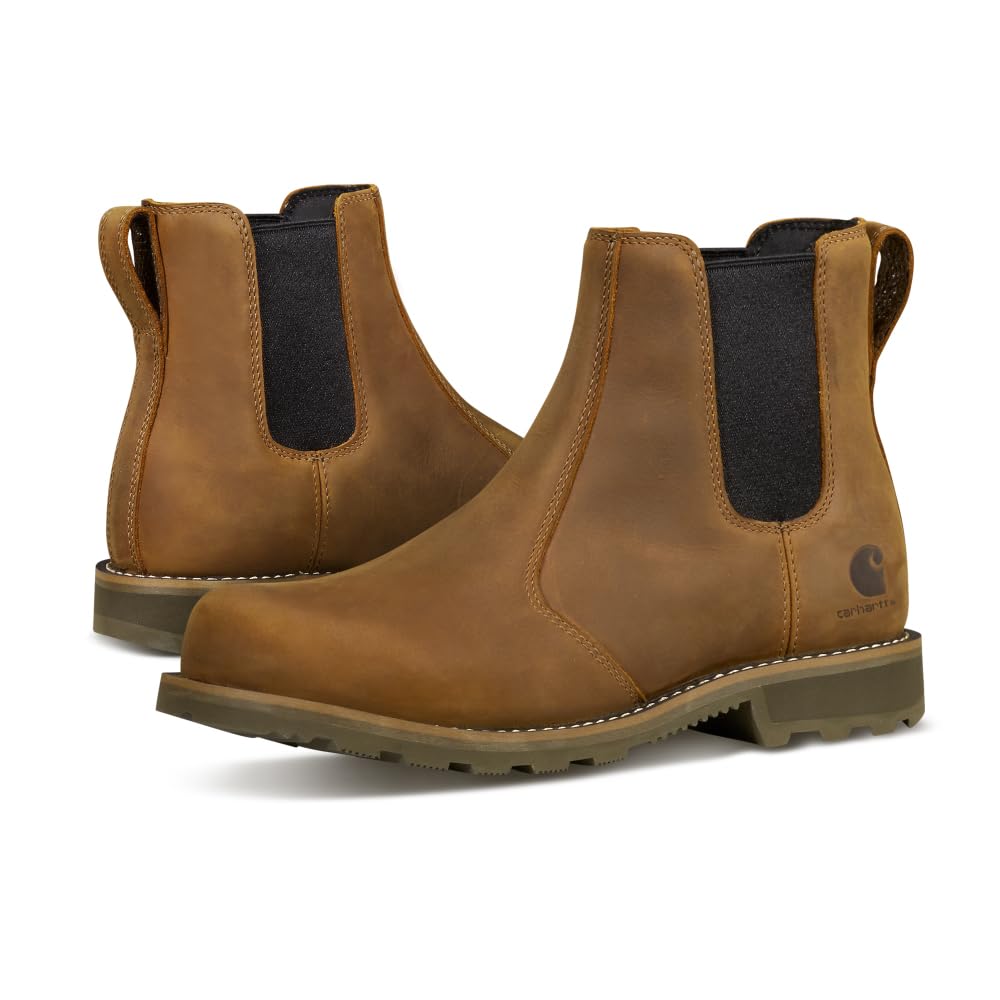
2. Carhartt Women’s Frontier Water-Resistant Chelsea Steel Toe Boots
A steel-toe Chelsea boot that goes on fast and stays comfortable for ten-hour days.
The Carhartt Frontier is built around a steel toe certified to ASTM F2413-24 EH, meaning it protects against electrical hazards up to 18,000 volts, and its outsole meets ASTM F3445-24 SR for slip resistance — two serious safety ratings packed into a boot that looks like a stylish Chelsea. The water-resistant leather upper keeps moisture out, while the FastDry moisture-wicking lining pulls sweat away so your feet do not stay damp. An Insite footbed with arch support and an EVA midsole (the lightweight foam you find in running shoes) cushion each step, and buyers report the boot is “very comfortable, durable, and provides great support throughout the day.”
Unlike the Wolverine or Timberland below, the Frontier uses a slip-on Chelsea design — no laces, which some buyers love for quick on-off but others find “difficult to remove quickly.” The steel toe is noticeable at first, but reviewers consistently say it becomes unnoticeable after a week of wear. One buyer on concrete floors for 8 to 10 hours reported “no need to swap” shoes, calling the comfort all-day. A few found the shaft too high and the elastic sides stiff during the first week, but most agree the break-in period is short.
The Frontier beats the Wolverine and Timberland on build quality and slip-resistance rating, though it costs more. For shift work on concrete, wet surfaces, or job sites with live wires, this is the most complete package.
Built to Work
- EH and SR safety ratings on the same boot
- Water-resistant leather with FastDry lining
- Slip-on Chelsea style saves time
- Strong arch support noted by multiple reviewers
Real Trade-Offs
- Steel toe adds more weight than composite options
- Elastic sides may feel stiff the first week
- Difficult to remove quickly, per some buyers
- Premium price compared to mid-range picks
Reach for it if: you need a durable steel-toe boot with both electrical hazard and slip-resistance ratings for long construction or warehouse shifts.
Look elsewhere if: you prefer the lightest possible shoe; the steel construction here is heavier than alloy or composite toe models.
3. Timberland PRO Women’s Intercept Steel Safety Toe Industrial Athletic Work Shoes
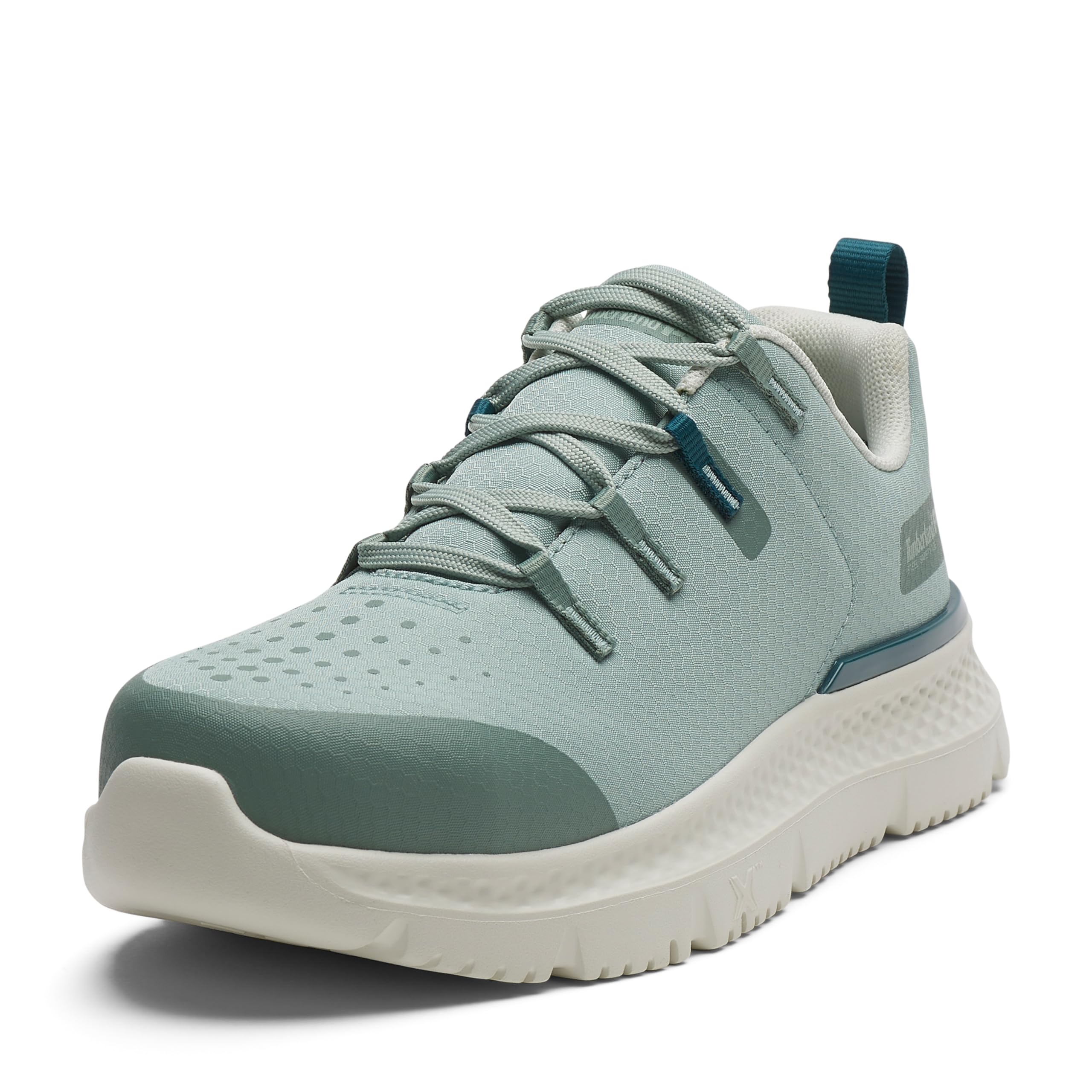
A lightweight steel-toe sneaker built for ten-hour standing shifts without fatigue.
The Timberland PRO Intercept is the lightest steel-toe shoe in this list at exactly 1.98 pounds. Its Timberland PRO 24/7 Comfort System uses a suspension system that supports the arch and cushions every step — a specific engineering approach to reduce foot fatigue. The upper is a ripstop nylon (a woven fabric with a reinforcing grid that stops tears from spreading), it is abrasion-resistant, and the non-marking outsole is slip- and abrasion-resistant EVA (the same foam used in running shoes) with flex grooves for natural movement. One buyer called them “Excellent for long shifts (10 hrs standing)” and noted they are machine washable and breathable, with no odor and “minimal sole wear after months.”
Compared to the KEEN Sparta II (2.1 pounds), the Timberland PRO is a bit lighter — 0.12 pounds less. This makes it a strong option for anyone who wants the lightest possible steel toe without switching to composite. But the mid-foot is narrow: one reviewer on a size 7 said to order half a size up for thick socks. The asymmetrical steel toe is contoured to the foot’s natural shape, helping reduce the boxy feel that many steel toes have.
The catch is the narrow mid-foot. If you have wide feet, this shoe may not work for all-day standing despite the great cushion. It is also not waterproof, unlike the Wolverine and Carhartt above. But for dry environments where you stand all day and want a steel toe that barely feels like one, this is the pick.
What Stands Out
- Lightest steel toe in the list at 1.98 pounds
- Excellent cushion and arch support for 10+ hour shifts
- Breathable, machine washable, no odor
- Asymmetrical steel toe for a more natural fit
Limitations
- Narrow mid-foot may not suit wide feet
- Not waterproof
- Some buyers found it heavy despite the spec
Best for: anyone who stands or walks on concrete floors for ten hours and wants the lightest steel-toe shoe with strong cushion.
Skip if: you have wide feet or work in wet environments; the mid-foot narrowness and lack of waterproofing are real limitations.
4. CAT Womens Venward Composite Toe

A retro-style composite-toe sneaker that looks like a fashion shoe but protects like a work boot.
The CAT Venward CT uses a composite (non-metallic) safety toe, so it is lighter than a steel toe and does not set off metal detectors. The shoe is designed as “a modern take on a retro sneaker” with engineered comfort — CAT Footwear’s own midsole foam. Multiple buyers call it “cute” and say “if you have to wear a protected toe shoe this is super cute.” One reviewer working 12-hour shifts with heavy walking calls it “extremely comfortable” and notes it “feels like regular shoe” with “no foot pain.” Another says “these are my absolute favorite thing to wear” even as a programmer on her feet most of the day.
The main caveat is sizing: several owners mention it runs large and recommend ordering half a size smaller, while others say order true to size. A few customers note the composite toe rubs the top of the foot, causing pain during long shifts. Unlike the Wolverine and Carhartt, this shoe is not waterproof and has no electrical hazard rating, so it is best for dry indoor environments. Compared to the PUMA Iconic Suede below (also a composite toe, also lightweight), the CAT Venward has a more athletic sneaker look while the PUMA leans suede casual.
The Venward is a strong mid-range option if you want composite toe protection in a shoe that does not scream “safety footwear.” It is less protective than the Carhartt on ratings but more comfortable for all-day wear in a light industrial or office-warehouse hybrid setting.
Why It Wins
- Composite toe is lighter and non-metallic
- Retro style looks like a regular sneaker
- Very comfortable for 12-hour shifts
- Lightweight build noted by multiple buyers
Consider This
- Runs large — order half size smaller
- No waterproofing or electrical hazard rating
- Composite toe may rub the top of the foot for some
Let’s be clear: this is for anyone who needs composite toe protection but hates the bulky boot look. It is comfortable, lightweight, and stylish.
But: skip it if you need waterproofing, electrical hazard protection, or a sure-fit for wide feet.
5. PUMA Safety Iconic Suede Low Women’s Shoes, Composite Toe, Static Dissipating

A suede safety shoe with a composite toe that looks like a casual sneaker and meets static dissipative standards.
The PUMA Safety Iconic Suede uses a composite safety toe certified to ASTM F2412-18a/ASTM F2413-18 I/75 C/75 SD — that means Impact (I/75), Compression (C/75), and Static Dissipative (SD). The SD rating is important if you work around flammable materials or sensitive electronics, as it prevents static buildup and a sudden spark. The insole uses memory foam for moderate cushioning, and the suede upper gives it a casual, non-work aesthetic. One reviewer called it “safety toe shoes that do not look like safety toe shoes” and praised the non-bulky toe. Another buyer working in a machining shop for 9 months reported “no heel blowout yet,” which is a good sign for durability.
Weight is 2 pounds — slightly heavier than the Timberland PRO Intercept but lighter than most steel-toe boots. The composite toe itself is lighter than steel, but the suede upper and memory foam insole add some heft. Sizing runs large: multiple reviewers recommend ordering one size down. One buyer returned them due to “uncomfortable padding on heels/Achilles,” and another called them “clunky, heavy, and hard to keep clean.” That last review stands out — the suede material does pick up dirt and is harder to wipe clean than leather or nylon.
The static dissipative rating sets the PUMA apart from the CAT Venward and the KEEN Sparta II. If your job requires SD footwear, this is the only shoe in this list that carries it. For style and SD protection in a package that does not resemble a boot, the PUMA Iconic Suede is the pick.
Unique Perks
- Static Dissipative rating for electronics and flammable environments
- Composite toe is lighter and non-metallic
- Casual sneaker look, not bulky
- Memory foam insole for moderate cushioning
Honest Drawbacks
- Runs large — order one size down
- Suede gets dirty easily and is hard to clean
- Some found padding uncomfortable on heel
- Heavier than Timberland PRO Intercept (2 lbs vs 1.98 lbs)
Reach for these if: you need static dissipative protection in a lightweight composite-toe shoe that does not scream “safety.”
Look elsewhere if: you work in wet, muddy conditions — suede is not easy to clean and not waterproof.
6. KEEN Utility Sparta II (Alloy Toe)
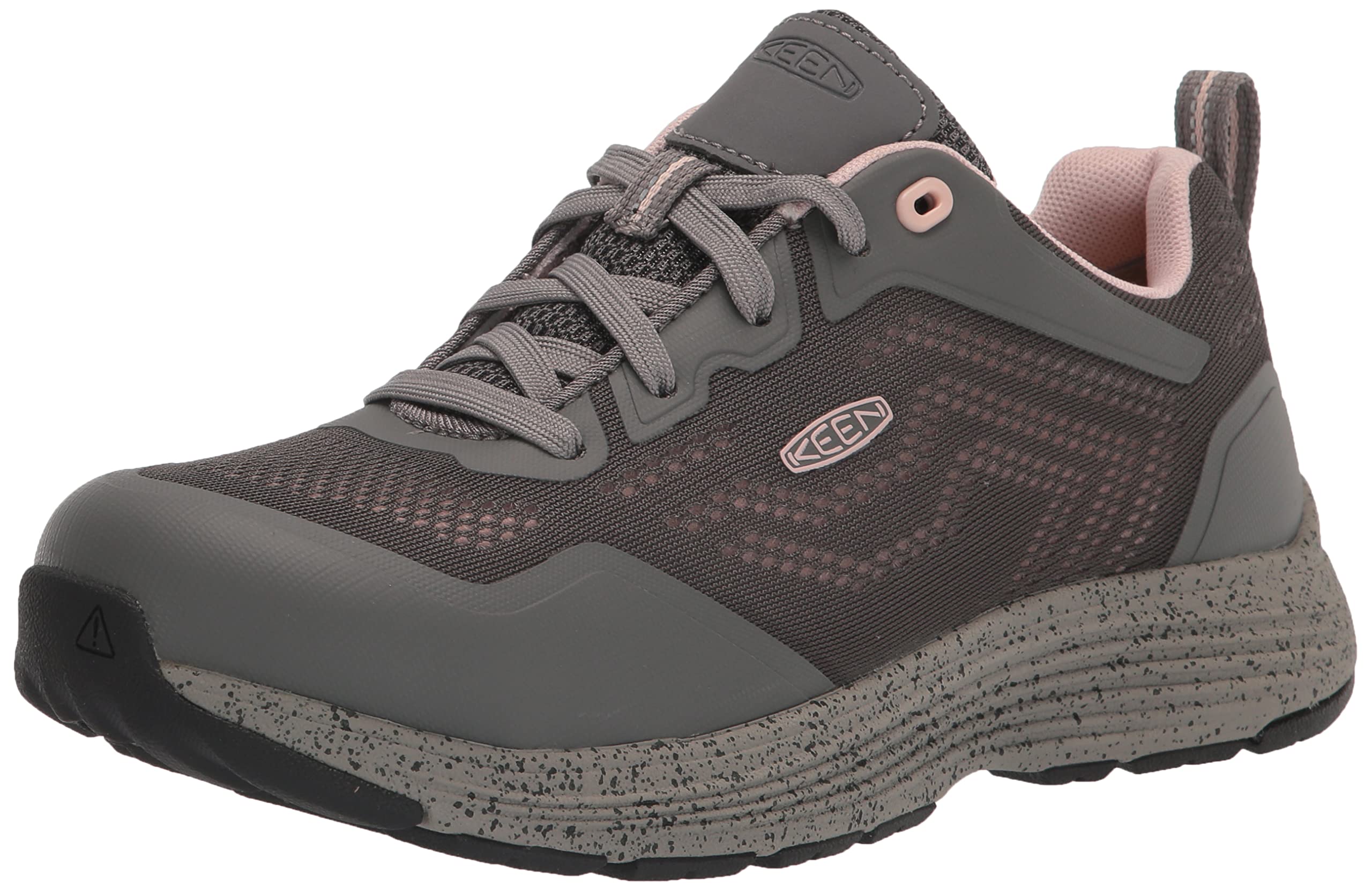
An alloy-toe work sneaker designed for all-day walking, weighing only 13.6 ounces per shoe.
The KEEN Sparta II is built around an alloy (aluminum) toe — lighter than steel, stronger than composite, and non-metallic so it does not trigger most metal detectors. At 13.6 ounces per shoe, that is about 2.1 pounds for the pair, making it one of the lighter options in this list. The KEEN.ReGEN midsole is a specific foam that rebounds after each step, and the breathable mesh upper paired with a water-resistant leather panel keeps the shoe airy while shedding light moisture. A CleansportNXT treatment (a natural antimicrobial additive) breaks down odor from sweat. Reviewers point out walking “over 10k steps in them” and note they are “super comfortable and lightweight” — enough that “everyone on the job site asked about them.”
Unlike the heavier Carhartt Frontier and Wolverine Floorhand, the Sparta II is a low-top sneaker designed for “light industrial tasks” like warehouse and distribution work. The wider toe box is a hallmark of KEEN — buyers with wide feet appreciate that the toe does not pinch. One reviewer with plantar fasciitis called them “very comfortable” and said they are great for “office and production.” However, durability is a known issue: one owner reported on their third pair of KEENs, saying the heel wears quickly and the sole detached in 6 months on the previous model (the Vista). Another says the toe box is “barely wide enough” despite KEEN’s reputation for width.
The KEEN Sparta II is slightly heavier than the Timberland PRO Intercept (2.1 lbs vs 1.98 lbs), but the alloy toe is lighter than steel, and the mesh upper is more breathable than the Timberland’s ripstop nylon. For light-duty walking over 10k steps a day, the Sparta II is the most comfortable option. For heavy construction or rough terrain, the Carhartt or Wolverine are more durable.
Why It Shines
- Alloy toe is lighter than steel, stronger than composite
- Very breathable mesh upper with odor control
- Wide toe box suits wide feet
- Great for high-step-count days (10k+ steps)
Watch For
- Durability concerns — heel wear and sole detachment reported
- Not waterproof — the water-resistant leather is light only
- Slightly heavier than Timberland PRO Intercept (2.1 lbs vs 1.98 lbs)
Best for: warehouse and distribution workers who log high step counts and want a breathable, lightweight shoe with alloy toe protection.
Skip if: you need a waterproof boot or heavy-duty durability for construction sites.
7. New Balance Women’s Fresh Foam Cremorne Composite Toe Safety Shoes
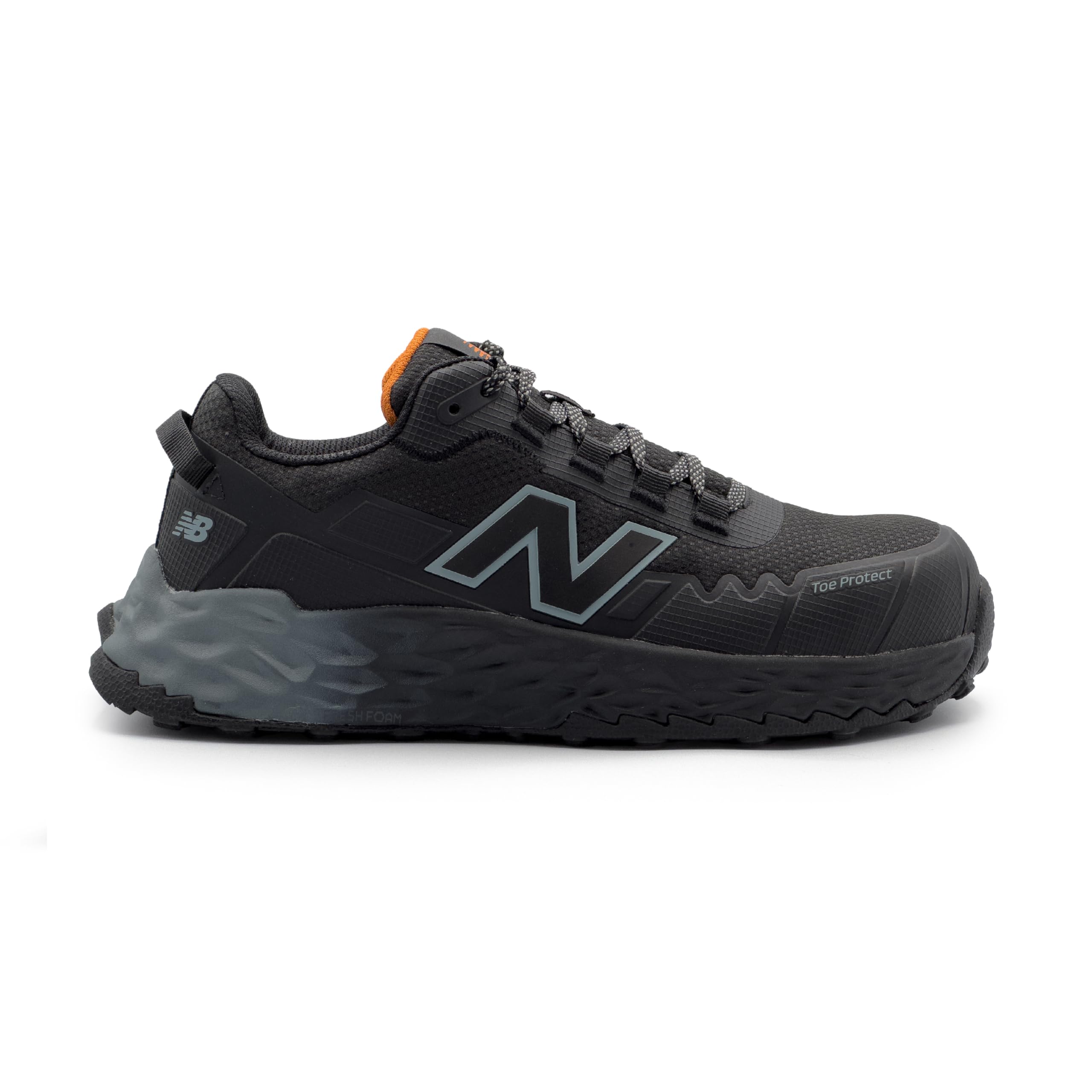
A Fresh Foam-cushioned composite-toe shoe that feels like a running shoe with a hard shell.
The New Balance Fresh Foam Cremorne uses the brand’s Fresh Foam midsole (a proprietary foam that delivers a soft, plush feel underfoot) combined with a composite safety toe and Toe Protect technology to shield against impacts. It is also electrical hazard (EH) rated, so the sole protects you from live wires, and the slip-resistant outsole adds grip. A wicking mesh lining helps keep feet dry, and the debris-free construction is designed to pass through airport security without triggering alarms — “security-friendly for low-maintenance travel,” per the maker. One buyer called them “very comfortable for 8hrs on concrete” and noted “no insoles needed.” Another said “best work shoe ever; durable and comfortable hard toe” and noted they are “stylish, not a typical work shoe.”
The catch is weight and sizing. Multiple shoppers say the shoe “runs BIG” — a size 9 had to drop to size 8. And while the composite toe is normally lighter than steel, several buyers called the Cremorne “super heavy for a composite toe.” That contradicts the general rule that composite toes are lighter, but the Fresh Foam midsole and outsole construction may add weight. One reviewer compared them to the Timberland PRO, saying the Timberland has “more structure/durability,” while noting the KEEN is “best for long hours” and the New Balance is “lightweight and durable” — but another directly called them “heavy shoe.” The lack of a published weight spec means we cannot confirm the exact figure, but the user feedback is mixed.
Compared to the CAT Venward (also composite toe, also lightweight-leaning), the New Balance has the Fresh Foam advantage for cushioning but the CAT is consistently praised as lighter. If cushioning is your top priority and you can manage the sizing quirk, the Cremorne delivers. If absolute lightweight is critical, the Timberland PRO Intercept (steel toe, 1.98 lbs) or CAT Venward are safer bets.
Why Consider It
- Fresh Foam midsole for plush cushioning on concrete
- Composite toe with EH and slip-resistance ratings
- Travel-friendly, debris-free design
- Stylish, athletic look
Heads Up
- Runs large — order one size down
- Mixed reviews on weight; some call it heavy
- Composite toe may rub the top of the foot for some
Best for: budget-conscious buyers who want Fresh Foam cushioning and composite toe protection in a shoe that looks athletic.
Skip if: weight is your biggest concern — several reviewers found it heavier than expected for a composite toe shoe.
Understanding the Specs
Toe Material: Steel vs Alloy vs Composite
The toe is the core protection in any safety shoe. Steel is the strongest and most durable, but it is heavy and conducts cold and heat — your feet get colder in winter and hotter in summer. Alloy (aluminum or titanium) is lighter than steel and passes the same ASTM F2413 impact and compression tests, but it still conducts temperature. Composite (carbon fiber, Kevlar, or reinforced plastic) is the lightest, does not conduct temperature, and will not set off metal detectors, but it can crack under extreme repeated impact over years. For most general warehouse and light industrial work, composite is comfortable and sufficient. For heavy construction with falling objects, steel is the safer bet.
Safety Ratings: EH and SD
Electrical Hazard (EH) rated shoes have a sole and heel that can withstand 18,000 volts without conducting electricity — you want this if you work near live wires, outlets, or electrical panels. Static Dissipative (SD) shoes have a lower level of electrical resistance that safely drains static charge from your body to the ground, preventing sparks near flammable material or static damage to electronics. You cannot use SD shoes as EH shoes — the ratings are different and opposite design goals. Most of the shoes here carry EH. The PUMA Iconic Suede carries SD, which is rare in this category and makes it the pick for static-sensitive environments.
Weight and Why It Matters
Every pound on your foot adds roughly 5-6 pounds of perceived load on your legs and back over a full shift. A shoe that weighs 1.98 pounds (like the Timberland PRO Intercept) will feel noticeably less tiring over ten hours than a 2.1 pound shoe (like the KEEN Sparta II). The difference is small per step, but over 10,000 steps it adds up to hundreds of pounds of extra load. That is why the exact weight spec matters — it is the single factor that determines how tired your feet feel at the end of the day. Composite and alloy toes almost always produce a lighter shoe than steel, so if you stand or walk all day, prioritize lighter constructions.
Slip Resistance and Outsole Material
Slip resistance is measured against a standardized test (ASTM F3445-24 SR) where the outsole is tested on wet, soapy, or oily surfaces. Not all safety shoes carry this rating. A non-marking outsole (like the Timberland PRO’s injection-molded EVA) also protects your work floors from black scuff marks. EVA (ethylene-vinyl acetate) is the same foam used in running shoes — it is lightweight, flexible, and absorbs shock, but it wears faster than rubber. Rubber outsoles last longer and provide better grip on rough surfaces but add weight. For wet floors, grease, or oil, look for a shoe that explicitly mentions slip resistance or carries the SR rating.
FAQ
Do I need steel toe or composite toe?
What does ASTM F2413-18 mean on a safety shoe?
What is the difference between EH and SD ratings?
How long do women safety shoes typically last?
Should I size up for safety shoes?
Can I wear composite toe shoes in metal detector zones?
Are lighter safety shoes less protective?
How do I clean suede safety shoes like the PUMA Iconic?
What is slip resistance and why should I care?
Can I use my safety shoes when I am not at work?
Final Thoughts: The Verdict
For the majority of shoppers, the best women safety shoes winner is the Carhart