
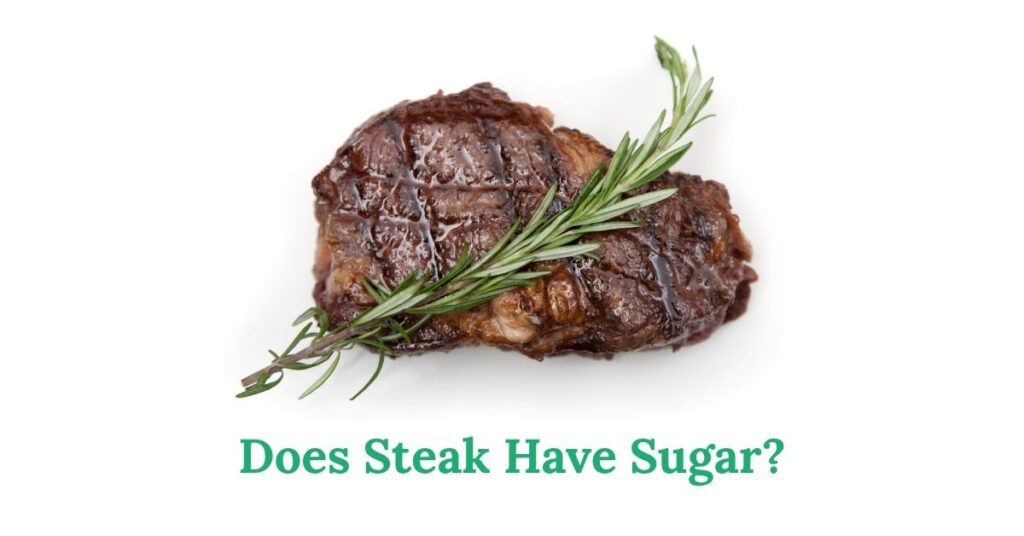
No—plain beef steak contains 0 grams of sugar; only marinades, sauces, or rubs add sugar to steak.
Steak Alone
With Dry Rub
Sauced/Glazed
Plain & Savory
- Salt, pepper, hot pan
- Finish with herb butter
- Rest before slicing
No added sugar
Dry Rub No Sugar
- Use sugar-free spices
- Coarse grind for bark
- Rest 20–30 minutes
It depends
Glazed & Sweet
- BBQ or teriyaki
- Brush on late
- Measure 1–2 tbsp
Adds sugar
Steak is a protein-dense food with fat and minerals, but carbohydrates are negligible. That raises a common question: does steak have sugar on its own? The answer is no for unseasoned beef. The meat’s trace glycogen breaks down after slaughter, leaving sugars at effectively zero per serving. Sugar shows up only when it’s added in a marinade, glaze, or sauce, or when the steak is part of a mixed dish.
Steak Sugar Basics: Cuts, Cooking, And Labels
Here’s a quick view of common cuts. Values reflect cooked, unseasoned beef. Numbers can shift with fat trim and doneness, but carbs stay near zero.
| Cut (Cooked) | Total Carbs | Sugars |
|---|---|---|
| Ribeye, pan-seared | 0 g | 0 g |
| Sirloin, broiled | 0 g | 0 g |
| Filet mignon, roasted | 0 g | 0 g |
| Flank, grilled | 0 g | 0 g |
| Skirt, grilled | 0 g | 0 g |
| NY strip, broiled | 0 g | 0 g |
Raw beef also lists zero sugars on nutrient databases. Any number you might see in branded marinated steak products reflects added ingredients, not the beef itself. When seasoning, aim for simple salt, pepper, and high-smoke-point oil. That keeps the label clean and avoids sneaky sugars. If you watch sodium, set your daily sodium intake target first, then season to taste.
For packaged foods that include sauces or glazes, the label must call out “Added Sugars” in grams and % Daily Value. The rule is explained in the FDA’s label guidance. For a nutrient snapshot of a typical steak cut that lists sugars at 0 grams, see this ribeye entry compiled from USDA data on MyFoodData.
Does Steak Contain Sugar When It Browns? Myth And Science
Searing makes steak taste savory and nutty. Some folks assume browning means sugars are forming. What’s happening is different. Browning in meat is driven by the Maillard reaction—amino acids reacting with small reducing sugars if present. Beef starts with negligible sugars, so the flavor comes from proteins and heat-driven chemistry, not new sugar being created during searing.
Caramelization is a sugar-only process, and that applies to foods like onions or candy making. Meat browns mainly through Maillard chemistry, not caramelization. That’s why a hard sear doesn’t raise the sugar content of a plain steak.
Where Added Sugar Sneaks Into Steak
Steak itself is sugar-free. The extras bring sugar in. Watch these common sources:
- Marinades: Many bottled blends use brown sugar, honey, molasses, or corn syrup to boost color and stickiness.
- Glazes: Teriyaki, balsamic reductions, and BBQ mops are sugar-rich.
- Sauces: Steak sauce, ketchup, and BBQ sauce can push multiple grams per tablespoon.
- Rub mixes: “BBQ” or “sweet heat” rubs often list sugar as the first ingredient.
- Restaurant specials: “Candied” or “bourbon” menu cues usually mean a sweet glaze.
How Nutrition Labels Treat Sugar On Beef
Packed raw beef sometimes carries a Nutrition Facts panel from the retailer. You’ll see total carbohydrate at 0 grams and sugars at 0 grams. When the package includes a marinade or glaze, the label must show those added sugars. The FDA’s label rules define “Added Sugars” and require the gram amount and % Daily Value on packages that contain them.
Data sets based on lab analysis report cooked beef with negligible carbohydrate and zero listed sugars. Steak brings protein, fat, iron, zinc, and B-vitamins; carbs are not part of its nutrition story.
How To Keep Steak Sugar-Free
If you want steak with no sugar added, stick with these steps. They keep flavor high without leaning on sweeteners.
Pick The Right Cut
Choose the cut for the eating experience you like. Ribeye brings marbling and juiciness. Sirloin stays leaner. Tenderloin is buttery and mild. None of these cuts carries sugars when unseasoned.
Season Without Sweeteners
Use kosher salt and cracked pepper. Add garlic powder, paprika, or chili. Skip blends that list sugar early. If a rub calls for sugar for bark, you can swap in extra paprika for color and a pinch of MSG for punch.
Sear In Neutral Oil
Use a high-smoke-point oil for the pan or grill grates. That keeps scorch in check and helps browning. If you want a refresher on heart-friendly fat choices, see this quick read on best oils for heart health.
Skip Sweet Sauces
Reach for compound butter, chimichurri, gremolata, or a splash of pan sauce made with stock. These options punch up flavor without added sugar. If you use steak sauce, treat it like a condiment and portion a teaspoon on the side.
Quick Reference: Steak, Sugar, And Heat
This table separates common cooking terms tied to steak browning and what each one means for sugar content.
| Method/Term | What Happens | Impact On Sugar |
|---|---|---|
| Hard sear | Maillard browning creates savory crust | No sugar added |
| Pan roast | Sear, then finish in oven | No sugar added |
| Basting | Butter, garlic, herbs over heat | No sugar added |
| Glaze | Reduced sauce brushed on | Added sugar depends on recipe |
| BBQ mop | Sweet sauce during grilling | Added sugar increases |
| Dry rub | Spice mix on surface | Check label; many include sugar |
Does Steak Fit Low-Sugar Eating Plans?
Yes. Plain steak fits low-sugar or low-carb patterns because it contributes protein and fat without carbohydrates. Balance your plate with greens, roasted vegetables, or a salad, and keep any sweet sauce to a measured drizzle.
Smart Swaps For Flavor Without Sugar
- Acid: Lemon juice or red wine vinegar brightens beef without sweetness.
- Herbs: Thyme, rosemary, parsley, and chives add lift.
- Umami: Anchovy paste, Worcestershire, soy sauce (low-sugar styles), or mushroom powder bring depth.
- Heat: Fresh cracked pepper, chili flakes, or a touch of horseradish.
Buying Tips: Reading Steak Labels And Claims
When you shop, glance at the ingredient line. If the package lists only “beef,” you’re getting sugar-free steak. If it lists a marinade, scan the first three ingredients. Words like sugar, brown sugar, molasses, honey, maple syrup, corn syrup, or fruit concentrate signal added sugar. Retailers sometimes pre-marinate or season meat for convenience, and those items carry grams of total and added sugars on the label.
Also watch sodium on seasoned items. Sugar and salt often travel together in ready-to-cook meat. If you prefer full control, choose plain cuts and season at home.
Cooking Guide: Sear-To-Finish Without Sweeteners
1) Pat Dry And Salt
Moisture blocks browning. Pat the surface dry, then salt both sides. Rest on a rack for 30–60 minutes to let salt move inward.
2) Heat The Pan Until Hot
Use cast iron or a heavy stainless pan. Add a teaspoon of neutral oil. When the oil shimmers, place the steak.
3) Sear, Flip, And Baste
Sear two to three minutes per side. Add a knob of butter with smashed garlic and thyme. Tilt and spoon to baste. This step adds flavor without sugar.
4) Finish Gently
Move the pan to a moderate oven or lower the burner to finish to your target temperature. Rest five to ten minutes before slicing.
Frequently Asked Clarifications
Is There Natural Sugar In Meat?
Muscle stores glycogen when alive, but levels drop fast after slaughter. The remaining trace amount gets metabolized during the post-mortem pH drop. By the time steak reaches your kitchen, lab tests show sugars at or near zero per serving.
Does Browning Create Sugar?
No. Browning on meat is mostly Maillard chemistry driven by amino acids and heat. Caramelization involves sugar alone and is not the main pathway on a steak.
What About Steak Sauces?
They vary. Classic steak sauce can land around 2–3 grams of sugar per tablespoon, while many BBQ sauces reach 5–7 grams or more. Portion lightly or pick savory swaps like chimichurri.
Bottom Line On Sugar In Steak
Plain steak contains zero grams of sugar. If you’re tracking sugar intake, focus on marinades, glazes, rubs, sauces, and sides. Choose unseasoned cuts, sear in neutral oil, finish with herbs or tart accents, and you’ll keep the plate sugar-free. Want a deeper primer on daily limits? You can skim our short take on the daily added sugar limit before you plan sauces.