
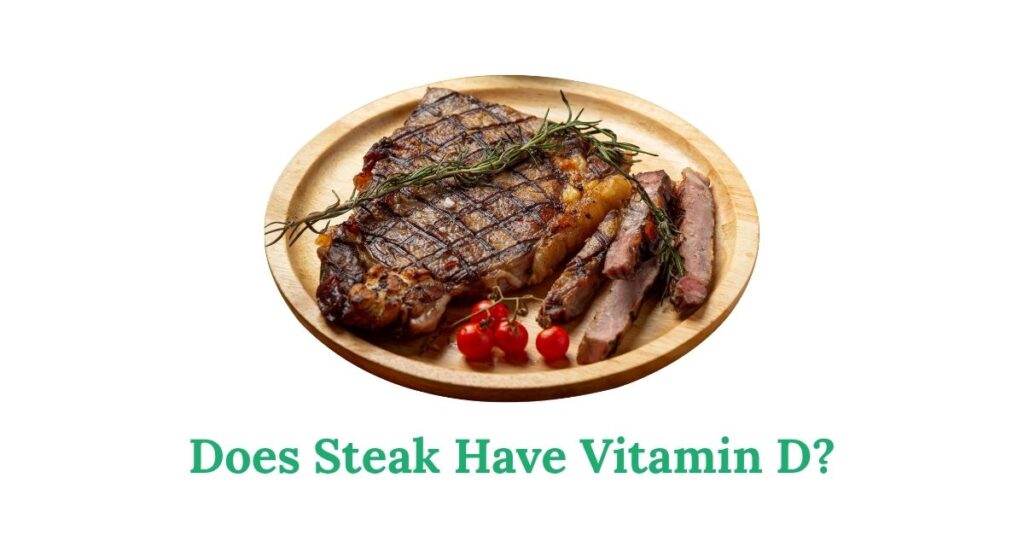
Yes—steak contains vitamin D in tiny amounts, and most cuts provide only a few IU per serving.
Steak Contribution
With Mushrooms
Fish Night
Keep Steak
- Choose 6–9 oz cooked.
- Add UV-mushroom skillet.
- Include a cup of fortified milk.
Basic
Pair Smart
- Steak salad with egg.
- Breakfast yogurt or milk.
- Plan fish once this week.
Better
Swap Once
- One trout or salmon dinner.
- Fortified plant milk at lunch.
- Steak on a second night.
Best
Steak brings protein, iron, zinc, and that satisfying sear. The question today is simple: does steak have vitamin D, and if yes, how much can it add to your day? Here’s a clear, number-first answer, plus ways to round out your plate if you need more.
Does Steak Have Vitamin D In It? Facts And Numbers
Short answer: yes, steak has vitamin D, but the amount is small. Data sets that track nutrients in meat show ranges from near-zero up to a whisper of vitamin D3 and its cousin 25-hydroxyvitamin D. A typical cooked skirt steak shows about 0.3 micrograms (≈12 IU) in a 6-ounce portion—low compared with fish or fortified milk. Beef liver can carry a bit more, yet it still trails the well-known sources.
How Steak Compares To Common Vitamin D Foods
To see where steak lands, compare typical servings below. Values are rounded and can vary by animal diet, season, cut, and cooking method.
| Food | Typical Serving | Vitamin D (mcg / IU) |
|---|---|---|
| Grilled skirt steak | 6 oz (170 g) | ~0.3 mcg / ~12 IU |
| Beef liver, pan-fried | 1 slice (~68 g) | ~1.0 mcg / ~40 IU |
| Salmon, baked | 3 oz (85 g) | ~11–17 mcg / ~440–680 IU |
| Trout, baked | 3 oz (85 g) | ~16 mcg / ~645 IU |
| Egg yolk | 1 large | ~1 mcg / ~40 IU |
| Milk, fortified | 1 cup (240 ml) | ~2.5–3 mcg / ~100–120 IU |
| Mushrooms, UV-exposed | 1 cup sliced (70–90 g) | ~7–27 mcg / ~280–1080 IU |
For label math, the current Daily Value for vitamin D on U.S. packages is 20 micrograms (800 IU)—that’s the baseline used on Nutrition Facts. Most adults ages 1–70 are advised to aim for 15 micrograms (600 IU) a day, and adults over 70 for 20 micrograms (800 IU). In that context, steak’s tiny contribution is more of a bonus than a pillar.
If you use a supplement, timing is less fussy than consistency, though many people prefer taking it with a meal; that way the fat in food helps absorption, and you stick to a routine once you pick the best time to take vitamin D.
Why Steak’s Vitamin D Is Low Compared With Fish
Vitamin D in land animals is hit-and-miss. Sunlight and feed matter. Fish store more vitamin D in fat and liver because their food chain carries it and they make and retain more of it in tissues. In beef, the mix skews to trace amounts, with some 25-hydroxyvitamin D present, which the body can use efficiently but shows up in small numbers on lab reports.
Where The Variation Comes From
- Cut and fat: fattier cuts may hold slightly more, but still low.
- Animal lifestyle: pasture time and feed can nudge levels up or down.
- Cooking: water loss concentrates nutrients by weight; values may look higher per 100 g after cooking, even when total vitamin D stays tiny.
Smart Ways To Build A Vitamin D Day Around Steak
Craving steak? Keep it, and pair it with reliable vitamin D sides. Think fish earlier in the week, fortified dairy at breakfast, or UV-exposed mushrooms in a quick pan sauce. Small moves add up to the day’s target without changing your main course.
Simple Meal Pairings That Move The Needle
- Steak + mushroom skillet: sauté UV-exposed mushrooms in the same pan after searing; splash stock, reduce, and spoon over slices.
- Steak salad lunch: leftovers over greens with hard-boiled egg and a yogurt dressing.
- Split the week: steak one night, trout or salmon another night to bank most of the day’s vitamin D.
How Much Vitamin D Do You Need From Food?
Your body can make vitamin D from sunlight, yet many people turn to food and supplements. Labels list vitamin D in micrograms and IU (1 mcg = 40 IU). Most healthy adults land on 15 mcg (600 IU) per day, while those over 70 target 20 mcg (800 IU). The upper limit for adults is 100 mcg (4,000 IU) from all sources unless a clinician gives a different plan for a short period.
Practical Targets With Real Plates
Build a week that rotates salmon or trout, eggs, fortified milk or yogurt, and the occasional steak night. If your diet is dairy-free, lean on fortified plant milks and cereals. If sun is scarce or your diet is limited, talk with a clinician about a simple daily supplement.
Reading Labels And Converting Units
Many dairy and plant milks list vitamin D in micrograms now. Some recipes and older charts still use IU. To convert, multiply micrograms by 40 to get IU, or divide IU by 40 to get micrograms. That quick mental switch helps when you compare foods or plan a day around a steak dinner.
Vitamin D Forms Found In Meat
Two forms matter in animal foods: cholecalciferol (D3) and 25-hydroxyvitamin D (25OHD). D3 is the same form found in many supplements. 25OHD is a compound the animal already converted in the liver. Your body can use both. When labs measure meat, tiny amounts of each may show up. Some nutrient databases report mostly D3; some add a small bump to account for 25OHD’s activity. Either way, the total in steak stays low.
What Lab Numbers Actually Mean
Numbers you see on charts come from carefully prepared samples of specific cuts. Technicians measure raw and cooked meat and report vitamin D per 100 grams or per portion. Cooking drives off moisture, so the number “per 100 g” can look larger after cooking even if the total on your plate barely changed. That’s why portion context matters alongside the lab method.
Portion Size, Frequency, And Diet Balance
Most steak dinners land near 6–9 ounces cooked. At that size, vitamin D is still a rounding error, but protein, iron, selenium, and B-vitamins are strong. If you eat steak once a week, aim for vitamin D on other days through fish, fortified milk, or mushrooms. If you enjoy steak twice a week, keep the same plan and you’ll still meet targets without effort.
Cooking Tips That Keep The Plate Balanced
- Pan sauce boost: deglaze with stock, toss in UV-exposed mushrooms, and finish with a pat of butter for richness.
- Grill and chill: grill extra mushrooms and store for omelets or grain bowls to add vitamin D elsewhere in the week.
- Doneness and size: slice across the grain and share; pairing with sides rich in fiber helps control portions without losing satisfaction.
Sample Day Plans That Hit Vitamin D Targets
| Meal Plan | Main Moves | Approx. Vitamin D Total |
|---|---|---|
| Steak Night + Dairy | Fortified milk (120 IU) at breakfast; egg at lunch (40 IU); grilled skirt steak at dinner (~12 IU) with mushroom skillet (300 IU) | ~472 IU (~11.8 mcg) |
| Fish Anchor | Yogurt or fortified milk (100–120 IU); baked salmon at dinner (500–600 IU); leafy salad | ~600–720 IU (~15–18 mcg) |
| Plant-Forward | UV-exposed mushrooms in tacos (280–500 IU); fortified plant milk (120 IU); oats with fortified cereal (40–80 IU) | ~440–700 IU (~11–17.5 mcg) |
Safety Notes And Upper Limits
Vitamin D is fat-soluble, so overshooting through high-dose supplements can cause problems. Healthy adults have an upper limit of 100 micrograms (4,000 IU) per day from all sources unless a clinician directs a short-term plan. Food sources rarely push anyone near that, and steak sits far below. If you’re managing a condition or take other medicines, get personal advice before adding a high-dose pill.
Steak Cuts: Any Meaningful Differences?
Data across skirt, ribeye, strip, and tender cuts show tiny swings that won’t change your day. Fattier cuts can show a touch more per gram; leaner cuts a touch less. Grass-fed versus grain-fed differences appear in some small studies but the range still sits far under fish and fortified milk. Choose the cut you enjoy and use sides to reach your vitamin D goal.
Shopping And Menu Moves That Work
Build a short list: a bag of UV-exposed mushrooms, a carton of fortified milk or plant milk, eggs, and a pound of fish for one dinner. With those on hand, steak nights fit smoothly into a balanced week. If you track macros or calories, this swap-and-pair approach is easier than chasing one “superfood.”
Answers To Common Questions About Steak And Vitamin D
Does cooking destroy vitamin D? Vitamin D is fairly stable with typical home cooking, though pan losses and moisture shifts can change numbers on a per-gram basis. Steak still ends up with trace amounts either way.
Is grass-fed steak higher? It can be, but the bump is modest and not reliable enough to plan a day around it. Treat any vitamin D from steak as a bonus.
Is beef liver a good source? Liver has more than muscle meat yet remains modest for vitamin D compared with fish and fortified dairy. Its strength is vitamin A and B12; rotate it if you like the taste.
Bottom Line On Steak And Vitamin D
Steak does have vitamin D, just not much. If you enjoy a ribeye or skirt steak, keep it for protein, iron, and taste. Meet most of your vitamin D needs with fish, fortified foods, eggs, and sunlight when appropriate. Then let steak play its usual role on the plate—no heavy lifting required for vitamin D. Want a broader nutrition refresher to go with that salmon night? Try our omega-3 benefits for heart.