
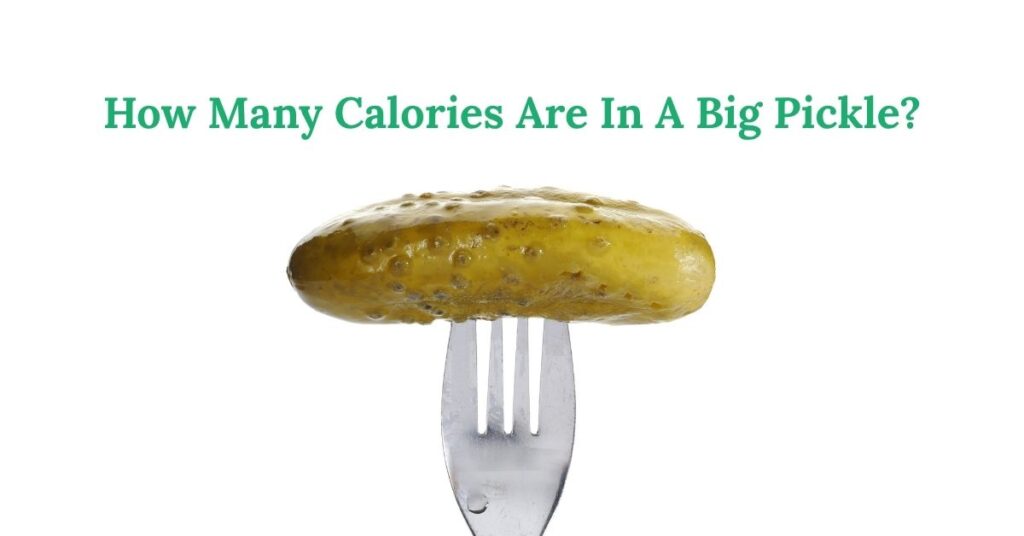
One big dill pickle (about 4 inches long) has roughly 24 calories; sweet styles run higher.
Large Dill (4" Whole)
Jumbo Deli Whole
Bread-&-Butter
Classic Dill
- Garlic and dill brine
- Lowest calories
- Bold tang, no sugar
Everyday Choice
Bread-&-Butter
- Sweeter brine
- Higher carbs
- Crunchy sandwich fit
Sweet & Tangy
Kosher Dill Fermented
- Naturally soured
- Similar calories
- May include live cultures
Old-World Style
How Many Calories Are In A Big Pickle: Sizes And Styles
For a clear starting point, a large dill cucumber pickle that’s about 4 inches long lands near 24 calories based on common nutrient listings. The number barely budges with classic dill brine, since salt, vinegar, and spices don’t add much energy. Counts rise when sugar joins the mix, which is why bread-and-butter or sweet gherkins can push past the plain dill range.
Brand labels vary, jar weights vary, and “large” isn’t a legal size. That’s why it helps to use two anchors: per 100 grams and per piece. Per 100 grams, dill pickles commonly sit in the mid-teens for calories; per piece, a big whole dill often falls in the low-to-mid 20s. Sweet styles climb because the brine carries sugar into the cucumber.
Big Pickle Calories By Common Portion
The table below sets quick benchmarks. Use it to sense where your pickle likely lands before you check your jar’s panel.
| Portion | Typical Calories | Notes |
|---|---|---|
| 1 large dill (about 4" whole) | ~24 kcal | Plain dill brine; low sugar. |
| 1 jumbo deli whole | ~28–32 kcal | Heavier cucumber raises total. |
| 1 large bread-&-butter | ~35–45 kcal | Sweet brine adds carbs. |
| 100 g dill pickle | ~14–18 kcal | Useful for weighing portions. |
| 1 spear (dill) | ~4–7 kcal | Single spear varies by cut. |
| 1 cup slices (dill) | ~15–20 kcal | Drained solids only. |
Jar labels remain the final word for your brand and size. Once you know your daily calorie needs, it’s easy to slot pickles into snacks or sandwiches without moving the needle too much, since a whole dill adds only a few dozen calories. That said, a sweet brine can nudge totals up quickly when you’re stacking chips on a burger or spooning relish.
What Drives The Calorie Count In A Big Pickle
Most of the energy comes from the cucumber itself and any sugar in the liquid. Vinegar and salt add tang and crunch but barely any calories. That’s why two big pickles from the same jar usually land within a tight range unless one is soaked in a sweet brine.
Brine Type Matters
Dill brine: salty, sour, and low calorie. Bread-and-butter brine: includes sugar; that’s where the extra calories show up. Fermented kosher dill: similar energy to plain dill; the difference isn’t the calories but the fermentation method.
Water Weight And Draining
Pickles are mostly water. If you blot or drain slices, the number you log can differ a little from the panel, which may include brine. That’s another reason to treat any single estimate as a range, then confirm against the jar in your hand.
Label Examples You Can Expect
Many national brands list about 5 calories per 28 grams (roughly half a small whole) on classic dill jars. A single large whole from the same product line often works out to several times that tiny serving, which is how you land near the mid-20s for one piece. Bread-and-butter styles can list several grams of sugar per serving, so a big sweet pickle runs higher.
How To Read The Panel Fast
- Serving size: note whether it’s slices, spears, or a fraction of a whole.
- Servings per container: divides the jar into pieces; big deli wholes may count as multiple servings.
- Added sugars: zero on dill; present on sweet styles.
- Sodium: see the salt section below; it varies a lot.
Big Pickle Calories In Meals And Swaps
Pickles can add crunch and bite without moving your calorie budget. A single large dill on a sandwich adds pop for about two dozen calories, while a small pile of sweet chips contributes more. If you want the flavor without extra sugar, stick with classic dill or fermented kosher dill.
Easy Ways To Use A Big Pickle
- Sandwich side: one large dill with a turkey sandwich for crunch and zip.
- Burger topper: swap sweet chips for dill slices to cut sugar.
- Snack plate: pair a whole dill with hummus and carrot sticks.
- Chop into tuna salad: use dill instead of relish to trim added sugar.
Calorie Math You Can Trust
If you want precision, weigh your pickle, then apply a per-100-gram figure for the style you’re eating. Dill falls around the mid-teens per 100 grams, so a 150-gram whole would land near the low 20s. Sweet styles climb, since each 100 grams carries more sugar.
Quick DIY Estimate
Weigh the pickle, convert to grams, multiply by the calories per 100 grams, and you’re set. This approach keeps you within a few calories of the panel, and it’s handy when you’re dealing with deli wholes that don’t match a jar’s suggested serving.
Salt: The Big Swing Factor
Calories stay low, but sodium can be steep. A serving on classic dill jars often lists a few hundred milligrams per ounce, while some older nutrient listings for a whole large piece cross one gram. If you’re watching blood pressure, check the panel and drain brine before serving.
Sodium Snapshot For Big Pickles
Use this table to compare common scenarios. The wide range comes from brine strength, size, and serving math on labels.
| Serving | Sodium (mg) | Notes |
|---|---|---|
| Per 1 oz dill (about 1/2 small whole) | ~200–300 | Typical jar listing for classic dill. |
| 1 large dill (about 4" whole) | ~700–1,700 | Depends on brand and recipe strength. |
| Low-sodium dill | ~100–200 | Varies; check the exact jar. |
| Sweet bread-&-butter | ~300–600 | Added sugar, similar salt. |
Simple Ways To Tame The Salt
- Drain well: shake off brine before serving.
- Rinse slices: quick water rinse can trim surface salt.
- Pick low-sodium jars: use them for daily snacking.
- Balance the plate: pair with low-sodium mains.
How This Fits Your Day
A big dill gives you crunch for roughly two dozen calories, which is an easy fit in a balanced day. Sweet styles taste great too; just factor the extra sugar when adding chips or relish. For most people, the main limiter with pickles isn’t energy; it’s sodium. Teens and adults are advised to cap sodium intake under 2,300 milligrams per day, so plan your pickle moments around the rest of your meals and snacks.
Smart Shopping And Label Tips
Choose The Style That Matches Your Goal
- Lowest calories: classic dill or fermented kosher dill.
- Lower sugar: avoid bread-and-butter brines.
- Lower sodium: look for “reduced sodium” jars.
Read Fine Print Quickly
- Serving size wording like “1 oz (about 1/2 pickle)” can hide how big your piece is.
- “Per piece” makes logging easier for deli wholes; still check weight if you need precision.
- Added sugars on sweet styles explain the calorie bump.
Bottom Line On Big Pickle Calories
Most big dills land near 24 calories. Jumbo deli wholes hover a little higher. Sweet brines lift the total by adding sugar. For daily eating, the crunch is practically “free” in energy terms; salt is the variable to watch. If you’re tracking numbers closely, weigh the piece and apply a per-100-gram figure to tighten the estimate.
References And Handy Benchmarks
Per-100-gram figures and per-piece estimates help you adjust on the fly. Authoritative nutrient databases list dill pickles in the mid-teens per 100 grams, which lines up with the low-to-mid-20s for one large whole. Health agencies set sodium guidance under 2,300 milligrams daily for teens and adults, so plan your pickle habit with the rest of your day’s food.
If you’re shaping a snack plan, it helps to set your daily calorie needs before you stack add-ins like sauces or cheese.
For a deeper nutrient breakdown by style and serving, see the detailed dill pickle entry on MyFoodData. For salt targets that help with label choices, check the CDC guidance on sodium.
Want a quick refresher on recommended limits? Take a peek at our short read on the daily sodium intake limit.